

P0339 on 2016-2020 Jeep Wrangler: Crank Sensor Causes and Fixes
P0339 on a 2016-2020 Jeep Wrangler almost always means the crankshaft position sensor is failing. This can cause stalling, especially when the engine is hot, and a no-start condition. Replacing the sensor is the most common fix. An OEM Mopar part costs around $50-$90, while aftermarket options are $25-$60. Labor at a shop can bring the total to between $148 and $223.
- P0339 on a 2016-2020 Wrangler indicates an intermittent signal from the crankshaft position sensor, a critical part for engine timing.
- The most common symptoms are the engine stalling when hot and/or difficulty starting.
- The most probable cause is a failing crankshaft position sensor, which is a common issue on the 3.6L Pentastar engine.
- Replacing the sensor is a straightforward DIY job (difficulty 2/5) with a relatively inexpensive part.
- Check the wiring and connector for heat damage, as this is the second most likely cause.
What's Unique About the 2016-2020 Jeep WRANGLER
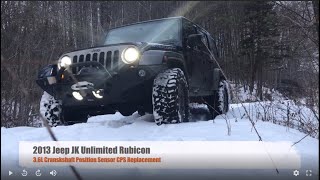
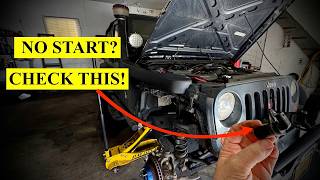
For the 2016-2020 Wrangler, this code spans two generations: the JK (2016-2018) and the JL (2018-2020), both primarily using versions of the 3.6L Pentastar V6. The crankshaft position sensor is a known failure point on these engines, often failing due to heat exposure from the nearby exhaust components. Forum discussions frequently highlight that symptoms like stalling appear when the engine gets hot and may disappear after it cools down. While the sensor itself is the usual culprit, the 🎬 Watch: Step-by-step 2016 Wrangler sensor replacement walkthrough. wiring harness leading to it is also susceptible to heat damage, causing the protective loom to become brittle and crumble. Several TSBs have been issued for both the 3.6L and 2.0L engines that address P0339 with a 🎬 See how to fix code P0339 on the 3.6L engine. PCM software update, indicating the logic for interpreting the sensor signal can be a factor. [Bulletin #1811422, #1810320]
Diagnostic Flowchart
Tap your situation to follow the diagnostic path that matches what you're seeing on this vehicle.
Generation note: Yes, this range covers two Wrangler generations. The 2016-2018 models are the 'JK' generation, while the 2018-2020 models are the 'JL' generation. The 2018 model year is an overlap. Both generations primarily use the 3.6L Pentastar V6 engine where this issue is common. The sensor location is on the passenger side of the engine block, near the transmission bell housing, for both the JK 3.6L and JL 3.6L. The JL also introduced a 2.0L Turbo engine, which has a different sensor location that is more difficult to access, potentially requiring removal of the starter.
Symptoms You May Notice
- Engine stalls unexpectedly, especially when hot, and may not restart until it cools down
- Engine cranks but will not start
- Hard starting (requires multiple attempts)
- Rough or uneven idle
- Hesitation, bucking, or stumbling during acceleration, sometimes feeling like a total loss of power
- Check Engine Light (MIL) is illuminated or flashing
- Traction control light may illuminate simultaneously with the Check Engine Light
- Replacing camshaft position sensors. People often confuse the crankshaft and camshaft sensors. The camshaft sensors are located on top of the engine, while the crankshaft sensor is on the lower side.
- Using cheap, low-quality aftermarket sensors. Forum users report that after replacing the sensor with a non-OEM part, the problem sometimes persists or returns quickly. Using a Mopar sensor is often recommended for reliability, as confirmed in multiple owner stories.
Most Likely Causes
- Failing Crankshaft Position Sensor 🔴 High Probability The sensor is located on the lower passenger side of the 3.6L engine, near the hot exhaust, leading to failures from heat cycles. This is a widely reported issue in Jeep forums, with many owners experiencing stalling only when the engine is hot.
How to confirm: The most definitive test is to monitor the CKP sensor signal on a live data scan tool or oscilloscope while the engine is running. Look for the RPM signal to drop to zero unexpectedly, especially as the engine warms up. Often, the simplest diagnosis is to replace the sensor, as it's a relatively inexpensive part and a very common failure.
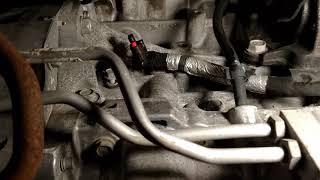
Typical fix: Replace the crankshaft position sensor. On the 3.6L, it's held by a single 10mm bolt and can be accessed from underneath the passenger side.
Est. part cost: $25-$90 - Damaged Wiring or Connector 🟡 Medium Probability The wiring harness for the sensor is also exposed to high heat, which can make the plastic connector brittle and the wire insulation fragile. Vibration and heat can cause an intermittent connection. Some owners have found the wires chafing against the hot engine block.
How to confirm: Visually inspect the wiring harness and connector for signs of melting, cracking, or corrosion. With the engine running, carefully wiggle the connector and wiring to see if it causes the engine to stumble or stall, which would indicate a bad connection.
Typical fix: Repair the damaged section of wire or replace the connector pigtail. Securing the harness away from the engine block with zip ties can prevent future chafing. In severe cases, a dealer might suggest a new engine wiring harness, which is a very expensive repair.
Est. part cost: $15-$30 for a pigtail connector - Powertrain Control Module (PCM) Software Issue ⚪ Low Probability Jeep has issued multiple Technical Service Bulletins (TSBs), such as 18-103-20 for the 2018 JK 3.6L and 18-114-22 for the 2019 JL 2.0L, that specifically call for a PCM software update to address P0339 among other codes. [Bulletin #1810320, #1811422] This indicates the original software may be too sensitive or has flawed logic for interpreting sensor signals.
How to confirm: A Jeep dealership or a well-equipped independent shop can use a scan tool like wiTECH to check if your vehicle's PCM has the latest software calibration installed by comparing it to the latest version available.
Typical fix: Reprogram the PCM with the latest software version. This must be done by a dealer or a shop with a J2534 pass-thru device. This is often the first step a dealer will take if the vehicle is under warranty and qualifies for a TSB.
Est. part cost: $0 (if covered by a TSB/warranty) - $200
Rare But Worth Checking
- Damaged Reluctor Ring: The reluctor ring (or tone wheel) is what the crankshaft sensor reads. If it's damaged, bent, or has debris on it, the signal will be erratic. This is rare but can happen, especially on vehicles used for serious off-roading where debris could enter the bell housing.
- Failing Powertrain Control Module (PCM): While very rare, the internal circuits of the PCM that process the CKP signal can fail, causing a P0339 code even with a good sensor and wiring. This should be the last consideration after all other possibilities are exhausted.
Diagnosis Steps
- Read all fault codes with an OBD-II scanner. Note any other codes that are present, especially P0335 or P0300.
- Visually inspect the crankshaft position sensor and its wiring harness on the lower passenger side of the engine near the transmission. Look for obvious damage, melting, or loose connections. Check for chafing against the engine.
- With the engine running, use a scan tool to monitor the RPM signal from the crankshaft sensor. If possible, view the live data graph. Look for the RPM signal to drop to zero unexpectedly, which indicates a signal loss.
- If the issue happens when the engine is hot, let the vehicle run until it reaches operating temperature to try and replicate the fault. Many owners report the stalling only occurs after 20-30 minutes of driving.
- If the signal is intermittent, carefully wiggle the sensor's connector and wiring to see if you can induce the fault. If wiggling the wires causes a stall or signal drop, the wiring is the problem.
- If the wiring appears okay, the most likely cause is the sensor itself. Replace the crankshaft position sensor, preferably with an OEM Mopar part.
- After replacement, clear the codes. Some vehicles may require a 'crankshaft position sensor relearn' procedure. This can sometimes be accomplished by disconnecting the battery for 15 minutes, or through a specific drive cycle (e.g., decelerating from 60mph to 50mph multiple times). More advanced scan tools may have a forced relearn function.
Parts You'll Likely Need
- Crankshaft Position Sensor (3.6L V6)
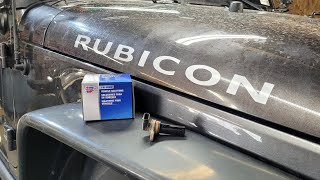
(OEM #5149169AB)— This sensor is the most common point of failure for code P0339 due to its location and susceptibility to heat damage. Part number 5149169AB is the widely cited OEM part for the 3.6L Pentastar crankshaft sensor.
Trusted brands: Mopar, NTK/NGK, Delphi
OEM price range: $50-$90
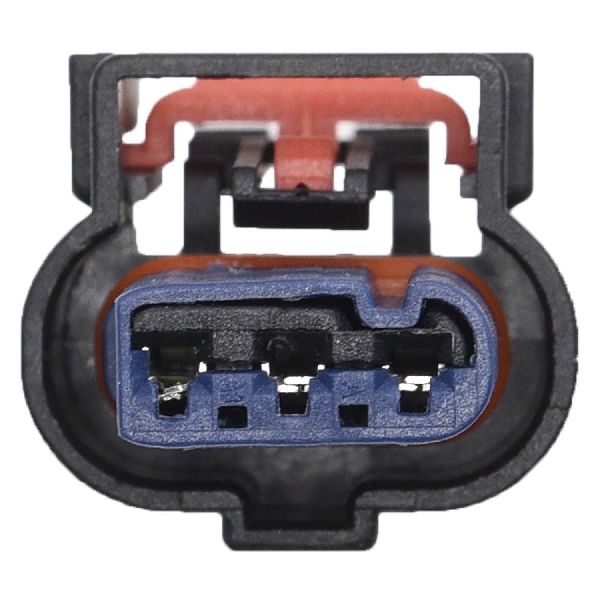
Aftermarket price range: $25-$60 - Crankshaft Position Sensor Connector Pigtail — If the connector itself is cracked, melted, or the locking tab is broken, replacing the pigtail is necessary to ensure a solid connection to the new sensor.
Trusted brands: Standard Motor Products, Dorman, Carquest
OEM price range: N/A
Aftermarket price range: $15-$30
Related Codes That Often Appear With This One
- P0335 — P0335 indicates a complete loss of the crankshaft position sensor signal, whereas P0339 is an intermittent loss. They often appear together because an intermittent fault can degrade into a hard fault. Multiple TSBs for Wranglers and other Jeep/Dodge vehicles group these codes together. [Bulletin #1807023, #1811422, #1814422, #18-090-16, #1805322REVA, #1810320, #1801922REVA]
- P0300 — This code means 'Random/Multiple Cylinder Misfire.' If the ECM loses the crankshaft position signal, it cannot time ignition spark correctly, leading to misfires. Owners often report this code appearing alongside P0339 when the engine begins to run rough.
- P2C90 — This code for the crankcase ventilation system is mentioned alongside P0339 in several TSBs for both the 2.0L and 3.6L engines, suggesting it may be part of a group of codes addressed by a single PCM software update. [Bulletin #1807023, #1811422, #1814422, #1805322REVA]
Technical Service Bulletins (TSBs) & Recalls
- 18-103-20
- 18-114-22
- 18-144-22
- 18-090-16
- 18-070-23
- 18-053-22REVA
- 18-019-22REVA
Platform-Specific Known Issues
- Heat-Soak Failure and Stalling: A very common owner experience involves the Wrangler running perfectly fine when cold, but after driving for 20-30 minutes, it will suddenly stall, often on the highway. After pulling over and waiting 10-15 minutes for it to cool, the engine will restart and run normally for a while before the issue repeats. This is a classic symptom of the crankshaft position sensor failing due to heat.
- TSB for PCM Update (2018 JK 3.6L): TSB 18-103-20 was released for 2018 Jeep Wrangler (JK) models with the 3.6L engine. It addresses a list of intermittent sensor codes, including P0339, by reprogramming the PCM with updated software. This suggests the fault can be triggered by software logic, not just a hardware failure.
- TSB for PCM Update (2019 JL 2.0L): TSB 18-114-22 applies to 2019 Jeep Wrangler (JL) models with the 2.0L Turbo eTorque engine. It also lists P0339 as one of several codes that can be resolved by a PCM software update, showing this is a known issue on the 4-cylinder turbo as well.
- Owner Repair Story: The Misleading Misfire: In a YouTube video by 'TheTopher', the owner of a 2013 JK described experiencing periodic hesitation at highway speeds. The issue escalated to the check engine light and traction control light illuminating, with the engine sputtering. The initial codes were P0339 and P0300 (random misfire). After replacing the sensor, which he located under the passenger side near the bell housing, the issue was resolved. This highlights how a P0339 fault can manifest as a severe misfire.
Mechanic-Grade Diagnostic Values
- 5V Reference Voltage at Sensor Connector — expected: Approximately 4.5 to 5.0 volts DC. Failure: A reading of 0V indicates an open in the supply circuit from the PCM. A reading significantly lower than 4.5V could indicate a short.
- Ground Circuit Integrity — expected: Near 0 ohms resistance between the ground pin and a known good chassis/engine ground.. Failure: Resistance above 1 ohm indicates a poor ground connection, which can cause erratic signals.
- Signal Wire Voltage (Static Test) — expected: Voltage should switch between approximately 0V and 5V as the engine is slowly rotated by hand.. Failure: If the voltage does not switch, or is stuck high or low, the sensor is likely faulty.
- Sensor Internal Resistance (Sensor Unplugged) — expected: While specifications vary, a general range for a good sensor is between 200 and 1000 ohms.. Failure: A reading of 0 ohms or infinite resistance (open) suggests the sensor has failed internally.
Scan Tool Commands That Help
- wiTECH, Autel, Appcar DiagFCA, or other professional scanner: Cam/Crank Relearn (also called 'Cam Crank Reward' or 'CPS Relearn') — This function is required after replacing the crankshaft position sensor, PCM, or timing components to synchronize the new sensor's signal with the PCM. Failure to perform the relearn can cause a persistent code, rough idle, or misfires even with a good part. The engine coolant temperature must be above 158°F (70°C) to perform the routine.
- Manual Procedure (No Scan Tool): Manual Crankshaft Position Relearn Drive Cycle — If a scan tool is not available after replacing the sensor. After a successful repair, a P0315 code may appear, indicating a relearn is needed. The procedure involves driving at 60 mph, decelerating to 50 mph without using the brake, and repeating this three times. Another method is to simply let the vehicle idle for 10-15 minutes after the repair.
Wiring & Ground Locations
- CKP Sensor Connector — On the lower passenger side of the 3.6L engine block, near the transmission bell housing.. This connector and its wiring are the most common points of failure besides the sensor itself. It is highly susceptible to heat damage from the exhaust, which can cause brittle plastic, loose connections, and chafed wires.
- CKP Sensor Pinout (3-wire Hall Effect) — At the sensor connector.. Testing requires knowing the function of each pin: one is a 5-volt reference from the PCM, one is a sensor ground provided by the PCM, and the third is the signal wire that sends the crank position back to the PCM.
- PCM/Engine Ground Points — Key ground points for the powertrain are located on the engine block, cylinder heads (often near the front), and on the chassis near the battery. A JL Wrangler ground map shows specific points like G901A/B/C, G902A, etc.. A loose or corroded main engine or PCM ground can create a floating reference voltage for all sensors, causing an intermittent signal code like P0339 even if the sensor and its direct wiring are perfectly fine.
Real Owner Repair Stories
- Jeeps.net Forum user (Jeep Cherokee Latitude (with 3.2L Pentastar, similar design)) — P0339 code, stalling when hot. Problem persisted after a mechanic replaced the sensor.
❌ Tried (didn't work) Replacing the crankshaft position sensor.
✅ What actually fixed it The connector was not fully seated. The user had to connect the wiring harness to the new sensor *before* bolting the sensor onto the engine to get enough leverage to ensure it clicked in securely. - Jeeps.net Forum user (Jeep Cherokee Latitude) — P0339, stalling when hot, returned one week after sensor replacement.
❌ Tried (didn't work) Replacing the crankshaft position sensor.
✅ What actually fixed it The wiring for the crankshaft and camshaft position sensors was chafing against the hot engine block. The owner secured the wires away from the block with zip ties and reset the computer, which resolved the issue. - Reddit user in r/MechanicAdvice (2013 Jeep Wrangler Sahara) — P0339, stalling on the highway when hot, bucking, erratic RPMs.
❌ Tried (didn't work) Replacing the crankshaft sensor with a new (likely aftermarket) part caused the vehicle to become a crank-no-start.
✅ What actually fixed it The story highlights a common misdiagnosis trap. Putting the original, failing Mopar sensor back in allowed the car to run again (with the initial intermittent stalling). The implication is the new aftermarket sensor was completely defective or incompatible. The final fix is using a genuine OEM Mopar sensor.
When the Usual Fixes Don't Work
- While replacing the sensor is the most common fix, it is not always the solution. In one documented case, a persistent P0339 was resolved by discovering the new sensor's electrical connector was not fully latched. The fix was to connect the harness to the sensor *before* installing it to get enough leverage for a secure click. In another case, the sensor and wiring were fine, but the wires were chafing on the engine block, causing an intermittent short that was fixed with zip ties. The most extreme counter-example involved a brand new remanufactured engine where the P0339 was ultimately traced to a physically defective reluctor ring on the new flexplate, which was only visible on an oscilloscope.
OEM Part Supersession History
Unknown (Early 3.6L Pentastar Part)→5149169AB (and subsequent revisions)— Early build 3.6L Pentastar engines had a known issue with the original design of the crankshaft position sensor, causing intermittent failures and codes like P0339. A redesigned part was issued to improve reliability.
Model Year Variations Within This Range
- 2011-2020 (3.6L Pentastar): Early build versions of the 3.6L Pentastar engine were equipped with a crankshaft position sensor prone to intermittent failure. Chrysler released a redesigned part to fix issues of intermittent stalling and misfires related to P0339. Vehicles within the 2016-2020 range should already have the updated design, but if a very old stock part is used for replacement, the issue could reappear.
Helpful Videos

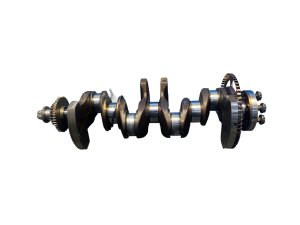
Used OEM Parts in Stock
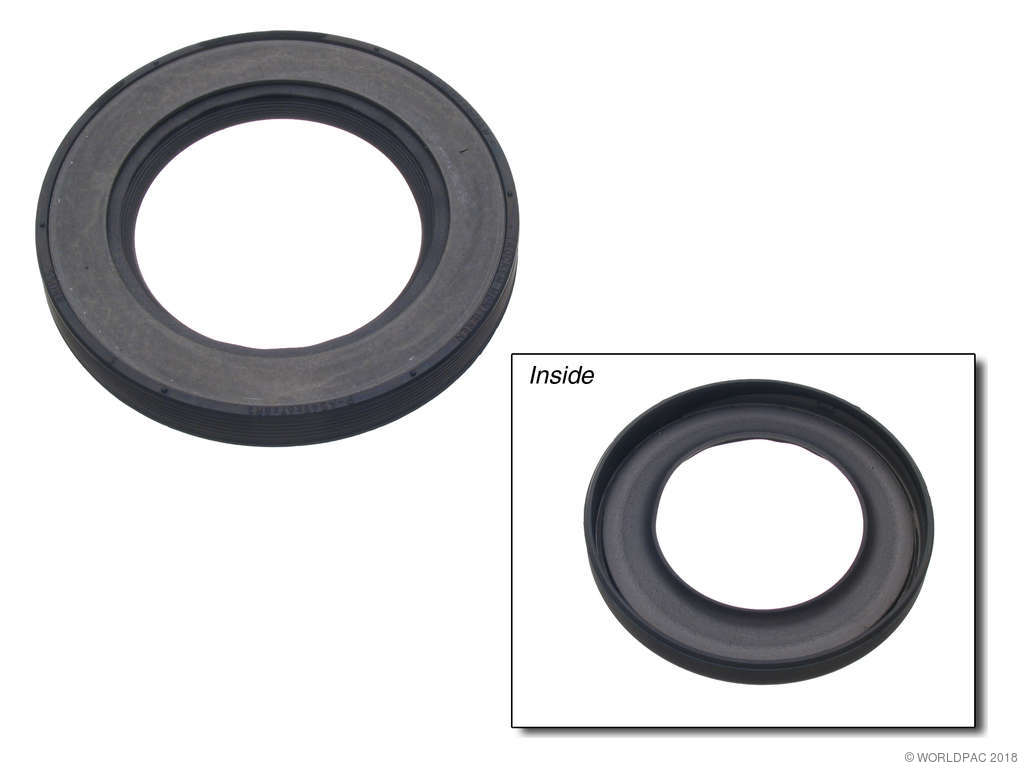
New Aftermarket Parts Available


The information in this article is provided for general reference and educational purposes only. Vehicle specifications, procedures, and part compatibility can vary by production date, trim level, and region. Always consult your vehicle's factory service manual and verify part numbers before purchasing or performing repairs. Safety-critical components such as airbags, seat belts, and braking systems should be installed by a qualified professional.
- Jeep WRANGLER:
- 🎬 Helpful Videos
- 🛍️ Shop This Part
- What's Unique About the 2016-2020 Jeep WRANGLER
- Diagnostic Flowchart
- Symptoms You May Notice
- Most Likely Causes
- Rare But Worth Checking
- Diagnosis Steps
- Parts You'll Likely Need
- Related Codes That Often Appear With This One
- Technical Service Bulletins (TSBs) & Recalls
- Platform-Specific Known Issues
- Mechanic-Grade Diagnostic Values
- Scan Tool Commands That Help
- Wiring & Ground Locations
- Real Owner Repair Stories
- When the Usual Fixes Don't Work
- OEM Part Supersession History
- Model Year Variations Within This Range
- 🎟️ Get 5% Off