

P0339 on 2015-2018 Jeep Renegade: Crankshaft Sensor Intermittent Causes and Fixes
P0339 on a 2015-2018 Jeep Renegade indicates an intermittent signal from the crankshaft position sensor, often causing stalling or a no-start condition. The most common fix is replacing the sensor itself, which costs between $30 and $80 for the part. Before replacing, check the wiring near the exhaust for heat damage, a frequent issue on the 2.4L engine. An OEM Mopar sensor (Part No. 68246343AD for the 2.4L) is strongly recommended.
- P0339 on a Jeep Renegade means the crankshaft sensor signal is dropping out, which can cause dangerous stalling while driving. Do not drive if possible.
- The most common cause is a failed crankshaft position sensor, but the wiring harness near the exhaust on the 2.4L engine is a very close second and must be inspected.
- Using an OEM Mopar sensor (Part #68246343AD for 2.4L) is highly recommended, as aftermarket sensors are known to cause repeat failures.
- A PCM software update (TSB S2108000027) might be required, so check with a dealer if a new sensor and good wiring don't solve the problem.
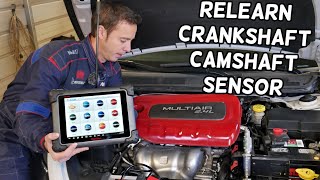
- A 'crank relearn' procedure with a proper scan tool is often necessary after replacing the sensor.
What's Unique About the 2015-2018 Jeep RENEGADE
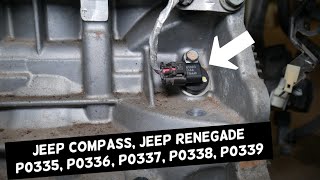
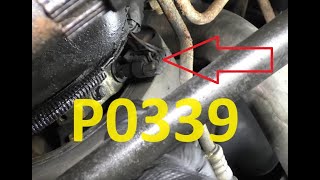
On the Jeep Renegade, particularly with the 2.4L MultiAir engine, the crankshaft position sensor's wiring is routed very close to the hot exhaust manifold. This makes the harness susceptible to heat damage, which can cause the intermittent signal loss that triggers the P0339 code. A manufacturer Technical Service Bulletin (TSB) also exists for this code, indicating it's a known issue that may sometimes be addressed with a software update. Aftermarket sensors are known to cause repeat failures, making OEM parts a strong recommendation 🎬 Watch: Locate and replace the sensor on your 2.4L engine. for this repair.
Diagnostic Flowchart
Tap your situation to follow the diagnostic path that matches what you're seeing on this vehicle.
Symptoms You May Notice
- Engine stalls intermittently, especially when warm or while driving
- Difficulty starting the engine, or multiple attempts required
- Engine cranks but does not start
- Check Engine Light is on
- Rough or uneven idle
- Hesitation during acceleration
- Tachometer behaves erratically or drops to zero while the engine is still running
- Engine bucks or stumbles at road speed
- Replacing the camshaft position sensor. While related to engine timing, P0339 specifically points to the crankshaft sensor circuit.
- Replacing spark plugs or ignition coils to fix a misfire without first addressing the P0339 code, which is the likely root cause of the timing-related misfire.
- Assuming the new sensor is good. There are many reports of new, especially non-OEM, crankshaft sensors being faulty out of the box or failing quickly.
Most Likely Causes
- Failing Crankshaft Position Sensor 🔴 High Probability Internal components of the sensor can fail from heat and vibration over time, leading to an intermittent signal, especially as the engine warms up. This is a very common failure point.
How to confirm: Use a scan tool to monitor RPM data while the engine is running. If the RPM signal drops out or becomes erratic, the sensor is likely failing. You can also test the sensor's internal resistance with a multimeter; a reading between 200-1000 Ohms is typical for a good sensor. An oscilloscope provides the most definitive test.
Typical fix: Replace the crankshaft position sensor. It is highly recommended to use an OEM Mopar sensor. After replacement, a crankshaft position sensor relearn procedure may be necessary, which can be performed with a capable scan tool.
Est. part cost: $30-$80 - Damaged Wiring or Connector 🟡 Medium Probability The sensor wiring on the 2.4L engine is routed near the exhaust manifold, and the protective heat shielding may not be sufficient. Heat can melt the insulation, causing a short or open in the circuit. The connector's locking tab can also become brittle and break.
How to confirm: Visually inspect the entire wiring harness from the sensor to the main loom. Look for melted plastic, brittle insulation, or corroded pins in the connector. Wiggle the harness with the engine running to see if it causes a stall or triggers the code.
Typical fix: Repair the damaged section of the wire or replace the connector pigtail. High-temperature protective sleeving can be added to prevent future damage.
Est. part cost: $15-$40 - PCM Software Calibration Issue ⚪ Low Probability Jeep issued a Technical Service Bulletin (TSB #S2108000027, also referenced as W80 Combo Phase1) for P0339, which can sometimes be resolved by a software update that makes the PCM less sensitive to minor signal variations. This is more likely if other codes are present.
How to confirm: A Jeep dealership or a qualified shop with access to OEM software (wiTECH) can check if your vehicle's PCM has the latest calibration by checking against the TSB.
Typical fix: Update the Powertrain Control Module (PCM) software.
Est. part cost: $0-$200
Rare But Worth Checking
- Damaged Reluctor Wheel: The toothed wheel that the crankshaft sensor reads can become damaged, cracked, or chipped, causing an erratic signal. This is uncommon but can happen, especially if other engine work has been performed. A cracked reluctor wheel has been noted as a root cause on similar Fiat/Chrysler engines.
- Failing Powertrain Control Module (PCM): While very rare, the PCM itself can fail and be unable to correctly process the signal from the sensor. This should only be considered after all other possibilities have been exhausted.
Diagnosis Steps
- Confirm the presence of P0339 with an OBD-II scanner. Note any other codes.
- Visually inspect the crankshaft position sensor and its wiring harness, especially on the 2.4L engine where it passes near the exhaust manifold. Look for signs of melting, chafing, or corrosion.
- Check that the sensor's electrical connector is securely plugged in and the locking tab is engaged. These are known to become brittle and break.
- With the engine running, use a scan tool to monitor the live RPM data. Wiggle the wiring harness to see if the signal drops out.
- If the signal is intermittent, the sensor is the most likely cause. Turn off the engine and let it cool completely before working near the exhaust.
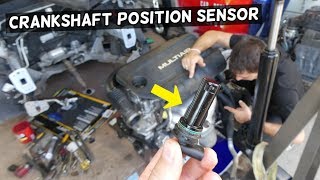
- Remove the sensor (typically held by a single 10mm bolt). The job is tight but can be done from above the engine.
- Replace the crankshaft position sensor. It is highly recommended to use an OEM (Mopar) part (Part #68246343AD for the 2.4L engine) or a high-quality equivalent from brands like NTK or Delphi, as cheap aftermarket sensors are known to fail prematurely.
- After installation, use a scan tool to clear codes and perform a 'Cam/Crank Relearn' or 'Phonic Wheel Relearn' procedure to synchronize the new sensor with the PCM.
- If a new OEM sensor does not resolve the issue, perform a continuity and resistance test on the wiring harness between the sensor and the PCM.
- If wiring and sensor are confirmed good, contact a dealership to check for any available PCM software updates as per TSB S2108000027.
Parts You'll Likely Need
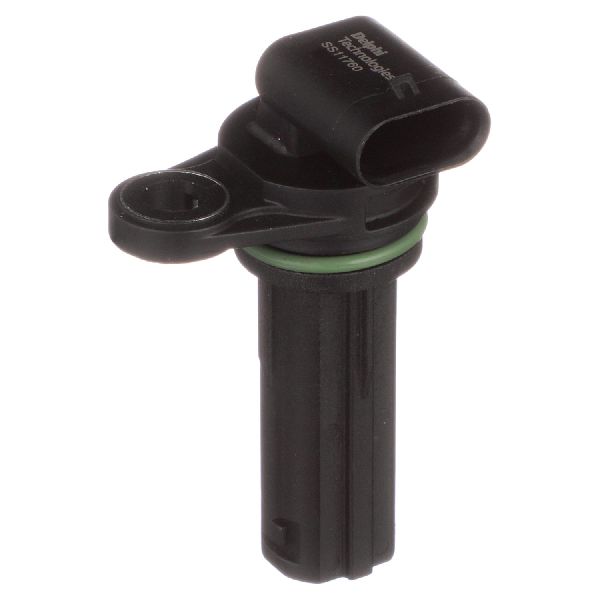
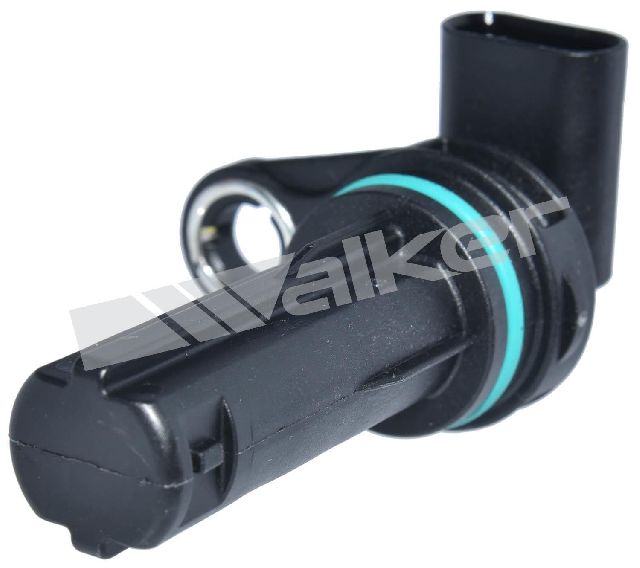
- Crankshaft Position Sensor
(OEM #68246343AD (for 2.4L Tigershark))— This sensor is the most frequent point of failure for the P0339 code due to its operating environment and electronic nature. Using an OEM Mopar part is critical for a lasting repair.
Trusted brands: Mopar, NTK, Delphi
OEM price range: $60-$90
Aftermarket price range: $30-$60
Related Codes That Often Appear With This One
- P0335 — This code indicates a complete loss of the crankshaft position sensor signal, which can occur alongside the intermittent P0339 if the sensor fails entirely or the wiring has a hard fault.
- P0300-P0306 — Random or specific cylinder misfire codes can be triggered because the incorrect crankshaft position data causes the PCM to command spark at the wrong time.
Technical Service Bulletins (TSBs) & Recalls
- S2108000027 / W80 Combo Phase1: CEL, Check Engine Lamp On, DTC P0339 Crankshaft Position Sensor Intermittent. This TSB acknowledges the intermittent crank sensor code and may lead to a PCM software update as the solution.
Platform-Specific Known Issues
- A known issue for the 2015 model year is covered by TSB #S2108000027 (also listed as W80 Combo Phase1), which addresses the P0339 code. The fix may involve a PCM software update.
- The wiring for the crankshaft position sensor on the 2.4L engine is located on the right (passenger) side of the engine block, near the exhaust manifold, making it prone to heat damage. Owners often add extra heat shielding to the new harness as a preventative measure.
- A crankshaft relearn procedure using a capable scan tool is often required after replacing the sensor to avoid continued running issues.
Mechanic-Grade Diagnostic Values
- Crankshaft Sensor Connector Voltage (Key On, Engine Off) — expected: Pin 1 (5V Supply): ~5 Volts, Pin 2 (Signal): ~5V or ~0V, Pin 3 (Ground): < 0.1 Volts.. Failure: No 5V reference, voltage on the ground wire, or a signal wire that is stuck high or low.
- Crankshaft Sensor Resistance (Sensor Unplugged) — expected: 200 - 1000 Ohms between the two main prongs.. Failure: A reading of zero indicates a short circuit; an infinite reading indicates an open circuit.
- Crankshaft Sensor AC Voltage (Engine Cranking) — expected: A fluctuating reading, typically around 200 millivolts (mV), that increases with RPM.. Failure: No AC voltage reading while cranking indicates a failed sensor.
Scan Tool Commands That Help
- wiTECH or capable aftermarket (e.g., Autel, Foxwell): Crankshaft Position (CKP) Variation Learn / Cam Crank Relearn — Required after replacing the crankshaft position sensor to synchronize the new sensor's signal with the PCM's learned values to prevent persistent codes, rough running, or starting issues.
Wiring & Ground Locations
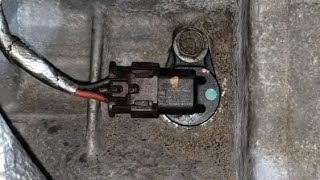
- Crankshaft Position Sensor Connector (2.4L) — On the right (passenger) side of the engine block, below the exhaust manifold.. This 3-pin connector's proximity to the exhaust makes it and its wiring highly susceptible to heat damage, a primary cause of intermittent signal loss for P0339. The red locking tab is also known to become brittle and break.
- CKP Sensor Pinout (at sensor, 2.4L) — Pin 1: 5-volt supply from PCM. Pin 2: Signal wire to PCM. Pin 3: Sensor ground.. Knowing the pinout is essential for testing for correct voltage, ground, and signal at the sensor connector to isolate a bad sensor from a wiring problem.
- PCM Connector C2 (2.4L) — The main engine computer, typically located in the engine bay.. The CKP sensor wires terminate here. Specifically, Pin 64 is the CKP Ground, and the signal wire also connects here, allowing for end-to-end continuity testing of the harness.
Real Owner Repair Stories
- Jeep KJ and KK Liberty Forum (2008 Jeep Liberty 3.7L (similar heat-related failure mode)) — Vehicle overheated, stalled on highway, then crank-no-start with no RPM on tach. Initially P0335, then P0339 after sensor replacement.
❌ Tried (didn't work) Replacing the crankshaft and camshaft sensors with non-OEM parts.
✅ What actually fixed it The user reported that unplugging the new (likely faulty aftermarket) crankshaft sensor allowed the engine to start and run, strongly suggesting the replacement sensor was bad out of the box. Forum members advised using only a Mopar sensor to resolve the issue.
OEM Part Supersession History
68211426AA→68213513AA— Part revision or manufacturer change.
Heads up: This supersession applies to the crankshaft position sensor for the 1.4L Turbo engine, not the 2.4L.
Helpful Videos
We Have This Part in Stock


The information in this article is provided for general reference and educational purposes only. Vehicle specifications, procedures, and part compatibility can vary by production date, trim level, and region. Always consult your vehicle's factory service manual and verify part numbers before purchasing or performing repairs. Safety-critical components such as airbags, seat belts, and braking systems should be installed by a qualified professional.
- Jeep RENEGADE:
- 🎬 Helpful Videos
- 🛍️ Shop This Part
- What's Unique About the 2015-2018 Jeep RENEGADE
- Diagnostic Flowchart
- Symptoms You May Notice
- Most Likely Causes
- Rare But Worth Checking
- Diagnosis Steps
- Parts You'll Likely Need
- Related Codes That Often Appear With This One
- Technical Service Bulletins (TSBs) & Recalls
- Platform-Specific Known Issues
- Mechanic-Grade Diagnostic Values
- Scan Tool Commands That Help
- Wiring & Ground Locations
- Real Owner Repair Stories
- OEM Part Supersession History
- 🎟️ Get 5% Off