

P0339 on 2016-2017 Jeep Grand Cherokee: Crank Sensor Fixes
P0339 on a 2016-2017 Grand Cherokee usually means the crankshaft position sensor is failing, causing stalling or hard starts. Before replacing parts, check if a critical software update (TSB 18-049-20) has been performed, as this was released by Jeep to prevent false codes. If the sensor is bad, a Mopar replacement is strongly recommended over aftermarket parts. Expect to pay $135-$225 for a professional replacement.
- For a 2016-2017 Grand Cherokee, your first step for a P0339 code should be to check if a PCM software update (TSB 18-049-20) has been performed.
- The most common symptoms are sudden engine stalling and long crank times.
- If software is not the issue, the crankshaft position sensor itself is the most likely failed part.
- Driving with this code is risky as the engine can shut off at any time.
- Always inspect the wiring for heat damage before replacing the sensor, as a melted wire can mimic a failed sensor.
What's Unique About the 2016-2017 Jeep GRAND CHEROKEE

For the 2016-2017 Grand Cherokee with the 3.0L and 3.6L engines, Jeep issued a Technical Service Bulletin (TSB 18-049-20) that directly addresses this code. The manufacturer updated the PCM software to be less sensitive to minor, transient glitches from the crank sensor, changing it from a one-trip to a two-trip fault. This update was designed to prevent the check engine light from coming on unnecessarily. Therefore, a crucial first step in diagnosis is to ensure the vehicle's PCM has this latest software installed. Additionally, for the 3.0L EcoDiesel, a recall (V01/NHTSA 19V867000) was issued for delaminating crankshaft position sensor tone wheels, which can cause a stall and is a known issue on these engines.
Diagnostic Flowchart

Tap your situation to follow the diagnostic path that matches what you're seeing on this vehicle.
Symptoms You May Notice

- Engine stalling intermittently, often after it has warmed up.
- Engine cranks for a long time before starting (extended crank).
- No-start condition where the engine turns over but won't fire up.
- Check Engine Light is on or flashing.
- Engine misfires, stumbles, or hesitates during acceleration.
- Rough or unstable idle.
- In some cases, the engine will start and run if the crankshaft sensor is unplugged, but will not start when it is plugged in.
- Replacing the crankshaft position sensor without first checking for the PCM software update. The TSB was issued for a reason, and a simple reflash may solve the problem without replacing any parts.
- Using a cheap aftermarket crankshaft position sensor. Many forum users report that the issue returned shortly after, and was only resolved by using a genuine Mopar part. 🎬 Watch a driveway mechanic replace the sensor on a Jeep.
Most Likely Causes

- Outdated Powertrain Control Module (PCM) Software 🔴 High Probability Manufacturer TSB #18-049-20 was released specifically to change the fault logic for P0339 on these vehicles to reduce false positives by changing it to a two-trip fault.
How to confirm: A Jeep dealership or a qualified independent shop with a wiTECH scan tool can check the current software calibration ID and see if it matches the latest version specified in the TSB.
Typical fix: Reprogramming the PCM with the latest software. The TSB explicitly states this is the fix for a MIL-on condition with this code present.
Est. part cost: $0 - Failing Crankshaft Position Sensor 🔴 High Probability The sensor is exposed to significant heat and vibration at the bottom of the engine, leading to internal electronic failure over time. The start-stop system on 3.6L models may also increase wear cycles. Many owners report that only genuine Mopar sensors solve the problem permanently, with aftermarket sensors failing quickly or not working at all.
How to confirm: After confirming the PCM software is up-to-date, the next step is to test the sensor. An oscilloscope provides the best diagnosis by showing dropouts in the sensor's signal waveform. A less definitive test is monitoring RPM on a scan tool while wiggling the sensor's wiring.
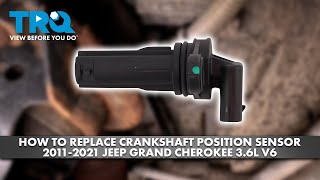
Typical fix: Replace the crankshaft position sensor. It is located on the lower passenger side of the engine block. 🎬 See this step-by-step walkthrough for replacing the 3.6L sensor. Using a genuine Mopar part is highly recommended.
Est. part cost: $90-$125 - Damaged Wiring or Connector 🟡 Medium Probability The sensor's wiring harness is routed near hot exhaust components and can become brittle, chafed, or melted over time, causing an intermittent short or open circuit.
How to confirm: Visually inspect the entire wiring harness from the sensor to the PCM for signs of melting, chafing, or corrosion at the connector. Perform a continuity test on the signal, power, and ground wires while flexing the harness to reveal intermittent breaks.
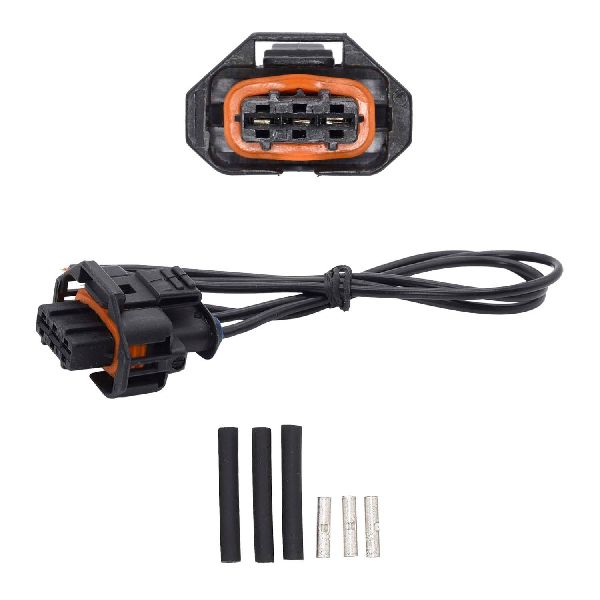
Typical fix: Repair the damaged section of the wire with heat-shrink connectors or replace the connector pigtail.
Est. part cost: $10-$40
Rare But Worth Checking
- Damaged Crankshaft Reluctor Wheel: The reluctor wheel (or tone ring) is a toothed ring on the crankshaft that the sensor reads. For 3.0L EcoDiesel engines, there was a recall because the wheel could delaminate, causing the engine to stall. On both engines, if the wheel gets damaged, has a bent tooth, or has metallic debris on it, it can produce an erratic signal that a new sensor won't fix. This is rare but can happen, especially if other engine work has been performed.
- Failing Powertrain Control Module (PCM): While very rare, the internal circuits of the PCM that process the crankshaft sensor signal can fail. This should only be considered after all other possibilities (sensor, wiring, software, reluctor wheel) have been definitively ruled out.
Diagnosis Steps
- Read all stored fault codes with an OBD-II scanner.
- Check for TSBs: Contact a dealer or equipped shop to verify if TSB #18-049-20 (or its latest revision) has been performed. If not, have the PCM reprogrammed. This is the most important first step for this specific vehicle.
- Visual Inspection: After addressing software, inspect the crankshaft position sensor and its wiring harness. The sensor is on the lower passenger side of the engine. Look for melted plastic, chafed wires, and a secure connector.
- Live Data Analysis: Use a scan tool to monitor the RPM signal while the engine is running. Wiggle the wiring harness from the sensor to the PCM to see if you can force the signal to drop out, indicating a wiring issue.
- Oscilloscope Test: For a definitive test, connect an oscilloscope to the sensor's signal wire. The waveform should be a clean, consistent square wave. Any gaps, glitches, or malformed waves point to a faulty sensor or a problem with the reluctor ring.
- Test the Circuit: If the signal is erratic, disconnect the sensor and check for a 5-volt reference and a good ground at the connector with the key on. Test the signal wire for continuity back to the PCM.
- Replace the Sensor: If the circuit tests good but the signal is bad, replace the crankshaft position sensor. Using a high-quality OEM (Mopar) part is strongly recommended to avoid repeat failures.
- Inspect Reluctor Ring: If a new Mopar sensor does not resolve the issue, the final step is to inspect the crankshaft reluctor ring for damage. On 3.0L EcoDiesels, this is a known recall issue. This is a labor-intensive job that requires transmission removal.
Parts You'll Likely Need
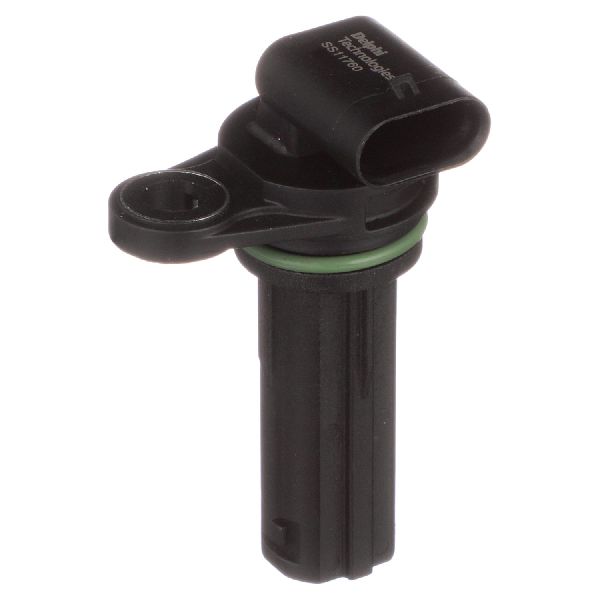
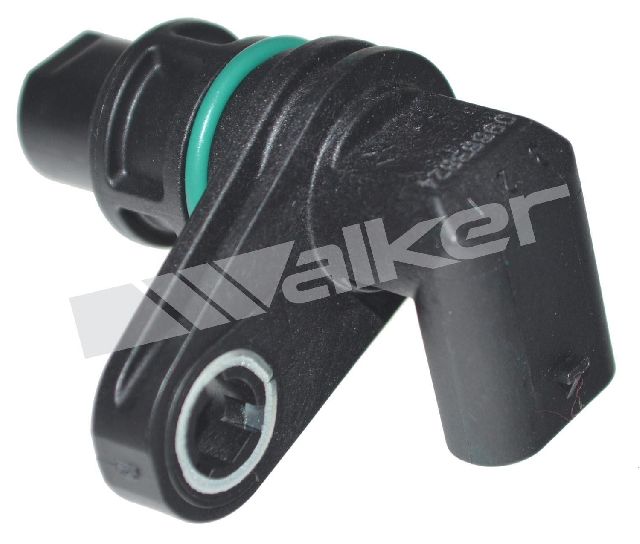
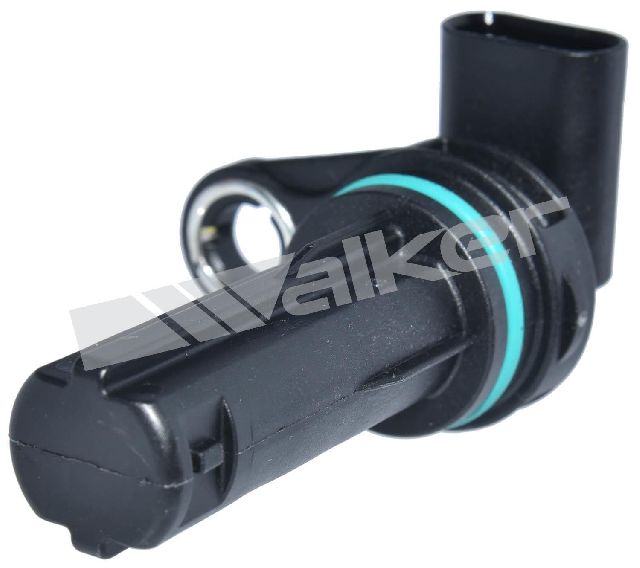
- Crankshaft Position Sensor (3.6L Gas)
(OEM #5149167AF (replaces 5149167AD, 5149167AE))— This sensor is the most common hardware failure for P0339 after software updates have been ruled out. It fails from heat and vibration.
Trusted brands: Mopar (highly recommended), Bosch, Delphi, NGK
OEM price range: $90-$131
Aftermarket price range: $20-$75 - Crankshaft Position Sensor (3.0L Diesel)
(OEM #68490180AA (replaces 68102341AA) or 68029496AB (replaces 68029496AA))— This sensor is the most common hardware failure for P0339 after software updates have been ruled out. It fails from heat and vibration.
Trusted brands: Mopar (highly recommended)
OEM price range: $120-$180
Aftermarket price range: $40-$90
Related Codes That Often Appear With This One
- P0300 — Stands for 'Random/Multiple Cylinder Misfire'. If the PCM gets an intermittent crank signal, it can't time ignition spark correctly, leading to misfires.
- P0335 — Stands for 'Crankshaft Position Sensor 'A' Circuit'. While P0339 is an intermittent fault, P0335 indicates a complete loss of signal. TSB 18-049-20 addresses both codes, changing them to two-trip faults.
- P0340/P0344 — Camshaft Position Sensor codes. These sensors work with the crank sensor for timing. A fault in one system can sometimes trigger a code in the other. TSB 18-049-20 also updated the logic for these codes.
Technical Service Bulletins (TSBs) & Recalls
- 18-049-20: Flash: Powertrain Control Module (PCM) Updates, which changes the fault logic for P0339 and other codes for the 3.0L and 3.6L engines.
- 18-024-17 REV. C: Superseded by 18-049-20, but contained similar updates for changing P0339 to a two-trip fault.
Platform-Specific Known Issues
- TSB #18-049-20: FCA released a software update for the PCM that changes the logic for setting P0339 from a one-trip to a two-trip fault. This bulletin also includes 'Improvements to vehicle drivability during a cam or crank sensor MIL condition'. This should be the first item checked in any diagnosis.
- 3.0L EcoDiesel Reluctor Wheel Recall: Chrysler issued a recall (V01/NHTSA 19V867000) for 2014-2018 Ram 1500 and 2014-2016 Jeep Grand Cherokee vehicles with the 3.0L diesel engine. The crankshaft position sensor tone wheel (reluctor wheel) can delaminate, causing an engine stall. This is a significant repair requiring transmission removal.
Mechanic-Grade Diagnostic Values
- Crankshaft Position Sensor 5V Reference Voltage — expected: Approximately 5.0 volts DC with key on, engine off.. Failure: Voltage significantly lower than 5.0V or 0V indicates an open/short in the supply circuit or a faulty PCM.
- Crankshaft Position Sensor Ground Circuit Resistance — expected: Below 1.0 ohm resistance to a known good ground (e.g., battery negative terminal).. Failure: Resistance above 1.0 ohm indicates a poor ground connection, which can cause erratic signals.
- Crankshaft Position Sensor Signal Wire Voltage (while cranking) — expected: A fluctuating square wave signal switching between approximately 0V and 5V when viewed on an oscilloscope.. Failure: A signal that is stuck high (at 5V), stuck low (at 0V), or shows dropouts/glitches indicates a faulty sensor or wiring issue.
- Crankshaft Position Sensor Internal Resistance (3.0L Diesel) — expected: Approximately 850-900 ohms between the signal and ground pins.. Failure: A reading outside this range suggests a faulty sensor.
Scan Tool Commands That Help
- wiTECH, Autel MaxiSys, or equivalent professional scanner: Cam/Crank Relearn (also called Cam Crank Reward) — This function is required after replacing the crankshaft sensor, camshaft sensor, timing components, or PCM. It synchronizes the signals from the new components with the PCM. Failure to perform this relearn can result in a persistent P0339 code, rough idle, or misfires even with a good sensor.
Wiring & Ground Locations
- Crankshaft Position Sensor Connector (3.6L) — On the passenger side of the engine block, near the junction with the transmission bell housing, often close to the oil dipstick tube.. This is the primary connection point for the sensor. The wiring harness is routed near hot exhaust components and is a common area for melting, chafing, or corrosion, leading to intermittent signal loss.
- Crankshaft Position Sensor Pinout (3-wire Hall Effect type) — At the sensor connector.. For testing, you need to identify the three wires: a 5-volt reference supply, a sensor ground, and the signal wire that sends the square wave back to the PCM. Testing for correct voltage and ground at this connector is a key diagnostic step before condemning the sensor.
Real Owner Repair Stories
- JK-Forum.com user (2012 Jeep Wrangler JK Unlimited (shares 3.6L Pentastar engine)) — Engine throws P0339, stalls when it gets hot, and will not restart until it cools down.
❌ Tried (didn't work) Replacing the Crankshaft Position Sensor (CPS).
✅ What actually fixed it The issue was escalated to the Chrysler Star Hotline. While the final resolution from the dealer wasn't posted by the user, the fact that a new sensor did not fix a heat-related intermittent failure strongly points towards a wiring harness issue where resistance increases with temperature, or a failing PCM.
OEM Part Supersession History
5149167AD→5149167AE, then the latest part 5149167AF— Standard part evolution for improved reliability or manufacturing changes.
Heads up: While all versions should be physically compatible, it is always recommended to use the latest part number (5149167AF) to ensure you have the most updated and reliable version of the sensor.
Model Year Variations Within This Range
- 2016-2017: The 2016 model year marked the introduction of the upgraded 3.6L Pentastar engine (PUG). Changes included a new EGR cooler, updated rocker arms, and two-step variable valve lift (VVL) on the intake side. While these internal engine changes don't directly alter the P0339 diagnosis, the 2017 models received further refinements, including a new standard ZF 8-speed automatic transmission across the range and electric power steering. These changes mean wiring harnesses and PCM software calibrations can have minor differences between the two years.
Helpful Videos

We Have This Part in Stock


The information in this article is provided for general reference and educational purposes only. Vehicle specifications, procedures, and part compatibility can vary by production date, trim level, and region. Always consult your vehicle's factory service manual and verify part numbers before purchasing or performing repairs. Safety-critical components such as airbags, seat belts, and braking systems should be installed by a qualified professional.
- Jeep GRAND CHEROKEE:
- 🎬 Helpful Videos
- 🛍️ Shop This Part
- What's Unique About the 2016-2017 Jeep GRAND CHEROKEE
- Diagnostic Flowchart
- Symptoms You May Notice
- Most Likely Causes
- Rare But Worth Checking
- Diagnosis Steps
- Parts You'll Likely Need
- Related Codes That Often Appear With This One
- Technical Service Bulletins (TSBs) & Recalls
- Platform-Specific Known Issues
- Mechanic-Grade Diagnostic Values
- Scan Tool Commands That Help
- Wiring & Ground Locations
- Real Owner Repair Stories
- OEM Part Supersession History
- Model Year Variations Within This Range
- 🎟️ Get 5% Off