

P0339 on 2015-2016 Dodge Charger: Intermittent Crank Sensor Causes and Fixes
P0339 on a 2015-2016 Dodge Charger most often means the crankshaft position sensor is failing. This can cause stalling or a no-start condition. Replacing the sensor is the most common fix, costing around $25-$60 for the part. In some cases, a PCM software update or a sensor shim on V6 models may be required.
- P0339 on a 2015-2016 Charger indicates an intermittent signal from the crankshaft position sensor, which is a serious issue that can cause the engine to stall while driving.
- The most common fix is to replace the crankshaft position sensor, which is a relatively inexpensive part.
- Before replacing parts, check for any available PCM software updates with a dealer, as multiple TSBs suggest a reflash can fix this code.
- Inspect the sensor's wiring harness for heat damage, as this is another frequent cause.
- Do not continue to drive the vehicle, as unexpected stalling poses a significant safety risk.
What's Unique About the 2015-2016 Dodge CHARGER
On Dodge vehicles, particularly those with V6 engines, the P0339 code has been common enough to warrant specific repair procedures. A notable issue is the potential need for a shim to be added to the crankshaft sensor to correct the air gap between the sensor and the flexplate. While the official TSB for this (18-024-10) applied to 2008-2010 models, the fix is widely acknowledged in repair databases and forums as a solution for later models as well. Additionally, multiple Technical Service Bulletins (TSBs) exist for the 2015-2016 model years, indicating that PCM software updates can sometimes resolve the issue by adjusting the sensor signal's sensitivity parameters. [Bulletin #18-062-17, Bulletin #18-032-16]
Diagnostic Flowchart
Tap your situation to follow the diagnostic path that matches what you're seeing on this vehicle.
Symptoms You May Notice
- Engine stalls intermittently, sometimes while driving, especially when the engine is hot
- Engine cranks but will not start, or has a very long crank time
- Hard starting (requires multiple attempts)
- Rough or uneven idle
- Hesitation or stumbling during acceleration
- Check Engine Light is on (may be flashing during severe events)
- Tachometer needle drops to 0 RPM while cranking or during a stall.
- Replacing the camshaft position sensor instead of the crankshaft position sensor.
- Replacing the starter motor due to a no-start condition without checking for an RPM signal first.
- Assuming the engine has a major internal failure without diagnosing the ignition system first.
- Replacing the sensor with a cheap aftermarket part that is dead-on-arrival or fails quickly, leading the technician to suspect a different cause.
Most Likely Causes
- Faulty Crankshaft Position Sensor 🔴 High Probability Chrysler/Dodge vehicles of this era are known for crankshaft position sensor failures, which can become intermittent as they degrade, especially with heat soak after the engine is turned off and restarted.
How to confirm: Use a scan tool to monitor the RPM signal while the engine is cranking or running. If the RPM signal drops to zero unexpectedly, the sensor is likely failing. The sensor can also be tested with a multimeter for resistance, though intermittent failures may test good when cold.
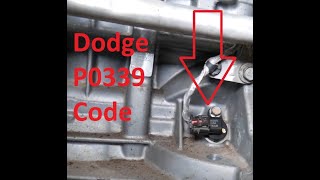
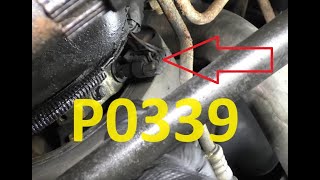
Typical fix: Replace the crankshaft position sensor. On the 3.6L V6, the sensor is on the passenger side of the engine block, near the transmission bell housing. On 5.7L and 6.4L V8s, it is located behind the starter motor, which must be removed for access.
Est. part cost: $25-$60 - Wiring or Connector Issue 🟡 Medium Probability The sensor wiring harness is routed near high-heat exhaust components, which can cause the insulation to become brittle and crack, or melt entirely, leading to shorts or open circuits. Corrosion at the connector pins is also common.
How to confirm: Visually inspect the wiring harness from the sensor to the PCM for any signs of melting, chafing, or corrosion at the connector pins. Perform a 'wiggle test' on the harness while monitoring the sensor signal on a scan tool to see if the signal drops out.
Typical fix: Repair the damaged section of the wiring harness or replace the connector pigtail. Apply dielectric grease to the new connector to prevent moisture intrusion.
Est. part cost: $15-$50 - Incorrect Air Gap / Requires Shim ⚪ Low Probability A TSB (18-024-10) was issued for earlier V6 models for P0339 where the distance between the sensor and the flexplate was incorrect, causing signal dropouts. This has become a known 'tribal knowledge' fix for the 3.6L Pentastar engine. The fix is to install a specific shim (washer) under the sensor's mounting bolt.
How to confirm: This is difficult to confirm without first trying the fix. If a new OEM sensor does not resolve the issue on a V6 engine, installing the shim is a common and inexpensive next step based on manufacturer guidance for similar engines.
Typical fix: Install a shim (washer p/n 68061031aa) between the sensor's mounting bushing and the transmission housing to properly space the sensor.
Est. part cost: $5-$10 - Outdated PCM Software ⚪ Low Probability Multiple TSBs for 2015-2016 Dodge models list P0339 as a code that can be addressed with a PCM software update, suggesting the original calibration may be overly sensitive to minor signal variations, especially during certain operating conditions. [Bulletin #1807517, Bulletin #18-062-17, Bulletin #18-032-16]
How to confirm: A Dodge dealership or a qualified shop with a subscription to OEM service information (like TechCONNECT) can check the vehicle's VIN for available PCM updates.
Typical fix: Update the Powertrain Control Module (PCM) to the latest software version using a dealer-level scan tool.
Est. part cost: $0 (if under warranty) - $200
Rare But Worth Checking
- Damaged Flexplate/Reluctor Ring: The reluctor ring (part of the flexplate) that the sensor reads can get damaged, have broken teeth, or warp. This was noted as a possible, though less common, cause in TSB 18-024-10 for V6 models if shimming the sensor didn't work.
- Failing Powertrain Control Module (PCM): While rare, the internal circuitry of the PCM that processes the crankshaft sensor signal can fail. A technician on the ScannerDanner forum diagnosed a faulty PCM after confirming a perfect crank sensor signal was going into the module, but the PCM was not registering an RPM signal.
- Weak Battery or Failing Alternator: Low system voltage during cranking or while driving can sometimes cause the crank sensor signal to become erratic, triggering a P0339 code before other low-voltage codes appear. This is a good preliminary check before replacing more expensive components.
- Blown Fuse: The crankshaft position sensor circuit is protected by a fuse. If this fuse is blown, the sensor will have no power. On a 2017 Charger, relevant fuses to check include F31, F34, F35, and F37 in the front fuse box, and relay R29 in the rear fuse box.
Diagnosis Steps
- Check for other diagnostic trouble codes to see if P0339 is part of a larger pattern (e.g., with P0335 or P0300).
- Use an OBD-II scanner with live data to monitor the engine RPM while cranking. If the RPM reading is 0, drops out intermittently, or is erratic, the issue is with the crank sensor circuit.
- Visually inspect the crankshaft position sensor's wiring and connector for any obvious signs of damage, such as melting from the exhaust, corrosion, or loose pins.
- Check for power at the sensor connector. With a three-wire sensor, you should typically find a 5-volt reference, a ground, and a signal wire. Also, check the related fuses (e.g., F31, F34, F35, F37 in the front fuse box on some models).
- If the wiring and power supply are good, the next step is to replace the crankshaft position sensor. Using an OEM Mopar sensor is highly recommended to avoid issues with aftermarket quality.
- After replacement, a crankshaft position sensor relearn procedure may be necessary if the car still runs poorly or won't start.
- If a new OEM sensor does not fix the issue, check with a dealer for any available PCM software updates related to TSBs for P0339. [Bulletin #18-062-17]
- If the problem persists on a V6, consider installing the manufacturer-specified shim (p/n 68061031aa) to correct the sensor's air gap.
- If all else fails, perform advanced testing on the circuit's continuity back to the PCM and scope the signal at the PCM connector to rule out a faulty PCM.
Parts You'll Likely Need
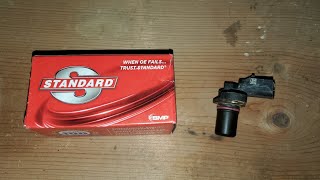
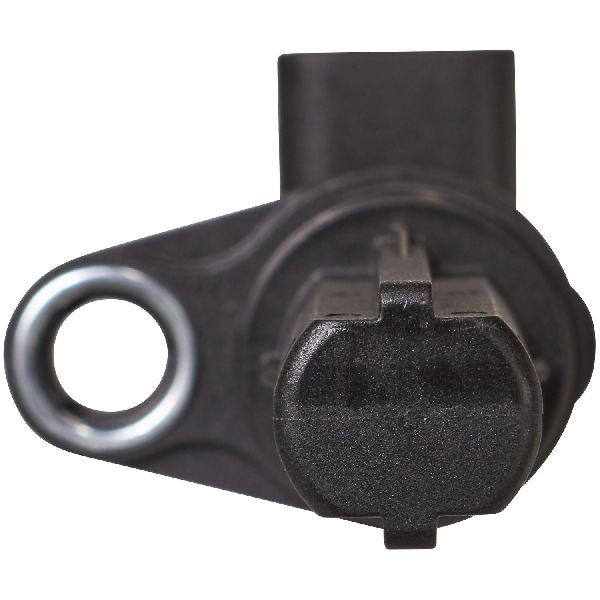
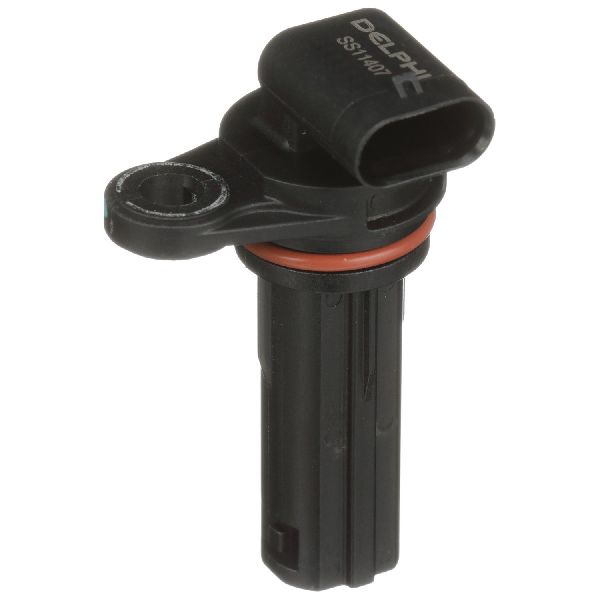
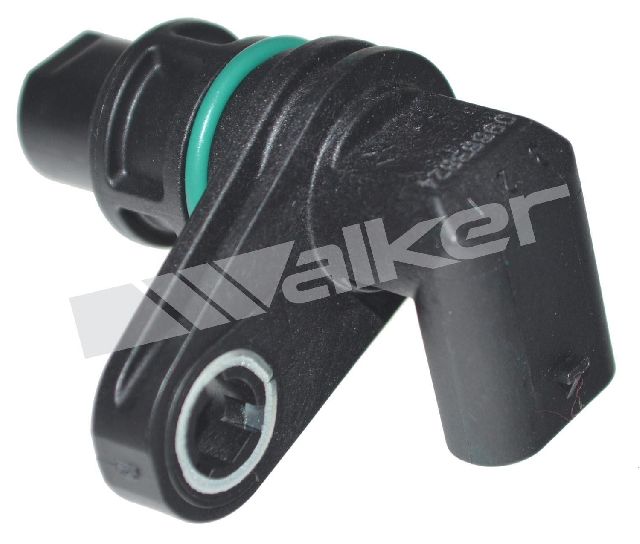
- Crankshaft Position Sensor
(OEM #68477925AB (For 5.7L/6.4L V8) or 5149167AF (For 3.6L V6))— This is the most common component to fail and cause an intermittent signal, leading to the P0339 code.
Trusted brands: Mopar (OEM - Recommended), NTK/NGK, Standard Motor Products (SMP), Dorman
OEM price range: $45-$80
Aftermarket price range: $25-$55
Related Codes That Often Appear With This One
- P0335 — P0335 indicates a general failure in the crankshaft position sensor circuit, while P0339 specifies an intermittent failure. They often appear together as the sensor begins to fail completely. [Bulletin #1807517, Bulletin #18-061-17]
- P0300 — A random/multiple cylinder misfire code can be triggered when the intermittent crank signal causes incorrect ignition timing, leading to misfires across several cylinders. A user on DodgeForum reported fixing both P0300 and P0339 by replacing the crank sensor.
- U1424 — This code for 'Implausible Engine Torque Signal' can be set when the PCM receives conflicting data. A failing crank sensor can provide erratic RPM data that doesn't align with what the transmission and throttle sensors are reporting, triggering U1424. [Bulletin #18-061-17]
Technical Service Bulletins (TSBs) & Recalls
- Bulletin #1807517: Mentions P0339 in a list of codes related to electrical system issues and software updates.
- Bulletin #18-061-17: Lists P0339 as a code that can be stored in the PCM, related to back over prevention systems.
- Bulletin #18-062-17: Includes P0339 in a list of codes addressed by software enhancements for the power train.
- Bulletin #18-045-16 REV. A: Cites P0339 as a code related to power train issues.
- Bulletin #18-032-16: Lists P0339 among codes related to engine and engine cooling that can be addressed by a software enhancement.
- Bulletin #18-024-10: Though for older 2008-2010 models, this is the key TSB that outlines the procedure for adding a shim to the crank sensor to correct P0339 on V6 engines, a fix still relevant today.
Platform-Specific Known Issues
- Several Technical Service Bulletins (TSBs) were issued by the manufacturer for 2015-2016 Dodge models where a PCM software update could resolve a P0339 code, indicating the logic for interpreting the sensor signal was too sensitive in the original software. [Bulletin #1807517, Bulletin #18-062-17, Bulletin #18-032-16]
- For 3.6L V6 engines, an incorrect air gap between the crankshaft position sensor and the flexplate can cause signal dropouts. A known fix, originally from a TSB for older models, is to install a shim (p/n 68061031aa) to properly space the sensor.
Mechanic-Grade Diagnostic Values
- Crankshaft Position Sensor 5V Reference — expected: 4.9 to 5.1 Volts DC. Failure: Voltage significantly lower than 4.9V or 0V indicates an open/short in the supply circuit or a faulty PCM.
- Crankshaft Position Sensor Ground Circuit — expected: Near 0 Ohms of resistance to a known good chassis ground.. Failure: High resistance indicates a poor ground connection, which can cause erratic sensor signals.
- Crankshaft Position Sensor Signal (Oscilloscope) — expected: A clean 0-5V square wave pattern while the engine is running.. Failure: Missing pulses, noise, or erratic voltage spikes in the waveform indicate an intermittent sensor or wiring fault.
- Scan Tool Engine RPM (Cranking) — expected: Should read between 100 and 500 RPM.. Failure: A reading of 0 RPM or an erratic/dropping signal while the engine is audibly cranking points directly to a fault in the crankshaft sensor circuit.
Scan Tool Commands That Help
- wiTECH (Dealer-level Scan Tool): Cam/Crank Relearn — This function should be performed after replacing the crankshaft position sensor or the PCM to synchronize the signals. Failure to perform the relearn can result in inaccurate timing values.
- wiTECH (Dealer-level Scan Tool): ECU Reset — A TSB for related models recommends performing an ECU reset in conjunction with the Cam/Crank Relearn to ensure all learned values are cleared before the new synchronization is established.
- wiTECH (Dealer-level Scan Tool): Monitor List > Cam Crank Synchronization Event Monitor — A technician can use this to view specific data PIDs like 'Engine Unlock Position' and 'Unlock RPM' to diagnose subtle timing and sensor alignment issues that may not be obvious from the main DTC.
Wiring & Ground Locations
- Crank Sensor Connector (3-wire) — At the crankshaft position sensor, near the transmission bell housing.. This is the primary point for testing. On a typical 3-wire Mopar sensor, you will test for a 5V reference, a sensor ground (low reference), and the signal wire that sends the square wave back to the PCM.
- G101 (or similar engine bay ground) — Typically located on the right front of the engine compartment or on the firewall.. The crankshaft sensor circuit relies on a clean ground path. A loose or corroded main engine or chassis ground can introduce electrical noise and cause intermittent signal dropouts, mimicking a sensor failure.
- Cylinder Head Ground — There are ground points on the rear of the passenger side cylinder head that connect to the firewall.. The entire ignition system, which relies on the crank sensor signal, requires a solid ground to the cylinder heads for the spark plugs to function correctly. A poor head-to-chassis ground can cause misfires and other erratic ignition behavior that could be misdiagnosed.
Real Owner Repair Stories
- YouTube user comment (Dodge with 3.6L Pentastar V6) — Random stalling, loss of power, especially over 4,000 RPM.
❌ Tried (didn't work) Initial diagnosis was unclear due to the intermittent nature of the problem.
✅ What actually fixed it Replacing the crankshaft position sensor resolved the P0339 code and the associated stalling and power loss symptoms. The user noted the sensor had apparently been redesigned.
OEM Part Supersession History
5149167AD, 5149167AE→5149167AF— Standard part revision and update by the manufacturer.
Heads up: Applies to the 3.6L V6 engine. Using the latest part number is always recommended to get the most current design.68140678AB, 68140678AC→68477925AB— Standard part revision and update by the manufacturer.
Heads up: Applies to 5.7L and 6.4L V8 engines. Using the latest part number ensures compatibility and incorporates any design improvements.
Helpful Videos
We Have This Part in Stock


The information in this article is provided for general reference and educational purposes only. Vehicle specifications, procedures, and part compatibility can vary by production date, trim level, and region. Always consult your vehicle's factory service manual and verify part numbers before purchasing or performing repairs. Safety-critical components such as airbags, seat belts, and braking systems should be installed by a qualified professional.
- Dodge CHARGER:
- 🎬 Helpful Videos
- 🛍️ Shop This Part
- What's Unique About the 2015-2016 Dodge CHARGER
- Diagnostic Flowchart
- Symptoms You May Notice
- Most Likely Causes
- Rare But Worth Checking
- Diagnosis Steps
- Parts You'll Likely Need
- Related Codes That Often Appear With This One
- Technical Service Bulletins (TSBs) & Recalls
- Platform-Specific Known Issues
- Mechanic-Grade Diagnostic Values
- Scan Tool Commands That Help
- Wiring & Ground Locations
- Real Owner Repair Stories
- OEM Part Supersession History
- 🎟️ Get 5% Off