

P0339 on 2015-2016 Dodge Challenger: Intermittent Crank Sensor Fixes
P0339 on a 2015-2016 Challenger indicates an intermittent signal from the crankshaft position sensor, often causing stalling or a no-start condition. The most common fix is replacing the sensor itself, but it is critical to check for necessary PCM software updates with a dealer first, as multiple TSBs address this exact issue. On V8 models, sensor replacement requires removing the starter motor.
- P0339 means the crankshaft position sensor signal is dropping out, which can cause your Challenger to stall or not start.
- Before replacing any parts, contact a Dodge dealer with your VIN to check if a PCM software update is needed, as this is a very common fix according to multiple TSBs.
- If a hardware repair is needed, the crankshaft position sensor is the most likely culprit. Using a quality OEM Mopar part is recommended.
- On V8 HEMI engines, be prepared for a more involved repair, as the starter motor must be moved to access the sensor.
- Always inspect the sensor's wiring and connector for heat damage or oil contamination, as this is another frequent cause of the intermittent signal.
What's Unique About the 2015-2016 Dodge CHALLENGER
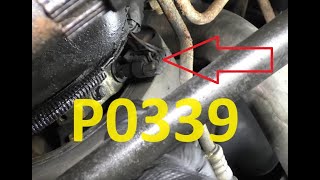
For this generation of Dodge Challenger, the P0339 code is not always a straightforward sensor failure. Chrysler released multiple Technical Service Bulletins (TSBs) indicating that the PCM's software could be overly sensitive or have logic errors, falsely triggering the code. 🎬 Watch: Common causes and fixes for the P0339 code. TSBs like #18-061-17 and #18-062-17 specifically list P0339 as a code that can be resolved with a software update. This makes it crucial for owners to consider a potential software reflash at a dealership as a primary diagnostic step, rather than immediately replacing parts. On some late-model Dodge vehicles, the engine may still start with a faulty crank sensor signal, but it will likely be a long-crank situation.
Diagnostic Flowchart
Tap your situation to follow the diagnostic path that matches what you're seeing on this vehicle.
Symptoms You May Notice
- Engine stalling unexpectedly, especially at idle or during deceleration
- Engine cranks for a long time but will not start, or starts with difficulty.
- Rough or uneven idle
- Noticeable loss of engine power and poor acceleration.
- Check Engine Light is on and may flash during engine hesitation.
- Engine misfires, especially under acceleration.
- Tachometer needle behaves erratically or drops to zero while the engine is still running.
- Replacing the camshaft position sensor instead of the crankshaft position sensor.
- Replacing the starter motor, as it sometimes needs to be moved for access on V8 models but is rarely the cause of the code.
- Assuming the sensor is bad when a PCM software update is the actual required fix per a TSB.
- Replacing the battery or alternator without confirming they are the root cause, although very low voltage can sometimes trigger this code.
Most Likely Causes
- Faulty Crankshaft Position Sensor 🔴 High Probability The sensor is located in a high-heat area of the engine block, and repeated heat cycles can cause its internal electronics to fail over time, leading to an intermittent signal. Oil leaks from above can also contaminate the sensor and its connector.
How to confirm: Use a scan tool to monitor the RPM signal while the engine is cranking or running. If the RPM reading drops to zero intermittently, the sensor is likely failing. An oscilloscope is the most definitive tool to observe the signal dropout.
Typical fix: Replace the crankshaft position sensor. It is highly recommended to use an OEM Mopar part for reliability, as forum users report issues with aftermarket sensor longevity.
Est. part cost: $25-$95 - Outdated Powertrain Control Module (PCM) Software 🟡 Medium Probability Multiple TSBs were issued by Dodge for this vehicle range to correct software logic that was too sensitive and could set a P0339 code incorrectly, sometimes in conjunction with other codes like U1424 (Implausible Engine Torque Signal). [1, Bulletin #18-061-17, #18-062-17, #18-032-16]
How to confirm: A Dodge dealership or a qualified shop with a wiTECH scan tool can check your vehicle's VIN against the TSBs to see if a software update is available and required. This is a critical first step.
Typical fix: Reprogram (reflash) the PCM with the latest software version. This must be done by a dealer or a properly equipped independent shop.
Est. part cost: $0 - Wiring Harness or Connector Damage 🟡 Medium Probability The sensor's wiring harness runs close to hot engine and exhaust components, which can make the wires brittle and prone to cracking or melting over time, causing an intermittent short or open circuit.
How to confirm: Visually inspect the entire length of the wiring from the sensor to the PCM. Check the connector at the sensor for corrosion, backed-out pins, or melted plastic. Wiggle the harness with the engine running to see if it triggers a stall or causes the RPM signal to drop on a scan tool.
Typical fix: Repair the damaged section of the wire or replace the pigtail connector.
Est. part cost: $15-$50
Rare But Worth Checking
- Damaged Reluctor Ring: The reluctor ring (or tone wheel) on the crankshaft has teeth that the sensor reads. If this ring is cracked, bent, or has debris on it, it can cause an erratic signal. This is uncommon but should be considered if a new sensor and good wiring don't solve the problem.
- Failing Powertrain Control Module (PCM): In very rare cases, the internal circuitry of the PCM that processes the crankshaft sensor signal can fail. This should only be considered after all other possibilities, including software updates, have been exhausted.
- Blown Fuse: The crankshaft position sensor circuit is protected by a fuse. While not a common failure point, if there is no voltage at the sensor connector, checking the related engine management fuses in the front and rear fuse boxes is a necessary step.
Diagnosis Steps
- Connect an OBD-II scanner and confirm the presence of P0339. Note any other codes stored in the PCM, especially P0335, U1424, or P0300.
- Check for applicable Technical Service Bulletins (TSBs) for your vehicle's VIN. Several TSBs (e.g., #18-061-17, #18-062-17) point to a required PCM software update as a fix. This should be a primary step.
- Using a scan tool with live data, monitor the Engine RPM parameter while cranking or running the engine. Watch for the RPM signal to drop to zero intermittently, which indicates a signal loss. A healthy signal should show 100-500 RPM during cranking.
- Perform a thorough visual inspection of the crankshaft position sensor's wiring and connector. Look for signs of heat damage, oil contamination, or loose connections. Wiggle the harness to try and induce the fault.
- If the wiring appears intact, test the circuit. A typical three-wire sensor will have a 5-volt reference, a ground, and a signal wire. Check for 5V and ground with the key on. An oscilloscope is the best tool to check the signal wire for a clean square wave pattern.
- If the wiring and software are confirmed to be good, replace the crankshaft position sensor. Using an OEM Mopar part is strongly recommended.
- For V8 models (5.7L, 6.4L), this requires disconnecting the battery and removing the three 15mm starter motor bolts to gain access to the sensor, which is held by a 10mm bolt.
- After replacement, clear the codes and perform a drive cycle to ensure the problem is resolved. Some vehicles may require a crankshaft position sensor relearn procedure, which can be done with a dealer-level scan tool like wiTECH.
Parts You'll Likely Need
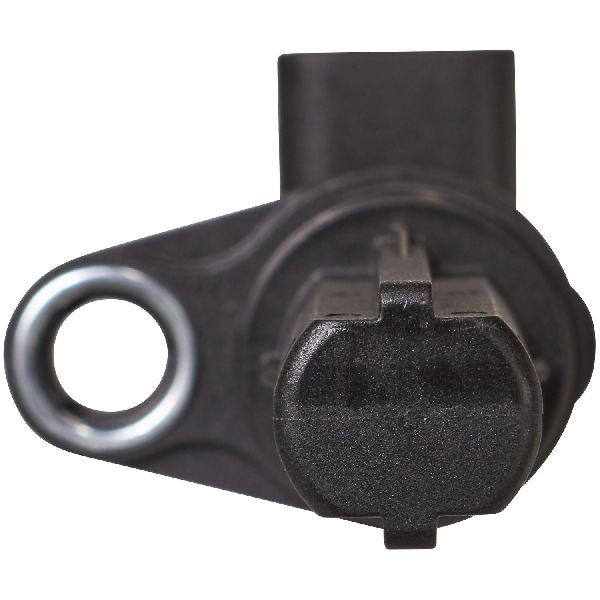
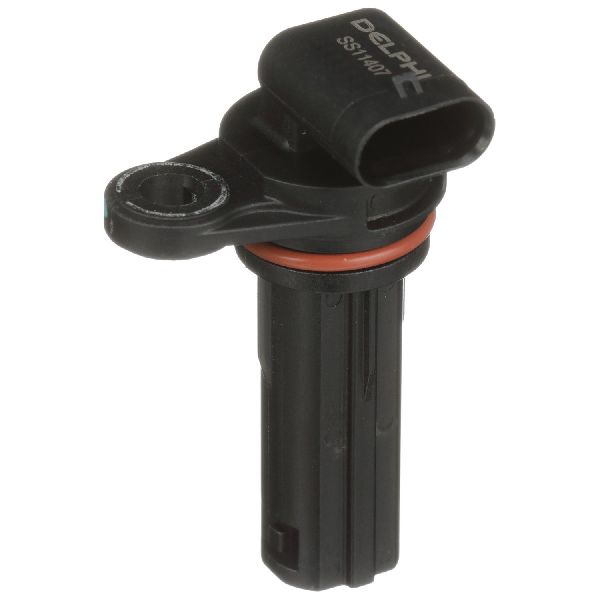
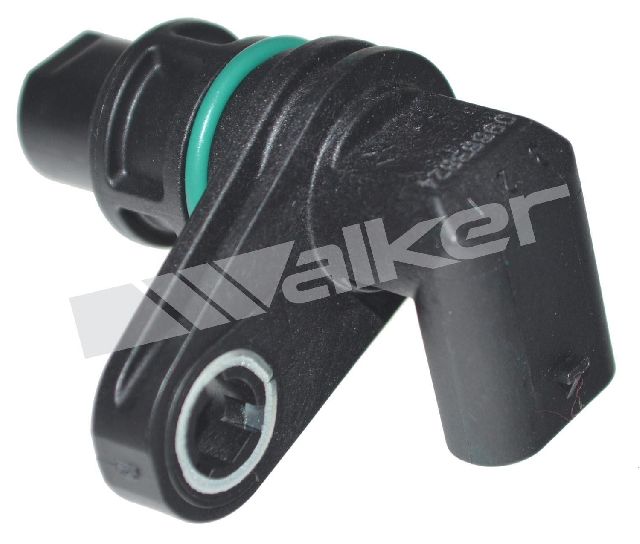
- Crankshaft Position Sensor
(OEM #5149167AF)— This sensor is the most common hardware failure for code P0339 due to its operating environment. An intermittent failure of its internal electronics is a frequent cause of stalling and no-start issues. Note: Part number 5149167AF is specified for the 3.6L V6 engine and supersedes 5149167AD and 5149167AE. The V8 engines may use a different part number (e.g., 68477925AB). Always verify with VIN.
Trusted brands: Mopar, NTK/NGK, Delphi, Standard Motor Products
OEM price range: $80-$131
Aftermarket price range: $25-$70
Related Codes That Often Appear With This One
- P0335 — This is the code for a complete loss of signal from the crankshaft sensor ('Circuit Malfunction'), while P0339 is for an intermittent loss. They often appear together and point to the same root causes.
- U1424 — This code for 'Implausible Engine Torque Signal' can be triggered when the PCM receives bad data from the crank sensor, as noted in TSB #18-061-17 and TSB #18-062-17.
- P0016 — This code for 'Crankshaft/Camshaft Timing Misalignment' can be set alongside P0339 if the intermittent signal causes the PCM to see a discrepancy between the two sensors, as mentioned in TSB #1807517.
- P0300 — A generic 'Random/Multiple Cylinder Misfire' code can be a direct result of the intermittent crank signal, as the PCM loses the ability to properly time spark and fuel.
Technical Service Bulletins (TSBs) & Recalls
- Bulletin #1807517: Lists P0339 along with other engine control codes that may be resolved by software updates.
- Bulletin #18-061-17: Mentions P0339 in a list of DTCs that can be addressed with a PCM software update.
- Bulletin #18-062-17: Notes P0339 as a code that can be resolved with a software reflash.
- Bulletin #18-045-16 REV. A: Lists P0339 as a DTC that can be set and may be addressed by software enhancements.
- Bulletin #18-032-16: Includes P0339 in a list of codes that may be set due to software sensitivity.
Platform-Specific Known Issues
- PCM Software Updates: Multiple TSBs (#18-061-17, #18-062-17, #18-032-16, #18-045-16 REV. A) were issued for the 2015-2016 Challenger, indicating that a PCM reflash is a common and necessary fix for a P0339 code, often to correct overly sensitive diagnostic logic.
- V8 Starter Removal for Access: On models with a 5.7L or 6.4L HEMI V8 engine, the crankshaft position sensor is located behind the starter motor. Replacing the sensor requires disconnecting the battery and removing the starter for access, which increases the labor time and complexity of the repair.
- V6 Shim Requirement (Older Models): While less common for the 2015-2016 range, an older TSB (#18-024-10, referenced in forums) for V6 engines sometimes involved adding a shim (washer P/N 68061031AA) to the sensor to correct the air gap. This is a historical note and less likely to apply to these model years but is worth being aware of if a new sensor doesn't fix the issue on a 3.6L engine.
Mechanic-Grade Diagnostic Values
- Crankshaft Position Sensor Resistance (3.6L V6) — expected: 500 - 1000 ohms (varies by batch). Failure: A reading of zero ohms (short circuit) or infinite ohms (open circuit).
- CKP Sensor Signal Circuit Voltage (Key On, Engine Off) — expected: 4.7 to 5.1 Volts DC. Failure: No voltage may indicate a short to ground, while unexpected voltage could mean a short to power.
- Live Data RPM while Cranking — expected: 100 to 500 RPM. Failure: A reading of 0 RPM on a scan tool while the engine is cranking is a strong indicator of a failed CKP sensor or a complete circuit failure.
- Sensor Power Supply (Typical 3-wire sensor) — expected: 5V or 12V reference voltage. Failure: No voltage at the power supply pin points towards a wiring issue or a blown fuse.
Scan Tool Commands That Help
- wiTECH: Cam/Crank Relearn — This function may be required after replacing the crankshaft position sensor to synchronize the new sensor's signal with the camshaft position sensor and the PCM.
- wiTECH: ECU Reset / Reset Memory — According to a TSB for a similar P0339 issue, performing a module reset is necessary to clear adaptive memory values before drive-cycle testing after a repair.
- wiTECH: Cam Crank Synchronization Event Monitor — This monitor list in the PCM data allows a technician to view the 'Engine Unlock Position' and 'Unlock RPM' to diagnose specific intermittent crank signal issues as outlined in TSB #18-024-10.
Wiring & Ground Locations
- Crankshaft Position Sensor Fuse — In the Power Distribution Center (fuse box) in the engine bay. The specific fuse often powers multiple components, such as the PCM or other sensors.. A blown fuse will cut power to the crankshaft position sensor circuit, preventing it from sending a signal. If there is no voltage at the sensor connector, checking the related fuses is a critical step.
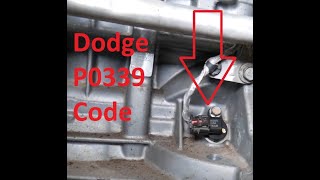
- CKP Sensor Connector (3-wire) — On the engine block, near the transmission bell housing. On V8 models, it is behind the starter motor.. This connector is the primary point for testing. It typically contains pins for a 5V/12V power supply, a ground, and the signal wire that sends the RPM data to the PCM.
Real Owner Repair Stories
- Automotive blog detailing a repair (2015 Dodge Charger 3.6L V6) — Car would suddenly die while driving at highway speeds, then restart after a few minutes.
❌ Tried (didn't work) Checked battery and alternator, which were both fine.
✅ What actually fixed it The immediate issue was a dirty electrical connector on the sensor. Cleaning it provided a temporary fix, but the signal remained erratic upon testing. A full resolution was achieved by replacing the crankshaft position sensor with a new unit (P/N 5149167AD).
OEM Part Supersession History
5149167AD, 5149167AE→5149167AF— Standard part revision and improvement by the manufacturer.
Heads up: These part numbers are for the 3.6L V6 engine. They are not compatible with the V8 engines.68140678AB, 68140678AC→68477925AB— Standard part revision and improvement by the manufacturer.
Heads up: This part number is specified for the 5.7L and 6.4L V8 HEMI engines. It is not compatible with the 3.6L V6.
Helpful Videos
We Have This Part in Stock


The information in this article is provided for general reference and educational purposes only. Vehicle specifications, procedures, and part compatibility can vary by production date, trim level, and region. Always consult your vehicle's factory service manual and verify part numbers before purchasing or performing repairs. Safety-critical components such as airbags, seat belts, and braking systems should be installed by a qualified professional.
- Dodge CHALLENGER:
- 🎬 Helpful Videos
- 🛍️ Shop This Part
- What's Unique About the 2015-2016 Dodge CHALLENGER
- Diagnostic Flowchart
- Symptoms You May Notice
- Most Likely Causes
- Rare But Worth Checking
- Diagnosis Steps
- Parts You'll Likely Need
- Related Codes That Often Appear With This One
- Technical Service Bulletins (TSBs) & Recalls
- Platform-Specific Known Issues
- Mechanic-Grade Diagnostic Values
- Scan Tool Commands That Help
- Wiring & Ground Locations
- Real Owner Repair Stories
- OEM Part Supersession History
- 🎟️ Get 5% Off