

P0339 on 2015-2016 Chrysler 300: Crank Sensor Intermittent Fault, Causes, and Fixes
P0339 on a 2015-2016 Chrysler 300 means the crankshaft position sensor signal is intermittent, often causing stalling or a no-start condition. The most common fix is replacing the sensor itself, which costs about $25-$75 for the part. On V8 models, the starter must be moved for access. Before replacing parts, it's crucial to check for required PCM software updates, as this can also be the root cause.
- P0339 indicates an intermittent signal from the crankshaft position sensor, which is a serious fault that can cause your engine to stall while driving.
- The most likely cause is a failing crankshaft position sensor, which is a relatively affordable part to replace.
- Before replacing parts, inspect the sensor's wiring and connector for heat damage or corrosion, as this is a common point of failure.
- On 5.7L V8 models, be prepared for extra labor as the starter motor must be moved to access the sensor.
- If sensor replacement doesn't fix the issue, the problem could be a damaged tone ring or require a PCM software update from a dealer.
What's Unique About the 2015-2016 Chrysler 300
For the 2015-2016 Chrysler 300 and its platform mates (Dodge Charger/Challenger), the P0339 code is a well-documented issue. While sensor failure is common across many cars, Chrysler has issued multiple Technical Service Bulletins (TSBs) that also point to PCM software updates as a potential fix. These updates can reduce the PCM's sensitivity to minor signal variations that might otherwise trigger the code. On the 5.7L V8 engine, the sensor's location behind the starter motor makes replacement more labor-intensive than on the 3.6L V6, where access is slightly easier from underneath.
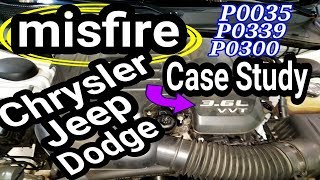
🎬 Watch: 3.6L V6 crankshaft sensor location and replacement guideDiagnostic Flowchart
Tap your situation to follow the diagnostic path that matches what you're seeing on this vehicle.
Symptoms You May Notice
- Engine stalls unexpectedly, sometimes while driving or at low speeds.
- Hard starting or extended cranking time, may require multiple attempts.
- Engine fails to start.
- Rough or uneven idle.
- Check Engine Light is on (can be steady or flashing).
- Hesitation or stumbling during acceleration.
- Engine will not rev past a certain RPM (e.g., 2500 RPM) without sputtering or jerking.
- Replacing the camshaft position sensor instead of the crankshaft position sensor.
- Repeatedly replacing the crankshaft sensor with aftermarket parts that are often faulty out of the box, leading to the assumption that the sensor is not the problem.
- Replacing the sensor without checking the wiring, connector, or for a damaged tone ring.
Most Likely Causes
- Faulty Crankshaft Position Sensor 🔴 High Probability The sensor is a common failure point due to constant exposure to heat and vibration in the engine bay, causing its internal electronics to fail intermittently. Owners and mechanics strongly recommend using OEM Mopar sensors, as aftermarket sensors are widely reported to be dead-on-arrival or fail quickly.
How to confirm: Use a scan tool to monitor the RPM signal while the engine is cranking or running. If the signal drops to zero or becomes erratic, the sensor is likely faulty. You can also test the sensor's resistance with a multimeter; a reading outside the typical 200-900 ohm range suggests a bad sensor.
Typical fix: Replace the crankshaft position sensor. It is highly recommended to use a genuine Mopar part for reliability.
Est. part cost: $25-$95 - Wiring Harness or Connector Issue 🟡 Medium Probability The sensor's wiring harness can be exposed to high heat from nearby exhaust components, leading to brittle insulation, frayed wires, or corrosion in the connector pins. Vibration can also cause wires to chafe or break internally.
How to confirm: Visually inspect the wiring harness from the sensor to the PCM for any signs of damage, melting, or corrosion. Wiggle the connector and harness with the engine running to see if it causes the engine to stumble or stall, which points to a wiring fault.
Typical fix: Repair the damaged section of wiring or replace the connector pigtail. Ensure the harness is properly secured away from heat sources.
Est. part cost: $10-$30 - Powertrain Control Module (PCM) Software Update Needed ⚪ Low Probability Chrysler has released TSBs (e.g., #18-045-16 REV. A for 6.4L engines) indicating that outdated PCM software can be too sensitive and misinterpret minor signal fluctuations as a fault, setting a P0339 code. The update recalibrates the PCM for better diagnostic and system performance.
How to confirm: A Chrysler dealership or a qualified shop with a dealer-level scan tool (like wiTECH) can check if your vehicle's VIN has any pending PCM software updates.
Typical fix: Flash the PCM with the latest software calibration. This must be done by a dealer or a properly equipped independent shop.
Est. part cost: $0-$200
Rare But Worth Checking
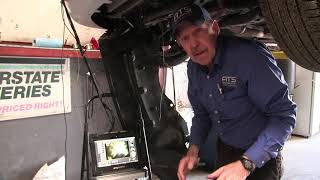
- Damaged Tone Ring: The crankshaft position sensor reads a toothed wheel (tone ring). If a tooth is bent, broken, or covered in debris, it can cause an intermittent signal. This was confirmed in a diagnostic video on a 2018 Chrysler 300 where a single bent tooth caused a persistent P0339 code after two new sensors were installed. This requires inspection with a borescope.
- Failing Powertrain Control Module (PCM): In rare cases, the fault lies within the PCM itself. If the sensor, wiring, and tone ring are all confirmed to be good, the PCM's input circuit may be malfunctioning and unable to properly process the sensor's signal.
Diagnosis Steps
- Connect an OBD-II scanner and confirm the P0339 code. Check for any other related codes like P0335 or P0300.
- Use the scanner's live data function to monitor engine RPM during cranking and idle. Look for any dropouts or erratic readings, which strongly suggest a sensor or wiring issue.
- Perform a thorough visual inspection of the crankshaft position sensor's wiring and connector. Look for signs of heat damage, corrosion, chafing, or loose pins.
- With the engine running, carefully wiggle the wiring harness and connector to see if it induces a stall or stumble, which would indicate a wiring issue.
- Check for Technical Service Bulletins (TSBs) and required PCM software updates for your specific VIN. A dealer can confirm this.
- If wiring appears okay, disconnect the battery. On 5.7L V8 models, you will need to remove the starter motor to access the sensor.
- Remove the single bolt holding the sensor and pull it from the engine block.
- Inspect the old sensor and its O-ring. Using a borescope or inspection camera, look inside the sensor mounting hole to inspect the tone ring for any bent, broken, or debris-covered teeth.
- Install the new, preferably OEM Mopar, sensor, ensuring it is seated properly. Reconnect the wiring and re-install the starter if it was removed.
- Reconnect the battery, clear the trouble codes, and perform a test drive to ensure the issue is resolved.
Parts You'll Likely Need
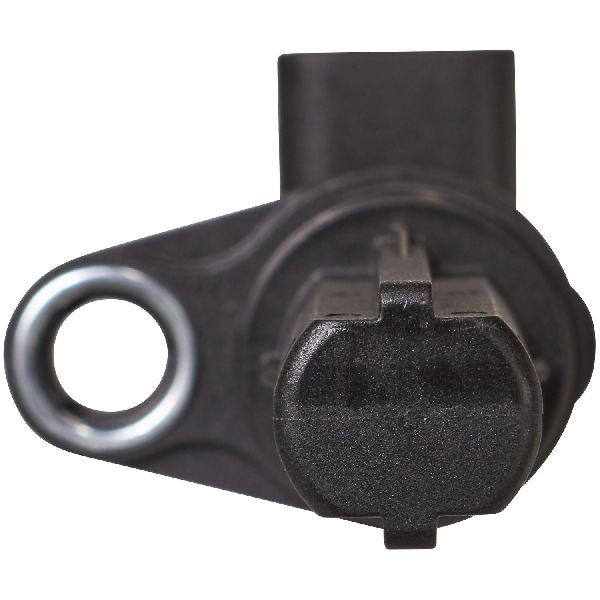
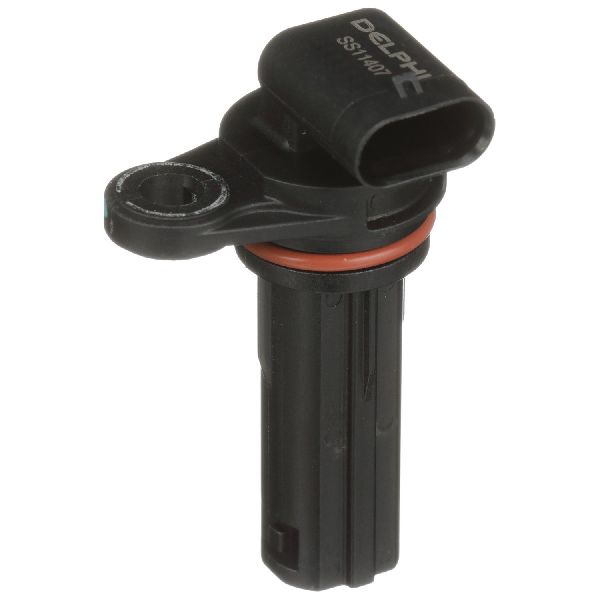
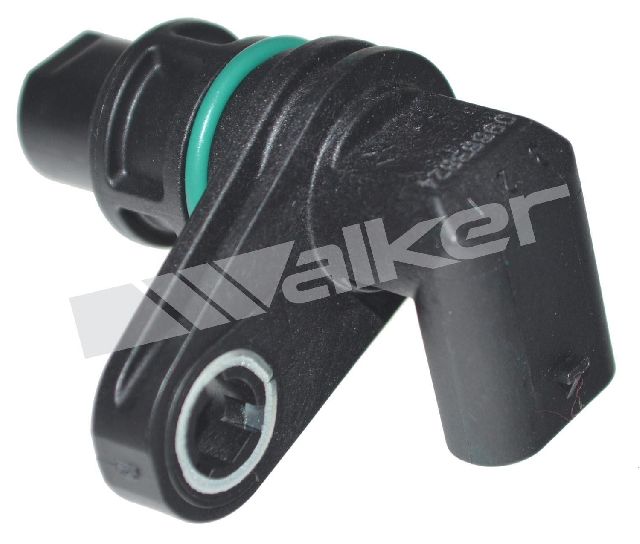
- Crankshaft Position Sensor
(OEM #3.6L V6: 5149167AF (replaces 5149167AD, 5149167AE) | 5.7L V8: 68477925AB (replaces 68140678AB, 68140678AC))— This sensor is the most common cause of failure for a P0339 code. It is an electronic component that wears out over time due to heat and vibration. Owner experiences heavily favor using OEM Mopar parts over aftermarket alternatives for reliability.
Trusted brands: Mopar (Strongly Recommended), NTK/NGK, Bosch, Delphi
OEM price range: $75-$95
Aftermarket price range: $25-$55
Related Codes That Often Appear With This One
- P0335 — P0335 indicates a more constant failure of the crankshaft position sensor circuit, while P0339 indicates an intermittent failure. They often appear together as the sensor's condition worsens. Both are mentioned in TSB #18-045-16 REV. A.
- P0016 — This code indicates a misalignment between the crankshaft and camshaft. An erratic signal from the crank sensor can cause the PCM to become confused about the engine's timing, potentially triggering this code. This is mentioned in TSB #1807517.
- P0300 — This indicates a random/multiple cylinder misfire. An intermittent crank signal prevents the PCM from accurately timing spark and fuel, leading to misfires. Forum users frequently report P0300 appearing with P0339.
Technical Service Bulletins (TSBs) & Recalls
- Bulletin #1807517: Mentions P0339 in a list of several other diagnostic trouble codes related to engine performance.
- Bulletin #18-045-16 REV. A: Specifically for 2015 models with 6.4L engines, but relevant as it lists P0339 and P0335 as codes that can be addressed by a PCM software update to improve diagnostics.
Platform-Specific Known Issues
- On 5.7L V8 models, the crankshaft position sensor is located behind the starter motor, which must be removed for access, increasing labor time and complexity.
- Several TSBs exist for this code, including #1807517 and #18-045-16 REV. A, which list P0339 alongside other codes, indicating it can be part of a broader electrical or software issue that may be resolved with a PCM flash.
- Owner forums for Chrysler/Dodge vehicles are filled with reports of aftermarket crankshaft sensors failing immediately or within a short period. Sticking with an OEM Mopar sensor is a common recommendation to avoid repeat repairs.
Mechanic-Grade Diagnostic Values
- CKP Sensor 5-Volt Supply — expected: 4.7 - 5.1 Volts DC (with key on, engine off, measured at the sensor connector).. Failure: Voltage below 4.7V or above 5.1V suggests a wiring or PCM issue.
- CKP Sensor Ground Circuit Resistance — expected: Below 5.0 Ohms of resistance to a known good chassis ground.. Failure: Resistance higher than 5.0 Ohms indicates a poor ground connection, which can cause an erratic signal.
- CKP Sensor Signal Wire (Static) — expected: Should read either ~0 Volts or ~5 Volts depending on the resting position of the crankshaft tone wheel.. Failure: A voltage reading between 1V and 4.5V may indicate a short or wiring issue.
- CKP Sensor Signal (Oscilloscope) — expected: A clean square wave pattern switching between approximately 0V and 5V as the engine is running or cranking.. Failure: Dropouts, missing pulses, or erratic/noisy patterns confirm an intermittent fault in the sensor, wiring, or tone ring.
- Scan Tool RPM Reading During Cranking — expected: A steady reading between 100 to 500 RPM.. Failure: An RPM signal that is erratic or drops to zero while the engine is physically cranking indicates a loss of signal from the CKP sensor.
Hidden / Shadow Codes Worth Checking
- Engine Unlock Position / Unlock RPM: These are not fault codes but specific data PIDs within the PCM that help diagnose intermittent crank signal issues. A TSB for a related vehicle indicates the 'Engine Unlock Position' should be between 40-55 or 400-415 degrees, and 'Unlock RPM' should be greater than 3000 RPM under specific test conditions. (see via Requires a dealer-level scan tool like wiTECH to access the PCM's monitor list and read these specific data values.)
Scan Tool Commands That Help
- wiTECH: Reset Memory function (under 'Misc Functions' tab, select 'All Adaptive Memory') — A Chrysler TSB for a P0339 issue on a similar platform requires performing this module reset before test driving to ensure learned values are cleared and the diagnostic routine runs accurately. It may also be required after sensor replacement to perform a relearn procedure.
Wiring & Ground Locations
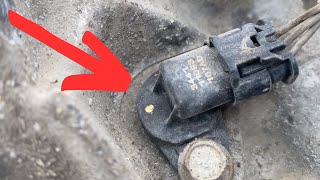
- Crankshaft Position Sensor Connector (3-pin) — On the 3.6L V6, it's on the passenger side rear of the engine block near the transmission bell housing. On the 5.7L V8, it is behind the starter motor on the passenger side of the block.. This is the primary test point. For V8 gas engines, pins are typically: (F855) 5-volt Supply, (K24) CKP Signal, and (K900/K925) Sensor Ground. For the V6, Pin 1 is typically 5V Supply, Pin 2 is Signal, and Pin 3 is Ground. Testing voltage and ground here is the first step in diagnosing the circuit.
- G104 — A primary engine ground located on the right side of the engine block or top of the right cylinder head cover.. A poor engine ground can introduce electrical noise and cause a weak or erratic signal from the crankshaft position sensor. Ensuring this ground is clean and tight is a critical diagnostic step.
- G102 / G109 — G102 is located at the right side of the engine compartment. G109 is on the right shock tower.. These are key grounding points for the engine management system. While not directly for the CKP sensor, a fault at these locations can cause widespread electrical issues, including intermittent sensor readings.
- Exhaust Ground Strap — Clipped to the middle hanger on the right tailpipe assembly.. While primarily for the exhaust, a missing or corroded ground strap can sometimes contribute to electrical noise in the vehicle, which can potentially interfere with sensitive sensor signals like the CKP.
Real Owner Repair Stories
- YouTube - Automotive Test Solutions (2018 Chrysler 300 (3.6L V6)) — Hard starting condition, would sometimes stall then be hard to restart. P0339 code stored.
❌ Tried (didn't work) Replacing the crankshaft position sensor twice.
✅ What actually fixed it Using a borescope, a single bent tooth was discovered on the crankshaft tone ring. The final repair required straightening or replacing the tone ring. - DodgeForum.com (Dodge Ram (similar engine management)) — Sputtering under acceleration, Check Engine Light with codes P0300 and P0339.
❌ Tried (didn't work) Initial diagnosis and searching for sensor location.
✅ What actually fixed it Replacing the crankshaft position sensor resolved the sputtering and cleared the codes. - Chrysler Forum (2007 Chrysler 300 2.7L V6) — Car ran poorly, hard to start, sputtering, multiple codes including P0339, P0335, P0300.
❌ Tried (didn't work) Replacing the CKP sensor with an aftermarket Carquest part from Advance Auto (ran worse)., Replacing the CKP sensor with an aftermarket Dorman part from AutoZone (very hard to start, sputtered)., Re-checking all engine timing.
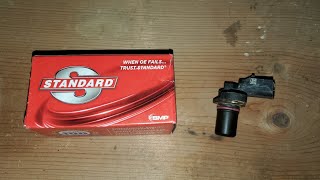
✅ What actually fixed it Installing a 'Standard' brand CKP sensor from O'Reilly's finally allowed the car to crank and run properly, resolving the codes. This highlights the platform's sensitivity to sensor quality.
"I Checked Everything" — The Actual Cause
- In a documented case on a 2018 Chrysler 300, standard diagnostics, including replacing the sensor twice, failed to resolve the P0339 code. The issue was not electrical. The actual cause was a physically bent tooth on the crankshaft tone ring, which could only be identified by using a borescope to visually inspect the component inside the engine block.
When the Usual Fixes Don't Work
- While replacing the crankshaft position sensor is the most common fix, it is not a guaranteed solution. In a documented case for a 2018 Chrysler 300, the P0339 code and hard-start symptoms persisted after two new sensors were installed. The ultimate cause was a bent tooth on the internal tone ring, a mechanical failure requiring a borescope to find. Furthermore, owner reports strongly indicate that this platform is highly sensitive to sensor quality; multiple accounts describe how new aftermarket sensors (e.g., Carquest, Dorman) failed to resolve the issue, which was only fixed after installing a genuine Mopar or high-quality alternative (e.g., Standard) part. This counters the assumption that any new sensor will work and emphasizes the need for thorough diagnosis beyond simple part replacement.
OEM Part Supersession History
5149167AD, 5149167AE→5149167AF— Standard revision and improvement by the manufacturer for the 3.6L V6 engine.68140678AB, 68140678AC→68477925AB— Standard revision and improvement by the manufacturer for the 5.7L V8 engine.
Helpful Videos
We Have This Part in Stock


The information in this article is provided for general reference and educational purposes only. Vehicle specifications, procedures, and part compatibility can vary by production date, trim level, and region. Always consult your vehicle's factory service manual and verify part numbers before purchasing or performing repairs. Safety-critical components such as airbags, seat belts, and braking systems should be installed by a qualified professional.
- Chrysler 300:
- 🎬 Helpful Videos
- 🛍️ Shop This Part
- What's Unique About the 2015-2016 Chrysler 300
- Diagnostic Flowchart
- Symptoms You May Notice
- Most Likely Causes
- Rare But Worth Checking
- Diagnosis Steps
- Parts You'll Likely Need
- Related Codes That Often Appear With This One
- Technical Service Bulletins (TSBs) & Recalls
- Platform-Specific Known Issues
- Mechanic-Grade Diagnostic Values
- Hidden / Shadow Codes Worth Checking
- Scan Tool Commands That Help
- Wiring & Ground Locations
- Real Owner Repair Stories
- "I Checked Everything" — The Actual Cause
- When the Usual Fixes Don't Work
- OEM Part Supersession History
- 🎟️ Get 5% Off