

P0335 on 2008-2015 Toyota Sequoia: Crank Sensor Causes and Fixes
P0335 on a Toyota Sequoia most often means the crankshaft position sensor has failed, causing a no-start or stalling. Before replacing the sensor, check that your battery is fully charged, as low voltage (below 11V) is a known cause for this code on these trucks per a Toyota TSB. An OEM Denso sensor costs around $110.
- **Check your battery first!** A weak or dying battery is a documented cause of P0335 on the Sequoia and can save you from buying a sensor you don't need.
- The most common symptom is the engine cranking but refusing to start, or stalling unexpectedly.
- If you do need to replace the sensor, use an OEM (Toyota/Denso) part for best reliability. The part number is likely 90919-05071.
- Driving with this code is unsafe due to the risk of stalling in traffic. Get the vehicle diagnosed and repaired promptly.
What's Unique About the 2008-2015 Toyota SEQUOIA

For the second-generation Sequoia and its platform-mate, the Tundra, this code has a specific quirk documented by Toyota in TSB T-TT-0010-10 Rev. A low battery can cause inconsistent cranking speed, which the computer may misinterpret as a faulty crankshaft sensor signal, triggering a P0335 code when the sensor is actually fine. The TSB specifically advises technicians to check freeze frame data to see if battery voltage was below 11 volts when the code was set. This is a common misdiagnosis trap, making battery testing the essential first step before you consider 🎬 Watch: Why you should check your battery before replacing parts. replacing any parts.
Diagnostic Flowchart
Tap your situation to follow the diagnostic path that matches what you're seeing on this vehicle.
Symptoms You May Notice
- Engine cranks but will not start
- Engine stalls intermittently, sometimes while driving
- Rough or unstable idle
- Hesitation or loss of power during acceleration
- Check Engine Light is on
- Tachometer may read zero even when the engine is cranking or running
- VSC/TRAC lights may illuminate, as the stability control system can be disabled when a critical engine fault code is present.
- Replacing the crankshaft position sensor when the actual problem is a weak battery. The TSB for this vehicle makes it clear this is a common scenario.
- Replacing the starter motor when the issue is a faulty crankshaft position sensor preventing the start sequence.
- Replacing camshaft position sensors when they are only throwing codes because the primary crankshaft signal is missing.
Most Likely Causes

- Faulty Crankshaft Position Sensor 🔴 High Probability The sensor is an electronic component exposed to high heat and vibration at the bottom of the engine, leading to eventual failure over time. On the 5.7L V8, it is located on the driver's side of the engine block, near the bellhousing.
How to confirm: After confirming wiring is intact, test the sensor's resistance with a multimeter (compare to factory specs) or replace it. Given the relatively low cost and high probability, many owners and technicians opt for replacement as a primary diagnostic step after checking the battery and wiring.
Typical fix: Replace the crankshaft position sensor. 🎬 Watch: Step-by-step guide to replacing the sensor on your V8. It is highly recommended to use an OEM or Denso-branded part, as many forum users on Tundras.com and IH8MUD report that aftermarket sensors can be unreliable, fail quickly, or be dead on arrival.
Est. part cost: $80-$150 - Low Battery Voltage or Failing Battery 🟡 Medium Probability A Toyota Technical Service Bulletin (T-TT-0010-10 Rev) specifically states that low battery voltage can cause inconsistent cranking speed, leading the ECM to incorrectly flag a P0335 code. The TSB advises checking if voltage dropped below 11V in the freeze frame data.
How to confirm: Test the battery with a multimeter or a load tester. A healthy, resting battery should be at or above 12.4 volts. Check the voltage while cranking; if it drops below 10-11 volts, the battery is weak and is the likely culprit. Check freeze frame data with a scan tool if possible.
Typical fix: Recharge or replace the vehicle's battery. Ensure battery terminals are clean and tight.
Est. part cost: $150-$300 - Damaged Wiring or Loose Connector 🟡 Medium Probability The sensor's wiring harness runs near hot exhaust components and is exposed to road debris, which can cause wires to melt, chafe, or break. Rodent damage is also a possibility for vehicles that sit for extended periods. Connectors can also become loose or corroded.
How to confirm: Visually inspect the entire wiring harness from the sensor to the ECM for any signs of damage, melting, or breaks. Unplug the connector and check for corrosion or bent pins. Use a multimeter to check for continuity and proper voltage at the connector.
Typical fix: Repair the damaged section of wire or replace the connector pigtail. Secure the harness away from heat sources. In cases of rodent damage, extensive harness repair may be needed.
Est. part cost: $10-$50 for a pigtail, potentially more for harness repair.
Rare But Worth Checking
- Failing Starter Motor: A weak or failing starter can crank the engine too slowly or erratically. The ECM may interpret this slow rotation as a problem with the crankshaft sensor signal, triggering P0335. Some owners on Tundra forums have reported that a P0335 with a no-crank, single-click symptom ultimately turned out to be a bad starter.
- Damaged Crankshaft Reluctor Ring: The toothed ring on the crankshaft that the sensor reads can become damaged, with bent, broken, or dirty teeth. This is uncommon but can happen, especially if other engine work was recently performed. A user on IH8MUD forums speculated that a dirty tooth could cause an intermittent code.
- Faulty Engine Control Module (ECM): This is extremely rare. The ECM's internal driver circuit for the sensor can fail. This should only be considered after all other possibilities, including wiring continuity back to the ECM plug, have been exhaustively ruled out.
Diagnosis Steps

- Check Battery Health: Before any other step, fully charge and load test the battery. A weak battery is a known cause of P0335 on this vehicle. Ensure terminals are clean and tight. If you have an advanced scan tool, check the freeze frame data for battery voltage at the time the code was set.
- Scan for Other Codes: Use an OBD-II scanner to confirm P0335 and check for other codes. Expect to see camshaft sensor codes like P0340, P0345, etc. The presence of these codes reinforces a primary crank signal issue.
- Check for Signal with a Scan Tool: While cranking the engine, observe the 'Engine Speed' (RPM) data on a live data scan tool. If it remains at 0, it confirms no signal is reaching the ECM. This is a definitive test.
- Inspect Wiring and Connector: Visually inspect the crankshaft position sensor's wiring harness for any signs of melting, chafing, or breaks, especially near the exhaust and where it might be exposed to rodents. Unplug the sensor and check the connector for corrosion or damage.
- Test the Sensor and Circuit: If you have a multimeter, you can test the sensor's internal resistance and compare it to the factory specification. You can also check for voltage and ground at the connector and test for continuity on the signal wire back to the ECM to rule out a wiring break.
- Replace the Crankshaft Position Sensor: If the battery and wiring are good, the sensor itself is the most likely failure point. Replace it, preferably with an OEM/Denso part (Part No. 90919-05071).
- Inspect the Reluctor Ring: If a new sensor does not fix the issue, the next step is to visually inspect the teeth on the crankshaft reluctor ring for damage, debris, or excessive rust. This is more involved and may require removing other components.
- Consider the Starter: If the issue is intermittent and accompanied by a slow crank or a single click no-crank, have the starter motor and its connections tested.
- ECM Testing: As a final step, if all else fails, the ECM may need to be professionally tested.
Parts You'll Likely Need
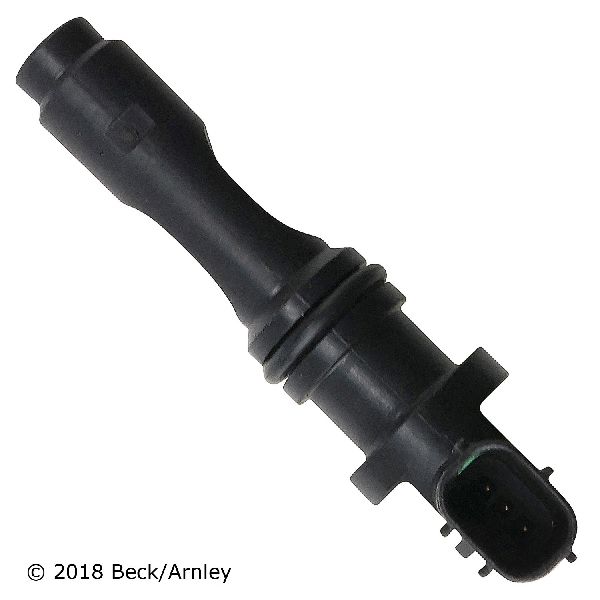
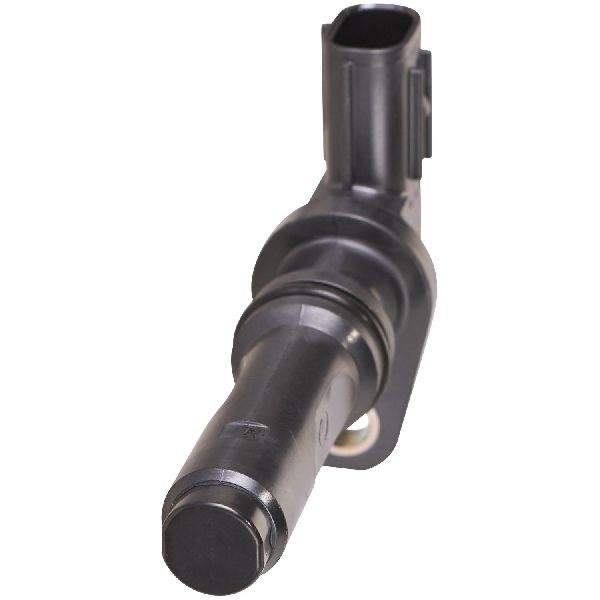
- Crankshaft Position Sensor
(OEM #90919-05071)— This sensor is the most common point of failure for the P0335 code after ruling out battery issues. It fits the 4.6L (1UR-FE) and 5.7L (3UR-FE) V8 engines found in the 2008-2015 Sequoia and Tundra.
Trusted brands: Denso (OEM), Standard Motor Products, Hitachi
OEM price range: $100-$150
Aftermarket price range: $25-$70
Related Codes That Often Appear With This One
- P0340, P0345, P0365, P0390 — These are codes for the various Camshaft Position Sensors. The ECM relies on both crank and cam signals to be in sync. A loss of the primary crank signal (P0335) will often cause the ECM to flag all cam signals as invalid, triggering a cascade of camshaft sensor codes. It is very common to see all these codes appear together with P0335.
Technical Service Bulletins (TSBs) & Recalls
- T-TT-0010-10 Rev: States that low battery voltage can contribute to a MIL 'ON' for P0335 due to inconsistent rotational speed of the crankshaft. Advises checking freeze frame data for battery voltage below 11 volts when the DTC was set.
Platform-Specific Known Issues
- A Technical Service Bulletin (T-TT-0010-10 Rev) was issued by Toyota, noting that low battery voltage (specifically below 11V) can cause this code to be set erroneously due to inconsistent engine cranking speed.
- The simultaneous triggering of P0335 along with all four camshaft position sensor codes (P0340, P0345, P0365, P0390) is a very common pattern on this platform and almost always points to a failure in the primary crankshaft position signal, not an issue with the camshaft sensors themselves.
Mechanic-Grade Diagnostic Values
- Crankshaft Position Sensor Resistance (2-pin pickup coil type, e.g., 1GR-FE) — expected: Cold: 1,630 to 2,740 Ω. Hot: 2,065 to 3,225 Ω. ('Cold' is -10°C to 50°C, 'Hot' is 50°C to 100°C).. Failure: Resistance is outside the specified range, indicating a faulty sensor coil.
- Crankshaft Position Sensor Resistance (e.g., 2AZ-FE) — expected: Cold: 985 to 1,600 Ω.. Failure: Resistance outside this range suggests a sensor failure.
- Crankshaft Position Sensor Signal Voltage (MRE Type Sensor) — expected: Pulsing waveform when viewed on an oscilloscope. Voltage should not remain static.. Failure: The ECM stores a DTC if the sensor output voltage remains at less than 0.3 V, or more than 4.7 V for more than 4 seconds.
Scan Tool Commands That Help
- Toyota Techstream: Data List > Engine Speed (RPM) — This is the primary method to confirm if the ECM is receiving a signal from the crankshaft sensor. While cranking the engine, if the 'Engine Speed' parameter remains at 0, it definitively confirms a lack of signal, pointing to the sensor, wiring, or ECM.
- Toyota Techstream: Utility > All Readiness > Input DTC: P0335 — After a repair, this function can be used to run the internal monitor for the crankshaft position sensor circuit to confirm if the fault has been rectified without having to perform a full drive cycle.
- Toyota Techstream: Read Freeze Frame Data — Crucial for this specific vehicle. As per TSB T-TT-0010-10 Rev, you should check the freeze frame data to see the battery voltage at the exact moment the P0335 code was triggered. If voltage was below 11V, the battery is the likely cause, not the sensor.
Wiring & Ground Locations

- Engine Ground Strap (General) — Multiple locations. Key grounds are typically from the engine block/cylinder head to the chassis/firewall. On the 2UZ-FE V8, one important ground is on the passenger side rear of the engine, connecting the harness to the firewall. Another is on the driver's side, mounting to the frame.. A poor or corroded engine ground can introduce electrical noise or cause voltage drops, interfering with the sensitive signal from the crankshaft position sensor and leading to a false P0335 code.
- ECM Connector (e.g., E13) — Located in the engine bay or behind the dashboard, depending on the specific model year and configuration.. This is the termination point for the crankshaft sensor wiring. To perform a full circuit check, you must test for continuity between the sensor connector pins and the corresponding pins at the ECM connector (e.g., NE+ and NE- terminals) to rule out an open or short in the harness.
- Starter Motor Ground — The main ground for the starter is a large cable typically connected from the top of the transmission bellhousing to the chassis.. A loose or corroded starter ground can cause the starter to draw excessive current through other, smaller ground paths, creating significant electrical interference that can disrupt the crankshaft position sensor signal during cranking.
Real Owner Repair Stories
- Reddit user in r/AskMechanics (Vehicle unspecified, but symptoms match P0335) — No crank, no start condition with P0335 and P0340 codes appearing after a starter replacement.
❌ Tried (didn't work) The user initially focused on the new codes (P0335/P0340) pointing to the crank/cam sensors.
✅ What actually fixed it The user discovered the clip on the starter solenoid wire was broken, causing a loose connection. This loose connection was the likely root cause of the electrical fault triggering the codes, not the sensors themselves.
OEM Part Supersession History
90919-05071→Current— This part number appears to be stable and has been used across many Toyota V8 and V6 models for an extended period, including the Land Cruiser, Tundra, and Sienna.
Model Year Variations Within This Range
- 2008-2009: The base engine was the 4.7L 2UZ-FE V8, with the 5.7L 3UR-FE V8 as an option or standard on higher trims.
- 2010-2012: For the 2010 model year, the 4.7L V8 was replaced by the newer 4.6L 1UR-FE V8, which was paired with a 6-speed automatic transmission. The 5.7L V8 remained the optional/upper trim engine.
- 2013-2015: Starting in 2013, the 4.6L V8 was dropped, and the 5.7L 3UR-FE V8 became the standard and only engine available across all trim levels.
Helpful Videos
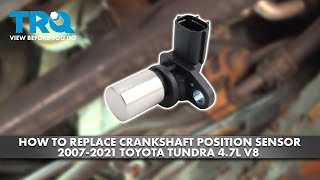

We Have This Part in Stock




The information in this article is provided for general reference and educational purposes only. Vehicle specifications, procedures, and part compatibility can vary by production date, trim level, and region. Always consult your vehicle's factory service manual and verify part numbers before purchasing or performing repairs. Safety-critical components such as airbags, seat belts, and braking systems should be installed by a qualified professional.
- Toyota SEQUOIA:
- 🎬 Helpful Videos
- 🛍️ Shop This Part
- What's Unique About the 2008-2015 Toyota SEQUOIA
- Diagnostic Flowchart
- Symptoms You May Notice
- Most Likely Causes
- Rare But Worth Checking
- Diagnosis Steps
- Parts You'll Likely Need
- Related Codes That Often Appear With This One
- Technical Service Bulletins (TSBs) & Recalls
- Platform-Specific Known Issues
- Mechanic-Grade Diagnostic Values
- Scan Tool Commands That Help
- Wiring & Ground Locations
- Real Owner Repair Stories
- OEM Part Supersession History
- Model Year Variations Within This Range
- 🎟️ Get 5% Off