

P0335 on 2005-2012 Toyota Matrix: Crank Sensor, Wiring, and Cam Gear Fixes
P0335 on a Toyota Matrix most often points to a failed crankshaft position sensor, causing no-start or stalling. Always check for a weak battery first, as low voltage can trigger this code. On 2006-2012 models with the 2.4L (2AZ-FE) engine, a faulty intake camshaft gear is a known issue per a Toyota TSB and is a more complex repair.
- P0335 indicates a loss of signal from the crankshaft position sensor, which can cause serious drivability issues like stalling or a no-start condition.
- Before replacing parts, always test the vehicle's battery, as low voltage is a known cause for this code on Toyota vehicles.
- The most common repair is replacing the crankshaft position sensor itself.
- Be aware of the TSB for 2006-2012 models with the 2.4L (2AZ-FE) engine; a faulty intake camshaft gear could be the underlying problem, which is a more complex and costly repair.
What's Unique About the 2005-2012 Toyota MATRIX
While a bad sensor is the most common cause for P0335 on any car, the Toyota Matrix has two very specific issues documented by Toyota itself. For 2006-2012 models with the 2.4L 2AZ-FE engine, an intermittent P0335 can be caused by a faulty intake camshaft gear assembly, a much more involved repair than a simple sensor swap. The TSB for this issue specifies that it most often occurs when the engine is warm and at idle (under 1000 RPM). Additionally, a technical tip from Toyota warns that low battery voltage during cranking can cause inconsistent engine speed, which may also trigger a P0335 code, sometimes along with a P0340 for the camshaft sensor.
Diagnostic Flowchart
Tap your situation to follow the diagnostic path that matches what you're seeing on this vehicle.
Generation note: This range covers the first generation (E130, 2005-2008) and the second generation (E140, 2009-2012). A key Toyota Technical Service Bulletin (TSB) regarding a faulty intake camshaft gear applies specifically to 2006-2012 models with the 2.4L 2AZ-FE engine, which spans both generations.
Symptoms You May Notice
- Check Engine Light is on
- Engine cranks but will not start
- Engine stalls intermittently, especially when warm or coming to a stop.
- Extended cranking time before the engine starts.
- Rough idling or engine misfires
- Noticeable loss of engine power.
- Reduced fuel economy.
- VSC and/or Traction Control lights may illuminate simultaneously with the Check Engine Light.
- Replacing the starter motor due to a no-start condition without checking for DTCs first. A failing starter can sometimes induce a P0335 code if the ECU doesn't see engine rotation when the start command is given.
- Replacing the camshaft position sensor (for code P0340) when the code is P0335.
Most Likely Causes
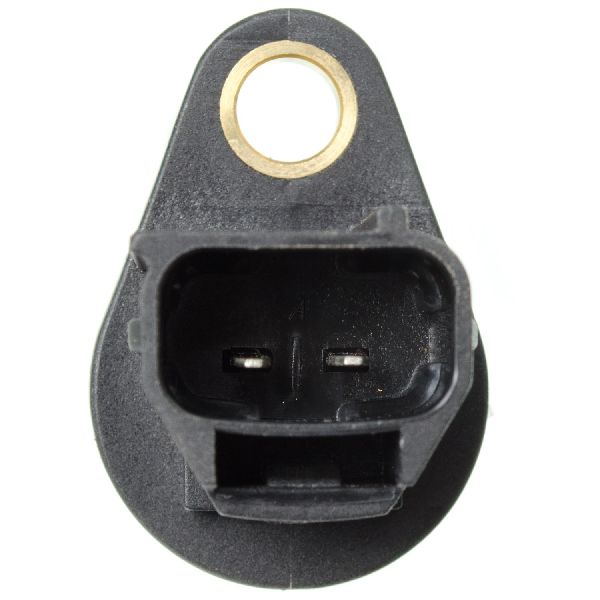
- Failed Crankshaft Position Sensor 🔴 High Probability Like any electronic sensor, it is subject to failure over time from extreme heat cycles and vibration at its location on the lower engine block. The sensor is located on the front of the engine (passenger side), near the crankshaft pulley and timing cover.
How to confirm: Use a scan tool to monitor engine RPM while cranking; a reading of zero indicates no signal. You can also test the sensor's internal resistance with a multimeter; it should be around 1.4 kOhms when cold. 🎬 Watch: How to test and diagnose the sensor circuit A failing sensor may also work when cold but fail when the engine warms up.
Typical fix: Replace the crankshaft position sensor and its O-ring. 🎬 See this step-by-step crankshaft position sensor replacement guide
Est. part cost: $40-$150 - Faulty Intake Camshaft Gear Assembly (2.4L 2AZ-FE Engine Only) 🟡 Medium Probability Toyota issued TSB T-SB-0192-12 for 2006-2012 models with the 2AZ engine, indicating an improved part was developed to prevent this condition. The issue is most likely to occur when the engine is warm and at idle (below 1000 RPM).
How to confirm: This is typically diagnosed after ruling out the sensor and wiring. The TSB specifies checking freeze frame data to see if the code was set at operating temperature (approx. 185°F/85°C or more) and low RPM. Professional diagnosis is recommended.
Typical fix: Replace the intake camshaft timing gear assembly with the updated part. This is a labor-intensive job that involves removing the valve cover and timing components.
Est. part cost: $200-$400 - Damaged Wiring or Connector 🟡 Medium Probability The sensor's location at the bottom of the engine exposes its wiring to heat, oil, and road debris. Wires can become brittle and break internally, or the connector pins can corrode, causing a poor connection that mimics a failed sensor.
How to confirm: Visually inspect the wiring harness from the sensor to the ECM for any signs of fraying, melting, or corrosion. Wiggle the connector while the engine is running to see if it causes a stall. Perform a continuity test with a multimeter from the sensor connector to the ECM connector.
Typical fix: Repair the damaged section of wiring or replace the connector pigtail.
Est. part cost: $10-$50 - Low Battery Voltage ⚪ Low Probability Toyota Technical Service Tip T-TT-0010-10 Rev states that low battery voltage can cause inconsistent rotational speed during cranking, leading the ECM to set a P0335. This can happen with a weak or dying battery, or even loose/corroded battery terminals.
How to confirm: Test the battery's state of charge and health. A voltage reading below 12.4V (engine off) indicates a weak battery. Ensure terminals are clean and tight. Also, check the charging system output (alternator).
Typical fix: Recharge or replace the battery. Clean or tighten battery terminals.
Est. part cost: $100-$250
Rare But Worth Checking
- Damaged Reluctor Ring: The toothed wheel (sensor plate) that the sensor reads can become damaged, bent, or accumulate metallic debris, causing an erratic signal. This is uncommon but worth considering if the sensor and wiring are good. Inspection requires removing the crankshaft pulley.
- Failed Engine Control Module (ECM): This is extremely rare and should only be considered after all other possibilities, including wiring, sensors, and the cam gear (on 2.4L), have been exhaustively tested. 🎬 Watch: Troubleshooting a no-start condition on a 2009 Matrix
Diagnosis Steps
- Read all stored DTCs with an OBD-II scanner. Note any other codes present and review freeze frame data to see the engine conditions when the code was set.
- Check the battery. Ensure voltage is above 12.4V with the engine off and that terminals are clean and tight. A slow crank can trigger this code.
- Visually inspect the crankshaft position sensor and its wiring harness. The sensor is on the front of the engine, near the main pulley. Look for obvious damage, oil saturation, corrosion, or loose connections.
- Use a scan tool with live data to monitor Engine RPM while cranking. If the reading is 0 or erratic, the sensor or its circuit is the primary suspect.
- If the wiring appears intact, test the sensor. Disconnect it and measure the resistance between the two pins. It should be approximately 1.4 kOhms when cold. If it's an open circuit (infinite resistance) or shorted (zero resistance), the sensor is bad.
- If the sensor tests good, check the circuit. Check for a 5V reference voltage at the connector with the key on. Check for continuity on the signal and ground wires back to the ECM.
- For 2006-2012 models with the 2.4L 2AZ-FE engine, if all previous steps pass and the code was set at warm idle (per freeze frame data), investigate the possibility of a faulty intake camshaft gear per TSB T-SB-0192-12.
Parts You'll Likely Need
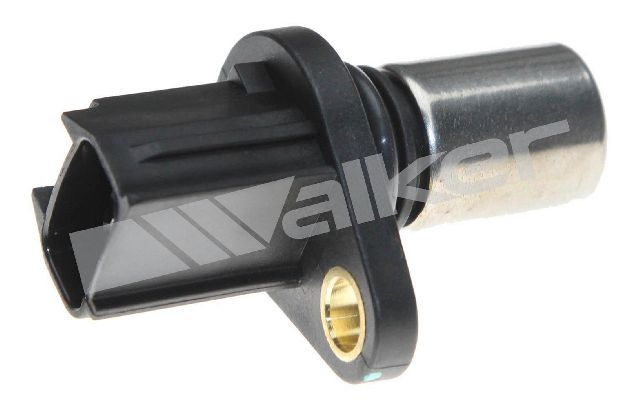
- Crankshaft Position Sensor
(OEM #90919-05047)— This is the most common failure point for a P0335 code. The sensor is an electronic component that wears out over time from heat and vibration.
Trusted brands: Denso (OEM manufacturer), NGK/NTK, Beck Arnley
OEM price range: $85-$150
Aftermarket price range: $40-$90 - Intake Camshaft Timing Gear Assembly (2.4L 2AZ-FE only)
(OEM #13050-0H051 (or superseding part 13050-28021))— This is the specific fix for the intermittent P0335 issue described in Toyota's TSB T-SB-0192-12 for affected models.
Trusted brands: Aisin (OEM manufacturer), Genuine Toyota
OEM price range: $300-$400
Aftermarket price range: $200-$300 - Crankshaft Position Sensor Connector Pigtail — If the connector itself is damaged, corroded, or the locking tab is broken, replacing the pigtail is necessary to ensure a solid connection to the new sensor.
Trusted brands: Dorman, Standard Motor Products
OEM price range: $20-$40
Aftermarket price range: $10-$25
Related Codes That Often Appear With This One
- P0340 — According to Toyota TSB T-TT-0010-10 Rev, low battery voltage can cause both the crankshaft and camshaft sensor codes to appear simultaneously due to inconsistent engine cranking speed.
- C1201, C1223, C1241 — In some instances, a P0335 fault can cause the ECU to disable the Vehicle Stability Control (VSC) and Traction Control systems, triggering their respective warning lights and codes. A GenVibe forum user reported this exact scenario.
Technical Service Bulletins (TSBs) & Recalls
- T-SB-0192-12: Notes that on 2006-2012 models with the 2AZ engine (including Matrix, Corolla, Camry, RAV4), an intermittent P0335 set at warm idle can be caused by a faulty intake camshaft gear assembly, for which an improved part was developed.
- T-TT-0010-10 Rev: States that low battery voltage during cranking can cause inconsistent engine speed, which may trigger P0335 and/or P0340.
Platform-Specific Known Issues
- A known issue documented in TSB T-SB-0192-12 affects 2006-2012 models with the 2.4L 2AZ-FE engine, where an intermittent P0335 can be caused by a faulty intake camshaft gear assembly, especially when the engine is warm and at idle.
- A technical tip from Toyota (T-TT-0010-10 Rev) indicates that low battery voltage can be a direct cause of code P0335 on these vehicles due to erratic cranking speed.
Mechanic-Grade Diagnostic Values
- Crankshaft Position Sensor Resistance (2.4L 2AZ-FE Engine) — expected: Cold: 985 to 1,600 Ω. Hot: 1,265 to 1,890 Ω.. Failure: A reading of 0 Ω (short), infinite resistance (open), or outside the specified temperature range indicates a faulty sensor.
- Crankshaft Position Sensor AC Voltage Output — expected: Approximately 200 mV AC while cranking the engine.. Failure: Significantly lower or no AC voltage suggests the sensor is not generating a signal.
- Live Data Engine Speed (RPM) via Scan Tool — expected: 100-500 RPM while cranking.. Failure: A reading of 0 RPM while the engine is physically cranking strongly points to a fault in the crankshaft position sensor circuit.
Scan Tool Commands That Help
- Toyota Techstream: Data List > Engine SPD — Use this to monitor live engine RPM while cranking. If the value remains at 0, it confirms the ECM is not receiving a signal from the crankshaft sensor or its circuit.
- Toyota Techstream: Utility > All Readiness — After a repair, this function can be used to check if the diagnostic monitors, including the one for P0335, have completed successfully, confirming the fix without waiting for multiple drive cycles.
Wiring & Ground Locations
- NE+ and NE- — These are the signal wires that run from the crankshaft position sensor connector to the Engine Control Module (ECM).. These are the specific circuit designations for the crankshaft position signal. When performing continuity or voltage tests, a technician needs to identify these wires at the ECM connector, which is located in the engine compartment on the driver's side.
OEM Part Supersession History
90919-05047→90080-19024— Standard part number update and consolidation by the manufacturer.
Heads up: The new part number is a direct replacement for the original.13050-0H051 / 13050-28020→13050-28021— This is the improved intake camshaft gear assembly referenced in TSB T-SB-0192-12 to fix the intermittent P0335 code on the 2.4L 2AZ-FE engine.
Heads up: Using an older, non-updated part number for the repair may result in the same intermittent P0335 issue returning.
Model Year Variations Within This Range
- 2005-2012: The engine installed significantly changes the diagnosis. The 2.4L 2AZ-FE engine (found in XR and XRS models) is subject to the intake camshaft gear issue (TSB T-SB-0192-12) and has a specific sensor resistance spec. The 1.8L engines (1ZZ-FE in 2005-2008, 2ZR-FE in 2009-2012) are not affected by that TSB and use different crankshaft sensor part numbers (e.g., 90919-05030 for 1ZZ-FE). Always verify the engine before ordering parts or using test specifications.
Helpful Videos
![Replace ECM and still Car wont start [ 09 Toyota Matrix ] Pt. 01](https://img.youtube.com/vi/3T6K4_hi_rQ/mqdefault.jpg)
![Replace ECM and still Car wont start [09 Toyota Matrix] Pt 02](https://img.youtube.com/vi/CnAgwvcMMrg/mqdefault.jpg)
We Have This Part in Stock


The information in this article is provided for general reference and educational purposes only. Vehicle specifications, procedures, and part compatibility can vary by production date, trim level, and region. Always consult your vehicle's factory service manual and verify part numbers before purchasing or performing repairs. Safety-critical components such as airbags, seat belts, and braking systems should be installed by a qualified professional.
- Toyota MATRIX:
- 🎬 Helpful Videos
- 🛍️ Shop This Part
- What's Unique About the 2005-2012 Toyota MATRIX
- Diagnostic Flowchart
- Symptoms You May Notice
- Most Likely Causes
- Rare But Worth Checking
- Diagnosis Steps
- Parts You'll Likely Need
- Related Codes That Often Appear With This One
- Technical Service Bulletins (TSBs) & Recalls
- Platform-Specific Known Issues
- Mechanic-Grade Diagnostic Values
- Scan Tool Commands That Help
- Wiring & Ground Locations
- OEM Part Supersession History
- Model Year Variations Within This Range
- 🎟️ Get 5% Off