

P0335 on 2012-2015 Toyota 4Runner: Crankshaft Sensor Causes and Fixes
P0335 on a 2012-2015 4Runner usually indicates a faulty crankshaft position sensor, but a weak battery is also a known cause per a Toyota TSB. First, check the battery and charging system. If those are healthy, the crankshaft sensor likely needs replacement. This is a difficult DIY job as the sensor is located behind the A/C compressor. An OEM Denso part costs about $90-$150.
- Always check your battery first! A weak battery dropping below 11V during cranking is a known cause of P0335 on this 4Runner per a Toyota TSB.
- If you replace the sensor, use an OEM part from Denso or Toyota. Aftermarket sensors are known to cause issues.
- The engine may stall without warning. Do not drive the vehicle until the issue is resolved.
- The sensor is very difficult to access; it is located behind the A/C compressor, which must be unbolted (4 bolts) and moved to the side for access.
What's Unique About the 2012-2015 Toyota 4RUNNER
For the 5th generation Toyota 4Runner with the 1GR-FE engine, a unique and well-documented issue can trigger a P0335 code. A Toyota Technical Service Bulletin (T-TT-0010-10 Rev) highlights that low battery voltage during cranking (specifically below 11V) can cause the ECM to set this code, even if the sensor is working correctly. Owners should always test the battery and check freeze frame data for low voltage before assuming the sensor has failed. Additionally, these engines are known to be sensitive to aftermarket sensors, with many owners reporting that only OEM Denso parts resolve the issue permanently.
Diagnostic Flowchart
Tap your situation to follow the diagnostic path that matches what you're seeing on this vehicle.
Symptoms You May Notice
- Engine cranks but will not start
- Engine stalls unexpectedly, sometimes when hot or coming to a stop
- Rough idling and engine vibrations
- Engine misfires or hesitates on acceleration
- Check Engine Light is on
- Intermittent or difficult warm starts
- Replacing the camshaft position sensors. P0335 is specific to the crankshaft sensor circuit.
- Replacing the fuel pump due to a crank-no-start symptom, when the root cause is a lack of ignition timing from the missing crank signal.
- Assuming a new, non-OEM crankshaft sensor is good. Aftermarket sensors are frequently reported to be dead-on-arrival or fail quickly for this application.
Most Likely Causes
- Faulty Crankshaft Position Sensor 🔴 High Probability The sensor is exposed to high heat and vibration, leading to eventual electronic failure. Its difficult-to-access location behind the A/C compressor means it is often contaminated by oil or coolant leaks over time.
How to confirm: After confirming battery voltage is good, use a scan tool to monitor 'Engine Speed' during cranking. A reading of 0 RPM confirms 🎬 See how to diagnose a Toyota crankshaft sensor circuit. the ECM is not getting a signal. A resistance test can also be performed; the expected value changes with sensor temperature.
Typical fix: Replace the crankshaft position sensor and its O-ring. This is a labor-intensive job requiring the A/C compressor to be unbolted and moved aside for access. Using an OEM Denso sensor is highly recommended.
Est. part cost: $90-$150 - Low Battery Voltage / Weak Battery 🟡 Medium Probability A specific Toyota TSB (T-TT-0010-10 Rev) states that low battery voltage (below 11V) during cranking can cause inconsistent crankshaft rotational speed, triggering a false P0335 code.
How to confirm: Test the battery with a multimeter. A healthy battery should show ~12.6V with the engine off and 13.7-14.7V when running. Crucially, check the freeze frame data with a scan tool to see if battery voltage was below 11V when the code was set.
Typical fix: Charge or replace the weak battery. If the alternator is failing, it must also be replaced.
Est. part cost: $150-$300 - Damaged Wiring or Connector ⚪ Low Probability The wiring harness can become brittle from heat cycles or damaged by road debris. A common issue is oil from a leaking valve cover gasket dripping onto the sensor and connector, degrading the plastic and causing a poor connection.
How to confirm: Visually inspect the wiring harness leading to the crankshaft position sensor for any signs of chafing, melting, or oil saturation. Check the connector for a secure fit and clean, corrosion-free contacts. Check for continuity between the sensor connector and the ECM connector.
Typical fix: Repair the damaged section of wire or replace the connector pigtail. Be careful to match wire positions if splicing a new pigtail. Clean any oil residue with electrical contact cleaner.
Est. part cost: $15-$50
Rare But Worth Checking
🎬 Watch: 6 common causes for a P0335 code you should check.- Improperly Torqued Harmonic Balancer Bolt: If the code appears after a recent timing chain or front engine service, an under-torqued harmonic balancer bolt can allow the reluctor ring (timing cog) to wobble or shear its keyway, causing an erratic signal. This can cause a persistent P0335 even with a good sensor.
- Damaged Reluctor Ring: The reluctor ring (a toothed wheel on the crankshaft that the sensor reads) can be damaged, especially during other engine repairs. Bent or broken teeth will cause an incorrect signal. This is rare but can cause a persistent P0335.
- Faulty Engine Control Module (ECM): This is extremely rare. The ECM should only be considered after all other possibilities, including the sensor, wiring, battery, and reluctor ring, have been thoroughly ruled out.
Diagnosis Steps
- Read Codes & Freeze Frame Data: Use an OBD-II scanner to confirm P0335. Immediately review the freeze-frame data, paying close attention to the 'Battery Voltage' parameter. If it was below 11V when the code was set, the battery is the likely culprit.
- Test Battery & Charging System: This is the critical first step. Use a multimeter to test the battery. It should be ~12.6V engine-off and 13.7-14.7V engine-on. Load test the battery to ensure it's healthy under cranking load.
- Check for RPM Signal: With a scan tool connected, view live data for 'Engine Speed' while cranking the engine. If the RPM reads 0, it confirms the ECM is not receiving a signal from the crank sensor circuit.
- Inspect Wiring: Visually inspect the crankshaft position sensor's wiring harness and connector. Look for obvious damage, melting, or oil saturation from leaks above. Ensure the connector is securely plugged in.
- Access and Replace the Sensor: If the battery and wiring are good, the sensor is the prime suspect. Replacement is difficult. The general procedure is:
- a. Jack up the vehicle and remove the front skid plates.
- b. From the top, use a 14mm wrench on the tensioner to remove the serpentine belt from the A/C compressor.
- c. Remove the driver's side front wheel and the plastic splash shield in the wheel well.
- d. Unbolt the four bolts holding the A/C compressor. This allows the compressor to be carefully moved aside without disconnecting the refrigerant lines.
- e. The crankshaft position sensor is now visible, held in by a single 10mm bolt. Unplug the connector and remove the bolt and sensor.
- Install New Sensor: Apply a light coat of engine oil to the new O-ring before installation. Install the new sensor, reconnect the A/C compressor, reinstall the belt, splash shield, wheel, and skid plates. Clear the codes and test drive. 🎬 Watch: A step-by-step walkthrough of this difficult sensor replacement.
Parts You'll Likely Need
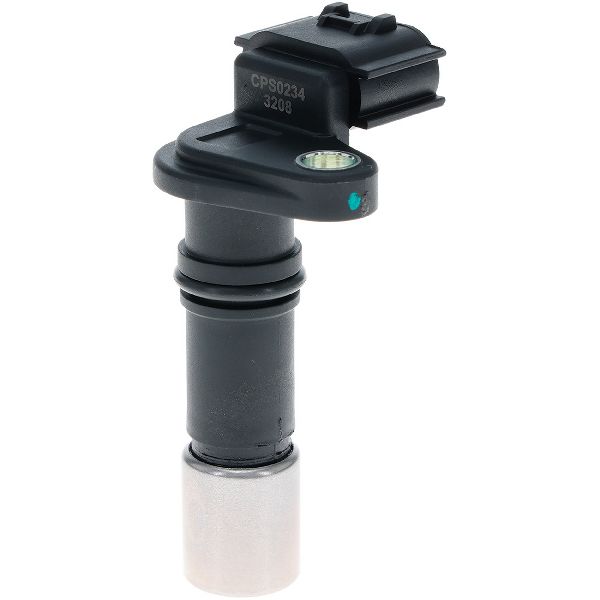
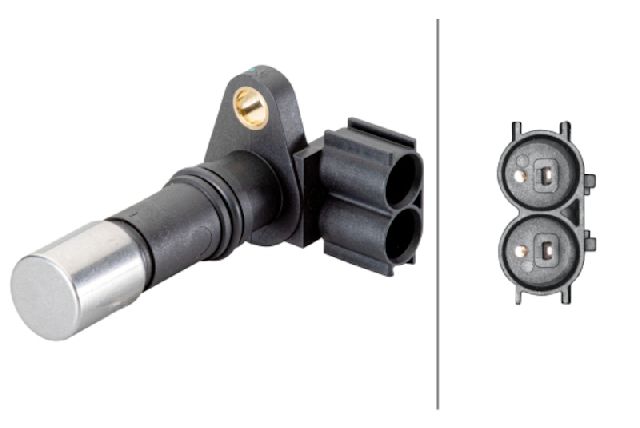
- Crankshaft Position Sensor
(OEM #90919-A5003)— This is the most common part to fail for this code after ruling out battery issues. The original part number 90919-05057 was superseded by 90919-A5003.
Trusted brands: Denso (OEM), Genuine Toyota
OEM price range: $90-$150
Aftermarket price range: $40-$80
Related Codes That Often Appear With This One
- P0340 — This is the code for the Camshaft Position Sensor. The TSB T-TT-0010-10 Rev mentions that low battery voltage can cause both P0335 and P0340 to appear together due to inconsistent engine rotation during startup.
Technical Service Bulletins (TSBs) & Recalls
- T-TT-0010-10 Rev: Notes that low battery voltage (below 11V) can contribute to a MIL "ON" condition for P0335 and/or P0340 due to inconsistent rotational speed of the engine's crankshaft during startup.
Platform-Specific Known Issues
- A Toyota Technical Service Bulletin (T-TT-0010-10 Rev) confirms that low battery voltage (below 11V during cranking) can trigger a false P0335 code due to inconsistent engine rotational speed.
- The physical location of the sensor on the 1GR-FE engine is extremely difficult to access, hidden behind the A/C compressor, which must be unbolted and moved to perform the replacement.
Mechanic-Grade Diagnostic Values
- Crankshaft Position Sensor Resistance — expected: Cold [-10 to 50°C (14 to 122°F)]: 1,630 to 2,740 Ohms. Hot [50 to 100°C (122 to 212°F)]: 2,065 to 3,225 Ohms.. Failure: Resistance outside of the specified range for the given temperature.
- Oscilloscope Waveform (NE+ vs NE-) — expected: A consistent AC pulse signal should be present between the NE+ and NE- terminals at the ECM while the engine is cranking or idling. The pattern should show 34 pulses per engine revolution.. Failure: A missing, erratic, or noisy waveform indicates a problem with the sensor, wiring, or reluctor ring.
Hidden / Shadow Codes Worth Checking
- P0335 with detailed info code: Toyota's Techstream software can provide more detailed information or sub-codes that specify the nature of the fault (e.g., missing signal, rationality check fail) which isn't visible on generic OBD-II scanners. (see via Toyota Techstream diagnostic software)
Scan Tool Commands That Help
- Techstream: Data List -> Engine Speed (RPM) — This is the primary test. While cranking the engine, if 'Engine Speed' reads 0 RPM, it confirms the ECM is not receiving a signal from the crankshaft position sensor circuit.
- Techstream: DTC Info / Freeze Frame Data — Used to check the stored parameters when the P0335 code was set. Specifically, check the battery voltage parameter to see if it was low, which would point towards the TSB-documented issue.
Wiring & Ground Locations
- EE and EF — Ground points located on the rear side of the right and left bank cylinder heads of the 1GR-FE engine.. The crankshaft position sensor circuit relies on a clean and solid ground connection. A corroded or loose engine ground at these locations can introduce noise or resistance into the circuit, potentially causing an erratic signal and triggering a P0335 code.
- Crankshaft Sensor Connector (B22) — On the sensor itself, located behind the A/C compressor on the front of the engine.. This is the primary point for testing the sensor's resistance and for inspecting for damage or oil contamination.
- ECM Connector (B30) — At the Engine Control Module (ECM), typically located in the engine bay or behind the glove box.. This is the termination point for the sensor circuit. Technicians test for continuity between the sensor connector (B22) and this connector to rule out a wiring break in the harness.
Real Owner Repair Stories
- Tacoma World Forum (2004 Toyota Tacoma 2.7L (Similar engine family, demonstrates common issue)) — P0335 code appeared immediately after replacing the timing chain.
❌ Tried (didn't work) Initial diagnosis pointed to a wiring issue or a faulty new sensor.
✅ What actually fixed it The aftermarket (Amazon) crankshaft position sensor installed during the timing chain job was faulty. Replacing it with an OEM sensor resolved the P0335 code.
OEM Part Supersession History
90919-05057→90919-A5003— Standard part update/revision by Toyota. No specific reason is publicly documented, but it's a common practice for minor improvements or manufacturer changes.
Helpful Videos

We Have This Part in Stock



The information in this article is provided for general reference and educational purposes only. Vehicle specifications, procedures, and part compatibility can vary by production date, trim level, and region. Always consult your vehicle's factory service manual and verify part numbers before purchasing or performing repairs. Safety-critical components such as airbags, seat belts, and braking systems should be installed by a qualified professional.
- Toyota 4RUNNER:
- 🎬 Helpful Videos
- 🛍️ Shop This Part
- What's Unique About the 2012-2015 Toyota 4RUNNER
- Diagnostic Flowchart
- Symptoms You May Notice
- Most Likely Causes
- Rare But Worth Checking
- Diagnosis Steps
- Parts You'll Likely Need
- Related Codes That Often Appear With This One
- Technical Service Bulletins (TSBs) & Recalls
- Platform-Specific Known Issues
- Mechanic-Grade Diagnostic Values
- Hidden / Shadow Codes Worth Checking
- Scan Tool Commands That Help
- Wiring & Ground Locations
- Real Owner Repair Stories
- OEM Part Supersession History
- 🎟️ Get 5% Off