

P0335 on 2014-2018 Ram ProMaster: Crankshaft Sensor Causes & Fixes
On a 2014-2018 Ram ProMaster with the 3.6L engine, code P0335 often points to a faulty crankshaft position sensor, but it is critical to check for a required Powertrain Control Module (PCM) software update first. Numerous Technical Service Bulletins (TSBs) show that a simple reflash at the dealer can resolve the issue without replacing any parts, a known quirk across many vehicles using the 3.6L Pentastar engine.
- For a P0335 code on a 2014-2018 ProMaster, your first step should always be to check if a PCM software update is needed.
- Do not immediately replace the crankshaft position sensor; a dealer reflash is a very common and well-documented fix.
- Symptoms are serious and include engine stalling or a no-start condition. Do not drive the vehicle until it is repaired.
- If the software is up-to-date, the most likely cause is a failed sensor or damaged wiring near the hot exhaust.
- The sensor is located on the passenger side of the engine near the transmission and is a moderately difficult DIY replacement due to tight access.
What's Unique About the 2014-2018 Ram PROMASTER
For the 2014-2018 Ram ProMaster, this code is not always a straightforward case of a bad sensor. Chrysler (Ram's parent company) has issued multiple Technical Service Bulletins (TSBs) indicating that the vehicle's original PCM software can be too sensitive or have diagnostic logic flaws. These bulletins advise technicians to check for and apply available software updates before replacing the sensor, as a reflash is often the correct and only necessary fix. This is a well-documented quirk of this specific platform and many others that use the 3.6L Pentastar engine.
Diagnostic Flowchart
Tap your situation to follow the diagnostic path that matches what you're seeing on this vehicle.
Symptoms You May Notice
- Check Engine Light (MIL) is on
- Engine stalls, sometimes unexpectedly while driving
- Engine cranks but does not start
- Hard starting or long crank times
- Rough idling or engine misfires
- Reduced acceleration and poor engine performance
- Engine bucks or stumbles at road speed
- Replacing the crankshaft position sensor without first checking for PCM software updates. This is the most common mistake, as multiple TSBs point to a software fix.
- Replacing the sensor when the actual fault is a damaged wire or connector pigtail that has been melted by the nearby exhaust.
Most Likely Causes
- Outdated Powertrain Control Module (PCM) Software 🔴 High Probability Multiple manufacturer TSBs confirm that software updates were released to correct overly sensitive diagnostics that could falsely trigger P0335, sometimes in specific conditions like high ambient heat.
How to confirm: A Ram dealership or a qualified shop with a high-end scan tool (like wiTECH) can check the current software version against the latest available updates by referencing the vehicle's VIN. This is the first step before any hardware replacement.
Typical fix: Update the PCM software (reflashing). This must be done by a dealership or a properly equipped independent shop. The cost for this service is often around one hour of shop labor, estimated between $150-$300.
Est. part cost: $0 - Faulty Crankshaft Position Sensor 🔴 High Probability The sensor operates in a high-heat environment at the back of the engine, near the transmission bellhousing and exhaust, which can lead to electronic failure over time. Symptoms often worsen as the engine warms up.
How to confirm: After confirming the PCM software is up-to-date, test the sensor's output with a multimeter or oscilloscope. A lack of signal or an erratic signal during cranking points to a failed sensor. Often, the code will be stored as 'permanent' and cannot be cleared with a standard scanner until the fault is rectified.
Typical fix: Replace the crankshaft position sensor. This is a common DIY repair for those with moderate experience.
Est. part cost: $28-$34 - Wiring or Connector Issue 🟡 Medium Probability The sensor's wiring is routed near hot exhaust components, which can cause the loom to melt or wires to become brittle and break. Rodent damage to wiring harnesses is also a possible cause. In some cases, water intrusion into fuse boxes or connectors has led to circuit issues.
How to confirm: Visually inspect the wiring harness and connector leading to the crankshaft position sensor for any signs of melting, corrosion, chafing, or loose pins. Perform a 'wiggle test' on the harness while monitoring the sensor signal. A loaded circuit test can identify high-resistance faults that a simple multimeter check might miss.
Typical fix: Repair the damaged section of the wiring harness or replace the pigtail connector.
Est. part cost: $15-$40
Rare But Worth Checking
- Damaged Reluctor Ring: The reluctor ring (or tone wheel) is what the crankshaft sensor reads. If it's damaged, cracked, or has missing teeth, it will send an erratic signal. This is rare but can happen and requires significant engine disassembly to inspect.
- Faulty Powertrain Control Module (PCM): It is very rare for the PCM itself to fail, but it is a possibility if all other components (sensor, wiring) have been thoroughly tested and confirmed to be working correctly. Water damage to the PCM is a potential, though uncommon, cause.
Diagnosis Steps
- Check for PCM Updates: Before any other step, contact a Ram dealer or qualified shop to determine if your vehicle's PCM software is up-to-date. This is the most critical and specific step for this vehicle. If an update is available, have it performed.
- Scan for Codes: Read all stored diagnostic trouble codes. Note any other codes that appear with P0335, as they can provide additional clues (see 'Often Seen With Codes'). Note if the code is stored as 'permanent', which is common for this fault.
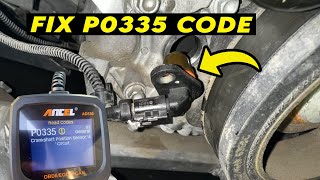
- Inspect Wiring and Connector: Locate the crankshaft position sensor on the passenger side of the engine block, near the transmission bellhousing. Carefully inspect the sensor's electrical connector and wiring harness for any signs of damage, such as melting from the nearby exhaust, corrosion, or loose connections.
- Test the Sensor: If the wiring appears intact and the software is current, test the sensor itself. Using a multimeter set to AC volts, check for a signal while a helper cranks the engine. A functioning sensor should produce a small AC voltage. For a more definitive test, use an oscilloscope to view the sensor's square waveform.
- Check the Reluctor Ring: This is an advanced step. If the sensor and wiring are good but the signal is erratic, the problem could be the reluctor ring on the crankshaft. This usually requires significant disassembly to inspect.
- Test the PCM: If all previous steps fail to identify the problem, the PCM's driver circuit for the crank sensor may be faulty. This is extremely rare and should be the last consideration.
Parts You'll Likely Need
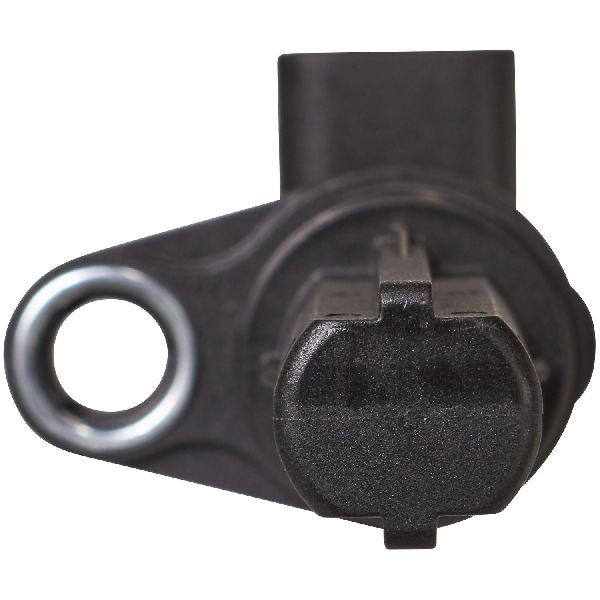
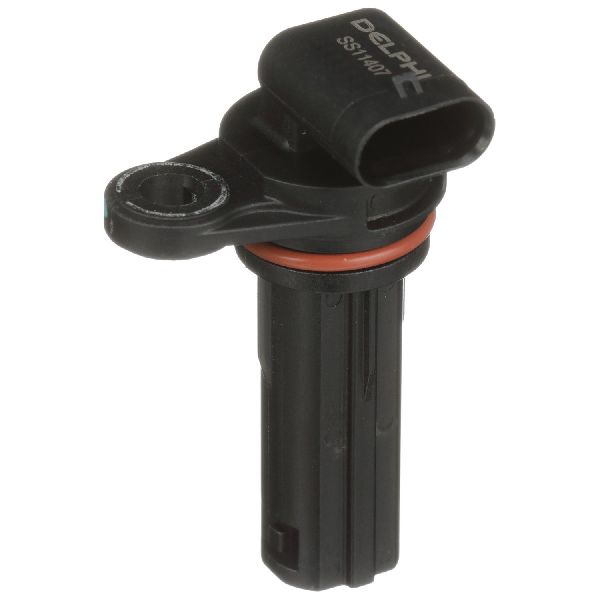
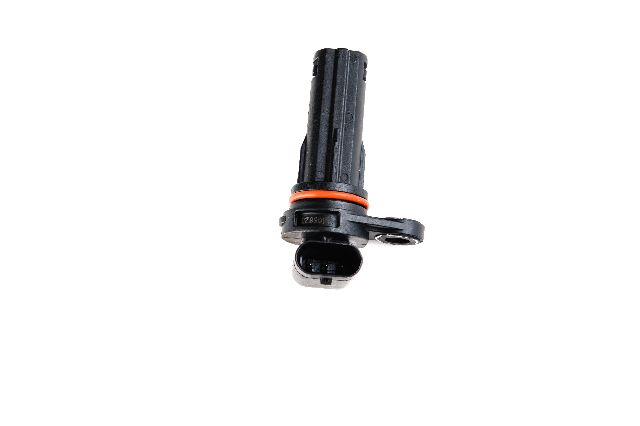
- Crankshaft Position Sensor
(OEM #05149167AD)— This is the most commonly replaced hardware component for code P0335 after software issues have been ruled out.
Trusted brands: Mopar, NGK, Delphi, Standard Motor Products
OEM price range: $40-$60
Aftermarket price range: $28-$45
Related Codes That Often Appear With This One
- P0133 — TSB #1813522 notes that P0335 can appear alongside P0133 (O2 Sensor 1/1 Slow Response) and may be resolved with the same PCM software update.
- P0153 — TSB #1813522 also lists P0153 (O2 Sensor 2/1 Slow Response) as a code that can be set with P0335 and fixed via a software update.
- U0140 — TSB #1810416 and #18-088-16 REV. A document that P0335 can be accompanied by U0140 (Lost Communication With Body Control Module), suggesting a potential software or broader electrical issue resolved by a PCM flash.
- P2610 — TSB #18-088-16 REV. A links P0335 with P2610 (PCM Internal Engine Off Timer Performance), especially in high ambient temperatures, with a recommended software update fix.
- P0456 — TSB #18-088-16 REV. A also connects P0335 to P0456 (EVAP System Small Leak), indicating a PCM software update could resolve both.
Technical Service Bulletins (TSBs) & Recalls
- Bulletin #1813522: Notes P0335 can be set with O2 sensor codes and fixed with a software update.
- Bulletin #1807516: Mentions MIL illumination for P0335 and available software improvements.
- Bulletin #1810416: Cites P0335 being set along with U0140, pointing to a software fix.
- Bulletin #18-088-16 REV. A: Links P0335 with other codes in high ambient temperatures, solvable by a PCM update.
- Bulletin #18-075-16: States P0335 can be the sole code present and that PCM software improvements are available.
- NHTSA ID #10149010 (Bulletin #68079375A): A 2015 TSB where engineering requested to be contacted before replacing the sensor for P0335, indicating a known issue with diagnostics.
- Bulletin #18-050-16: Shows the same P0335 software issue on other 3.6L vehicles like the Dodge Grand Caravan.
Platform-Specific Known Issues
- A high number of Technical Service Bulletins (TSBs) were issued for the 2014-2016 model years specifically calling for a PCM software update to fix erroneous P0335 codes.
- One TSB from 2015 (NHTSA ID #10149010, Bulletin #68079375A) explicitly requested technicians to contact Chrysler engineering before replacing the sensor for a P0335 fault, highlighting the manufacturer's focus on software-related causes.
- Owner forums for the ProMaster and other 3.6L Pentastar vehicles frequently feature threads where a user replaces the sensor, only to find the problem persists until the PCM is reflashed at a dealership.
Mechanic-Grade Diagnostic Values
- Crankshaft Position Sensor 5-Volt Supply Circuit Voltage — expected: 4.5 - 5.2 Volts. Failure: Voltage outside this range indicates a fault in the supply circuit from the PCM or a short.
- Crankshaft Position Sensor Signal Circuit Voltage (connector disconnected) — expected: Approximately 5.0 Volts (± 0.1V). Failure: Incorrect voltage points to a problem within the PCM or the wiring.
- Sensor Ground Circuit Resistance to PCM — expected: Below 5.0 Ohms. Failure: Resistance above 5.0 Ohms indicates an open or high resistance in the ground circuit.
- Resistance between Signal Circuit and Supply Circuit — expected: Above 5.0 Ohms. Failure: Resistance below 5.0 Ohms indicates a short between the two circuits.
Scan Tool Commands That Help
- wiTECH or equivalent high-end scanner: Crankshaft Position Sensor Relearn — After replacing the crankshaft position sensor or performing any timing work. Some vehicles require this procedure for the PCM to recognize the new sensor's signal characteristics. Failure to perform the relearn can sometimes cause the code to persist even with a new part.
Wiring & Ground Locations
- Crankshaft Position Sensor Connector — On the passenger side of the engine block, near the transmission bellhousing, above the starter.. This is the primary connection point for the sensor. It is prone to heat damage from the nearby exhaust and oil contamination, leading to poor connection and circuit faults.
- (K24) CKP Signal Circuit — Wire running from the CKP sensor connector to the PCM.. This wire carries the essential crankshaft position signal. A short to ground or an open circuit on this wire will directly cause a P0335 code.
- (F855) 5-Volt Supply Circuit — Wire from the PCM to the CKP sensor connector.. This wire provides the necessary operating voltage for the sensor. A loss of this voltage will cause the sensor to stop functioning.
- (K900) Sensor Ground Circuit — Wire from the CKP sensor connector to the PCM, providing a ground reference.. A high-resistance or open ground circuit will prevent the sensor from sending a valid signal.
Real Owner Repair Stories
- DodgeForum.com (2004 Dodge Dakota 4.7L (similar engine control principles)) — Engine cranks but will not start after an engine swap.
❌ Tried (didn't work) Initial startup attempt after swapping an engine from a 2003 Durango into a 2004 Dakota.
✅ What actually fixed it The root cause was identified as an incompatible reluctor wheel (tone ring). The donor engine from the Durango had a 16-tooth ring compatible with a 3-plug PCM (JTEC controller), while the recipient Dakota required a 32-tooth ring for its 4-plug PCM (NGC controller). The mismatch in the number of teeth on the reluctor wheel sent a signal the PCM could not interpret, triggering P0335. The fix required using the correct engine or swapping the crankshaft/reluctor ring.
OEM Part Supersession History
5149167AD→5149167AE, then 5149167AF— Supersessions are typically done to improve reliability, durability, or address a known failure mode, such as improving heat resistance or internal electronics. The multiple revisions suggest ongoing improvements to the part.
Heads up: The latest part number, 5149167AF, is the recommended replacement for all previous versions for this application.
Helpful Videos
We Have This Part in Stock


The information in this article is provided for general reference and educational purposes only. Vehicle specifications, procedures, and part compatibility can vary by production date, trim level, and region. Always consult your vehicle's factory service manual and verify part numbers before purchasing or performing repairs. Safety-critical components such as airbags, seat belts, and braking systems should be installed by a qualified professional.
- Ram PROMASTER:
- 🎬 Helpful Videos
- 🛍️ Shop This Part
- What's Unique About the 2014-2018 Ram PROMASTER
- Diagnostic Flowchart
- Symptoms You May Notice
- Most Likely Causes
- Rare But Worth Checking
- Diagnosis Steps
- Parts You'll Likely Need
- Related Codes That Often Appear With This One
- Technical Service Bulletins (TSBs) & Recalls
- Platform-Specific Known Issues
- Mechanic-Grade Diagnostic Values
- Scan Tool Commands That Help
- Wiring & Ground Locations
- Real Owner Repair Stories
- OEM Part Supersession History
- 🎟️ Get 5% Off