

P0335 on 2014-2018 Ram 2500: Crank Sensor Circuit Causes and Fixes
P0335 on a 2014-2018 Ram 2500 indicates a fault in the crankshaft position sensor (CKP) circuit, often causing stalling or a no-start condition. While the sensor itself can fail, it's crucial to check wiring and connectors first. Critically, multiple Ram TSBs confirm this code is frequently triggered by a PCM software issue, especially when seen with codes P2610 or P0456, and the correct fix is a dealer-performed reflash, not a new sensor.
- P0335 is a critical code that can cause your truck to stall or not start; do not drive with it.
- Before replacing the sensor, always inspect the wiring and connector for damage, as this is a common point of failure.
- If P0335 appears with codes P2610 or P0456, the most likely cause is a PCM software issue that a dealer must fix with an update, per multiple Ram TSBs.
- The crankshaft position sensor is a relatively inexpensive part and is moderately difficult to replace for a DIYer.
- Aftermarket engine tuners have been known to cause this code on the 6.4L HEMI engine.
What's Unique About the 2014-2018 Ram 2500
On this generation of Ram 2500, the P0335 code has a unique characteristic documented in multiple Technical Service Bulletins (TSBs). It frequently appears alongside seemingly unrelated codes like P0456 (EVAP System Small Leak) and P2610 (PCM Internal Engine Off Timer Performance). This specific combination of codes often points not to a failed sensor or wiring, but to a PCM software glitch that requires a dealer-performed update to resolve. Ignoring this platform-specific issue can lead to unnecessary and expensive replacement of the crank sensor and EVAP system parts, as confirmed by owners who have had the reflash successfully fix the issue.
Diagnostic Flowchart
Tap your situation to follow the diagnostic path that matches what you're seeing on this vehicle.
Symptoms You May Notice
- Check Engine Light is on
- Engine stalls unexpectedly, sometimes when coming to a stop or when warm.
- Engine cranks but will not start, or has a prolonged cranking time.
- Hard starting (prolonged cranking time).
- Rough idling or engine misfires.
- Loss of power and hesitation during acceleration.
- Engine will not rev past a certain RPM (e.g., 2500 RPM).
- Service Electronic Throttle Control message may appear.
- Service Electronic Braking System message may appear. 🎬 Watch: Common symptoms of a failing crankshaft position sensor.
- Replacing the crankshaft position sensor when the actual cause is a wiring issue or a PCM software glitch that requires a reflash.
- Replacing EVAP system components for a P0456 code without realizing it was triggered alongside P0335 due to a PCM software issue.
- Assuming a no-start condition is a battery or starter issue without first checking for diagnostic trouble codes.
Most Likely Causes
- Faulty Crankshaft Position Sensor 🔴 High Probability The sensor is exposed to harsh conditions at the bottom of the engine, including extreme heat and potential oil leaks, which can cause internal electronics to fail over time.
How to confirm: After checking wiring, test the sensor's output signal with a multimeter or oscilloscope while cranking the engine. A missing or erratic signal points to a failed sensor. Many owners simply replace it as a high-probability item after a visual wiring check.
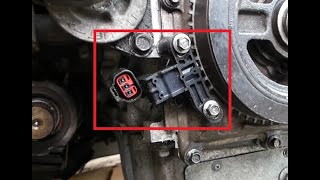
Typical fix: Replace the crankshaft position sensor. On the 5.7L/6.4L HEMI, it is located on the passenger side of the engine block near the transmission, held by a single 10mm bolt. On the 6.7L Cummins, it is on the driver's side of the engine. In a forum repair story, a dealer charged a customer $927 for a new sensor and wiring harness, a job the owner estimated would have cost around $150 in parts to do himself.
Est. part cost: $20-$90 - Wiring Harness or Connector Damage 🟡 Medium Probability The wiring harness leading to the sensor can be damaged by road debris, excessive heat from the exhaust, or chafing against the engine block. Rodent damage is also a known issue where animals chew through the wires. The connector itself can also become corroded or filled with oil and debris.
How to confirm: Visually inspect the entire circuit from the sensor to the PCM for any signs of chafing, melting, or corrosion. Perform a continuity test on the power, ground, and signal wires. Wiggle the harness while the engine is running to see if it causes a stall.
Typical fix: Repair the damaged section of wire or replace the connector pigtail. Ensure the harness is properly secured away from heat sources and moving parts.
Est. part cost: $10-$50 - PCM Software Issue 🟡 Medium Probability Multiple manufacturer TSBs (e.g., #1810822REVA, #1810722) confirm that a software glitch can cause P0335 to set, often in conjunction with P0456 and P2610. This is a well-documented quirk for this platform.
How to confirm: If P0335 is present with P0456 and/or P2610, and no physical faults are found with the sensor or wiring, a software issue is the most likely cause. A dealer can check for available PCM updates using the vehicle's VIN.
Typical fix: Reprogram the Powertrain Control Module (PCM) with the latest available software at a Ram dealership. This procedure is often called a 'reflash'.
Est. part cost: $0-$200 (Labor for flashing)
Rare But Worth Checking
- Damaged Reluctor Ring: The reluctor ring (or tone wheel) on the crankshaft has teeth that the sensor reads. If this ring is damaged, cracked, or has broken teeth, it will cause an erratic signal. This is an uncommon but serious issue that requires significant labor to access and repair, as it may involve removing the transmission or timing cover.
- Aftermarket Tuner/Module Issues: Some aftermarket performance modules that plug into the vehicle's wiring, like a pedal commander, can interfere with sensor signals. One owner reported P0335 and stalling on a 6.4L HEMI; disconnecting the module did not immediately solve the issue, but it was a contributing factor to investigate.
- Faulty Powertrain Control Module (PCM): While rare, the PCM itself can fail internally. This should only be considered after all other possibilities, including sensor, wiring, and software updates, have been exhaustively ruled out.
Diagnosis Steps
- Check for Other Codes: Scan the PCM for any other stored trouble codes. Pay close attention if P2610 or P0456 are present, as this strongly points towards the TSBs requiring a software update.
- Inspect Wiring and Connector: Perform a thorough visual inspection of the crankshaft position sensor's wiring harness and connector. Look for loose connections, corrosion, or any signs of damage from heat (especially near the exhaust) or chafing against the engine block.
- Test Sensor Circuit: Use a multimeter to check for correct voltage and ground at the sensor connector with the key on, engine off. You should have a reference voltage (typically 5V) on one pin and a good ground on another. If voltage is missing, check for a blown fuse.
- Test Sensor Signal: If possible, use an oscilloscope to check the sensor's output signal while an assistant cranks the engine. A clean, consistent square wave should be present. No signal or an erratic, glitchy signal indicates a bad sensor.
- Check for TSBs: If codes P2610 or P0456 are present, contact a Ram dealer with your VIN to confirm if your PCM software is outdated as described in TSBs like #1810822REVA. This should be done before replacing parts.
- Replace the Sensor: If the wiring is good, power and ground are present, and the sensor signal is absent or incorrect (or if you lack an oscilloscope to test), replace the crankshaft position sensor. It is the most common point of failure.
- Inspect Reluctor Ring: If a new OEM sensor does not fix the issue, the next, more involved step is to inspect the reluctor ring for damage. This may require removing the sensor and using a borescope, or removing larger components for a direct visual check.
Parts You'll Likely Need
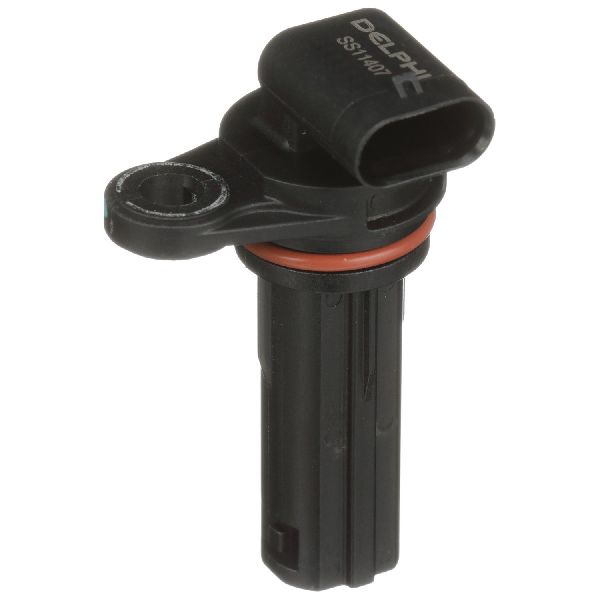
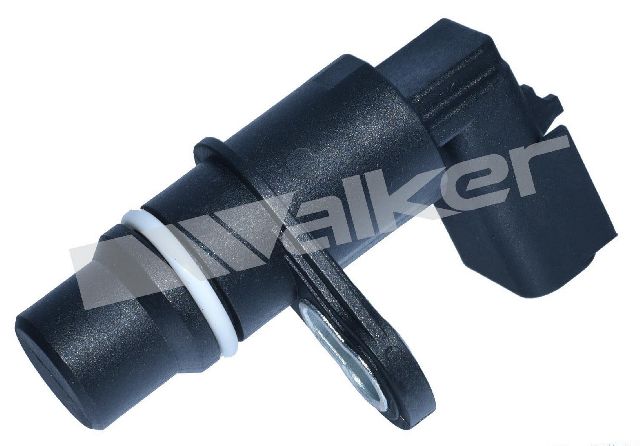
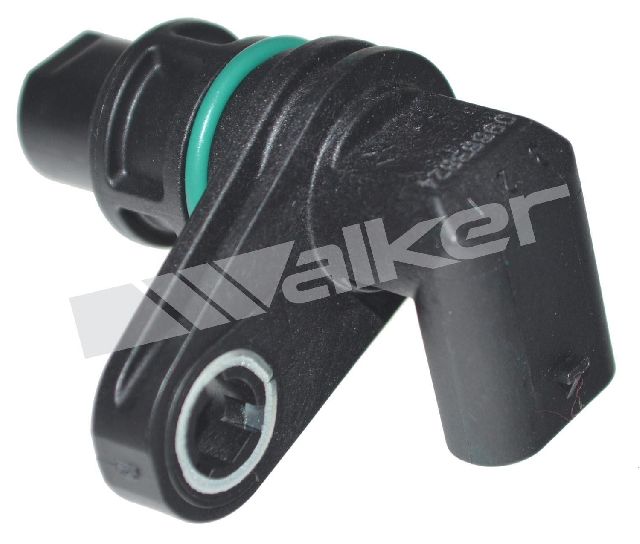
- Crankshaft Position Sensor
(OEM #Mopar #68477925AB (For 5.7L & 6.4L HEMI) or Mopar #68526830AB (For 6.7L Cummins))— This is the most common hardware failure for a P0335 code after ruling out wiring and software issues. Using an OEM Mopar part is highly recommended by owners to avoid compatibility problems.
Trusted brands: Mopar, Bosch, Delphi, NTK
OEM price range: $50-$90
Aftermarket price range: $20-$60
Related Codes That Often Appear With This One
- P2610 — PCM Internal Engine Off Timer Performance. Per TSBs #1810822REVA and others, this code often appears with P0335 due to a PCM software issue that requires a reflash. The timer's logic can be affected by the faulty crank signal.
- P0456 — EVAP System Small Leak. Per TSBs #1810822REVA and others, this code can also be triggered by the same PCM software glitch that causes P0335. The PCM may falsely flag an EVAP leak when the root cause is electronic.
- P0300 — Multiple Cylinder Misfire. A faulty crankshaft position sensor signal disrupts ignition and fuel timing, leading to misfires across multiple cylinders. TSB #18-096-16 notes this combination specifically.
Technical Service Bulletins (TSBs) & Recalls
- 1810822REVA: Notes MIL illumination with DTCs P0335, P2610, and P0456 for 2016 models with 5.7L engines. The fix is to reprogram the PCM.
- 1810722: Mentions MIL illumination with DTCs P0335, P0456, P2610, and P0300 for 2015 models.
- 18-096-16: Notes P0335 may occur at 40-80 mph on 2014 models, possibly with P0300.
- 1806216: Links P0335 with P0456, P2610, and P0300 for 2015 models.
- 18-081-16: Connects P0335, P2610, and P0456 for 2016 models.
- 68079375A: Indicates engineering interest in P0335 on 2014 models, suggesting a deeper issue was being investigated.
- 18-082-16: Associates P0335 with P2610 and P0456 on 2016 models.
Platform-Specific Known Issues
- A series of TSBs (#1810822REVA, #1810722, #1806216) indicate that P0335 can be falsely triggered by a PCM software error, often appearing with P2610 and P0456. The official fix is a PCM reflash, not part replacement.
- TSB #18-096-16 notes that P0335 may appear specifically when driving between 40-80 mph, potentially accompanied by misfire codes (P0300).
- Owner forums confirm the TSB software issue is a real-world problem. Multiple owners with the P0335/P2610/P0456 code combination have had the issue resolved only after a dealer performed the PCM software update.
Mechanic-Grade Diagnostic Values
- CKP Sensor 5-Volt Supply — expected: 4.5 - 5.2 Volts DC. Failure: Voltage outside this range indicates a problem with the PCM or wiring.
- CKP Sensor Signal Circuit (Key On, Engine Off) — expected: Approximately 5.0 Volts DC. Failure: No voltage or significantly lower voltage suggests a circuit or sensor issue.
- CKP Sensor Signal (Engine Cranking) — expected: Signal should toggle between ~5V and 0V (Hall-effect sensor).. Failure: No toggling signal indicates a failed sensor or damaged reluctor wheel.
- CKP Sensor Circuit Resistance to Ground — expected: Less than 5.0 Ohms for supply and signal circuits to the PCM.. Failure: Higher resistance indicates an open or high-resistance in the wiring.
- Scan Tool RPM Reading (During Cranking) — expected: 100 - 500 RPM. Failure: A reading of zero RPM while the engine is physically cranking strongly points to a failed CKP sensor or circuit.
Scan Tool Commands That Help
- wiTECH (Dealer Tool) or equivalent (Appcar, HP Tuners): Cam/Crank Relearn — This procedure is required after replacing the crankshaft position sensor, flexplate, or after certain PCM software updates to synchronize the sensor signals with the PCM. Failure to perform this can result in rough running or misfire codes even with a good sensor.
- wiTECH (Dealer Tool): Flash ECU / PCM Reprogram — Used to load updated software from the manufacturer to fix bugs. This is the specific fix for P0335 when it appears with P2610 and P0456 as noted in multiple TSBs.
Wiring & Ground Locations
- CKP Sensor Connector (HEMI) — On the passenger side of the engine block, near the transmission bell housing.. This is the primary point for testing power, ground, and signal directly at the sensor.
- PCM Connector C2 (Tan) — The rear (closest to firewall) of the two main connectors on the PCM, located on the driver's side of the engine bay.. This connector contains the pins for the CKP sensor circuit. Testing here confirms continuity from the sensor to the PCM.
- (F855) 5-volt Supply Circuit — Pin on the CKP sensor connector and PCM connector C2.. This wire provides the reference voltage to the sensor. A loss of this voltage (due to a broken wire or internal PCM fault) will cause P0335.
- (K24) CKP Signal Circuit — Pin on the CKP sensor connector and PCM connector C2.. This is the wire that carries the crankshaft position signal back to the PCM. Shorts or opens on this circuit are a direct cause of the code.
- (K900) Sensor Ground Circuit — Pin on the CKP sensor connector and PCM connector C2.. Provides the ground reference for the sensor. A bad ground is a common cause of faulty sensor readings.
- Main Engine/Body Grounds — One large cable from the battery negative terminal to the engine block, and a smaller wire to the body, typically near the driver's side headlight.. A poor main ground connection can cause a variety of electrical issues, including erratic sensor behavior. While not a direct cause, it should be checked if multiple electrical faults are present.
Real Owner Repair Stories
- RamForum.com user 'zeddy' (2017 Ram 2500 6.4L HEMI with 52k miles) — Truck started sputtering and stalling, 'Service electronic throttle' message appeared, P0335 code stored. Engine would die, have a long crank time, and would not rev over 2500 RPM.
❌ Tried (didn't work) Disconnecting an aftermarket pedal commander., Considering cleaning the throttle body.
✅ What actually fixed it The dealership replaced the crankshaft position sensor and the wiring harness. The total cost was $927. The owner noted the repair was not covered under the powertrain warranty as it was deemed a 'wear and tear' item.
OEM Part Supersession History
68140678AB, 68140678AC→68477925AB— Standard part revision and consolidation by the manufacturer.
Helpful Videos
We Have This Part in Stock


The information in this article is provided for general reference and educational purposes only. Vehicle specifications, procedures, and part compatibility can vary by production date, trim level, and region. Always consult your vehicle's factory service manual and verify part numbers before purchasing or performing repairs. Safety-critical components such as airbags, seat belts, and braking systems should be installed by a qualified professional.
- Ram 2500:
- 🎬 Helpful Videos
- 🛍️ Shop This Part
- What's Unique About the 2014-2018 Ram 2500
- Diagnostic Flowchart
- Symptoms You May Notice
- Most Likely Causes
- Rare But Worth Checking
- Diagnosis Steps
- Parts You'll Likely Need
- Related Codes That Often Appear With This One
- Technical Service Bulletins (TSBs) & Recalls
- Platform-Specific Known Issues
- Mechanic-Grade Diagnostic Values
- Scan Tool Commands That Help
- Wiring & Ground Locations
- Real Owner Repair Stories
- OEM Part Supersession History
- 🎟️ Get 5% Off