

P0335 on 2019-2021 Ram 1500: Crankshaft Position Sensor Circuit Causes & Fixes
P0335 on a 2019-2021 Ram 1500 indicates a fault in the crankshaft position sensor circuit. The most common and manufacturer-recommended first step is a PCM software update from a dealer, as noted in several TSBs (e.g., 18-076-20, 18-020-26). If the software is current, the next most likely cause is a failed crankshaft position sensor. Always check for software updates before replacing parts to avoid unnecessary repairs.
- For a P0335 code on a 2019-2021 Ram 1500, your first step should be to check with a dealer if a PCM software update is available.
- This code is almost always accompanied by P0339 (Crankshaft Position Sensor Intermittent).
- If a hardware replacement is needed, the most common part is the crankshaft position sensor itself. Use a genuine Mopar part to avoid issues.
- Before replacing the sensor, always inspect the wiring harness and connector for heat damage or corrosion, as this is another possible cause.
What's Unique About the 2019-2021 Ram 1500

For the 5th generation Ram 1500, this code is frequently linked to software issues, not just hardware failure. Ram has issued multiple Technical Service Bulletins (TSBs) for both the 3.6L and 5.7L engines that call for a PCM software update to correct overly sensitive fault logic. This code is also almost always seen with P0339 (Crankshaft Position Sensor Intermittent), further pointing to a logic or intermittent connection issue rather than a complete sensor failure, as confirmed in TSBs like #18-076-20.
Diagnostic Flowchart
Tap your situation to follow the diagnostic path that matches what you're seeing on this vehicle.
Symptoms You May Notice
- Check Engine Light (MIL) is on
- Engine will not start
- Engine cranks for a long time before starting (extended crank)
- Engine stalls, especially when coming to a stop, at idle, or when hot
- Rough running or engine misfires
- Hesitation or lack of power during acceleration
- Reduced engine power or 'limp mode'
- Traction Control System (TCS) or Electronic Stability Control (ESC) light may illuminate simultaneously
- Replacing the crankshaft position sensor without first checking for required PCM software updates. Many owners replace the sensor only to have the code return because the root cause was a software logic issue.
- Using a cheap aftermarket sensor. Forum threads are filled with owners who had the P0335/P0339 codes return shortly after installing a non-OEM sensor, only resolving the issue by switching to the genuine Mopar part.
- Replacing the camshaft position sensor. P0335 specifically points to the crankshaft sensor circuit. While related, the camshaft sensor has its own set of codes (e.g., P0340, P0344).
Most Likely Causes

- Outdated Powertrain Control Module (PCM) Software 🔴 High Probability Multiple TSBs (#18-020-26, #18-076-20, #18-016-23) have been issued by the manufacturer to address this code with a software update. The logic for detecting crank sensor faults was likely too sensitive, especially during events like cold starts.
How to confirm: A Ram dealership or a properly equipped independent shop with a wiTECH scan tool can check the current PCM software version against the latest available version referenced in the TSBs.
Typical fix: The PCM must be reprogrammed (flashed) with the updated software. This must be done by a dealer or qualified shop. The process requires a stable power supply to the vehicle to prevent module failure during the flash.
Est. part cost: $0-$200 - Faulty Crankshaft Position Sensor 🟡 Medium Probability The sensor is located in a high-heat area on the engine block near the transmission and exhaust, and repeated heat cycles can cause the internal electronics to fail over time. Owners report failures are more common once the engine is fully warmed up.
How to confirm: After confirming the PCM software is up to date, the sensor's circuit should be tested. Using an oscilloscope to view the sensor's square wave signal is the most definitive test. A multimeter can be used to check for a reference voltage (typically 5V), ground, and a fluctuating signal voltage while cranking the engine.
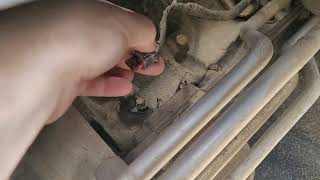
Typical fix: Replace the crankshaft position sensor. It is highly recommended to use an OEM Mopar part to avoid compatibility issues and repeat failures, a sentiment echoed in many owner forums. Be careful during removal, as the plastic sensor can become brittle 🎬 Watch: How to remove the sensor on a 2019 Ram and break off in the engine block.
Est. part cost: $25-$75 - Wiring Harness or Connector Damage ⚪ Low Probability The wiring harness runs near hot exhaust components and can become brittle, melted, or chafed. The connector pins can also corrode or lose tension, causing a poor connection. Rodent damage is also a possibility.
How to confirm: Visually inspect the entire wiring harness from the sensor to the PCM for any signs of damage, melting, or corrosion. Pay close attention to the pigtail right at the sensor. Wiggle the connector and harness with the engine running (if possible) to see if it triggers the fault.
Typical fix: Repair the damaged section of wire or replace the connector pigtail. Secure the harness away from heat sources using zip ties or heat-reflective tape.
Est. part cost: $10-$50
Rare But Worth Checking
- Damaged Tone Ring: The tone ring (or reluctor wheel) is what the crank sensor reads. While rare, damage to its teeth from debris or internal engine failure can cause a P0335 code. This is a labor-intensive repair requiring transmission removal and should only be considered after all other causes are ruled out.
- Failed Powertrain Control Module (PCM): This is the least likely cause. The PCM should only be considered after all other possibilities, including the software, sensor, wiring, and tone ring, have been thoroughly tested and ruled out.
- Weak or Failing Battery: On some Jeep models sharing similar electronics, a weak battery has been anecdotally linked to triggering a P0335 code, as low voltage during cranking can disrupt sensor signals. While not a primary cause, ensuring the battery is healthy is a good preliminary step.
Diagnosis Steps
- Check for Technical Service Bulletins (TSBs) for your vehicle's VIN. A dealer software update is the most likely and first recommended fix.
- Scan for all DTCs. Note if P0339 and/or misfire codes are also present, which is highly likely.
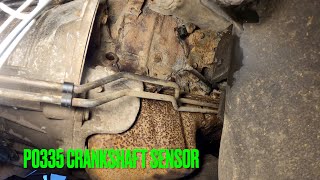
- Visually inspect the crankshaft position sensor and its wiring harness. On the 5.7L HEMI, it's located on the passenger side of the engine block, near the rear, just above the transmission cooler lines. On the 3.6L V6, it is in a 🎬 See this guide for 3.6L Pentastar crank sensor issues similar location. Look for any signs of melting, chafing, or corrosion.
- If a scan tool is available, monitor the engine RPM signal while cranking. If the RPM reads 0 or is erratic, the PCM is not receiving a valid signal.
- Test the sensor's electrical connector. Using a multimeter, check for the correct reference voltage (typically a 5V signal on one pin) and a solid ground on another pin.
- If wiring and software are confirmed good, replace the crankshaft position sensor. Be prepared for a difficult connector release; it often has a red locking tab that must be slid out before the main tab can be depressed.
- If the problem persists after a software update and a new OEM sensor, perform a detailed wiring harness inspection, checking for continuity and shorts between the sensor connector and the PCM.
- If all else fails, the tone ring may need to be inspected for damage, which is a labor-intensive job requiring transmission removal.
Parts You'll Likely Need

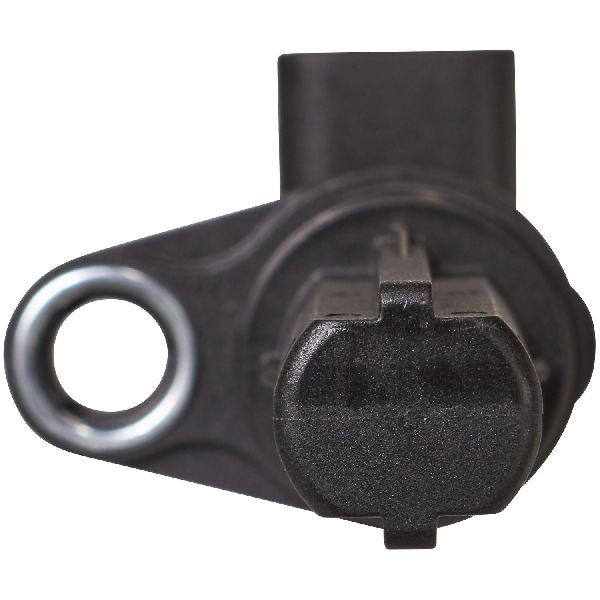
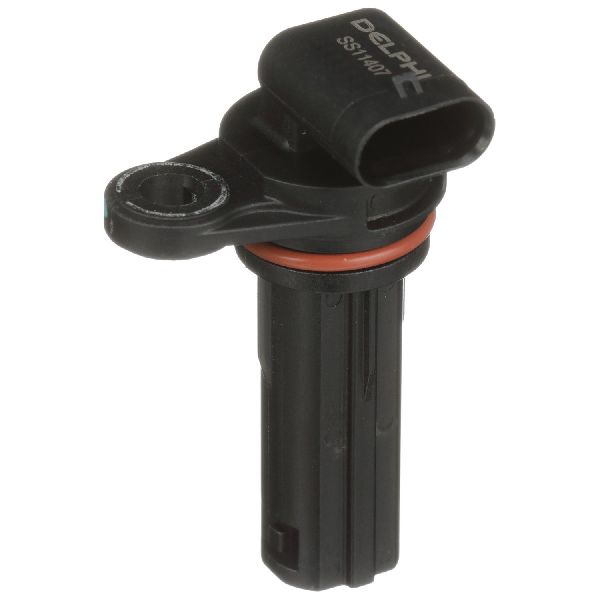
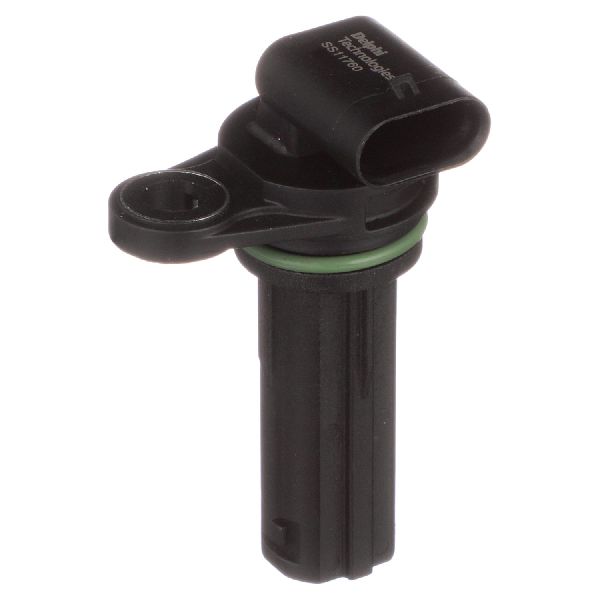
- Crankshaft Position Sensor
(OEM #68477925AB)— This sensor is the primary hardware component that fails, leading to the P0335 code after software issues are ruled out. Using the OEM Mopar part is strongly recommended by owners to ensure compatibility and longevity. This part number supersedes previous versions 🎬 Watch: Step-by-step 5.7L Hemi crankshaft sensor replacement 68140678AB and 68140678AC.
Trusted brands: Mopar
OEM price range: $40-$75
Aftermarket price range: $15-$45
Related Codes That Often Appear With This One
- P0339 — P0339 (Crankshaft Position Sensor Intermittent) is almost always found with P0335 on this platform. The manufacturer TSBs list them together, indicating the PCM often sees the signal as both faulty (P0335) and intermittent (P0339) due to the same root cause, which is often a software issue.
- P0300-P0308 — Misfire codes (e.g., P0306 as seen in TSB #18-020-26) can occur because if the PCM doesn't know the crankshaft's position, it cannot properly time ignition spark or fuel injection, leading to misfires.
- U1428 — This code for 'Implausible Torque Request Signal Received' has been reported by owners alongside P0335/P0339, often when the truck enters limp mode. It indicates a communication breakdown between modules, likely triggered by the loss of the critical crank signal.
Technical Service Bulletins (TSBs) & Recalls
- 18-020-26: Addresses P0335/P0339 and cylinder misfires (P0306) that may be set during cold start catalyst heating on the 3.6L engine.
- 18-076-20 / 1807620: Links P0335/P0339 to a needed software update for the 5.7L engine, and also addresses P258B and P0456.
- 18-016-23: Mentions MIL illumination for P0335/P0339 and other software enhancements for idle stability.
- 18-074-20 / 1807420REVA: Also points to a software update for P0335/P0339 on the 5.7L engine.
- 68079375A: An older bulletin indicating engineering interest in the fault conditions, suggesting it was a known issue under investigation.
Platform-Specific Known Issues
- TSB #18-020-26, #18-076-20, #18-016-23, and others indicate that a PCM software update is a common and manufacturer-recommended fix for P0335/P0339 codes on this platform.
- The sensor can be difficult to remove due to corrosion or a tight fit, sometimes requiring careful prying with a screwdriver or using pliers to pull it out. It can become brittle and break, leaving the tip inside the engine block if too much force is used.
- The electrical connector has a red locking tab that can be difficult to release. It must be slid sideways before the main release tab can be depressed.
Mechanic-Grade Diagnostic Values
- 5-Volt Supply Circuit Voltage — expected: 4.7 to 5.2 Volts with ignition on, engine off, sensor disconnected.. Failure: Voltage outside this range indicates a problem with the PCM or wiring.
- Sensor Ground Circuit Resistance — expected: Less than 3.0 to 5.0 Ohms between the sensor connector ground pin and the PCM connector.. Failure: Higher resistance indicates an open or high-resistance ground path.
- CKP Signal Circuit Voltage (while cranking) — expected: A fluctuating digital square wave switching between 0V and 5V on an oscilloscope. A multimeter on AC setting may show ~200mV or more.. Failure: A flatline 0V or 5V signal indicates a failed sensor or wiring issue.
- CKP Sensor Internal Resistance — expected: Generally between 200 to 1000 ohms, but this can vary by manufacturer.. Failure: A reading of zero or infinite ohms indicates a shorted or open sensor.
Scan Tool Commands That Help
- wiTECH or equivalent professional scan tool (e.g., Autel MaxiSys): CKP Pattern Relearn (or similar wording like 'Crank Pattern Learn') — After replacing the crankshaft position sensor, or after performing major engine work like a camshaft swap, to allow the PCM to learn the new sensor's signal pattern for accurate misfire detection. However, many forum users report that this is not strictly necessary for this platform and the vehicle will often self-learn.
Wiring & Ground Locations

- CKP Sensor Circuit (5.7L) — Harness connector at the crankshaft position sensor, passenger side rear of engine block.. These are the specific wires to test: F855 (5V Supply), K900 (Sensor Ground), and K24 (CKP Signal). Damage to any of these will cause P0335.
- Main Engine Ground — The battery negative terminal connects directly to the engine block.. A poor engine ground can cause a voltage differential, leading to erratic behavior from critical sensors like the CKP. The resistance from the battery terminal to the engine block should not exceed two milliohms.
- PCM Connector C2 — At the Powertrain Control Module (PCM).. This is the termination point for the CKP sensor harness, used for continuity and short-to-ground testing from the sensor end.
Real Owner Repair Stories
- RamForum.com user (2019 Ram 1500 6.4L (similar architecture to 5.7L)) — Stalling, P0335 code.
❌ Tried (didn't work) Initial diagnosis pointed to sensor and harness.
✅ What actually fixed it The dealer replaced the crankshaft sensor and a section of the wiring harness. The total cost was significant ($927), and the user noted that the parts were considered 'wear and tear' and not covered under the powertrain warranty.
OEM Part Supersession History
68140678AB, 68140678AC→68477925AB— Standard part revision and improvement by the manufacturer.
Helpful Videos

We Have This Part in Stock


The information in this article is provided for general reference and educational purposes only. Vehicle specifications, procedures, and part compatibility can vary by production date, trim level, and region. Always consult your vehicle's factory service manual and verify part numbers before purchasing or performing repairs. Safety-critical components such as airbags, seat belts, and braking systems should be installed by a qualified professional.
- Ram 1500:
- 🎬 Helpful Videos
- 🛍️ Shop This Part
- What's Unique About the 2019-2021 Ram 1500
- Diagnostic Flowchart
- Symptoms You May Notice
- Most Likely Causes
- Rare But Worth Checking
- Diagnosis Steps
- Parts You'll Likely Need
- Related Codes That Often Appear With This One
- Technical Service Bulletins (TSBs) & Recalls
- Platform-Specific Known Issues
- Mechanic-Grade Diagnostic Values
- Scan Tool Commands That Help
- Wiring & Ground Locations
- Real Owner Repair Stories
- OEM Part Supersession History
- 🎟️ Get 5% Off