

P0335 on 2015-2020 Jeep Wrangler: Crankshaft Sensor Circuit Fixes
P0335 on a 2015-2020 Jeep Wrangler almost always means the crankshaft position sensor is failing. Symptoms include stalling when hot, a crank-no-start condition, or rough running. Replacing the sensor is a common, inexpensive DIY fix, with the part costing between $20 and $60. The sensor is known to fail from 'heat soak' as the engine warms up.
- P0335 on a 2015-2020 Wrangler is most likely a failed crankshaft position sensor, often due to heat.
- Key symptoms are stalling when the engine is warm, a crank-no-start condition, and rough running.
- The fix is typically a straightforward DIY replacement of the sensor, located on the passenger side of the engine block.
- Using an OEM Mopar sensor is strongly recommended to avoid further issues.
- Always inspect the wiring harness near the sensor for heat damage from the exhaust.
What's Unique About the 2015-2020 Jeep WRANGLER

The 2015-2020 model years span two Wrangler generations, the JK (2012-2018) and the JL (2018-present), but both primarily use the 3.6L Pentastar V6 engine. On this engine, the P0335 code is a very common issue. The problem is often heat-related; the sensor begins to fail as the engine warms up, causing stalling, and then works again after cooling down. This intermittent failure, often called 'heat soak', is a classic sign of a failing sensor on these Jeeps and is often logged alongside P0339 (Crankshaft Position Sensor Intermittent). [Bulletin #1807023, Bulletin #1814422]
Diagnostic Flowchart
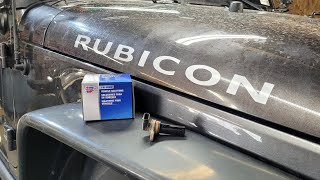
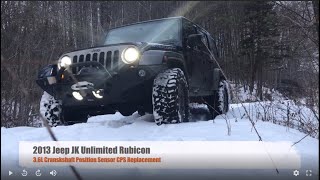
 🎬 See this step-by-step replacement walkthrough for the 3.6L engine." loading="lazy" style="max-width:100%;height:auto;border-radius:6px;display:block;box-shadow:0 2px 8px rgba(0,0,0,0.1);" />
Tap your situation to follow the diagnostic path that matches what you're seeing on this vehicle.
Generation note: This range covers the end of the Wrangler JK generation (2015-2018) and the beginning of the JL generation (2018-2020). Both generations use the 3.6L Pentastar V6, and the location and failure pattern of the crankshaft position sensor are very similar for this engine across both platforms.
Symptoms You May Notice

- Engine cranks but will not start
- Engine stalls unexpectedly, especially when warm or sitting at a stop light
- Hard starting or extended cranking time
- Check Engine Light is on or flashing
- Rough idle or engine misfiring
- Loss of engine power or hesitation
- Replacing the camshaft position sensors. While they are part of the timing system, P0335 specifically points to the crankshaft sensor circuit.
- Assuming a bad fuel pump, as the symptoms of stalling and no-start can be similar.
Most Likely Causes

- Failing Crankshaft Position Sensor 🔴 High Probability The sensor is known to become sensitive to heat as it ages, causing it to stop sending a signal when the engine reaches operating temperature, a condition known as 'heat soak'. This is the most frequent cause for P0335 on this platform, with many owners reporting stalling only on hot days or after the engine is fully warmed up.
How to confirm: Use a scan tool to monitor RPMs while cranking. If the RPM reading is zero or erratic, the sensor is likely bad. The issue often occurs when the engine is hot and may disappear when it cools, making it intermittent.
Typical fix: Replace the crankshaft position sensor. It is held by a single 10mm bolt and is accessible from underneath the passenger side of the vehicle, near the bell housing.
Est. part cost: $20-$60 - Damaged Wiring or Connector 🟡 Medium Probability The sensor's wiring harness is routed near the hot exhaust manifold and catalytic converter. Over time, this heat can make the plastic loom and wire insulation brittle, leading to cracks, melted plastic, and exposed or broken wires. Corrosion can also form in the connector pins.
How to confirm: Visually inspect the wiring harness leading to the crankshaft position sensor. Look for melted plastic, frayed or broken wires, and green corrosion inside the connector plug. Wiggle the harness while the engine is running (if it runs) to see if it causes a stall.
Typical fix: Repair the damaged section of wire or replace the connector pigtail if it is corroded or broken. Ensure the harness is secured away from the exhaust manifold using zip ties or heat-protective loom.
Est. part cost: $15-$40 for a pigtail connector.
Rare But Worth Checking
- Damaged Reluctor Ring: The reluctor ring (or tone wheel) is what the sensor reads. While durable, it can be damaged (e.g., bent teeth, sheared keyway) during other engine or transmission work. A visual inspection is necessary if a new sensor and good wiring do not resolve the code, but this requires more significant disassembly.
- Faulty Powertrain Control Module (PCM): This is very rare. The PCM is the last item to suspect after thoroughly testing the sensor, wiring, and reluctor ring. Some owners have reported needing a PCM replacement after multiple new sensors did not fix the issue, but this is uncommon.
Diagnosis Steps
- Read all fault codes with an OBD-II scanner. Note if other codes like P0339 or misfire codes are present.
- Using the scanner's live data function, monitor engine RPM while cranking. A reading of '0' strongly suggests a problem with the CKP sensor or its circuit.
- Get under the vehicle on the passenger side. Locate the crankshaft position sensor on the engine block, near where it meets the transmission bell housing.
- Visually inspect the sensor's connector and wiring harness. Look for signs of melting from exhaust heat, chafed wires, or corrosion in the connector pins. Pay close attention to the area near the exhaust manifold.
- If the wiring appears intact, the most likely cause is a failed sensor. Disconnect the electrical connector (you may need a small flathead screwdriver to lift the locking tab).
- Remove the single 10mm bolt holding the sensor in place. A ratchet with a short extension may be needed.
- Gently twist and pull the sensor to remove it. It may be stuck by the O-ring; a pair of pliers can be used to gently wiggle it out.
- Lubricate the O-ring on the new sensor with fresh engine oil before installation to ensure a good seal and prevent damage.
- Install the new sensor, hand-tighten the bolt, then torque to specification (approx. 106 in-lbs). Do not overtighten, as the sensor housing is plastic.
- Reconnect the wiring harness securely, ensuring it clicks into place. Clear the trouble codes with the scanner and perform a test drive to confirm the fix.
Parts You'll Likely Need
- Crankshaft Position Sensor
(OEM #5149167AF (supersedes 5149167AD, 5149167AE))— This sensor is the most common failure point for code P0335, often failing due to heat soak after the engine has been running. It is highly recommended to use an OEM Mopar sensor to avoid compatibility issues.
Trusted brands: Mopar, NTK, Delphi
OEM price range: $45-$80
Aftermarket price range: $20-$50 - Crankshaft Position Sensor Connector Pigtail
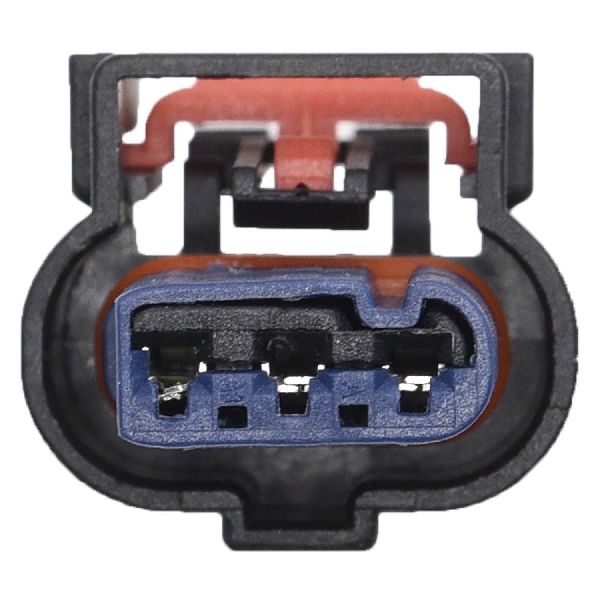
(OEM #Standard Motor Products S2316 (aftermarket))— Needed if the original connector or wiring is melted, corroded, or damaged from heat exposure near the exhaust.
Trusted brands: Standard Motor Products, Dorman, Walker
OEM price range: N/A (typically sold as part of a larger harness)
Aftermarket price range: $15-$30
Related Codes That Often Appear With This One
- P0339 — P0339 indicates an *intermittent* signal from the crankshaft sensor. It frequently appears with P0335 as the sensor begins to fail, especially with heat, causing the signal to drop out. Multiple TSBs from Jeep group these two codes together. [Bulletin #1814422, Bulletin #18-090-16]
- P0300 — P0300 (Random/Multiple Cylinder Misfire) can occur because without a proper crankshaft signal, the PCM cannot time the spark correctly, leading to misfires. [Bulletin #18-041-16 REV. A, 38]
Technical Service Bulletins (TSBs) & Recalls
- 1807023: Mentions P0335 in a list of potential DTCs related to the electrical system on 2020 models.
- 1814422: Notes that a MIL illumination on 2018 models may be caused by P0335 or P0339.
- 18-090-16: Lists P0335 as a possible code stored in the PCM memory for 2016 models, often addressed by a software update.
- 18-041-16 REV. A: Associates P0335 with misfire codes on 2015 models.
- 1801922REVA: Cites P0335 as a potential code for a MIL illumination on 2020 models.
Platform-Specific Known Issues
- Multiple Technical Service Bulletins (TSBs) from Jeep list P0335 as a potential code that may illuminate the Malfunction Indicator Lamp (MIL). These bulletins often group it with P0339 (Crankshaft Position Sensor Intermittent), confirming the common failure pattern of an intermittent signal loss. [Bulletin #1807023, Bulletin #1814422, Bulletin #18-090-16, Bulletin #1801922REVA] These TSBs often involve a PCM software update to improve diagnostic logic rather than a component recall.
Mechanic-Grade Diagnostic Values
- Crankshaft Position Sensor 5V Reference Voltage — expected: Approximately 5.0 volts DC with key on, engine off.. Failure: A reading of 0 volts indicates an open in the supply circuit or a faulty PCM. A reading significantly lower than 5V could indicate a short to ground.
- Crankshaft Position Sensor Ground Circuit — expected: Near 0 ohms resistance to a known good ground (like the battery negative terminal).. Failure: High resistance (above 1 ohm) indicates a poor ground connection, which can cause erratic sensor signals.
- Crankshaft Position Sensor Signal Wire Voltage (Static Test) — expected: With the sensor connected and key on, back-probing the signal wire should show a voltage that switches between approximately 0V and 5V as the engine is slowly rotated by hand.. Failure: If the voltage does not switch, or is stuck high or low, the sensor is likely faulty.
Scan Tool Commands That Help
- Autel MaxiSys or equivalent professional scanner (e.g., wiTECH): Cam/Crank Relearn (or 'Cam Crank Reward') — This function is required after replacing the crankshaft position sensor, camshaft position sensor, timing components, or PCM. It synchronizes the signals from the new components with the PCM. Failure to perform this relearn can result in a persistent P0335 code, rough idle, or misfires even with a good sensor.
Wiring & Ground Locations
- CKP Sensor Connector — On the passenger side of the engine block, near the junction with the transmission bell housing.. This is the primary connection point for the sensor. It is susceptible to heat damage from the nearby exhaust, as well as oil contamination, leading to poor connections that trigger P0335.
- PCM Ground — The primary PCM and sensor grounds are typically located on the engine block or cylinder head. On the 3.6L Pentastar, key ground points are often found near the alternator and on the front of the cylinder heads.. A loose or corroded PCM ground can cause a floating reference for all sensors, including the crankshaft position sensor, leading to erratic signals and codes like P0335 even when the sensor and its direct wiring are good.
Real Owner Repair Stories
- Reddit user in r/MechanicAdvice (2013 Jeep Grand Cherokee 3.6L Pentastar) — Started with lifter tick, which led to a major timing job. After replacing cams, phasers, and timing components, the engine developed a P0300 random misfire on bank 2 after warming up.
❌ Tried (didn't work) Replacing all timing components, replacing bank 2 exhaust cam a second time, checking injector and coil wiring, checking for leakdown.
✅ What actually fixed it The issue was traced back to the reluctor wheel on the back of the new aftermarket camshaft being at the wrong angle, causing cam/crank correlation issues that manifested as misfires after the engine entered closed loop. This highlights that even without a direct P0335, a crank signal's relationship to the cam signals is critical and can be disrupted by incorrect aftermarket parts. - YouTube video by The Jeep Life (2012 Jeep Wrangler with 98,000 miles) — While driving on the highway, experienced a sudden loss of power, flashing check engine light, and engine misfires. Codes P0339 (Crank Position Sensor Intermittent) and P0300 (Multiple Cylinder Misfire) were stored.
❌ Tried (didn't work) The diagnosis pointed directly to the crank sensor.
✅ What actually fixed it The crankshaft position sensor was replaced. The owner noted this is a common failure item around this mileage. The repair was straightforward and took about 10 minutes.
When the Usual Fixes Don't Work
- While the vast majority of P0335 codes on the 3.6L Pentastar are fixed by replacing the sensor, a persistent code after replacement strongly points to one of three less common issues: 1) The wiring harness or connector is damaged from heat, which was missed on initial inspection. 2) A 'Cam/Crank Relearn' procedure was not performed with a capable scan tool, and the PCM has not synchronized with the new sensor. 3) An inexpensive aftermarket sensor was used and is either dead-on-arrival or provides a signal the PCM cannot properly interpret.
OEM Part Supersession History
5149167AD, 5149167AE→5149167AF— Standard part revision and improvement by the manufacturer.
Heads up: All listed part numbers (AD, AE, AF) are generally interchangeable for the 3.6L Pentastar in this vehicle range. However, it is always recommended to use the latest revision (5149167AF) and to stick with the OEM Mopar brand to avoid quality and compatibility issues seen with some aftermarket sensors.
Helpful Videos



Used OEM Parts in Stock
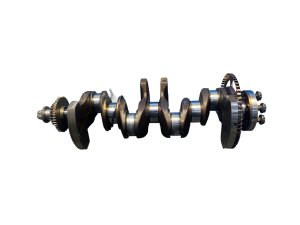
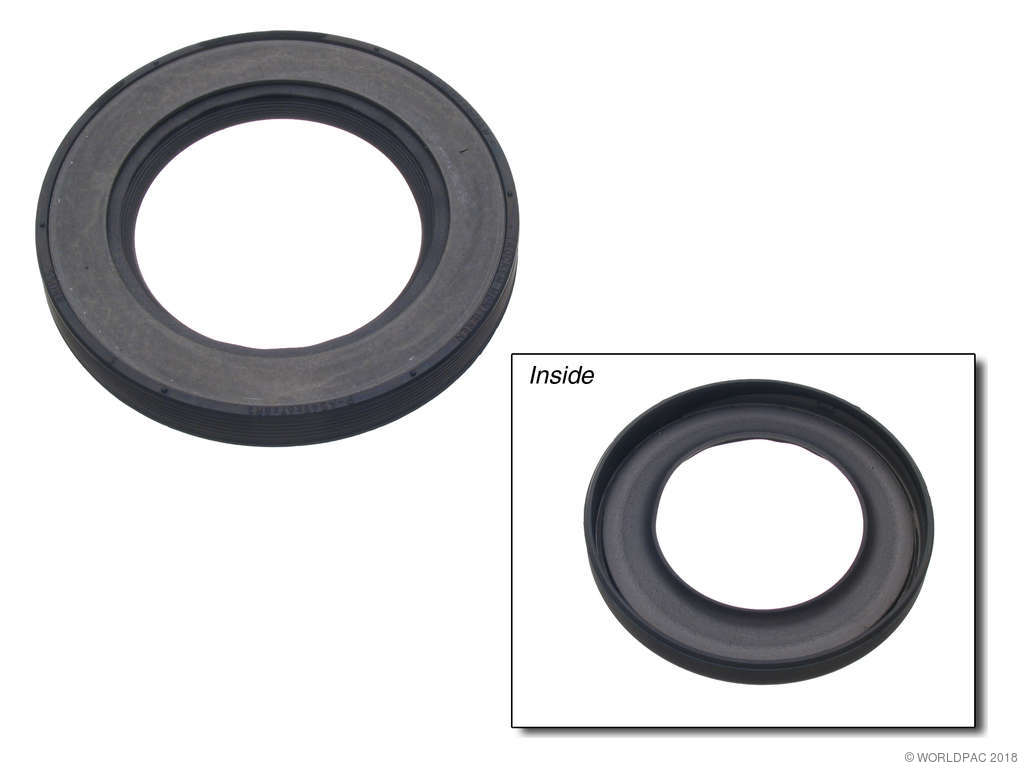
New Aftermarket Parts Available


The information in this article is provided for general reference and educational purposes only. Vehicle specifications, procedures, and part compatibility can vary by production date, trim level, and region. Always consult your vehicle's factory service manual and verify part numbers before purchasing or performing repairs. Safety-critical components such as airbags, seat belts, and braking systems should be installed by a qualified professional.
- Jeep WRANGLER:
- 🎬 Helpful Videos
- 🛍️ Shop This Part
- What's Unique About the 2015-2020 Jeep WRANGLER
- Diagnostic Flowchart
- Symptoms You May Notice
- Most Likely Causes
- Rare But Worth Checking
- Diagnosis Steps
- Parts You'll Likely Need
- Related Codes That Often Appear With This One
- Technical Service Bulletins (TSBs) & Recalls
- Platform-Specific Known Issues
- Mechanic-Grade Diagnostic Values
- Scan Tool Commands That Help
- Wiring & Ground Locations
- Real Owner Repair Stories
- When the Usual Fixes Don't Work
- OEM Part Supersession History
- 🎟️ Get 5% Off