

P0335 on 2015-2016 Jeep Renegade: Crankshaft Sensor Circuit Causes & Fixes
On a 2015-2016 Jeep Renegade with the 2.4L engine, P0335 is very often caused by a software glitch requiring a dealer PCM update, as noted in multiple TSBs. If the software is up-to-date, the second most likely cause is a failed crankshaft position sensor, which can cause stalling when hot. Always check for TSBs with a dealer before replacing parts.
- Before buying any parts, contact a Jeep dealer with your VIN to check for open TSBs or required PCM software updates, as this is the most common fix.
- P0335 is a serious code that can cause the engine to stall while driving. Do not drive the vehicle until it is repaired.
- If a software update is not the cause, the crankshaft position sensor itself is the next most likely culprit, followed by its wiring.
- The code often appears with a specific group of other codes (P0101, P050D, P1CEC, U1424-00), which strongly indicates the software issue.
What's Unique About the 2015-2016 Jeep RENEGADE

For the 2015-2016 Jeep Renegade, particularly those with the 2.4L Tigershark engine, code P0335 is frequently not a hardware problem. Numerous Technical Service Bulletins (TSBs) issued by the manufacturer indicate that this code, often appearing with a cluster of others, is caused by a software issue within the Powertrain Control Module (PCM). In these cases, the fix is a software update performed by a dealer, not the replacement of the crankshaft sensor itself. This makes it crucial to check for applicable TSBs before assuming the sensor has failed. This issue is also common across other FCA vehicles with the same engine, like the Dodge Dart and Chrysler 200.
Diagnostic Flowchart
Tap your situation to follow the diagnostic path that matches what you're seeing on this vehicle.
Symptoms You May Notice
- Engine cranks but will not start
- Engine stalls unexpectedly, sometimes after warming up and won't restart until it cools down.
- Check Engine Light is illuminated
- Rough or unstable idle.
- Hesitation or lack of power during acceleration.
- Extended cranking time before the engine starts.
- Blinking check engine light followed by a solid light.
- Replacing the crankshaft position sensor when a PCM software update was the actual required fix.
- Replacing the camshaft position sensor (P0340), which is a different component. While they can fail together, P0335 specifically points to the crankshaft circuit. 🎬 See this video for a breakdown of P0335 error codes.
Most Likely Causes

- Outdated Powertrain Control Module (PCM) Software 🔴 High Probability Multiple manufacturer TSBs (including #18-061-16 REV. C) were issued to correct software logic that could falsely trigger P0335 along with other codes, often related to engine performance and communication. This indicates a known calibration issue from the factory.
How to confirm: Check the vehicle's service history or contact a Jeep dealership with the VIN to see if software updates related to TSBs #18-061-16, #1806316, or others are pending. A dealer uses a wiTECH tool to verify the current software version.
Typical fix: A dealership or qualified shop must reflash the PCM with the latest software version. This process takes about an hour and is often covered under warranty.
Est. part cost: $0 - Failed Crankshaft Position Sensor (CKP) 🟡 Medium Probability The sensor is located on the rear of the engine block, below the exhaust manifold, 🎬 Watch: How to locate and swap the sensor on MultiAir engines. a high-heat area that can lead to electronic failure over time. The wiring is also close to the hot exhaust, making it vulnerable.
How to confirm: If no software updates are needed and the code persists, test the sensor's output. A common failure mode is stalling when hot; the sensor works when cool but fails at operating temperature. A multimeter should show a fluctuating voltage (or a 5V square wave on an oscilloscope) during cranking. No signal points to a failed sensor.
Typical fix: Replace the crankshaft position sensor. It is held in by a single bolt. 🎬 Watch: Step-by-step guide to replacing the 2.4L crankshaft sensor. After replacement, a crankshaft variation relearn procedure is recommended.
Est. part cost: $35-$125 - Wiring Harness or Connector Issue ⚪ Low Probability The sensor's wiring is routed near the exhaust manifold, making it susceptible to heat damage, melting, or becoming brittle and cracking over time. The connector pins can also corrode or loosen.
How to confirm: Visually inspect the wiring harness leading to the CKP sensor for any signs of melting, chafing, or cracking. Wiggle the harness and connector (with the engine running, if possible) to see if it triggers a stall or code.
Typical fix: Repair the damaged section of the wire or replace the connector pigtail. Ensure the repaired harness is secured away from heat sources.
Est. part cost: $15-$40
Rare But Worth Checking
- Damaged Reluctor Ring: The reluctor ring (or tone wheel) on the crankshaft has teeth that the sensor reads. If this ring is damaged, cracked, or has broken teeth, it can cause an erratic or no-signal condition. This is an uncommon but possible mechanical failure that requires significant engine disassembly to inspect and repair.
- Faulty Powertrain Control Module (PCM): In very rare cases, the PCM itself can fail internally. This should only be considered after all other possibilities, including software, sensor, and wiring, have been exhaustively ruled out.
Diagnosis Steps
- Check for Technical Service Bulletins (TSBs): This is the most critical first step. Contact a Jeep dealer with your VIN to see if any PCM software updates (like those in TSB #18-061-16 REV. C) are available. This step alone solves a high percentage of cases.
- Scan for Other Codes: Check if P0335 is accompanied by other codes listed in the TSBs (e.g., P0101, P050D, P1CEC, U1424-00). If so, a software update is highly probable.
- Inspect Wiring and Connector: Perform a thorough visual inspection of the crankshaft position sensor's wiring and connector. The harness runs near the exhaust manifold; look for any signs of melting, corrosion, or damage.
- Test the Sensor Signal: If wiring is good and software is up-to-date, use a scan tool to monitor for an RPM signal while cranking the engine. No RPM signal suggests a faulty sensor or circuit. Test for failure when hot, as this is a common symptom.
- Test the Sensor Circuit: If there's no signal, use a digital multimeter to check for a 5-volt reference and a good ground at the sensor connector with the key on. If power and ground are present but there's no signal output during cranking, the sensor has likely failed.
- Replace the Sensor: If the sensor is confirmed to be faulty, replace it. Using an OEM Mopar part is highly recommended as aftermarket sensors have a higher failure rate.
- Perform Crankshaft Variation Relearn: After replacing the sensor or updating the PCM, a 'relearn' or 'calibration' procedure is recommended. This procedure, done with a capable scan tool, synchronizes the new sensor's signal with the PCM's expectations for precise timing and misfire detection. Failure to do so can sometimes result in a persistent check engine light or rough running.
Parts You'll Likely Need
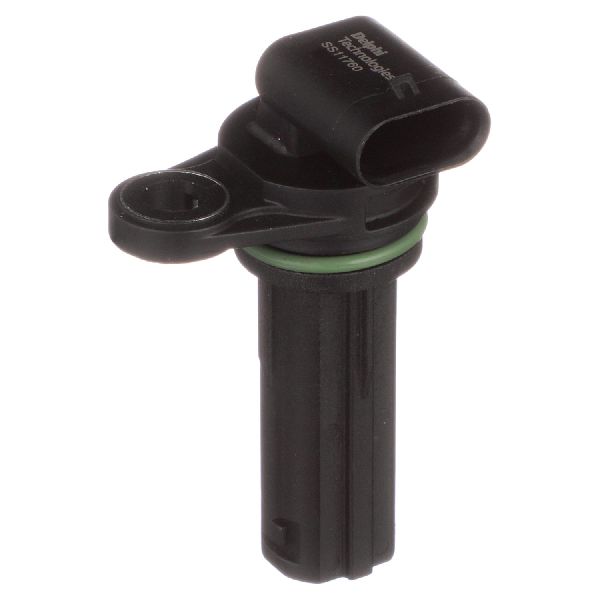
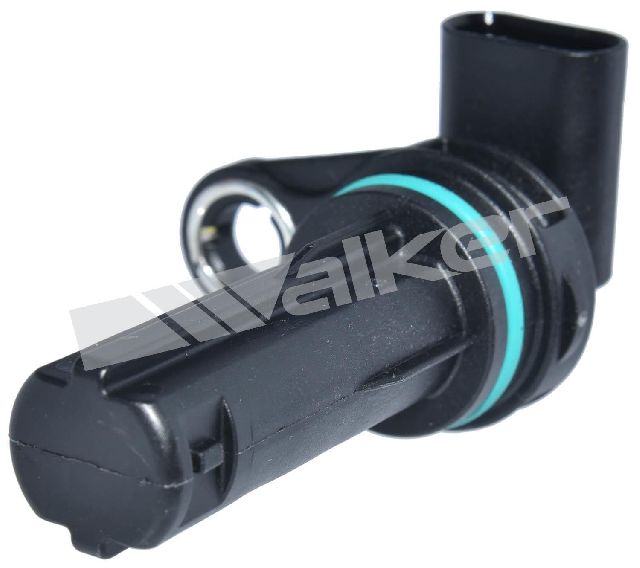
- Crankshaft Position Sensor
(OEM #68213513AA)— This is the sensor that fails if the issue is hardware-related. Heat and vibration cause the internal electronics to break down, often leading to stalling when the engine is hot.
Trusted brands: Mopar, Bosch, Delphi, NTK
OEM price range: $80-$125
Aftermarket price range: $35-$75
Related Codes That Often Appear With This One
- P0101 — Mass Air Flow Sensor 'A' Circuit Performance - Listed together in TSB #18-061-16 REV. C, suggesting a common software-related cause.
- P050D — Cold Start Rough Idle - Listed together in TSB #1806316, pointing to a PCM software calibration issue affecting engine stability.
- P1CEC — Variable Valve Solenoid Valve Cold Start Closing Position 1 Timing Over-Retard - Listed in TSB #1806316, indicating a broader engine control software problem related to the MultiAir valve system.
- U1424-00 — Implausible Engine Torque Signal Received - Listed together in TSB #18-061-16 REV. B. A faulty crank signal directly impacts torque calculation, linking these codes via software logic.
- P0340 — Camshaft Position Sensor Circuit - This code may appear with P0335, as they are both critical for engine timing. A problem with one can sometimes affect the other's readings, or they may be flagged together by a PCM software glitch.
Technical Service Bulletins (TSBs) & Recalls

- 18-061-16 REV. C: Involves reprogramming the PCM for a MIL caused by P0335, P0340, U1504, P0101, and P1066 on 2016 Renegades with the 2.4L engine.
- 1806316: Lists P0335 with cold start and performance codes (P050D, P0101, P1CEC, P1CED), also addressed by software updates for 2015 models.
- 18-061-16 REV. B: Associates P0335 with implausible torque signals (U1424-00) and other performance codes, pointing to a software calibration issue.
- 1806116REVA: Another revision of the bulletin indicating ongoing software fixes for this group of codes.
- 18-061-16: The original bulletin identifying a group of DTCs, including P0335, that are software-related.
Platform-Specific Known Issues
- Multiple TSBs (#18-061-16 REV. C, #1806316, #18-061-16 REV. B) confirm that P0335 is often triggered by a software issue that requires a PCM reflash, rather than a part replacement.
- The 2.4L Tigershark engine is also known for excessive oil consumption, which can cause a host of engine performance issues and codes. While not a direct cause of P0335, maintaining the correct oil level is critical for overall engine health.
Mechanic-Grade Diagnostic Values
- Crankshaft Sensor Connector Pin Voltages (Key On, Engine Off) — expected: Pin 1 (Supply): ~5 Volts DC. Pin 2 (Signal): ~5V or ~0V. Pin 3 (Ground): < 0.1 Volts DC.. Failure: No 5V reference on the supply pin, voltage present on the ground pin, or a signal wire that is stuck and does not change indicates a circuit fault.
- Crankshaft Sensor Signal (Engine Cranking or Running) — expected: Using an oscilloscope, a clean digital square wave pattern that switches between approximately 0V and 5V.. Failure: A missing, erratic, or noisy waveform indicates a faulty sensor or wiring issue.
Scan Tool Commands That Help
- wiTECH or capable aftermarket scanner (e.g., Autel): Cam/Crank Relearn (or Crankshaft Variation Relearn, CKP Pattern Learn) — This procedure is required after replacing the crankshaft position sensor or after a PCM software update to synchronize the sensor's signal with the PCM for accurate timing and misfire detection. The engine coolant temperature must be above 158°F (70°C) to perform the routine.
Wiring & Ground Locations

- Crankshaft Position Sensor Connector (C104) — On the right (passenger) side of the 2.4L engine block, below the exhaust manifold.. This is the connection point for all electrical tests. Its proximity to the exhaust makes the connector and its wiring vulnerable to heat damage, which can cause an open or short in the circuit, triggering P0335.
- CKP Sensor Connector Pinout — At the sensor connector itself.. Knowing the pinout is essential for accurate electrical testing. Pin 1 is the 5V supply from the PCM, Pin 3 is the ground, and Pin 2 is the signal wire that sends the crankshaft position back to the PCM.
Real Owner Repair Stories
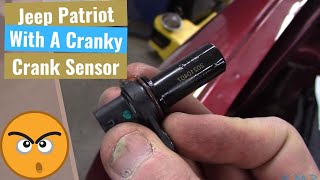
- ScannerDanner YouTube Channel (Jeep Patriot with 2.4L Engine (platform-mate with identical issue)) — Engine stalls while driving, sets P0339 (Crankshaft Position Sensor Intermittent), which is closely related to P0335.
❌ Tried (didn't work) Replacing the original sensor with a new aftermarket crankshaft position sensor., Replacing that aftermarket sensor with a second, different brand of aftermarket sensor., Replacing the PCM with a used unit.
✅ What actually fixed it The problem was finally resolved by installing a genuine OEM Mopar crankshaft position sensor. The aftermarket sensors, while new, had a different physical shape that created an incorrect air gap between the sensor and the reluctor ring, producing a weak signal that the PCM rejected. The OEM sensor restored the correct signal waveform and fixed the stalling.
When the Usual Fixes Don't Work
- While outdated software is a very common cause of P0335 on this vehicle, it is not the only cause. In cases where the PCM software has been updated but the code persists, the root cause is often the quality of the replacement sensor itself. Multiple documented instances show that new aftermarket crankshaft position sensors fail to resolve the code due to incorrect internal construction or an improper air gap. The problem is only resolved after installing a genuine OEM Mopar sensor, proving that even after addressing the software, part quality remains a critical factor.
OEM Part Supersession History
5033307AB, 5033307AC, 5033307AD→5033307AE— Standard part revision and improvement by the manufacturer for the 2.4L engine sensor.
Heads up: The part number68213513AAis often listed for the Renegade but is specific to the 1.4L Turbo engine. Using it in a 2.4L may cause issues.
Model Year Variations Within This Range
- 2015 vs 2016: While both years suffer from software-related P0335 triggers, different TSBs apply. TSB #1806316 specifically addresses 2015 models, while TSB #18-061-16 and its revisions (A, B, C) apply to 2016 models, indicating different software calibration updates for each year.
Helpful Videos
We Have This Part in Stock


The information in this article is provided for general reference and educational purposes only. Vehicle specifications, procedures, and part compatibility can vary by production date, trim level, and region. Always consult your vehicle's factory service manual and verify part numbers before purchasing or performing repairs. Safety-critical components such as airbags, seat belts, and braking systems should be installed by a qualified professional.
- Jeep RENEGADE:
- 🎬 Helpful Videos
- 🛍️ Shop This Part
- What's Unique About the 2015-2016 Jeep RENEGADE
- Diagnostic Flowchart
- Symptoms You May Notice
- Most Likely Causes
- Rare But Worth Checking
- Diagnosis Steps
- Parts You'll Likely Need
- Related Codes That Often Appear With This One
- Technical Service Bulletins (TSBs) & Recalls
- Platform-Specific Known Issues
- Mechanic-Grade Diagnostic Values
- Scan Tool Commands That Help
- Wiring & Ground Locations
- Real Owner Repair Stories
- When the Usual Fixes Don't Work
- OEM Part Supersession History
- Model Year Variations Within This Range
- 🎟️ Get 5% Off