

P0335 on 2014-2018 Jeep Grand Cherokee: Crankshaft Sensor Circuit Malfunction Causes and Fixes
P0335 on a 2014-2018 Jeep Grand Cherokee most often means the crankshaft position sensor has failed, causing stalling or a no-start condition. Replacing the sensor is a common DIY fix, with the Mopar part costing around $50-$110. For the 3.0L EcoDiesel, this code can indicate a much more serious issue with the crankshaft tone wheel, covered by warranty extension X95.
- P0335 on a Grand Cherokee indicates a problem with the crankshaft position sensor circuit, which is critical for engine operation.
- The most common symptoms are the engine stalling or cranking but failing to start.
- For gasoline engines (3.6L, 5.7L), the most likely fix is replacing the crankshaft position sensor itself.
- For the 3.0L EcoDiesel engine, this code could be caused by a known defect with the crankshaft tone wheel, covered by a manufacturer warranty extension.
- Do not continue to drive with this code, as the engine can shut off unexpectedly, posing a serious safety hazard.
What's Unique About the 2014-2018 Jeep GRAND CHEROKEE

For the 2014-2018 Grand Cherokee (WK2 generation), this code is a well-documented issue. While sensor failure is common across all engines, models with the 3.0L EcoDiesel have a specific, serious problem covered by a warranty extension (X95) and TSB #14-008-21. On these diesel engines, the magnetic material on the crankshaft's tone wheel can separate, causing a loss of signal and engine stalling. This was also the subject of NHTSA recall W58, which involved a software update to allow the engine to run off the camshaft sensor if the crank signal was lost, as a limp-home measure. For the gasoline engines (3.6L V6 and 5.7L V8), the issue is more typically a straightforward sensor failure due to heat and age or a damaged wiring pigtail.
Diagnostic Flowchart

Tap your situation to follow the diagnostic path that matches what you're seeing on this vehicle.
Symptoms You May Notice
- Engine cranks but will not start
- Engine stalls unexpectedly while driving, especially when coming to a stop
- Check Engine Light is on
- Rough or unstable idle
- Engine hesitates or stumbles during acceleration
- Reduced fuel efficiency
- Inability to accelerate past 50 mph (limp mode), particularly on 3.0L Diesel models.
- Long crank time before the engine starts.
- Replacing the camshaft position sensor. While cam and crank sensors work together, P0335 specifically points to the crankshaft sensor circuit.
- Replacing the starter motor. While a bad starter can cause a no-crank condition, it will not set a P0335 code. The engine must be cranking for the PCM to detect a missing crank signal.
Most Likely Causes

- Failed Crankshaft Position Sensor 🔴 High Probability The sensor is located in a high-heat area on the lower part of the engine block, near the exhaust. Repeated heat cycles can cause the internal electronics to fail over time, a common issue on many Chrysler/Jeep/Dodge products.
How to confirm: Test the sensor's resistance with a multimeter or use an OBD-II scanner to check for an RPM signal while cranking the engine. If the RPM reads 0 while the engine is turning over, the sensor or its circuit is faulty. Many owners and mechanics recommend using only OEM Mopar sensors, as aftermarket sensors have a reputation for premature failure.
Typical fix: Replace the crankshaft position sensor. Lubricate the new sensor's O-ring with clean engine oil before installation.
Est. part cost: $50 - $110 - Damaged Wiring or Connector 🟡 Medium Probability The sensor's wiring harness is routed near hot exhaust components and the transmission bellhousing, making it susceptible to melting, becoming brittle, and cracking. Previous repairs are also a common failure point; shoddy, unsealed butt connectors on a replaced pigtail can corrode or break, causing an intermittent signal.
How to confirm: Visually inspect the wiring harness and connector leading to the crankshaft position sensor for any signs of melting, corrosion, breaks, or loose pins. Wiggle the harness while the engine is running (if possible) to see if it causes a stall. Check for 5-volt reference and good ground at the connector with the key on.
Typical fix: Repair the damaged section of the wiring harness or replace the pigtail connector using heat-shrink, sealed connectors.
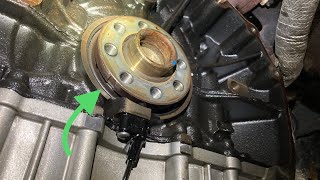
Est. part cost: $15 - $40 - Damaged Crankshaft Tone Wheel (3.0L Diesel Only) ⚪ Low Probability As documented in TSB #14-008-21 and NHTSA recall W58, the magnetic material on the tone wheel can delaminate, causing a loss of signal. This is a known manufacturing defect specific to the 3.0L EcoDiesel engine used in the Grand Cherokee and Ram 1500.
How to confirm: This is a complex diagnosis that requires transmission removal to visually inspect the tone wheel for missing magnetic material. This should only be done after definitively ruling out the sensor and wiring.
Typical fix: Replace the crankshaft tone wheel. This is a labor-intensive job (requires transmission removal) but is covered under a specific warranty extension (X95) for affected vehicles, even outside the standard warranty period.
Est. part cost: $100 - $200 (Part only, labor is significant)
Rare But Worth Checking
- Faulty Powertrain Control Module (PCM): This is very rare. A Reddit user reported a dealer suggesting a faulty PCM after multiple sensor replacements failed to fix the issue on a Wrangler with the same engine family. The PCM should only be considered after all other possibilities have been exhaustively checked.
Diagnosis Steps
- Connect an OBD-II scanner and confirm the P0335 code is present. Check for any other related codes like P0336, P0339, or P0300.
- Use the scanner's live data function to monitor Engine RPM while cranking the engine. If the RPM reads 0 or is erratic, it confirms a problem with the crank sensor or its circuit.
- Perform a thorough visual inspection of the crankshaft position sensor and its wiring harness. On the 3.6L V6, it's on the lower passenger side of the engine, accessible from underneath, behind the oil dipstick tube. Look for melted wires, loose connections, or physical damage. Pay close attention to the area near the exhaust.
- If the wiring looks good, test the circuit. Disconnect the sensor and check for a 5-volt reference signal and a good ground at the connector with the ignition on. Check the signal wire for continuity back to the PCM.
- Inspect the connector pins for damage or corrosion. One technician found a bent pin in the connector was the root cause after swapping sensors didn't work.
- If the wiring and power/ground are confirmed to be good, the crankshaft position sensor itself is the most likely culprit and should be replaced. It is highly recommended to use an OEM Mopar part.
- After replacing the sensor, clear the codes with the scanner and perform a test drive to ensure the problem is resolved. Some vehicles may require a crankshaft position variation relearn procedure, which can sometimes be done with a capable scan tool.
- For 3.0L Diesel models, if a new OEM sensor and confirmed good wiring do not fix the issue, the vehicle should be taken to a dealer to investigate the crankshaft tone wheel under the X95 warranty extension.
Parts You'll Likely Need

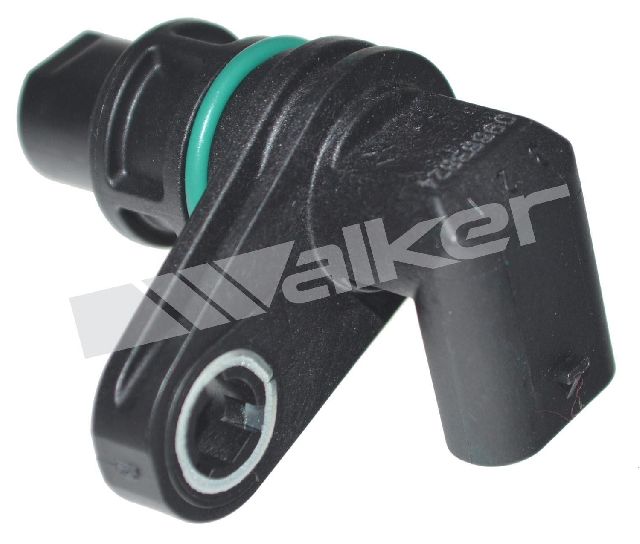
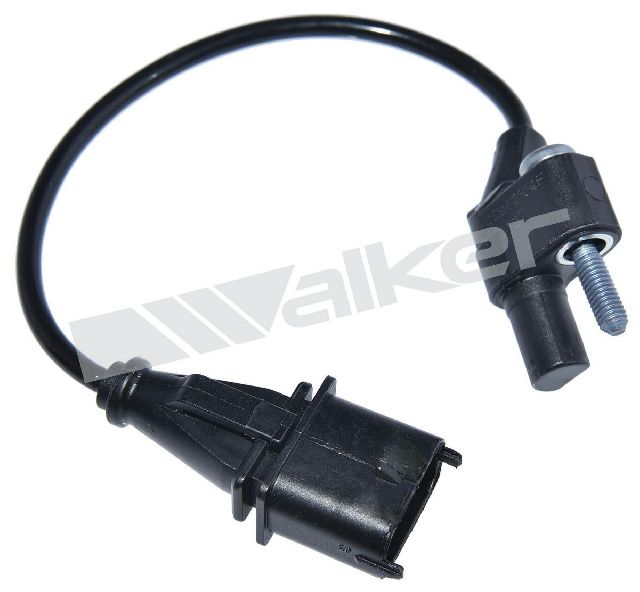
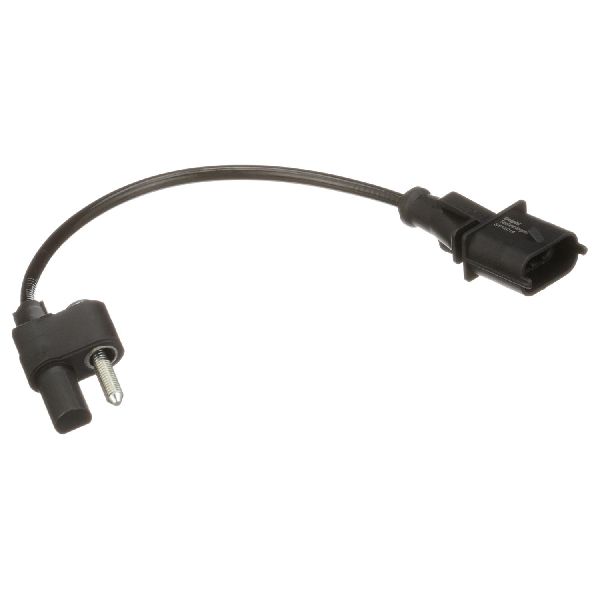
- Crankshaft Position Sensor
(OEM #5149169AA (For 3.6L V6 & 5.7L V8), 68222374AA (For 3.0L Diesel))— This is the most common component to fail, triggering the P0335 code. It's a sensor that wears out from heat and vibration over time.
Trusted brands: Mopar (Highly Recommended), NTK, Bosch, Delphi
OEM price range: $50-$110
Aftermarket price range: $20-$70
Related Codes That Often Appear With This One
- P0336 — This code for 'Crankshaft Position Sensor Performance' often appears with P0335, indicating an intermittent, erratic, or incorrect signal rather than a complete loss. This is common with a failing tone wheel on the 3.0L Diesel.
- P0300 — A 'Random Misfire' code can be triggered because without a proper crank signal, the PCM cannot time the spark and fuel injection correctly, leading to misfires across multiple cylinders.
- P0339 — This code for 'Crankshaft Position Sensor Intermittent' is also frequently seen alongside P0335, pointing towards a wiring issue or a sensor that is failing under certain conditions (like heat).
Technical Service Bulletins (TSBs) & Recalls
- 14-008-21: Addresses crankshaft tone wheel delamination on 3.0L Diesel engines, causing P0335 and P0336. Specifies replacement of the tone wheel.
- 18-049-20: Changed P0335 from a one-trip to a two-trip fault for 3.0L and 3.6L engines.
- 18-024-17 REV. C: Changed P0335 from a one-trip to a two-trip fault for 3.0L and 3.6L engines.
- W58 Recall: A software update for 3.0L Diesels to allow the PCM to use the camshaft position signal to maintain propulsion if the crankshaft signal is lost due to tone wheel delamination.
Platform-Specific Known Issues
- 3.0L EcoDiesel Engine: TSB #14-008-21 was issued for 2014-2018 models with the 3.0L diesel engine due to the crankshaft tone wheel's magnetic material delaminating, causing engine stalls. The fix involves replacing the tone wheel and is covered by the X95 warranty extension.
- Software Updates: TSBs #18-049-20 and #18-024-17 REV. C changed the P0335 fault logic from a one-trip to a two-trip fault for 3.0L and 3.6L engines. This was a software update to reduce the likelihood of the check engine light illuminating for brief, non-critical signal interruptions that might not affect drivability.
Mechanic-Grade Diagnostic Values
- 5-Volt Supply Circuit Voltage — expected: Approximately 5.0 volts with key on, engine off.. Failure: Voltage significantly lower than 5.0 volts or no voltage indicates an open/short in the supply circuit (often a pink/yellow wire).
- Sensor Ground Circuit Resistance — expected: Below 5.0 ohms between the ground circuit pin at the connector and a known good chassis ground.. Failure: Resistance above 5.0 ohms indicates a poor ground connection, which can cause erratic sensor readings.
- CKP Signal Circuit to Ground Resistance — expected: Above 100 ohms between the signal circuit pin and the ground circuit pin at the harness connector.. Failure: Resistance below 100 ohms indicates a short between the signal and ground wires in the harness.
- Live Data Engine RPM — expected: A steady RPM reading on a scan tool while cranking the engine (typically >150 RPM).. Failure: A reading of 0 RPM while the engine is audibly cranking strongly points to a complete failure of the CKP sensor or its circuit.
Scan Tool Commands That Help
- wiTECH (dealer tool), Autel, Appcar DiagFCA, or other professional scanners: Cam/Crank Relearn (or Crankshaft Position Variation Relearn) — This procedure is required after replacing the crankshaft position sensor, timing components, or sometimes after fixing a misfire. It synchronizes the new sensor's signal with the PCM's learned values for the crankshaft tone wheel's minor imperfections. Failure to perform this may result in rough running or other codes even with a new sensor.
Wiring & Ground Locations
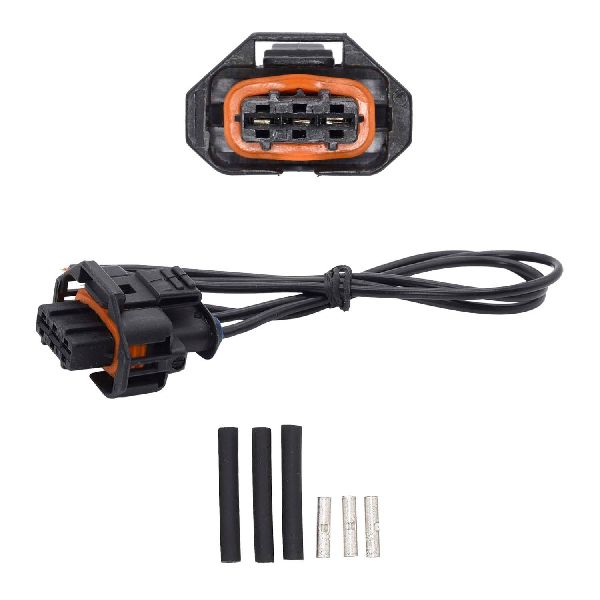
- Crankshaft Position Sensor Connector — On the lower passenger side of the engine block, near the transmission bellhousing and behind the oil dipstick tube.. This 3-pin connector is the primary interface for the sensor. The pins are for the 5-volt supply, sensor ground, and the signal wire back to the PCM. The connector and its wiring are prone to heat damage from the nearby exhaust.
- G100 / Main Engine Ground — Likely on a stud on the engine block behind the engine oil dipstick tube, on the passenger side.. While this specific ground point is from a prior generation (WJ), its location is identical to where the CKP sensor is on the WK2. A poor engine block ground can cause unstable voltage and erratic behavior for sensors grounded to the block, including the crankshaft position sensor.
Real Owner Repair Stories
- YouFixnSave Garage on YouTube (2005-2010 Jeep Grand Cherokee (prior generation, but same diagnostic principle)) — Engine cranks but does not start, codes P0335 and P0315 stored.
❌ Tried (didn't work) Initial assumption was a bad aftermarket crankshaft sensor that had been recently installed.
✅ What actually fixed it The technician found no 5-volt reference at the sensor connector. Tracing the harness back, he discovered a broken pink/yellow supply wire. Repairing this wire restored the 5-volt supply and fixed the no-start condition. - Pine Hollow Auto Diagnostics on YouTube (2015 Jeep Wrangler (3.6L Pentastar, same engine family)) — Multiple camshaft position sensor codes (P0340, P0345, P0365, P0390).
❌ Tried (didn't work) Testing sensor signals with a lab scope showed no signal from one bank of sensors.
✅ What actually fixed it Upon removing the electrical connector to swap sensors from one bank to the other for diagnosis, the technician discovered a bent pin inside the connector for the non-responsive sensors. Straightening the pin restored the connection and resolved all codes. This highlights the importance of physically inspecting connector pins.
OEM Part Supersession History
5149167AD, 5149167AE→5149167AF— Standard part revision and improvement by the manufacturer.
Heads up: The previous part numbers have been replaced by 5149167AF for the 3.6L and 5.7L engines. Using the old stock is possible, but the latest revision is always recommended.
Model Year Variations Within This Range
- 2016-2018: For the 2016 model year, Jeep added an automatic engine stop/start system to the 3.6L V6 models. While not a direct cause, this feature increases the frequency of engine restarts, placing more cycles on the crankshaft position sensor and its circuit over the life of the vehicle.
- 2017-2018: The 2017 model year introduced a mid-cycle refresh with a new front fascia and other cosmetic updates. While no specific changes to the P0335 issue are documented, wiring harness routing can sometimes be altered during a facelift, which could introduce different chafe points than earlier models.
Helpful Videos


We Have This Part in Stock


The information in this article is provided for general reference and educational purposes only. Vehicle specifications, procedures, and part compatibility can vary by production date, trim level, and region. Always consult your vehicle's factory service manual and verify part numbers before purchasing or performing repairs. Safety-critical components such as airbags, seat belts, and braking systems should be installed by a qualified professional.
- Jeep GRAND CHEROKEE:
- 🎬 Helpful Videos
- 🛍️ Shop This Part
- What's Unique About the 2014-2018 Jeep GRAND CHEROKEE
- Diagnostic Flowchart
- Symptoms You May Notice
- Most Likely Causes
- Rare But Worth Checking
- Diagnosis Steps
- Parts You'll Likely Need
- Related Codes That Often Appear With This One
- Technical Service Bulletins (TSBs) & Recalls
- Platform-Specific Known Issues
- Mechanic-Grade Diagnostic Values
- Scan Tool Commands That Help
- Wiring & Ground Locations
- Real Owner Repair Stories
- OEM Part Supersession History
- Model Year Variations Within This Range
- 🎟️ Get 5% Off