

P0335 on 2016 Fiat 500X 2.4L: Crankshaft Sensor Circuit Causes and Fixes
On a 2016 Fiat 500X with the 2.4L engine, code P0335 is frequently caused by a software issue, not a bad sensor. Check for TSB #08-010-16 REV. D first, which requires a dealer software update for the PCM, TCM, and BCM. This is a well-documented issue shared with its platform-mate, the Jeep Renegade. If the software is up-to-date and the sensor is truly faulty, expect to pay $150-$300 for a professional replacement.
- Before buying any parts, have a Fiat dealer or qualified shop check if TSB #08-010-16 REV. D has been performed on your vehicle.
- This code is critical and can cause the engine to stall while driving. Do not drive the vehicle until it is repaired.
- The most likely cause is a software issue that requires a professional scan tool to fix.
- If the software is up-to-date, the next most likely cause is a failed crankshaft position sensor, followed by wiring issues.
What's Unique About the 2016-2016 Fiat 500X

For the 2016 Fiat 500X with the 2.4L engine, this code is uniquely tied to a well-documented software issue. Manufacturer Technical Service Bulletins (TSBs) show that P0335 often appears with other codes, like U1424 (Implausible Engine Torque Signal), and the official fix is not to replace the sensor, but to perform a comprehensive software update on the vehicle's main computers (PCM, TCM, and BCM). This means that unlike on many other vehicles, replacing the sensor first is often the wrong step and a waste of money. This specific software-related issue is also prevalent in its platform-mate, the Jeep Renegade, which uses the same engine and transmission.
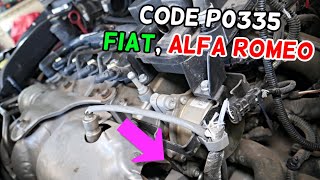
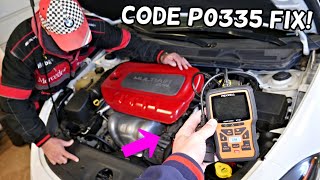
🎬 Watch: How to fix P0335 on the 2.4L engine.Diagnostic Flowchart
Tap your situation to follow the diagnostic path that matches what you're seeing on this vehicle.
Symptoms You May Notice
- Check Engine Light is on
- Engine stalls unexpectedly, sometimes only when hot.
- Engine will not start.
- Extended cranking time before the engine starts
- Rough or unstable idle
- Engine misfires or hesitates during acceleration.
- Reduced engine power and poor fuel economy.
- Tachometer shows 0 RPM while cranking the engine.
- Replacing the crankshaft position sensor without first checking for the software update specified in TSB #08-010-16 REV. D. Many owners replace the hardware when only a software flash was needed.
- Replacing the camshaft position sensor. Code P0335 specifically points to the crankshaft sensor circuit.
Most Likely Causes

- Outdated Powertrain/Body/Transmission Control Module Software 🔴 High Probability Multiple official TSBs (including #08-010-16 REV. D) were issued by the manufacturer to correct a software logic issue that causes this and other codes to be set erroneously. This is the most common cause for this specific vehicle.
How to confirm: A Fiat dealer or a shop with a wiTECH scan tool can check the current software version on the PCM, TCM, and BCM and determine if the update specified in the TSB is needed for your VIN.
Typical fix: Reprogramming (flashing) the PCM, TCM, and BCM to the latest software version. This is not a DIY repair and must be done by a dealer or qualified shop.
Est. part cost: $0 - Faulty Crankshaft Position Sensor 🟡 Medium Probability Sensors are electronic components that can fail over time due to heat cycles and vibration. A classic symptom is the engine stalling when hot but restarting fine once it cools down. This should only be considered after verifying the software is up-to-date.
How to confirm: After confirming the vehicle software is current, a technician can test the sensor's output signal with a multimeter or oscilloscope. If the signal is absent, erratic, or out of specification while cranking the engine, the sensor is bad. A basic resistance test should show a value between 200 and 1,000 ohms.
Typical fix: Replace the crankshaft position sensor. A relearn procedure may be required after replacement.
Est. part cost: $35-$140 - Wiring or Connector Issue ⚪ Low Probability The sensor wiring is routed in the engine bay and can be susceptible to damage from heat (especially near the exhaust), oil, or vibrations, leading to a short, open, or corroded connection.
How to confirm: A visual inspection of the wiring harness and connector for any signs of melting, chafing, or corrosion. A continuity test with a multimeter can confirm if the circuit between the sensor and the PCM is intact.
Typical fix: Repair the damaged section of wiring or replace the connector pigtail.
Est. part cost: $5-$25
Rare But Worth Checking
- Damaged Reluctor Ring (Tone Wheel): The crankshaft position sensor reads a series of teeth on a wheel (the reluctor ring) to determine position. While rare, this wheel can be damaged, break, or become misaligned, leading to an erratic signal. This is a much more involved and expensive repair.
- Faulty Powertrain Control Module (PCM): It is extremely rare for the PCM itself to be the cause of the problem. This should only be considered after all other possibilities, including software, sensor, and wiring, have been thoroughly ruled out.
Diagnosis Steps
- Check for TSBs: The first and most important step. Ask a dealer or equipped shop to check if TSB #08-010-16 REV. D is open for your VIN or if the software updates have been performed.
- Perform Software Update: If the TSB applies, have the PCM, TCM, and BCM software updated. This often resolves the code and is the most likely fix.
- Visual Inspection: If the software is current, inspect the crankshaft position sensor's wiring and connector for any signs of damage, melting near the exhaust, or corrosion.
- Test the Sensor Circuit: Use a multimeter to check for the correct voltage (typically a 5-volt reference) and ground at the sensor connector.
- Test the Sensor Signal: Using an oscilloscope or a capable scan tool, monitor the crankshaft sensor signal while cranking the engine. Look for a clean, consistent square wave pattern. An erratic or missing signal indicates a failed sensor. No RPM reading on the scan tool during cranking is a strong indicator of a bad sensor or circuit.
- Inspect Reluctor Ring: If possible, visually inspect the reluctor ring for damage or debris through the sensor mounting hole. This is an advanced step.
- Replace the Sensor: If the sensor is confirmed to be faulty, replace it with a new, high-quality part.
- Perform Relearn Procedure: Some FCA vehicles require a crankshaft position sensor relearn procedure after replacement. This may require a capable scan tool.
- Test Drive: After any repair, clear the codes and perform a thorough test drive to ensure the problem is resolved.
Parts You'll Likely Need
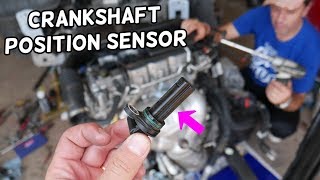
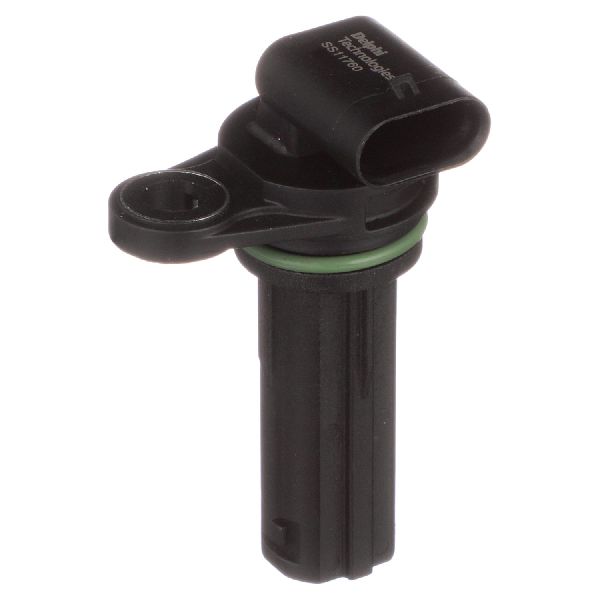
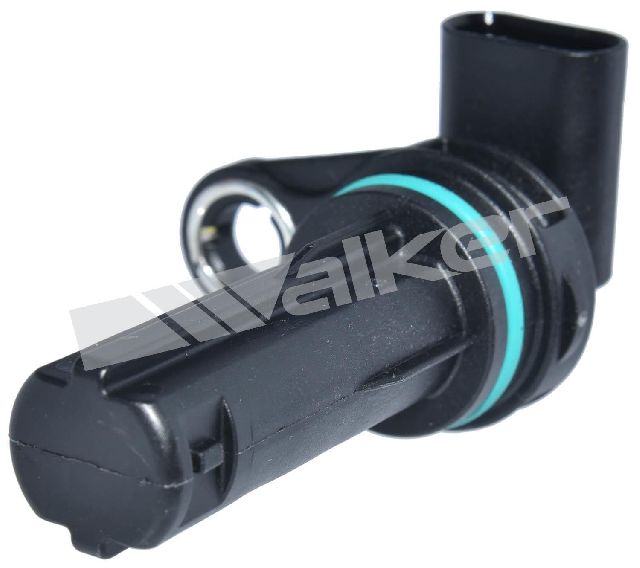
- Crankshaft Position Sensor
(OEM #68079375AD)— This is the sensor that provides the crankshaft position signal to the PCM. If it fails internally, it will trigger code P0335 after software issues have been ruled out. This part number supersedes previous versions 68079375AB and 68079375AC.
Trusted brands: Mopar, Delphi, Bosch, NTK
OEM price range: $80-$120
Aftermarket price range: $35-$80
Related Codes That Often Appear With This One
- U1424-00 — Implausible Engine Torque Signal Received. This code is explicitly mentioned in TSB #08-010-16 REV. D alongside P0335. A bad crank signal prevents the PCM from calculating engine torque correctly.
- P1185 — General Pressure Sensor Correlation. Also listed in the TSB, suggesting the software update addresses a cluster of related diagnostic faults. [Bulletin #08-010-16 REV. D]
- P050D — Cold Start Rough Idle. Also listed in the TSB, indicating the software issue can affect cold start performance calculations. [Bulletin #08-010-16 REV. D]
- P1CEC — Variable Valve Solenoid. Also listed in the TSB, pointing to a broad software issue affecting multiple engine management systems. [Bulletin #08-010-16 REV. D]
Technical Service Bulletins (TSBs) & Recalls
- 08-010-16 REV. D: Flash: Diagnostic And System Improvements. This is the primary TSB that recommends a software update for the PCM, TCM, and BCM to resolve P0335 and other codes.
- 08-010-16 REV. C: Predecessor to REV. D, also mentioning P0335.
- 08-010-16 REV. B: Predecessor to REV. C, also mentioning P0335.
- 0801016: Predecessor to the revised TSBs, also mentioning P0335.
Platform-Specific Known Issues
- A significant number of 2016 Fiat 500X models with the 2.4L engine are subject to Technical Service Bulletin #08-010-16 REV. D. This bulletin indicates that a software update for the PCM, TCM, and BCM is required to fix a condition where P0335 and other DTCs are falsely triggered. This should be the first item to check before any parts are replaced.
- This issue is not isolated to the Fiat 500X. The Jeep Renegade, which shares the 2.4L Tigershark engine and chassis, has its own TSBs (like #18-063-16) for the exact same P0335 software-related fault.
Mechanic-Grade Diagnostic Values
- Crankshaft Position Sensor (CKP) Resistance — expected: 200 - 1,000 Ohms. Failure: An open circuit (infinite resistance) or a value significantly outside the expected range. Note that a sensor can pass a resistance test when cold but still fail when hot.
- CKP Sensor Connector Voltage (Key On, Engine Off) — expected: For a three-wire sensor: 5V on the reference/supply wire, ~0V on the ground wire, and 5V on the signal wire (pulled high by PCM).. Failure: Missing 5V reference suggests a PCM or wiring issue. Battery voltage (~12V) on the signal or ground wire indicates a short circuit in the harness.
- Live Data RPM on Scan Tool (while cranking) — expected: Should show a steady RPM reading (e.g., 150-300 RPM).. Failure: A reading of 0 RPM is a strong indicator that the PCM is not receiving a signal from the crankshaft sensor or its circuit.
Scan Tool Commands That Help
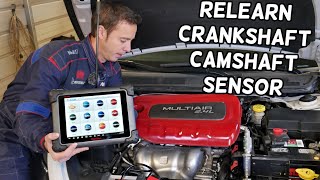
- wiTECH (or other capable scan tool): Cam/Crank Relearn / Phonic Wheel Relearn — This procedure is required after replacing the crankshaft position sensor, or after work involving the timing chain or reluctor wheel. It synchronizes the PCM with the new sensor's signal to ensure accurate timing.
Wiring & Ground Locations

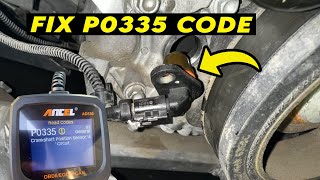
- Crankshaft Position Sensor — On the back of the 2.4L Tigershark engine block, near or below the hot exhaust manifold.. Its proximity to the exhaust makes the sensor and its wiring highly susceptible to heat damage, which can cause melting, brittleness, and intermittent short or open circuits, triggering P0335.
- Main Battery Ground Strap — The main ground cable runs from the battery negative terminal to a termination point on the chassis frame, located underneath the battery and battery tray.. These cables are known to corrode internally, sometimes without visible external signs. A poor ground can cause a wide range of intermittent electrical faults and implausible sensor readings, potentially contributing to the cluster of codes seen in the TSB, including U1424 and P0335.
Real Owner Repair Stories
- Jeep Compass Forum user (2011 Jeep Compass 2.4L (Platform mate with shared engine architecture)) — P0335 - Crankshaft Position Sensor Circuit Performance
✅ What actually fixed it The technician performed a full circuit test. They confirmed 5V on the two outer pins and a good ground on the middle pin of the sensor connector. Wiggling the harness caused no voltage drops. The circuit and wiring were deemed good. The sensor itself was condemned and replaced, which resolved the code.
OEM Part Supersession History
68079375AB, 68079375AC→68079375AD— Standard part revision and improvement by the manufacturer.
Heads up: The latest revision, 68079375AD, is the correct replacement for the earlier part numbers for the 2016 Fiat 500X 2.4L engine.
Helpful Videos
We Have This Part in Stock


The information in this article is provided for general reference and educational purposes only. Vehicle specifications, procedures, and part compatibility can vary by production date, trim level, and region. Always consult your vehicle's factory service manual and verify part numbers before purchasing or performing repairs. Safety-critical components such as airbags, seat belts, and braking systems should be installed by a qualified professional.
- Fiat 500X:
- 🎬 Helpful Videos
- 🛍️ Shop This Part
- What's Unique About the 2016-2016 Fiat 500X
- Diagnostic Flowchart
- Symptoms You May Notice
- Most Likely Causes
- Rare But Worth Checking
- Diagnosis Steps
- Parts You'll Likely Need
- Related Codes That Often Appear With This One
- Technical Service Bulletins (TSBs) & Recalls
- Platform-Specific Known Issues
- Mechanic-Grade Diagnostic Values
- Scan Tool Commands That Help
- Wiring & Ground Locations
- Real Owner Repair Stories
- OEM Part Supersession History
- 🎟️ Get 5% Off