

P0335 on 2012-2016 Dodge Journey: Crankshaft Sensor Causes and Fixes
P0335 on a 2012-2016 Dodge Journey indicates a fault in the crankshaft position sensor circuit. This often causes stalling, no-start conditions, or a rough running engine. The most common fix is replacing the crankshaft position sensor itself. However, several TSBs also point to a required PCM software update. Expect to pay $20-$60 for an aftermarket part or $80+ for an OEM sensor.
- P0335 on a Dodge Journey means the crankshaft position sensor circuit has failed, which is a serious issue that can cause your engine to stall without warning.
- The most common symptoms are the engine stalling, cranking but not starting, and a rough idle.
- The most probable cause is a faulty crankshaft position sensor, but a PCM software update is also a very common fix according to manufacturer TSBs.
- While DIY replacement is possible, the sensor is in a difficult-to-reach location on both the 2.4L and 3.6L engines, requiring some patience and the removal of other parts.
- Do not continue to drive the vehicle, as unexpected stalling is a major safety hazard.
What's Unique About the 2012-2016 Dodge JOURNEY

On the Dodge Journey for these years, the P0335 code is a known issue affecting both the 2.4L 4-cylinder and 3.6L V6 Pentastar engines, as documented in multiple Technical Service Bulletins (TSBs). The primary cause is often the sensor itself failing due to heat and age, but many of the TSBs (like 18-080-17 and 18-050-16) point to a necessary PCM software update to correct the fault logic. The location of the sensor on both engines is difficult to access, tucked away at the rear of the engine block near the transmission, often requiring the removal of a heat shield to reach.
Diagnostic Flowchart

Tap your situation to follow the diagnostic path that matches what you're seeing on this vehicle.
Symptoms You May Notice
- Check Engine Light is on
- Engine stalls intermittently while driving, sometimes after warming up
- Engine cranks but will not start
- Hard starting (prolonged cranking)
- Rough or unstable idle
- Engine misfires or runs rough
- Reduced engine power and poor acceleration
- Decreased fuel economy
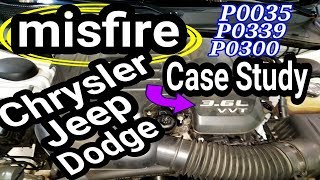
- Replacing spark plugs or ignition coils for a misfire without first addressing the P0335 code. The TSBs clearly link P0335 to misfire codes (P030x), indicating the crank sensor signal is the root cause. 🎬 See this diagnosis of P0335 and cylinder misfires
- Replacing the sensor when a PCM software update is the actual fix specified by a TSB.
Most Likely Causes


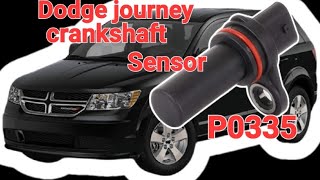
- Failed Crankshaft Position Sensor 🔴 High Probability The sensor is located in a high-heat area at the back of the engine block, leading to eventual electronic failure. This is the most cited reason for P0335 across forums and TSBs. The symptom of stalling when hot is a classic sign of this failure mode. 🎬 Watch: How to fix P0335 and stalling issues
How to confirm: Use a scan tool to monitor live data for an RPM signal while cranking the engine. If there is no RPM signal, the sensor or its circuit is the likely fault. A more advanced method is to use an oscilloscope to check for a proper signal waveform from the sensor. Given the low part cost, many owners replace it as a primary diagnostic step.
Typical fix: Replace the crankshaft position sensor. This involves disconnecting the battery, accessing the sensor at the rear of the engine block (which requires removing the airbox and a heat shield held by 10mm and 13mm bolts), unbolting the old sensor (10mm bolt), and installing the new one.
Est. part cost: $20-$85 - Damaged Wiring or Loose Connector 🟡 Medium Probability The wiring harness runs in a hot, tight space near the engine and transmission, making it susceptible to heat damage, abrasion, or corrosion. Specifically, NHTSA Safety Recall S89 / 16V-907 was issued for some 2016 2.4L models for an intermittent connection at the crankshaft sensor connector that could cause stalling.
How to confirm: Visually inspect the wiring harness leading to the crankshaft sensor for any signs of melting, chafing, or breaks. Check that the connector is securely plugged into the sensor and that the terminals are clean and free of corrosion. Wiggle the harness while the engine is running (if possible) to see if it causes a stall.
Typical fix: Repair the damaged section of wire or replace the connector pigtail. For affected 2016 models, a dealer will perform the recall repair. Ensure the harness is properly secured away from hot exhaust components using tie-wraps.
Est. part cost: $10-$30 - PCM Software Update Required 🟡 Medium Probability Multiple TSBs (including 18-080-17 for the 2.4L and 18-050-16 for the 3.6L) state that P0335 can be triggered by a software logic error, especially when accompanied by other codes like P2610 or P030x misfires. The fix is not a part replacement but a PCM reflash.
How to confirm: This can only be confirmed by a Dodge dealership or a qualified shop with a wiTECH scan tool. They can check your vehicle's VIN against the TSBs to see if a software update is available and required.
Typical fix: A technician reprograms the PCM with the latest software version. This is not a DIY repair and requires specialized equipment.
Est. part cost: $0-$200 (Labor for flash)
Rare But Worth Checking
- Damaged Reluctor Ring: The reluctor ring (or tone wheel) that the sensor reads can be damaged, have broken teeth, or wobble, causing an erratic signal. This is less common but can happen, especially if other internal engine work has been performed. This would typically set a P0339 (intermittent signal) code as well.
- Failing Powertrain Control Module (PCM): In very rare cases, the fault may lie within the PCM itself. NHTSA recall V66 / 18V-524 was issued for some 2018 models where the PCM's voltage regulator could fail, causing a stall. This should only be considered after all other possibilities (sensor, wiring, software) have been exhausted.
Diagnosis Steps
- Connect an OBD-II scanner to check for P0335 and any other related codes, paying close attention to misfire codes (P030x) or P2610.
- Check for applicable TSBs and Recalls for your VIN. A PCM software update may be the primary required fix.
- Use the scanner's live data function to monitor engine RPM while cranking. No RPM reading points strongly to a bad sensor or circuit issue.
- Perform a visual inspection of the crankshaft position sensor's wiring and connector. Look for any signs of melting, corrosion, or loose connections, paying attention to the issues mentioned in recall S89 / 16V-907.
- If the wiring appears intact, test the circuit. Disconnect the sensor and use a multimeter to check for a reference voltage (typically 5V) and a good ground at the connector with the key on.
- If the wiring and software are ruled out, the crankshaft position sensor itself is the most likely culprit.
- For the 2.4L engine, the sensor is located on the back of the engine block. Access requires removing the air filter housing and a heat shield held on by 10mm and 13mm fasteners.
- For the 3.6L engine, the sensor is also on the back of the block, near the transmission bell housing, typically on the passenger side.
- Replace the sensor (held by a 10mm bolt), clear the codes, and perform a test drive. 🎬 Watch: How to perform the crankshaft sensor relearn procedure A 'crankshaft position system variation learn' procedure with a capable scan tool may be required after replacement.
Parts You'll Likely Need
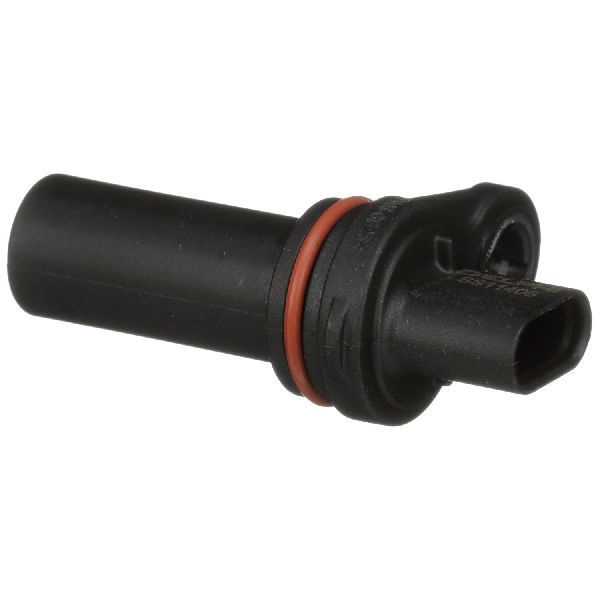
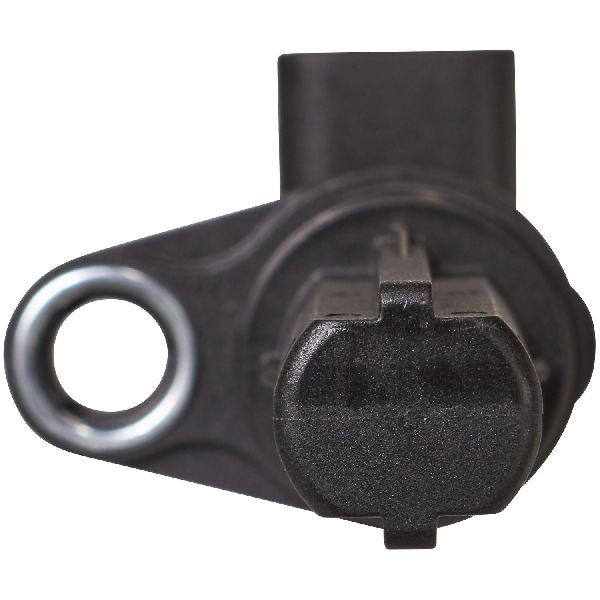
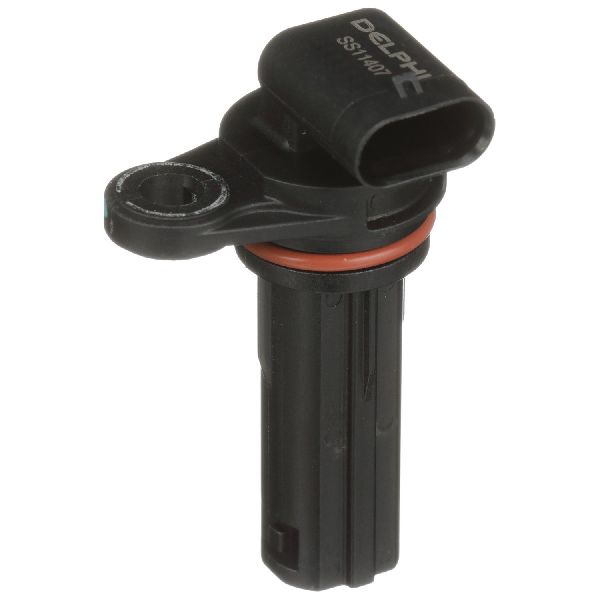
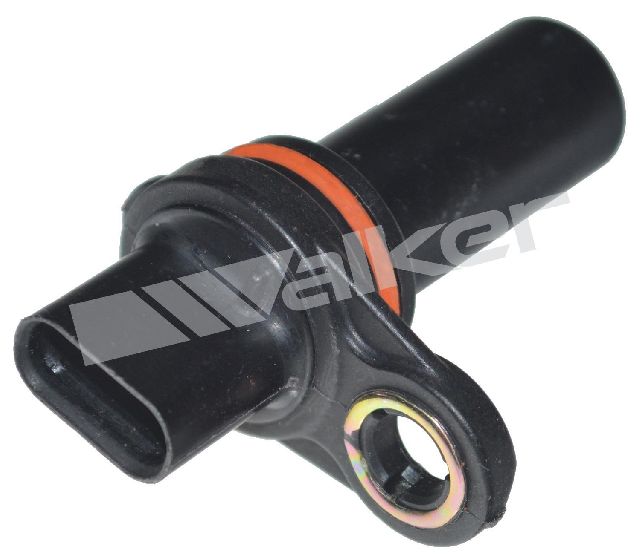
- Crankshaft Position Sensor
(OEM #05033307AC)— This sensor is the most frequent point of failure for the P0335 code on this vehicle due to its location and the symptoms associated with its failure. A user on dodgejourneyforum.com confirmed this part number fixed their P0335 issue.
Trusted brands: Mopar, NTK, Delphi, Bosch, Standard Motor Products
OEM price range: $80-$95
Aftermarket price range: $20-$60
Related Codes That Often Appear With This One
- P0300, P0301, P0302, P0303, P0304 — These are cylinder misfire codes. A faulty crankshaft sensor provides incorrect timing information, which can lead to the PCM detecting misfires. TSB 18-033-16 directly links P0335 with these codes on the 2.4L engine and recommends a PCM software update.
- P0339 — This code indicates an intermittent signal from the crankshaft position sensor. It often points to a failing sensor on the verge of complete failure, a wiring issue, or a damaged reluctor ring. It may appear before, with, or after P0335.
- P2610 — This code for 'PCM Internal Engine Off Timer Performance' is specifically mentioned alongside P0335 in TSBs 18-050-16 REV. A and 18-080-17. When seen together, it strongly suggests a PCM software update is the required fix.
Technical Service Bulletins (TSBs) & Recalls
- 18-080-17: For 2016 2.4L/3.6L, involves reprogramming the PCM for P0335, especially if accompanied by stalling in high heat or codes like P030x and P2610.
- 18-033-16: For 2015 2.4L, calls for a PCM reflash to fix P0335 when it appears with multiple cylinder misfire codes (P0301-P0304).
- 18-086-16: Lists P0335 for 2014 2.4L vehicles as one of several codes that can be addressed by a PCM software update.
- 18-050-16 & 18-050-16 REV. A: For 2012-2013 3.6L, involves reprogramming the PCM for P0335, P2610, and U0140.
Platform-Specific Known Issues
- Multiple Technical Service Bulletins (TSBs) have been issued by Dodge for P0335. TSBs 18-080-17 (2.4L) and 18-050-16 REV. A (3.6L) specifically recommend a PCM software update as a fix, especially when other codes like P030x or P2610 are present.
- NHTSA Safety Recall S89 / 16V-907 affects some 2016 2.4L models due to an intermittent connection at the crankshaft sensor connector, which can cause stalling.
Mechanic-Grade Diagnostic Values
- Crankshaft Position Sensor Connector Voltage — expected: The 3-pin connector should have: one pin with 5V reference from the PCM, one pin for ground, and one for the signal back to the PCM.. Failure: Absence of the 5V reference or a bad ground indicates a wiring or PCM issue, not a sensor failure.
- Crankshaft Position Sensor Signal (Oscilloscope) — expected: A square wave pattern that switches between approximately 0V and 5V as the engine is cranked or running.. Failure: A flat line, erratic signal, or a signal that does not switch cleanly indicates a failed sensor or a problem with the reluctor wheel.
Scan Tool Commands That Help
- wiTECH or capable aftermarket scanner (e.g., Autel): Cam/Crank Relearn (also called Cam/Crank Reward or Crankshaft Position System Variation Learn) — This procedure is required after replacing the crankshaft position sensor, camshaft position sensor, timing components, or the PCM. Failure to perform the relearn can result in a persistent P0335 or the setting of code P0315 (Crankshaft Position System Variation Not Learned), leading to rough idle or stalling. The function is typically found under 'Powertrain', 'Engine', then 'Special Functions' or 'Misc Functions'.
Wiring & Ground Locations
- Crankshaft Position Sensor Connector (Both Engines) — Located at the rear of the engine block, near the transmission bell housing.. This 3-pin connector provides power, ground, and signal for the sensor. The pins are for 5V reference, ground, and the crank signal to the PCM. Damage or corrosion here is a direct cause of P0335. Recall S89 for 2016 models was specifically for improperly manufactured terminals in this connector.
Real Owner Repair Stories
- YouTube user Gumera's Garage (2016 Dodge Journey) — Engine stalling, code P0335 set.
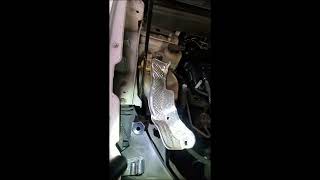
✅ What actually fixed it The crankshaft position sensor was replaced with an OEM part from the dealership. The video shows the location at the back of the engine and the process of removing a heat shield to access it.
OEM Part Supersession History
05033307AA, 05033307AB→05033307AC, which was later superseded by 5033307AE— Standard part revisions for improved reliability or manufacturing changes.
Heads up: While multiple revisions exist (AA, AB, AC, AD, AE), they are generally interchangeable for the specified applications. However, it is always best to use the latest revision (5033307AE) when available.
Model Year Variations Within This Range
- 2011-2015: The 3.6L Pentastar V6 engine was the initial version.
- 2016: For the 2016 model year, the 3.6L Pentastar V6 received a significant update that included a two-stage variable valve lift (VVL), cooled EGR, and a higher compression ratio (11.3:1 vs 10.2:1) for improved efficiency and torque. While the P0335 issue persists, diagnostics on a 2016 V6 should account for these engine changes. Additionally, some 2016 2.4L models were subject to recall S89 for a faulty crankshaft sensor connector.
Helpful Videos

We Have This Part in Stock


The information in this article is provided for general reference and educational purposes only. Vehicle specifications, procedures, and part compatibility can vary by production date, trim level, and region. Always consult your vehicle's factory service manual and verify part numbers before purchasing or performing repairs. Safety-critical components such as airbags, seat belts, and braking systems should be installed by a qualified professional.
- Dodge JOURNEY:
- 🎬 Helpful Videos
- 🛍️ Shop This Part
- What's Unique About the 2012-2016 Dodge JOURNEY
- Diagnostic Flowchart
- Symptoms You May Notice
- Most Likely Causes
- Rare But Worth Checking
- Diagnosis Steps
- Parts You'll Likely Need
- Related Codes That Often Appear With This One
- Technical Service Bulletins (TSBs) & Recalls
- Platform-Specific Known Issues
- Mechanic-Grade Diagnostic Values
- Scan Tool Commands That Help
- Wiring & Ground Locations
- Real Owner Repair Stories
- OEM Part Supersession History
- Model Year Variations Within This Range
- 🎟️ Get 5% Off