

P0335 on 2013-2016 Dodge DART: Crankshaft Position Sensor Circuit Fault Guide
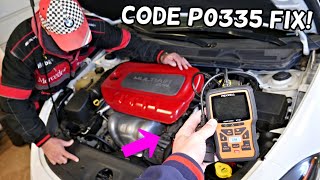
P0335 on a Dodge Dart indicates a problem with the crankshaft position sensor circuit, often causing a no-start or stalling. Before replacing the sensor, check for official manufacturer TSBs, as a simple PCM software update often fixes this code when it appears with others like P0340. This is a known issue on the Dart and its platform mates (Jeep Cherokee, Chrysler 200).
- P0335 on a Dodge Dart means the engine computer has lost the signal from the crankshaft position sensor, which can cause stalling or a no-start condition.
- **IMPORTANT**: Before buying parts, check if other codes are present. Multiple TSBs show that a PCM software update from a dealer is the correct fix when P0335 appears with codes like P0340, P0128, or P050D.
- If no other codes are present and a software update doesn't apply, the most likely cause is a failed crankshaft position sensor.
- Driving with this code is unsafe due to the high risk of the engine stalling unexpectedly.
- Replacing the sensor is a DIY-friendly job for many, but a 'relearn' procedure with a scan tool may be required afterward.
What's Unique About the 2013-2016 Dodge DART

On the Dodge Dart and other vehicles using the 2.4L MultiAir engine, the P0335 code has a unique characteristic. It is frequently triggered as part of a group of seemingly unrelated trouble codes. Manufacturer Technical Service Bulletins (TSBs) reveal that the root cause is often not the sensor itself, but rather a glitch in the PCM's software. In these specific cases, a dealership-performed software update is the correct fix, not a new crankshaft sensor. This is a critical distinction that can save owners from unnecessary repairs, a scenario frequently discussed in owner forums.
Diagnostic Flowchart

Tap your situation to follow the diagnostic path that matches what you're seeing on this vehicle.
Symptoms You May Notice
- Engine cranks but will not start (most common symptom).
- Engine stalls intermittently, possibly after warming up and may not restart until it cools down.
- Check Engine Light is on.
- Long crank time before the engine finally starts.
- Rough idling or engine misfires.
- Reduced engine power and poor acceleration.
- Replacing the crankshaft position sensor when a PCM software update was the actual required fix. This is the most common misdiagnosis for this platform.
- Replacing the camshaft position sensor (for code P0340) when the issue is with the crankshaft sensor circuit, or vice-versa. The TSBs show they can be triggered together by the same software issue.
- Assuming the new sensor is bad when a cam/crank relearn procedure was not performed after installation.
- Replacing the starter or battery for a no-crank, no-start condition without first verifying and cleaning the main engine-to-chassis ground connections, 🎬 Watch: How to perform a $15 ground upgrade to fix electrical gremlins. which are a known failure point on this vehicle.
Most Likely Causes

- PCM Software Requires Update 🔴 High Probability Multiple TSBs (#18-022-17 REV. A, #18-023-16 REV. D) list P0335 among a host of other DTCs that are resolved with a PCM software flash. This indicates the logic for interpreting sensor data was flawed in the original software, causing false codes to be set. This is particularly true for 2.4L engine models.
How to confirm: Check if other codes like P0340 (Camshaft Sensor), P0128 (Thermostat), U1504, U1424-00, P050D, P1607, P0133, or P0456 are present simultaneously. If so, a TSB-related software update is the most likely solution.
Typical fix: A Dodge dealership or a qualified shop with a wiTECH scan tool must apply the latest PCM software update. The TSBs explicitly state this involves reprogramming the PCM.
Est. part cost: $0 (if under warranty) - $200 (dealer diagnostic/flash fee) - Failed Crankshaft Position Sensor 🟡 Medium Probability The sensor is an electronic component mounted on the engine block, where it is exposed to intense heat cycles and vibration, which can cause internal failure over time. Heat soak from the nearby exhaust manifold is a common cause of intermittent failure.
How to confirm: Use a scan tool to check for an RPM signal while cranking the engine. No signal points to a bad sensor or circuit. You can also test the sensor's internal resistance with a multimeter (if specs are known) or check for a 5V reference signal at the connector with the key on.
Typical fix: Replace the crankshaft position sensor and perform a cam/crank relearn procedure.
Est. part cost: $40-$120 - Damaged Wiring or Connector ⚪ Low Probability The sensor's wiring harness is routed near the hot exhaust manifold and other moving parts. Wires can become brittle from heat, chafe against the engine block, or the connector's plastic locking tab can break, leading to a poor connection.
How to confirm: Visually inspect the wiring harness from the sensor to the main loom for any signs of melting, chafing, or corrosion. Unplug the sensor and check the connector pins for corrosion or damage. Test for continuity, power (5V reference), and ground at the connector with a multimeter.
Typical fix: Repair the damaged section of wiring or replace the connector pigtail.
Est. part cost: $15-$50
Rare But Worth Checking
- Damaged Reluctor Ring: The reluctor ring (or tone wheel) that the sensor reads can get damaged, lose teeth, or become misaligned, though this is uncommon without other engine work being performed. This would require more significant engine work to access and replace.
- Failed Powertrain Control Module (PCM): In very rare cases, the PCM itself can fail. This should only be considered after all other possibilities, including software updates and thorough circuit testing, have been exhausted.
- Corroded Engine or Chassis Grounds: The Dodge Dart is known for having issues with its main grounding points. A poor ground between the engine block, chassis, and battery negative terminal can cause a host of electrical issues, including a no-start condition and seemingly unrelated sensor codes. Cleaning the main ground studs on the frame rail and engine block is a crucial, low-cost diagnostic step.
Diagnosis Steps
- Read all diagnostic trouble codes (DTCs) with an OBD-II scanner. If P0335 is accompanied by codes like P0340, P0128, P050D, etc., proceed to the next step.
- Check for Technical Service Bulletins (TSBs). This is a critical first step. If your vehicle and combination of codes match those in TSB #18-022-17 REV. A or #18-023-16 REV. D, the solution is a PCM software update. Contact a dealer or equipped independent shop.
- Inspect and Clean Main Ground Connections: Before testing components, inspect the main ground strap from the engine to the chassis. On the Dart, a common failure point is the ground stud on the driver's side frame rail, which is prone to corrosion. Remove, clean all contact surfaces with a wire brush, and re-secure the ground connections. This simple step can resolve many electrical issues.
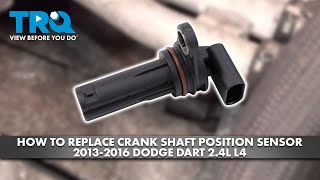
- Inspect Sensor and Wiring: Visually inspect the crankshaft position sensor and its wiring. On the 2.4L engine, it's located on the back of the engine block, below the exhaust manifold, near the transmission bell housing. 🎬 See this walkthrough for replacing the 2.4L crankshaft position sensor. On the 1.4L Turbo, it is on the lower front of the engine. Look for melted plastic, frayed wires, or corroded connector pins. The red locking tab on the connector is notoriously fragile.
- Check for RPM Signal: Use a scan tool with live data to monitor engine RPM while cranking. A reading of 0 RPM confirms the PCM is not receiving a signal from the crank sensor or its circuit.
- Test the Circuit: If the wiring appears intact, test the circuit. Disconnect the sensor and turn the ignition to 'ON'. Use a multimeter to check for a 5-volt reference and a good ground at the connector pins. If voltage or ground is missing, trace the circuit back to the PCM.
- Replace the Sensor: If the TSBs do not apply, grounds are clean, and the circuit tests good, the crankshaft position sensor itself is the most likely culprit and should be replaced. Using a Mopar or high-quality OEM equivalent (like NTK) is highly recommended.
- Perform Crankshaft Position Relearn: After replacing the sensor or performing any timing-related work, a 'Cam/Crank Relearn' procedure is required. This procedure requires a bidirectional scan tool (like the dealer's wiTECH or some high-end aftermarket scanners) to sync the new sensor with the PCM. Failure to do this can result in continued no-start or poor running conditions.
Parts You'll Likely Need
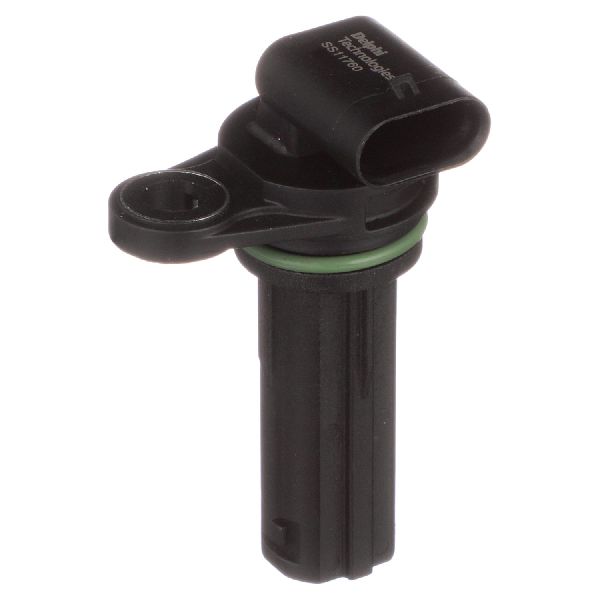
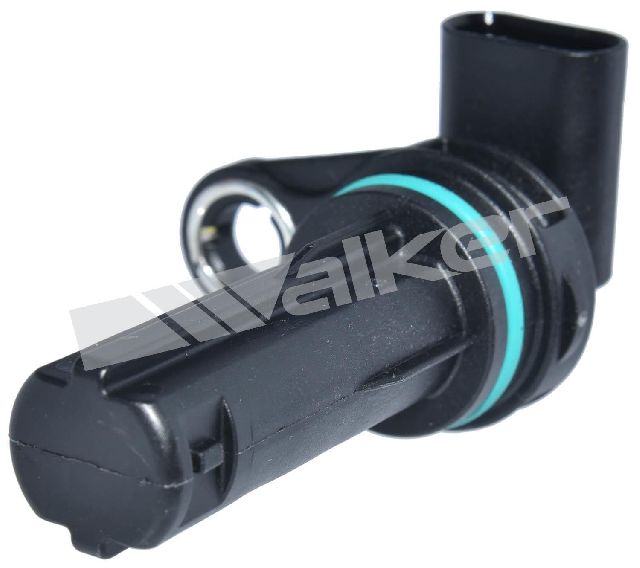
- Crankshaft Position Sensor
(OEM #68153903AC)— This sensor is the most common hardware failure for a P0335 code when a software update is not the cause. It is a critical component for engine timing that is subject to heat and wear. Note: This part is listed as discontinued by Mopar but is still widely available from OEM stock and aftermarket suppliers.
Trusted brands: Mopar (OEM), NTK/NGK, Delphi, Standard Motor Products (SMP)
OEM price range: $70-$120
Aftermarket price range: $40-$75
Related Codes That Often Appear With This One
- P0340 — Camshaft Position Sensor Circuit. TSB #18-022-17 REV. A shows this code is often set alongside P0335 and is resolved by the same PCM software update.
- P0128 — Thermostat Rationality. Also listed in TSB #18-022-17 REV. A as being part of a group of codes fixed by a software update.
- P050D — Cold Start Rough Idle. Listed in TSB #18-023-16 REV. D with P0335 as being resolved by a PCM update for the 2.4L engine.
- P1607 — PCM Internal Shutdown Timer Rationality. Another code listed in TSB #18-023-16 REV. D that points to a software issue.
Technical Service Bulletins (TSBs) & Recalls

- 18-022-17 REV. A: Addresses P0335 along with U1504, P0128, P0340, and U1424-00 for 2.4L engines, recommending a PCM software update. Also adds other drivability improvements.
- 18-023-16 REV. D: Addresses P0335 along with P050D, P1607, P0133, and P0456 for 2.4L engines, also recommending a PCM software update.
Platform-Specific Known Issues
- A primary issue for the 2013-2016 Dodge Dart is that P0335 is often set due to a software issue within the Powertrain Control Module (PCM), rather than a hardware failure. TSBs #18-022-17 REV. A and #18-023-16 REV. D confirm that updating the PCM software can resolve P0335 when it appears with a specific group of other codes.
- The crankshaft position sensor on the 2.4L engine is located in a difficult-to-access spot on the rear of the engine block, below the exhaust heat shield, making replacement tricky without the right tools (e.g., extensions and swivels).
- A cam/crank relearn procedure using a capable scan tool is mandatory after sensor replacement to ensure proper engine operation. Simply swapping the part is often not enough to fix the issue.
- The main engine-to-chassis ground points are a known weak spot. Corrosion on the ground studs, particularly the one on the driver's side frame rail, can cause a no-start or no-crank condition that can be misdiagnosed as a failed starter, battery, or other electronic components.
Mechanic-Grade Diagnostic Values
- Crankshaft Position Sensor Connector Pin Test (Key On, Engine Off) — expected: The Dodge Dart uses a 3-wire Hall-effect sensor. With the connector unplugged and key on, you should find: Pin 1: 5-volt reference supply from the PCM. Pin 2: Sensor ground. Pin 3: Signal wire (will show no voltage when disconnected).. Failure: Absence of the 5V reference or a bad ground indicates a wiring or PCM issue, not a sensor failure.
- Crankshaft Position Sensor Resistance (Hall-effect) — expected: Hall-effect sensors, unlike 2-wire inductive sensors, should NOT be tested for resistance between the pins. An ohmmeter can damage the internal electronics.. Failure: Attempting to measure resistance is an incorrect test procedure for this type of sensor.
- Live Data RPM Signal (During Cranking) — expected: A healthy crankshaft position sensor circuit will show an engine RPM reading of 100-500 RPM on a scan tool while the engine is cranking.. Failure: A reading of 0 RPM while cranking is a strong indication that the PCM is not receiving a signal from the CKP sensor or its circuit.
Scan Tool Commands That Help
- wiTECH (or equivalent bidirectional scanner): Cam/Crank Relearn — This function is mandatory after replacing the crankshaft position sensor, camshaft position sensor, timing components, or the PCM. It synchronizes the positional relationship between the crankshaft and camshafts with the PCM. Failure to perform this relearn can result in a persistent P0335 code, rough running, or a no-start condition even with a new sensor.
Wiring & Ground Locations

- G100 / G102 — Located on the driver's side frame rail in the engine compartment, often near or under the battery tray.. These are primary chassis and engine ground points. Multiple sources report that corrosion at these specific ground studs is a common cause of no-crank or no-start conditions on the Dodge Dart. A poor ground can cause voltage drops and electrical noise that may disrupt sensor signals or prevent modules from operating correctly, potentially triggering false codes like P0335.
- Crankshaft Position Sensor Connector (2.4L) — On the rear of the engine block, below the exhaust manifold heat shield, near the transmission bell housing.. This is the direct connection point for the sensor. Its location makes it susceptible to heat damage from the exhaust, which can make the plastic connector brittle and the wiring insulation fragile. A visual inspection for melting or damage is crucial.
Real Owner Repair Stories
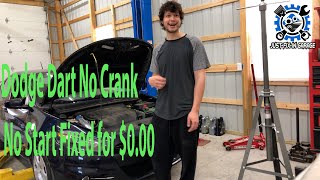
- YouTube video by 'Just a Dude' (2013 Dodge Dart 2.0L) — No-crank, no-start condition. The owner had driven the car, parked it, and it would not start again.
❌ Tried (didn't work) Replacing the starter motor.
✅ What actually fixed it The problem was a corroded main ground connection on the driver's side frame rail. The fix involved removing the 10mm and 13mm nuts, cleaning the ground studs and cable ends with a wire brush until they were shiny, and reassembling. The car started immediately after the grounds were cleaned.
OEM Part Supersession History
68153903AC→This part number is listed as discontinued by Mopar with no direct supersession listed in many catalogs.— End of life for the vehicle platform.
Heads up: While the OEM part is discontinued, it is still widely available as New Old Stock (NOS) and from numerous aftermarket manufacturers. Ensure any aftermarket part is listed as a direct cross-reference to 68153903AC.
Model Year Variations Within This Range
- 2014-2016: In 2014, the 2.4L MultiAir engine became standard on the SXT, Limited, and GT trims, while the 2.0L engine was relegated to the base SE model. This is significant because the TSBs regarding software updates for P0335 are most frequently associated with the 2.4L engine.
Helpful Videos

We Have This Part in Stock


The information in this article is provided for general reference and educational purposes only. Vehicle specifications, procedures, and part compatibility can vary by production date, trim level, and region. Always consult your vehicle's factory service manual and verify part numbers before purchasing or performing repairs. Safety-critical components such as airbags, seat belts, and braking systems should be installed by a qualified professional.
- Dodge DART:
- 🎬 Helpful Videos
- 🛍️ Shop This Part
- What's Unique About the 2013-2016 Dodge DART
- Diagnostic Flowchart
- Symptoms You May Notice
- Most Likely Causes
- Rare But Worth Checking
- Diagnosis Steps
- Parts You'll Likely Need
- Related Codes That Often Appear With This One
- Technical Service Bulletins (TSBs) & Recalls
- Platform-Specific Known Issues
- Mechanic-Grade Diagnostic Values
- Scan Tool Commands That Help
- Wiring & Ground Locations
- Real Owner Repair Stories
- OEM Part Supersession History
- Model Year Variations Within This Range
- 🎟️ Get 5% Off