

P0335 on 2013-2016 Dodge Charger: Crankshaft Sensor Circuit Causes & Fixes
P0335 on a 2013-2016 Dodge Charger almost always points to a failed crankshaft position sensor, causing stalling or a no-start condition. Replacing the sensor is the most common fix, costing around $25-$80 for the part. However, check for related TSBs, as a PCM software update may be required, especially if code P2610 is also present after the vehicle has been parked in hot weather.
- P0335 on a 2013-2016 Charger indicates a loss of signal from the crankshaft position sensor, which will likely cause the engine to stall or not start.
- The most common fix is replacing the crankshaft position sensor itself, which is a relatively inexpensive and accessible part.
- Always check for other trouble codes. If P2610 is also present, especially after the car has been sitting in the heat, a PCM software update is a very likely solution, as documented in multiple TSBs.
- Before replacing parts, perform a visual inspection of the sensor's wiring harness for any signs of melting or damage, as its location near the exhaust makes it vulnerable.
What's Unique About the 2013-2016 Dodge CHARGER
On this generation of Dodge Charger, P0335 is frequently linked to other seemingly unrelated codes in official manufacturer Technical Service Bulletins (TSBs). Codes like P2610 (PCM Internal Engine Off Timer Performance) and P0456 (EVAP System Small Leak) often appear alongside P0335. Several TSBs, including 18-088-16, specifically mention that these codes can be triggered after parking the vehicle in high ambient temperatures, a condition known as a "hot soak." This suggests the root cause is not always a simple sensor failure but can be related to PCM software that needs updating to correct performance in certain conditions, particularly on models with the 5.7L V8 engine.
Diagnostic Flowchart
Tap your situation to follow the diagnostic path that matches what you're seeing on this vehicle.
Symptoms You May Notice
- Engine will not start
- Engine stalls, especially when warm or after being parked in hot weather
- Hard starting (prolonged cranking)
- Rough or unstable idle
- Engine misfires or hesitates during acceleration
- Check Engine Light is on
- Decreased fuel efficiency.
- Engine bucks or stumbles at road speed.
- Replacing the camshaft position sensor instead of the crankshaft sensor. They are different parts with different locations and functions.
- Replacing the PCM without first checking for available software updates or thoroughly testing the sensor circuit.
- Replacing the sensor without inspecting the wiring harness first. An owner on DodgeForum.com replaced multiple sensors before finding the wires had melted together near the engine block.
Most Likely Causes
- Failed Crankshaft Position Sensor 🔴 High Probability The sensor is exposed to high heat cycles, being located on the lower part of the engine block near the transmission bellhousing or hot exhaust components. This constant exposure to heat and vibration can cause the internal electronics to fail over time, a common issue on many Chrysler/Dodge vehicles.
How to confirm: Use a scan tool to see if an RPM signal is present while cranking; no signal points to the sensor circuit. A more definitive test is to use a multimeter to check for a 5-volt reference and ground at the connector. 🎬 Watch: How to test a Chrysler or Dodge crank sensor with a multimeter. Given the low cost of the part, replacement is a common and effective diagnostic step if wiring is confirmed to be good.
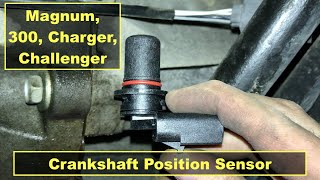
Typical fix: Replace the crankshaft position sensor. It is typically held by a single 10mm bolt. 🎬 See this walkthrough for replacing the sensor on a Hemi engine.
Est. part cost: $25-$85 - Damaged Wiring or Connector 🟡 Medium Probability The sensor's wiring harness is routed near hot exhaust components and the engine block, making it susceptible to melting, chafing, or corrosion. The plastic connector and its locking tab can also become brittle from heat and break, causing a loose connection.
How to confirm: Visually inspect the wiring harness from the sensor to the PCM for any signs of damage, melting, or corrosion at the connector. A wiggle test on the harness while monitoring scan tool data can help identify intermittent shorts. In one documented case, an owner found the three wires to the sensor had melted together, causing a short.
Typical fix: Repair the damaged section of the harness by splicing in new wire or replace the connector pigtail.
Est. part cost: $15-$40 - Outdated PCM Software 🟡 Medium Probability Multiple TSBs (18-070-20, 1807320, 1808816) specifically link P0335 with other codes like P2610, indicating a software logic issue, particularly related to hot weather operation. TSB 18-070-20 applies to 2016 models with the 5.7L V8 and explicitly states a PCM re-flash is the remedy for P0335 when it appears with P2610 and P0456.
How to confirm: A dealership or a qualified repair shop with access to OEM software (like wiTECH) can check if the vehicle's PCM has the latest calibration. If codes P2610 or P0456 are also present, a software issue is highly likely.
Typical fix: Update or re-flash the Powertrain Control Module (PCM) to the latest software version. This is a non-mechanical repair that can only be done with specialized equipment.
Est. part cost: $0 (if under warranty) - $200
Rare But Worth Checking
- Damaged Reluctor Ring: The reluctor ring (or tone wheel) that the sensor reads can get damaged, have broken/bent teeth, or accumulate rust and metal shavings, causing an erratic or missing signal. A cracked flexplate, which can occur on HEMI engines, can also cause issues with the reluctor ring and may produce a knocking noise. This is less common but should be considered if a new sensor and good wiring don't solve the problem.
- Faulty Powertrain Control Module (PCM): While rare, the PCM itself can fail, specifically the internal circuit that processes the crank sensor signal. This should only be considered as a last resort after all other possibilities, including sensor, wiring, and software, have been thoroughly ruled out.
Diagnosis Steps
- Scan for all stored DTCs. Note if codes like P0339, P2610, or P0456 are present, as this points towards a potential TSB-related software issue.
- Visually inspect the crankshaft position sensor and its electrical connector and wiring for any obvious damage, melting, or corrosion. The sensor is typically located on the passenger side of the engine block, near the transmission bellhousing, sometimes hidden by a heat shield. 🎬 Watch: Troubleshooting a P0335 code when your Dodge won't start.
- If possible, use a scan tool to monitor the engine RPM signal while cranking. No RPM signal strongly suggests a problem with the crank sensor circuit.
- If the wiring appears intact, test the circuit with the key on. Using a multimeter, check for a 5-volt reference signal (typically on the F855 circuit) and a good ground (K925 circuit) at the sensor connector.
- If wiring and power/ground are good, the crankshaft sensor is the most likely culprit. Replace the sensor. It is often secured with a single 10mm bolt.
- After replacement, clear the codes. Some vehicles may require a crankshaft position sensor relearn procedure, which may require a capable scan tool or a specific drive cycle.
- If the code returns, or if it was initially paired with P2610, contact a dealership or qualified shop to check for and perform any available PCM software updates as specified in relevant TSBs like 18-070-20.
Parts You'll Likely Need
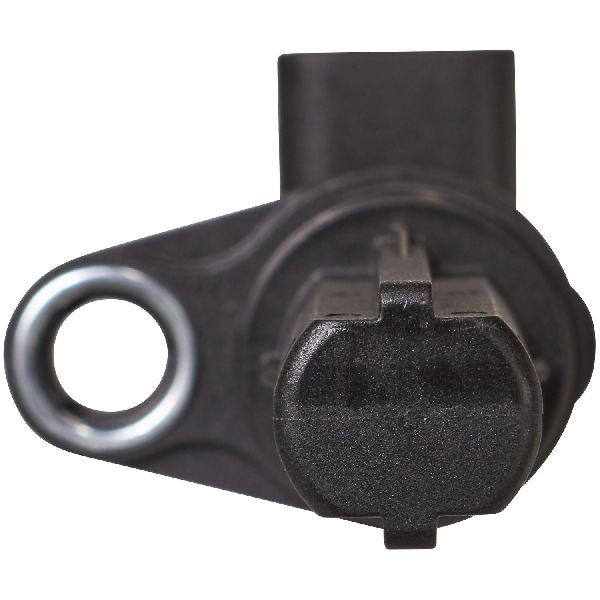
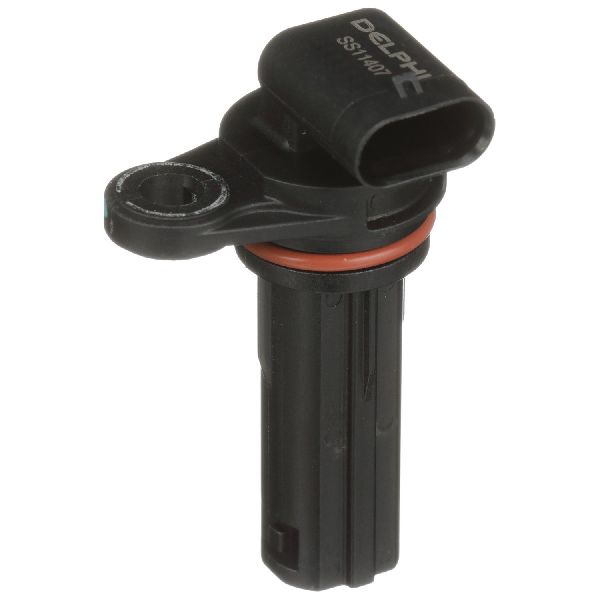
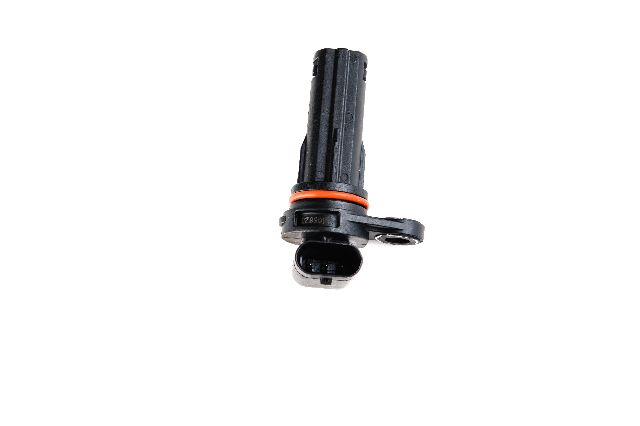
- Crankshaft Position Sensor
(OEM #5033307AE)— This sensor is the most frequent point of failure for the P0335 code due to its operating environment and electronic nature. The OEM part number 5033307AE supersedes previous versions 5033307AD, 5033307AC, and 5033307AB.
Trusted brands: Mopar, NTK, Bosch, Delphi, Duralast
OEM price range: $50-$99
Aftermarket price range: $25-$60
Related Codes That Often Appear With This One
- P0339 — This code for 'Crankshaft Position Sensor Intermittent' often accompanies P0335, indicating the signal isn't just missing, but is dropping out, which points to a failing sensor or loose connection.
- P2610 — Stands for 'PCM Internal Engine Off Timer Performance.' Multiple TSBs for this platform show P2610 and P0335 appearing together, often due to a PCM software glitch related to 'hot soak' conditions that requires an update.
- P0456 — This code for a small EVAP leak is also mentioned in TSBs alongside P0335, suggesting a potential PCM software issue that incorrectly flags multiple faults. TSB 18-070-20 directly links these three codes on 2016 5.7L models.
Technical Service Bulletins (TSBs) & Recalls
- 18-070-20: Mentions P0335 may be set along with P0456 and P2610 on 2016 models with 5.7L V8s. Recommends a PCM software update.
- 1807320: Lists P0335 with other electrical and communication codes like P2610 and U0140.
- 1808816 & 18-088-16 REV. A: Links P0335 and P2610 to issues occurring after parking in high ambient temperatures ('hot soak').
- 1807517: Groups P0335 with P0339 (Crankshaft Position Sensor Intermittent) and timing misalignment codes.
Platform-Specific Known Issues
- A notable issue documented in TSBs #1808816 and #18-070-20 is the setting of P0335 (along with P2610) after the vehicle has been parked in high ambient temperatures. This 'hot soak' condition points towards a PCM software calibration issue rather than a hard part failure, particularly on 5.7L V8 models.
Mechanic-Grade Diagnostic Values
- Crankshaft Position Sensor 5V Reference — expected: 4.9 to 5.1 Volts DC with key on, engine off, measured at the sensor connector harness side.. Failure: Voltage below 4.9V or above 5.1V indicates a problem with the PCM or wiring.
- Crankshaft Position Sensor Ground Circuit — expected: Near 0 Ohms of resistance to a known good chassis ground.. Failure: High resistance indicates a poor ground connection, which can cause an incorrect signal.
- Crankshaft Position Sensor Signal (Cranking) — expected: A fluctuating AC voltage signal (typically around 200 millivolts or higher) or a clean 0-5V square wave on an oscilloscope while the engine is cranking.. Failure: No signal, a flat line, or a very weak/erratic signal indicates a failed sensor or a problem with the reluctor wheel.
- Scan Tool Engine RPM (Cranking) — expected: Should read between 100 and 500 RPM while cranking the engine.. Failure: A reading of zero RPM while the engine is physically cranking is a strong indicator of a fault in the crankshaft position sensor circuit.
Scan Tool Commands That Help
- wiTECH or capable aftermarket scan tool (e.g., Autel): Cam/Crank Relearn or Crankshaft Position System Variation Learn — This procedure is required after replacing the crankshaft position sensor, camshaft position sensor, timing components, or PCM. It synchronizes the new sensor's signal with the PCM's learned values. Failure to perform this may result in a persistent P0335 or the setting of a P0315 (Crankshaft Position System Variation Not Learned) code.
Wiring & Ground Locations
- G120 — Under the driver's seat.. This is a major interior ground point. While not directly for the engine sensor, poor grounding here can cause a variety of electrical issues in modules that process sensor data.
- G305 — Right side of the luggage compartment (trunk).. This is a key ground point for components located in the rear of the vehicle, including the Rear Power Distribution Center. Poor grounding can lead to unstable voltage supply for various modules.
- G101 — Right front of the engine compartment.. This is a primary engine bay ground. The crankshaft position sensor circuit relies on a clean ground path back to the PCM, which is grounded to the engine and chassis. A corroded or loose G101 can cause erratic sensor readings.
- Crank Sensor Connector Pins (Typical 3-wire) — At the crankshaft position sensor itself.. Testing at the pins is critical. Pin 1: Signal wire (to PCM). Pin 2: Ground (from PCM). Pin 3: 5-Volt Reference (from PCM). Verifying voltage and ground at this connector is a primary diagnostic step.
Real Owner Repair Stories
- DodgeForum.com user (2006 Dodge Charger 2.7L) — P0335 code, no-start condition.
❌ Tried (didn't work) Replacing the crankshaft position sensor multiple times.
✅ What actually fixed it The three wires in the harness leading to the crankshaft position sensor had melted together near the engine block, causing a short circuit. The owner cut out the damaged section and spliced the wires, which resolved the issue.
OEM Part Supersession History
5033307AB, 5033307AC, 5033307AD→5033307AE— Standard part revision and improvement over time.
Heads up: The latest part number, 5033307AE, is the correct service replacement for the earlier versions and should be used for all 2013-2016 Charger applications requiring this sensor.
Helpful Videos
We Have This Part in Stock


The information in this article is provided for general reference and educational purposes only. Vehicle specifications, procedures, and part compatibility can vary by production date, trim level, and region. Always consult your vehicle's factory service manual and verify part numbers before purchasing or performing repairs. Safety-critical components such as airbags, seat belts, and braking systems should be installed by a qualified professional.
- Dodge CHARGER:
- 🎬 Helpful Videos
- 🛍️ Shop This Part
- What's Unique About the 2013-2016 Dodge CHARGER
- Diagnostic Flowchart
- Symptoms You May Notice
- Most Likely Causes
- Rare But Worth Checking
- Diagnosis Steps
- Parts You'll Likely Need
- Related Codes That Often Appear With This One
- Technical Service Bulletins (TSBs) & Recalls
- Platform-Specific Known Issues
- Mechanic-Grade Diagnostic Values
- Scan Tool Commands That Help
- Wiring & Ground Locations
- Real Owner Repair Stories
- OEM Part Supersession History
- 🎟️ Get 5% Off