

P0335 on 2017-2021 Chrysler Pacifica: Crankshaft Sensor Causes and Fixes
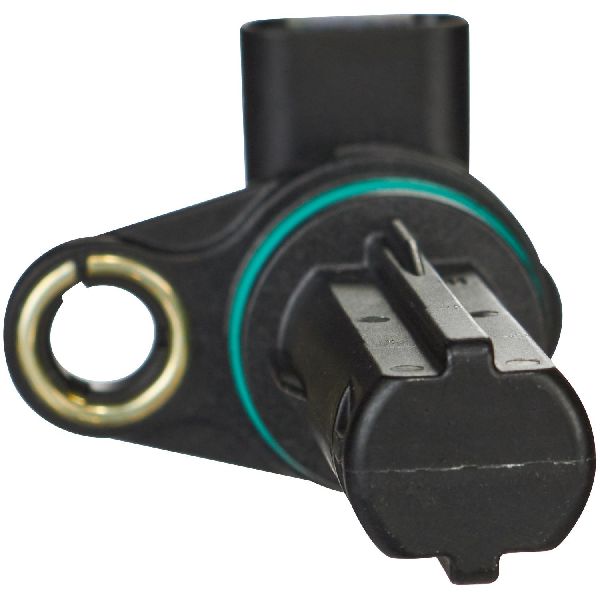
P0335 on a 2017-2021 Chrysler Pacifica almost always points to a faulty crankshaft position sensor, a common failure on the 3.6L Pentastar engine. This can cause dangerous stalling or a no-start condition. Replacing the sensor (Mopar Part #05149167AF) is the typical fix, costing around $30-$90 for the part and 1-2 hours of labor.
- P0335 on a Pacifica is a serious code that can leave you stranded; do not drive with it.
- The most likely cause is a failed crankshaft position sensor, which is a common issue on the 3.6L Pentastar engine.
- Symptoms include the engine stalling, cranking but not starting, and a rough idle.
- The correct OEM replacement part is Mopar #05149167AF.
- While the sensor is the most common cause, wiring issues should also be inspected.
What's Unique About the 2017-2021 Chrysler PACIFICA
For the Chrysler Pacifica with the 3.6L Pentastar V6, this code is a well-documented issue acknowledged by the manufacturer through multiple Technical Service Bulletins (TSBs). One notable change, detailed in TSB #18-002-19 REV A, was to re-program the PCM to make P0335 a "two-trip fault." This change was intended to reduce false positives by requiring the fault to be detected on two consecutive driving cycles before illuminating the Check Engine Light. The existence of this and other TSBs confirms that P0335 is a known issue on this platform, often addressed with software updates or sensor replacement.
Diagnostic Flowchart
Tap your situation to follow the diagnostic path that matches what you're seeing on this vehicle.
Symptoms You May Notice
- Check Engine Light is on
- Engine stalls unexpectedly, often when coming to a stop or after the engine has warmed up
- Engine cranks but will not start (no-start condition)
- Extended cranking time before the engine starts (hard starting)
- Rough or unstable idle
- Hesitation or lack of power during acceleration
- Engine misfires, which may trigger other codes like P0300
- Replacing the camshaft position sensors. The crankshaft and camshaft sensors work together, but they are distinct parts and will set different codes (e.g., P0340, P0345). P0335 is specific to the crankshaft sensor circuit.
- Replacing the battery or starter when the vehicle won't start, without first checking for diagnostic trouble codes. 🎬 Watch: How to fix a no-start condition caused by P0335.
- Assuming a P0336 code (Crankshaft Position Sensor 'A' Circuit Range/Performance) that appears after replacing the sensor means the new sensor is bad. It can sometimes indicate a wiring issue that was disturbed during the repair or the need for a crankshaft position relearn procedure.
Most Likely Causes
- Failed Crankshaft Position Sensor 🔴 High Probability The sensor is a very common failure point across the millions of Chrysler/Dodge/Jeep vehicles with the 3.6L Pentastar engine. Heat cycles and age cause the internal electronics of the sensor to fail, leading to an intermittent or complete loss of signal. Multiple TSBs from Chrysler acknowledge issues with this sensor circuit.
How to confirm: Scan for RPM signal during cranking. If the RPM reads 0, the PCM is not seeing a signal from the crank sensor. The most definitive test is using an oscilloscope to check the sensor's square wave output signal pattern. However, given the high failure rate, replacement is often the most practical diagnostic step after checking wiring.
Typical fix: Replace the crankshaft position sensor. It is highly recommended to use an OEM Mopar part or a top-tier aftermarket brand like NTK or Delphi for this critical component.
Est. part cost: $30-$90 - Wiring Harness or Connector Issue 🟡 Medium Probability The sensor is located at the rear of the engine block, low on the vehicle, exposing the wiring to potential damage from road debris, heat from the exhaust, and moisture. The wiring can become chafed, melted, or the connector pins can corrode, causing an intermittent or lost connection.
How to confirm: Visually inspect the wiring harness leading to the sensor for any signs of chafing, melting, or breaks. Check the connector for corrosion, moisture, or loose pins. Wiggle the harness while the engine is running (if possible) to see if it causes a stall.
Typical fix: Repair the damaged section of wiring or clean/replace the connector pigtail.
Est. part cost: $10-$50 - Damaged Reluctor Ring ⚪ Low Probability This is not specific to the Pacifica but is a possibility for any vehicle. The reluctor ring (or tone wheel) has teeth that the sensor reads; damage to these teeth from debris or during other engine/transmission work can cause an erratic signal. However, this is a very rare cause for P0335 on the 3.6L Pentastar compared to sensor or wiring failure.
How to confirm: Visual inspection of the reluctor ring, which is a labor-intensive process as it often requires removing the transmission or timing cover.
Typical fix: Replace the damaged reluctor ring.
Est. part cost: $50-$200 (part only, labor is very high)
Rare But Worth Checking
- Faulty Powertrain Control Module (PCM): This is extremely rare. The PCM should only be suspected after all other possibilities, including the sensor and wiring, have been exhaustively tested and ruled out.
Diagnosis Steps
- Connect an OBD-II scanner to verify P0335 is present and check for any other codes like P0339 or P0300.
- Using the scanner's live data function, monitor the engine RPM while cranking. If the RPM reads 0 or is erratic, the PCM is not getting a good signal from the crank sensor.
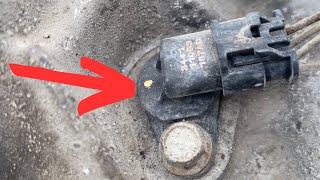
- Safely raise and support the vehicle on jack stands. Locate the crankshaft position sensor on the rear of the engine block (passenger side), near the transmission bell housing. It is accessible from underneath.
- Visually inspect the sensor's connector and wiring harness for obvious damage, such as melting from exhaust heat, chafing, or corrosion in the connector.
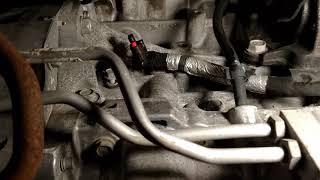
- If the wiring appears intact, the most common and cost-effective next step is to replace the sensor. It is held in by a single 10mm bolt. 🎬 Watch: Step-by-step crankshaft sensor location and replacement guide.
- Before installing the new sensor, apply a small amount of clean engine oil to the new O-ring to ensure it seats properly.
- After replacing the sensor, clear the code with the scanner and start the vehicle to confirm the fix. A test drive is recommended.
- If the code returns, a more advanced diagnosis is needed. This involves using a multimeter to test the 3-wire circuit (power, ground, signal) for continuity and voltage, and ideally using an oscilloscope to verify the signal pattern from the sensor to the PCM.
Parts You'll Likely Need
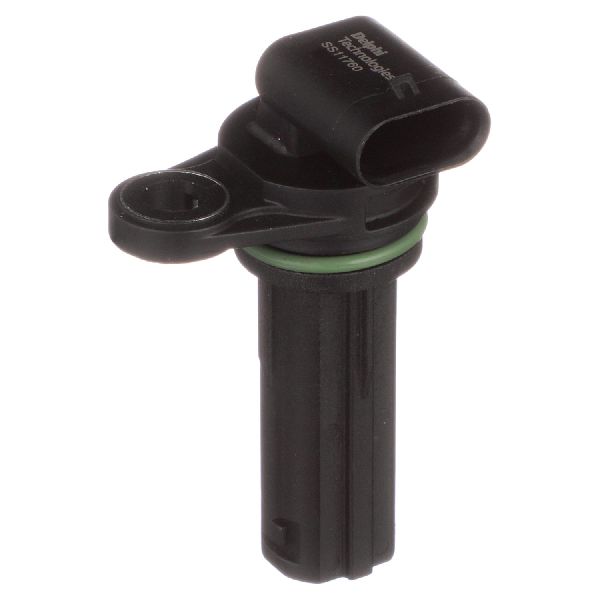
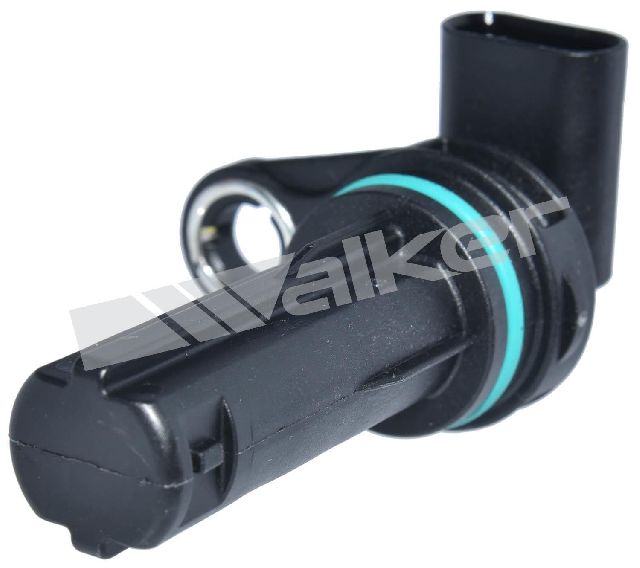
- Engine Crankshaft Position Sensor
(OEM #05149167AF)— This is the most common failure point for code P0335. The sensor's internal components fail over time due to heat cycles. The OEM part number 05149167AF supersedes previous versions like 5149167AD and 5149167AE.
Trusted brands: Mopar (OEM), NTK, Delphi, Standard Motor Products (SMP), Dorman
OEM price range: $60-$90
Aftermarket price range: $30-$65
Related Codes That Often Appear With This One
- P0339 — P0339 indicates an intermittent signal from the crankshaft sensor, while P0335 indicates a complete loss of signal. They often appear together as the sensor fails. Chrysler TSBs frequently list both codes together as part of the same fault condition. 🎬 See this case study on diagnosing P0335 and P0339 codes.
- P1AC6-00 — This is a manufacturer-specific code for 'MCPA Crankshaft Position Signal Sensor Performance' and is cited alongside P0335 in Chrysler TSBs, indicating a related diagnostic. [Bulletin #1805022REVA, #1805121]
- P0300 — P0300 stands for 'Random/Multiple Cylinder Misfire Detected'. A faulty crankshaft sensor signal can prevent the PCM from correctly timing spark and fuel, leading to misfires across multiple cylinders.
Technical Service Bulletins (TSBs) & Recalls
- 18-002-19 REV A: Details the change of P0335 to a two-trip fault to reduce false MIL illumination and includes other PCM updates.
- 1805022REVA: Mentions P0335, P0339, and P1AC6-00 together in a list of DTCs for technicians to investigate related to electrical system issues.
- 1802123 & 1802023: Cites that pending P0335 and P0339 codes can disable other important diagnostics like misfire monitoring.
- 1805121: Lists P0335 with other sensor performance codes as part of a diagnostic tree for technicians.
- 18-002-21 (Superseded): Specifically calls out P0335 and P0339 as potential causes for MIL illumination that a PCM software update is designed to address.
Platform-Specific Known Issues
- Stalling Recall vs. Sensor Failure: A recall was issued for some 2017 Pacifica models for engine stalling, but the official cause was a software issue. However, the symptoms are identical to a failing crankshaft sensor. If the recall was performed and stalling persists with a P0335 code, the sensor itself is the primary suspect.
- TSB Changing Fault Logic: Chrysler TSB #18-002-19 REV A changed the logic for setting P0335 from a one-trip to a two-trip fault, indicating the manufacturer was aware of potential nuisance codes from this circuit and sought to make the check engine light less sensitive to intermittent glitches.
- Owner Experience: On forums like Reddit's r/ChryslerPacifica, owners have discussed troubleshooting P0335. In one case, a user replaced the crankshaft sensor but the starting issue was ultimately resolved by replacing a camshaft position sensor, highlighting the importance of proper diagnosis as the symptoms can overlap.
Mechanic-Grade Diagnostic Values
- Crankshaft Sensor 5V Reference Supply Voltage — expected: 4.9 to 5.1 Volts. Failure: Voltage below 4.9V or above 5.1V indicates a problem with the PCM or wiring.
- Crankshaft Sensor Ground Circuit — expected: Battery Voltage (approx. 12.6V) when testing between the positive battery terminal and the sensor's ground pin.. Failure: A reading other than battery voltage indicates a poor ground connection.
- Crankshaft Sensor Signal Circuit (Key On, Engine Off) — expected: Approx. 5 Volts. Failure: A reading significantly lower than 5V, or 0V, can indicate a short in the wiring or a faulty sensor.
- Crankshaft Sensor Signal Waveform — expected: A clean square wave pattern switching between approximately 0V and 5V when viewed on an oscilloscope while the engine is cranking or running.. Failure: A missing, noisy, or rounded waveform indicates a failing sensor or an issue with the reluctor wheel.
Scan Tool Commands That Help
- wiTECH (Chrysler Dealer Tool) or equivalent high-level scanner: Cam/Crank Relearn — This procedure may be required after replacing the crankshaft position sensor, camshaft position sensor, or timing components. It synchronizes the PCM with the new sensor's signal characteristics. Failure to perform this can sometimes lead to persistent codes or rough running even with a new part.
Wiring & Ground Locations
- Crankshaft Position Sensor Connector — On the sensor itself, located at the rear of the engine block near the transmission bell housing, accessed from underneath the vehicle.. This is the primary connection point to test. It is a 3-wire connector for the 5V supply, signal, and ground circuits.
- PCM Connector C2 — This is one of the main connectors at the Powertrain Control Module (PCM).. The crankshaft position sensor wires terminate here. For advanced diagnostics, you would test for continuity and shorts between this connector and the sensor connector. For example, on some Chrysler vehicles, the CKP signal is on pin 35, ground on pin 34, and 5V supply on pin 24 of the ECM connector.
- Engine Ground Straps — Multiple ground straps connect the engine block and transmission to the vehicle's chassis. One key location is on the engine mount. Another is often found on the aft left-hand side of the undercarriage, attached to the frame.. A poor or corroded engine ground can cause a variety of electrical issues, including erratic sensor signals. While not a direct cause of P0335, ensuring all engine grounds are clean and tight is a crucial step in diagnosing any electrical fault.
Real Owner Repair Stories
- Chrysler Forum user 'myf16' (2004 Chrysler Pacifica (Note: Older model but same code and component function)) — Persistent P0335 error code that returned immediately after being reset. The car appeared to run normally otherwise.
❌ Tried (didn't work) Resetting the code with a scanner.
✅ What actually fixed it The user replaced the crankshaft position sensor, which resolved the P0335 code. They noted that separating the electrical connector was very difficult.
OEM Part Supersession History
5149167AD, 5149167AE→05149167AF— Part revision and improvement by the manufacturer.
Model Year Variations Within This Range
- 2017-2019 (Pre-update): TSB #18-002-19 REV A, issued in May 2019, changed the fault logic for P0335 from a one-trip to a two-trip fault. This means earlier models were more likely to illuminate the Check Engine Light from a single, intermittent glitch, whereas later models (or earlier ones that received the PCM update) require the fault to be detected on two consecutive drive cycles.
Helpful Videos
Used OEM Parts in Stock

New Aftermarket Parts Available


The information in this article is provided for general reference and educational purposes only. Vehicle specifications, procedures, and part compatibility can vary by production date, trim level, and region. Always consult your vehicle's factory service manual and verify part numbers before purchasing or performing repairs. Safety-critical components such as airbags, seat belts, and braking systems should be installed by a qualified professional.
- Chrysler PACIFICA:
- 🎬 Helpful Videos
- 🛍️ Shop This Part
- What's Unique About the 2017-2021 Chrysler PACIFICA
- Diagnostic Flowchart
- Symptoms You May Notice
- Most Likely Causes
- Rare But Worth Checking
- Diagnosis Steps
- Parts You'll Likely Need
- Related Codes That Often Appear With This One
- Technical Service Bulletins (TSBs) & Recalls
- Platform-Specific Known Issues
- Mechanic-Grade Diagnostic Values
- Scan Tool Commands That Help
- Wiring & Ground Locations
- Real Owner Repair Stories
- OEM Part Supersession History
- Model Year Variations Within This Range
- 🎟️ Get 5% Off