

P0335 on 2013-2016 Chrysler 300: Crank Sensor Circuit Causes and Fixes
P0335 on a Chrysler 300 means there's a problem with the crankshaft position sensor circuit. This often causes stalling when hot, long crank times, or a no-start condition. The most common fix is replacing the crankshaft position sensor itself, which costs about $20-$75 for an aftermarket part or $145+ for OEM. On the 5.7L Hemi, this is a more difficult job as the starter must be removed.
- P0335 on a 2013-2016 Chrysler 300 indicates a loss of signal from the crankshaft position sensor, which is a critical failure that can cause the engine to stall without warning.
- The most common symptom is the engine stalling after it has warmed up, followed by a no-start condition until it cools down.
- For the 3.6L V6, the sensor is relatively easy to access from under the car. For the 5.7L V8, the starter must be removed, making the repair more complex.
- While the sensor itself is the most likely culprit, the wiring harness should be carefully inspected for damage before replacing parts.
- Due to the risk of stalling, it is unsafe to drive the vehicle until the issue is repaired.
What's Unique About the 2013-2016 Chrysler 300

On the second-generation (LD) Chrysler 300 and its platform mates like the Dodge Charger, a failing crankshaft position sensor often presents with a classic symptom: the engine stalls unexpectedly after reaching operating temperature, then refuses to restart until it has cooled down. This is a common failure mode for electronic components sensitive to heat. Additionally, several Technical Service Bulletins (TSBs) issued by Chrysler, such as TSB 18-088-16, directly link P0335 to complaints of poor performance in high ambient temperatures and recommend a PCM software update as the fix, especially when P0335 appears with code P2610 (PCM Internal Engine Off Timer Performance). [Bulletin #1808816, Bulletin #18-088-16 REV. A] This indicates the problem can be software-related, not just a failed sensor.
Diagnostic Flowchart
Tap your situation to follow the diagnostic path that matches what you're seeing on this vehicle.
Symptoms You May Notice
- Engine stalls, especially when hot, and may not restart until cooled.
- Extended cranking time before the engine starts.
- Complete no-start condition.
- Check Engine Light is on.
- Rough or unstable idle.
- Engine hesitation or misfiring during acceleration.
- Reduced engine power.
- Engine will not rev past a certain RPM (e.g., 3000 RPM) as the PCM enters a limited operating strategy. 🎬 Watch: A detailed overview of the P0335 code and symptoms.
- Replacing the camshaft position sensor. While related, a cam sensor fault will set its own specific codes (e.g., P0340, P0344).
- Replacing the starter motor. While the starter may need to be removed for access on V8 models, it is not the cause of the code. A weak starter may cause slow cranking but won't set a P0335.
- Replacing the battery. A weak battery can cause a no-start and other electrical issues but will not typically set a P0335 code, which is specific to the sensor's circuit.
Most Likely Causes

- Failing Crankshaft Position Sensor 🔴 High Probability Heat and vibration cause the sensor's internal electronics to fail over time, a common issue on many vehicles. The symptom of stalling when hot is a classic sign of this type of failure.
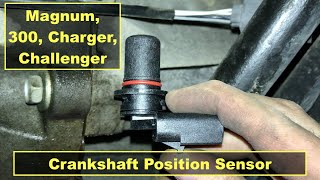
How to confirm: Use a scan tool to monitor live data for an RPM signal while cranking. No RPM signal points to a bad sensor or circuit. You can also test the sensor's voltage output with a multimeter; it should generate a fluctuating voltage signal as the engine turns. An oscilloscope is the best tool to verify the square wave signal pattern. 🎬 See how to test and fix the sensor on Chrysler vehicles.
Typical fix: Replace the crankshaft position sensor. It is held in by a single 10mm bolt. On the 3.6L V6, access is from underneath on the passenger side of the engine block near the transmission. On the 5.7L V8, the starter motor must be removed to access the sensor, making the job more difficult. 🎬 Watch: Step-by-step guide to replacing the Hemi crankshaft sensor.
Est. part cost: $20 - $75 - Damaged Wiring or Connector 🟡 Medium Probability The sensor and its wiring are located at the bottom of the engine, exposed to heat, oil, and road debris, which can degrade the wiring or connector over time. A corroded connector or a break in the harness can disrupt the signal.
How to confirm: Visually inspect the wiring harness leading to the sensor for any signs of melting, chafing, or corrosion at the connector. Wiggle the harness while the engine is running (if possible) or while monitoring the circuit with a multimeter to see if the signal cuts out.
Typical fix: Repair the damaged section of wire or replace the connector pigtail. If the damage is extensive, the engine harness may need replacement.
Est. part cost: $10 - $300 - Faulty or Outdated Powertrain Control Module (PCM) Software 🟡 Medium Probability Chrysler TSB #18-088-16 Rev. A explicitly states that P0335 can be set during operation in high ambient temperatures and the prescribed fix is to reprogram the PCM with updated software. [Bulletin #18-088-16 REV. A] This is especially relevant if code P2610 is also present. [Bulletin #1807020, #1808816]
How to confirm: This must be confirmed by a dealership or a qualified shop with access to Chrysler's wiTECH software. They can check the current software calibration level of your PCM against the latest version available.
Typical fix: Reprogram (flash) the PCM with the latest software version. This is a dealer or specialist-level repair. [Bulletin #18-088-16 REV. A]
Est. part cost: $150 - $300 (Labor for flashing)
Rare But Worth Checking
- Damaged Reluctor Ring (Tone Ring): The reluctor ring is a toothed wheel that the crank sensor reads. If it's damaged, cracked, or has broken teeth, the signal will be incorrect, triggering P0335. This is rare but can happen, and usually requires significant labor to access and replace as it may be part of the crankshaft or flywheel/flexplate.
- Timing Chain/Belt Issue: If the timing chain has stretched or jumped a tooth, the correlation between the crankshaft and camshaft sensors will be incorrect, which can sometimes manifest as a crank sensor circuit code. This is usually accompanied by other timing-related codes like P0016. [1, Bulletin #1807517]
Diagnosis Steps

- Read the codes with an OBD-II scanner to confirm P0335 and note any other codes present, paying close attention to P2610 or P0315.
- Use the scanner's live data function to monitor Engine RPM while cranking the engine. If the RPM reads 0, the PCM is not receiving a signal from the sensor or its circuit.
- If possible, start the engine. Observe for symptoms like rough idle, stalling, or hesitation.
- Disconnect the battery. Locate the crankshaft position sensor. On the 3.6L V6, it's on the lower passenger side of the engine block near the transmission bell housing. On the 5.7L V8, it's behind the starter motor on the passenger side.
- Inspect the sensor's electrical connector and wiring for damage, corrosion, or loose pins. Check for oil contamination which can degrade the connection.
- For 5.7L V8 models, the starter must be removed. Disconnect the battery's negative terminal. Remove the 13mm nut for the main power lead and unplug the solenoid wire. Then, remove the three 15mm starter bolts and maneuver the starter out of the way.
- If wiring looks good, replace the sensor. It is held by a single 10mm bolt. Lightly oil the new sensor's O-ring before installation.
- After replacing the sensor, reconnect everything, clear the codes with the scanner, and start the vehicle to confirm the fix. A specific crankshaft variation relearn procedure may be required if code P0315 is present, which needs a capable scan tool. Many vehicles will relearn automatically after a short drive cycle.
Parts You'll Likely Need

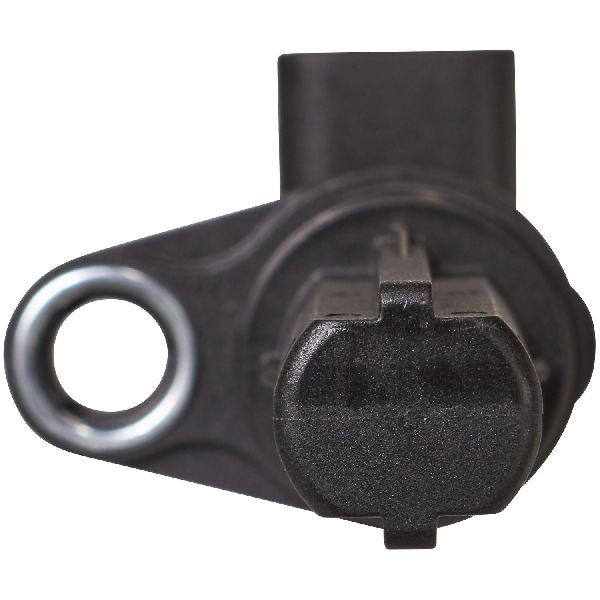
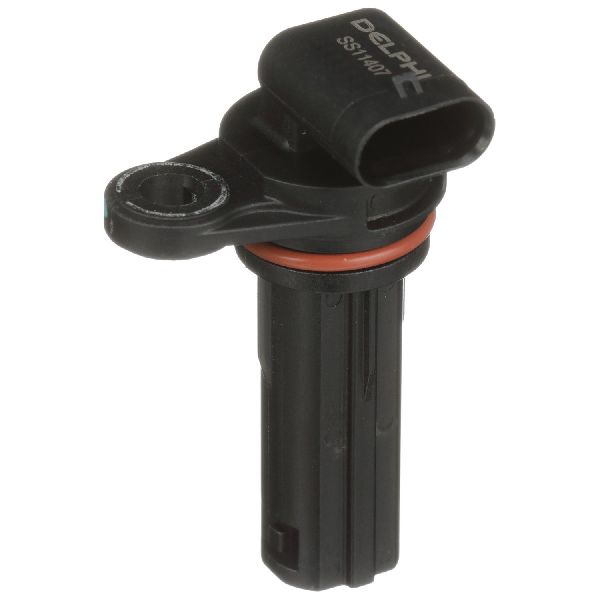
- Crankshaft Position Sensor (5.7L V8)
(OEM #56028815AB)— This sensor is the most frequent point of failure for the P0335 code on the Hemi engine, often due to heat and age. It supersedes part number 56028815AA.
Trusted brands: Mopar, Delphi, NGK/NTK
OEM price range: $145-$220
Aftermarket price range: $25-$80 - Crankshaft Position Sensor (3.6L V6)
(OEM #5149169AB)— This is the typical OEM sensor for the 3.6L Pentastar V6. Like the Hemi version, it is prone to heat-related failure causing stalling and no-start issues.
Trusted brands: Mopar, Standard Motor Products, Bosch
OEM price range: $40-$70
Aftermarket price range: $20-$50
Related Codes That Often Appear With This One
- P0339 — This code means 'Crankshaft Position Sensor Intermittent,' which is a more specific version of P0335 and strongly points to a failing sensor or a loose connection. [Bulletin #1807517]
- P2610 — This code for 'PCM Internal Engine Off Timer Performance' has been noted in multiple TSBs alongside P0335, suggesting a potential software or internal PCM issue that Chrysler has addressed via software updates. [Bulletin #1807020, #1808816]
- P0300-P0308 — These are misfire codes for random or specific cylinders. If the PCM doesn't know the crankshaft's position, it can't time the spark correctly, leading to misfires. [Bulletin #1809416]
- P0315 — This code means 'Crankshaft Position System Variation Not Learned'. It can appear after a sensor replacement if the PCM needs a specific relearn procedure, which usually requires a capable scan tool.
Technical Service Bulletins (TSBs) & Recalls
- 18-088-16 REV. B
- 1807020
- 1807320
- 1807517
- 1809416
- 1807617
Platform-Specific Known Issues
- TSB #18-088-16 Rev. A specifically calls for a PCM reflash to fix P0335 on 2013-2014 models with the 3.6L engine experiencing issues in high heat, indicating a known software logic problem. [Bulletin #18-088-16 REV. A]
- On the 5.7L Hemi engine, replacing the sensor is significantly more labor-intensive because the starter motor must be removed for access. This involves disconnecting power cables and removing three 15mm bolts.
- Owners on forums like 300cforums.com and chryslerforum.com strongly advise using an OEM Mopar sensor, reporting that aftermarket sensors can be faulty out of the box or fail prematurely.
Mechanic-Grade Diagnostic Values
- Crankshaft Position Sensor (3-wire Hall Effect) Reference Voltage — expected: 5 Volts DC (with key on, engine off). Failure: Voltage significantly lower than 5V or 0V indicates a wiring or PCM issue.
- Crankshaft Position Sensor Ground Circuit — expected: Near 0 Volts DC / Good continuity to ground. Failure: Voltage above 0V or high resistance indicates a bad ground connection.
- Crankshaft Position Sensor Signal Wire — expected: A fluctuating 0V to 5V square wave pattern when the engine is cranking or running (best viewed on an oscilloscope).. Failure: A flat 0V, 5V, or no signal indicates a failed sensor or wiring fault. A distorted or glitchy waveform can also indicate a failing sensor.
Scan Tool Commands That Help
- Chrysler wiTECH or capable aftermarket scanner (e.g., Autel): CKP Relearn / Cam/Crank Relearn / Crank Pattern Learn — This function should be performed after replacing the crankshaft position sensor, especially if code P0315 (Crankshaft Position System Variation Not Learned) is present. It synchronizes the new sensor's signal with the PCM's learned values for the reluctor wheel.
Wiring & Ground Locations
- Crankshaft Position Sensor Connector (Typical 3-wire) — On the sensor body, located on the lower passenger side of the engine block (3.6L) or behind the starter (5.7L).. This is the primary point for testing voltage, ground, and signal. The pins are typically: 1) 5V Reference, 2) Signal, 3) Ground. Verifying integrity here is a key diagnostic step.
- G104 — On the right side of the engine block or top of the right cylinder head cover.. This is a primary engine ground. A loose or corroded connection at G104 can cause erratic behavior and fault codes for various engine sensors, including the crankshaft position sensor.
- G105 / G106 — Located on the rear of the engine block or cylinder head.. These are additional engine-to-chassis grounds. Poor connections here can create electrical noise and unstable sensor readings, potentially leading to a P0335 code.
Real Owner Repair Stories
- Reddit user in r/Duramax (similar Hall effect sensor issue) (2014 GM Truck (LML Duramax)) — Intermittent stalling within the first 20 minutes of run time, then runs fine for the rest of the day. P0335 code stored.
❌ Tried (didn't work) Replaced the crankshaft position sensor., Replaced the pigtail connector.
✅ What actually fixed it The user confirmed with an oscilloscope that the square wave signal was disappearing. The final diagnosis pointed towards a wiring issue or a failing PCM that was pulling the signal to ground, as multiple new sensors did not resolve the issue. The intermittent, heat-related nature of the fault after trying common fixes strongly suggested a PCM or complex wiring problem.
OEM Part Supersession History
56028815AA→56028815AB— Standard part revision for improved reliability or manufacturing process change.
Helpful Videos
We Have This Part in Stock


The information in this article is provided for general reference and educational purposes only. Vehicle specifications, procedures, and part compatibility can vary by production date, trim level, and region. Always consult your vehicle's factory service manual and verify part numbers before purchasing or performing repairs. Safety-critical components such as airbags, seat belts, and braking systems should be installed by a qualified professional.
- Chrysler 300:
- 🎬 Helpful Videos
- 🛍️ Shop This Part
- What's Unique About the 2013-2016 Chrysler 300
- Diagnostic Flowchart
- Symptoms You May Notice
- Most Likely Causes
- Rare But Worth Checking
- Diagnosis Steps
- Parts You'll Likely Need
- Related Codes That Often Appear With This One
- Technical Service Bulletins (TSBs) & Recalls
- Platform-Specific Known Issues
- Mechanic-Grade Diagnostic Values
- Scan Tool Commands That Help
- Wiring & Ground Locations
- Real Owner Repair Stories
- OEM Part Supersession History
- 🎟️ Get 5% Off