

P0335 on 2013-2016 Chrysler 200: Crank Sensor Circuit Failure Causes and Fixes
P0335 on a Chrysler 200 indicates a problem with the crankshaft position sensor circuit, often causing stalling or a no-start condition. The most common fix is replacing the sensor itself, which costs about $25-$75 for an aftermarket part. However, wiring issues or even a needed PCM software update can also trigger this code, so a full diagnosis is recommended.
- P0335 on a 2013-2016 Chrysler 200 is a serious code that will likely cause stalling or prevent the car from starting.
- The most common cause is a failed crankshaft position sensor, which is a relatively affordable part to replace.
- Before replacing the sensor, check for other trouble codes. The TSBs for this car show P0335 is often a symptom of a larger electrical or communication problem.
- Always inspect the sensor's wiring for heat damage, as its location near the exhaust makes it vulnerable.
- After replacing the sensor, you may need a scan tool to perform a 'relearn' procedure for the engine to run properly.
What's Unique About the 2013-2016 Chrysler 200

The 2013-2016 Chrysler 200 spans two different vehicle generations (2013-2014 and 2015-2016), but both commonly experience this code. What's notable for this platform is that P0335 often appears alongside other, seemingly unrelated trouble codes, as documented in multiple Technical Service Bulletins (TSBs). The fix for these clusters of codes is frequently a PCM software update, not a hardware replacement. This suggests the root cause may not always be a simple sensor failure, but could be related to broader electrical issues like wiring harnesses or the PCM software itself, requiring more thorough diagnosis before replacing parts.
Diagnostic Flowchart
Tap your situation to follow the diagnostic path that matches what you're seeing on this vehicle.
Generation note: This range covers two generations: the first generation (JS) from 2013-2014 and the second generation (UF) from 2015-2016. Both were available with 2.4L and 3.6L engines. While the code's meaning is the same, the physical location of the sensor and specific wiring paths may differ slightly between generations and engines. The TSBs often specify which generation or engine the associated software update applies to.
Symptoms You May Notice
- Engine will not start
- Engine cranks for a long time before starting (hard start)
- Engine stalls unexpectedly, sometimes when it gets hot
- Rough or unstable idle
- Check Engine Light is on
- Reduced acceleration and engine power
- Tachometer (RPM gauge) shows 0 while cranking
- Replacing the camshaft position sensor instead of the crankshaft sensor. While they can cause similar symptoms, P0335 specifically points to the crank sensor circuit.
- Replacing the crankshaft sensor when a PCM software update is the actual required fix per a TSB. This leads to the code returning.
Most Likely Causes

- Failed Crankshaft Position Sensor 🔴 High Probability These sensors are exposed to significant heat and vibration, causing internal electronics to fail over time. This is a common issue on many Chrysler, Dodge, and Jeep vehicles of this era. Symptoms often appear when the engine warms up and may disappear after cooling down.
How to confirm: Test the sensor's resistance with a multimeter or observe its signal with an oscilloscope. A lack of an RPM signal on a scan tool during cranking is a strong indicator. Given the low cost of the part, many DIYers opt to replace it as a primary diagnostic step.
Typical fix: Replace the crankshaft position sensor and perform a cam/crank relearn procedure.
Est. part cost: $25-$75 - Damaged Wiring or Connector 🟡 Medium Probability The sensor's wiring is often located near hot exhaust components, which can cause the loom and wires to become brittle, melt, or fail over time. The connector itself can also become loose or corroded, interrupting the signal.
How to confirm: Visually inspect the wiring harness from the sensor to the PCM for any signs of melting, chafing, or corrosion at the connector. Wiggle the harness at the sensor and at the PCM to see if the fault is intermittent. Perform a continuity test on the signal, ground, and voltage reference wires.
Typical fix: Repair the damaged section of the wiring harness or replace the connector pigtail.
Est. part cost: $15-$50 - Powertrain Control Module (PCM) Software Issue 🟡 Medium Probability Chrysler has released numerous TSBs (e.g., 18-022-17 REV. A, 18-050-16 REV. A) that bundle P0335 with other codes. The prescribed fix is not to replace the sensor, but to reprogram the PCM with updated software that corrects logic errors and improves system performance.
How to confirm: Check the vehicle's VIN against active TSBs. If P0335 is present along with the other codes listed in the bulletin (like U1424, P2610, P0340), a software update is the likely solution. This requires a dealer or a properly equipped independent shop.
Typical fix: Reprogram the PCM using a wiTECH scan tool or equivalent.
Est. part cost: $0 (if under warranty) - $200 - Damaged Reluctor Ring ⚪ Low Probability This is less common, but the toothed ring that the sensor reads can be damaged, especially during major engine or transmission work.
How to confirm: Visually inspect the reluctor ring (on the flywheel or crankshaft) for bent, broken, or debris-covered teeth. This may require significant disassembly, such as removing the transmission or oil pan.
Typical fix: Replace the reluctor ring/flywheel.
Est. part cost: $100-$400
Rare But Worth Checking
- Faulty Powertrain Control Module (PCM): While a software update is more common, a complete hardware failure of the PCM is possible. TSBs indicate that P0335 can be set along with internal PCM performance codes (P2610, P1607), suggesting the PCM itself could be the issue. This should only be considered after the sensor, wiring, and software have been ruled out.
Diagnosis Steps
- Scan for all DTCs. Note any other codes that appear with P0335, as they are critical diagnostic clues. Cross-reference the codes with known TSBs for this vehicle.
- While cranking the engine, observe the RPM reading on the scan tool. If it stays at 0, it strongly suggests a problem with the crank sensor or its circuit.
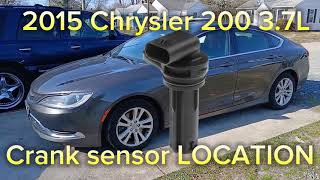
- Visually inspect the crankshaft position sensor and its electrical connector for obvious damage, melting, or corrosion. The sensor is located on the rear of the engine block near the transmission bell housing.
- Inspect the wiring harness leading from the sensor. Look for any signs of contact with hot exhaust parts or chafing against the engine block. Wiggle the wires to check for intermittent connections.
- If wiring looks good, test the connector for power, ground, and signal. With the key on, you should have a 5V reference and a good ground. The signal wire can be tested with an oscilloscope during cranking.
- If tests are inconclusive and the sensor is the original, replacement is a reasonable next step due to its high failure rate and low cost.
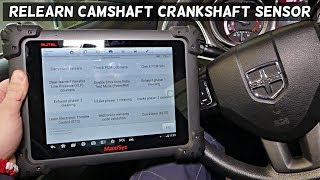
- After replacement, clear the codes. It is highly recommended to perform a 'cam/crank variation relearn' procedure using a capable scan tool. Failure to do this can result in rough running or the code returning.
- If the code persists after replacement and relearn, the issue is likely in the wiring harness or the PCM. If TSBs indicate a software fix for the code combination you have, a PCM reflash is the next step.
Parts You'll Likely Need

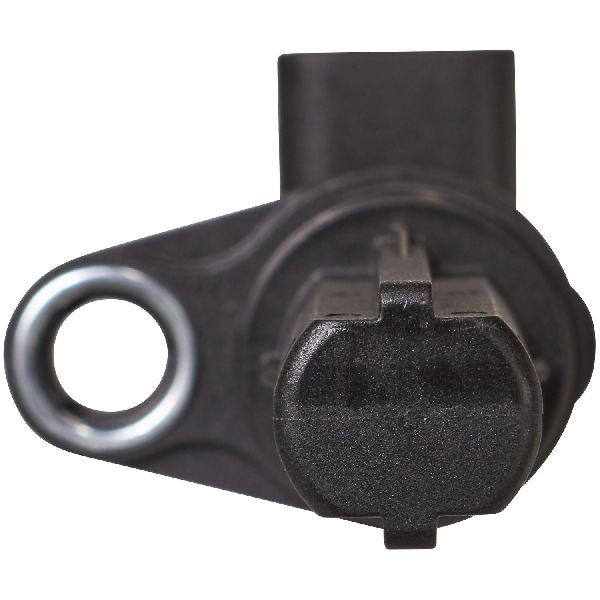
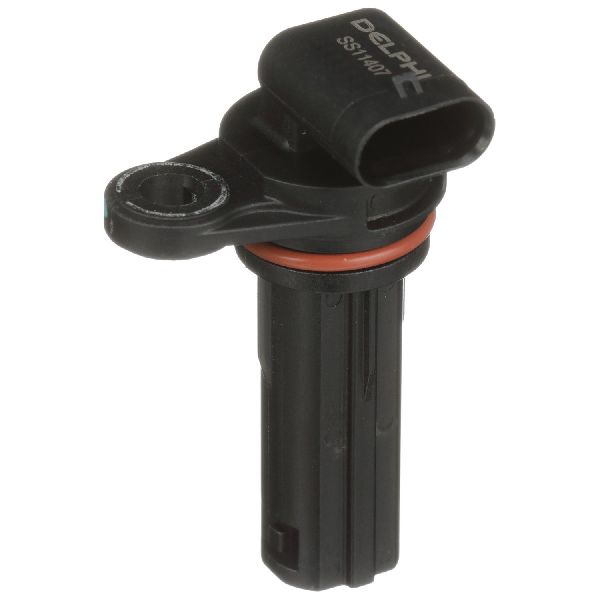
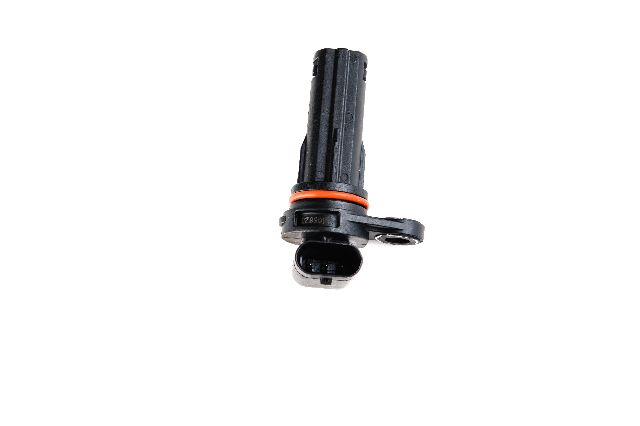
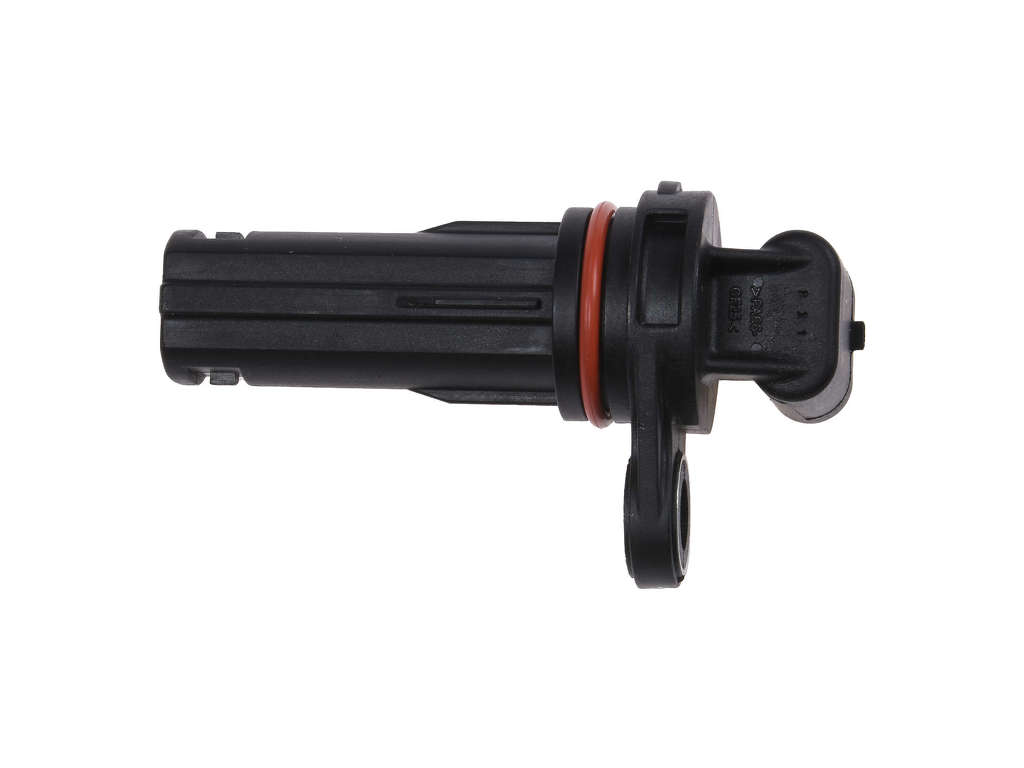
- Crankshaft Position Sensor
(OEM #For 3.6L V6: 5149167AF (supersedes 5149167AE, 5149167AD). For 2.4L I4: 5033307AE.)— This is the most frequent failure point for code P0335. Internal electronics fail from heat and vibration, causing intermittent or total signal loss. It is highly recommended to use an OEM Mopar part, as aftermarket sensors are known for premature failure on these vehicles.
Trusted brands: Mopar (OEM - Recommended), NGK/NTK, Delphi, Standard Motor Products (SMP)
OEM price range: $90-$130
Aftermarket price range: $25-$75
Related Codes That Often Appear With This One
- P0340 — This is the code for the Camshaft Position Sensor. The PCM uses both crank and cam signals to verify engine timing. A fault in one can sometimes trigger a code for the other. TSB #18-022-17 REV. A lists them together as being resolved by a PCM flash.
- U1424-00 — An 'Implausible Engine Torque Signal Received' code. This suggests a communication breakdown between modules, where the engine's reported torque (derived from crank sensor data) doesn't match what other modules expect. TSB #18-052-16 REV. A links this with P0335 and points to a PCM software update.
- P2610 — A 'PCM Internal Engine Off Timer Performance' code. This indicates a potential issue within the PCM itself, which could be the root cause of the P0335, as seen in TSB #18-050-16 REV. A. The fix is a PCM reflash.
- U0140 — 'Lost Communication With Body Control Module (BCM)'. Its appearance with P0335 in TSB #18-050-16 REV. A points to a wider network or electrical issue that is often resolved with a PCM software update.
Technical Service Bulletins (TSBs) & Recalls
- 18-051-16
- 18-022-17 REV. A
- 18-050-16 REV. A
- 18-052-16 REV. A
- 18-023-16
- 18-051-16 REV. A
- 18-023-16 REV. D
- 18-023-16 REV.C
Platform-Specific Known Issues
- On the 2.4L engine, the sensor is located on the back of the engine block, near the transmission, and may require removing a heat shield to access it.
- On the 3.6L engine, the sensor is also on the lower rear side of the engine block near the transmission and CV axle shaft.
- A significant number of TSBs (e.g., 18-023-16, 18-022-17) indicate that a PCM reflash is the correct fix when P0335 appears with a specific group of other codes. Simply replacing the sensor will not resolve the issue in these cases.
- A 'cam/crank relearn' procedure is strongly recommended after replacing the sensor. Some owners report the code returning or the car running in limp mode until this procedure is performed with a capable scan tool.
Mechanic-Grade Diagnostic Values
- Crankshaft Position Sensor (3-wire Hall effect type) Reference Voltage — expected: 5.0 Volts DC. Failure: No voltage or significantly lower voltage indicates a problem with the PCM or the wiring.
- Crankshaft Position Sensor Ground Circuit — expected: Close to 0 Volts DC (when testing voltage drop) or near 0 Ohms to a known good ground.. Failure: Any significant voltage reading or high resistance indicates a poor ground connection.
- Crankshaft Position Sensor (2-wire inductive type) Internal Resistance — expected: 200 - 1,000 Ohms (varies by manufacturer). Failure: A reading of 0 Ohms indicates a short circuit, while a very high or infinite reading indicates an open circuit within the sensor.
Scan Tool Commands That Help

- wiTECH (Chrysler Dealer Tool) or equivalent professional scanner: Cam/Crank Relearn (also called CKP Variation Relearn) — This function must be performed after replacing the crankshaft position sensor, camshaft position sensor, timing components, or the PCM. It allows the PCM to learn the minor variations in the new sensor's signal and the reluctor wheel's tooth profile to ensure accurate misfire detection and timing. Failure to perform this can cause the P0335 code to return or lead to rough running.
Wiring & Ground Locations

- PCM (Powertrain Control Module) Location — For 2015-2017 models with the 2.4L engine, the PCM is located on the right side of the engine bay, under the hood, near the battery.. The PCM provides the power, ground, and receives the signal from the crankshaft position sensor. All wiring for the sensor terminates at the PCM connectors, making this a key location for advanced electrical testing.
- G200 — Located at the left end of the dash for 2013 models.. This is a major interior ground point. While the CKP sensor ground is typically a dedicated return to the PCM, issues with main chassis grounds can introduce electrical noise that may affect sensor readings.
- G105 — Located on the right side of the engine compartment for 2013 models.. This is a primary engine bay ground. A poor connection here can cause a variety of engine control issues, potentially including sensor signal problems.
- Battery Jump Start Terminals — On the second generation (2015-2016), the positive jump-start terminal is under a red plastic cover on the driver's side strut tower, and the negative ground stud is nearby.. Knowing the correct jump-start points is critical, as improper connections can damage sensitive electronics like the PCM, which is directly related to the P0335 code.
Real Owner Repair Stories
- Reddit user post (Vehicle with P0335 (model not specified, but behavior is relevant)) — Car would crank for a long time before starting, and the P0335 code would appear. Clearing the code would make it run fine, but the starting issue and code would return on the next startup.
❌ Tried (didn't work) The owner initially replaced the sensor with one from a junkyard.
✅ What actually fixed it The junkyard sensor failed. The problem was only resolved after installing a brand new crankshaft position sensor. This highlights the risk of using used electronic parts for this repair. - 2CarPros Forum user (Vehicle with P0335 and P0340) — No RPM reading on the gauge. Car would not start initially.
❌ Tried (didn't work) Replacing the camshaft sensor did not fix the issue. The P0340 code returned.
✅ What actually fixed it The user found that by tapping the camshaft sensor signal wire while the car was idling, the tachometer would start working and the car would run normally. This pointed to an intermittent wiring or connection issue in the shared sensor harness, rather than a failed component. The fix involved tracing and repairing the wiring between the sensors and the PCM.
When the Usual Fixes Don't Work
- An owner complaint filed with the NHTSA (ODI #11614234) for a 2015 model states that the P0335 code and check engine light remained even after the crankshaft position sensor was replaced with a new part. This provides real-world evidence supporting the 'common_misdiagnoses' section, where simply replacing the sensor does not fix the problem. In such cases, the root cause is likely a wiring issue or a PCM software problem as indicated by multiple TSBs.
OEM Part Supersession History
5149167AD→5149167AE, which was then superseded by 5149167AF— Standard part revisions by the manufacturer to improve reliability, material, or design.
Heads up: The latest part number, 5149167AF, is the recommended replacement for all previous versions for the 3.6L engine. Using older stock (AD/AE) is not advised.
Model Year Variations Within This Range
- 2013-2014 (JS Generation) vs. 2015-2016 (UF Generation): The vehicle platform changed significantly between 2014 and 2015. While the engines (2.4L/3.6L) are similar, the PCM, wiring harnesses, and specific TSBs are often generation-specific. For example, TSB #18-050-16 REV. A applies to 2013 models, while TSB #18-022-17 REV. A applies to 2015 models. It is crucial to use diagnostic information and parts specific to the correct generation.
Helpful Videos
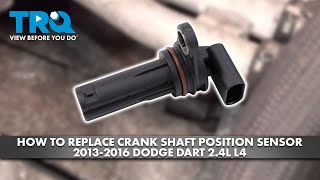
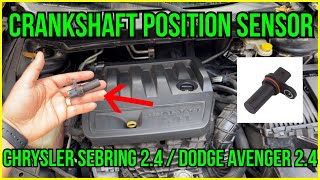
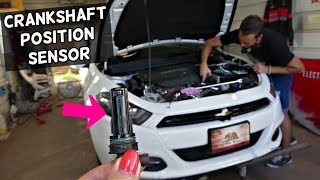
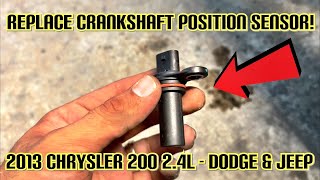
We Have This Part in Stock


The information in this article is provided for general reference and educational purposes only. Vehicle specifications, procedures, and part compatibility can vary by production date, trim level, and region. Always consult your vehicle's factory service manual and verify part numbers before purchasing or performing repairs. Safety-critical components such as airbags, seat belts, and braking systems should be installed by a qualified professional.
- Chrysler 200:
- 🎬 Helpful Videos
- 🛍️ Shop This Part
- What's Unique About the 2013-2016 Chrysler 200
- Diagnostic Flowchart
- Symptoms You May Notice
- Most Likely Causes
- Rare But Worth Checking
- Diagnosis Steps
- Parts You'll Likely Need
- Related Codes That Often Appear With This One
- Technical Service Bulletins (TSBs) & Recalls
- Platform-Specific Known Issues
- Mechanic-Grade Diagnostic Values
- Scan Tool Commands That Help
- Wiring & Ground Locations
- Real Owner Repair Stories
- When the Usual Fixes Don't Work
- OEM Part Supersession History
- Model Year Variations Within This Range
- 🎟️ Get 5% Off