

P0335 on 2007-2013 Chevrolet Silverado 1500: Crank Sensor Causes and Fixes
P0335 on a 2007-2013 Silverado almost always means the crankshaft position sensor has failed. This can cause a no-start or stalling. The sensor is located behind the starter, and replacement requires removing the starter and performing a mandatory 'Crank Relearn' procedure with a scan tool. Always inspect the wiring for damage during the repair. Expect to pay $40-$75 for a quality replacement part.
- P0335 means your truck's computer has lost the signal from the crankshaft position sensor, which will likely cause a no-start or dangerous stalling condition.
- The most common fix is to replace the crankshaft position sensor itself. Use a quality part from a brand like ACDelco or Delphi.
- The sensor is located on the passenger side of the engine, and you must remove the starter to access it.
- After replacing the sensor, you MUST perform a 'Crankshaft Position Variation Relearn' with a capable scan tool for the engine to run correctly and avoid other trouble codes.
What's Unique About the 2007-2013 Chevrolet Silverado 1500

For the GMT900 generation Silverado, the P0335 code is a very common and straightforward issue, almost always pointing to the sensor itself. The key challenge is its location; the sensor is tucked behind the starter motor on the passenger side of the engine block, making replacement more labor-intensive than on other vehicles. A critical, non-negotiable step for this platform is performing a 'Crankshaft Position Variation Relearn' with a capable scan tool after replacing the sensor. Skipping this step will likely lead to rough running, false misfire codes like P0300, and persistent drivability issues.
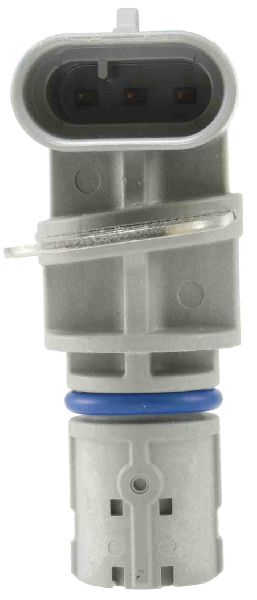
Generation note: The 2007-2013 year range primarily covers the second-generation Silverado 1500 (GMT900). However, in 2007, Chevrolet also sold the previous generation (GMT800) as the 'Silverado Classic.' This guide focuses on the more common GMT900 models, though the cause and repair are very similar for both. All GMT900 trucks in this year range use a 58x reluctor wheel, which is paired with a grey crankshaft position sensor.
Symptoms You May Notice
- Engine cranks but will not start
- Intermittent stalling, sometimes while driving
- Engine shuts off and won't restart
- Rough idle
- Extended crank time before the engine starts
- Check Engine Light is on
- Stabilitrak / Traction Control warning light may illuminate as a secondary fault.
- Reduced Engine Power mode may be activated.
- Replacing the camshaft position sensor(s). P0335 is specific to the crankshaft circuit.
- Replacing the fuel pump. A 'crank-no-start' can be caused by a fuel issue, but on these trucks, the CKP sensor is a more frequent cause for this symptom when a P0335 code is present.
- Replacing the battery or alternator. While a weak electrical system can cause various issues, a P0335 code specifically points to the CKP circuit, not general power supply.
Most Likely Causes

- Failed Crankshaft Position Sensor 🔴 High Probability The sensor is a common failure item due to age, heat cycles, and its location on the lower part of the engine, which exposes it to harsh conditions.
How to confirm: Use a scan tool to monitor engine RPM while cranking. If the RPM reads 0 or is erratic, the sensor or its circuit is faulty. Given the high failure rate, if the wiring is intact, the sensor is the most likely culprit.
Typical fix: Replace the crankshaft position sensor and perform the Crankshaft Position Variation Relearn procedure.
Est. part cost: $40-$75 - Damaged Wiring or Connector 🟡 Medium Probability The wiring harness runs near hot exhaust components and is exposed to road debris and oil. It is frequently disturbed or damaged during starter replacement, a common repair on these trucks. Chafing can occur against the ECM/TCM bracket or shock tower.
How to confirm: Visually inspect the wiring harness from the sensor connector as far back as possible. Look for melted plastic, chafed insulation, or corrosion on the connector pins. Pay close attention to the area around the starter. Check for continuity on the signal, power, and ground wires between the sensor connector and the ECM.
Typical fix: Repair the broken or shorted section of wire. Replace the pigtail connector if it is corroded or damaged. In a documented case, a user found the connector was simply knocked loose during a starter replacement, and reconnecting it solved the P0335 code. Manufacturer bulletin TSB Bulletin #PIP5553A, though referencing other models, notes that a wiring jumper harness can chafe at a bolt, leading to a P0335 and a possible stall or no-start.
Est. part cost: $15-$30 for a pigtail connector
Rare But Worth Checking
- Damaged Reluctor Wheel: The reluctor wheel is a toothed ring on the crankshaft that the sensor reads. While rare, damage can occur, especially if there has been major internal engine work. Inspection can sometimes be done by looking through the sensor mounting hole while rotating the engine. This is a significant repair and should only be considered after the sensor and wiring have been definitively ruled out.
- Faulty Engine Control Module (ECM): An internal failure of the ECM is very rare but possible. This should be the last item to consider after all other possibilities have been exhausted by a professional technician. TSB Bulletin #PIP4880F notes that P0335 may be stored in both the Engine Control Module and the Power Inverter Module on certain hybrid-electric platforms.
Diagnosis Steps

- Connect a capable OBD-II scanner and confirm P0335 is the primary active code.
- Using the scanner's live data feature, monitor 'Engine RPM' while cranking the engine. A reading of '0' strongly indicates a problem with the CKP sensor or its circuit. A healthy cranking RPM should be 100-500 RPM.
- Disconnect the battery. TSB Bulletin #PIP5482A advises technicians to perform a thorough battery inspection and test as part of the diagnostic steps for P0335.
- Safely raise and support the vehicle. Locate the starter motor on the passenger side of the engine.
- Inspect the CKP sensor wiring harness, which is visible near the starter. Look for any signs of melting, chafing, or loose connections. A common failure point is a damaged connector from a previous starter replacement.
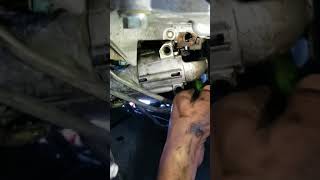
- If wiring appears intact, the most probable cause is the sensor itself. Proceed with removal of the starter motor 🎬 Watch: Step-by-step guide to replacing the sensor on a 5.3L engine. (typically two 13mm or 14mm bolts) to gain access to the sensor.
- Remove the single 10mm bolt holding the CKP sensor and carefully pry the old sensor out of the engine block.
- Before installing the new sensor, compare the O-ring to the original. Some aftermarket sensors may have an oversized O-ring that prevents proper seating, leading to a persistent code.
- Install the new sensor, ensuring it is fully seated before tightening the bolt.
- Reinstall the starter and all connections.
- Crucial Step: After starting the engine, use a capable scan tool to perform the 'Crankshaft Position Variation Relearn' procedure. Follow the on-screen prompts, which typically involve warming the engine, applying the brake, and briefly revving the engine to a fuel cut-off point (around 4,000 RPM). Affordable tools like the VXDIAG VCX Nano or CGSULIT SC530 have been reported 🎬 Watch: How to perform the mandatory crank relearn with a scan tool. by owners to perform this function.
Parts You'll Likely Need
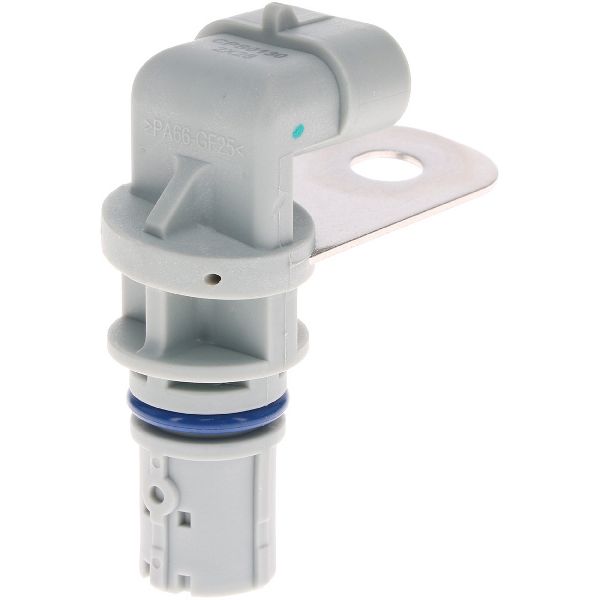
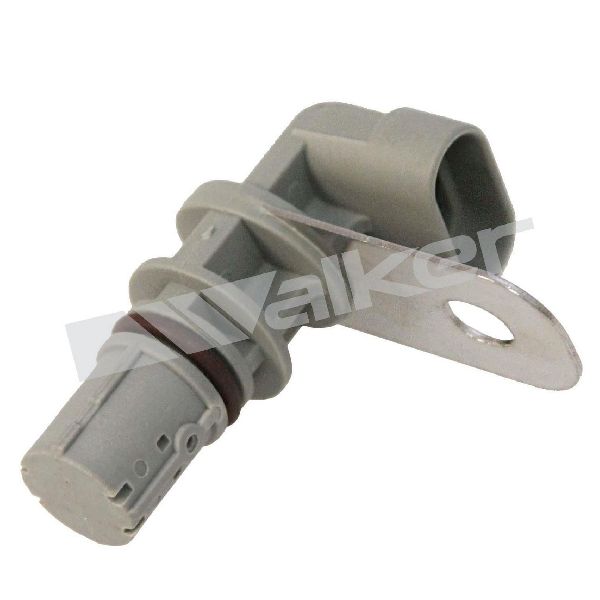
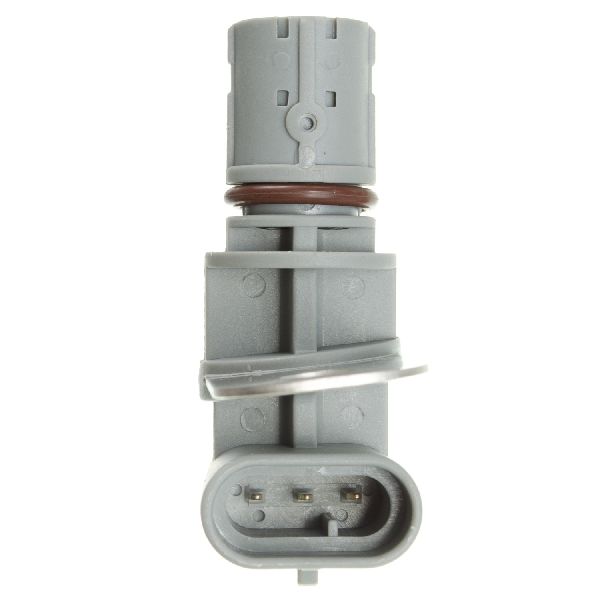
- Crankshaft Position Sensor
(OEM #12585546)— This is the most common failure point for code P0335 on this vehicle.
Trusted brands: ACDelco (OEM), Delphi (Often the Original Equipment Supplier), NTK, Standard Motor Products (SMP)
OEM price range: $50-$80
Aftermarket price range: $30-$65
Related Codes That Often Appear With This One
- P0336 — This code indicates an intermittent or noisy signal, rather than a complete loss. It can appear if the sensor is failing, the wiring is partially damaged, or after a new sensor is installed without performing the crank relearn procedure.
- P0300 — This code for random/multiple cylinder misfires can be falsely triggered if a new crankshaft sensor is installed but the mandatory 'Crankshaft Position Variation Relearn' is not performed.
Technical Service Bulletins (TSBs) & Recalls
- TSB 21-NA-233 / 21-NA-149: Mentions that engine wire harness chafing against various brackets and components can cause a variety of DTCs, including P0335.
- TSB Bulletin #PIP5724: Notes that P0335 can be set if a specific wiring jumper harness is pinched between a connector bracket and the front engine cover, potentially causing a crank-no-start or stall.
- TSB Bulletin #PIE0416A: This bulletin was issued to collect information from the field regarding vehicles exhibiting a Malfunction Indicator Lamp with DTC P0335.
Platform-Specific Known Issues
- A 'Crankshaft Position Variation Relearn' is mandatory after sensor replacement to prevent false P0300 misfire codes.
- The sensor is located behind the starter, requiring the starter's removal for access, which adds significant labor compared to other vehicles.
Mechanic-Grade Diagnostic Values
- CKP Sensor Power Supply Voltage — expected: ~12.0 Volts DC (Battery Voltage). Failure: Significantly less than 12V indicates a wiring issue or problem with the ignition relay.
- CKP Sensor Reference Voltage — expected: ~5.0 Volts DC. Failure: 0V or significantly low voltage points to a problem with the ECM or the wiring between the ECM and sensor.
- CKP Sensor Ground Circuit — expected: Near 0 Volts DC / Good continuity to ground. Failure: Any significant voltage reading indicates a poor ground connection, which is a common issue.
- CKP Sensor Signal (while cranking) — expected: A fluctuating digital square wave (0V to 5V or 0V to 12V depending on sensor type) visible on an oscilloscope. A multimeter set to AC voltage may show a fluctuating reading.. Failure: No signal, an erratic signal, or a signal that does not change with engine speed indicates a failed sensor or damaged reluctor wheel.
- Scan Tool 'Engine RPM' (while cranking) — expected: 100-500 RPM. Failure: A reading of 0 RPM while the engine is physically turning is a primary indicator of a complete failure in the CKP circuit.
Scan Tool Commands That Help

- GDS2/Tech2 or equivalent professional scanner: Crankshaft Position Variation Learn (also called CASE Relearn) — This is a mandatory procedure after replacing the crankshaft position sensor, the ECM, or performing major engine work. It corrects for minor mechanical inconsistencies between the reluctor wheel and the sensor, preventing false misfire codes (P0300) and ensuring accurate ignition timing.
Wiring & Ground Locations

- G103 / G104 — On the front of the driver's side cylinder head and the rear of the passenger side cylinder head, respectively. These are primary engine-to-chassis grounds.. A poor engine ground can introduce electrical noise or cause voltage drops that affect sensor readings, including the crankshaft position sensor. While not a direct cause of P0335, checking these grounds is good practice for any electrical diagnosis.
- ECM Ground — A critical ground wire for the ECM is often located on a stud at the top rear of the engine block, near the firewall.. The ECM provides the ground reference for the CKP sensor. If this primary ECM ground is corroded or loose, it can cause erratic sensor behavior and codes like P0335. This ground is notoriously difficult to access and prone to corrosion.
- CKP Sensor Connector Pins — At the sensor connector behind the starter.. Testing at the connector is crucial. For a typical 3-wire sensor on these trucks, you will test for: Pin A (Pink/Black): 12V Ignition Power, Pin B (Light Green/Black): Low Reference (Ground from ECM), Pin C (Yellow/Black): CKP Signal to ECM. Verifying power, ground, and signal at these specific pins is the core of electrical diagnosis for P0335.
Real Owner Repair Stories
- GM-Trucks.com Forum User (2008 Chevrolet Silverado 5.3L) — P0335 code, crank no-start condition.
❌ Tried (didn't work) Replacing the crankshaft position sensor, Replacing the ECM
✅ What actually fixed it The user discovered they were only getting 3.1V on the power supply wire to the sensor connector instead of the required 12V. The root cause was a damaged wire in the harness, demonstrating the importance of verifying voltage at the connector before replacing expensive parts like the ECM. - YouTube - Schrodinger's Box (2006 Chevrolet Silverado) — Initially P0335, intermittent stall, and no-start. After sensor replacement, it ran terribly and set a P0336.
❌ Tried (didn't work) Replacing the crankshaft position sensor initially seemed to change the symptoms but did not fix the root problem., Attempting a crank relearn procedure, which failed because the engine would not rev high enough when warm.
✅ What actually fixed it The problem only occurred when the engine was warm. The technician diagnosed a wiring harness that was pinched and shorting out against the transmission bell housing after a recent transmission replacement. The heat expansion when warm caused the short. Repairing the damaged wires resolved all codes and symptoms.
OEM Part Supersession History
12585546→12703627— Standard part lifecycle update by GM.
Heads up: The parts are fully interchangeable. 12585546 is the most commonly known number and is often cross-referenced by aftermarket brands. ACDelco also uses the part number 213-3520 for the same sensor.
Model Year Variations Within This Range
- 2007: In 2007, both the old body style ('Classic', GMT800) and new body style (GMT900) were sold. The GMT800 'Classic' models used a Gen 3 engine with a 24x reluctor wheel and a black CKP sensor. The new GMT900 models used a Gen 4 engine with a 58x reluctor wheel and a grey CKP sensor. This guide focuses on the GMT900, for which P/N 12585546 is correct.
- 2007-2013: Within the GMT900 generation, several 5.3L V8 engine codes were used (e.g., LY5, LMG, LC9). While they had differences in features like Active Fuel Management (AFM) and Flex Fuel capability, they all used the same 58x reluctor wheel and crankshaft position sensor (12585546).
Diagnostic Flowchart
Other Known Issues on This Vehicle
Issues unrelated to this code that are worth knowing about as an owner of this generation:
- Active Fuel Management (AFM) Lifter Failure 🔴 High — Very common, especially on 5.3L (LC9, LY5, LMG) engines. Can occur anywhere from 60,000 to 150,000+ miles. Leads to ticking noises, misfires (P0300), and potential camshaft damage. (Ref: Multiple TSBs exist, including 15-06-01-002E, which address diagnosing collapsed AFM lifters. A permanent fix often involves an 'AFM delete' kit.)
- Excessive Engine Oil Consumption 🔴 High — Widespread on 2007-2011 models with AFM V8s. Owners report consuming over 1 quart per 2,000 miles. Often fouls spark plugs on cylinders 1 and/or 7. (Ref: TSB 10-06-01-008G (and later revisions H, L) details the cause (PCV system and oil spray from AFM relief valve) and fixes, which include installing an updated valve cover and an oil deflector shield in the oil pan.)
- Cracked Dashboard 🟠 Medium — Extremely common across the entire GMT900 lineup. Cracks typically form above the instrument cluster and/or around the passenger airbag cover, regardless of sun exposure. (Ref: No recall was issued, but the problem led to multiple class-action lawsuits (e.g., Smith et al. v. General Motors Company, LLC) due to cosmetic damage and potential safety concerns with airbag deployment.)
- Throttle Position Sensor (TPS) Failure 🟠 Medium — Commonly causes the 'Reduced Engine Power' message, erratic idle, and sets code P2135. The sensor is integrated into the throttle body. (Ref: While no specific recall, this is a widely documented failure. The typical fix is to replace the entire throttle body assembly.)
Used vs. New Parts: Buying Guide for This Vehicle
When a used part is the smart pick: For this repair, buying a used crankshaft position sensor is generally not recommended. It is a relatively inexpensive electronic component that fails from heat and age. The labor to access it behind the starter is significant, so installing a new, quality part is the wisest choice to avoid doing the job twice. A used wiring pigtail from a junkyard could be a viable option if only the connector is damaged and a new pigtail is unavailable.
Donor-vehicle mileage cap: roughly under 150000 miles for the part to have meaningful remaining life.
What to inspect on the donor part:
- For a wiring pigtail, ensure the plastic is not brittle or cracked.
- Check for any signs of melting on the connector or insulation.
- Ensure the locking tab on the connector is intact.
- Cut the pigtail with plenty of wire length for splicing.
Aftermarket brands forum-validated for this vehicle:
- ACDelco (OEM)
- Delphi
- NTK/NGK
Brands owners have reported issues with on this vehicle:
- Ultra-cheap, unbranded sensors from online marketplaces are frequently reported as dead-on-arrival or failing prematurely.
Real Owner Stories
Aggregated from forums and TSBs cited above. Mileages and costs reflect what owners reported in those sources.
2007 Chevrolet Silverado 1500
Symptoms: Replaced the starter and immediately got a P0335 code and a no-start condition.
What fixed it: Discovered the new crankshaft sensor was not fully seated because its O-ring was too large, preventing a proper reading.
Source hint: Reddit r/MechanicAdvice - '2007 Chevy Silverado P0335 crank position after replacing starter'
2009 Chevrolet Tahoe 5.3L V8
Symptoms: P0335 code; needed to locate and replace the sensor above the starter.
What fixed it: Replaced the sensor by removing the starter (14mm bolts) and the sensor bolt (13mm), noting the sensor needed to be turned 90 degrees for removal.
Source hint: TahoeYukonForum.com - 'p0335 crankshaft position sensor'
2007-2013 Chevrolet Silverado 1500
Symptoms: Cranks but will not start; P0335 code present. Replaced the sensor and the PCM but the truck still would not start.
What fixed it: Diagnosed low voltage (3.1V) at the sensor connector, indicating the issue was in the circuit wiring rather than the sensor or PCM.
Source hint: GM-Trucks.com - 'Cranks but will not start.'
Related OBD-II Codes
Frequently Asked Questions
I just replaced my starter and now my Silverado has a P0335 code and won't start. What happened?
Does TSB 21-NA-233 apply to my P0335 code?
Is it true I need a special tool to finish the repair on my 5.3L Silverado?
Why is my Stabilitrak light on at the same time as the P0335 Check Engine light?
Can a pinched wire cause this code on my 2007-2013 truck?
Where exactly is the sensor located on my Silverado 1500?
Helpful Videos

We Have This Part in Stock


The information in this article is provided for general reference and educational purposes only. Vehicle specifications, procedures, and part compatibility can vary by production date, trim level, and region. Always consult your vehicle's factory service manual and verify part numbers before purchasing or performing repairs. Safety-critical components such as airbags, seat belts, and braking systems should be installed by a qualified professional.
- Chevrolet Silverado 1500:
- 🎬 Helpful Videos
- 🛍️ Shop This Part
- What's Unique About the 2007-2013 Chevrolet Silverado 1500
- Symptoms You May Notice
- Most Likely Causes
- Rare But Worth Checking
- Diagnosis Steps
- Parts You'll Likely Need
- Related Codes That Often Appear With This One
- Technical Service Bulletins (TSBs) & Recalls
- Platform-Specific Known Issues
- Mechanic-Grade Diagnostic Values
- Scan Tool Commands That Help
- Wiring & Ground Locations
- Real Owner Repair Stories
- OEM Part Supersession History
- Model Year Variations Within This Range
- Diagnostic Flowchart
- Other Known Issues on This Vehicle
- Used vs. New Parts: Buying Guide for This Vehicle
- Real Owner Stories
- 2007 Chevrolet Silverado 1500
- 2009 Chevrolet Tahoe 5.3L V8
- 2007-2013 Chevrolet Silverado 1500
- Related OBD-II Codes
- Frequently Asked Questions
- 🎟️ Get 5% Off