

P0335 on 2007-2016 BMW N54/N55: Crankshaft Position Sensor 'A' Circuit Malfunction Guide
For a 2007-2016 BMW with the N54 or N55 engine, code P0335 almost always means the crankshaft position sensor has failed. This can cause long cranks, stalling, or a no-start condition. Expect to pay $70-$125 for an OEM-quality sensor and 2-4 hours of labor, as the intake manifold must be removed for access.
- P0335 on an N54 or N55 engine is a critical fault that almost certainly points to a failed crankshaft position sensor.
- Symptoms are severe and include long cranking, stalling, or a complete no-start condition. Do not drive the vehicle.
- The sensor itself is not expensive, but the repair is labor-intensive due to its location under the intake manifold and starter motor.
- This is a challenging but possible DIY for an experienced mechanic. If attempting, be sure to replace the intake manifold gaskets at the same time.
- Always use a quality OEM or reputable aftermarket sensor (like VDO) to avoid repeat failures.
What's Unique About the 2007-2016 BMW Multiple

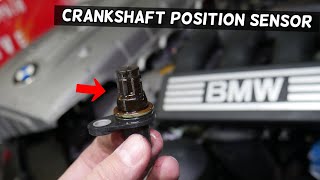
On the N54 and N55 engines, the crankshaft position sensor is notoriously difficult to access. It is located on the driver's side of the engine block, but it's buried underneath the starter motor, which itself is under the intake manifold. This location makes replacement a more involved job than on many other engines, where the sensor is often accessible from the bottom of the car. Due to the high heat in the turbo engine bay, the sensor's plastic components and wiring can become brittle over time, contributing to its eventual failure.
Generation note: This guide covers the N54 engine (approx. 2007-2010 in models like the 335i) and its successor, the N55 engine (approx. 2011-2016). While the engines have different turbo setups and fuel systems, the function, location, and failure symptoms of the crankshaft position sensor for code P0335 are virtually identical. The replacement procedure is also very similar for both engines. The N54 has a forged crankshaft, while the N55 has a cast crankshaft, but this does not affect the function of the sensor.
Symptoms You May Notice

- Engine cranks for a long time before starting (extended crank)
- Engine fails to start at all
- Engine stalls unexpectedly, sometimes while driving
- Rough or unstable idle
- Reduced engine power and sluggish acceleration
- Check Engine Light is illuminated
- Transmission may enter a limp mode or show a malfunction light
- Replacing the battery: While a weak battery can cause starting issues, it will not typically set a P0335 code on its own.
- Replacing the starter motor: The starter is located near the sensor, but a failing starter causes a no-crank or slow-crank condition, whereas a bad crank sensor usually allows the engine to crank normally but not start.
- Replacing the fuel pump (HPFP): While HPFP failure is a known issue on N54 engines, it typically presents with different codes related to fuel pressure (like 29F2) and does not directly cause P0335.
Most Likely Causes

- Failed Crankshaft Position Sensor 🔴 High Probability The sensor is located in a high-heat area of the engine bay, which can degrade its internal electronics and plastic housing over time. Oil leaks from above (like the valve cover gasket) can also contaminate the sensor and its connector.
How to confirm: Scan the DME for code P0335. If the engine cranks but the tachometer does not move, it's a strong sign the sensor is not sending a signal. The definitive test is to use an oscilloscope to check for a proper signal from the sensor while cranking, but this is often unnecessary as the sensor is the most common failure point.
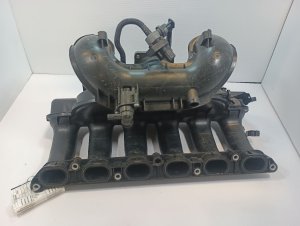
Typical fix: Replace the crankshaft position sensor and its o-ring. It is highly recommended to replace the intake manifold gaskets at the same time, as the manifold must be removed for access.
Est. part cost: $70-$125 - Wiring Harness or Connector Issue 🟡 Medium Probability The wiring harness leading to the sensor is also exposed to high heat, which can make the insulation brittle and prone to cracking. The connector itself can become contaminated with oil or fail internally.
How to confirm: Visually inspect the wiring harness from the sensor up to the main engine harness for any signs of cracking, melting, or chafing. Check the connector for oil contamination, corrosion, or broken locking tabs. Use a multimeter to check for continuity, power, and ground at the connector.
Typical fix: Repair the damaged section of wiring. If the connector is damaged, replace it with a new pigtail. Clean any oil from the connector with electrical contact cleaner.
Est. part cost: $15-$50
Rare But Worth Checking
- Failed DME (Engine Computer): This is extremely rare. Before condemning the DME, all other possibilities, including the sensor and wiring, must be exhaustively ruled out. A DME failure would likely present with multiple other fault codes and system malfunctions.
- Damaged Reluctor Wheel: The reluctor wheel, which the sensor reads, is part of the crankshaft itself. Damage is very unlikely unless there has been a catastrophic internal engine failure or incorrect service performed.
Diagnosis Steps
- Read fault codes from the DME using a BMW-compatible scan tool. Confirm P0335 and/or 2A94 are present.
- While cranking the engine, observe the tachometer. If it does not move at all, it strongly indicates a failed crankshaft position sensor.
- Disconnect the battery.
- Remove the engine air intake, charge pipe, and intake manifold to gain access to the starter motor area.
- Locate the crankshaft position sensor underneath the starter motor.
- Inspect the sensor's wiring and connector for any visible damage, melting, or oil contamination.
- If the wiring appears intact, the most probable cause is the sensor itself. Replace the crankshaft position sensor and its o-ring.
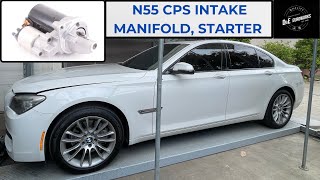
- It is highly recommended to also replace the set of intake manifold gaskets before reinstalling the manifold. 🎬 Watch this step-by-step guide to removing the manifold and sensor.
- Reassemble all components in the reverse order of removal.
- Reconnect the battery, clear the fault codes, and start the engine to verify the repair.
Parts You'll Likely Need

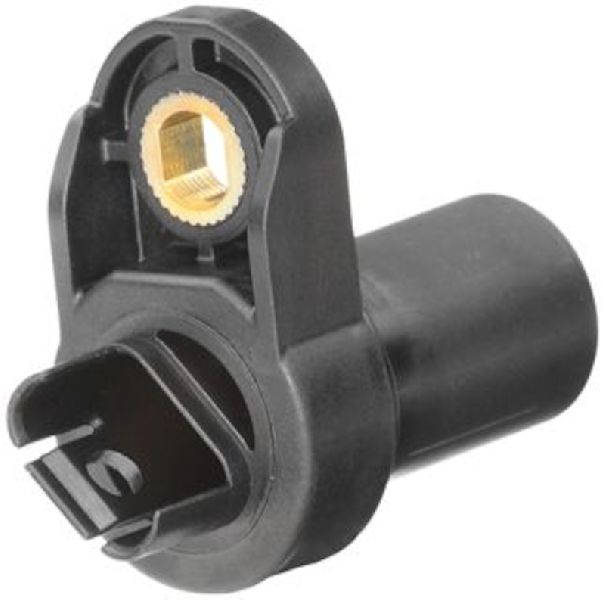
- Engine Crankshaft Position Sensor
(OEM #13627525015, 13627548995, 13627582842)— This sensor is the primary cause of P0335. It fails due to heat and age, leading to a loss of signal required for engine operation.
Trusted brands: Genuine BMW, VDO, Hella, Bosch
OEM price range: $105-$130
Aftermarket price range: $70-$100 - Intake Manifold Gasket Set
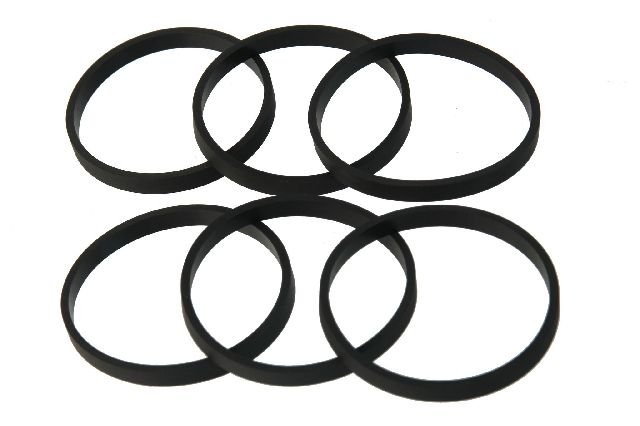
(OEM #11617547242)— The intake manifold must be removed to access the sensor. The gaskets are single-use and must be replaced to prevent vacuum leaks.
Trusted brands: Genuine BMW, Elring, Victor Reinz
OEM price range: $40-$60
Aftermarket price range: $20-$35
Related Codes That Often Appear With This One
- 2A94 — This is a BMW-specific DME code for 'Crankshaft sensor, signal'. It is the manufacturer-equivalent of the generic P0335 and will almost always appear alongside it.
- P1727 — This is a transmission-related code that can indicate a lack of engine speed signal from the DME. The transmission control unit relies on the crankshaft sensor data (relayed by the DME) for proper shift timing.
- 3100 — This is a shadow code for 'Boost pressure control shutdown'. It can be triggered as a protective measure when the DME loses the critical crankshaft position signal and can no longer safely manage the turbocharger. 🎬 Watch a technician diagnose these specific P1727 and P0335 codes.
Platform-Specific Known Issues
- The location of the sensor under the intake manifold and starter makes this a labor-intensive job for a simple sensor replacement.
- Oil leaks from the valve cover gasket or oil filter housing gasket are common on these engines and can drip onto the sensor and its wiring, accelerating failure.
- Some early aftermarket sensors had fitment issues with the alignment notch, but this seems to have been corrected by major brands like VDO.
Mechanic-Grade Diagnostic Values
- Crankshaft Sensor Connector Pin 1 Voltage (Supply) — expected: ~12V (Battery Voltage) with key on, engine off.. Failure: Significantly lower or no voltage indicates a wiring or DME supply issue.
- Crankshaft Sensor Connector Pin 2 Voltage (Signal) — expected: ~5V with key on, engine off, sensor connected.. Failure: No voltage or incorrect voltage suggests a problem with the DME or internal sensor wiring.
- Crankshaft Sensor Connector Pin 3 (Ground) — expected: Near 0V, testing for continuity to chassis ground.. Failure: Any significant voltage or high resistance to ground indicates a bad ground connection.
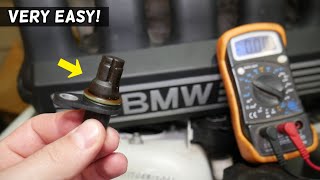
- Crankshaft Sensor Signal Test (Bench Test) — expected: With the sensor connected and backprobed, voltage should switch from ~5V to near 0V when a metal object is passed in front of the sensor tip. 🎬 See how to bench test your sensor using a multimeter.. Failure: Voltage does not switch, or switches erratically, indicating a faulty sensor.
- Live Data - Engine RPM while cranking — expected: Should show approximately 200-300 RPM on a scan tool.. Failure: 0 RPM while the engine is audibly cranking is a classic sign of a failed crankshaft position sensor.
Hidden / Shadow Codes Worth Checking
- 3100: Boost pressure control, deactivation. This is a protective measure taken by the DME when it loses the crankshaft signal and can no longer safely control the turbocharger system. (see via Often appears as a 'shadow code' in BMW-specific scan tools like MHD, Carly, or ISTA.)
Scan Tool Commands That Help
- ISTA/D: Vehicle Test / Fault Memory Scan — To read the official BMW fault code (e.g., 2A94) and its associated description and fault conditions.
- ISTA/D: Call Up ECU Functions -> DME Digital Motor Electronics -> Diagnosis Scan -> Crankshaft Sensor — To access the guided troubleshooting test plan. ISTA will walk the technician through checking voltages, signals, and wiring integrity based on the stored fault.
- ISTA/D: Control Unit Tree -> DME -> Live Data / Digital Values — To monitor engine RPM in real-time while cranking to confirm if a signal is being received by the DME.
Wiring & Ground Locations

- Crankshaft Sensor Connector (X6214) — On the driver's side of the engine block, below the starter motor, under the intake manifold.. This is the direct connection point for the sensor. It is prone to oil contamination and heat damage. Pin 1 is 12V supply, Pin 2 is the 5V signal, and Pin 3 is ground.
- Main Engine Ground Strap — Underneath the car, typically a braided copper strap connecting the engine block (often near an engine mount on the driver's side) to the chassis.. A corroded or loose main engine ground can cause a host of electrical issues, including erratic sensor readings and no-start conditions that can mimic a P0335 fault.
- DME Connector (e.g., X60005 on MSD80/81) — In the electronics box (E-box) located in the engine bay, typically under the passenger side cabin air filter housing.. This is where the crankshaft sensor wiring terminates. For example, on an N54 with an MSD81 DME, the signal wire is Pin 29 on connector X60005. Checking for signal here can rule out the entire wiring harness in one step.
Real Owner Repair Stories
- Bimmerpost user 'chasejennings' (2007-2010 BMW 335i (N54)) — Sudden limp mode at highway speed, transmission malfunction warnings, engine malfunction warnings, long crank, and stalling on cold starts. Codes 2A94 (Crankshaft Sensor) and 3100 (Boost loss shadow code) were present.
❌ Tried (didn't work) Replacing both VANOS solenoids., Replacing the crankshaft position sensor (initially)., Checking all fuses in the fuse box.
✅ What actually fixed it The owner took the car to a mechanic who discovered the newly installed crankshaft position sensor was not fully seated in the engine block. After the mechanic properly seated the sensor, the codes were resolved and the car ran correctly. - Reddit user r/BmwTech (2007 335i N54 with 119,000 miles) — Unexpected limp mode, long cranks, and codes 3100 (Boost pressure control shutdown) and 2A94 (Crankshaft sensor signal). The issue would appear after about 20 minutes of driving.
❌ Tried (didn't work) Replacing the crankshaft position sensor. The problem was fixed temporarily but returned.
✅ What actually fixed it The user suspected the new sensor was not fully seated. After re-checking the installation, the car started normally. The intermittent nature suggests that even a slight installation error can cause the fault to appear only when the engine is warm. - NHTSA ODI #11445896 — An owner reported that while traveling at approximately 35 mph, the vehicle shut off and the check engine light illuminated. A code reader identified P0335 for the crankshaft position sensor, requiring the driver to coast to the shoulder.
OEM Part Supersession History
13627525015→13627548995, which was then superseded by 13627582842— Standard part revisions for improved reliability or manufacturing process changes.
Heads up: All part numbers are generally interchangeable for the N54/N55 application. However, always use the latest available revision (13627582842) when purchasing new.
Model Year Variations Within This Range
- 2007-2016: While the crankshaft sensor's function and location are consistent, the N54 (approx. 2007-2010) uses a forged steel crankshaft, whereas the N55 (approx. 2011-2016) uses a cast iron crankshaft. This has no bearing on the P0335 diagnosis or repair. The DME model also changed from MSD80/MSD81 (N54) to MEVD17 (N55), which means pinouts at the DME connector will differ, requiring the correct wiring diagram for advanced diagnostics.
Diagnostic Flowchart
Used vs. New Parts: Buying Guide for This Vehicle
When a used part is the smart pick: Never. A used crankshaft position sensor is not recommended. It is an electronic component subject to failure from heat cycles, and the labor to replace it is significant (2.5-4 hours). The risk of a used part failing shortly after installation far outweighs the small cost savings over a new, quality aftermarket part.
OEM-only on this vehicle (don't cheap out):
- While not strictly 'OEM-only', using a reputable OEM supplier is critical for this part. The cost of labor for a repeat repair due to a cheap, unreliable sensor is very high.
Aftermarket brands forum-validated for this vehicle:
- VDO (often the original supplier to BMW)
- Bosch
- Hella
Brands owners have reported issues with on this vehicle:
- Unnamed, no-brand sensors from online marketplaces. Forum users have reported issues with cheap aftermarket sensors failing quickly or being dead-on-arrival.
Real Owner Stories
Aggregated from forums and TSBs cited above. Mileages and costs reflect what owners reported in those sources.
2008 e92 M3 — 35000 miles
Symptoms: Car died shortly after starting and would not start up again; threw P0335 code.
What fixed it: The repair shop diagnosed it as a faulty crankshaft position sensor and replaced it, which resolved the issue.
Source hint: Bimmerpost - Code p0335
2007 e90 328xi N51 — 117000 miles
Symptoms: Stuttering/missing issues, SES and 'car on a lift' lights, long crank, rough idle with fluctuating RPM. Codes P1727 and P0335.
What fixed it: Another user with similar symptoms reported that replacing the alternator, coil plugs, spark plugs, and crankshaft sensor solved the problems.
Source hint: Bimmerpost - Crankshaft Position Sensor '07 328xi
BMW 335i
Symptoms: Multiple warning lights ('christmas lights'), car won't start properly, limp mode, no power, rough idle, and misfire. Codes P1727 and P0335 were present.
What fixed it: The owner diagnosed the issue as a faulty crankshaft sensor and was planning to go to BMW to purchase the part for replacement.
Source hint: youtube.com - BMW 335I Crankshaft sensor fault codes P1727 and P0335
2008 BMW E60 535i N54
Symptoms: Extended cranking period, Check Engine Light, reduced power mode. Trouble codes P0335, DME 2A94, DME 3100.
What fixed it: The article details the diagnosis and implies replacement of the crankshaft sensor is the fix.
Source hint: newparts.com - Case Study: BMW Crankshaft Position Sensor, N54 Engine
Related OBD-II Codes
Frequently Asked Questions
Where is the crankshaft position sensor located on my N54/N55 engine, and why is it so hard to replace?
Why is the crankshaft position sensor a common failure point on these BMWs?
I'm replacing the crankshaft sensor myself. Is there anything else I should replace at the same time?
My engine cranks but the tachometer needle doesn't move. Is this a symptom of P0335?
My scanner shows the BMW-specific code 2A94 along with P0335. Is this normal?
Are there any known issues with aftermarket crankshaft sensors for this engine?
Helpful Videos
Used OEM Parts in Stock



New Aftermarket Parts Available


The information in this article is provided for general reference and educational purposes only. Vehicle specifications, procedures, and part compatibility can vary by production date, trim level, and region. Always consult your vehicle's factory service manual and verify part numbers before purchasing or performing repairs. Safety-critical components such as airbags, seat belts, and braking systems should be installed by a qualified professional.
- BMW Multiple:
- 🎬 Helpful Videos
- 🛍️ Shop This Part
- What's Unique About the 2007-2016 BMW Multiple
- Symptoms You May Notice
- Most Likely Causes
- Rare But Worth Checking
- Diagnosis Steps
- Parts You'll Likely Need
- Related Codes That Often Appear With This One
- Platform-Specific Known Issues
- Mechanic-Grade Diagnostic Values
- Hidden / Shadow Codes Worth Checking
- Scan Tool Commands That Help
- Wiring & Ground Locations
- Real Owner Repair Stories
- OEM Part Supersession History
- Model Year Variations Within This Range
- Diagnostic Flowchart
- Used vs. New Parts: Buying Guide for This Vehicle
- Real Owner Stories
- 2008 e92 M3 — 35000 miles
- 2007 e90 328xi N51 — 117000 miles
- BMW 335i
- 2008 BMW E60 535i N54
- Related OBD-II Codes
- Frequently Asked Questions
- 🎟️ Get 5% Off