

P0333 on 2015-2017 Subaru WRX: Knock Sensor 2 Circuit High Causes and Fixes
For a 2015-2017 Subaru WRX, code P0333 is almost always caused by a failed knock sensor. Subaru issued a Technical Service Bulletin (TSB #07-133-18R) for this exact issue, recommending replacement with an updated, more durable sensor (P/N 22060AA180). The original sensor is prone to cracking. Expect to pay around $150 for the OEM part and ensure it is torqued to 17.7 ft-lbs.
- P0333 on a 2015-2017 WRX is a known issue covered by Subaru Technical Service Bulletin #07-133-18R.
- The most likely cause is a failed Bank 2 (driver's side) knock sensor due to a known durability problem with the original part (22060AA160).
- The correct fix is to replace the faulty sensor with the updated OEM part, number 22060AA180.
- It is critical to torque the new sensor's mounting bolt to the factory specification (17.7 ft-lbs / 24 Nm) without anti-seize to ensure it functions correctly.
- While you can drive with this code, you should avoid hard acceleration to prevent potential engine damage.
What's Unique About the 2015-2017 Subaru WRX

The 2015-2017 Subaru WRX with the FA20F DIT engine is known for this specific issue. Subaru acknowledged a durability problem with the original knock sensors (P/N 22060AA160), which were susceptible to heat and failure from the plastic housing cracking. The manufacturer released a revised Technical Service Bulletin (TSB #07-133-18R) detailing the problem and providing a solution: replacing the original sensor with a more robust part (P/N 22060AA180) that was originally designed for their Naturally Aspirated (NA) engines to improve heat resistance. This makes a faulty sensor the most probable cause, not just a possibility.
Diagnostic Flowchart

Tap your situation to follow the diagnostic path that matches what you're seeing on this vehicle.
Symptoms You May Notice
- Check Engine Light illuminated
- Reduced engine power or performance
- Sluggish or hesitant acceleration
- Audible engine pinging or knocking under load
- Rough, uneven idle that can cause shaking
- Measurable increase in fuel consumption
- misdiagnosis: Internal engine problem | why: While a severe internal issue can cause knocking that the sensor picks up, a P0333 'Circuit High' code specifically points to an electrical fault in the sensor's circuit, not the detection of actual knock. The problem is with the sensor or wiring, not the engine's mechanical health.
Most Likely Causes

- Faulty Knock Sensor 🔴 High Probability Subaru issued TSB #07-133-18R due to the original knock sensors (P/N 22060AA160) having durability issues. The plastic housing can crack from heat cycles, allowing moisture to enter and cause corrosion and failure. This is especially noted after heavy rain by some owners. The location under the intercooler scoop can expose the connector to water ingress.
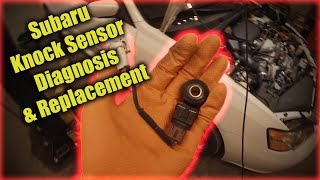
How to confirm: Visually inspect the sensor for cracks or corrosion. Test the sensor's internal resistance with a multimeter; a reading outside the 400-700 kΩ range 🎬 See how to diagnose and test your Subaru knock sensor often indicates failure. However, given the known TSB and high failure rate, replacement is often the most direct diagnostic step after a visual check.
Typical fix: Replace the knock sensor with the updated OEM part (22060AA180). Ensure the mounting bolt is torqued to the correct specification (24 Nm / 17.7 ft-lbs). Do NOT use anti-seize compound on the bolt threads. The sensor's orientation is also critical; the pigtail should be at a 60-degree angle relative to the rear of the engine.
Est. part cost: $140-$220 - Damaged Wiring or Connector 🟡 Medium Probability The engine bay is a harsh environment. Wires can become brittle from heat cycles, and connectors can get corroded or damaged. Some Subaru models use soy-based wiring insulation, which can attract rodents that chew through the wires, causing a circuit high fault.
How to confirm: Visually inspect the wiring harness leading to the knock sensor for any signs of chafing, melting, breaks, or rodent damage. Check the connector for corrosion, bent pins, or a loose connection. Perform a continuity test on the wiring with a multimeter. Check for a 5-volt reference signal at the connector with the key on, engine off.
Typical fix: Repair the damaged section of wire or replace the connector pigtail. In cases of rodent damage, applying rodent-repellent tape or spray to the new harness can be a preventative measure.
Est. part cost: $10-$50
Rare But Worth Checking
- Loose Knock Sensor: The sensor must be torqued correctly to the engine block to function. If it has been previously replaced and not tightened to spec (17.7 ft-lbs), or if the bolt has loosened over time, it can cause false readings. The orientation of the sensor is also critical for proper function.
- Faulty Engine Control Module (ECM): This is very rare. The ECM's internal circuit for interpreting the knock sensor signal could fail, but all other potential causes should be eliminated before considering ECM replacement.
Diagnosis Steps
- Verify the code P0333 is present using an OBD-II scanner.
- Check for any other stored trouble codes.
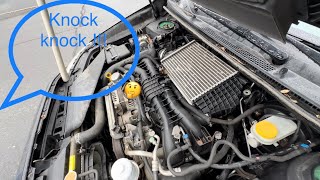
- Visually inspect the Bank 2 knock sensor and its wiring. On the FA20F engine, Bank 2 is the driver's side. The sensor is located on the engine block, below the throttle body. Access can be tight but is possible without removing the intake manifold.
- Look for obvious cracks on the sensor body, corrosion on the connector (especially from water ingress), or damage to the wires from heat or rodents.
- If visual inspection is inconclusive, disconnect the sensor and test its resistance with a multimeter. A common specification for Subaru knock sensors is between 400 kΩ and 700 kΩ. Readings outside this range suggest a faulty sensor.
- Check for a 5-volt reference signal at the harness-side connector with the key on, engine off. The absence of this voltage points to a wiring or ECM issue.
- Check the wiring harness for continuity and for a short to voltage, which would cause the 'Circuit High' reading.
- If the sensor and wiring are confirmed to be good, the issue may be with the ECM, but this is extremely unlikely.
- Given the known TSB for this issue, the most practical first step after a visual inspection is often to replace the sensor with the updated part, P/N 22060AA180.
- After replacement, ensure the bolt is torqued to exactly 17.7 ft-lbs (24 Nm) and the connector is securely fastened. Clear the code and perform a test drive.
Parts You'll Likely Need

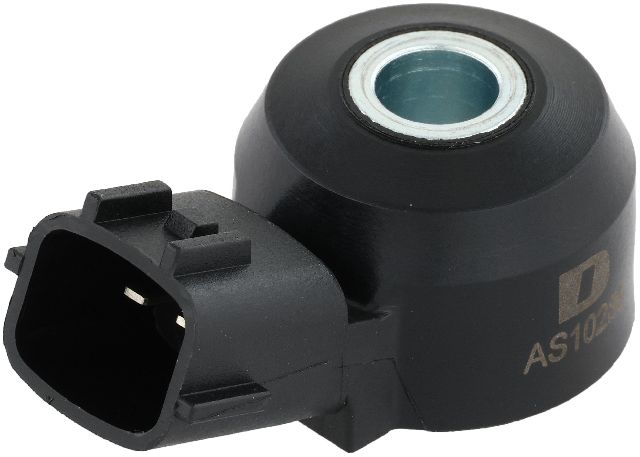
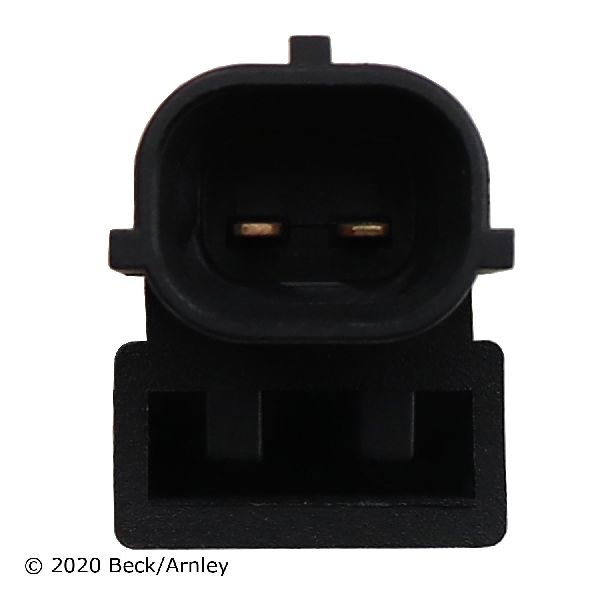
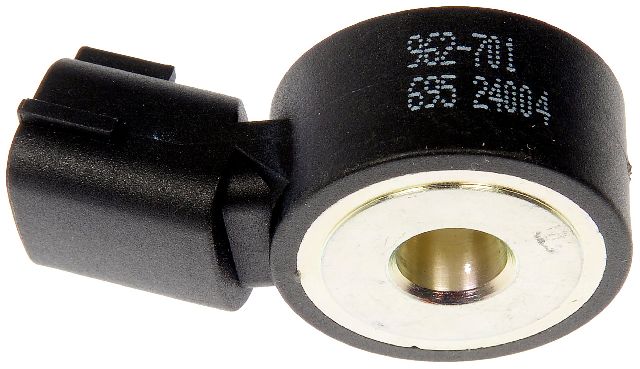
- Knock Sensor
(OEM #22060AA180)— This is the updated, more durable part specified by Subaru in TSB #07-133-18R to fix the common failure of the original sensor (P/N 22060AA160).
Trusted brands: Subaru (Genuine OEM)
OEM price range: $145-$220
Aftermarket price range: $80-$150
Related Codes That Often Appear With This One
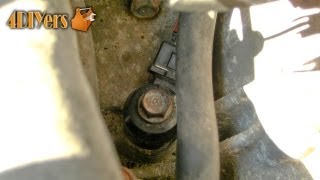
- P0328 — This code is for "Knock Sensor 1 Circuit High (Bank 1)". It is common to see both knock sensor codes if there is a systemic issue or if both sensors, being of the same age and original design, fail around the same time. Many owners choose to replace both sensors preventatively. 🎬 Watch: How to replace the Bank 1 knock sensor
- P0332 — This is the "low input" counterpart to P0333. Seeing both might indicate an intermittent wiring problem where the circuit is both shorting and opening, or it could be a separate failure on the same sensor.
Technical Service Bulletins (TSBs) & Recalls
- 07-133-18R: Announcing a design change to the knock sensor to improve durability and address codes P0327, P0328, P0332, and P0333. This TSB supersedes the original 07-133-18.
Platform-Specific Known Issues
- Subaru Technical Service Bulletin #07-133-18R was issued for 2015-2017 WRX models (among others) for DTCs including P0333. It acknowledges a durability issue with the original knock sensor and instructs technicians to replace it with an improved part (P/N 22060AA180).
- The failure is often characterized by a crack in the sensor's plastic housing, leading to moisture intrusion. This has been noted by owners to occur after heavy rainfall.
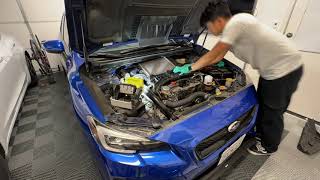
- The Bank 2 sensor is on the driver's side and can be accessed by removing the intercooler and throttle body. It is held by a single 12mm bolt. 🎬 Watch: Step-by-step Bank 2 knock sensor replacement guide
Mechanic-Grade Diagnostic Values
- Knock Sensor Internal Resistance — expected: 530 kΩ to 580 kΩ. Some service manuals state a range of 400 kΩ to 700 kΩ.. Failure: A reading of 0, infinity (open circuit), or significantly outside the specified kilo-ohm range indicates a faulty sensor.
- Knock Sensor Harness Voltage (Key On, Engine Off) — expected: ~5 Volts DC. Failure: A reading significantly below 5V (e.g., 0V) suggests an open in the wiring or an ECM fault. A reading above 5V indicates a short to voltage.
- Knock Sensor AC Voltage Output (Tapping Test) — expected: A small AC voltage should be generated when the sensor body is tapped gently.. Failure: No AC voltage produced when tapped indicates a dead piezoelectric element inside the sensor.
Wiring & Ground Locations
- E14 — This is the wiring diagram ID for the knock sensor connector plug itself.. When sourcing a replacement pigtail for a corroded or damaged connector, knowing the connector ID (E14) helps ensure the correct part is ordered from a supplier like iWire.
- Sensor Ground — The knock sensor grounds through its metal mounting base to the engine block.. A clean, metal-to-metal contact surface is critical for a proper ground. Corrosion or debris between the sensor and the block can cause faulty readings. The mounting surface should be cleaned with an abrasive pad before installing the new sensor.
- Shielded Wire Ground — The shielding for the knock sensor wire is grounded separately, often at a joint connector (like B83 on some models) near the ECU, not at the sensor itself.. A 'Circuit High' code can be caused by electrical noise if the wire's shielding is compromised. The shield must be properly grounded at the ECU side to protect the low-voltage signal from interference.
Real Owner Repair Stories
- IH8MUD.com Forum User (Toyota (similar P0333 issue)) — Check Engine Light with P0333.
❌ Tried (didn't work) Replacing both knock sensors with new parts did not resolve the code.
✅ What actually fixed it The user cut back the Bank 2 knock sensor wire and replaced the pigtail harness using solder and shrink wrap. This resolved the P0333 code, indicating the fault was in the connector or the short length of wire attached to it, not the sensor itself. - YouTube - Adriane Almiranez (2015+ Subaru WRX) — Check Engine Light with P0332 (Bank 2 Low, but same sensor and process). Occurred after a heavy downpour.
❌ Tried (didn't work) The owner tested the old sensor's resistance and found it was within spec, yet the code persisted.
✅ What actually fixed it Replaced the Bank 2 knock sensor with the updated OEM part (22060AA180) as recommended by the TSB. The owner suspected that despite the resistance test passing, the sensor had a crack or the connector had water ingress, causing the fault. The replacement fixed the issue.
OEM Part Supersession History
22060AA160→22060AA180— To increase durability and resistance to heat and cracking, as noted in TSB #07-133-18R.
Heads up: The original part (22060AA160) should not be used for replacement as it is prone to the failure that causes code P0333. Always use the updated part 22060AA180.
Helpful Videos
We Have This Part in Stock


The information in this article is provided for general reference and educational purposes only. Vehicle specifications, procedures, and part compatibility can vary by production date, trim level, and region. Always consult your vehicle's factory service manual and verify part numbers before purchasing or performing repairs. Safety-critical components such as airbags, seat belts, and braking systems should be installed by a qualified professional.
- Subaru WRX:
- 🎬 Helpful Videos
- 🛍️ Shop This Part
- What's Unique About the 2015-2017 Subaru WRX
- Diagnostic Flowchart
- Symptoms You May Notice
- Most Likely Causes
- Rare But Worth Checking
- Diagnosis Steps
- Parts You'll Likely Need
- Related Codes That Often Appear With This One
- Technical Service Bulletins (TSBs) & Recalls
- Platform-Specific Known Issues
- Mechanic-Grade Diagnostic Values
- Wiring & Ground Locations
- Real Owner Repair Stories
- OEM Part Supersession History
- 🎟️ Get 5% Off