

P0333 on 2015-2020 Cadillac Escalade ESV: Knock Sensor Circuit Causes and Fixes
On a 2015-2020 Escalade, code P0333 is most often caused by a wiring issue, not a faulty knock sensor. GM issued a Technical Service Bulletin (TSB #20-NA-207) pointing to a problem at the main engine computer's X2 connector where voltage can cross-contaminate circuits. Always inspect this connector before replacing any parts, especially if the Check Engine Light appears when shifting out of Park.
- For a P0333 code on a 2015-2020 Escalade, your first step should always be to inspect the ECM's X2 connector as specified in TSB #20-NA-207.
- Do not immediately replace the knock sensor. It is more likely to be a wiring or connector issue than a failed sensor on this specific vehicle.
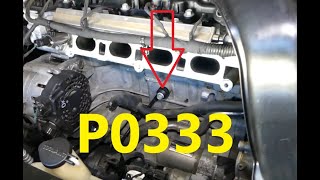
- The Bank 2 knock sensor is on the passenger side of the engine; accessing it can be difficult and may require removing the starter motor.
- Symptoms include a check engine light, reduced power, and potentially an audible engine pinging sound.
- If you experience the check engine light turning on specifically when you shift the transmission out of Park, it is a strong indicator of the wiring fault described in the TSB.
What's Unique About the 2015-2020 Cadillac ESCALADE ESV
For this specific generation of Cadillac Escalade with the 6.2L L86 engine, P0333 is frequently caused by specific, documented wiring problems rather than a simple sensor failure. 🎬 Watch: Understanding P0333 causes and common fixes for Bank 2. General Motors released TSB #20-NA-207 which states that voltage from the transmission's park/neutral signal 1 circuit can bleed into the knock sensor circuit, causing a false high voltage reading. This makes a thorough wiring inspection, especially at the K20 ECM's X2 connector (specifically Pin 52 for the knock sensor 2 signal and Pin 1 for the park/neutral signal), a mandatory first step before considering sensor replacement.
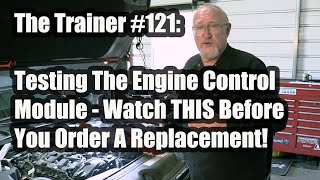
🎬 See how to properly test the ECM before buying parts.Diagnostic Flowchart
Tap your situation to follow the diagnostic path that matches what you're seeing on this vehicle.
Symptoms You May Notice
- Check Engine Light (Malfunction Indicator Lamp) is on
- The Check Engine Light may appear specifically when shifting out of Park.
- Reduced engine power and acceleration
- Audible engine knock or pinging, especially under load
- Hesitation during acceleration
- Vehicle feels lifeless or seems to have 'brake drag' due to the ECU retarding timing significantly.
- Replacing the knock sensor without first inspecting the ECM X2 connector and related wiring. The TSB clearly indicates a wiring problem is a very common cause, and skipping this diagnostic step can lead to unnecessary repairs and the code returning.
Most Likely Causes
- Electrical issue at the ECM X2 Connector 🔴 High Probability GM TSB #20-NA-207 and its predecessor #PIP5576 specifically identify this as a common problem on this platform. Voltage from the transmission's park/neutral signal circuit (Pin 1 on some models) can bleed into the Knock Sensor 2 circuit (Pin 52), causing the P0333 code. Debris/corrosion can also cause a poor connection.
How to confirm: Inspect the K20 Engine Control Module's X2 electrical connector for any debris, corrosion, moisture, or terminals that may have backed out or are not fully seated. Pay close attention to pins 1 and 52.
Typical fix: Clean the connector and terminals thoroughly with electrical contact cleaner. Apply dielectric grease and ensure the connector is fully seated. If a terminal has backed out, it will need to be re-seated or replaced.
Est. part cost: $5-$20 - Faulty Knock Sensor (Bank 2) 🟡 Medium Probability Sensors can fail over time due to heat cycles and vibration. However, on this vehicle, it's often misdiagnosed when the real problem is wiring. Owners on forums frequently report that replacing the sensor alone does not fix the issue.
How to confirm: After ruling out wiring issues, the sensor itself can be tested. This usually involves checking its resistance with a multimeter or using a scan tool to monitor its live data while tapping on the engine block near the sensor.
Typical fix: Replace the Bank 2 knock sensor. This sensor is located on the lower passenger side of the engine block, often behind a heat shield and may require removal of the starter for access. It is critical to torque the new sensor to specification (typically 15-18 ft-lbs).
Est. part cost: $25-$70 - Damaged Wiring Harness ⚪ Low Probability The wiring harness runs close to hot exhaust components and the starter, making it susceptible to heat damage, chafing, or corrosion over time. Rodents have also been known to chew on the wires under the intake manifold, causing shorts.
How to confirm: Visually inspect the wiring leading to the knock sensor on Bank 2 for any signs of melting, fraying, rodent damage, or breaks. Check for continuity using a multimeter.
Typical fix: Repair the damaged section of the wire or replace the connector pigtail.
Est. part cost: $15-$40
Rare But Worth Checking
- Faulty Powertrain Control Module (PCM/ECM): This is a rare cause. The PCM should only be considered after all other possibilities, including sensors and all related wiring, have been exhaustively tested and ruled out. An internal ECM voltage regulator failure can cause a false high voltage reading.
- Internal Engine Mechanical Problems: Severe mechanical issues can sometimes create vibrations that the knock sensor might interpret incorrectly. This is usually accompanied by other serious symptoms and codes, like P0300 (Random Misfire). On these L86 engines, P0300 can be related to Active Fuel Management (AFM) lifter failure, a known issue documented in TSB 15-06-01-002J.
Diagnosis Steps
- Scan the vehicle for any other stored trouble codes. Address other codes first, especially misfire (P0300-P0308) or other circuit codes.
- As per TSB #20-NA-207, the primary step is to carefully inspect the Engine Control Module's (ECM) X2 electrical connector. Disconnect it and look for debris, moisture, corrosion, or any pins that are not fully seated. Pay special attention to Pin 52 (Knock Sensor 2 Signal, typically a Dark Blue wire) and Pin 1 (Park/Neutral Signal).
- If the connector looks good, inspect the wiring harness leading to the Bank 2 (passenger side) knock sensor. Check for any signs of melting, chafing, or breaks, especially near the exhaust manifold and starter.
- Locate the Bank 2 knock sensor on the lower passenger side of the engine block. Inspect its connector for damage or corrosion.
- Test the knock sensor circuit. With the key on and engine off, check for the correct reference voltage at the sensor connector. Some GM systems use a 5V bias voltage that should drop slightly when the sensor is connected.
- Test the knock sensor itself. One method is to tap on the engine block near the sensor while monitoring the signal with an oscilloscope or a multimeter on AC Volts. A lack of signal suggests a faulty sensor. Another test is to check the sensor's resistance, which should be between 93k-110k ohms for many GM applications.
- If replacing the sensor, ensure it is torqued correctly to 15-18 ft-lbs, as improper torque can affect its sensitivity.
- If the sensor and wiring are good, the final, least likely possibility is a fault within the ECM itself.
Parts You'll Likely Need
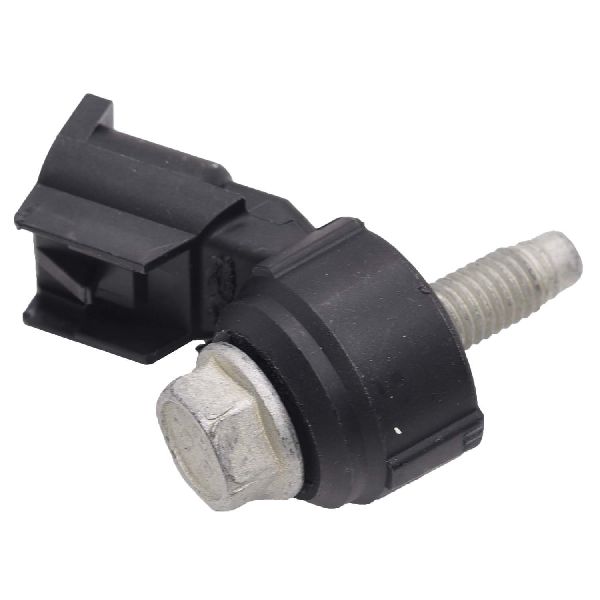
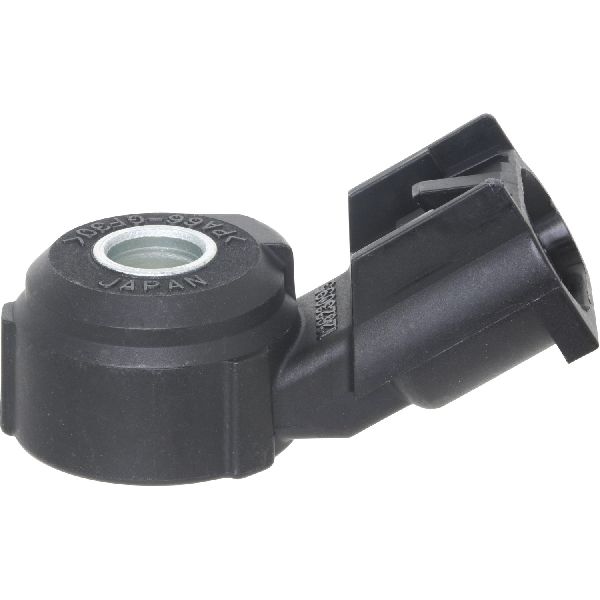
- Knock Sensor (Bank 2)
(OEM #12623734)— If the sensor itself has failed, it will need to be replaced. This is the correct part for Bank 2 (passenger side). Must be torqued to 15-18 ft-lbs.
Trusted brands: ACDelco, Delphi, Bosch
OEM price range: $40-$60
Aftermarket price range: $25-$45 - Knock Sensor Connector Pigtail
(OEM #ACDelco PT1804)— If the plastic connector at the sensor is broken or the wires are corroded right at the connector, replacing the pigtail is the standard repair.
Trusted brands: ACDelco, Dorman, Standard Motor Products (S-934)
OEM price range: $25-$40
Aftermarket price range: $15-$25
Technical Service Bulletins (TSBs) & Recalls
- 20-NA-207: Information on Malfunction Indicator Lamp (MIL) Illuminated - DTC P0333 Set. Points to a possible electrical concern at the ECM X2 electrical connector or voltage bleed from the transmission park/neutral circuit.
- PIP5576: The preliminary bulletin that preceded 20-NA-207, documenting the same issue on earlier model years of the platform.
Platform-Specific Known Issues
- TSB #20-NA-207 (revised March 2022, supersedes #PIP5576) explicitly calls out an electrical issue for P0333. It states that voltage from the transmission park/neutral signal circuit can cross-talk into the knock sensor circuit, or that debris/poor terminal connection at the ECM's X2 connector can cause the code, often when shifting out of Park.
Mechanic-Grade Diagnostic Values
- Knock Sensor Resistance — expected: 93,000 - 110,000 Ohms (93k-110k Ω). Failure: An open circuit (OL) or resistance far outside this range indicates a faulty sensor.
- Knock Sensor AC Voltage Output (Active Test) — expected: A voltage spike, often >1.0V AC, when the engine block is tapped firmly near the sensor.. Failure: Little to no AC voltage produced during the tap test suggests the sensor is dead.
- Knock Sensor Circuit Bias Voltage (KOEO) — expected: ~5V at the sensor connector with the sensor unplugged; a slightly lower voltage (e.g., 4.8V) with the sensor plugged in.. Failure: No voltage indicates a wiring or ECM issue. No voltage drop when plugging in the sensor can indicate a bad sensor internal resistor.
Scan Tool Commands That Help
- GDS2 / Tech2 / High-End Scan Tool: Live Data PID: 'Knock Retard' — While the engine is running, monitor this PID while lightly tapping the engine block near the sensor. An increase in knock retard degrees confirms the sensor is detecting the vibration and the ECM is responding. If there is no change, it points to a problem in the sensor or circuit.
Wiring & Ground Locations
- K20 ECM Connector X2 — In the engine compartment, one of the large multi-pin connectors plugging into the Engine Control Module (ECM).. This is the specific connector identified in TSB #20-NA-207. Pin 52 (Knock Sensor 2 Signal) and Pin 1 (Park/Neutral Signal) are where voltage bleed-over or contamination can occur, causing a false P0333.
- G103 — Typically located on the rear or front of the passenger (right) side cylinder head.. This is a major engine ground. A loose or corroded connection at G103 can affect sensors on Bank 2 (passenger side), leading to erratic signals and potentially contributing to circuit high/low codes.
Real Owner Repair Stories
- IH8MUD.com Forum Post (Toyota Land Cruiser (demonstrates a common pattern applicable to P0333)) — Check Engine Light with P0333 code.
❌ Tried (didn't work) Replacing both knock sensors did not resolve the code.
✅ What actually fixed it The user cut out the old Bank 2 knock sensor connector and soldered in a new wiring pigtail. This permanently fixed the code, proving the fault was in the short harness/connector, not the sensor itself.
OEM Part Supersession History
12623734→12623734— No supersession found.
Heads up: Searches for this part number do not indicate a direct supersession, suggesting the part has remained consistent. Always verify with a dealer using the vehicle's VIN.
Model Year Variations Within This Range
- 2015-2016: Early models in this generation with the 8-speed automatic transmission were subject to TSB #15-NA-007 for firm shifts from Park to Drive/Reverse and potential MIL illumination. The fix was a Transmission Control Module (TCM) software update. While not directly for P0333, its relation to shifting out of Park (a key symptom of the P0333 TSB) suggests a potential software or electronic relationship that could be more prevalent on these earlier years.
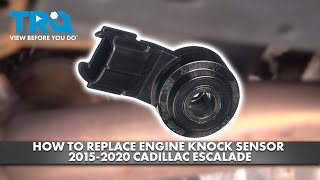
Helpful Videos
We Have This Part in Stock


The information in this article is provided for general reference and educational purposes only. Vehicle specifications, procedures, and part compatibility can vary by production date, trim level, and region. Always consult your vehicle's factory service manual and verify part numbers before purchasing or performing repairs. Safety-critical components such as airbags, seat belts, and braking systems should be installed by a qualified professional.
- Cadillac ESCALADE ESV:
- 🎬 Helpful Videos
- 🛍️ Shop This Part
- What's Unique About the 2015-2020 Cadillac ESCALADE ESV
- Diagnostic Flowchart
- Symptoms You May Notice
- Most Likely Causes
- Rare But Worth Checking
- Diagnosis Steps
- Parts You'll Likely Need
- Technical Service Bulletins (TSBs) & Recalls
- Platform-Specific Known Issues
- Mechanic-Grade Diagnostic Values
- Scan Tool Commands That Help
- Wiring & Ground Locations
- Real Owner Repair Stories
- OEM Part Supersession History
- Model Year Variations Within This Range
- 🎟️ Get 5% Off