

OBD-II Code P0332: Knock Sensor 2 Circuit Low Input
The Ultimate 2026 Guide to Causes, Diagnosis, and Repair Costs
- P0332 indicates the Powertrain Control Module (PCM) is receiving less than 0.5V from the Bank 2 knock sensor, meaning it can no longer detect damaging engine detonation.
- Water intrusion is the leading cause of this code on 1999-2007 GM V8 engines, requiring replacement of both sensors, the wiring harness, and an RTV silicone dam to prevent recurrence.
- Never use cheap aftermarket knock sensors for this repair; technicians report a failure rate exceeding 50%, which often forces a repeat of a $1,000+ labor charge.
- Repair costs range from $200 for accessible sensors to over $1,500 for V6 and V8 engines where the sensors are buried underneath the intake manifold.
What Does P0332 Mean?

The Powertrain Control Module (PCM) is receiving a voltage signal from the Bank 2 knock sensor that is below the specified threshold (often near zero volts). The computer can no longer 'hear' dangerous engine vibrations known as 'knock' or 'pinging'. The PCM relies on this signal to adjust ignition timing and protect the engine. P0332 indicates an electrical fault in the circuit, not necessarily that the engine is actively knocking.
Technical definition: The official SAE/OBD-II definition is "Knock Sensor 2 Circuit Low Input (Bank 2)". This code sets when the PCM detects the voltage from the Bank 2 knock sensor is below its specified minimum range (typically under 0.5V) for a predetermined amount of time. The sensor is a piezoelectric microphone bolted to the engine block, engineered to generate an AC voltage signal when it detects vibrational frequencies associated with engine detonation (6 to 15 kHz).
Can I Drive With P0332?
yes_but_not_recommended. You can drive for short trips, but avoid heavy acceleration, towing, or high engine loads. The PCM enters a 'safe mode' with reduced power and fuel economy to prevent harm. The real danger is the PCM cannot detect actual engine knock, leading to severe internal engine damage if detonation occurs. Continuing to drive turns a sub-$1000 repair into a $3,000-$6,000 engine replacement. Prolonged driving with inefficient combustion damages the catalytic converter, adding $800-$2500 to repair costs.
Common Causes

- Faulty Knock Sensor (Bank 2) (Very Common) — The sensor itself is the most common point of failure. The internal piezoelectric crystal cracks from age, heat cycles, and constant vibration, or the housing fails, allowing moisture to cause internal corrosion.
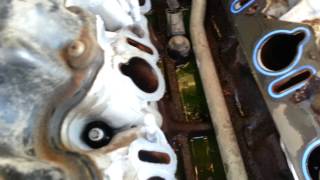
- Water Intrusion (GM V8s) (Very Common) — On General Motors LS-based V8 engines, the knock sensors sit in a valley under the intake manifold. This area collects water from rain or engine washing, which pools and corrodes the sensors and the sub-harness.
- Wiring Harness or Connector Issues (Common) — Wiring degrades from engine heat, vibration, or rodents. The connector frequently suffers from corrosion, moisture intrusion, or backed-out pins, leading to a poor or open connection.
- Use of Low-Quality/Aftermarket Sensors (Common) — Cheap aftermarket sensors often fail immediately or shortly after installation, causing the P0332 code to return. Always use OEM or high-quality OEM-equivalent parts to avoid repeat repairs.
- Improperly Secured Sensor or Poor Ground (Less Common) — The knock sensor must be torqued to the manufacturer's exact specification. If too loose, it cannot detect vibrations; if too tight, it becomes damaged. Corrosion between the sensor and the engine block also disrupts the ground path, weakening the signal.
- Faulty Engine Control Module (ECM/PCM) (Very Rare) — The PCM itself fails and can no longer process the signal from the knock sensor. This is the absolute last consideration after every other possibility, including all wiring, is definitively ruled out.
Symptoms

- Check Engine Light On — This is the most common and often the only symptom the driver notices initially.
- Reduced Engine Power and Hesitation — The PCM enters a protective 'limp mode,' retarding ignition timing to prevent damage. The vehicle feels sluggish, unresponsive, and stumbles under heavy acceleration.
- Worse Fuel Economy — The conservative engine timing in safe mode is highly inefficient, causing the vehicle to consume significantly more fuel than normal.
- Engine Pinging or Knocking Noise — You hear an audible pinging or metallic knocking sound during acceleration. This indicates real detonation is occurring, and the PCM is unable to stop it due to the faulty circuit.
- Increased Emissions / Failed Smog Test (scan-tool only — no driver-felt sign) — An illuminated Check Engine Light is an automatic failure for emissions testing. Inefficient combustion also increases harmful emissions like NOx.
Diagnostic Flowchart
Tap your situation to follow the diagnostic path that matches what you're seeing on this code.
Common Fixes & Costs
- Replace Bank 2 Knock Sensor — Parts: $40-$150, Labor: $150-$450 (accessible) to $900-$1600+ (under intake), ~1.5 to 7.0 hr book time (Intermediate To Professional)
- Replace Both Knock Sensors and Harness (GM V8s) — Parts: $100-$250, Labor: $400-$700, ~5.5 hr book time (Professional)
- Repair or Replace Wiring/Connector — Parts: $20-$100, Labor: $100-$300, ~2 hr book time (Intermediate)
- Replace Intake Manifold Gaskets — Parts: $50-$150, Labor: $0 (if done during sensor replacement) to $400-$800, ~4 hr book time (Professional)
- Clean Engine Block and Sensor Mounting Surfaces — Parts: $5, Labor: $50-$150, ~0.5 hr book time (DIY)
DIY vs Professional
- Replace Accessible Knock Sensor — Beginner: Yes, if the sensor is on the outside of the engine block.
Tools: Socket set, torque wrench, flashlight. - Replace Knock Sensor Under Intake Manifold — Beginner: No, this is not recommended for beginners. Stop DIY and consult a mechanic if you lack experience removing fuel rails and intake manifolds.
Tools: Extensive socket/wrench set, torque wrench, fuel line disconnect tools, gasket scrapers, shop vacuum, service manual. - Repair Wiring/Connector — Beginner: Maybe. Simple cleaning is easy, but splicing wires requires skill.
Tools: Electrical contact cleaner, multimeter, wire strippers, crimpers, heat shrink tubing.
Used vs. New Parts: Buying Guide
When a used part is worth it: Buying a used knock sensor is never recommended. It is a sensitive electronic part whose failure is caused by age and heat cycles. A used sensor has a high risk of being non-functional, forcing you to pay for expensive labor a second time.
Donor-vehicle mileage cap: roughly under 20000 miles for the part to have meaningful remaining life.
Donor quality checklist:
- If forced to buy used, source from a very low-mileage vehicle that was wrecked.
- Avoid parts from vehicles in the rust belt due to corrosion risk.
- Match the OEM part number exactly; do not rely on visual similarity.
Decision logic:
- If The sensor is located under the intake manifold (high labor cost) → Always buy a new OEM sensor. The cost of a potential repeat repair far outweighs the savings from a cheaper part.
- If The sensor is easily accessible on the side of the engine block (low labor cost) → A high-quality aftermarket brand (e.g., Bosch, Delphi, Denso) is an acceptable risk, but a new OEM part is still the safest choice.
- If The vehicle is a Nissan, or a 1999-2007 GM V8 → Buy new OEM only. These applications are notoriously picky about sensor quality, and aftermarket failure rates are extremely high.
Warranty tradeoff: Used parts typically offer a 30-90 day warranty. Aftermarket new parts offer 1 year to limited lifetime warranties, but this does not cover repeat labor costs. OEM parts typically carry a 12-month/12,000-mile warranty.
Worst-case if a used part fails: $500-$1600 if a non-OEM part fails after installation, requiring a full repeat of the labor plus the cost of a new OEM sensor.
What Happens If You Wait — Timeline
- 0-1 Month: Code P0332 is set, Check Engine Light is on. PCM enters 'safe mode,' retarding ignition timing. Driver notices a very slight loss of responsiveness. (MPG impact: 3-5%% · Added cost: $10-$30 in wasted fuel.)
- 1-3 Months: Driver notices sluggish acceleration and a consistent drop in fuel economy. The car feels 'lazy,' especially when accelerating or climbing hills. No audible knocking is present because the timing is retarded. (MPG impact: 10-15%% · Added cost: $50-$150 in wasted fuel.)
- 3-6 Months: If a separate issue causes real knock (e.g., bad fuel, overheating), the PCM is unable to detect it. Audible pinging occurs under load. Uncontrolled detonation begins causing cumulative internal engine stress. (MPG impact: 10-15%% · Added cost: $500-$2,500 for potential catalytic converter damage from inefficient combustion.)
- 6+ Months: Sustained, undetected, severe detonation leads to catastrophic engine failure. This manifests as cracked pistons, damaged connecting rod bearings, or a blown head gasket. (MPG impact: N/A (vehicle likely undrivable)% · Added cost: $3,000-$8,000+ for a used engine replacement or a complete rebuild.)
Cost of Not Fixing It
- 0-1 Month: Reduced fuel economy (up to 10-15% loss) and sluggish performance due to the PCM running in a safe, conservative timing map. (Added cost: $20-$60 in extra fuel costs.)
- 1-6 Months: If real engine knock occurs, the uncontrolled detonation overheats and damages the catalytic converter. (Added cost: $1200-$2800 for catalytic converter replacement.)
- 6+ Months: Prolonged, severe, and undetected engine knock leads to catastrophic internal engine damage, including cracked pistons or damaged rod bearings. (Added cost: $3,000-$8,000+ for an engine rebuild or replacement.)
Diagnosis Steps

- Scan for Other Codes
Using an OBD-II scanner, confirm P0332 is active and check for other DTCs. Codes related to other sensors (e.g., P0327, P0171, P0300) provide valuable clues. Address lean and misfire codes first.
Tools: OBD-II Scanner (Beginner) - Visual Inspection
Locate the Bank 2 knock sensor (the side of the engine without cylinder #1). Inspect the sensor, connector, and wiring harness for melted insulation, frayed wires, rodent damage, or corrosion. On GM V8s, check for standing water in the intake valley.
Tools: Flashlight, Inspection Mirror (Beginner) - Clear Code and Test Drive
Clear the code and perform a test drive including various loads and accelerations. If the code does not immediately return, it is an intermittent issue. If it returns quickly, a hard fault is present.
Tools: OBD-II Scanner (Beginner) - Check Harness for Reference Voltage
Disconnect the sensor. With the key on, engine off (KOEO), use a multimeter to check for a reference voltage from the PCM at the sensor connector's signal wire. Some systems use a 5V reference; others bias the circuit at 2.5V. A reading of 0V points to a wiring issue or a failed PCM.
Tools: Digital Multimeter, Vehicle Wiring Diagram (Advanced) - Test the Sensor's Resistance
Disconnect the sensor and use a multimeter set to Ohms (Ω). Measure resistance between the sensor's signal pin and the sensor body/ground. Compare this to the service manual (e.g., GM sensors read 93-107 kΩ). A reading of infinity (O.L.) or near zero ohms indicates a failed sensor.
Tools: Digital Multimeter, Service Manual (Intermediate) - Check for AC Voltage Signal (Tap Test)
Set your multimeter to AC millivolts (mV). Reconnect the sensor, back-probe the signal wire, and lightly tap the engine block near the sensor with a small wrench. You should see a small AC voltage reading (15-30 mV) appear. No voltage indicates a dead sensor.
Tools: Digital Multimeter, T-pins, Wrench (Intermediate) - Check Wiring for Continuity
With the key off, disconnect the sensor and the PCM. Check for continuity (near zero ohms) on the signal and ground wires between the sensor connector and the PCM connector. Test resistance between the signal wire and a known good ground; the reading should be infinity (O.L.).
Tools: Digital Multimeter, Vehicle Wiring Diagram (Advanced) - Analyze Live Data (Scan Tool)
Using an advanced scan tool, monitor the Knock Retard PID. While driving under load, this value should be close to 0 degrees. If you hear audible knock and the PID does not change, the PCM is not receiving a valid signal. Monitor the knock sensor voltage PID; it should show small fluctuating AC voltage, not a flat 0V.
Tools: Advanced OBD-II Scan Tool (Advanced) - Check Sensor Signal with an Oscilloscope (Pro Tip)
Connect a lab scope to the sensor's signal wire and ground. Start the engine. A healthy knock sensor produces a consistent, low-level AC voltage sine wave. A sharp rap on the engine block produces a sharp spike. A flat line indicates a dead sensor or open circuit.
Tools: Automotive Oscilloscope (Professional) - Bench Test New Sensors Before Installation
Due to high Dead-on-Arrival (DOA) rates for aftermarket sensors, test the new sensor before a labor-intensive installation. Place the sensor in a vise, connect a multimeter set to AC millivolts, and tap the vise with a hammer. It must generate a small AC voltage.
Tools: Digital Multimeter, Bench Vise, Hammer (Intermediate)
When This Code Triggers (Freeze-Frame Conditions)
- Engine Coolant Temp: 185-210°F (85-99°C) (The engine has reached full operating temperature.)
- Engine RPM: 1500-2500 RPM (The code sets during steady-state cruising or light, constant acceleration, not during idle or heavy load.)
- Engine Load: 20-50% (A moderate and steady engine load is a common trigger condition as the PCM actively monitors for knock.)
- Vehicle Speed: 40-65 mph (65-105 kph) (Consistent highway or arterial road speed aligns with the RPM and load conditions that trigger the fault.)
Related Codes
- P0327 — The identical 'Circuit Low Input' code for Bank 1. On V-engines, P0327 and P0332 frequently appear together, especially on GM V8s where water damage affects both sensors in the intake valley.
- P0333 — The opposite code for the same sensor: 'Knock Sensor 2 Circuit High Input'. A 'Low Input' (P0332) points to an open circuit or dead sensor. A 'High Input' (P0333) indicates a short to voltage in the wiring.
- P0171 or P0174 — These 'System Too Lean' codes are not caused by P0332. However, a leaking intake manifold gasket causes lean codes, and since knock sensors sit under the manifold, the wiring is often damaged during gasket repair.
- P0300, P030X — Misfire codes. A severe engine misfire creates vibrations that confuse the knock control system. Conversely, if the PCM is in safe mode from P0332, incorrect timing contributes to misfire conditions under heavy loads.
Climate & Environmental Factors
- Humidity and Water: High humidity and direct water exposure are major contributors to P0332. Water causes corrosion on the sensor body, connector pins, and engine block grounding surface, impeding the signal. This is the primary cause for failures on 1999-2007 GM V8s.
- Cold Weather: Extreme cold makes wiring insulation brittle and prone to cracking, causing an open or short in the circuit. Freeze-thaw cycles allow water to penetrate connectors and sensor housings.
- High Engine Bay Heat: Sustained high heat degrades plastic connectors and wiring insulation over time, making them brittle and susceptible to cracking from engine vibration.
How to Talk to a Mechanic About This Code
Say this: "I have an OBD-II code P0332, which is a Knock Sensor 2 circuit low input. I'd like to schedule a diagnostic to confirm if the issue is the sensor or the wiring harness. If the sensor is under the intake manifold, I'd like a quote that includes replacing both sensors, the harness, and the intake gaskets."
This signals that you understand the common failure points and the 'while you're in there' best practices for high-labor jobs. It encourages the shop to provide a comprehensive and accurate initial quote.
Avoid saying:
- 'My check engine light is on, can you fix it?'
- 'The car is running a little rough.'
- 'Just replace the knock sensor.'
Questions to ask before authorizing the repair:
- Did you test the sensor's resistance and voltage output before condemning it?
- Did you inspect the wiring harness and connector for damage or corrosion?
- If the sensor needs replacement, what brand of part will you be using? (Insist on OEM for problem vehicles like Nissan).
- What is the torque specification for the new sensor, and will you be using a torque wrench?
- Does your repair warranty cover both parts and labor if the code returns?
Where to Take It: Dealer vs Independent vs Chain
- Dealer:
A strong choice if your vehicle is known for specific P0332 issues addressed by a TSB, or if it's still under warranty. Otherwise, an independent shop is more cost-effective.
Best for: Vehicles still under a powertrain or emissions warranty., Repairs involving manufacturer-specific TSBs (like the GM water intrusion issue)., Complex electrical diagnostics on newer or European vehicles.
Downsides: Significantly higher labor rates., Less flexible on repairing wiring vs. replacing an entire harness. (Typical cost: +50% vs. baseline) - Independent Shop:
Best fit for most P0332 situations, especially on common domestic and Asian vehicles. A good independent shop has performed this exact repair many times.
Best for: Most out-of-warranty P0332 repairs., Vehicles where the sensor is buried under the intake manifold, as their labor rates are more competitive., Owners who want direct communication with the technician.
Downsides: Quality and diagnostic capabilities vary widely; look for ASE certifications., May not have immediate access to the latest manufacturer-specific TSBs. (Typical cost: +0% vs. baseline) - Chain Shop:
Acceptable only for the most straightforward, accessible knock sensor replacements. AVOID for any P0332 repair requiring significant engine disassembly.
Best for: Simple repairs where the knock sensor is easily accessible on the outside of the engine.
Downsides: Technician experience varies greatly., Lacks specialized tools or experience for high-labor jobs requiring intake manifold removal., Higher pressure to upsell services. (Typical cost: -10% vs. baseline)
When to Walk Away From the Repair
If the estimated repair cost for P0332 exceeds 40-50% of your car's private-party value, seriously consider selling or trading in the vehicle.
- Car worth $4000, fix is $1600: Borderline (40%). Get a second opinion and assess the car's overall health before proceeding.
- Car worth $12000, fix is $1200: Fix it. The repair cost is only 10% of the vehicle's value.
- Car worth $3000, fix is $1800: Walk away (60%). The repair cost is too high relative to the car's value.
What Scan Tool You Need for This Code
Minimum: A basic OBD-II code reader that can read and clear codes is sufficient to confirm P0332 is the issue.
A basic scanner cannot show live data, such as the voltage signal from the knock sensor. This data is crucial for confirming if the sensor is truly dead or if the problem is intermittent, saving you from replacing a good part.
Budget: BlueDriver Pro (~$100) — Connects to your smartphone via Bluetooth and allows you to view live data for the knock sensor voltage, a significant step up from a basic code reader.
Mid-range: Innova 5610 (~$350) — A powerful handheld bidirectional tool that provides detailed live data streams and graphs the knock sensor's output, extremely helpful for diagnosing intermittent wiring issues.
Professional: Autel MaxiCOM MK808 (~$500) — Offers full bidirectional control and OEM-level diagnostics. While overkill for just this code, it's a valuable tool for serious DIYers performing advanced diagnostics on all vehicle systems.
Rent vs buy: For a one-time diagnosis, auto parts stores like AutoZone read codes for free. If you plan to do your own repairs, buying a tool like the BlueDriver offers excellent value for future issues.
How to Clear the Code After You Fix It
- Use an OBD-II scan tool to clear the P0332 code from the PCM's memory.
- Reconnect the battery if it was disconnected for the repair.
- Perform a complete OBD-II drive cycle to allow the system's readiness monitors to run.
Drive cycle (~30 minutes): Start the engine from a cold state (let sit for 8+ hours). Idle for 2-3 minutes. Drive in mixed city conditions (stop-and-go) for 10-15 minutes. Drive at a steady highway speed (between 45-60 mph) for 5-10 minutes. Allow the vehicle to cool down completely.
Readiness monitors affected: Comprehensive Component Monitor, Misfire Monitor, Catalyst Monitor, Evaporative System Monitor
Before emissions retest: drive at least 100 miles to fully set monitors.
Watch out for:
- Clearing the code without fixing the underlying problem causes the code to return almost immediately.
- Simply disconnecting the battery does not guarantee that all readiness monitors will reset.
- Failing to complete the full drive cycle leaves readiness monitors in a 'Not Ready' state, causing an emissions test failure.
Will This Fail Emissions / State Inspection?
Yes — this code typically fails an OBD-II emissions inspection.
- California: An active P0332 code is an automatic smog check failure. After the repair, a complete drive cycle must be performed to set all OBD-II readiness monitors to 'Ready' before a re-test is possible.
- New York: The NYS DMV vehicle inspection includes an OBD-II scan. An illuminated Check Engine Light from code P0332 results in an immediate inspection failure.
- Texas: In the 17 counties requiring emissions testing, an active P0332 trouble code causes the vehicle to fail the OBD portion of the annual safety inspection.
Most Commonly Affected Vehicles

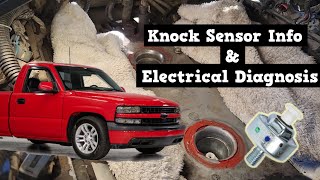
- Chevrolet / GMC / Cadillac Silverado, Sierra, Tahoe, Suburban, Escalade (1999-2007) — Extremely common on LS-based V8s (4.8L, 5.3L, 6.0L). Water pools in the intake valley, corroding sensors and the harness. GM TSB #02-06-04-023A advises replacing the rear sensor and applying an RTV dam. Best practice is replacing both sensors and the harness simultaneously.
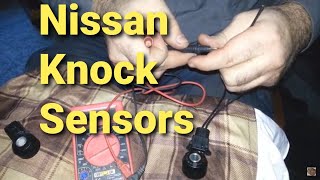
- Nissan Pathfinder, Frontier, Xterra (2005-2012) — On the VQ40DE V6 engine, the sensor is buried under the lower intake manifold. Repair costs often exceed $1,100. Using non-OEM sensors guarantees the code returns; genuine Nissan parts are critical.
- Subaru Forester (Turbo), WRX (2014-2018) — Subaru TSB 07-133-18R addresses a poorly designed original knock sensor prone to cracking. The fix replaces the old part with an updated one (P/N 22060AA180).
- Toyota Camry (V6), 4Runner (V6), Tundra (2005-2024) — On V6 engines (1GR-FE, 2GR-FE), the two knock sensors are located deep in the engine valley under the entire intake manifold assembly, making replacement a costly job.
- Honda Accord (V6), Odyssey, Pilot, Ridgeline (2003-2024) — The knock sensors on Honda's J-series V6 are located under the intake manifold, turning a simple sensor replacement into a multi-hour labor charge.
- Ford F-150, Expedition (2004-2010) — On the 5.4L 3V Triton V8 engine, the knock sensors are located under the intake manifold. Owners are often quoted $1500-$2500+ due to the complexity of removing the manifold.
- BMW 3-Series (E46), 5-Series (E39), X3 (E83) (1998-2006) — On the M54 inline-6 engine, the two knock sensors are bolted to the block underneath the intake manifold. Back-probe the DME connector to check for the 2.5V reference voltage before attempting replacement.
- Hyundai / Kia Santa Fe, Sonata, Sorento (V6) (2006-2012) — Sensors are located in the engine valley beneath the intake manifold, mirroring the difficult and labor-intensive repair process found in Toyota and Honda V6 engines.
Manufacturer-Specific Notes
- General Motors (GM): A design flaw on LS-based V8s (1999-2007) allows water to collect in the intake valley, corroding the knock sensors. TSB #02-06-04-023A recommends replacing the sensors, harness, and building a silicone (RTV) 'dam' around the sensor grommets to divert water.
- Subaru: Subaru issued TSB 07-133-18R for a high failure rate of the original knock sensor on 2014-2018 Forester Turbo and WRX models. The original housing cracks easily. The fix replaces it with a redesigned part (P/N 22060AA180).
- Nissan: Technicians strongly advise using only OEM knock sensors on Nissan vehicles, particularly the VQ40DE engine. Aftermarket sensors have an extremely high failure rate, causing the P0332 code to return and forcing a repeat of the $1,100+ labor charge.
- V-Engines (General): On any V6 or V8 engine where sensors are located under the intake manifold, always replace both knock sensors, the wiring sub-harness, and the intake manifold gaskets simultaneously to prevent paying the massive labor charge twice.
Real Owner Stories
2005 Chevy Silverado 5.3L - The Classic Water Damage Fix
Check Engine Light with code P0332 appeared. Owner noted a 1-2 MPG drop and power loss. The rear knock sensor (Bank 2) was heavily rusted and corroded.
Outcome: Initially, the code returned due to a loose harness connection. After securing the connection, the code cleared permanently, restoring power and fuel economy.
Lesson: On GM V8s, water intrusion is the prime suspect. Always replace both sensors and the harness, clean the block surface, torque to 15 ft-lbs, and build an RTV dam to prevent a repeat failure.
2001 Corvette Z06 - The Bad Aftermarket Part Nightmare
After an engine rebuild, a persistent P0332 code appeared immediately despite installing new sensors and a harness.
Outcome: After multiple failed attempts with aftermarket parts, the owner purchased genuine OEM GM sensors. This immediately and permanently fixed the problem.
Lesson: Avoid cheap aftermarket sensors for this specific job. The cost savings are not worth the repeated, labor-intensive repairs. Using OEM parts saves you from doing the job multiple times.
Jaguar S-Type R - The "Don't Panic, Just Dry It" Scenario
Immediately after washing the engine bay with a pressure washer, the car went into "Restricted Performance" mode and threw both P0327 and P0332 codes.
Outcome: After allowing the engine bay to dry completely, the codes cleared and did not return. The car exited limp mode and ran normally.
Lesson: If P0332 appears immediately after an engine wash or driving through deep water, do not replace parts. First, thoroughly dry the engine bay for 24-48 hours.
How to Prevent This Code From Triggering
- Avoid High-Pressure Engine Washing (Always) — High-pressure water forces its way past weather seals on connectors, flooding sensor cavities and causing shorts. Clean engine bays with a damp rag and degreaser, not a hose.
- Build an RTV 'Dam' (GM V8s) (During knock sensor replacement) — Applying a bead of RTV silicone around the knock sensor grommets in the valley cover diverts water away from the sensor holes, preventing corrosion. This is an official fix from GM TSB #02-06-04-023A.
- Use Top Tier Gasoline and Correct Octane (Every fill-up) — Low octane fuel causes real engine knock, putting extra stress on the knock control system. Quality fuel with detergents prevents carbon buildup, which creates hot spots and leads to pre-ignition.
- Inspect and Protect Wiring Harnesses (During other engine maintenance) — Inspect wiring for brittleness or chafing in high-heat areas. Using heat-resistant wire loom prevents insulation from degrading and causing a short or open circuit.
- Address Engine Oil and Coolant Leaks Promptly (As they occur) — Leaking fluids saturate wiring harnesses and connectors, degrading the insulation and causing electrical shorts.
Frequently Asked Questions
What is 'Bank 2'?
On a V-shaped engine, 'Bank 2' is the side that does not contain the #1 cylinder. On an inline engine, there is typically only one bank, but some use two sensors, with sensor 2 monitoring the rear cylinders.
Will P0332 fail an emissions test?
Yes. An active P0332 code illuminates the Check Engine Light, which is an automatic failure for any smog or emissions inspection.
What are the most common mistakes when fixing P0332?
Top mistakes include replacing the sensor without testing the wiring and using cheap aftermarket sensors that fail quickly. Failing to torque the sensor to factory specs (e.g., 15 lb-ft) also causes immediate issues. On GM V8s, skipping the harness replacement and RTV dam leads to repeat water damage.
Why did the P0332 code come back after I replaced the sensor?
The replacement sensor was likely a low-quality aftermarket part that failed prematurely. Alternatively, the actual problem is in the wiring harness or connector, which was not repaired. Finally, the new sensor might not be torqued to the correct specification.
Can I just relocate the knock sensor to an easier spot?
No. The sensor is calibrated for a specific location on the engine block to detect harmful frequencies. Relocating it leaves your engine unprotected from real knock or causes it to pick up false vibrations, leading to poor performance.
Will using the wrong octane fuel cause a P0332 code?
No. Low-octane fuel causes real engine knock, which a working sensor detects to retard timing. P0332 indicates an electrical circuit fault (low or no signal), not the presence of actual knock.
Can a bad ground or dirty sensor cause P0332?
Yes. The sensor requires a clean, solid ground path through its mounting point on the engine block. Corrosion, rust, or dirt on the mounting surface creates resistance and weakens the signal, triggering the code.
I have P0332 but hear no knocking and the car seems to run fine. What's wrong?
The PCM puts the engine into a safe mode with conservative timing, preventing most knocking. You will likely only notice a lack of power during hard acceleration or hill climbs. The absence of symptoms means the safety protocols are working, but the engine remains unprotected from real knock.
Key Takeaways
- P0332 indicates the Powertrain Control Module (PCM) is receiving less than 0.5V from the Bank 2 knock sensor, meaning it can no longer detect damaging engine detonation.
- Water intrusion is the leading cause of this code on 1999-2007 GM V8 engines, requiring replacement of both sensors, the wiring harness, and an RTV silicone dam to prevent recurrence.
- Never use cheap aftermarket knock sensors for this repair; technicians report a failure rate exceeding 50%, which often forces a repeat of a $1,000+ labor charge.
- Repair costs range from $200 for accessible sensors to over $1,500 for V6 and V8 engines where the sensors are buried underneath the intake manifold.
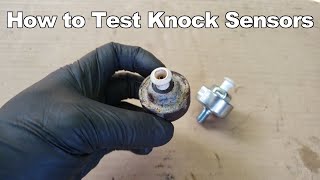
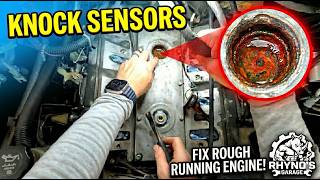
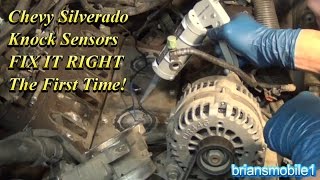
Helpful Videos


The information in this article is provided for general reference and educational purposes only. Vehicle specifications, procedures, and part compatibility can vary by production date, trim level, and region. Always consult your vehicle's factory service manual and verify part numbers before purchasing or performing repairs. Safety-critical components such as airbags, seat belts, and braking systems should be installed by a qualified professional.
- 🎬 Helpful Videos
- What Does P0332 Mean?
- Can I Drive With P0332?
- Common Causes
- Symptoms
- Diagnostic Flowchart
- Common Fixes & Costs
- DIY vs Professional
- Used vs. New Parts: Buying Guide
- What Happens If You Wait — Timeline
- Cost of Not Fixing It
- Diagnosis Steps
- When This Code Triggers (Freeze-Frame Conditions)
- Related Codes
- Climate & Environmental Factors
- How to Talk to a Mechanic About This Code
- Where to Take It: Dealer vs Independent vs Chain
- When to Walk Away From the Repair
- What Scan Tool You Need for This Code
- How to Clear the Code After You Fix It
- Will This Fail Emissions / State Inspection?
- Most Commonly Affected Vehicles
- Manufacturer-Specific Notes
- Real Owner Stories
- 2005 Chevy Silverado 5.3L - The Classic Water Damage Fix
- 2001 Corvette Z06 - The Bad Aftermarket Part Nightmare
- Jaguar S-Type R - The "Don't Panic, Just Dry It" Scenario
- How to Prevent This Code From Triggering
- Frequently Asked Questions
- What is 'Bank 2'?
- Will P0332 fail an emissions test?
- What are the most common mistakes when fixing P0332?
- Why did the P0332 code come back after I replaced the sensor?
- Can I just relocate the knock sensor to an easier spot?
- Will using the wrong octane fuel cause a P0332 code?
- Can a bad ground or dirty sensor cause P0332?
- I have P0332 but hear no knocking and the car seems to run fine. What's wrong?
- Key Takeaways
- 🎟️ Get 5% Off