

P0331 on 2015-2022 GMC Canyon: Knock Sensor Performance and Fixes
On a 2015-2022 GMC Canyon, code P0331 often points to a knock sensor circuit issue that may require an Engine Control Module (ECM) software update, as noted in manufacturer bulletins. If not software, the cause is typically a faulty knock sensor, its wiring, or an improper sensor seating. On V6 models, the sensor is extremely difficult to access, leading to high repair costs. An ECM reprogram must be done by a dealer.
- Before buying any parts for a P0331 code on a 2015-2022 GMC Canyon, check with a dealer if your vehicle needs an ECM/TCM software update, as this is a very common fix.
- If software is not the issue, the most likely causes are a faulty knock sensor or a problem with its wiring harness.
- This code is serious because it compromises the engine's ability to protect itself from harmful detonation.
- The code is often seen with P0326 (the other knock sensor), and fixing them often involves the same procedure or part.
What's Unique About the 2015-2022 Gmc CANYON
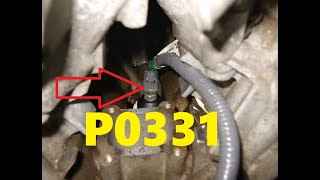
For the second-generation GMC Canyon and its twin, the Chevrolet Colorado, this code is frequently linked to software calibration issues. Multiple Technical Service Bulletins (TSBs) issued by GM specifically recommend reprogramming the Engine Control Module (ECM) as a primary fix. Furthermore, on the popular 3.6L V6 engine, Knock Sensor 2 is located on the passenger side of the engine block in a very difficult-to-access area, often requiring the removal of the starter motor 🎬 See this walkthrough for locating the knock sensors on the 3.6L. for replacement. This makes the diagnosis and repair significantly more labor-intensive and expensive compared to many other vehicles where knock sensors are more accessible.
Diagnostic Flowchart
Tap your situation to follow the diagnostic path that matches what you're seeing on this vehicle.
Symptoms You May Notice
- Check Engine Light is on
- Audible engine knocking or pinging, especially under load
- Reduced engine power and acceleration
- Rough or unstable idle
- Cruise control engagement feels rough or bumpy
- Hesitation during acceleration
- Stabilitrak light may come on in some cases
- Replacing the knock sensor without checking for software updates first. Many owners might replace the sensor, incurring high labor costs on a V6, only to have the code return because the root cause was the ECM calibration.
- Replacing the knock sensor without first attempting the re-torque procedure outlined in TSB #PIP5836A, which may resolve the issue without a new part.
Most Likely Causes
- Engine/Transmission Control Module Calibration 🔴 High Probability As per TSBs #PIP5303B and #PIP5303A, the factory software may be too sensitive or have logic errors that incorrectly trigger P0331. This is a well-documented issue addressed by GM.
How to confirm: A GM dealership or a qualified shop with access to GM's service information system can check if your vehicle's VIN has an open campaign or a pending software update for the ECM and TCM. This should be the first step.
Typical fix: Reprogram the Engine Control Module (ECM) and Transmission Control Module (TCM) with the latest software calibration. This can only be performed by a dealer or a shop with a GM subscription.
Est. part cost: $0 - Wiring or Connector Issue 🟡 Medium Probability The engine wiring harness is known to chafe against the edge of the camshaft cover or cylinder head, which can damage the knock sensor circuit wires. The connector itself can also suffer from corrosion or a loose connection due to heat and vibration.
How to confirm: Visually inspect the wiring harness, specifically where it runs near the back of the cylinder heads/cam covers, for any signs of chafing or exposed wires. Check the connector at the knock sensor for corrosion or a loose fit. Test for continuity from the sensor connector back to the ECM.
Typical fix: Repair the damaged section of wire with solder and heat shrink. Replace the connector pigtail if it's corroded or broken. Secure the harness away from sharp edges.
Est. part cost: $10-$30 - Faulty Knock Sensor 🟡 Medium Probability Sensors are electronic components that can fail over time due to extreme heat cycles and vibration. On the 3.6L V6, Sensor 2 is on the passenger side, where access is extremely limited, increasing labor time significantly.
How to confirm: After confirming software is updated and wiring is intact, the sensor is the next suspect. A professional may use an oscilloscope to check the signal pattern. TSB #PIP5836A suggests a specific procedure: disconnect, remove, check for debris, and reinstall the sensor, torquing the bolt to exactly 25 Nm (18 ft-lbs) before condemning it.
Typical fix: Replace the faulty knock sensor. Ensure the new sensor is torqued to the correct specification (25 +/- 4 Nm), as improper torque will affect its reading and can cause the code to return. It is often recommended to replace both sensors on a V6 at the same time due to the high labor cost to access them.
Est. part cost: $40-$90
Rare But Worth Checking
- Improper Sensor Seating or Connection: TSB #PIP5836A identifies an issue on low-mileage trucks where the code can be set without a faulty sensor. The fix involves disconnecting the sensor, removing the bolt, cleaning any 'block ashing' (casting material) from the mounting surface, and reinstalling the original sensor to the correct torque of 25 Nm. This suggests a poor physical or electrical connection can be the root cause.
- Faulty Engine Control Module (ECM): This is very rare. The ECM should only be considered after all other possibilities, including software updates, sensor failure, and wiring issues, have been exhaustively ruled out.
- Excessive Engine Vibration: Severe vibrations from other failing components, like worn engine mounts or an internal engine imbalance, can sometimes be misinterpreted by the knock sensor, triggering the code.
Diagnosis Steps
- Check for Technical Service Bulletins (TSBs): First, verify with a dealer if your vehicle requires the ECM/TCM software update mentioned in TSBs #PIP5303B/A. This is the most likely and least invasive fix.
- Scan for Other Codes: Check for other codes like P0326 or any MAF/MAP/Cam sensor codes. The presence of other codes, especially those listed in TSB #18-NA-307, may point you toward a wiring harness issue.
- Inspect Wiring and Connector: Carefully inspect the engine wiring harness, paying close attention to the area where it passes over the rear of the camshaft/valve covers for signs of chafing. Then, inspect the knock sensor connector for damage, corrosion, or a loose fit.
- Perform TSB #PIP5836A Procedure: Before replacing the sensor, follow the GM-recommended procedure for low-mileage P0331. Disconnect the sensor, remove the mounting bolt, and inspect the mounting boss on the engine block for 'block ashing' or debris. Clean if necessary. Reinstall the sensor and torque the bolt to 25 Nm (18 ft-lbs). Reconnect the connector.
- Test the Circuit: If the code persists, use a digital multimeter to check for correct voltage and ground at the sensor connector. Test the continuity of the signal wire between the sensor and the ECM to rule out an open or short circuit.
- Test the Sensor: If the circuit is good, test the knock sensor itself. This is typically done by checking its internal resistance or, more effectively, by using an oscilloscope to observe its signal pattern with the engine running.
- Replace the Knock Sensor: If the sensor fails testing, replace it. Ensure it is torqued to the correct specification (25 Nm), as improper torque can affect its reading. On V6 models, due to the extreme labor involved, consider replacing both sensors at once.
- Final Verification: After the repair, clear the codes and perform a comprehensive test drive under various conditions (idle, acceleration, cruise) to ensure the code does not return.
Parts You'll Likely Need
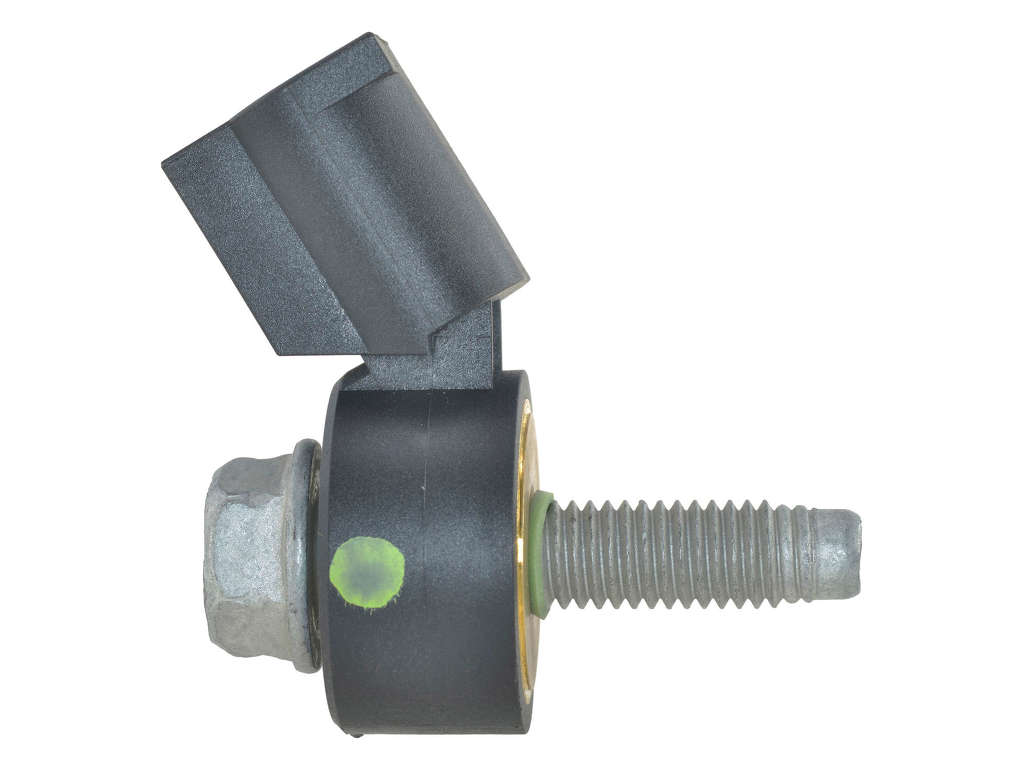
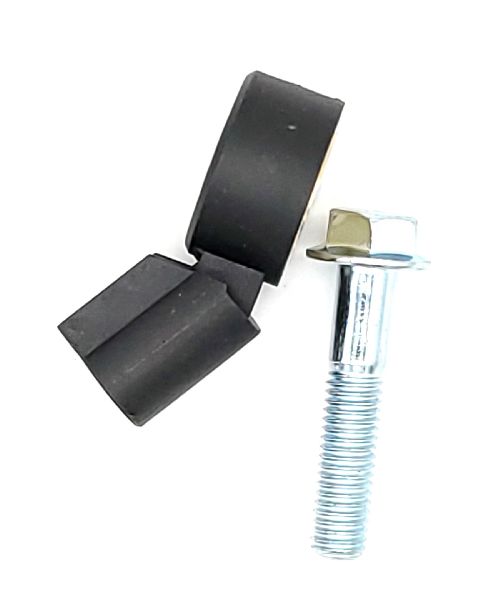
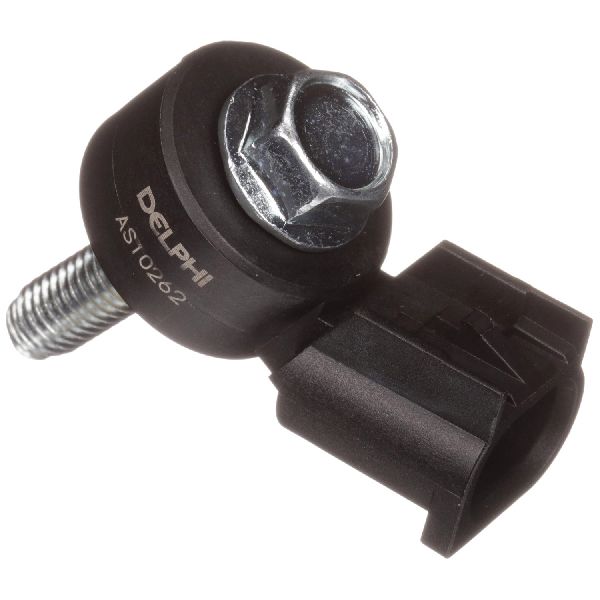
- Knock Sensor
(OEM #12643999 (ACDelco))— If the ECM software is up to date and the wiring is intact, the sensor itself is the most probable failed component. This part number is for the V6 engine.
Trusted brands: ACDelco (OEM), Delphi, NTK
OEM price range: $60-$90
Aftermarket price range: $40-$70
Related Codes That Often Appear With This One
- P0326 — This code is for 'Knock Sensor 1 Circuit Range/Performance'. TSBs #PIP5303B and #PIP5303A mention both codes appearing together, suggesting a common root cause, often the ECM software.
- P0014, P0365, P0366 — TSB #18-NA-307 lists these camshaft-related codes as potential results of the same engine wiring harness chafing issue that can affect the knock sensor circuit. Finding these codes together strongly points to a wiring problem.
- P0068, P0101, P0106, P0171 — TSBs #PIP5529A and #PIP5529B list these codes alongside P0331. This indicates that a separate issue, like a vacuum leak or a problem with the mass airflow (MAF) or MAP sensors, could be causing engine performance problems that indirectly trigger the knock sensor code.
Technical Service Bulletins (TSBs) & Recalls
- PIP5836A: Recommends a procedure of disconnecting, cleaning the mounting surface, and re-torquing the existing knock sensor to 25 Nm to fix P0331 on low-mileage trucks before replacing parts.
- PIP5303B / PIP5303A: Explicitly recommends reprogramming the ECM and TCM to resolve P0326/P0331, especially when accompanied by rough idle or cruise control issues.
- 18-NA-307: Details a known issue where the engine wiring harness chafes on the camshaft cover, causing various DTCs that could include the knock sensor circuit.
- PIP5529B / PIP5529A: Lists P0331 as part of a group of codes that can be set due to a single underlying issue, pointing towards complex diagnostics.
- PIP5273: An early TSB advising against immediate sensor replacement for P0331, hinting at software or connection issues.
Platform-Specific Known Issues
- A primary cause for P0331 on this platform is a software issue requiring an ECM and TCM reprogram, as documented in GM TSBs #PIP5303B and #PIP5303A.
- TSB #PIP5836A details a specific diagnostic procedure for low-mileage trucks
Mechanic-Grade Diagnostic Values
- Knock Sensor Internal Resistance — expected: 93 kOhms - 110 kOhms. Failure: A reading of OL (open circuit), zero, or significantly outside the specified range indicates a faulty sensor.
- Knock Sensor Circuit Bias Voltage (Key-On, Engine-Off) — expected: ~5V DC at the harness connector (sensor unplugged), dropping to ~2.5V - 4.8V DC when a good sensor is plugged in.. Failure: Zero volts suggests a wiring or ECM issue. No voltage drop when connecting the sensor points to an open in the sensor's internal resistor.
- Knock Sensor AC Voltage Output (Tap Test) — expected: A small AC voltage (e.g., 0.5V - 1.0V) should be generated on a multimeter or oscilloscope when the engine block is tapped firmly near the sensor with the engine off.. Failure: No AC voltage produced during a tap test indicates a dead sensor.
- Scan Tool Live Data - Knock Retard — expected: 0 degrees at idle with no load. May show some degrees of retard under heavy acceleration.. Failure: Consistently high knock retard values at idle or light load, or a value that is maxed out, can indicate a real knock condition or a hypersensitive/faulty sensor circuit.
Scan Tool Commands That Help
- GDS2 (GM Global Diagnostic System 2): Engine Data Display > Knock Sensor Data — To monitor live data PIDs like 'Knock Retard' and 'Knock Sensor Activity Counts' for Bank 1 and Bank 2. Comparing the two banks is crucial; if Bank 2 shows no activity or is maxed out while Bank 1 responds normally, it points to a fault in the Bank 2 circuit.
- GDS2 (GM Global Diagnostic System 2): Module Diagnostics > Engine Control Module > Configuration/Reset Functions > Knock Sensor Learn Reset — This function should be performed after replacing a knock sensor or after major engine repairs. It resets the learned baseline noise profile of the engine, which can help prevent false knock readings if the engine's acoustic signature has changed.
Wiring & Ground Locations
- Knock Sensor 2 (Bank 2) Connector — On the passenger side of the 3.6L V6 engine block, typically obscured by the starter motor.. This is the primary connection point for the sensor. It is susceptible to heat damage, corrosion, and being improperly seated due to its difficult-to-access location.
- G103 and G104 — These are critical engine and ECM grounds, often located on the rear of the cylinder heads (firewall side).. The knock sensor circuit is a low-voltage AC signal that is highly sensitive to electrical noise. A poor or corroded engine ground can introduce interference, causing the ECM to misinterpret the signal and set a P0331.
- Harness Chafe Point — The engine wiring harness section that routes over the rear of the passenger-side cylinder head/cam cover.. As noted in TSBs and owner forums, this harness can rub against the sharp edge of the cylinder head, eventually wearing through the insulation and causing the knock sensor signal wire to short to ground, triggering P0331.
Real Owner Repair Stories
- ColoradoFans.com forum user (2016 Chevrolet Colorado 3.6L V6) — Check Engine Light with codes P0331 and P0326.
❌ Tried (didn't work) Replaced both knock sensors and the wiring harness between them. The codes returned shortly after the repair.
✅ What actually fixed it The owner took the truck to a dealership, which performed the ECM/TCM software update as specified in TSB #PIP5303. The codes did not return after the reprogram. - GM-Trucks.com forum user (2017 GMC Canyon 3.6L V6) — Intermittent P0331 code, especially on long drives.
❌ Tried (didn't work) Dealer initially could not replicate the issue., Sensor replacement was considered but postponed due to high labor cost.
✅ What actually fixed it A different technician found that the engine wiring harness was chafing on the back of the cylinder head near the firewall. The damaged wires were repaired and protected, which permanently resolved the code.
OEM Part Supersession History
Unknown→12643999 (ACDelco 213-4687)— Standard part evolution and updates.
Heads up: This is the widely accepted part number for the 2015-2022 3.6L V6. No significant incompatibility issues are noted, but always verify with VIN.
Model Year Variations Within This Range
- 2015-2016: These years use the 3.6L LFX V6 engine and are the primary models affected by the overly sensitive software issue described in TSB #PIP5303B. For these years, an ECM/TCM reprogram is a very common fix.
- 2017-2022: These years use the updated 3.6L LGZ V6 engine. While still susceptible to P0331 from wiring or sensor faults, they are less likely to be caused by the specific software sensitivity that plagued the earlier LFX engine.
- 2022+: TSB #PIP5836A specifically calls out an emerging issue on newer, low-mileage trucks where casting flash ('block ashing') on the sensor mounting boss can cause a poor connection, requiring cleaning rather than part replacement.
Helpful Videos


We Have This Part in Stock


The information in this article is provided for general reference and educational purposes only. Vehicle specifications, procedures, and part compatibility can vary by production date, trim level, and region. Always consult your vehicle's factory service manual and verify part numbers before purchasing or performing repairs. Safety-critical components such as airbags, seat belts, and braking systems should be installed by a qualified professional.
- Gmc CANYON:
- 🎬 Helpful Videos
- 🛍️ Shop This Part
- What's Unique About the 2015-2022 Gmc CANYON
- Diagnostic Flowchart
- Symptoms You May Notice
- Most Likely Causes
- Rare But Worth Checking
- Diagnosis Steps
- Parts You'll Likely Need
- Related Codes That Often Appear With This One
- Technical Service Bulletins (TSBs) & Recalls
- Platform-Specific Known Issues
- Mechanic-Grade Diagnostic Values
- Scan Tool Commands That Help
- Wiring & Ground Locations
- Real Owner Repair Stories
- OEM Part Supersession History
- Model Year Variations Within This Range
- 🎟️ Get 5% Off