

P0331 on 2014-2017 Cadillac CTS V6: Knock Sensor or Loose Intake?
On a 2014-2017 Cadillac CTS with a V6, P0331 is a puzzle. If seen with other codes like P0171 or P0106, the cause is likely loose intake manifold bolts creating a vacuum leak, per GM TSB #PIP5529B. If P0331 appears alone, suspect a faulty Knock Sensor 2 or its wiring. The sensor itself is about $20-$80.
- Always check for other codes first. The presence of codes like P0171, P0106, or P0506 strongly points to the loose intake manifold bolt issue from TSB #PIP5529B.
- If P0331 is the only code, the fault is likely the knock sensor on the driver's side of the engine or its wiring. Check for pinched wires near the oil filter housing.
- The fix for the TSB issue is simple and cheap: apply threadlocker and re-torque the intake bolts. Do not replace the gasket unless necessary.
- Proper torque on the knock sensor mounting bolt is critical for its correct operation.
What's Unique About the 2014-2017 Cadillac CTS
What's unique about the P0331 code on this specific Cadillac platform is a known issue documented by General Motors. A Technical Service Bulletin (TSB #PIP5529B) reveals that loose intake manifold bolts can cause a significant vacuum leak. This leak leads to a cascade of seemingly unrelated error codes, including P0331. The resulting engine instability and abnormal vibrations from the vacuum leak can be misinterpreted by the knock sensor system as a sensor fault. Therefore, on these vehicles, P0331 is often not a sensor problem but a symptom of a mechanical issue elsewhere. The TSB explicitly states that if these codes are present and other diagnostics don't lead to a solution, technicians should inspect for loose intake manifold bolts.
Diagnostic Flowchart
Tap your situation to follow the diagnostic path that matches what you're seeing on this vehicle.
Symptoms You May Notice
- Check Engine Light is on
- Reduced engine power and sluggish acceleration.
- Hesitation, especially under load.
- Poor fuel economy.
- Rough or unstable idle.
- Audible pinging or knocking noise from the engine (less common).
- Replacing the knock sensor without checking for other codes. If multiple codes from TSB PIP5529B are present, the knock sensor is almost certainly not the root cause.
- Replacing the intake manifold gasket. The TSB for loose bolts explicitly states not to replace the gasket unless it is confirmed to be leaking after the bolts have been properly torqued.
Most Likely Causes
- Loose Intake Manifold Bolts (per TSB PIP5529B) 🔴 High Probability A known issue documented by GM where the intake manifold bolts can loosen over time, creating a vacuum leak that triggers a variety of codes, including P0331. This issue is common enough to have a dedicated TSB that has been revised multiple times.
How to confirm: Check for the presence of other codes listed in the TSB (P0068, P0101, P0106, P0171, P0131, P0137, P0324, P0326, P0506). Physically inspect the intake manifold bolts to see if they can be turned easily by hand or with minimal force. A user on a Cadillac forum with P0171/P0174 codes confirmed finding and tightening three loose manifold bolts resolved their check engine light.
Typical fix: Per TSB PIP5529B, remove one intake manifold bolt at a time, apply medium-strength threadlocker, and torque to the manufacturer's specification in the correct sequence. The TSB notes a labor time of 0.4 hours for this procedure and explicitly states not to replace the intake gasket unless it's proven to be leaking after the bolts are torqued.
Est. part cost: $5-$15 - Faulty Knock Sensor 2 or Wiring 🟡 Medium Probability The sensor is exposed to extreme heat and vibration, and its wiring connector can become brittle or corroded over time. On some GM 3.6L engines, the wiring harness for the knock sensor can get pinched under the oil filter housing during an oil change, causing a short.
How to confirm: If P0331 appears alone, inspect the sensor and its wiring harness for damage or corrosion. The sensor is located on the driver's side (Bank 2) of the engine block, just behind the starter motor. A multimeter can be used to check the sensor's resistance; if it's out of the manufacturer's specified range, it's faulty. A scan tool can also be used to monitor the sensor's live data.
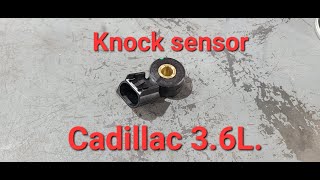
Typical fix: Replace the faulty knock sensor. It is held on by a single bolt. Ensure the new sensor is torqued to the correct specification (15 ft-lbs for the 3.6L engine) as this is critical for proper function. Accessing the sensor requires working around the starter motor but does not require intake manifold removal on this engine. 🎬 Watch: This video shows the knock sensor location on a 3.6L CTS.
Est. part cost: $20-$80
Rare But Worth Checking
- Powertrain Control Module (PCM) Fault: This is very rare. The PCM should only be considered after all other possibilities, including the TSB and sensor/wiring checks, have been exhausted.
- Software Calibration Issue: In some cases, particularly on 2015 models with the 3.6L LFX engine, GM released updated ECM/TCM software calibrations to address a variety of issues, including false P0326 and P0331 codes. See TSB PIP5303A.
Diagnosis Steps
- Scan for all OBD-II codes. Pay close attention to any codes that accompany P0331.
- If codes P0068, P0101, P0106, P0171, P0131, P0137, P0324, P0326, or P0506 are present: Your first step should be to investigate TSB #PIP5529B. Carefully check if the intake manifold bolts are loose. If they are, this is your most likely problem.
- If P0331 is the only code: The problem is more likely with the Knock Sensor 2 circuit itself.
- Locate Knock Sensor 2 on the driver's side (Bank 2) of the engine block. It is often located just behind the starter motor. Visually inspect the wiring harness near the oil filter housing for any signs of being pinched or damaged, which is a known issue on some GM 3.6L engines.
- Visually inspect the sensor's connector and wiring for any signs of damage, melting, corrosion, or loose connections.
- If the wiring looks good, test the sensor. Using a multimeter, check the resistance between the sensor's pin and its housing. A good GM knock sensor should read between 93k and 110k ohms. An open circuit or a reading far outside this range indicates a bad sensor.
- If the wiring and connections are good but the sensor fails testing, replace Knock Sensor 2. Ensure the new sensor is torqued to the correct specification (15 ft-lbs / 20 N·m). Over or under-tightening will cause incorrect readings.
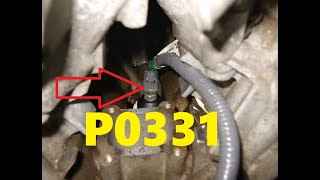
- After any repair, clear the codes and perform a test drive 🎬 Watch: A helpful guide on common causes and fixes for P0331. to ensure the Check Engine Light does not return.
Parts You'll Likely Need
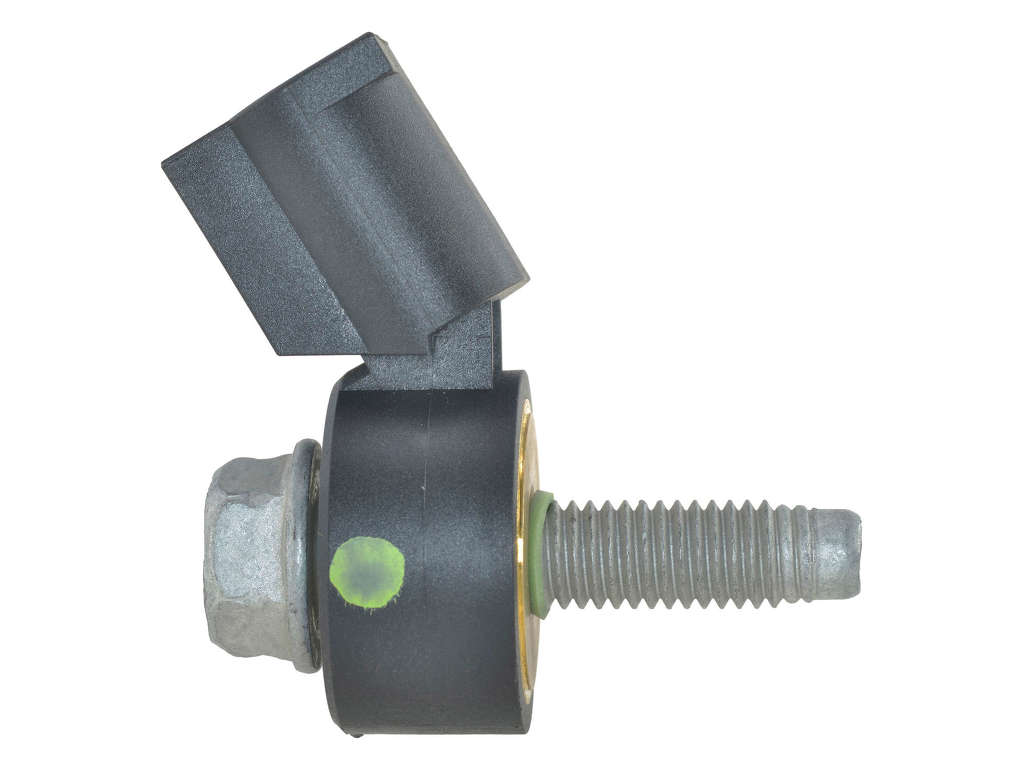
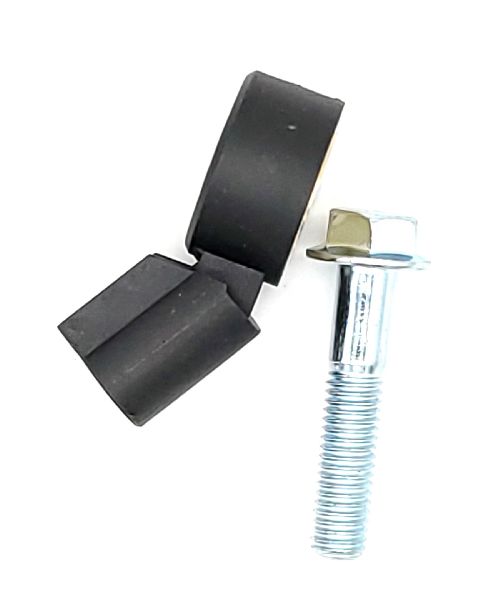
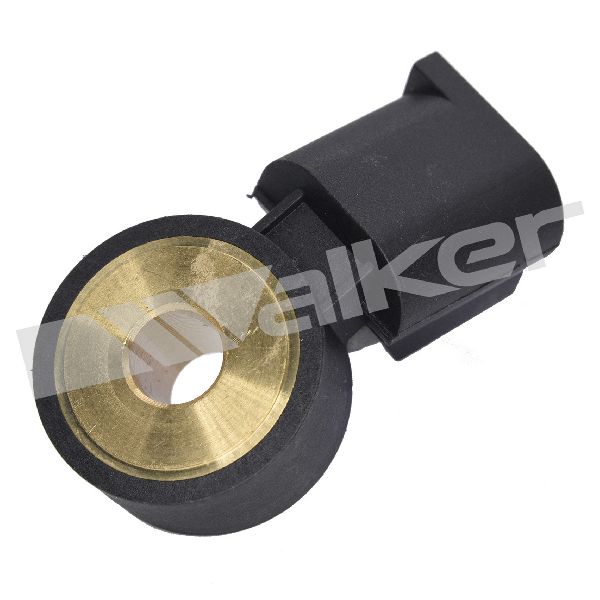
- Ignition Knock (Detonation) Sensor
(OEM #12729597)— This is the most common part to fail if the code P0331 appears by itself, without the other codes mentioned in the TSB. This part number is a widely used GM knock sensor.
Trusted brands: ACDelco, Delphi, Bosch, NTK
OEM price range: $35-$70
Aftermarket price range: $20-$85 - Medium-Strength Threadlocker — Required to perform the fix for loose intake manifold bolts as specified in TSB #PIP5529B.
Trusted brands: Loctite, Permatex
OEM price range: $5-$15
Aftermarket price range: $5-$15
Related Codes That Often Appear With This One
- P0171 — System Too Lean (Bank 1) - Caused by the unmetered air from the vacuum leak described in TSB PIP5529B.
- P0106 — Manifold Absolute Pressure (MAP) Sensor Performance - The vacuum leak causes the MAP sensor readings to be out of their expected range.
- P0506 — Idle Air Control RPM Lower Than Expected - The vacuum leak introduces extra air, making it difficult for the PCM to control the idle speed properly.
- P0068 — MAP/MAF - Throttle Position Correlation - The conflicting information from the MAP sensor (due to the leak) and other sensors triggers this code.
- P0326 — Knock Sensor 1 Circuit Range/Performance - This is the equivalent code for Bank 1. If both P0326 and P0331 are present, it points even more strongly to a systemic issue like the vacuum leak from TSB PIP5529B.
Technical Service Bulletins (TSBs) & Recalls
- PIP5529B: Addresses a potential stall, hesitation, and MIL illumination with a combination of DTCs including P0331, caused by loose intake manifold bolts.
- PIP5303A: Announces new service calibrations for the ECM and TCM on 2015 LFX engines to address various concerns, including historical P0326 and P0331 codes.
Platform-Specific Known Issues
- TSB #PIP5529B: This is a critical issue for this platform. It states that a combination of codes, including P0331, can be caused by loose intake manifold bolts. The official fix is to remove, apply threadlocker, and re-torque the bolts to specification. This should be the first check if multiple codes are present.
- Pinched Wiring Harness: On some 3.6L engines, the knock sensor wiring can be pinched by the oil filter housing during service, leading to a short and triggering knock sensor codes. A technician on YouTube demonstrated this exact issue on a 2012 Camaro with a 3.6L engine.
Mechanic-Grade Diagnostic Values
- Knock Sensor Resistance — expected: 93,000 to 110,000 Ohms (93k-110k Ω). Failure: An open reading (O.L.) or a value significantly outside the expected range indicates a faulty internal resistor in the sensor.
- Knock Sensor AC Voltage Output (Tap Test) — expected: Should generate an AC voltage signal when the engine block near it is tapped.. Failure: A known-bad sensor generated less than 10 millivolts, while a good sensor generated over 1 volt AC when tapped with a hammer. No voltage signal indicates a dead sensor.
- Knock Sensor Bolt Torque — expected: 15 ft-lbs (20 N·m). Failure: Over-tightening can make the sensor overly sensitive to normal vibrations, while under-tightening can prevent it from detecting real knock. Both can lead to incorrect signals.
- Knock Sensor Connector Voltage (Key On, Engine Off) — expected: ~5 Volts DC. Failure: A reading of 0 volts indicates a problem with the wiring harness or the PCM's reference voltage circuit, not the sensor itself.
Hidden / Shadow Codes Worth Checking
- Knock Retard Counts (Live Data): This is not a DTC, but a live data parameter visible on advanced scan tools like GM's GDS2 or HP Tuners. It shows how many degrees of timing the PCM is pulling in response to perceived knock, on a cylinder-by-cylinder basis. High counts on Bank 2 cylinders without audible knock can point to a hypersensitive or faulty sensor, or false knock from other vibrations. (see via Advanced scan tool or tuning software (e.g., GDS2, HP Tuners) capable of viewing GM-specific engine parameters.)
Wiring & Ground Locations
- Knock Sensor 2 (Bank 2) Connector — On the driver's side of the engine block, typically located just above and behind the starter motor. On the LGX V6 (2016+), its position is above the crankshaft position sensor.. This is the primary connection point to test the sensor and its circuit. Its location near the hot exhaust and starter can lead to heat damage or corrosion of the connector and wiring.
Real Owner Repair Stories
- YouTube channel 'Jim Cox' (2008 Cadillac CTS 3.6L V6 (LFX engine family)) — Check Engine Light with code P0331.
❌ Tried (didn't work) The owner noted that internet research suggested complex repairs like pulling the motor or exhaust, which were incorrect.
✅ What actually fixed it The owner located the Bank 2 knock sensor on the driver's side of the block, above the starter. He replaced the sensor, which cost $27.99, and torqued the new one to approximately 20-25 ft-lbs (note: spec is 15 ft-lbs). This resolved the code. - YouTube channel 'car PROblems' (cited in Pass 2) (2012 Chevrolet Camaro 3.6L V6 (LFX engine)) — Knock sensor codes (P0332/P0333 mentioned, similar circuit fault).
✅ What actually fixed it A technician found that during a previous oil change, the knock sensor wiring harness had been pinched between the engine block and the oil filter housing. This created a short in the circuit. Rerouting the harness and clearing the codes fixed the issue without replacing any parts.
"I Checked Everything" — The Actual Cause
- A technician may chase a P0331 by testing the sensor and wiring, finding both are perfectly fine. A smoke test for vacuum leaks may also come back clean if the leak is minor. The actual cause, as per TSB #PIP5529B, is often loose intake manifold bolts causing abnormal engine vibrations and lean conditions that the knock sensor misinterprets as detonation. The fix is not electrical, but mechanical: re-torquing the intake bolts with threadlocker.
OEM Part Supersession History
12605738, 12636736, 12692505→12729597— Standard part evolution and consolidation by GM.
Model Year Variations Within This Range
- 2014-2015 (LFX) vs. 2016-2017 (LGX): The 2014-2017 CTS model range spans a major engine update. 2014-2015 models use the 3.6L LFX V6, while 2016-2017 models use the redesigned 3.6L LGX V6. The LGX is a significantly different 'clean sheet' design with different bore, connecting rods, and internal components. While the function of the knock sensor is the same, technicians should be aware that wiring diagrams, harness routing, and component locations may differ between these engine generations. For example, TSB PIP5303A regarding software updates for false knock codes was specific to the 2015 LFX engine.
Helpful Videos
We Have This Part in Stock


The information in this article is provided for general reference and educational purposes only. Vehicle specifications, procedures, and part compatibility can vary by production date, trim level, and region. Always consult your vehicle's factory service manual and verify part numbers before purchasing or performing repairs. Safety-critical components such as airbags, seat belts, and braking systems should be installed by a qualified professional.
- Cadillac CTS:
- 🎬 Helpful Videos
- 🛍️ Shop This Part
- What's Unique About the 2014-2017 Cadillac CTS
- Diagnostic Flowchart
- Symptoms You May Notice
- Most Likely Causes
- Rare But Worth Checking
- Diagnosis Steps
- Parts You'll Likely Need
- Related Codes That Often Appear With This One
- Technical Service Bulletins (TSBs) & Recalls
- Platform-Specific Known Issues
- Mechanic-Grade Diagnostic Values
- Hidden / Shadow Codes Worth Checking
- Wiring & Ground Locations
- Real Owner Repair Stories
- "I Checked Everything" — The Actual Cause
- OEM Part Supersession History
- Model Year Variations Within This Range
- 🎟️ Get 5% Off