

P0328 on 2019-2026 Audi Q8: Knock Sensor Circuit High Causes and Fixes
P0328 on an Audi Q8 indicates a high voltage signal from the Bank 1 knock sensor. The most common causes are a faulty knock sensor or a damaged wiring harness. Expect a repair cost of $450-$900, as the sensor is located under the intake manifold, making it difficult to access.
- P0328 on your Q8 is an electrical fault with the Bank 1 knock sensor circuit, not necessarily a sign of engine damage.
- The most likely causes are a bad knock sensor or damaged wiring. Have the wiring inspected carefully, especially if other work was recently done on the engine.
- This is not a simple DIY repair. The sensor is buried under the intake manifold, making labor a significant portion of the repair cost.
- When replacing the sensor, using a torque wrench is critical. Over-tightening the new sensor can cause the code to return immediately.
- Due to the high labor cost, it is wise to consider replacing both knock sensors (Bank 1 and Bank 2) at the same time.
What's Unique About the 2019-2026 Audi Q8
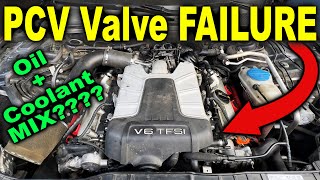
On the Audi Q8's 3.0L TFSI V6 engine (EA839), the two knock sensors are located deep in the 'V' of the engine, underneath the intake manifold. This location makes them difficult to access, turning what would be a simple sensor swap on some vehicles into a more labor-intensive job requiring intake manifold removal. Furthermore, Audi has issued a Technical Service Bulletin (TSB 2051342, which may be referenced as TSB_2081342_1 in some systems) that includes this code for V6 engines, indicating it's a recognized issue. Wiring damage near the sensor, sometimes occurring after other engine service (like PCV, water pump, or oil cooler repairs 🎬 Watch: How to access the PCV valve on this engine), has also been noted as a specific issue on this platform.
Diagnostic Flowchart
Tap your situation to follow the diagnostic path that matches what you're seeing on this vehicle.
Symptoms You May Notice
- Check Engine Light is on
- Reduced engine power and sluggish acceleration
- Hesitation or stumbling during acceleration
- Poor fuel economy
- Rough or uneven idle
- Audible engine pinging or knocking (less common with a circuit fault, but possible)
- Replacing the knock sensor without thoroughly checking the wiring. A pinched or damaged wire can cause the same code and symptoms, leading to a repeat failure after the new part is installed.
- Replacing only one knock sensor. Given the labor involved to remove the intake manifold, it is considered best practice to replace both sensors and the associated harness at the same time to prevent a similar failure of the second sensor in the near future.
Most Likely Causes
- Faulty Knock Sensor (Bank 1) 🔴 High Probability The sensor's location in the hot engine valley exposes it to extreme temperature cycles, which can lead to premature failure of its internal piezoelectric crystal.
How to confirm: After verifying the wiring is intact, test the sensor's internal resistance with a multimeter. An open circuit or resistance outside the manufacturer's specification indicates a bad sensor. The most definitive test is swapping the sensor with a known good one.
Typical fix: Replace the Bank 1 knock sensor. It is highly recommended to replace both sensors (Bank 1 and Bank 2) and the wiring sub-harness at the same time due to the high labor cost to access them.
Est. part cost: $65-$90 per sensor (OEM) - Wiring Harness or Connector Damage 🟡 Medium Probability The wiring is routed in a hot, tight area. Wires can become brittle and crack, or connectors can be damaged, contaminated with oil, or pinched during other engine service, such as a PCV valve, oil filter housing, or water pump replacement.
How to confirm: Visually inspect the wiring harness leading to the Bank 1 knock sensor for any signs of melting, chafing, or breaks. Check the connector for corrosion or loose pins. Perform a continuity test from the sensor connector to the ECM.
Typical fix: Repair the damaged section of the wiring harness or replace the connector pigtail. In many cases, replacing the small sub-harness that connects both knock sensors is the best practice.
Est. part cost: $25-$75 for a pigtail or sub-harness - Improperly Torqued Knock Sensor ⚪ Low Probability This can occur if the sensor was recently replaced without using a torque wrench. The sensor is a piezoelectric microphone and relies on precise mounting pressure to function correctly. Both over-tightening and under-tightening can cause faults.
How to confirm: This can only be confirmed by accessing the sensor and checking the torque on its mounting bolt. The correct specification is critical.
Typical fix: Torque the knock sensor mounting bolt to the manufacturer's specification. For similar Audi V6 engines, this is often 25 Nm (approximately 18 ft-lbs), but always verify for the specific EA839 engine. Do not over-tighten, as this can physically damage the sensor or cause a 'Circuit High' fault.
Est. part cost: $0
Rare But Worth Checking
- Engine Control Module (ECM) Fault: This is very rare, but a failure in the ECM's internal circuitry for the knock sensor can mimic a sensor or wiring problem. This should only be considered after all other possibilities have been exhaustively ruled out.
Diagnosis Steps
- Read the fault codes with an OBD-II scanner and document the freeze frame data to understand the conditions when the fault occurred.
- Visually inspect the engine bay for any obvious issues, like damaged wiring or connectors, especially if recent service has been performed.
- Gain access to the knock sensor connectors in the 'V' of the engine. This requires removing the intake manifold. New intake manifold gaskets will be required for reassembly.
- Inspect the Bank 1 knock sensor connector (typically green on many VAG products) and its wiring for damage, corrosion, or oil contamination.
- Perform a continuity test on the wiring between the sensor connector and the ECM connector to rule out an open or short circuit.
- If the wiring is good, test the knock sensor itself. You can measure its internal resistance with a multimeter, though specifications can be hard to find. A reading of infinity (open circuit) indicates a failed sensor.
- Check that the knock sensor mounting bolt is torqued correctly. A loose or over-tightened bolt can cause incorrect readings. The spec for a similar Audi engine is 25 Nm.
- If the wiring and torque are correct, the knock sensor is the most likely culprit and should be replaced. Best practice is to replace both sensors and the harness.
Parts You'll Likely Need
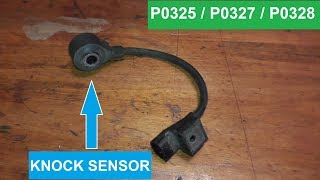
- Knock Sensor
(OEM #06M905377)— This is the most common failure point for code P0328. The sensor's internal piezoelectric crystal can fail, leading to an incorrect high voltage signal.
Trusted brands: Audi (OEM), Bosch, Standard Motor Products
OEM price range: $65-$90
Aftermarket price range: $30-$55 - Intake Manifold Gaskets
(OEM #Varies by specific engine code)— These are single-use gaskets that must be replaced anytime the intake manifold is removed to access the knock sensors.
Trusted brands: Audi (OEM), Victor Reinz, Elring
OEM price range: $40-$60 (set)
Aftermarket price range: $20-$40 (set) - Knock Sensor Wiring Harness
(OEM #Varies, e.g., 06M971595BQ for main harness)— The sub-harness connecting the sensors is often replaced as a preventative measure due to heat exposure and the risk of damage during repair.
Trusted brands: Audi (OEM)
OEM price range: $50-$150
Aftermarket price range: N/A
Related Codes That Often Appear With This One
- P0327 — This is the code for 'Knock Sensor 1 Circuit Low'. Seeing both may indicate an intermittent wiring problem or a failing sensor.
- P0333 — This is the code for 'Knock Sensor 2 Circuit High'. If both Bank 1 and Bank 2 codes appear, it strongly suggests a wiring harness issue common to both sensors, a problem that occurred during a service procedure, or a systemic issue like a voltage surge.
- P0332 — This is the code for 'Knock Sensor 2 Circuit Low'. The TSB provided by Audi (2051342) groups all four knock sensor codes (P0327, P0328, P0332, P0333) together as a known issue pattern.
Technical Service Bulletins (TSBs) & Recalls
- TSB 2051342 / 2081342: Provides information for Drive System Malfunction with DTCs related to Knock Sensors P0327, P0332, P0328, P0333 on V6 TFSI engines. This TSB confirms this is a recognized issue by the manufacturer.
Platform-Specific Known Issues
- Audi has issued Technical Service Bulletin #2051342 (also seen as 2081342/1) which addresses a 'Drive System Malfunction' and lists DTCs P0327, P0332, P0328, and P0333 for V6 TFSI engines, indicating a known pattern of knock sensor faults.
- A user on Reddit with a 2023 Q7 (sharing the same engine platform) reported a P0328 code that was diagnosed by the dealer as a faulty knock sensor, which was replaced under warranty.
Mechanic-Grade Diagnostic Values
- Knock Sensor Mounting Bolt Torque — expected: 25 Nm (approx. 18 ft-lbs). Failure: Over-tightening can make the sensor hyper-sensitive and cause a P0328 'Circuit High' fault. Under-tightening can prevent it from detecting knock correctly.
- Knock Sensor Voltage Generation (Tap Test) — expected: A small AC voltage or fluctuating DC millivolts should be generated when the sensor is lightly tapped.. Failure: If no voltage is produced when tapping the sensor, its internal piezoelectric crystal is likely dead. This is a more reliable test for modern sensors than a resistance check.
- VCDS Scan Tool - Measuring Blocks 026 & 027 — expected: Relatively low and stable voltage at idle.. Failure: A persistently high voltage reading from the Bank 1 sensor (compared to Bank 2) points towards a sensor or circuit fault.
- VCDS Scan Tool - Measuring Blocks 020-025 — expected: 0°KW of ignition angle retard on all cylinders at idle and under light load.. Failure: If the ECU is actively retarding timing on Bank 1 cylinders, it may be responding to a real knock event (from carbon, etc.) or a faulty high signal from the sensor.
Scan Tool Commands That Help
- VCDS (VAG-COM): Measuring Block 028 - Test Knock Sensor — This function runs a system check on the knock control system. The result will display as 'Test ON', 'Test OFF', 'Sys. OK', or 'Sys. not OK'. It can be used to quickly verify if the ECU sees a fundamental problem with the system after a repair.
Wiring & Ground Locations
- Main Battery Ground — The main battery earth cable is bolted to the body on the front panel of the plenum chamber, under the cover.. A poor main ground can cause floating voltages and erratic behavior in sensitive electronic sensors like the knock sensor. This should be checked for corrosion and tightness in any electrical diagnosis.
- G608 / G609 — On the related Q7 platform, ground connections G608 (center plenum chamber) and G609 (right plenum chamber) are used. These are likely candidates for the engine sensor ground network.. The knock sensor circuit relies on a clean ground reference. A faulty or corroded ground point in this area could introduce noise or a voltage offset, potentially triggering a 'Circuit High' fault.
Model Year Variations Within This Range
- 2019: Early production runs of the EA839 engine (including 2019 models) are more prone to rocker arm bearing failure. This mechanical issue can create engine noise that may trigger a P0328 code as a secondary symptom before total engine failure occurs.
Helpful Videos
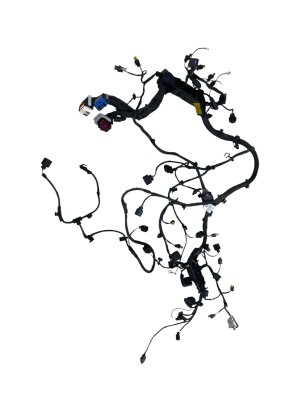
We Have This Part in Stock




The information in this article is provided for general reference and educational purposes only. Vehicle specifications, procedures, and part compatibility can vary by production date, trim level, and region. Always consult your vehicle's factory service manual and verify part numbers before purchasing or performing repairs. Safety-critical components such as airbags, seat belts, and braking systems should be installed by a qualified professional.
- Audi Q8:
- 🎬 Helpful Videos
- 🛍️ Shop This Part
- What's Unique About the 2019-2026 Audi Q8
- Diagnostic Flowchart
- Symptoms You May Notice
- Most Likely Causes
- Rare But Worth Checking
- Diagnosis Steps
- Parts You'll Likely Need
- Related Codes That Often Appear With This One
- Technical Service Bulletins (TSBs) & Recalls
- Platform-Specific Known Issues
- Mechanic-Grade Diagnostic Values
- Scan Tool Commands That Help
- Wiring & Ground Locations
- Model Year Variations Within This Range
- 🎟️ Get 5% Off