

P0328 on 2019-2025 Audi A6: Knock Sensor Circuit High Causes and Fixes
On a 2019-2025 Audi A6, code P0328 usually indicates a failed knock sensor on Bank 1 or its wiring. On the 3.0L V6, this is a labor-intensive repair as the sensor is under the turbo and intake manifold in the engine 'hot V'. For the 2.0L, it is located behind the water pump. A common related failure on the V6 is a coolant leak in the valley that floods the sensor. Expect a shop cost of $600-$1200, primarily due to extensive labor.
- P0328 on a 2019-2025 Audi A6 points to an electrical fault in the Bank 1 knock sensor circuit, not necessarily engine knock.
- The most common fix is to replace the knock sensor itself.
- Repair is expensive due to the sensor's location on both the 2.0L and 3.0L engines, requiring several hours of labor.
- Always verify the wiring is intact before condemning the sensor.
- This is not a DIY-friendly repair for beginners due to the extensive disassembly required.
What's Unique About the 2019-2025 Audi A6
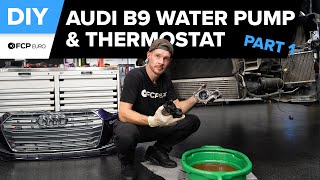
The 2019-2025 Audi A6 (C8 generation) uses either a 2.0L 4-cylinder (EA888 family) or a 3.0L V6 (EA839) engine. On the 3.0L V6, the knock sensors are located deep in the engine valley (the 'hot V'), underneath the turbocharger and intake manifold, making replacement a significant job. For the 2.0L TFSI engine, the sensor is located on the engine block, but access is blocked by the water pump 🎬 Watch: This walkthrough shows how to access the water pump area. and thermostat housing, which also requires considerable disassembly. A Technical Service Bulletin (TSB_2081342_1) was issued for the V6 model specifically mentioning this code in relation to a 'Drive System Malfunction', confirming it's a known issue to the manufacturer.
Diagnostic Flowchart
Tap your situation to follow the diagnostic path that matches what you're seeing on this vehicle.
Symptoms You May Notice
- Check Engine Light is on
- Reduced engine power and sluggish acceleration
- Decreased fuel economy
- Engine may run rough or hesitate, especially at low RPMs
- Audible pinging or knocking noise from the engine (less common with a circuit fault, but possible if the ECM can't compensate)
- Replacing spark plugs or ignition coils without diagnosing the P0328 code first. While these can cause performance issues, they won't resolve a knock sensor circuit fault.
- Using low-octane fuel. While poor quality fuel can cause actual engine knock, it typically won't cause a 'Circuit High' fault, which is an electrical issue.
- Replacing only the knock sensor on a 3.0L V6 without addressing an underlying coolant leak in the valley, leading to a repeat failure.
Most Likely Causes
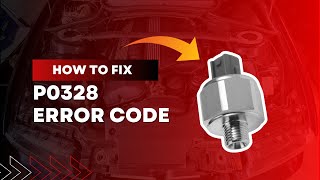
- Faulty Knock Sensor (Bank 1) 🔴 High Probability The sensor is the most frequent point of failure. 🎬 See this guide on diagnosing and fixing the P0328 code. Constant heat cycles and vibration in the engine bay can cause the internal piezoelectric element to fail or crack, resulting in an incorrect high voltage signal. 🎬 Watch: A mechanic explains common causes for high circuit input faults.
How to confirm: After verifying the wiring is intact, the most definitive test is to replace the sensor. A multimeter can be used to check for infinite resistance between the pins (a reading indicates a short), but a resistance test for a specific value is often inconclusive on piezoelectric sensors.
Typical fix: Replace the Bank 1 knock sensor. On the 3.0L V6, Bank 1 is the passenger side (right side). On the 2.0L I4, there is only one bank. It is highly recommended to replace both sensors on the V6 at the same time due to the labor involved.
Est. part cost: $50-$150 - Wiring Harness or Connector Damage 🟡 Medium Probability The engine bay environment can cause wiring to become brittle or connectors to corrode. On the 3.0L V6, the harness runs through the hot valley. Rodents are also known to chew on soy-based wiring insulation used in modern cars. An open circuit or a short-to-power in the signal wire will cause a 'Circuit High' fault.
How to confirm: Visually inspect the wiring harness leading to the knock sensor for any signs of melting, chafing, or corrosion. Use a multimeter to check for continuity and for a short to voltage between the ECM and the sensor connector.
Typical fix: Repair the damaged section of the wiring harness or replace the connector pigtail.
Est. part cost: $20-$60 - Coolant or Oil Leak (Primarily on 3.0L V6) 🟡 Medium Probability On the 3.0L V6, the knock sensors sit in the engine valley. A common failure is a coolant leak from the thermostat housing or the PCV/oil separator assembly, which also has coolant passages. Leaking coolant pools in the valley, submerging the knock sensors and their connectors, causing corrosion and short circuits.
How to confirm: When the intake manifold is removed for inspection, look for signs of pink/purple dried coolant residue or pooled liquid in the engine valley around the sensors. This is a very common finding during this repair.
Typical fix: Replace the leaking component (e.g., thermostat, PCV assembly) in addition to the damaged knock sensor(s) and harness connector. Thoroughly clean and dry the engine valley before reassembly.
Est. part cost: $150-$400 (for thermostat or PCV parts) - Loose or Improperly Torqued Knock Sensor ⚪ Low Probability The sensor must be torqued to a specific value to correctly 'hear' engine vibrations. If it's too loose or too tight, it can send false signals. The specified torque for Audi engines is consistently 20 Nm (15 ft-lbs), and this precision is critical. An incorrect torque value from a previous repair can be a cause.
How to confirm: This can only be checked by accessing the sensor. If the bolt is found to be loose, it's the likely cause. However, the sensor may have been damaged by the improper vibration and should still be replaced.
Typical fix: Tighten the new knock sensor to the exact manufacturer's specified torque of 20 Nm using a calibrated torque wrench. Do not use washers or grease on the mounting surface.
Est. part cost: $0
Rare But Worth Checking
- Engine Control Module (ECM) Fault: This is a rare cause. The ECM's internal circuit for processing the knock sensor signal can fail. This should only be considered after the sensor and wiring have been definitively ruled out.
Diagnosis Steps
- Read the fault codes using an OBD-II scanner to confirm P0328 is present and note any other codes, especially P0333.
- Check the freeze frame data to see the engine conditions (RPM, load, temperature) when the code was set.
- On the 3.0L V6, begin disassembly to remove the intake manifold/turbocharger. On the 2.0L, begin disassembly to access the water pump area.
- Visually inspect the knock sensor wiring harness and connector for obvious damage, corrosion, melting, or signs of rodent activity. On the 3.0L V6, specifically look for evidence of pooled or dried coolant in the engine valley.
- If wiring appears okay, disconnect the sensor and use a multimeter to test the sensor's internal resistance. Check for infinite resistance (no continuity) between the sensor's pins; any reading indicates an internal short. Note that a specific Ohm value test is often not reliable for piezoelectric sensors.
- Test the wiring circuit. Check for the correct reference voltage (typically around 5V) at the connector from the ECM with the key on, engine off. Check for continuity on the signal and ground wires back to the ECM.
- If the wiring and connector are good, the knock sensor is the most likely culprit.
- When replacing the sensor, ensure the mounting surface on the engine block is perfectly clean. Torque the new sensor to the exact manufacturer's specification (20 Nm / 15 ft-lbs). This is critical.
- Clear the codes and perform a test drive, monitoring live data to ensure the fault does not return.
Parts You'll Likely Need
- Knock Sensor
(OEM #3.0L V6: 06M905377F; 2.0L I4: 06K905377E)— This is the most common part to fail, triggering the P0328 code. Part numbers can supersede; always verify with VIN.
Trusted brands: Bosch, NTK, Genuine Audi/VW
OEM price range: $90-$160
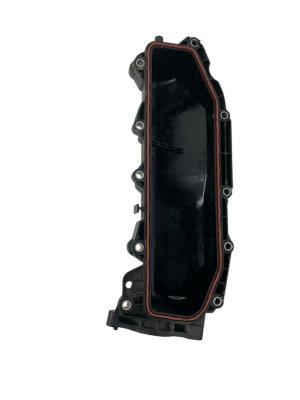
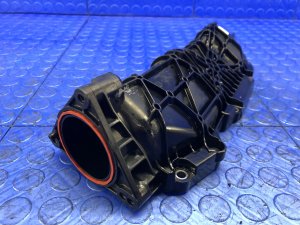
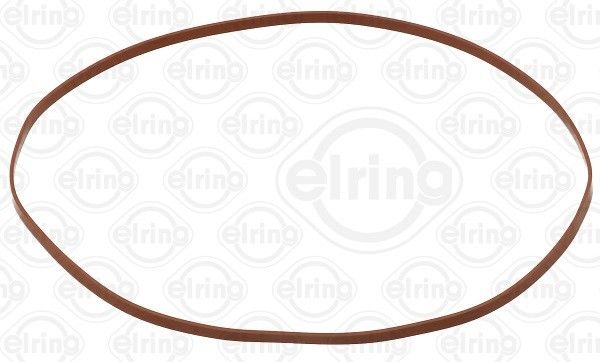
Aftermarket price range: $45-$85 - Intake Manifold Gaskets (3.0L V6) — Required for re-installing the intake manifold after accessing the sensors. These are single-use gaskets.
Trusted brands: Victor Reinz, Elring, Genuine Audi
OEM price range: $40-$70
Aftermarket price range: $20-$40 - PCV / Oil Separator Assembly (3.0L V6) — A common source of coolant leaks into the engine valley that destroys the knock sensors. It is highly recommended to replace this preventatively while the intake is off.
Trusted brands: Genuine Audi
OEM price range: $250-$400
Aftermarket price range: $150-$250
Related Codes That Often Appear With This One
- P0333 — This is the 'Circuit High' code for the Bank 2 knock sensor (on the 3.0L V6). If both P0328 and P0333 appear together, it strongly suggests a common problem like a wiring harness issue or, very commonly, a coolant leak in the engine valley flooding both sensors.
- P0327 — This is the 'Circuit Low' code for the same sensor. Seeing both intermittently could point to a frayed wire that is shorting to ground at times and open or shorting to power at other times.
- P0441, P0171, P0174 — If a failing PCV valve on the 3.0L V6 is the source of a coolant leak that damages the knock sensor, it may also trigger codes related to vacuum leaks or fuel mixture.
Technical Service Bulletins (TSBs) & Recalls
- TSB_2081342_1: Mentions DTCs P0327, P0332, P0328, and P0333 in relation to a Drive System Malfunction on V6 TFSI engines.
Platform-Specific Known Issues
- A known issue documented in TSB #TSB_2081342_1 for the V6 TFSI engine involves a 'Drive System Malfunction' that can be accompanied by knock sensor codes P0328 and P0333.
Mechanic-Grade Diagnostic Values
- Knock Sensor Circuit Voltage (Key On, Engine Off, Sensor Disconnected) — expected: Approximately 5.0 V reference from the ECM at the harness connector.. Failure: Significantly lower or no voltage may indicate a wiring or ECM issue.
- Live Data Knock Sensor Voltage (Engine Running) — expected: A low voltage signal that varies with engine RPM and load, typically well below 5V.. Failure: A static voltage signal stuck high (e.g., at or above 5V) confirms a 'Circuit High' condition.
- Knock Sensor Bolt Tightening Torque — expected: Exactly 20 Nm (15 ft-lbs).. Failure: Over-torquing can make the sensor overly sensitive, while under-torquing can prevent it from detecting knock correctly. Both can lead to fault codes.
- Knock Sensor Internal Resistance — expected: Infinite resistance (no continuity) between the pins.. Failure: Any continuity reading indicates an internal short circuit. Note: A specific Ohm value is not a reliable test for piezoelectric sensors; some new sensors will show no reading at all.
Hidden / Shadow Codes Worth Checking
- 16712/P0328/000808: This is the VAG-specific fault code for 'Knock Sensor 1 (G61): Signal too High'. G61 is the manufacturer's designation for Knock Sensor 1 (Bank 1). (see via VCDS (VAG-COM) by Ross-Tech or ODIS (dealership tool).)
Scan Tool Commands That Help
- VCDS (VAG-COM) or ODIS: Advanced Measuring Blocks — For all modern Audi models (like the A6 C8) that use the UDS/ODX protocol, this function is required to view live data from the knock sensors, as the older 'Measuring Blocks' function is not available. This allows a technician to monitor the sensor's voltage in real-time to confirm if it is stuck high.
Wiring & Ground Locations
- Main Engine Ground Strap — Typically located between the engine block and the vehicle's chassis frame rail.. A loose or corroded main engine ground can cause unstable voltage references for multiple sensors, including the knock sensor. This can lead to erratic signals and trigger faults like P0328 that are difficult to trace, as the sensor and its direct wiring may appear to be fine.
- Right Engine Compartment Ground Point — On the C7 platform, a key ground point is located on the right side of the engine compartment, near the alternator. The C8 has a similar layout.. This is a potential grounding point for the engine harness. Verifying it is clean and tight is a crucial step when diagnosing any electrical fault, including sensor circuit codes.
"I Checked Everything" — The Actual Cause
- A technician may perform all electrical checks (continuity, voltage reference) and find no issues, and even replace the sensor, but the P0328 code returns. The root cause can be that the sensor's mounting bolt was improperly torqued during a previous repair. If the bolt is too tight or too loose, the piezoelectric crystal will not resonate correctly, sending an invalid signal that the ECM interprets as a circuit fault, even though the wiring and sensor are electrically sound.
OEM Part Supersession History
06K905376, 06K905377→06K905377E— Updated design or manufacturer revision for the 2.0L TFSI (EA888) engine.
Model Year Variations Within This Range
- 2021-2025: The 2.0L TFSI engine's power was increased from 248 hp to 261 hp starting in the 2021 model year. While the physical knock sensor part number did not change, the ECM software and its sensitivity thresholds may differ slightly between the two engine versions.
- 2024-2025: A mid-cycle facelift was introduced for the 2024 model year. However, no significant changes were made to the powertrain options or the core engine architecture, so the causes and fixes for P0328 remain consistent with earlier C8 models.
Helpful Videos

Used OEM Parts in Stock



New Aftermarket Parts Available



The information in this article is provided for general reference and educational purposes only. Vehicle specifications, procedures, and part compatibility can vary by production date, trim level, and region. Always consult your vehicle's factory service manual and verify part numbers before purchasing or performing repairs. Safety-critical components such as airbags, seat belts, and braking systems should be installed by a qualified professional.
- Audi A6:
- 🎬 Helpful Videos
- 🛍️ Shop This Part
- What's Unique About the 2019-2025 Audi A6
- Diagnostic Flowchart
- Symptoms You May Notice
- Most Likely Causes
- Rare But Worth Checking
- Diagnosis Steps
- Parts You'll Likely Need
- Related Codes That Often Appear With This One
- Technical Service Bulletins (TSBs) & Recalls
- Platform-Specific Known Issues
- Mechanic-Grade Diagnostic Values
- Hidden / Shadow Codes Worth Checking
- Scan Tool Commands That Help
- Wiring & Ground Locations
- "I Checked Everything" — The Actual Cause
- OEM Part Supersession History
- Model Year Variations Within This Range
- 🎟️ Get 5% Off