

P0326 on 2012-2014 Kia Soul: Knock Sensor Fixes and Software Updates
For a 2012-2014 Kia Soul, code P0326 is frequently caused by outdated Engine Control Module (ECM) software. Before replacing parts, check with a Kia dealer to see if TSB ENG146R1 (for 2012-2013 models) or TSB ENG150 (for 2014 models) applies. This is a simple software reflash. If the software is current, the issue is likely a faulty knock sensor located under the intake manifold or its wiring.
- For a 2012-2014 Kia Soul, P0326 is most often a software issue, not a bad sensor.
- Your first step should always be to call a Kia dealer with your VIN to check for TSB ENG146R1 or TSB ENG150.
- Do not replace the knock sensor unless the ECM software update has been performed and the code still returns.
- If the sensor does need replacement, it is located under the intake manifold and is a moderately difficult DIY job.
- This code is different from P1326, which indicates a much more serious internal engine problem.
What's Unique About the 2012-2014 Kia SOUL

For this specific generation of Kia Soul and its platform mates (like the Rio and Hyundai Accent), the P0326 code is very often a software problem, not a hardware failure. Kia issued Technical Service Bulletins (TSBs) because the original engine computer software was overly sensitive and could set this code erroneously, especially under certain load conditions. This makes the first diagnostic step for a Soul owner different from other vehicles: instead of immediately inspecting the sensor, the primary step is to check the vehicle's service history for a crucial ECM update.
Diagnostic Flowchart
Tap your situation to follow the diagnostic path that matches what you're seeing on this vehicle.
Generation note: This range covers two generations. The 2012-2013 models are the first generation (AM) facelift, and the 2014 model is the start of the second generation (PS). Both generations have specific TSBs related to this code, with TSB ENG146R1 covering the 2012-2013 models and TSB ENG150 covering the 2014 model.
Symptoms You May Notice
- Check Engine Light is on
- Audible engine pinging or a rattling sound, especially during acceleration, that may quiet down at cruising speed.
- Reduced engine power and sluggish acceleration
- Hesitation or stumbling when accelerating
- Worse than usual fuel economy
- Replacing the knock sensor before checking for the ECM software update. The TSBs from Kia strongly indicate that a software reflash should be the first step, which can save the cost and labor of an unnecessary sensor replacement.
Most Likely Causes

- Outdated Engine Control Module (ECM) Software 🔴 High Probability Kia released TSBs ENG146R1 for 2012-2013 models and TSB ENG150 for 2014 models to specifically address false P0326 codes by updating the ECM logic. TSB ENG150 applies to 2014 Souls produced from August 26, 2013, through January 24, 2014. This is the most common cause and should always be the first check.
How to confirm: Contact a Kia dealership with your Vehicle Identification Number (VIN) and ask if TSB ENG146R1 or TSB ENG150 is open or has been performed. They can check the vehicle's service history.
Typical fix: A Kia dealer needs to reprogram the ECM with the updated software using their proprietary GDS/KDS tool. This is often referred to as a 'reflash' and typically costs one hour of shop labor.
Est. part cost: $0-$200 - Faulty Knock Sensor 🟡 Medium Probability Sensors can fail over time due to heat cycles and engine vibration. This is the most common hardware failure for this code after software issues are ruled out.
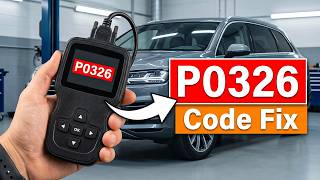
How to confirm: After confirming the ECM software is up-to-date, the sensor can be tested. A mechanic can check its resistance with a multimeter or monitor its live data with a scan tool. 🎬 Watch: How to diagnose and fix the P0326 code A failed test confirms the sensor is bad.
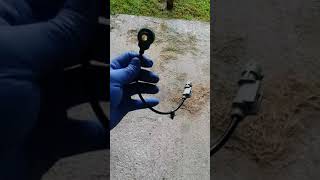
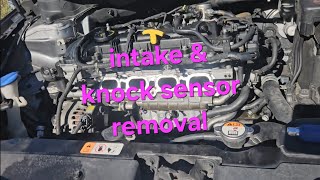
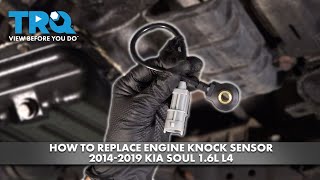
Typical fix: Replace the knock sensor. On both the 1.6L and 2.0L engines, it is located on the back of the engine block, underneath the intake manifold. 🎬 Watch: Step-by-step knock sensor replacement on a 2013 Soul This makes replacement moderately difficult as the manifold must be removed. 🎬 See how to remove the intake manifold on 2014 models The intake manifold gasket should be replaced at the same time.
Est. part cost: $30-$100 - Wiring or Connector Issue ⚪ Low Probability The wiring harness to the knock sensor can become damaged, corroded, or loose, especially given its location near engine heat and vibration. The connector itself can become brittle.
How to confirm: Visually inspect the wiring harness and connector leading to the knock sensor for any signs of breaks, melting, or corrosion. Wiggle the connector to ensure it is secure. Perform a continuity test on the wiring if visual inspection is inconclusive.
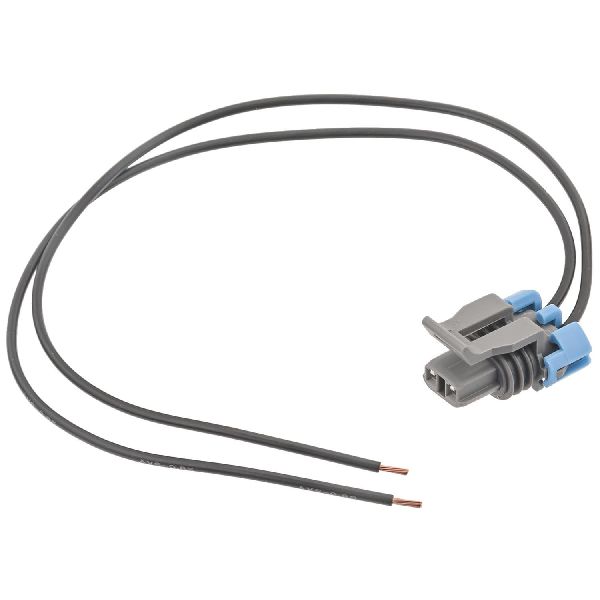
Typical fix: Repair the damaged section of wire or replace the connector pigtail. In some cases, simply cleaning a corroded connector and applying dielectric grease is sufficient.
Est. part cost: $5-$30
Rare But Worth Checking
- Internal Engine Problems: If the ECM software is updated and the knock sensor circuit is confirmed to be working, the code could be triggered by actual, severe engine knock from issues like a stretched timing chain, excessive carbon buildup, or bearing failure. This would often be accompanied by other noises and symptoms and is a more serious condition.
- Excessive Carbon Buildup on Pistons: Direct injection (GDI) engines are prone to carbon buildup. Excessive buildup can increase the compression ratio and create hot spots, leading to pre-ignition (knock) that the sensor correctly detects. This would be considered a valid, not false, P0326 code. A related TSB (ENG222) discusses cleaning procedures for these engines.
- Faulty Powertrain Control Module (PCM): It is extremely rare for the PCM itself to fail, but it is a possibility if all other causes have been exhaustively ruled out. A replacement PCM can cost over $1,500.
Diagnosis Steps
- Verify the problem: Read the codes with an OBD-II scanner to confirm P0326 is present.
- Check for TSBs: Call a Kia dealership with your VIN. Ask if TSB ENG146R1 (for 2012-2013 models) or TSB ENG150 (for 2014 models) is open for your vehicle. If it is, have the ECM reprogrammed. This is the most critical and cost-effective first step.
- Clear codes and test drive: After the reflash (or if the software was already up to date), clear the code and drive the vehicle under various conditions (city, highway, acceleration) to see if it returns.
- Inspect wiring: If the code returns, perform a thorough visual inspection of the knock sensor's wiring and connector for any obvious damage, corrosion, or loose connections. The harness is routed behind the engine and can be exposed to heat.
- Test the sensor: If the wiring looks good, test the knock sensor itself. This can be done by checking its internal resistance with a multimeter against the manufacturer's specification (typically requires disconnecting the sensor).
- Check for actual knock: If the sensor and wiring test good, investigate potential causes of real engine knock, such as using low-octane fuel, excessive carbon buildup, or other mechanical engine noises.
- Replace the sensor: If the sensor is found to be faulty, replace it. This involves removing the air intake components and the intake manifold to access the sensor on the back of the engine block. Always use a new intake manifold gasket.
Parts You'll Likely Need

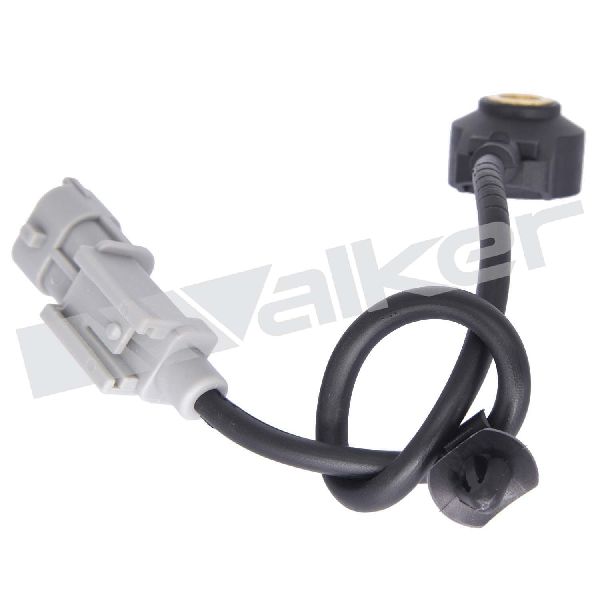
- Knock Sensor
(OEM #39250-2B000)— This is the most common hardware component to fail for this code after the more likely software issue is ruled out. It is responsible for detecting engine knock.
Trusted brands: Genuine Kia/Hyundai, Bosch, NTK, Standard Motor Products
OEM price range: $65-$100
Aftermarket price range: $30-$70 - Intake Manifold Gasket
(OEM #28411-2B600)— This gasket must be replaced when the intake manifold is removed to access and replace the knock sensor. Reusing the old gasket can cause vacuum leaks.
Trusted brands: Genuine Kia/Hyundai, Fel-Pro, Mahle
OEM price range: $15-$25
Aftermarket price range: $8-$15
Related Codes That Often Appear With This One
- P0441 — This code for 'Evaporative Emission System Incorrect Purge Flow' is mentioned alongside P0326 in Kia TSBs ENG146R1 and ENG150, indicating that the same ECM software update resolves both issues simultaneously.
- P1326 — While P0326 indicates a fault in the sensor's *circuit*, P1326 is a Kia-specific code indicating the Knock Sensor Detection System (KSDS) has detected vibrations consistent with a catastrophic engine failure (like a bad rod bearing), often putting the car in limp mode. Owners often confuse the two, but P1326 is far more serious.
Technical Service Bulletins (TSBs) & Recalls
- TSBENG146R1: ECM UPGRADE – RIO, SOUL MIL ON WITH DTC(S) P0456/P0461/P050A/P2188/P2192/P0128/P0326/P0441. This bulletin directly addresses false P0326 codes on 2012-2013 Kia Souls.
- TSBENG150: SERVICE ACTION: MIL ON WITH DTC(S) P0326/P0441(SA194). This bulletin provides an ECM software update for the 2014 Kia Soul to fix false P0326 codes.
Platform-Specific Known Issues
- A mandatory first step for the 2012-2013 Soul is checking the applicability of TSB ENG146R1, which provides an ECM software update to correct an overly sensitive knock detection logic.
- For the 2014 Soul (built between Aug 2013 and Jan 2014), TSB ENG150 provides a similar ECM software update to resolve false P0326 codes. The TSB explicitly warns against replacing parts before performing the update.
Mechanic-Grade Diagnostic Values
- Knock Sensor Reference Voltage — expected: 5 Volts. Failure: No voltage indicates a wiring or ECM problem upstream of the sensor.
- Knock Sensor Signal (Tap Test) — expected: A spike in millivolts (mV) on a multimeter or scan tool live data when the engine block near the sensor is tapped with a wrench.. Failure: No change in voltage during the tap test suggests a dead sensor.
- Knock Sensor Resistance — expected: While not specific to Kia, a general expected range is 93-100 Ohms. Another source suggests 1-3 kOhms. Always refer to the specific service manual for the vehicle.. Failure: A reading outside the specified range indicates a faulty sensor.
Scan Tool Commands That Help
- Kia GDS (Global Diagnostic System): Vehicle S/W Management — This function is used to perform the ECM software update specified in TSBs ENG146R1 and ENG150, which is the primary fix for this code.
- Kia GDS (Global Diagnostic System): Live Data / Actuation Test — Used to monitor the knock sensor signal in real-time to observe its behavior and to perform actuation tests on related engine components during diagnosis.
Wiring & Ground Locations

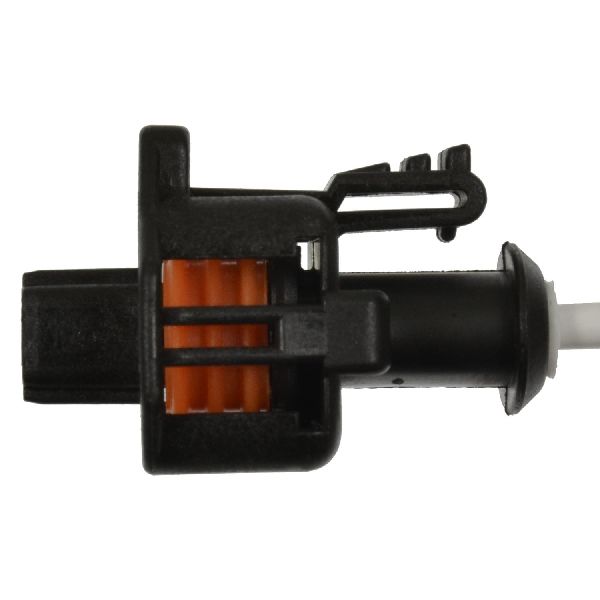
- Knock Sensor Connector — On the knock sensor itself, which is located on the back of the engine block, underneath the intake manifold.. It is a 2-pin connector that provides the signal and ground path for the sensor. It is a common point of failure due to corrosion or damage. The pigtail may look similar to the crankshaft position sensor connector.
- Engine Ground Points — General engine ground points are typically labeled 'B1', 'B2', etc., on wiring diagrams and are bolted to the engine block or chassis.. A poor engine ground can introduce electrical noise or cause voltage drops, potentially leading to an incorrect signal from the knock sensor and triggering a P0326 code.
Real Owner Repair Stories
- Reddit user post in r/AskAMechanic (2013 Kia Soul 1.6L) — Crank no start after installing a new remanufactured motor. No RPM reading on the gauge.
❌ Tried (didn't work) Replacing the crankshaft position sensor with both aftermarket and OEM parts., Replacing the crankshaft position sensor pigtail.
✅ What actually fixed it The user suspected they had swapped the crankshaft position sensor and knock sensor connectors, as they looked similar. After swapping the pigtails back to their correct sensors, the engine ran properly. - Reddit user post in r/MechanicAdvice (2013 Hyundai Accent GLS (sister platform to Soul)) — Check Engine Light on with code P0326. No audible abnormal noises.
❌ Tried (didn't work) A repair shop replaced the knock sensor.
✅ What actually fixed it The code returned a week or two after the sensor was replaced. The user was advised to investigate wiring issues or the possibility of a faulty new sensor. The thread does not have a final confirmed fix, highlighting the frustration when a simple part replacement doesn't work.
OEM Part Supersession History
39250-2B000→39250-2B000— This is the current and long-standing part number for the 1.6L engine knock sensor. No major supersessions were found, indicating a stable part design.39250-2E000→39250-2E000— This is the part number for the 2.0L engine knock sensor. It is different from the 1.6L sensor.
Heads up: This part is not interchangeable with the 1.6L engine's 39250-2B000 sensor.
Model Year Variations Within This Range
- 2012-2014: The knock sensor part number differs based on the engine. The 1.6L Gamma engine uses part number 39250-2B000, while the 2.0L Nu engine uses part number 39250-2E000. It is critical to use the correct part for the specific engine.
Helpful Videos
Used OEM Parts in Stock


New Aftermarket Parts Available


The information in this article is provided for general reference and educational purposes only. Vehicle specifications, procedures, and part compatibility can vary by production date, trim level, and region. Always consult your vehicle's factory service manual and verify part numbers before purchasing or performing repairs. Safety-critical components such as airbags, seat belts, and braking systems should be installed by a qualified professional.
- Kia SOUL:
- 🎬 Helpful Videos
- 🛍️ Shop This Part
- What's Unique About the 2012-2014 Kia SOUL
- Diagnostic Flowchart
- Symptoms You May Notice
- Most Likely Causes
- Rare But Worth Checking
- Diagnosis Steps
- Parts You'll Likely Need
- Related Codes That Often Appear With This One
- Technical Service Bulletins (TSBs) & Recalls
- Platform-Specific Known Issues
- Mechanic-Grade Diagnostic Values
- Scan Tool Commands That Help
- Wiring & Ground Locations
- Real Owner Repair Stories
- OEM Part Supersession History
- Model Year Variations Within This Range
- 🎟️ Get 5% Off