

P0326 on 2012-2014 Kia Rio: Knock Sensor Fixes and Software Updates
For a 2012-2014 Kia Rio, code P0326 is frequently caused by outdated engine computer software. Before replacing the knock sensor, check with a Kia dealer to see if your vehicle needs a free software update as specified in Technical Service Bulletins. If the software is current, the knock sensor itself or its wiring is the next likely cause.
- Your first step for a P0326 code on a 2012-2014 Rio should be to check with a Kia dealer about a software update (TSB ENG150/ENG146R1).
- Do not replace the knock sensor until you have confirmed the engine software is up-to-date, as the TSB is the most likely fix.
- If you do replace the sensor, using the correct torque on the mounting bolt is critical for it to function correctly.
- Symptoms like rattling on acceleration and sluggish performance are common with this code.
- This code is different from the more severe P1326, which indicates the engine is actively protecting itself from damage.
What's Unique About the 2012-2014 Kia RIO

For this specific generation of Kia Rio (UB) and its platform mates with the 1.6L GDI engine, the P0326 code is very often a software glitch rather than a hardware failure. Kia issued multiple Technical Service Bulletins (TSBs), including ENG150 and ENG146R1, advising that the correct first step is an ECM software upgrade to improve the computer's logic for interpreting the knock sensor signal. Many owners and even some shops mistakenly replace the sensor one or more times, as seen in NHTSA complaint #11467019 and forum discussions, without addressing the underlying software issue that is the true root cause.
🎬 Watch: How to fix a P0326 code on this RioDiagnostic Flowchart

Tap your situation to follow the diagnostic path that matches what you're seeing on this vehicle.
Symptoms You May Notice
- Check Engine Light is on
- Audible engine pinging or rattling, especially during acceleration
- Sluggish or hesitant acceleration
- Reduced fuel economy
- Engine running louder than usual
- Check engine light may be intermittent, turning off and on again over several drive cycles
- Replacing the knock sensor without first checking for required ECM software updates. The TSBs from Kia explicitly state to reprogram the ECM and not to replace parts unless the software update fails to resolve the issue.
- Confusing P0326 with P1326. P0326 is a sensor circuit performance issue, whereas P1326 is a manufacturer-specific code indicating the Knock Sensor Detection System (KSDS) has detected vibrations consistent with imminent engine failure (e.g., rod bearing wear) and will put the car in limp mode.
Most Likely Causes

- Outdated Engine Control Module (ECM) Software 🔴 High Probability Kia released TSBs ENG150 and ENG146R1 specifically to address false P0326 codes on 2012-2014 Rios by updating the ECM software logic. TSB ENG150 covers 2014 Rios produced from Oct 2013 to Jan 2014, while ENG146R1 is broader, covering 2012-2014 models.
How to confirm: A Kia dealership or a qualified shop with access to Kia's diagnostic system (GDS/KDS) can check your vehicle's current software ROM ID against the updated versions listed in the TSBs. This is a required first step before any parts are replaced.
Typical fix: Reprogramming (flashing) the ECM with the latest software version. This is typically performed by a Kia dealer and may be done at no cost under the service action.
Est. part cost: $0 - Faulty Knock Sensor 🟡 Medium Probability The sensor itself can fail over time due to heat and vibration. An owner complaint to the NHTSA (ODI #11467019) mentions replacing the sensor multiple times, highlighting it as a common, though sometimes incorrect, diagnosis. It is often replaced when the software update was the real required fix.
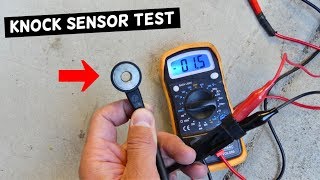
How to confirm: After confirming the ECM software is up to date, the sensor can be tested. With a multimeter set to AC millivolts, tap the engine block near the sensor with a metal tool; it should produce a small AC voltage, indicating it's generating a signal. A visual inspection for cracks or damage is also recommended. The sensor is located on the back of the engine block, under the intake manifold.
Typical fix: Replace the knock sensor. It is critical that the single mounting bolt is tightened to the correct torque specification, which is typically 13.7 – 17.4 lb-ft (18.6 - 23.5 N.m) for this engine family, as improper torque will affect its sensitivity.
Est. part cost: $35-$85 - Wiring or Connector Issue ⚪ Low Probability The wiring harness to the knock sensor can become damaged, corroded, or chewed by rodents, leading to a lost or erratic signal. One owner on YouTube found a completely severed wire at the connector was the cause of their P0326 code.
How to confirm: Visually inspect the wiring harness and connector leading to the knock sensor for any signs of damage, fraying, or corrosion. Check for continuity from the ECM connector to the sensor connector using a multimeter. A wiring diagram for the 2012 Rio indicates the knock sensor signal is a red wire at ECM pin 37, and the ground is a black wire at pin 38.
Typical fix: Repair the damaged section of wire or replace the connector pigtail.
Est. part cost: $10-$30
Rare But Worth Checking
- Internal Engine Mechanical Problems: In some cases, the P0326 code can be triggered because the sensor is correctly detecting excessive engine vibration from another problem, such as worn rod bearings, piston slap, or excessive carbon buildup. If you hear audible knocking, this should be investigated immediately.
- Faulty Engine Control Module (ECM): It is very rare for the ECM itself to fail, but it is a possibility if all other causes have been ruled out.
Diagnosis Steps
- Scan for other DTCs. If other codes are present, address them first, especially if they relate to engine misfires or timing.
- Check for TSBs: This is the most critical first step. Contact a Kia dealer with your VIN to determine if your vehicle is covered by TSB ENG150 (for 2014 models) or TSB ENG146R1 (for 2012-2014 models) for an ECM software update.
- If the software is up-to-date, perform a visual inspection of the knock sensor and its wiring harness. Look for any obvious damage, corrosion, loose connections, or rodent damage. The sensor is on the rear of the engine block, below the intake manifold. Access is from underneath the vehicle.
- Test the knock sensor. Disconnect the sensor and connect a multimeter set to AC millivolts to its two pins. Lightly tap the engine block near the sensor with a wrench. You should see a small voltage reading on the multimeter, which confirms the sensor is generating a signal.
- Check the wiring for proper continuity from the ECM to the sensor connector. A 2012 Rio wiring diagram shows the knock sensor signal wire (Red) is at pin 37 and the ground wire (Black) is at pin 38 of the ECM connector. Repair any breaks or shorts found. One owner found a severed wire right at the connector to be the culprit.
- If the sensor and wiring test good, but the code persists, investigate potential mechanical engine noises that the sensor might be detecting.
- If the sensor and wiring are good and there are no mechanical issues, replace the knock sensor. Ensure the mounting bolt is torqued to the correct specification of 13.7 – 17.4 lb. ft.
Parts You'll Likely Need
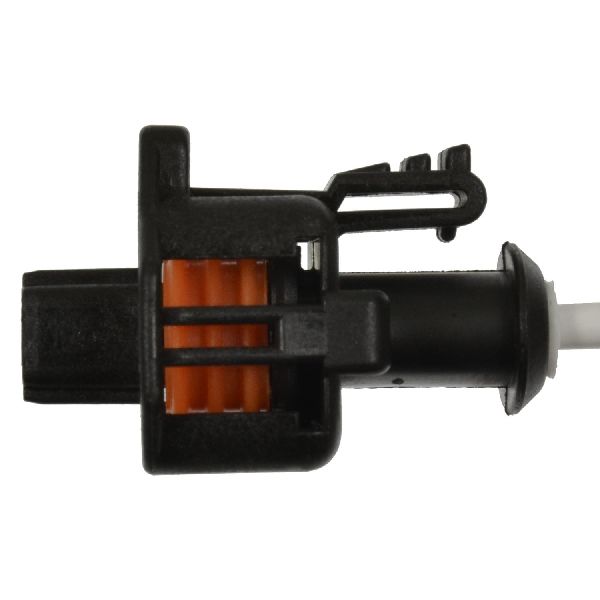
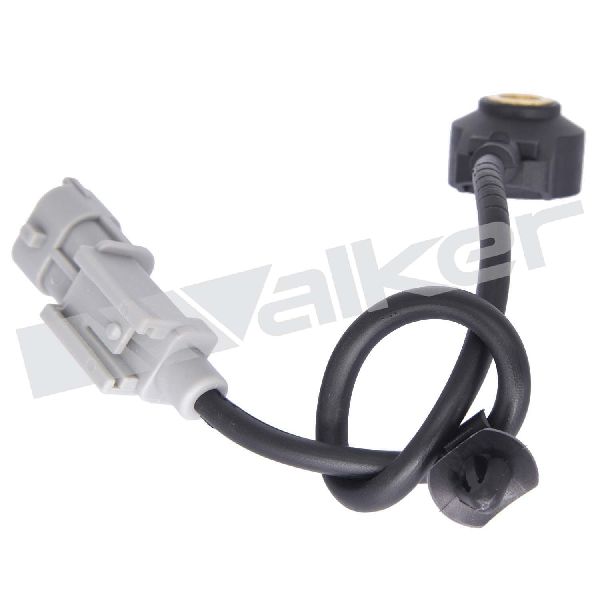
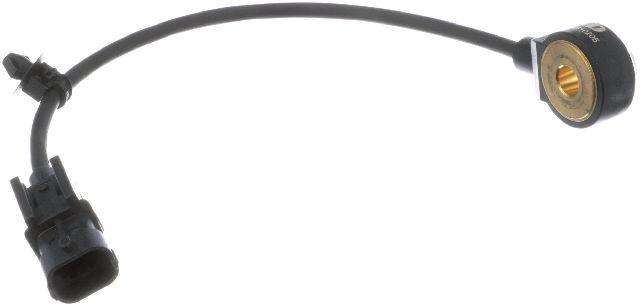
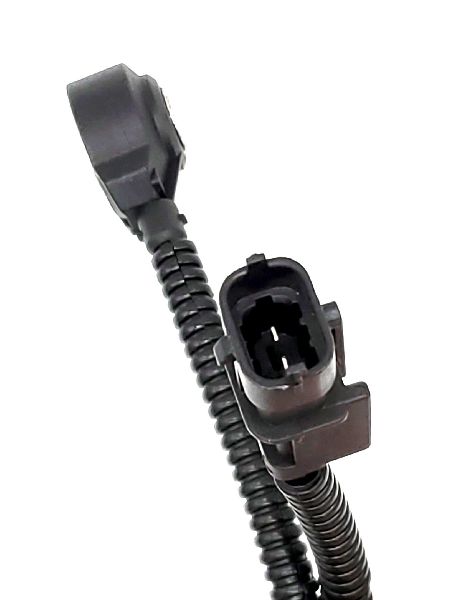
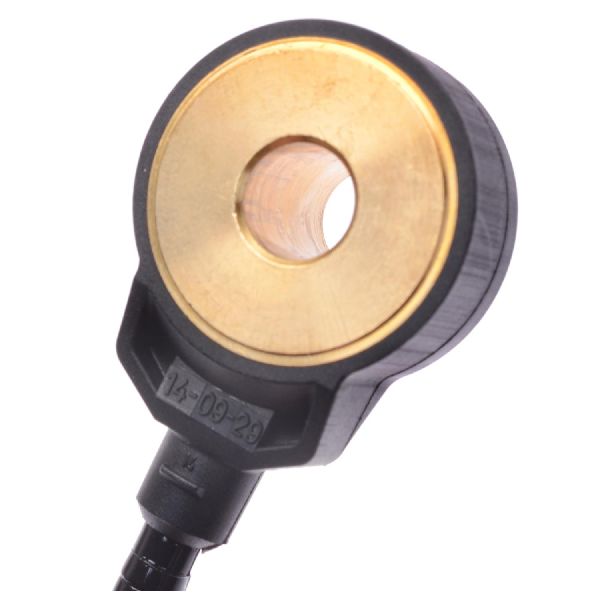
- Knock Sensor
(OEM #39250-2B000)— This is the most commonly replaced part for this code, after verifying the ECM software is current. This part number is shared across many Kia and Hyundai models with the 1.6L engine.
Trusted brands: Genuine Kia / Hyundai, Bosch, Delphi, Duralast, Standard Motor Products (SMP)
OEM price range: $68-$100
Aftermarket price range: $35-$70
Related Codes That Often Appear With This One
- P0441 — Kia TSBs ENG150 and ENG146R1 list P0326 and P0441 (Evaporative Emission System Incorrect Purge Flow) as codes that are often resolved simultaneously by the same ECM software update.
- P1326 — While P0326 indicates a problem with the sensor's circuit, P1326 is a Kia-specific code that indicates the Knock Sensor Detection System (KSDS) has detected persistent vibrations indicative of engine failure (like rod bearing wear) and has put the vehicle into limp mode. A faulty knock sensor or wiring (causing P0326) could theoretically interfere with the KSDS, but P1326 is considered far more severe.
Technical Service Bulletins (TSBs) & Recalls

- TSB ENG150: "SERVICE ACTION: MIL ON WITH DTC(S) P0326/P0441(SA194)" - For 2014 Rio models produced from Oct 1, 2013 to Jan 22, 2014. Provides an ECM software upgrade.
- TSB ENG146R1: "ECM UPGRADE – RIO, SOUL MIL ON WITH DTC(S) P0456/P0461/P050A/P2188/P2192/P0128/P0326/P0441" - A broader TSB covering 2012-2014 Rio models for an ECM upgrade to fix a list of codes, including P0326.
- PI1803Y/Z: While primarily for P1326, this TSB provides the knock sensor replacement torque spec of 13.7 – 17.4 lb. ft. for this engine family.
Platform-Specific Known Issues
- ECM Software Update: The most significant issue for the 2012-2014 Rio is the known software problem that causes the ECM to incorrectly flag the P0326 code. TSB ENG150 and TSB ENG146R1 were issued to correct this logic.
- Owner Complaint of Recurring Code: NHTSA ODI #11467019 details a 2013 Rio owner who repeatedly replaced the knock sensor for P0326, suggesting the root cause (likely the software) was not addressed, which eventually led to more severe issues.
- Intermittent Nature: Owners on forums report the P0326 code can be intermittent, sometimes clearing on its own and then returning days or weeks later, which can make diagnosis confusing.
Mechanic-Grade Diagnostic Values
- Knock Sensor Signal Wire at ECM — expected: Pin 37 (Red wire) on the ECM connector.. Failure: N/A - This is a location for testing.
- Knock Sensor Ground Wire at ECM — expected: Pin 38 (Black wire) on the ECM connector.. Failure: N/A - This is a location for testing.
- Knock Sensor AC Voltage Output (Tap Test) — expected: A small, fluctuating AC millivolt reading when tapping the engine block near the sensor.. Failure: No voltage produced when tapping indicates a dead sensor.
- Knock Sensor Resistance — expected: Varies significantly; some sources claim 4-5 MΩ, while others state modern piezoelectric sensors will not give a reliable reading and may show an open circuit even when new.. Failure: Resistance testing is not a reliable method for this type of sensor; the AC voltage tap test is preferred.
Scan Tool Commands That Help
- Kia Diagnostic System (KDS): Engine Noise Inspection (via 'Special Inspection' application) — This is a dealer-level test, primarily for the related P1326 code, to determine if the knock signal is from true engine bearing noise or from electrical signal interference. It involves using a special listening device connected to the KDS to analyze engine sounds.
Wiring & Ground Locations
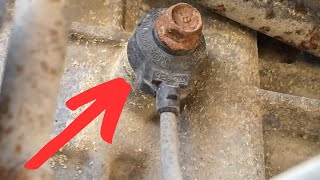
- Knock Sensor Connector — On the back of the engine block, below the intake manifold. The harness runs up toward the top of the transmission.. This connector and its wiring are a common failure point, susceptible to damage from heat and vibration. A wire can break inside the connector's boot, which may not be obvious on a visual inspection.
- 918601W200 — Passenger side of the engine compartment.. This is the part number for the main engine ground cable. A poor engine ground can cause a variety of electrical issues and floating voltages, potentially affecting sensor readings.
- 918601W120 — Driver side of the engine compartment.. This is the part number for the earth/ground cable on the driver's side. Ensuring all main grounds are clean and secure is a fundamental step in diagnosing any electrical fault.
Real Owner Repair Stories
- YouTube channel 'David okpali' (2012/2013 Kia Rio) — Check Engine Light with code P0326.
❌ Tried (didn't work) The owner initially assumed the knock sensor itself was faulty.
✅ What actually fixed it Upon inspection, the owner discovered a wire was completely cut/severed right at the knock sensor connector. Repairing the wire resolved the code.
When the Usual Fixes Don't Work
- While the most common fixes are a software update or sensor replacement, there are confirmed cases where the root cause was physical wiring damage. In one documented instance, a 2012/2013 Rio owner found a severed wire directly at the knock sensor connector, which was the true cause of the P0326 code. This highlights the importance of a thorough wiring inspection before replacing parts, even when a software issue is the most probable cause.
OEM Part Supersession History
39250-2B000→39250-2B000— No supersession found.
Heads up: This appears to be a stable part number used across a wide range of Hyundai and Kia vehicles from approximately 2010-2020. No major revisions or incompatibility issues were noted in research.
Model Year Variations Within This Range
- 2014: TSB ENG150 is specific to 2014MY Rio (UB) vehicles produced from October 01, 2013 through January 22, 2014, for a P0326/P0441 software update.
- 2012-2014: TSB ENG146R1 is a broader software update campaign covering 2012-2014 Rio models for a list of codes that includes P0326.
Helpful Videos
We Have This Part in Stock


The information in this article is provided for general reference and educational purposes only. Vehicle specifications, procedures, and part compatibility can vary by production date, trim level, and region. Always consult your vehicle's factory service manual and verify part numbers before purchasing or performing repairs. Safety-critical components such as airbags, seat belts, and braking systems should be installed by a qualified professional.
- Kia RIO:
- 🎬 Helpful Videos
- 🛍️ Shop This Part
- What's Unique About the 2012-2014 Kia RIO
- Diagnostic Flowchart
- Symptoms You May Notice
- Most Likely Causes
- Rare But Worth Checking
- Diagnosis Steps
- Parts You'll Likely Need
- Related Codes That Often Appear With This One
- Technical Service Bulletins (TSBs) & Recalls
- Platform-Specific Known Issues
- Mechanic-Grade Diagnostic Values
- Scan Tool Commands That Help
- Wiring & Ground Locations
- Real Owner Repair Stories
- When the Usual Fixes Don't Work
- OEM Part Supersession History
- Model Year Variations Within This Range
- 🎟️ Get 5% Off