

P0324 on 2014-2015 Chevrolet Spark EV: Drive Unit Noise and Bearing Failure Fixes
On a 2014-2015 Spark EV, code P0324 almost always points to a failing bearing inside the electric drive unit, causing a rattling or grinding noise often described as a 'buzzsaw'. The only official fix is a complete drive unit replacement, which is a very expensive, non-DIY repair typically covered under the 8-year/100,000-mile Voltec warranty.
- P0324 on a Spark EV is not an engine knock issue; it's a mechanical noise warning from the electric drive unit.
- The most common symptom is a rattling, grinding, or 'buzzsaw' noise from the front of the car while driving that changes pitch with speed.
- The fix is almost always a complete replacement of the electric drive unit, a major and expensive repair.
- This is not a DIY-friendly repair due to the high-voltage systems and GM parts restrictions.
- Before authorizing repairs, confirm if the vehicle is still under the 8-year/100,000-mile high-voltage component warranty.
What's Unique About the 2014-2015 Chevrolet SPARK EV
The Chevrolet Spark EV uses a traditional knock sensor, a part designed for internal combustion engines, in an unconventional way: to monitor the health of its electric drive unit. This creative engineering means a code typically associated with fuel or ignition problems is instead a sign of a severe mechanical failure in the drivetrain. The quiet nature of the electric motor makes it possible for this sensor to pick up on sounds like failing bearings, which would be masked by a gas engine's normal operation. This issue is sometimes referred to as the stator bearing 'buzzsaw' failure by owners of similar GM EVs like the Volt.
Diagnostic Flowchart
Tap your situation to follow the diagnostic path that matches what you're seeing on this vehicle.
Symptoms You May Notice
- Check Engine Light (Malfunction Indicator Lamp) is on
- Rattling, grinding, whining, or 'spark knock' type noise while driving, especially during acceleration or deceleration.
- Noise is often described by owners as a 'buzzsaw' or like 'marbles in a can', and it changes pitch with vehicle speed.
- The noise may be more pronounced during regenerative braking.
- Assuming it's a software or control module issue. While control module failures can happen, the P0324 code combined with a rattling noise on this specific vehicle almost always points to the mechanical failure of the drive unit.
- Confusing the drive unit bearing noise with a bad wheel bearing. A wheel bearing noise typically changes when turning, while the P0324 drive unit noise is more related to vehicle speed and acceleration/deceleration.
Most Likely Causes
- Failing Drive Unit Bearing(s) 🔴 High Probability This specific issue is well-documented for the 2014-2015 Spark EV and is the subject of Technical Service Bulletin #PIP5251B. The bearings inside the 1ET35 drive unit are known to fail prematurely. GM acknowledged the issue and initiated a drive unit exchange program to gather data on the failures.
How to confirm: A mechanic can use a stethoscope on the drive unit housing to confirm the noise is originating from within. The noise is the primary indicator and is very distinct. Driving the vehicle and listening for the characteristic 'buzzsaw' sound that changes with speed is the most common confirmation method.
Typical fix: The entire electric drive unit assembly must be replaced. Internal components are not serviced separately by dealerships, and the unit is part of a GM-controlled exchange program. The repair is almost always covered under the 8-year/100,000-mile Voltec powertrain warranty if the vehicle is eligible.
Est. part cost: $2000-$4500+
Rare But Worth Checking
- Faulty Knock Sensor: While it's possible for the sensor itself to fail, it is far less common than the mechanical bearing failure it is designed to detect. If there is absolutely no audible noise from the drive unit, the sensor and its wiring should be tested. A faulty sensor would be a much cheaper repair, but it is an unlikely diagnosis for this specific vehicle and code.
- Wiring or Connector Issue: Damage to the wiring harness leading to the knock sensor could cause a fault code, but this is unlikely unless the vehicle has sustained physical damage or has significant corrosion.
- Worn Engine Mounts: While not a direct cause of P0324, severely worn engine or drive unit mounts can cause excessive vibration that could potentially be misinterpreted by the knock sensor, though this is highly speculative and not a documented cause.
Diagnosis Steps
- Confirm the presence of code P0324 using an OBD-II scanner.
- Drive the vehicle to listen for a distinct rattling, whining, or grinding noise from the front of the car, consistent with the description in TSB #PIP5251B. The noise should change in pitch and intensity with vehicle speed.
- With the vehicle safely raised on a lift, have a technician use a mechanic's stethoscope to listen to the electric drive unit housing while the wheels are rotated. This can help pinpoint the noise source directly to the drive unit.
- If a loud mechanical noise is confirmed to be coming from the drive unit, the unit is faulty and requires replacement.
- Check the vehicle's age and mileage to determine if it is still covered under the 8-year/100,000-mile Voltec warranty. Most repairs for this issue are performed under warranty.
- If no abnormal noise is present, inspect the knock sensor and its electrical connector for damage or corrosion.
- If the sensor and wiring appear intact, test the sensor's function according to the manufacturer's service manual.
Parts You'll Likely Need
- Electric Drive Unit Assembly
(OEM #24269476 (original), 24279374 (possible successor))— This is the primary failure point for code P0324 on the Spark EV. The assembly contains the bearings that fail and is replaced as a single unit under a GM exchange program.
Trusted brands: ACDelco (OEM)
OEM price range: $3000-$4500
Aftermarket price range: $2000-$3500 (Used/Remanufactured)
Technical Service Bulletins (TSBs) & Recalls
- PIP5251B: Describes a condition where a Malfunction Indicator Lamp is on with DTC P0324 and a rattle or 'spark knock' type noise may be heard. This bulletin points directly to a mechanical issue within the drivetrain being interpreted as knock.
- SB-10052489-3795: Details the initial 1ET35 Drive Unit exchange program for the 2014 Spark EV, confirming that from the start, GM treated the drive unit as a single replacement assembly to gather failure data, rather than servicing internal components.
Platform-Specific Known Issues
- The 2014-2015 Spark EV is known for premature drive unit bearing failures, which produce a rattling or grinding noise. This specific problem is addressed by GM Technical Service Bulletin #PIP5251B, which directly links the noise and DTC P0324 to an internal drive unit issue.
- Owner Experience: A user on the MyChevySpark.com forums described the issue starting at 40,000 miles. The dealer confirmed P0324 and the bearing noise, and replaced the entire drive unit under the Voltec warranty. The process took several days as the part had to be ordered.
- Owner Experience: A Reddit user with a 2014 Spark EV described the sound as a 'buzzsaw' that was initially intermittent but became constant. The repair was a full drive unit replacement covered by the 8-year/100k mile warranty, and the user emphasized the importance of this warranty coverage for peace of mind.
Mechanic-Grade Diagnostic Values
- Knock Sensor Internal Resistance — expected: 93 kOhms to 107 kOhms. Failure: An open (OL) or shorted reading on a multimeter, or a value significantly outside the expected range.
- Knock Sensor AC Voltage Output (Tapping Test) — expected: A small, fluctuating AC voltage (e.g., 50mV to 1V) should be generated when tapping the drive unit housing near the sensor.. Failure: No voltage signal when tapping suggests a dead sensor or a wiring circuit issue.
- Knock Sensor Mounting Bolt Torque — expected: 11 - 18 ft-lbs (15 - 24 Nm). Failure: Over or under-torquing the sensor can alter its sensitivity, leading to false signals or a failure to detect real issues.
Scan Tool Commands That Help
- GDS2 (GM Global Diagnostic System 2): Monitor Live Data: 'Total Knock Retard' under Ignition Data. — While the Spark EV has no ignition to retard, this parameter is what the ECM uses to quantify the noise level from the knock sensor. In other GM vehicles, a reading continuously above 6.0 degrees indicates a problem. A technician would watch this data while driving or rotating the wheels on a lift to see if the value spikes in correlation with the audible noise, confirming the system is detecting the fault.
We Have This Part in Stock
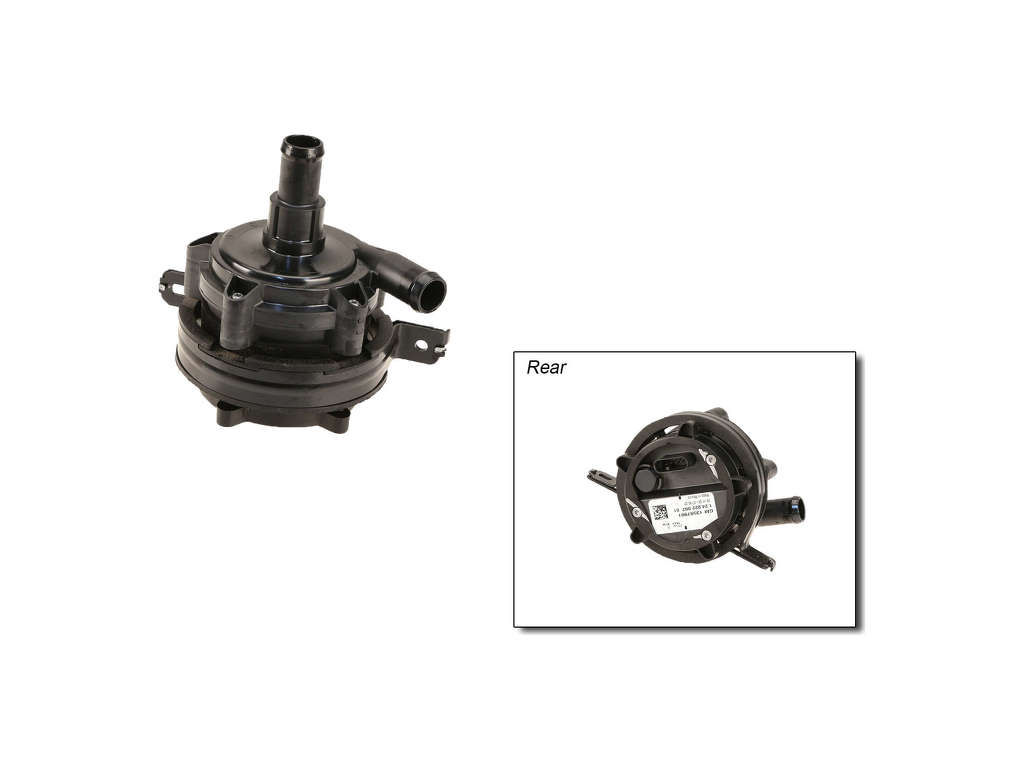

The information in this article is provided for general reference and educational purposes only. Vehicle specifications, procedures, and part compatibility can vary by production date, trim level, and region. Always consult your vehicle's factory service manual and verify part numbers before purchasing or performing repairs. Safety-critical components such as airbags, seat belts, and braking systems should be installed by a qualified professional.
- Chevrolet SPARK EV:
- 🛍️ Shop This Part
- What's Unique About the 2014-2015 Chevrolet SPARK EV
- Diagnostic Flowchart
- Symptoms You May Notice
- Most Likely Causes
- Rare But Worth Checking
- Diagnosis Steps
- Parts You'll Likely Need
- Technical Service Bulletins (TSBs) & Recalls
- Platform-Specific Known Issues
- Mechanic-Grade Diagnostic Values
- Scan Tool Commands That Help
- 🎟️ Get 5% Off