

P0324 on 2014-2017 Chevrolet Impala: Knock Control System Error Causes and Fixes
On a 2014-2017 Impala, P0324 often points to a faulty knock sensor, its wiring, or a failing water pump creating false knock signals. For the 3.6L V6, this water pump issue is a known problem documented by GM. Knock sensor replacement is an accessible DIY job on this generation, with parts costing between $30 and $75.
- P0324 is a general knock system error, not necessarily a bad sensor.
- Before replacing sensors, listen for noises from the water pump or other accessories, as this is a known issue.
- On the 2014-2017 Impala, the knock sensors are on the outside of the engine block, making replacement a feasible DIY job.
- The 2.5L I4 engine has one knock sensor, while the 3.6L V6 has two.
- Always inspect wiring and connectors for damage before buying new parts.
What's Unique About the 2014-2017 Chevrolet IMPALA
For this 10th generation Impala, the knock sensors on both the 2.5L and 3.6L engines are mounted on the exterior of the engine block, not buried under the intake manifold like in many other vehicles. This makes inspection and replacement significantly easier and cheaper. Furthermore, GM has issued a Technical Service Bulletin (TSB 21-NA-030) for the 3.6L engine family where a failing water pump can create vibrations that the PCM misinterprets as engine knock, triggering a P0324 code. This means the problem isn't always the sensor itself but can be another component creating noise. For the 2.5L engine, TSB PIP5529B notes that P0324 can be caused by loose intake manifold bolts creating a vacuum leak or unmetered air.
Diagnostic Flowchart
Tap your situation to follow the diagnostic path that matches what you're seeing on this vehicle.
Symptoms You May Notice
- Check Engine Light is on
- Reduced engine power and sluggish acceleration
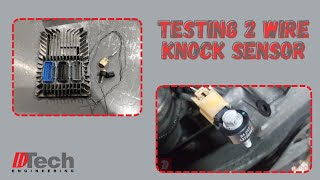
- Noticeably worse fuel economy 🎬 Watch: A breakdown of P0324 causes and common fixes.
- Engine hesitation or stumbling
- Audible engine knocking or pinging sound during acceleration (in some cases)
- Squeaking or grinding noise from the front of the engine, especially if related to the water pump
- Immediately replacing the PCM without testing the sensor and wiring first.
- Replacing the knock sensor on a 3.6L V6 without checking for external noise sources like a bad water pump or loose accessory bracket.
Most Likely Causes
- Faulty Knock Sensor(s) 🔴 High Probability Sensors can fail over time due to heat cycles and vibration. The 3.6L V6 has two sensors, doubling the chance of a failure compared to the single sensor on the 2.5L I4.
How to confirm: Test the sensor's resistance with a multimeter to see if it's within the specifications listed in the service manual (typically looking for high resistance, e.g., 90-110 kOhms, but specs vary). A visual inspection for cracks or damage is also recommended. A definitive test involves using an oscilloscope to check the signal pattern while lightly tapping the engine block near the sensor.
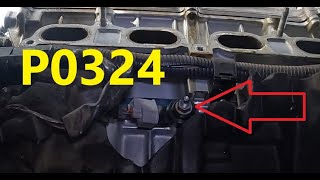
Typical fix: Replace the faulty knock sensor. On this Impala, they are located on the engine block and are relatively easy to access from underneath the vehicle. 🎬 See how to fix the knock sensor circuit on an Impala.
Est. part cost: $30-$75 per sensor - Wiring or Connector Issue 🟡 Medium Probability The wiring harness to the knock sensor is exposed to heat and potential road debris, which can cause corrosion, frayed wires, or loose connections over time.
How to confirm: Visually inspect the entire wiring harness from the sensor to the PCM. Check for brittle or melted plastic, corrosion in the connector, and use a multimeter to test for continuity and check for shorts to ground or power.
Typical fix: Repair the damaged section of the wire or replace the connector pigtail. It is highly recommended to solder and heat-shrink repairs, as simple butt connectors can alter the resistance of the circuit and cause continued issues.
Est. part cost: $10-$30 - Failing Water Pump or Other Accessory (Especially 3.6L V6) 🟡 Medium Probability A well-documented GM TSB (#21-NA-030) for the 3.6L engine family indicates that a failing water pump can create a squeaking or grinding noise that the knock sensor picks up as detonation, setting code P0324. This can also be caused by other loose or failing belt-driven accessories.
How to confirm: With the engine running, use a mechanic's stethoscope to listen for noise from the water pump or other accessories. The official GM diagnostic procedure involves monitoring knock retard values on a GDS2 scan tool, then removing the serpentine belt and running the engine briefly to see if the knock retard value disappears. If it does, the issue is an accessory.
Typical fix: Replace the failing water pump or other noisy accessory component.
Est. part cost: $100-$300 for a water pump - Loose Intake Manifold Bolts (Especially 2.5L I4) ⚪ Low Probability TSB #PIP5529B applies to the 2.5L LKW engine and lists P0324 as a potential code that can set when intake manifold bolts become loose. This can create a vacuum leak or other air metering issues that may lead to knock or system errors.
How to confirm: After ruling out other causes, inspect the intake manifold bolts to see if they can be turned easily. The TSB advises checking torque if other diagnostics for codes like P0171, P0106, and P0068 do not resolve the issue.
Typical fix: Remove one bolt at a time, apply medium-strength threadlocker, and torque all bolts to the proper specification in the correct sequence.
Est. part cost: $5-$10 for threadlocker - Faulty Powertrain Control Module (PCM) ⚪ Low Probability While rare, an internal failure in the PCM's circuitry for processing knock signals can trigger this code.
How to confirm: This is a diagnosis of exclusion. If the sensors, wiring, and all other potential causes of noise have been ruled out, the PCM is the likely culprit.
Typical fix: Replace and reprogram the Powertrain Control Module.
Est. part cost: $400-$800
Rare But Worth Checking
- Excessive Internal Engine Noise: If there is a true mechanical issue inside the engine (like a bad bearing, piston slap, or lifter noise), it can create vibrations that the knock sensor correctly reports. The PCM may set a P0324 if it cannot correct the perceived knock via timing adjustments. This would typically be accompanied by other serious symptoms and is a much more severe issue.
- Incorrect Fuel Octane: Using a lower octane fuel than recommended (especially in the 3.6L V6 which performs best on 91 octane) can lead to real engine knock. While the system is designed to compensate, severe or poor quality fuel could overwhelm its ability, potentially setting a P0324. A forum post on a similar GM vehicle noted this code appeared immediately after filling with 87 octane.
Diagnosis Steps
- Scan for all DTCs. Note if P0324 appears alone or with other codes. Pay special attention to codes listed in TSBs.
- Listen to the engine for any unusual noises. Use a stethoscope to check the water pump and other accessories for grinding or squeaking sounds, as noted in GM TSB #21-NA-030 for the 3.6L engine.
- If accessory noise is suspected (3.6L), use a scan tool to monitor knock retard. Then, carefully remove the serpentine belt and briefly run the engine. If the noise and knock retard value disappear, the issue is one of the belt-driven accessories.
- If no external noise is found, raise the vehicle and locate the knock sensor(s). The 2.5L has one; the 3.6L has two. They are on the engine block.
- Visually inspect the sensor(s) and their wiring harnesses for any signs of damage, melting, or corrosion.
- Disconnect the sensor and test its internal resistance with a multimeter. Compare the reading to the manufacturer's specification (e.g., 90-110 kOhms, but always verify).
- Test the wiring harness for continuity from the sensor connector back to the PCM. Check for shorts to ground or power. Ensure repairs are soldered, as butt connectors can fail.
- For the 2.5L engine, if other air/fuel codes are present, inspect the intake manifold bolts for proper torque per TSB PIP5529B.
- If the sensor, wiring, and accessories all test good, the final possibility is a fault within the PCM itself.
Parts You'll Likely Need
- Ignition Knock Sensor (2.5L Engine)
(OEM #12623095)— This is the most common component to fail within the knock control system. This part number fits a wide range of GM vehicles, including the 2014-2019 Impala.
Trusted brands: ACDelco, Delphi, NTK
OEM price range: $35-$60
Aftermarket price range: $25-$45 - Ignition Knock Sensor (3.6L Engine)
(OEM #12636736)— The V6 engine uses two sensors, increasing the likelihood of one failing. Note: Verify the exact part number with your vehicle's VIN, as multiple numbers may apply.
Trusted brands: ACDelco, Delphi, NTK
OEM price range: $35-$75
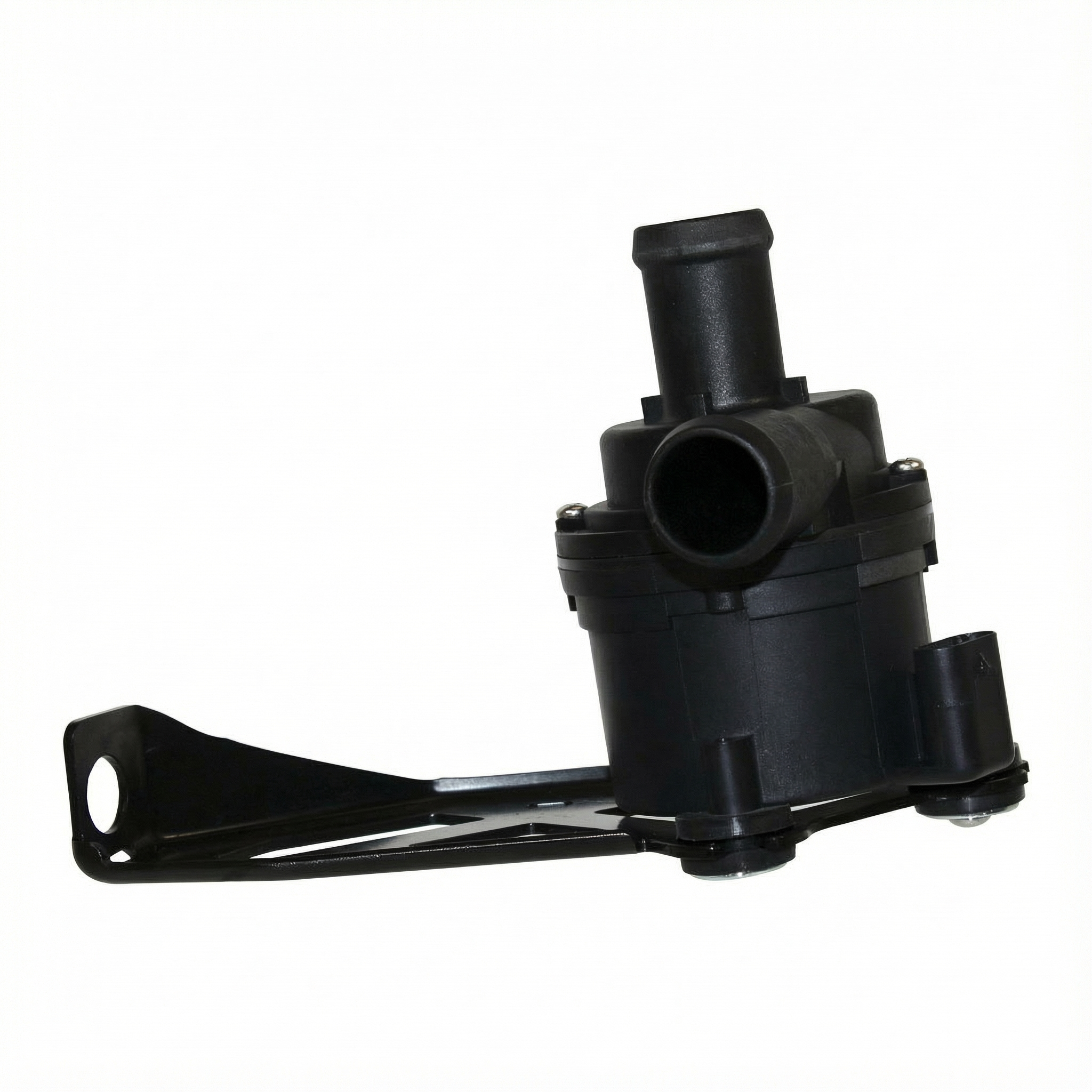
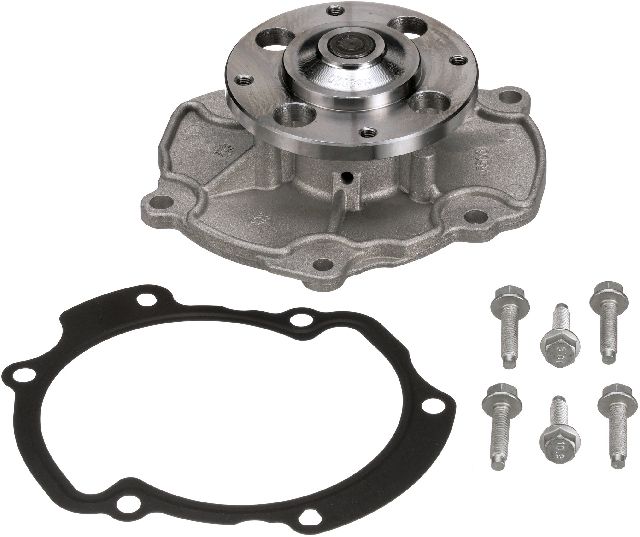
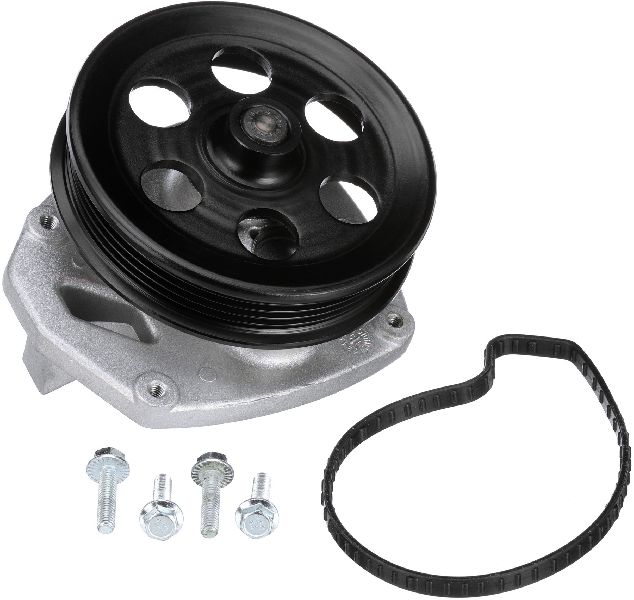
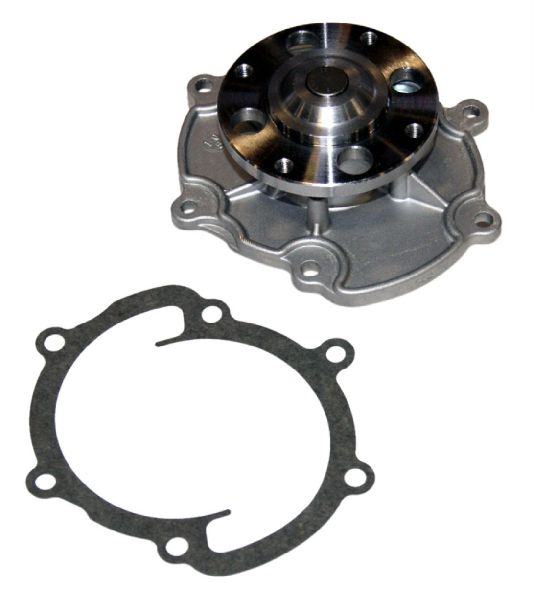
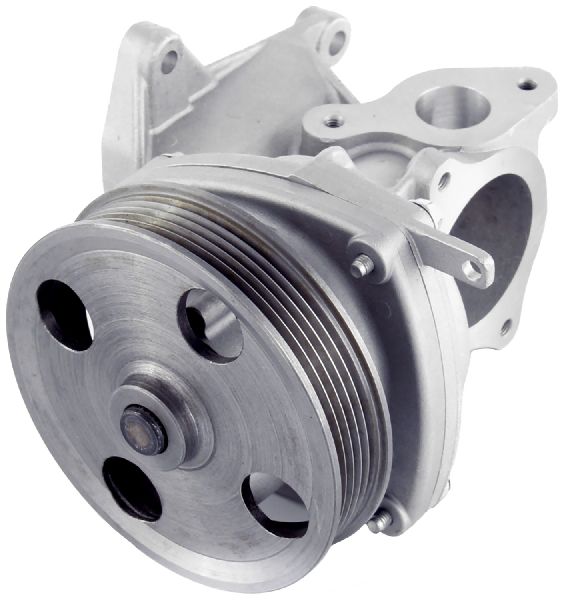
Aftermarket price range: $25-$55 - Engine Water Pump (3.6L Engine) — A failing water pump can create noise that falsely triggers the P0324 code, as documented in GM TSB 21-NA-030.
Trusted brands: ACDelco, Gates, Bosch
OEM price range: $150-$250
Aftermarket price range: $80-$160
Related Codes That Often Appear With This One
- P0326, P0327, P0331, P0332 — These are other knock sensor circuit codes. Their presence alongside P0324 can help pinpoint whether the issue is with a specific sensor bank or a more general system fault.
- P0068, P0101, P0106, P0171 — As cited in NHTSA TSB #PIP5529B for the 2.5L engine, P0324 can appear with this group of codes, suggesting a possible shared cause like loose intake manifold bolts creating an air/fuel mixture problem.
Technical Service Bulletins (TSBs) & Recalls
- PIP5529B: Notes that P0324 can be illuminated with a wide array of other DTCs on the 2.5L LKW engine. Suggests inspecting for loose intake manifold bolts as a potential root cause after other diagnostics fail.
- 21-NA-030 (replaces PIP5545C): Identifies a failing water pump as a potential cause for P0324 on many GM 3.6L engines due to the squeaking or grinding noise it creates, which is picked up by the knock sensor.
Platform-Specific Known Issues
- Water Pump Noise on 3.6L V6: A known issue on GM 3.6L engines, documented in TSB #21-NA-030, is a faulty water pump causing noise that the ECM interprets as knock, setting P0324. The diagnostic involves listening to the pump and monitoring knock retard on a scan tool with the serpentine belt on and then briefly off.
Mechanic-Grade Diagnostic Values
- Knock Sensor Internal Resistance — expected: 93 kOhms to 110 kOhms. Failure: An open circuit (infinite resistance) or a value significantly outside this range indicates a faulty sensor.
- Knock Sensor Signal Voltage (Live Data) — expected: 0.5V - 1.0V AC at idle, rising to 1.0V - 4.0V under load or when tapping the block.. Failure: A flatline signal or voltage persistently below 0.5V indicates a problem with the sensor or circuit.
- Knock Sensor Mounting Bolt Torque (3.6L LFX) — expected: 18 ft-lbs. Failure: Over-torquing can make the sensor overly sensitive and create false signals; under-torquing can prevent it from detecting real knock. Both can lead to codes returning after replacement.
- Total Knock Retard (GDS2 Scan Tool) — expected: Below 6.0 degrees during specified test conditions.. Failure: Continuously reading above 6.0 degrees for more than 5 seconds during the GDS2 test procedure indicates a detected knock issue that requires repair.
Scan Tool Commands That Help
- GDS2 (GM Dealer Tool): Monitor 'Total Knock Retard Parameter' — Used to quantify the amount of knock the ECM is detecting. A specific GM diagnostic procedure uses this value to confirm if a knock condition is actively occurring.
- GDS2 (GM Dealer Tool): Monitor 'Knock Retard' bank-to-bank — Specifically called for in TSB #21-NA-030 to diagnose false knock from a water pump. The technician removes the serpentine belt and runs the engine briefly to see if the knock retard value disappears, confirming the noise is from a belt-driven accessory.
- OBD-II Scan Tool: Clear DTCs / Reset ECU — After replacing a knock sensor or fixing a related issue, the stored P0324 code must be cleared. There is no special 'relearn' procedure required for the knock sensors themselves; the ECU will adapt timing based on the new (correct) signal after the codes are cleared.
Wiring & Ground Locations
- Knock Sensor 2 (Bank 2) - 3.6L V6 — Accessed from underneath the vehicle. It is located on the front side of the engine block (radiator side), above the oil filter and below the exhaust manifold. Removing the oil filter may be necessary for better access.. This is the physical location for inspection and replacement of the sensor for the front cylinder bank.
- Knock Sensor 1 (Bank 1) - 3.6L V6 — Located on the rear side of the engine block (firewall side), reportedly near the starter motor.. This is the physical location for inspection and replacement of the sensor for the rear cylinder bank, which is generally harder to access.
Real Owner Repair Stories
- YouTube video by 'T.I.'s Garage' (2014 Chevrolet Impala (engine not specified, but behavior is universal)) — Check engine light with knock sensor code P0325 (Bank 1 Circuit).
❌ Tried (didn't work) A different shop had already replaced the knock sensor, but the code returned.
✅ What actually fixed it Upon close inspection, a wire pin had backed out and was broken inside the sensor's electrical connector, causing an intermittent open circuit. Repairing the connector and ensuring a solid connection resolved the code. - 2CarPros Forum user 'TIJUAS' (2014 Chevrolet Impala LTZ, 3.6L V6, 170,000 miles) — Needed to replace knock sensor 2.
✅ What actually fixed it The user located the sensor underneath the car, near the oil filter, based on a provided diagram. They successfully replaced the sensor and confirmed the job was complete, resolving the issue. - YouTube video by 'ScannerDanner' (2017 GM Truck 5.3L (different vehicle, but identical P0324 cause)) — P0324 (Knock Sensor Module Performance) and an engine ticking noise.
❌ Tried (didn't work) Initial diagnosis focused on the knock control system itself.
✅ What actually fixed it The root cause was a bent pushrod in the valvetrain. The mechanical ticking noise was being correctly detected by the knock sensor, but the PCM set a P0324 because it couldn't resolve the persistent 'knock' with timing adjustments. Replacing the bent pushrod eliminated the noise and the code.
"I Checked Everything" — The Actual Cause
- The diagnostic equivalent for P0324 is when the sensor and wiring test perfectly fine with a multimeter, but the code persists. The most common cause for this on the 3.6L V6 is a failing water pump creating noise that the system misinterprets as engine knock, as documented in TSB 21-NA-030.
- Another cause is other mechanical noise, such as a bent pushrod, a failing lifter, or even a loose heat shield rattling against the engine block at a specific frequency. The knock control system is working as designed by reporting the noise, but the source is external or non-combustion related.
When the Usual Fixes Don't Work
- While replacing the knock sensor is a common fix, a significant number of P0324 cases on the 3.6L V6 are not caused by a faulty sensor at all. As documented in TSB #21-NA-030, a failing water pump is a frequent culprit. Owners who replace the knock sensor without first investigating accessory noise may find the code returns. Similarly, as shown in repair stories, a broken pin in the connector or a mechanical engine tick from a bent pushrod can also set this code, even with a brand new sensor installed.
Helpful Videos
![How to Fix P0324 Engine Code in 2 Minutes [1 DIY Method / Only $10.99]](https://img.youtube.com/vi/wkXpTfgZ7Bs/mqdefault.jpg)
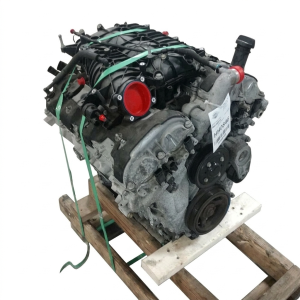
Used OEM Parts in Stock
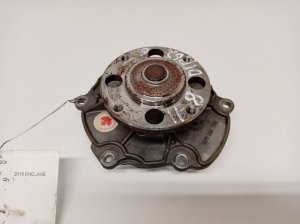

New Aftermarket Parts Available


The information in this article is provided for general reference and educational purposes only. Vehicle specifications, procedures, and part compatibility can vary by production date, trim level, and region. Always consult your vehicle's factory service manual and verify part numbers before purchasing or performing repairs. Safety-critical components such as airbags, seat belts, and braking systems should be installed by a qualified professional.
- Chevrolet IMPALA:
- 🎬 Helpful Videos
- 🛍️ Shop This Part
- What's Unique About the 2014-2017 Chevrolet IMPALA
- Diagnostic Flowchart
- Symptoms You May Notice
- Most Likely Causes
- Rare But Worth Checking
- Diagnosis Steps
- Parts You'll Likely Need
- Related Codes That Often Appear With This One
- Technical Service Bulletins (TSBs) & Recalls
- Platform-Specific Known Issues
- Mechanic-Grade Diagnostic Values
- Scan Tool Commands That Help
- Wiring & Ground Locations
- Real Owner Repair Stories
- "I Checked Everything" — The Actual Cause
- When the Usual Fixes Don't Work
- 🎟️ Get 5% Off