

P0324 on 2013-2017 Cadillac ATS: Knock Control System Error Causes and Fixes
This code indicates a general fault in the knock control system. On the Cadillac ATS, especially models with the 3.6L V6 engine, this can be triggered by a failing water pump creating vibrations that the system misinterprets as engine knock. Otherwise, common causes are a faulty knock sensor, wiring issues (including chafing on brackets), or, more rarely, noisy engine components like hydraulic lifters.
- P0324 means there's an error in the knock control system, not necessarily a bad sensor.
- On the Cadillac ATS with the 3.6L V6, a noisy, failing water pump is a very common cause for this code and should be checked first.
- If the water pump is not the cause, inspect the knock sensor wiring and connectors for damage before replacing the sensor itself.
- Driving with this code active can lead to reduced performance and, in the long term, potential engine damage if a real knock condition exists and is not being managed.
What's Unique About the 2013-2017 Cadillac ATS
For the 2013-2017 Cadillac ATS, particularly those with the 2016-2017 3.6L V6 engine (LGX), a known issue can trigger P0324 that isn't directly related to the sensor itself. A failing water pump can create noise and vibration that the knock sensor picks up, causing the ECM to believe there is an engine knock condition. This leads to a P0324 code even though the sensor and its wiring may be perfectly fine. Additionally, GM has issued technical service bulletins that group P0324 with a wide range of other engine performance codes, suggesting complex electrical issues 🎬 Watch: Understanding P0324 causes and common fixes, shared harness problems, or wire chafing can be a root cause.
Diagnostic Flowchart
Tap your situation to follow the diagnostic path that matches what you're seeing on this vehicle.
Symptoms You May Notice
- Check Engine Light is on
- Audible engine knocking or pinging, especially during acceleration
- Reduced engine power and poor acceleration
- Hesitation during acceleration
- Decreased fuel economy
- A squeaking or grinding noise from the front of the engine, which could indicate a failing water pump
- Replacing the knock sensor when the actual cause is a noisy water pump or other accessory creating vibrations.
- Replacing the knock sensor when the problem is a damaged wire or corroded connector further up the harness, particularly at a chafe point.
- Assuming there is an engine knock problem when the code is indicating a fault in the sensor's control circuit itself.
Most Likely Causes
- Failing Water Pump (especially on 3.6L V6) 🔴 High Probability A GM Technical Service Bulletin (21-NA-030) specifically identifies the water pump on 3.6L LGX engines (model years 2016-2017) as a primary cause. The noise from a failing pump bearing can be misinterpreted by the ECM as engine knock, triggering a false P0324.
How to confirm: With the engine running, use a mechanic's stethoscope to listen for grinding or whining noises from the water pump. The official GM diagnostic step is to monitor knock retard data on a scan tool (like GDS2), then remove the serpentine belt and briefly run the engine. If the knock retard value drops to zero or significantly changes, the water pump or another belt-driven accessory is the source of the noise.
Typical fix: Replace the water pump.
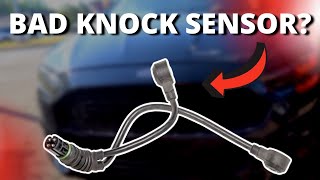
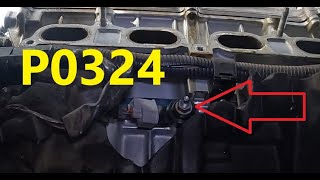
Est. part cost: $100-$300 - Faulty Knock Sensor 🟡 Medium Probability Knock sensors are sensitive piezoelectric microphones that can fail over time due to heat cycles and constant vibration. They are often located on the engine block, sometimes in difficult-to-reach areas like under the intake manifold.
How to confirm: Test the sensor's resistance and voltage output with a multimeter against the manufacturer's specifications. A visual inspection for cracks or physical damage is also recommended. A scan tool can also be used to monitor the sensor's output.
Typical fix: Replace the faulty knock sensor. Depending on the engine, there may be one or two sensors.
Est. part cost: $40-$90 per sensor - Wiring or Connector Issues 🟡 Medium Probability The wiring harness to the knock sensor is exposed to high engine temperatures, which can make wires brittle or cause connectors to become loose or corroded. TSB 21-NA-149 suggests inspecting for harness chafing against the ECM/TCM bracket or other sharp edges in the engine bay. On performance models or vehicles used on track, heat from exhaust headers can also damage the harness.
How to confirm: Visually inspect the entire circuit from the sensor to the ECM for any signs of damage, melting, corrosion, or loose connections. Pay close attention to where the harness may rub against engine or chassis components. Perform a continuity test on the wiring with a multimeter.
Typical fix: Repair the damaged section of the wiring harness or clean/replace the connector. If chafing is found, re-route and secure the harness after repair.
Est. part cost: $10-$50
Rare But Worth Checking
- Spongy Hydraulic Lash Adjusters: GM bulletin PIP5251B notes that if a vehicle has sat for a long period, hydraulic lash adjusters can bleed down and become 'spongy,' creating a ticking or rattling noise the ECM may interpret as knock, setting a P0324. The recommended fix is to verify the oil level and let the engine idle for up to an hour to allow the adjusters to prime with oil.
- Engine Control Module (ECM) Fault: This is rare, but a service manual for a similar Cadillac model notes that P0324 can indicate an internal control module circuitry failure if no external circuit issues are found. Always eliminate all other possibilities before considering ECM replacement.
- Actual Engine Mechanical Issues: Severe carbon buildup, failing rod bearings, piston slap, or a failed rocker arm can cause true engine knock that the system cannot control, leading to a P0324 code. This is usually accompanied by other serious symptoms and codes, such as misfires (P030x) or loud mechanical noises.
- Other Noisy Accessories or Components: A user on a Camaro6 forum reported getting a P0324 code after installing a jarring aftermarket suspension, raising the possibility that other non-engine vibrations could potentially be picked up by the sensitive knock sensor system.
Diagnosis Steps
- Scan for all stored DTCs. If other codes are present, especially those listed in TSBs, address them as part of the diagnosis.
- (For 3.6L V6) Listen to the water pump with a stethoscope for grinding or whining noises. Compare to a known good vehicle if possible.
- (For 3.6L V6) With a scan tool (like GM's GDS2), monitor the 'Total Knock Retard' parameter. Remove the serpentine belt and briefly run the engine (do not run for long to avoid overheating). If the knock retard value drops to zero, the water pump or another belt-driven accessory is the source of the noise and this bulletin applies.
- If the water pump is not the issue, perform a thorough visual inspection of the knock sensor(s) and their wiring harnesses. Look for melted plastic, frayed wires, or corrosion on the connector pins. Pay special attention to the area where the harness passes the ECM/TCM bracket for signs of chafing.
- Test the knock sensor itself. Disconnect it and check its internal resistance with a multimeter, comparing it to the specified range in the service manual (typically 93-107 kOhms for many GM vehicles, but always verify).
- Check the wiring circuit for continuity and ensure there are no shorts to ground or power between the sensor connector and the ECM.
- If the vehicle has been sitting for an extended period and has an audible engine tick, follow the procedure in TSB PIP5251B: let the engine idle for up to an hour to re-prime the hydraulic lash adjusters.
- If the sensor and wiring are confirmed to be good, and no external mechanical noise is present, the final step would be to investigate a potential ECM fault, which is rare.
Parts You'll Likely Need
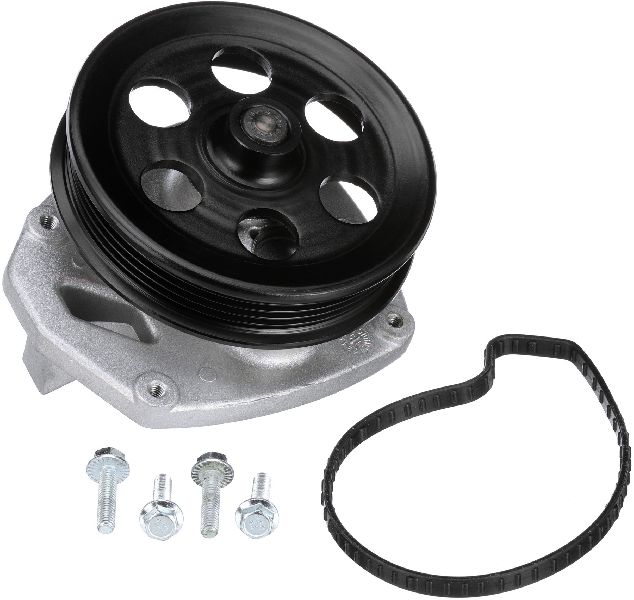
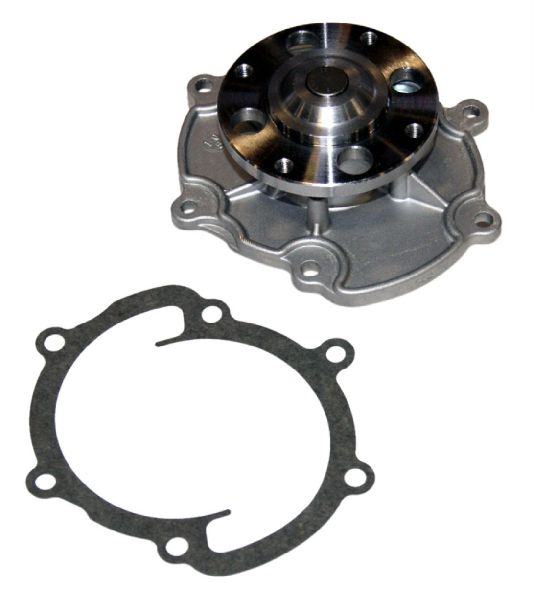
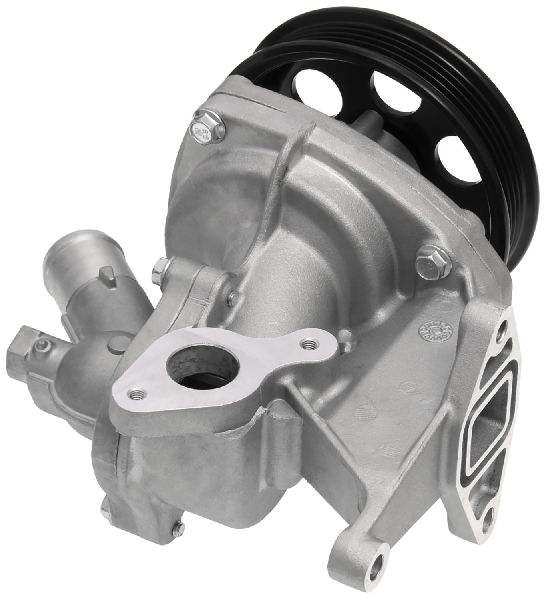
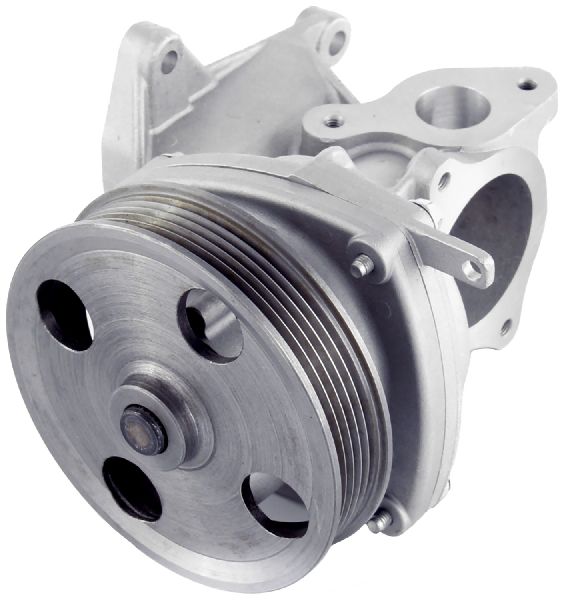
- Water Pump
(OEM #12682284 (for 3.6L LGX, verify by VIN))— A known issue on the 3.6L V6 engine where a failing pump creates vibrations that mimic engine knock, triggering code P0324. TSB 21-NA-030 specifically calls for its replacement.
Trusted brands: ACDelco (GM Genuine), Gates, GMB
OEM price range: $150-$250
Aftermarket price range: $80-$150 - Engine Knock Sensor
(OEM #e.g., 12643991 (verify by VIN and engine type))— This is the primary sensor for the system. It can fail from heat and vibration, or be damaged during other repairs.
Trusted brands: ACDelco (GM Genuine), Bosch, Delphi, NTK
OEM price range: $60-$90
Aftermarket price range: $30-$60
Related Codes That Often Appear With This One
- P0326 — This code indicates a 'Knock Sensor Performance' issue, which is closely related to the general system error of P0324. They often appear together.
- P0331 — This is the equivalent code for the second knock sensor (Bank 2). Both may appear if there's a shared issue in the wiring harness or ECM.
- P0068, P0101, P0106, P0171, P0131, P0137, P0506 — A GM Technical Service Bulletin (#PIP5529B) lists P0324 in combination with these codes, suggesting a potential widespread electrical fault, ground issue, or vacuum leak that affects multiple systems. [Bulletin #PIP5529B]
- P0300-P0306 — If a true mechanical issue like a failed rocker arm is the cause, a misfire code for the corresponding cylinder may also be present.
Technical Service Bulletins (TSBs) & Recalls
- 21-NA-030: 'Engine Noise and/or Belt Squeak, MIL Illuminated – DTC P0324 Set' - Specifically links P0324 on 2016-2019 ATS 3.6L models (and many other GM vehicles) to a failing water pump.
- PIP5529B / PIP5529A: Mentions P0324 as part of a combination of DTCs that can illuminate the malfunction indicator lamp, suggesting a broader electrical issue. [Bulletin #PIP5529B]
- 21-NA-149: 'Various Drivability Concerns, MIL Illuminated with Numerous DTCs Set' - Points to engine wire harness chafing on brackets as a potential cause for a group of codes including P0324.
- PIP5251B: 'Malfunction Indicator Lamp Illuminated With DTC P0324 And / Or Spark Knock (Detonation) Type Noise' - Describes how noise from spongy hydraulic lash adjusters after a long sit can trigger a false P0324.
Platform-Specific Known Issues
- A failing water pump on 3.6L V6 models is a documented cause for a false P0324 code, as outlined in GM TSB 21-NA-030.
- TSBs #PIP5529B and #PIP5529A indicate that P0324 can appear with a large group of other unrelated codes, pointing to a possible complex electrical issue, ground fault, or harness problem rather than a single component failure. [Bulletin #PIP5529B, Bulletin #PIP5529A]
Mechanic-Grade Diagnostic Values
- Knock Sensor Internal Resistance — expected: 93 kOhms to 107 kOhms. Failure: A reading of open (infinite resistance) or a value outside the specified range indicates a faulty sensor.
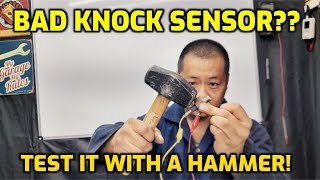
- Knock Sensor AC Voltage Output — expected: A small, fluctuating AC voltage signal when the engine block is tapped near the sensor.. Failure: No AC voltage signal or a flat line when tapping the engine block suggests the sensor's piezoelectric element is dead.
- Scan Tool 'Total Knock Retard' — expected: Should not be continuously high under normal conditions.. Failure: A value continuously above 6.0 degrees for more than 5 seconds during specific loaded RPM tests can indicate a problem the system is trying to correct.
Scan Tool Commands That Help
- GM GDS2 (Global Diagnostic System 2): Monitor 'Total Knock Retard' or 'knock re-tard bank to bank' in the engine data display. — This is the primary diagnostic step for the known water pump issue on LGX engines. After noting the baseline value, the technician removes the serpentine belt and briefly runs the engine. A significant drop in the knock retard value confirms the noise is from a belt-driven accessory (likely the water pump), not internal engine knock.
Wiring & Ground Locations
- G104 / G109 — On the front of the right cylinder head for the 3.6L V6 engine.. These are primary engine grounds. TSBs related to multiple simultaneous engine codes, including P0324 and P0326, point to a poor connection at these grounds as a potential root cause for erratic sensor readings.
- G104 (4-Cylinder) — On the lower rear of the cylinder head for 2.0L and 2.5L engines.. This is the equivalent primary engine ground for the 4-cylinder engines. A poor connection here can cause the same widespread electrical issues and false sensor codes as on the V6.
- ECM Connectors (X1, X2, X3) — Located in the right front of the engine compartment.. The knock sensor signal wires terminate at the ECM. Moisture intrusion or corrosion in these main connectors can disrupt the signal and mimic a sensor or harness fault, potentially causing a P0324 code.
OEM Part Supersession History
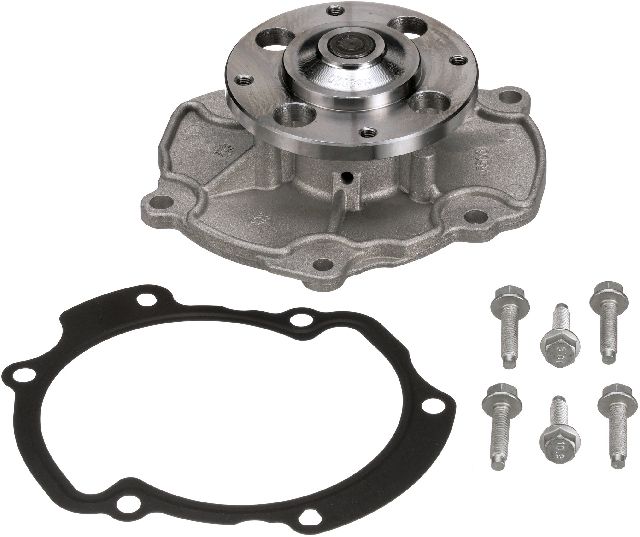
Unknown (related to PIP5545C)→Water Pump Kit 12707180 (for LGX engine)— To resolve the engine noise/belt squeak condition that causes a false P0324 code.
Heads up: This part number is specified for the 3.6L LGX and 3.6L LGZ engines and is the specific fix for the TSB.
Model Year Variations Within This Range
- 2013-2015: Models with the 3.6L V6 used the LFX engine. While still susceptible to general knock sensor issues, they are NOT covered under the specific TSB (21-NA-030) that identifies the water pump as a common cause of P0324.
- 2016-2017: Models with the 3.6L V6 used the updated LGX engine. These specific model years are included in GM TSB 21-NA-030, which explicitly states that noise from a failing water pump can be misinterpreted as engine knock, setting code P0324.
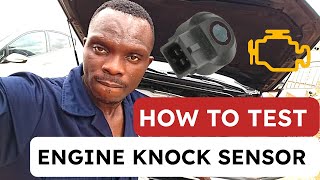
Helpful Videos
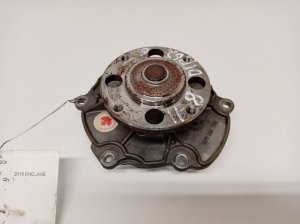
Used OEM Parts in Stock


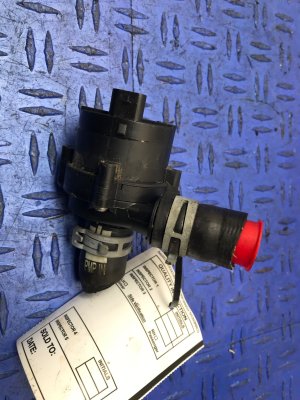
New Aftermarket Parts Available


The information in this article is provided for general reference and educational purposes only. Vehicle specifications, procedures, and part compatibility can vary by production date, trim level, and region. Always consult your vehicle's factory service manual and verify part numbers before purchasing or performing repairs. Safety-critical components such as airbags, seat belts, and braking systems should be installed by a qualified professional.
- Cadillac ATS:
- 🎬 Helpful Videos
- 🛍️ Shop This Part
- What's Unique About the 2013-2017 Cadillac ATS
- Diagnostic Flowchart
- Symptoms You May Notice
- Most Likely Causes
- Rare But Worth Checking
- Diagnosis Steps
- Parts You'll Likely Need
- Related Codes That Often Appear With This One
- Technical Service Bulletins (TSBs) & Recalls
- Platform-Specific Known Issues
- Mechanic-Grade Diagnostic Values
- Scan Tool Commands That Help
- Wiring & Ground Locations
- OEM Part Supersession History
- Model Year Variations Within This Range
- 🎟️ Get 5% Off