

OBD-II Code P0321: Ignition/Distributor Engine Speed Input Circuit Range/Performance
The Ultimate Guide to Diagnosing and Fixing P0321
- Code P0321 indicates an erratic signal from the crankshaft position sensor, disrupting the engine's ignition and fuel timing.
- Stop driving immediately; an active P0321 code causes unpredictable engine stalling and no-start conditions that leave you stranded.
- A faulty crankshaft position sensor causes up to 70% of P0321 codes, with damaged wiring and oil contamination accounting for the remaining 30%.
- Always perform a 5-minute visual inspection of the sensor's wiring harness and a live-data RPM check before spending $50-$150 on a replacement part.
- Expect to pay between $200 and $400 at an independent shop to replace the crankshaft position sensor, including parts and labor.
What Does P0321 Mean?

P0321 indicates the Powertrain Control Module (PCM) is receiving an erratic or out-of-range signal from the engine speed sensor. This sensor, usually the Crankshaft Position Sensor (CKP), tracks the precise speed and position of the crankshaft. The PCM requires this data to control ignition timing and fuel injector pulses.
Technical definition: Ignition/Distributor Engine Speed Input Circuit Range/Performance. This code sets when the Powertrain Control Module (PCM) detects that the engine speed input signal is present, but its performance or range is incorrect. The PCM compares the Crankshaft Position Sensor (CKP) signal to the Camshaft Position Sensor (CMP) signal, and triggers P0321 if they fail to correlate.
Can I Drive With P0321?
No — Do Not Drive. Do not drive with a P0321 code. The engine stalls unexpectedly, creating a severe safety risk in traffic. You also risk being stranded if the engine fails to restart, and continued driving damages the catalytic converter.
Common Causes

- Faulty Crankshaft Position Sensor (CKP) (Very Common) — This accounts for up to 70% of cases. The sensor fails from thermal stress, age, or internal electronic degradation, sending an incorrect or intermittent signal to the PCM.
- Damaged Wiring or Connectors (Common) — The wiring harness to the CKP sensor frays, melts against the exhaust, or corrodes at the connector. This disrupts the signal path and causes about 20% of P0321 faults.
- Sensor Contamination (Oil/Debris) (Common) — The magnetic tip of the CKP sensor accumulates metallic shavings from engine wear. Engine oil leaks also contaminate the sensor and its electrical connector, blocking the signal.
- Damaged Reluctor Wheel (Tone Ring) (Less Common) — The CKP sensor reads a toothed ring on the crankshaft. If this ring has broken teeth, is warped, or has excessive rust, it generates an erratic signal.
- Faulty Camshaft Position Sensor (CMP) (Less Common) — The PCM constantly compares CKP and CMP signals. A fault in the camshaft sensor creates a signal mismatch that the PCM interprets as a crankshaft sensor performance issue.
- Weak Battery or Charging System Issues (Uncommon) — Low system voltage from a weak battery causes a massive voltage drop during engine cranking, disrupting the CKP signal enough to set a code.
- Mechanical Timing Issues (Rare) — A stretched timing chain or a skipped timing belt throws off the physical correlation between the crankshaft and camshaft, triggering a signal range/performance fault.
- Failing Powertrain Control Module (PCM) (Rare) — The PCM's internal driver circuit for processing the engine speed signal fails. Consider this only after definitively ruling out the sensor, wiring, and reluctor wheel.
Symptoms

- Engine Stalls or Will Not Start — The engine cranks but fails to start, or stalls unexpectedly while driving. The PCM shuts down spark and fuel because it lacks accurate engine speed data.
- Erratic Tachometer Behavior — The RPM gauge on the dashboard drops to zero intermittently or jumps around erratically, even while the vehicle maintains a steady speed.
- Rough Idle and Misfires — The engine runs unevenly, shakes, or vibrates. You feel severe hesitation or jerking during acceleration due to incorrect ignition timing.
- Reduced Engine Power and Poor Fuel Economy — The car feels sluggish and unresponsive because ignition and fuel timing are out of sync, leading to a noticeable decrease in fuel mileage.
- Hard Starting — The engine takes significantly longer than usual to start, requiring extended cranking before it finally fires up. 🎬 Watch: Diagnosing a VW Jetta that stalls with code P0321.
- Check Engine Light is On (also visible on scanner) — The PCM illuminates the malfunction indicator lamp immediately upon detecting the erratic signal.
Diagnostic Flowchart
Tap your situation to follow the diagnostic path that matches what you're seeing on this code.
Common Fixes & Costs
- Replace Crankshaft Position Sensor — Parts: $50-$150, Labor: $150-$250, ~1.5 hr book time (Intermediate)
- Repair Wiring or Replace Connector Pigtail — Parts: $10-$50, Labor: $100-$250, ~1.5 hr book time (Intermediate)
- Clean Sensor and/or Reluctor Ring — Parts: $10, Labor: $75-$150, ~0.8 hr book time (DIY)
- Replace Camshaft Position Sensor — Parts: $40-$120, Labor: $100-$200, ~1.2 hr book time (DIY)
- Perform PCM Software Update — Parts: $0, Labor: $150-$200, ~1 hr book time (Professional)
- Replace Powertrain Control Module (PCM) — Parts: $500-$900, Labor: $150-$300, ~2 hr book time (Professional)
Used vs. New Parts: Buying Guide
When a used part is worth it: Never. Crankshaft Position Sensors are inexpensive electronic components that fail due to age and heat cycles. A used sensor guarantees premature failure.
Donor quality checklist:
- Avoid used electronic sensors entirely.
- Choose a reputable OEM brand (Bosch, Denso, NTK) over the cheapest aftermarket option.
Decision logic:
- If The part is a Crankshaft Position Sensor → Always buy new from an OEM or reputable aftermarket source.
- If The vehicle is over 10 years old → A quality aftermarket part offers the best balance of cost and reliability.
- If The vehicle is under warranty or a newer model → Use an OEM part to ensure perfect compatibility and avoid warranty issues.
Warranty tradeoff: Used parts: No warranty. Aftermarket new: 1-year to limited lifetime warranty. OEM new: 1-2 year warranty.
Worst-case if a used part fails: $200-$500 if a cheap aftermarket sensor fails shortly after installation, requiring repeat labor costs.
What Happens If You Wait — Timeline
- 0-1 month: Code is set, Check Engine Light illuminates. You experience occasional hard starting or a brief, intermittent stumble while driving. (MPG impact: 0-2%% · Added cost: $0)
- 1-3 months: Engine stalls intermittently, especially when hot or coming to a stop. Rough idle and noticeable hesitation during acceleration occur daily. (MPG impact: 3-8%% · Added cost: $50-$100 in wasted fuel.)
- 3-6 months: The vehicle becomes unreliable. Stalling is frequent, and no-start conditions leave you stranded. Incorrect timing causes severe misfires, sending unburnt fuel into the exhaust and overheating the catalytic converter. (MPG impact: 10-15%% · Added cost: $1000-$2500 (catalytic converter damage))
- 6+ months: Continued driving melts or clogs the catalytic converter (triggering P0420). The engine loses significant power due to exhaust blockage, risking internal engine damage. (MPG impact: 15-25%+% · Added cost: $1500-$4000+ (guaranteed catalytic converter replacement and potential engine harm))
Cost of Not Fixing It
- Immediate: Unpredictable stalling, no-start conditions, and a 5-15% drop in fuel economy. (Added cost: Negligible, besides fuel cost and towing risk.)
- 1-3 months: Ongoing misfires from incorrect timing overheat the catalytic converter, causing internal damage. (Added cost: $1000-$3000)
- 6+ months: A completely melted catalytic converter causes severe exhaust blockages that damage internal engine components. (Added cost: $1200-$4000+)
Diagnosis Steps

- Scan for Codes and Review Freeze Frame Data
Connect an OBD-II scanner to confirm P0321. Note any other codes, especially P0322 or camshaft codes (P0340-series). Review the freeze frame data to see the exact engine RPM and temperature when the code set.
Tools: OBD-II Scanner (Beginner) - Check for Technical Service Bulletins (TSBs)
Search online for TSBs related to P0321 for your specific vehicle. Manufacturers release bulletins for known issues, providing direct fixes like software updates or specific wiring repairs.
Tools: Smartphone or Computer (Beginner) - Perform a Detailed Visual Inspection
Locate the Crankshaft Position Sensor (CKP). Inspect its wiring harness for melting, chafing, or rodent damage. Check the connector for corrosion (green/white powder), bent pins, or oil contamination.
Tools: Flashlight, Inspection mirror (Beginner) - Pro Tip: Perform a 'Wiggle Test'
With the engine running, carefully wiggle the wiring harness for the CKP sensor at the connector and along its length. If the engine stumbles or the tachometer drops, you have a broken wire or loose connection.
Tools: Hands, Helper (Intermediate) - Advanced Test: Check Live Data RPM
Connect a scan tool and monitor the Engine RPM PID while a helper cranks the engine. A healthy sensor generates 100-500 RPM. A reading of 0 RPM confirms a dead sensor or broken wire. An erratic reading confirms a performance issue.
Tools: OBD-II Scan Tool with Live Data (Intermediate) - Test the Battery and Charging System
Verify the battery has at least 12.4 volts with the engine off and the alternator charges between 13.5 and 14.5 volts with the engine running. A weak battery causes erroneous codes during cranking.
Tools: Multimeter (Beginner) - Test the Sensor's Circuit at the Connector
Disconnect the sensor. For a three-wire Hall-effect sensor, check for a 5V or 12V reference voltage, a solid ground, and a signal wire. Missing voltage or ground points to a wiring or PCM issue, not a bad sensor.
Tools: Multimeter, Vehicle-specific repair manual (Intermediate) - Advanced Test: Measure Sensor Resistance (2-Wire Inductive Sensors)
For 2-wire sensors, measure the resistance between the two pins. Compare your reading to the manufacturer's specification (typically 200-2000 Ω). Zero ohms indicates a short; an infinite (OL) reading indicates an open circuit.
Tools: Multimeter, Vehicle-specific repair manual (Advanced) - Advanced Test: Measure AC Voltage Output (2-Wire Inductive Sensors)
Set your multimeter to low AC Volts. Back-probe the two wires and have a helper crank the engine. You should see a fluctuating AC voltage between 0.2V and 1.5V. No voltage indicates a failed sensor.
Tools: Multimeter with AC Volts, Back-probe kit (Advanced) - Pro Tip: Analyze the Sensor's Live Signal (Oscilloscope)
Back-probe the signal wire with an oscilloscope. A Hall-effect sensor produces a clean square wave (0V to 5V/12V). A magnetic sensor produces a sine wave. Gaps or noise indicate a faulty sensor or damaged reluctor wheel.
Tools: Oscilloscope, Back-probe kit (Advanced) - Inspect the Reluctor Wheel
Remove the sensor and use a flashlight to inspect the toothed ring inside the engine block. Look for missing teeth, severe rust, or wobbling as you turn the engine slowly by hand.
Tools: Basic socket/wrench set, Flashlight (Advanced)
When This Code Triggers (Freeze-Frame Conditions)
- Engine Coolant Temp: 180-210°F (Fully warmed up)
- RPM: 1500-3000 RPM (Steady cruise or light acceleration)
- Engine Load: 25-60% (Maintaining speed on a flat road or slight incline)
- Vehicle Speed: 40-65 mph (Highway or arterial road driving)
Related Codes
- P0320 — P0320 indicates a general electrical malfunction in the circuit (short or open). P0321 specifies a 'Range/Performance' problem, meaning a signal is present but erratic.
- P0322 — P0322 means 'No Signal' is received. P0321 means an erratic signal is received. Seeing both confirms the sensor is failing intermittently.
- P0335 — P0335 is the generic code for a Crankshaft Position Sensor circuit malfunction. P0321 is the performance-specific version. They frequently appear together.
- P0300-P0308 — These are cylinder misfire codes. An erratic crankshaft sensor signal directly causes misfires by preventing the PCM from correctly timing ignition spark.
Climate & Environmental Factors
- Heat Cycling: Constant expansion and contraction from engine heat degrades the sensor's internal circuitry. This causes 'heat soak' failures, where the engine stalls when hot but restarts after cooling down.
- Cold Weather: Extreme cold makes aging wiring harnesses and plastic connectors brittle, causing them to snap or crack when disturbed during maintenance.
- Humidity and Moisture: High humidity accelerates corrosion on exposed connector pins or within a damaged wiring harness, destroying signal quality.
How to Talk to a Mechanic About This Code
Say this: "I have a P0321 code and the car is stalling intermittently. I'd like to book a diagnostic appointment. Based on my research, the most likely causes are the crankshaft position sensor or its wiring. Please start by testing the sensor and checking the harness for damage before recommending other parts."
This signals you are an informed customer. It directs the technician to the most probable causes first, preventing expensive 'shotgun' diagnostics.
Avoid saying:
- 'My check engine light is on, can you just fix it?' (Invites a broad, expensive diagnostic process.)
- 'My car is acting weird, I think it's the computer.' (Jumping to conclusions about the most expensive part is a costly mistake.)
- 'Just do whatever you think is best.' (Gives the shop a blank check.)
Questions to ask before authorizing the repair:
- Did you test the crankshaft sensor's signal with a multimeter or oscilloscope? What were the readings?
- Did you perform a 'wiggle test' on the wiring harness to check for intermittent shorts?
- Is the new part OEM or a quality aftermarket brand, and what is the warranty?
- Does my vehicle require a 'crankshaft variation relearn' procedure, and is that included in the quote?
Where to Take It: Dealer vs Independent vs Chain
- Dealer:
Best for: Vehicles still under a powertrain warranty., Complex cases requiring a PCM software update., Repairs requiring a 'crankshaft variation relearn' procedure.
Downsides: Significantly higher labor rates (1.5-2x) compared to independent shops., Defaults to replacing expensive wiring harnesses rather than repairing them. (Typical cost: +50% vs. baseline) - Independent Shop:
Best fit for most scenarios. P0321 is a common code, and any competent independent shop has extensive experience diagnosing it.
Best for: Most out-of-warranty vehicles., Straightforward sensor replacements and wiring diagnostics.
Downsides: Quality varies widely; ensure the shop employs ASE-certified technicians., May lack the specific scan tools for brand-specific relearn procedures. (Typical cost: +0% vs. baseline) - Chain Shop:
Use with caution. Acceptable for a confirmed bad sensor swap, but avoid for initial diagnosis of an intermittent P0321.
Best for: If you are certain it's only a sensor replacement and the location is easily accessible.
Downsides: Technician skill is inconsistent., Lacks advanced diagnostic tools (like oscilloscopes) for tricky wiring issues., High pressure to upsell services. (Typical cost: -10% vs. baseline)
When to Walk Away From the Repair
If the total estimated repair cost for the P0321 fault exceeds 50% of your car's current private-party market value, seriously consider selling the car as-is.
- Car worth $4000, fix is $350: Fix it. This is a standard repair cost and is well below the threshold.
- Car worth $3000, fix is $1600: Walk away. The repair cost is over half the car's value, indicating a rare timing or PCM issue that isn't worth fixing.
- Car worth $8000, fix is $2200: Borderline. This repair is significant. Get a second opinion to confirm the diagnosis before proceeding.
What Scan Tool You Need for This Code

Minimum: A scanner that reads and graphs live data, specifically the Engine RPM (PID 0C). This is crucial to see if the signal drops out while the engine runs.
A basic $20 code reader only shows the P0321 code. It cannot display live RPM data, which is the most important diagnostic step to confirm a failing sensor.
Budget: BlueDriver Pro or Ancel BD310 (~$90) — These Bluetooth scanners connect to a smartphone app and graph live Engine RPM data. This is sufficient for a DIYer to confirm a failing sensor or wiring issue.
Mid-range: Foxwell NT604 Elite or Innova 5610 (~$140) — These handheld units offer robust live data graphing. The Innova 5610 offers bidirectional control to perform a 'Crankshaft Variation Relearn' required for GM vehicles.
Professional: Autel MaxiCOM MK808S or XTOOL D7 (~$450-500) — These professional tablets provide full bidirectional control for relearn procedures on all makes. They save and playback live data streams to catch intermittent dropouts.
Rent vs buy: Buy a budget scanner (~$90). The ability to watch live data is essential for P0321 and highly useful for future diagnostics.
How to Clear the Code After You Fix It
- Use an OBD-II scan tool to erase the P0321 code.
- Ensure the fuel tank is between 1/4 and 3/4 full.
- Perform a complete drive cycle to allow readiness monitors to run.
Drive cycle (~20 minutes): Start the engine cold and idle for 3 minutes. Drive in stop-and-go traffic for 5 minutes. Drive at a steady speed between 40-60 mph for 15 minutes. Let the vehicle cool down completely.
Readiness monitors affected: Misfire Monitor, Comprehensive Component Monitor (CCM), Catalyst Monitor, Oxygen (O2) Sensor Monitor
Before emissions retest: drive at least 50 miles to fully set monitors.
Watch out for:
- Disconnecting the battery clears the code but resets all readiness monitors, guaranteeing an emissions test failure.
- The code returns immediately if you failed to perform a required 'relearn' procedure.
- Highway driving alone will not complete all necessary monitor self-tests.
Will This Fail Emissions / State Inspection?
Yes — this code typically fails an OBD-II emissions inspection.
- California: An active P0321 code is an automatic smog check failure. You must complete a full drive cycle to set all readiness monitors before a retest.
- New York: An illuminated Check Engine Light for P0321 results in an automatic failure of the NYS DMV emissions inspection.
- Texas: In the 17 counties requiring emissions testing, an active P0321 code causes an automatic OBD-II inspection failure.
Most Commonly Affected Vehicles
- Volkswagen Jetta, Golf, Beetle, Passat (2000-2015) — Extremely common. VW refers to the CKP as the Engine Speed Sensor (G28). On the 1.8T engine, the sensor is located near the oil filter housing and is easily damaged.
- Audi A4, A6, TT (2002-2008) — Shares platforms with VW and is prone to P0321 from a failed Engine Speed Sensor (G28). The issue frequently manifests as stalling when the engine warms up.
- Chrysler/Dodge/Jeep Grand Caravan, Ram 1500, Grand Cherokee, Wrangler (2000-2010) — P0321 frequently points to a failed crankshaft position sensor. On models like the Grand Cherokee, the sensor sits on the transmission bell housing.
- Ford F-150, Focus, Escape (2004-2014) — On the F-150 5.4L 3V engine, a damaged or shifting reluctor wheel is a known mechanical issue that sets this code, mimicking a bad sensor.
- BMW 3-Series (E46), 5-Series (E39), X5 (E53) (2000-2012) — Oil leaking from the oil filter housing gasket directly onto the sensor and its connector causes premature failure. You must fix the leak when replacing the sensor.
- Honda Accord, Civic (2003-2012) — P0321 points directly to a failing crankshaft position sensor. Aftermarket sensors cause immediate repeat failures; use an OEM part.
- Nissan Tsuru, X-Trail, Sentra, Altima (2000-2012) — On older models, the engine speed sensor is inside the distributor. On newer models, it's a standalone crankshaft sensor. Failures of either trigger P0321.
- Subaru Impreza, Forester, Outback (2005-2014) — The sensor's location on the front of the engine block makes it highly susceptible to damage from road debris and corrosion.
Manufacturer-Specific Notes
- Volkswagen/Audi: VW refers to the CKP as the 'Engine Speed Sensor (G28)'. TSB 2010461 recommends a PCM software update and installing a supplemental ground wire to fix persistent P0321 codes on 1.9L TDI engines.
- General Motors (GM): Replacing the crankshaft position sensor requires a 'Crankshaft Variation Relearn' procedure using a professional scan tool. Skipping this causes the code to return immediately.
- Chrysler/Dodge/Jeep: Older Chrysler products require a 'crank relearn' procedure after sensor replacement. The wiring harness routes near hot exhaust components, making heat damage a primary cause.
- Ford: On Triton engines (5.4L 3V), the reluctor wheel (tone ring) shifts its position on the crankshaft, causing a P0321 even with a perfect sensor. This requires significant mechanical repair.
Real Owner Stories
2003 Audi A4 3.0L - Stalling When Hot
The car ran fine initially, but revved erratically and stalled upon reaching operating temperature. It restarted only after cooling down, throwing a P0321 code.
What they tried:
- Replaced the crankshaft position sensor with a new aftermarket part.
Outcome: The problem returned immediately. The owner discovered that cheap aftermarket sensors are frequently out of spec. Installing an authentic OEM Bosch sensor permanently resolved the heat-soak stalling issue.
Lesson: If a new sensor fails to fix a heat-related stalling issue, verify you used an OEM part. Aftermarket crank sensors are notoriously unreliable.
VW TDI CJAA Engine - Intermittent Shut-off
The car intermittently shut off while driving, flashing the glow plug and check engine lights with codes P0321 and P0322.
What they tried:
- Inspected the wiring harness before attempting the difficult sensor replacement.
Outcome: The owner found the crank sensor wiring harness rubbed through on the oil pressure sensor, causing a short. Repairing the wires with sealed butt connectors and rerouting the harness completely solved the problem.
Lesson: Always perform a detailed visual inspection of the wiring loom for chafing before committing to a difficult or expensive sensor replacement.
1998 Lexus LS400 - Oil Leak at Sensor
The owner found the crankshaft position sensor covered in oily grime with a cracked plastic housing.
What they tried:
- Cleaned the sensor and patched the cracked housing with RTV sealant.
Outcome: The code returned. The actual cause was a failing main crankshaft seal forcing oil into the sensor's location. The sensor failed because it was submerged in oil.
Lesson: Oil contamination destroys sensors. If you find the sensor soaked in oil, you must repair the source of the leak (e.g., main seal) to prevent repeat failures.
2009 VW Jetta 2.5L - No-Start Condition
The car died at a traffic light and wouldn't restart, throwing a P0321 code. Turning the key produced a single click.
What they tried:
- Attempted to turn the engine over manually with a breaker bar on the main crank pulley.
Outcome: The engine was completely seized due to a catastrophic timing chain failure. The broken chain severed the correlation between the crank and cam, triggering the P0321 code right before the engine locked up.
Lesson: If you have a no-start and P0321 after a sudden shutdown, manually turn the engine by hand to rule out severe mechanical failure before buying electronic parts.
How to Prevent This Code From Triggering
- Fix Engine Oil Leaks Promptly (As soon as detected) — Oil leaking from valve cover gaskets or main seals saturates the crankshaft sensor, degrading the plastic and shorting the electrical signal.
- Inspect and Secure Wiring Harnesses (During every oil change) — Ensuring the CKP sensor harness is secured in its clips prevents chafing against hot exhaust or vibrating engine components.
- Maintain a Healthy Battery and Charging System (Test annually) — A significant voltage drop during cranking disrupts the PCM and triggers a false P0321 code even with a perfectly healthy sensor.
- Use OEM Sensors for Replacement (When replacement is needed) — Cheap aftermarket crankshaft sensors have incorrect resistance values and weak magnets, leading to immediate or premature failure.
Frequently Asked Questions
Can I drive my car with a P0321 code?
No, it is not safe to drive. The engine stalls without warning, which is dangerous in traffic. You also risk being stranded if the engine fails to restart.
How much does it cost to fix P0321?
The most common fix is replacing the crankshaft position sensor. At an independent repair shop, this typically costs between $200 and $400 including parts and labor. DIY parts cost between $50 and $150.
I replaced the crankshaft sensor, but the P0321 code came back. What now?
The issue is likely a damaged wiring harness, a corroded connector, or a contaminated reluctor wheel. You also must perform a 'crankshaft variation relearn' procedure on many GM and Chrysler vehicles after replacement.
Do I need to perform a 'relearn' procedure after replacing the crankshaft sensor?
Many manufacturers, especially General Motors and Chrysler, require a 'Crankshaft Variation Relearn' using a professional scan tool. This calibrates the PCM to the new sensor. Always check the service manual for your specific vehicle.
What's the difference between P0321 and P0322?
P0321 means the sensor's signal is erratic, noisy, or out of the expected range, but a signal is present. P0322 means the computer detects absolutely no signal.
Can a bad battery cause a P0321 code?
Yes. A weak battery causes a significant voltage drop during cranking, disrupting the sensitive signal from the crankshaft sensor and triggering a P0321 code.
Can P0321 cause transmission problems?
Yes. Modern automatic transmissions rely on engine speed data from the PCM to control shift points, so an erratic signal causes harsh or delayed shifting.
Will a P0321 code clear itself?
No. P0321 indicates a hard fault that requires diagnosis and repair. The Check Engine Light stays on until the underlying problem is fixed and the codes are cleared with a scanner.
Key Takeaways
- Code P0321 indicates an erratic signal from the crankshaft position sensor, disrupting the engine's ignition and fuel timing.
- Stop driving immediately; an active P0321 code causes unpredictable engine stalling and no-start conditions that leave you stranded.
- A faulty crankshaft position sensor causes up to 70% of P0321 codes, with damaged wiring and oil contamination accounting for the remaining 30%.
- Always perform a 5-minute visual inspection of the sensor's wiring harness and a live-data RPM check before spending $50-$150 on a replacement part.
- Expect to pay between $200 and $400 at an independent shop to replace the crankshaft position sensor, including parts and labor.
Helpful Videos


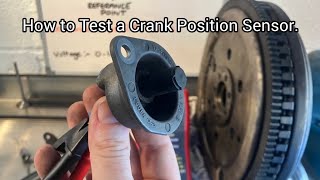
![[EN] How to test your crank shaft position sensor | Masters of Motion](https://img.youtube.com/vi/sGCV2mtAYyM/mqdefault.jpg)

The information in this article is provided for general reference and educational purposes only. Vehicle specifications, procedures, and part compatibility can vary by production date, trim level, and region. Always consult your vehicle's factory service manual and verify part numbers before purchasing or performing repairs. Safety-critical components such as airbags, seat belts, and braking systems should be installed by a qualified professional.
- 🎬 Helpful Videos
- What Does P0321 Mean?
- Can I Drive With P0321?
- Common Causes
- Symptoms
- Diagnostic Flowchart
- Common Fixes & Costs
- Used vs. New Parts: Buying Guide
- What Happens If You Wait — Timeline
- Cost of Not Fixing It
- Diagnosis Steps
- When This Code Triggers (Freeze-Frame Conditions)
- Related Codes
- Climate & Environmental Factors
- How to Talk to a Mechanic About This Code
- Where to Take It: Dealer vs Independent vs Chain
- When to Walk Away From the Repair
- What Scan Tool You Need for This Code
- How to Clear the Code After You Fix It
- Will This Fail Emissions / State Inspection?
- Most Commonly Affected Vehicles
- Manufacturer-Specific Notes
- Real Owner Stories
- 2003 Audi A4 3.0L - Stalling When Hot
- VW TDI CJAA Engine - Intermittent Shut-off
- 1998 Lexus LS400 - Oil Leak at Sensor
- 2009 VW Jetta 2.5L - No-Start Condition
- How to Prevent This Code From Triggering
- Frequently Asked Questions
- Can I drive my car with a P0321 code?
- How much does it cost to fix P0321?
- I replaced the crankshaft sensor, but the P0321 code came back. What now?
- Do I need to perform a 'relearn' procedure after replacing the crankshaft sensor?
- What's the difference between P0321 and P0322?
- Can a bad battery cause a P0321 code?
- Can P0321 cause transmission problems?
- Will a P0321 code clear itself?
- Key Takeaways
- 🎟️ Get 5% Off