

OBD-II Code P0320: Ignition/Distributor Engine Speed Input Circuit Malfunction
What P0320 means, why it triggers, and how to fix it
- P0320 means the Powertrain Control Module lost the engine speed signal, instantly disabling spark and fuel timing.
- Replacing the crankshaft position sensor (CKP) fixes P0320 in the majority of cases, costing $150 to $300 at a repair shop.
- Never replace a sensor without first using a multimeter to verify it receives a steady 5V reference and solid ground.
- Driving with P0320 causes sudden highway stalling and destroys a $1,200 catalytic converter within weeks due to raw fuel dumping.
What Does P0320 Mean?

P0320 means your car's main computer (PCM) lost the signal indicating engine speed. This signal originates from the crankshaft position sensor (CKP), camshaft position sensor (CMP), or a dedicated ignition failure sensor. Without this data, the computer cannot time the spark plugs and fuel injectors, causing immediate stalling, misfiring, or a no-start condition.
Technical definition: The SAE/OBD-II definition for P0320 is "Ignition/Distributor Engine Speed Input Circuit Malfunction." It triggers when the Powertrain Control Module (PCM) detects an erratic, intermittent, or missing electrical signal from the engine speed circuit. The PCM requires a consistent pulse; two successive erratic pulses immediately set the code.
Can I Drive With P0320?
No — Do Not Drive. Driving with P0320 causes sudden engine stalling at highway speeds, creating a severe safety hazard. Continuing to drive with misfires destroys the catalytic converter within weeks, turning a $150 sensor replacement into a $2,000 repair. Tow the vehicle or repair it immediately to avoid being stranded.
Common Causes

- Faulty Crankshaft Position (CKP) Sensor (Very Common) — The CKP sensor monitors the crankshaft's speed and position. It fails due to internal shorts, heat damage, or age, sending an erratic or non-existent signal to the PCM.
- Faulty Camshaft Position (CMP) Sensor (Common) — The CMP sensor tracks the camshaft's position. A failing CMP sensor disrupts the engine speed signal correlation check performed by the PCM, triggering P0320.
- Damaged Wiring or Connectors (Common) — Wiring harnesses become brittle, frayed, melted, or corroded from heat, vibration, and oil exposure, leading to a short or open circuit in the sensor communication lines.
- Faulty Ignition Failure Sensor (Hyundai/Kia) (Common) — Hyundai and Kia vehicles use a dedicated 'Ignition Failure Sensor' to monitor ignition coils and provide tachometer data. Its failure instantly triggers P0320 and drops the tachometer to zero.
- Weak Battery or Charging System Issues (Less Common) — A weak battery or faulty alternator causes severe voltage drops during cranking. This starves the sensors of their 5V reference, causing the PCM to incorrectly flag a P0320 code.
- Damaged Reluctor Ring (Tone Wheel) (Less Common) — Sensors read a spinning wheel with teeth called a reluctor ring. If this ring cracks, loses teeth, or accumulates metallic debris, the sensor cannot generate a clean waveform.
- Faulty Profile Ignition Pickup (PIP) Sensor (Older Fords) (Less Common) — On older Ford vehicles equipped with a distributor, this code triggers when the Profile Ignition Pickup (PIP) sensor inside the distributor fails.
- Mechanical Timing Issues (Rare) — If the timing belt or chain slips a tooth, the correlation between the crankshaft and camshaft sensors breaks. The PCM flags P0320 due to the irrational signal relationship.
- PCM Failure or Software Glitch (Rare) — The PCM's internal input driver circuit can fail, preventing it from processing a good sensor signal. Alternatively, overly sensitive PCM software requires a dealer reflash to correct false P0320 codes.
Symptoms

- Engine Stalls or Dies While Driving — The engine shuts off unexpectedly, especially when slowing down or at idle, because the PCM loses its primary timing reference.
- Engine Cranks but Will Not Start — If the PCM receives zero signal from the speed sensors, it disables the spark plugs and fuel injectors to prevent engine damage, resulting in a crank-no-start condition.
- Rough Idle and Engine Misfires — An erratic signal causes incorrect ignition and fuel timing, leading to a shaky idle, hesitation during acceleration, and a P0300 misfire code.
- Check Engine Light is On — The MIL illuminates immediately upon detecting the fault and flashes if the resulting misfires are severe enough to damage the catalytic converter.
- Erratic or Dead Tachometer (also visible on scanner) — The RPM gauge jumps wildly or drops to zero while the engine is running. On Hyundais and Kias, a dead tachometer guarantees a failed Ignition Failure Sensor.
Diagnostic Flowchart
Tap your situation to follow the diagnostic path that matches what you're seeing on this code.
Common Fixes & Costs
- Replace Crankshaft Position Sensor — Parts: $40-$120, Labor: $150-$300, ~1.5 hr book time (Intermediate)
- Replace Camshaft Position Sensor — Parts: $30-$100, Labor: $100-$200, ~0.8 hr book time (DIY)
- Repair Damaged Wiring/Connector — Parts: $10-$50, Labor: $150-$350, ~2.0 hr book time (Intermediate)
- Replace Ignition Failure Sensor (Hyundai/Kia) — Parts: $25-$70, Labor: $100-$200, ~0.7 hr book time (DIY)
- Replace Powertrain Control Module (PCM) — Parts: $200-$1000, Labor: $150-$300, ~1.5 hr book time (Professional)
DIY vs Professional
- Replace Camshaft Position Sensor — Beginner:
Tools: Basic socket set, screwdriver. - Replace Ignition Failure Sensor (Hyundai/Kia) — Beginner:
Tools: Basic socket set (10mm or 12mm sockets). - Replace Crankshaft Position Sensor — Beginner:
Tools: Long extensions, universal/swivel joints, ratcheting wrenches, flashlight. - Repair Damaged Wiring/Connector — Beginner:
Tools: Multimeter, wire strippers, soldering iron, heat shrink tubing, wiring diagram. - Replace Powertrain Control Module (PCM) — Beginner:
Tools: Basic socket set, specialized scan tool for programming.
Used vs. New Parts: Buying Guide
When a used part is worth it: Buying a used crankshaft or camshaft position sensor is never recommended. The low cost of a new part outweighs the risk of premature failure.
Donor-vehicle mileage cap: roughly under 50000 miles for the part to have meaningful remaining life.
Donor quality checklist:
- Source from a low-mileage vehicle not scrapped due to engine failure.
- Ensure the part number matches exactly.
- Avoid parts with physical damage, corrosion, or oil contamination.
Decision logic:
- If The part is a crankshaft or camshaft position sensor → Buy new. OEM is strongly preferred for reliability, especially if the sensor is difficult to access.
- If The vehicle is over 150,000 miles and budget is the primary concern → A new aftermarket sensor is an acceptable compromise over a used one.
- If The part has a known high failure rate on your specific vehicle → Invest in a new OEM part to minimize the chance of a repeat failure.
Warranty tradeoff: Used parts offer a 30-day warranty. Aftermarket new parts offer a 1-year to limited lifetime warranty. New OEM parts carry a 1-year warranty.
Worst-case if a used part fails: $300 if a used sensor fails shortly after installation, requiring a repeat of the labor costs.
What Happens If You Wait — Timeline
- 0-1 week: Check Engine Light illuminates. The vehicle experiences slightly longer crank times or a single, unexplained stall. No other consistent symptoms. (MPG impact: 0-2%% · Added cost: $0)
- 1 week - 1 month: Engine stalls intermittently when coming to a stop. Noticeable hesitation occurs during acceleration, and the tachometer becomes erratic. (MPG impact: 3-8%% · Added cost: $150 (Towing bill from being stranded))
- 1-3 months: Stalling becomes frequent and dangerous. The engine runs rough constantly due to severe misfiring. The rich fuel mixture begins overheating the catalytic converter. (MPG impact: 10-15%% · Added cost: $100 in wasted fuel, high risk of catalytic converter damage.)
- 3+ months: The catalytic converter melts internally from raw fuel exposure, triggering P0420. The vehicle is barely drivable and requires a complete exhaust replacement. (MPG impact: 15-25%+% · Added cost: $1200-$2800 (Catalytic converter replacement))
Cost of Not Fixing It
- Immediate: High risk of engine stalling in traffic, leading to a dangerous situation and a towing bill. (Added cost: $150)
- 0-1 month: Continued misfiring dumps raw fuel into the exhaust, overheating and melting the catalytic converter. (Added cost: $1200-$2800)
- 1-6 months: Severe, long-term misfires wash cylinder walls and damage pistons, requiring complete engine replacement. (Added cost: $3000-$7000)
Diagnosis Steps
- Scan Codes and Review Live Data
Use an OBD-II scanner to confirm P0320 and check for related codes (P0335, P0340). Check the live data stream for 'Engine RPM' while cranking. A healthy signal shows 150-200 RPM. If it reads zero or jumps inconsistently, the primary engine speed input failed.
Tools: OBD-II Scanner (Beginner) - Check Technical Service Bulletins (TSBs)
Search for TSBs for your specific year, make, and model. Manufacturers frequently release bulletins for known wiring harness chafing issues or software updates that correct false P0320 codes.
Tools: Internet access (Beginner) - Perform Visual Inspection & Wiggle Test
Inspect the CKP and CMP sensors and wiring for melted connectors, frayed wires, or corrosion. With the engine running (or while monitoring live RPM data), wiggle the wiring harnesses. If the engine stumbles or the RPM drops out, you located a wiring break.
Tools: Flashlight, OBD-II Scanner (Beginner) - Check Sensor Power, Ground, and Reference Voltage
Back-probe the sensor's connector with the key 'ON' (engine off). A 3-wire Hall-effect sensor requires a 5V or 12V power wire, a ground wire (<0.5Ω to battery negative), and a signal wire. Missing reference voltage or bad ground indicates a wiring or PCM issue, not a bad sensor.
Tools: Multimeter, Back-probe kit (Intermediate) - Test Sensor Resistance (2-Wire Magnetic Pickup)
For 2-wire sensors, disconnect the sensor and measure resistance across the two pins. Expected values fall between 200 and 1,000 Ohms. A reading of 0 Ohms indicates a short; an infinite (OL) reading indicates an open circuit.
Tools: Multimeter, Service Manual (Intermediate) - Test Signal Output with Oscilloscope
Connect an oscilloscope to the sensor's signal wire and ground. While cranking, verify a clean square wave (Hall-effect) or AC sine wave (magnetic pickup). A flat line or noisy pattern confirms a failed sensor or damaged reluctor wheel.
Tools: Oscilloscope (Advanced) - Inspect Reluctor Ring and Sensor Air Gap
Remove the sensor to inspect the reluctor ring (tone wheel) for missing teeth, warping, or metallic debris. Verify the air gap between the sensor tip and the ring meets specifications (typically 0.5mm - 1.5mm).
Tools: Basic hand tools, Feeler gauge, Flashlight (Advanced) - Test Wiring for Continuity and Shorts
Disconnect the sensor and PCM connectors. Measure continuity on the signal, power, and ground wires between the connectors (<1 Ohm). Test for shorts to ground or power by checking continuity between the signal wire and battery terminals.
Tools: Multimeter, Wiring diagram (Advanced)
When This Code Triggers (Freeze-Frame Conditions)
- Engine Coolant Temp: 175-210°F (Fully warmed up)
- RPM: 1200-2800 RPM (During acceleration or steady cruise)
- Engine Load: 25-70% (Under moderate load)
- Vehicle Speed: 25-60 mph (City or highway driving)
Related Codes
- P0335 — Specific to the 'Crankshaft Position Sensor A Circuit.' If present with P0320, the CKP sensor or its dedicated wiring is the guaranteed culprit.
- P0340 — Specific to the 'Camshaft Position Sensor A Circuit.' A lost cam signal causes the PCM to deem the entire engine speed input unreliable, triggering P0320.
- P1391 — Chrysler-specific code for 'Intermittent Loss of CMP or CKP.' Indicates a dropping signal due to wiring chafing or a loose connector, rather than a hard failure.
- P0300 — 'Random/Multiple Cylinder Misfire Detected.' The faulty engine speed signal from P0320 causes the PCM to deliver spark at the wrong time, directly causing misfires.
Climate & Environmental Factors
- High Engine Bay Heat: Constant heat cycles cause the sensor's internal electronics and plastic housing to become brittle and fail. Heat soak after shutting off a hot engine is particularly damaging.
- Extreme Cold: Very cold temperatures make wiring insulation brittle and susceptible to cracking. It also causes moisture to freeze within connectors, breaking electrical contact.
- Humidity and Road Salt: Moisture and salt penetrate connectors, causing green corrosion on the pins. This increases resistance and blocks the low-voltage sensor signal.
How to Talk to a Mechanic About This Code
Say this: "I have a P0320 code causing stalling and a rough idle. Can you test the crankshaft and camshaft sensor circuits to pinpoint the failure? I want to confirm whether it's a sensor, the wiring, or the PCM before replacing parts."
This signals you understand the common causes of P0320 and expect a proper electrical diagnosis. It prevents the shop from blindly replacing a sensor when the real issue is a broken wire.
Avoid saying:
- 'Just fix whatever's wrong'
- 'My check engine light is on, can you look at it?'
- 'My car is stalling, just replace the crank sensor'
Questions to ask before authorizing the repair:
- Did you get a specific fault code for the crank (P0335) or cam (P0340) sensor, or just the general P0320?
- Did you confirm the sensor is bad by testing its power, ground, and signal output?
- Did you inspect the wiring harness for visible damage, melting, or corrosion?
- What is the warranty on the parts and labor?
Where to Take It: Dealer vs Independent vs Chain
- Dealer:
Best for: Vehicles under powertrain warranty, Known manufacturer-specific issues requiring a software update (TSB), Complex electrical issues requiring proprietary diagnostic tools
Downsides: Highest labor rates, typically 1.5-2x more than independent shops., May prefer replacing an entire wiring harness rather than repairing a single wire. (Typical cost: +50% vs. baseline) - Independent Shop:
Best fit for most situations. A reputable independent shop has extensive experience with P0320, is equipped for electrical testing, and is willing to perform cost-effective wiring repairs.
Best for: Out-of-warranty vehicles where cost is a factor., Common diagnostic trouble codes like P0320., Owners wanting a direct relationship with the technician.
Downsides: Quality varies widely; vetting the shop's ASE certifications is crucial., May lack expensive manufacturer-specific tools for rare PCM issues. (Typical cost: +0% vs. baseline) - Chain Shop:
Avoid for initial diagnosis. Acceptable only if you already diagnosed a simple, easy-to-access sensor failure.
Best for: Simple repairs where the faulty part is easily accessible and already confirmed.
Downsides: Technician skill and experience is inconsistent., Lacks advanced diagnostic equipment (oscilloscopes) needed for complex P0320 diagnosis., Business model pressures technicians to replace parts rather than diagnose. (Typical cost: -10% vs. baseline)
When to Walk Away From the Repair
If the estimated repair cost for P0320 exceeds 40-50% of your car's current private-party value, seriously consider not fixing it.
- Car worth $5000, fix is $300: Fix it. This repair cost is well below the threshold and restores a critical function.
- Car worth $3500, fix is $1200: Borderline. Get a second opinion to ensure the diagnosis (e.g., a PCM replacement) is accurate before proceeding.
- Car worth $2000, fix is $1500: Walk away. The repair cost is not economical. Put the money toward a replacement vehicle.
What Scan Tool You Need for This Code

Minimum: An OBD-II reader that displays live data, specifically the 'Engine RPM' parameter.
A $20 code reader only confirms P0320 exists. It cannot show the live RPM signal from the sensor. You must see if the RPM reading drops to zero during cranking or driving to confirm the fault.
Budget: BlueDriver Pro or OBDLink LX/CX (~$100) — Connects to a smartphone app to provide detailed live data, including graphing Engine RPM. Crucial for spotting signal dropouts that cause P0320.
Mid-range: Foxwell NT510 Elite (~$200) — Offers manufacturer-specific diagnostics to identify related proprietary codes (like P1391) and includes bidirectional control for 'Crankshaft Position Sensor Relearn' procedures.
Professional: Autel MaxiCOM MK808 (~$450) — Provides OE-level diagnostics with advanced bidirectional controls. Allows fast data graphing of multiple sensors simultaneously (comparing crank and cam signals) to pinpoint inconsistencies.
Rent vs buy: Auto parts stores scan codes for free, but lack live data analysis. For DIY diagnosis of P0320, you must buy a budget scanner capable of live data graphing.
How to Clear the Code After You Fix It
- Use an OBD-II scan tool to clear the diagnostic trouble codes.
- Reconnect the battery if it was disconnected for the repair.
- Perform a complete drive cycle to allow readiness monitors to run.
Drive cycle (~20 minutes): Start the engine cold. Idle for 3 minutes. Drive in mixed conditions, including steady speeds at 55 mph for 5 minutes and stop-and-go traffic. Allow the vehicle to cool completely.
Readiness monitors affected: Misfire Monitor, Comprehensive Component Monitor, Catalyst Monitor
Before emissions retest: drive at least 50 miles to fully set monitors.
Watch out for:
- Clearing the code without a proper drive cycle fails to set readiness monitors to 'Ready'.
- The code returns immediately if the root cause was not correctly repaired.
- Disconnecting the battery resets all adaptive memory, requiring a full drive cycle to relearn.
Will This Fail Emissions / State Inspection?
Yes — this code typically fails an OBD-II emissions inspection.
- California: P0320 causes an automatic smog check failure. All readiness monitors must be 'Ready' before testing, requiring 50 miles of driving post-repair.
- New York: The NYS DMV emissions inspection includes an OBD-II scan. An active P0320 code results in immediate failure.
- Texas: In the 17 Texas counties requiring emissions testing, an illuminated Check Engine Light with P0320 fails the OBD inspection.
Most Commonly Affected Vehicles
- Jeep Grand Cherokee, Wrangler (1999-2004) — Very common issue caused by either the crank or cam sensor failing. The crank sensor is notoriously difficult to access on the 4.0L engine.
- Dodge Ram, Dakota, Durango (1999-2003) — Vehicles with 4.7L and 5.9L engines frequently experience this code, accompanied by stalling and erratic tachometer behavior.
- Ford Focus, F-150, Escape (2000-2020) — TSB 18-2062 exists for 2012-2014 Focus models for a wiring harness that chafes near engine ground G103.
- Hyundai Santa Fe, XG350, Tiburon (2001-2008) — Frequently caused by a failed Ignition Failure Sensor on V6 models. A dead tachometer is the primary symptom.
- Kia Sedona, Sorento (2002-2006) — Uses the same Ignition Failure Sensor as Hyundai, leading to identical P0320 codes and non-functional tachometers.
- Chevrolet Silverado, Tahoe (2014-2019) — Prone to cracked reluctor wheels on the crankshaft, leading to an inconsistent CKP signal. Requires significant engine disassembly.
- Nissan Altima, Maxima (2013-2019) — Instances of P0320 trace back to PCM software glitches requiring a dealer-installed update to fix.
- Subaru Outback, Forester, Impreza (2005-2014) — Wiring damage near the exhaust manifolds is common due to high heat exposure on the boxer engine layout.
Manufacturer-Specific Notes

- Chrysler/Jeep/Dodge: A failing camshaft position sensor frequently causes the computer to set a code for the crankshaft position sensor. Test both sensors before replacing either.
- Ford: On older models with a distributor, P0320 is caused by a failed Profile Ignition Pickup (PIP) sensor located inside the distributor.
- Hyundai/Kia: Models use a separate 'Ignition Failure Sensor' mounted on the intake plenum. Its failure is the primary cause of P0320 and guarantees a dead tachometer.
- General Motors (Chevrolet/GMC): On V8 truck engines (2014+), a cracked crankshaft reluctor wheel causes P0320. This mechanical failure requires an oscilloscope to diagnose.
- Nissan: Technical Service Bulletins exist for specific models addressing P0320 via a PCM software update. Check for TSBs before assuming hardware failure.
Real Owner Stories
2001 Jeep Grand Cherokee 4.7L V8 with intermittent stalling
The vehicle stalled intermittently and had difficulty restarting, throwing codes P0320, P0725, and P1281.
What they tried:
- Suspected the crankshaft or camshaft position sensor based on forum research.
- Replaced both the Crankshaft Position Sensor and the Camshaft Position Sensor simultaneously.
Outcome: Replacing both sensors with OEM Mopar parts resolved the stalling and cleared all codes. The owner noted the importance of using the included spacer washer to properly seat the new crankshaft sensor.
Lesson: On Chrysler/Jeep/Dodge products, crank and cam sensors are common failure items. Replacing both simultaneously with OEM parts prevents repeat repairs, especially since the PCM relies heavily on their correlation.
2010 Ford Focus with sudden stalling and rough idle
The car stalled unexpectedly while driving and idled poorly. The check engine light illuminated with code P0320.
What they tried:
- The technician initially suspected a failed sensor.
- A visual inspection revealed the crankshaft position sensor harness was severed after rubbing against the axle boot.
Outcome: The technician soldered the broken wires, applied heat shrink, replaced the sensor as a precaution, and secured the harness with a zip tie. This permanently fixed the stalling.
Lesson: Always perform a thorough visual inspection of the wiring harness before replacing parts. Chafing against moving parts or melting on exhaust components causes 30% of sensor circuit faults.
2001 Dodge Ram 2500 with intermittent rough running and stalling
The truck ran fine for miles, then suddenly ran rough, stalled, and failed to restart. A scan tool showed erratic injection pump timing during the events.
What they tried:
- The owner suspected the original crankshaft position sensor or the injection pump.
- When the truck acted up, the owner sprayed A/C refrigerant on the injection pump to rapidly cool it.
- Cooling the pump temporarily restored normal operation, confirming an internal electronic heat failure.
Outcome: Replacing the injection pump resolved the issue. The crankshaft sensor was perfectly fine.
Lesson: P0320 indicates a loss of engine speed signal, but the root cause isn't always the main crank/cam sensors. On diesels, components like the injection pump provide critical timing feedback.
1999-2003 Chrysler/Dodge/Jeep 4.7L V8 with a surge around 2700 RPM
The vehicle presented a P0320 code accompanied by a distinct engine surge and hesitation at exactly 2700 RPM.
What they tried:
- The owner immediately replaced the crankshaft position sensor.
- The code and the symptom remained unchanged.
Outcome: The actual fault was a failing camshaft position sensor. The PCM relies on both signals, and a fault in the cam sensor led the computer to report a general engine speed input fault.
Lesson: This is a classic misdiagnosis trap. If you have a Chrysler-family vehicle with P0320 and a 2700 RPM surge, the camshaft position sensor is the primary suspect. Test both sensors before replacing either.
How to Prevent This Code From Triggering
- Fix Engine Oil Leaks Promptly (As needed) — Engine oil degrades the rubber seals and plastic housings of sensors. A leaking valve cover gasket saturates a crank or cam sensor, causing premature internal shorting.
- Inspect and Secure Wiring Harnesses (During any under-hood service) — Securing sensor wiring away from high-heat exhaust manifolds and moving parts (like axle shafts) prevents chafing and melting, the leading causes of circuit shorts.
- Clean Major Engine and Chassis Ground Connections (Every 60,000 miles) — Crank and cam sensors operate on a low-voltage signal highly sensitive to electrical noise. A corroded engine ground strap creates an unstable ground reference, corrupting the sensor's signal.
- Use Dielectric Grease on Connectors (When replacing a sensor) — Applying dielectric grease to the inside of a sensor connector seals out moisture and oxygen, preventing pin corrosion in humid climates or areas using road salt.
Frequently Asked Questions
What is the most common fix for a P0320 code?
The most common fix is replacing the crankshaft position sensor (CKP). This sensor is the primary source of engine speed information and fails frequently across all makes.
I replaced the crankshaft sensor, but the P0320 code came back. What's the most common misdiagnosis?
A common misdiagnosis is replacing the CKP sensor when the fault lies with the camshaft position sensor (CMP) or wiring. On Chrysler/Jeep products, a bad CMP sensor notoriously sets a CKP code, while Hyundai/Kia vehicles often suffer from a failed Ignition Failure Sensor. Always test sensor power, ground, and signal before replacing parts.
My tachometer is dead and I have a P0320 code. Are these related?
Yes, they are directly related. The malfunctioning engine speed signal is the same signal used to operate the tachometer. On Hyundai and Kia models, a dead tachometer with P0320 guarantees a failed Ignition Failure Sensor.
What is a 'crankshaft relearn' and do I need to do one after fixing P0320?
A crankshaft relearn synchronizes the new sensor's signal with the PCM to prevent misfire codes and ensure accurate timing. While many vehicles relearn automatically after a 20-minute drive cycle, others require a specific bidirectional scan tool function. Check your vehicle's service manual to confirm if a manual relearn is required.
Can a bad battery cause a P0320 code?
Yes, a weak battery causes severe voltage drops during cranking that lead to erratic sensor readings. The PCM interprets this low voltage as a sensor fault and triggers P0320.
Is it safe to drive my car with a P0320 code?
No. The vehicle has a high risk of the engine stalling unexpectedly in traffic or on the highway, creating a major safety hazard.
How much does it cost to fix a P0320 code?
A diagnostic fee typically runs $100 to $150. A simple sensor replacement costs between $150 and $300 for parts and labor. If the issue is a damaged wiring harness or failed PCM, costs exceed $500.
Can a bad ignition coil cause P0320?
Severe secondary ignition issues like arcing from a bad coil create electrical interference (EMI) that disrupts the low-voltage signal from the speed sensors. This is rare but occurs on older vehicles.
Key Takeaways
- P0320 means the Powertrain Control Module lost the engine speed signal, instantly disabling spark and fuel timing.
- Replacing the crankshaft position sensor (CKP) fixes P0320 in the majority of cases, costing $150 to $300 at a repair shop.
- Never replace a sensor without first using a multimeter to verify it receives a steady 5V reference and solid ground.
- Driving with P0320 causes sudden highway stalling and destroys a $1,200 catalytic converter within weeks due to raw fuel dumping.
Helpful Videos

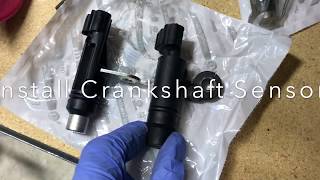


The information in this article is provided for general reference and educational purposes only. Vehicle specifications, procedures, and part compatibility can vary by production date, trim level, and region. Always consult your vehicle's factory service manual and verify part numbers before purchasing or performing repairs. Safety-critical components such as airbags, seat belts, and braking systems should be installed by a qualified professional.
- 🎬 Helpful Videos
- What Does P0320 Mean?
- Can I Drive With P0320?
- Common Causes
- Symptoms
- Diagnostic Flowchart
- Common Fixes & Costs
- DIY vs Professional
- Used vs. New Parts: Buying Guide
- What Happens If You Wait — Timeline
- Cost of Not Fixing It
- Diagnosis Steps
- When This Code Triggers (Freeze-Frame Conditions)
- Related Codes
- Climate & Environmental Factors
- How to Talk to a Mechanic About This Code
- Where to Take It: Dealer vs Independent vs Chain
- When to Walk Away From the Repair
- What Scan Tool You Need for This Code
- How to Clear the Code After You Fix It
- Will This Fail Emissions / State Inspection?
- Most Commonly Affected Vehicles
- Manufacturer-Specific Notes
- Real Owner Stories
- 2001 Jeep Grand Cherokee 4.7L V8 with intermittent stalling
- 2010 Ford Focus with sudden stalling and rough idle
- 2001 Dodge Ram 2500 with intermittent rough running and stalling
- 1999-2003 Chrysler/Dodge/Jeep 4.7L V8 with a surge around 2700 RPM
- How to Prevent This Code From Triggering
- Frequently Asked Questions
- What is the most common fix for a P0320 code?
- I replaced the crankshaft sensor, but the P0320 code came back. What's the most common misdiagnosis?
- My tachometer is dead and I have a P0320 code. Are these related?
- What is a 'crankshaft relearn' and do I need to do one after fixing P0320?
- Can a bad battery cause a P0320 code?
- Is it safe to drive my car with a P0320 code?
- How much does it cost to fix a P0320 code?
- Can a bad ignition coil cause P0320?
- Key Takeaways
- 🎟️ Get 5% Off