

OBD-II Code P0318: Rough Road Sensor 'A' Circuit Malfunction
The Ultimate Guide to Diagnosing and Fixing P0318
- P0318 indicates a failure in the rough road detection system, immediately disabling your ABS and traction control.
- Over 80% of P0318 codes stem from damaged wheel speed sensor wiring or a faulty ABS sensor, not the engine's crankshaft sensor.
- Driving with P0318 increases stopping distances by up to 20% on wet roads due to deactivated anti-lock brakes.
- Always fix accompanying C-codes (ABS) or U-codes (Communication) first, as they represent the root cause triggering the secondary P0318 code.
- Perform a free visual inspection and wiring 'wiggle test' before spending $100+ on replacement sensors or modules.
What Does P0318 Mean?

The Powertrain Control Module (PCM) detected a fault in the 'Rough Road Sensor A' circuit. This system helps the computer differentiate between actual engine misfires and normal vibrations from a bumpy road. Without this signal, the PCM cannot reliably validate misfires. As a safety precaution, it immediately disables the ABS and traction control systems.
Technical definition: The official SAE definition is "Rough Road Sensor 'A' Signal Circuit". Most modern vehicles do not use a dedicated accelerometer for this. Instead, they infer rough road conditions by comparing the rotational speeds of the wheels via the ABS wheel speed sensors. When one wheel spins faster over a bump, the PCM registers a rough road and ignores potential misfire flags from the crankshaft sensor during that time.
Can I Drive With P0318?

Yes, But With Caution. Yes, but drive with extreme caution. P0318 immediately disables the Anti-lock Braking System (ABS) and Traction/Stability Control (TCS/ESC). In an emergency stop or on wet roads, your wheels will lock up, increasing stopping distance and causing a loss of steering control. It does not damage the engine, but the disabled safety systems create a serious crash risk. Limit driving to reaching a repair shop.
Common Causes

- Damaged, Corroded, or Loose Wiring/Connectors (Very Common) — The wiring harness for the wheel speed sensors sits near the wheels and suspension, making it highly vulnerable to road debris, moisture, and salt corrosion. This causes shorted or open circuits.
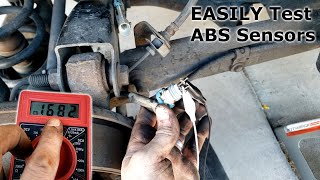
- Faulty ABS/Wheel Speed Sensor (Common) — Most vehicles use ABS wheel speed sensors to detect rough roads. The sensor fails internally due to age or brake dust contamination, sending incorrect data to the control module. 🎬 Watch: How to test wheel speed sensor resistance and voltage.
- Faulty Electronic Brake Control Module (EBCM) or ABS Module (Less Common) — The EBCM interprets data from the wheel speed sensors. It fails due to internal circuit breakdown, software glitches, or corrosion at the main ground wire.
- Worn or Damaged Suspension Components (Uncommon) — Severely worn shocks or bad control arm bushings cause excessive wheel bounce. The system interprets these harsh vibrations as an erratic sensor signal.
- Improper Wheel or Tire Size (Uncommon) — Mismatched tires or non-factory wheel sizes cause wheels to rotate at different speeds. The EBCM interprets this conflicting data as a system fault.
- Faulty Rough Road Sensor (Dedicated Accelerometer) (Rare) — On older vehicles with a dedicated rough road sensor, the unit fails internally due to age, impact, or extreme temperature changes.
- Low Battery Voltage or Charging System Issues (Rare) — Low system voltage causes unpredictable behavior and communication errors across control modules, triggering erroneous codes like P0318.
- Faulty Powertrain Control Module (PCM) (Rare) — The PCM itself rarely fails. Only consider this after exhaustively testing all wiring, sensors, and other modules.
Symptoms
- ABS and/or Traction Control Warning Light is On — A fault immediately disables these systems and illuminates their dashboard warning lights.
- Check Engine Light is On — Often the first and only initial warning.
- Disabled Traction or Stability Control — The vehicle feels less stable, and systems preventing wheel spin are turned off.
- Engine Hesitation or Perceived Misfire — Without a reliable rough road signal, the PCM misinterprets road vibrations as an engine misfire, making incorrect fuel adjustments.
- Intermittent Chime or Warning Message on Bumps — A warning chime sounds or a message flashes specifically when hitting a pothole, indicating the exact moment the circuit fails.
Diagnostic Flowchart

Tap your situation to follow the diagnostic path that matches what you're seeing on this code.
Common Fixes & Costs
- Repair or Replace Damaged Wiring — Parts: $10-$50, Labor: $125-$250, ~1.5 hr book time (Intermediate)
- Replace a Faulty ABS/Wheel Speed Sensor
— Parts: $40-$120, Labor: $100-$200, ~1.2 hr book time
(DIY)
GM (e.g., 2010 Silverado): OEM 15232650 (Alt: {"brand": "Dorman", "part_number": "970-040"}, {"brand": "ACDelco", "part_number": "15232650"})
VW/Audi (e.g., 2012 Jetta): OEM 1K0927808 / WHT003858 (Alt: {"brand": "Bosch", "part_number": "0986594508"}, {"brand": "ATE", "part_number": "1K0927808"})
Ford (e.g., 2013 F-150): OEM BRAB310 / AT4Z2C190A (Alt: {"brand": "Motorcraft", "part_number": "BRAB310"}, {"brand": "Standard Motor Products", "part_number": "ALS2596"}) - Clean or Replace a Damaged ABS Tone Ring — Parts: $30-$150, Labor: $150-$300, ~2.5 hr book time (Intermediate)
- Reprogram or Replace the Electronic Brake Control Module (EBCM) — Parts: $600-$1200, Labor: $150-$300, ~2.0 hr book time (Professional)
- Replace a Faulty Rough Road Sensor (Accelerometer) — Parts: $120-$250, Labor: $50-$100, ~0.8 hr book time (Intermediate)
DIY vs Professional
- Repair or Replace Damaged Wiring — Beginner: no
Tools: Multimeter, wire strippers, crimpers, heat shrink tubing, soldering iron, wiring diagrams. - Replace a Faulty ABS/Wheel Speed Sensor — Beginner: yes
Tools: Jack and jack stands, lug wrench, socket set, wrenches, penetrating oil, torque wrench. - Reprogram or Replace the Electronic Brake Control Module (EBCM) — Beginner: no
Tools: Professional-grade scan tool with programming capabilities. - Clean or Replace a Damaged ABS Tone Ring — Beginner: no
Tools: Full brake service tools, hub/axle pullers, press or bearing driver set, sandpaper/wire brushes, torque wrench.
Used vs. New Parts: Buying Guide
When a used part is worth it: Buy new ABS/wheel speed sensors. Buy a used or professionally rebuilt EBCM/ABS module to save hundreds over a new OEM unit.
Donor-vehicle mileage cap: roughly under 70000 miles for the part to have meaningful remaining life.
Donor quality checklist:
- Verify the part number matches exactly; electronic modules are not interchangeable.
- For EBCM/ABS modules, ensure the donor vehicle was not scrapped for electrical or flood damage.
- Ask about the seller's return policy and warranty period.
Decision logic:
- If The part is an ABS/wheel speed sensor → Buy new. The cost savings of a used sensor are minimal and not worth the risk of premature failure.
- If The part is an EBCM/ABS module and a new OEM unit is over $800 → Consider a professionally rebuilt module with a lifetime warranty first, or a used module from a reputable recycler as a second choice.
- If The vehicle is older (>10 years) and the budget is very tight → A used part is acceptable, but be aware that it requires programming to your vehicle's VIN at an additional cost.
Warranty tradeoff: Used parts typically have a 30-90 day warranty. New aftermarket parts often carry a 1-year to limited lifetime warranty. Professionally rebuilt modules often come with a lifetime warranty.
Worst-case if a used part fails: $200-$400 if a used part fails after installation, primarily due to repeated labor costs and the need for reprogramming.
What Happens If You Wait — Timeline
- 0-2 Weeks: Code P0318 sets, disabling ABS/Traction Control immediately. (MPG impact: 0%% · Added cost: $0)
- 1-3 Months: Underlying electrical issue degrades further due to vibration and moisture. (MPG impact: 0%% · Added cost: $0 (but safety risk remains high))
- 3-12 Months: Wiring short affects other circuits, causing unrelated electrical gremlins. (MPG impact: 0-1% (if related modules are affected)% · Added cost: $0 - $500 (Potential for a simple wire repair to become a more complex harness or module diagnostic issue))
- 12+ Months: High safety risk from disabled ABS/ESC leads to increased accident probability. (MPG impact: 0%% · Added cost: N/A (Accident cost is the primary financial risk))
Cost of Not Fixing It
- Immediate: ABS and Traction/Stability Control systems are disabled. Increases risk of skidding and longer stopping distances. (Added cost: N/A (Safety Risk))
- 1-6 Months: Driving without stability control increases accident likelihood. The underlying electrical short damages other components in the harness. (Added cost: $0 - $5000+ (Potential accident cost))
- 6+ Months: Driver complacency to warning lights leads to ignoring new, severe mechanical failures. (Added cost: N/A (Safety Risk))
Diagnosis Steps
- Scan for All Trouble Codes in All Modules
Use an advanced OBD-II scanner to read all modules. P0318 is usually a secondary code. Look for primary ABS codes (C-codes) or communication codes (U-codes like U0121). These dictate the root cause.
Tools: Advanced OBD-II Scanner (Beginner) - Perform a Thorough Visual Inspection
Inspect all wiring and connectors for the wheel speed sensors. Look for chafed, melted, or broken wires, and connector corrosion. Locate and inspect the main ground wire for the EBCM/ABS module.
Tools: Flashlight, Mechanic's Mirror (Beginner) - Check for Technical Service Bulletins (TSBs)
Search for TSBs related to P0318 for your specific vehicle. Manufacturers release bulletins for known issues, like GM EBCM ground faults, saving hours of diagnostic time.
Tools: Internet access (Beginner) - Perform a Harness Wiggle Test
With the scanner graphing live wheel speed data, manually wiggle the wiring harness between the sensor and the control module. If the signal drops, you found an intermittent break.
Tools: Advanced OBD-II Scanner (Intermediate) - Test Sensor Circuit Voltage and Ground
Disconnect the suspect sensor and turn the ignition ON. Use a multimeter to verify reference voltage (typically 5V or 12V) and a solid ground at the connector. Missing voltage points to a wiring issue, not a bad sensor.
Tools: Multimeter, Vehicle Service Manual (Intermediate) - [ADVANCED] Analyze Live Wheel Speed Data
View live data PIDs for all four wheel speed sensors while driving slowly in a straight line. All sensors must read within 1-2 MPH of each other. An erratic reading isolates the faulty corner.
Tools: Advanced OBD-II Scanner (Advanced) - [ADVANCED] Verify EBCM Ground Integrity
Locate the main EBCM ground point. Measure resistance between the ground terminal and the negative battery post. A reading above 0.5 Ohms indicates corrosion requiring cleaning.
Tools: Multimeter, Basic Hand Tools, Wire Brush (Advanced) - [ADVANCED] Test Wheel Speed Sensor Resistance
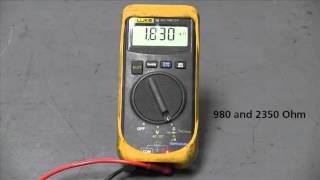
For passive 2-wire sensors, measure resistance across the pins. Typical readings are 800-1,600 Ohms. Infinity (O.L.) means an open circuit; near zero means a short.
Tools: Multimeter, Vehicle Service Manual (Advanced) - [PRO TIP] Analyze the Sensor Signal with an Oscilloscope
Backprobe the sensor's signal wire. Spinning the wheel by hand must produce a clean, repeating waveform. A flat line or noisy signal confirms a bad sensor or tone ring.
Tools: Oscilloscope, Jack and Jack Stands (Advanced) - [PRO TIP] Check CAN Bus Network Integrity
If U0121 is present, measure resistance between CAN High and CAN Low pins at the DLC (pins 6 and 14) with the battery disconnected. It must read exactly 60 Ohms.
Tools: Multimeter, Vehicle Wiring Diagram (Advanced) - Check for Module Software Updates
If wiring and sensors test perfectly, a dealership must check for EBCM or PCM software updates to correct faulty logic.
Tools: Professional Scan Tool, Dealer/Shop Access (Professional)
When This Code Triggers (Freeze-Frame Conditions)
- Engine Coolant Temp: 180-200°F (82-93°C) (The engine is fully warmed up and running for at least 5-10 minutes.)
- Vehicle Speed: 35-60 mph (56-97 km/h) (The fault registers at city or highway cruising speeds when a momentary loss of signal occurs over a bump.)
- Engine Load: 20-50% (Corresponds to normal cruising or gentle acceleration, where the system actively monitors for misfires.)
- RPM: 1500-2500 RPM (The code sets during steady-state cruise or light acceleration, rarely at idle.)
Related Codes
- U0121 — Lost Communication With ABS Control Module. This is the root cause. P0318 sets because the PCM cannot get wheel speed data. Fix the U-code first.
- P0300-P0312 — Misfire Detected. P0318 validates misfires. A faulty rough road system causes the PCM to log false misfires. Fix P0318 first.
- P0317 — Rough Road Hardware Not Present. Indicates a missing component or complete power failure to the EBCM.
- C0035-C0050 — Wheel Speed Sensor Circuit Codes. Pinpoints a fault in a specific wheel speed sensor circuit. This is the direct cause of P0318.
Climate & Environmental Factors
- Cold Climates / Road Salt: Road salt and brine accelerate degradation of wiring insulation and EBCM ground points.
- High Heat: Thermal stress breaks down internal solder joints inside the ABS control module.
- High Humidity: Moisture intrusion promotes corrosion at non-sealed connection points, increasing circuit resistance.
How to Talk to a Mechanic About This Code
Say this: "I have a Check Engine Light with code P0318, plus ABS and Traction Control lights. Please check for related ABS (C-codes) or communication (U-codes) and inspect the wheel speed sensor wiring."
This proves you know P0318 is an ABS-related fault, preventing the shop from wasting time diagnosing engine misfires.
Avoid saying:
- 'My check engine light is on, can you just fix it?'
- 'I think I need a new crankshaft sensor.'
- 'Just do whatever you think is best.'
Questions to ask before authorizing the repair:
- Did you find any specific ABS (C-codes) or communication (U-codes) stored along with the P0318?
- What did the live data from the four wheel speed sensors show when you drove it?
- Did you perform a 'wiggle test' or check the resistance of the wiring harness for the suspect sensor?
- If it's a GM vehicle, did you inspect the EBCM ground on the frame rail?
- What is the warranty on the proposed repair, including both parts and labor?
Where to Take It: Dealer vs Independent vs Chain
- Dealer:
Best for: Vehicles under warranty., Diagnosing known manufacturer-specific issues covered by a Technical Service Bulletin (TSB), like GM EBCM ground faults., Jobs requiring module replacement and VIN-specific programming.
Downsides: Highest labor rates, often 1.5x to 2x more than independent shops., Defaults to expensive module replacement over detailed wiring repair. (Typical cost: +50% vs. baseline) - Independent Shop:
Best fit. A reputable independent shop with strong electrical diagnostic skills handles common P0318 wiring repairs efficiently.
Best for: Out-of-warranty vehicles where cost is a factor., Diagnosing and repairing common P0318 causes like a bad wheel speed sensor or damaged wiring., Shops with strong electrical and diagnostic reputations.
Downsides: Quality and diagnostic capabilities vary widely., Lacks access to the latest manufacturer software updates. (Typical cost: +0% vs. baseline) - Chain Shop:
Avoid for initial diagnosis. Acceptable for a straightforward wheel speed sensor replacement, but lacks the tools for complex wiring issues.
Best for: Simple, clear-cut repairs where the diagnosis is already certain.
Downsides: Technician skill varies greatly., Lacks the advanced diagnostic tools for complex wiring or module communication issues., High pressure to upsell parts leads to misdiagnosis. (Typical cost: -10% vs. baseline)
When to Walk Away From the Repair
If the estimated repair cost exceeds 40% of the car's private-party value, consider selling it.
- Car worth $3500, fix is $1800: Walk away. The repair cost is over 50% of the car's value. It's not economically sensible to invest this much into an older car for a single repair.
- Car worth $12000, fix is $450: Fix it. This is a relatively low-cost repair for a bad sensor or wiring, well below the threshold. Fixing it restores critical safety features and the car's value.
- Car worth $5000, fix is $750: Borderline, but likely worth fixing. The cost is below the 40% threshold, and the repair restores essential safety systems (ABS/TCS). Get a second opinion to confirm the diagnosis before proceeding.
What Scan Tool You Need for This Code
Minimum: A scanner capable of reading and clearing codes from the Anti-lock Brake System (ABS) module.
A $20 code reader only shows the P0318 engine code. It cannot read the underlying ABS codes (C-codes) or communication codes (U-codes) causing the problem.
Budget: BlueDriver Pro Scan Tool (~$100) — Connects to your smartphone and reads/clears engine (P-codes) and ABS (C-codes). It provides live data graphing to watch wheel speed sensor performance while driving.
Mid-range: Foxwell NT510 Elite (~$180) — A powerful handheld unit offering deep, manufacturer-specific diagnostics for all modules. It includes bidirectional controls to command ABS solenoids, confirming module integrity.
Professional: Autel MaxiCOM MK808 / MK906BT (~$500-1200) — Professional-level tool with full bidirectional control, comprehensive live data, and advanced diagnostic functions. It performs ABS module programming and initialization.
Rent vs buy: Many auto parts stores offer free loaner tools, but verify their specific tool reads ABS codes. Buying a tool like the BlueDriver or Foxwell NT510 is a worthwhile investment.
How to Clear the Code After You Fix It
- Use an OBD-II scan tool to clear all codes from the PCM and EBCM/ABS modules.
- Turn the ignition off for at least 30 seconds.
- Perform a complete drive cycle to allow the readiness monitors to run.
Drive cycle (~20 minutes): 1. Cold start the vehicle and let it idle for 2-3 minutes. 2. Accelerate to 55 mph (88 km/h) and hold a steady speed for 3-5 minutes. 3. Let the vehicle coast down to 20 mph (32 km/h) without braking. 4. Accelerate again to 55 mph and hold for 2-3 minutes. 5. Decelerate and come to a stop.
Readiness monitors affected: Misfire Monitor, Comprehensive Component Monitor
Before emissions retest: drive at least 50 miles to fully set monitors.
Watch out for:
- Disconnecting the battery clears the code but resets all readiness monitors, causing an automatic emissions failure.
- The code returns immediately if the electrical fault remains.
- Failure to clear codes from both the PCM (P-codes) and the ABS module (C-codes) causes the light to return.
Will This Fail Emissions / State Inspection?
Yes — this code typically fails an OBD-II emissions inspection.
- California: An illuminated Check Engine Light results in an automatic failure of the smog check. All OBD-II readiness monitors must also be in a 'Ready' state to pass.
- New York: The NYS vehicle inspection includes a check for any illuminated malfunction indicator lamps, including the Check Engine Light, which constitutes a failure. The ABS light itself is also typically checked as a safety item.
- Texas: In counties requiring emissions testing, an illuminated Check Engine Light is an automatic failure. Even in counties without emissions testing, a lit Check Engine Light results in a failed safety inspection.
Most Commonly Affected Vehicles
- Cadillac / Chevrolet / GMC CTS, SRX, Silverado, Sierra, SUVs (2004-2014) — P0318 is frequently caused by a loss of communication with the EBCM due to a corroded ground wire on the frame rail (TSB #PIC5460B).
- Volkswagen / Audi Jetta, Golf, Beetle, A3 (2005-2013) — Triggers P0318 due to a failure in the plastic ABS wheel speed sensor, which becomes brittle with age.
- Ford F-150, Focus, Escape (2009-2018) — Failure of the ABS module itself is a known issue causing P0318. Rear wheel speed sensor wiring is also susceptible to damage.
- Chrysler / Dodge Pacifica, Grand Caravan (2017-2021) — Often related to wheel speed sensor circuit malfunctions. A specific camshaft position sensor fault triggers P0318 on the 3.6L Pentastar engine.
- Subaru Outback, Forester, Impreza (2010-2017) — Rear wheel speed sensor harnesses are routed poorly, making them susceptible to road debris damage.
- BMW 3-Series, 5-Series, X3, X5 (2006-2015) — Typically a direct result of a faulty wheel speed sensor, which disables the DSC and ABS systems, illuminating the '4x4' warning light.
- Nissan Qashqai, Altima, Rogue (2014-2020) — Commonly associated with faults in the wheel speed sensor circuits used to determine if the vehicle is on a rough surface.
- Hyundai / Kia Elantra, Sonata, Optima (2011-2018) — The primary cause is a faulty wheel speed sensor or its associated wiring. Check for corrosion in the connectors.
Manufacturer-Specific Notes
- General Motors (Cadillac, Chevrolet, GMC): P0318 is a 'ghost code' caused by a corroded ground wire on the driver-side frame rail (G103/G104).
- Volkswagen/Audi: Heavily relies on ABS wheel speed sensors, which frequently fail due to brittle plastic.
- Ford: ABS control module suffers from internal solder joint fractures. Check for extended warranty coverage.
- Subaru: Rear wheel speed sensor harnesses are routed poorly, making them susceptible to road debris damage.
Real Owner Stories
2008 Chevy Silverado 1500 at 155K miles - A Misdiagnosis Story
Check Engine, ABS, and Traction Control lights came on intermittently, especially on bumpy roads. Also had a U0121 code.
What they tried:
- Mechanic initially replaced the front left ABS wheel speed sensor based on a C-code, but the lights returned.
- Owner researched forums and found TSB #PIC5460B.
- Inspected the main EBCM ground wire on the frame rail under the driver's door and found it was severely corroded.
Outcome: Cleaned the frame rail to bare metal, replaced the ground bolt and terminal for under $20. All codes, including P0318 and U0121, cleared and did not return.
Lesson: On GM trucks, P0318 with communication codes (U-codes) is almost always a wiring or ground problem, not a sensor. Check the EBCM ground on the frame before replacing any parts.
2012 VW Jetta at 85K miles - The Straightforward Fix
ABS and traction control lights came on, along with the Check Engine Light for P0318. A scan revealed a C-code for the right rear wheel speed sensor.
What they tried:
- Visually inspected the wiring to the sensor and it looked intact.
- Decided to replace the sensor as it's a common failure item on VWs.
- The old sensor was brittle and broke during removal, confirming it was likely bad.
Outcome: Installed a new Bosch wheel speed sensor (approx. $50). Cleared the codes with a scanner, and the problem was resolved.
Lesson: If a specific wheel speed sensor code (C-code) is present with P0318, and a visual inspection of the wiring shows no damage, replacing the identified sensor is often the correct and direct fix.
2010 Ford F-150 at 120K miles - An Unusual Root Cause
ABS light and P0318 code appeared after having new, larger-than-stock tires installed.
What they tried:
- Took the truck back to the tire shop to re-check the balance, which was fine.
- A mechanic checked all wheel speed sensors and wiring, finding no faults.
- The mechanic noted the significant difference in tire diameter from the OEM size.
Outcome: The PCM/ABS module had to be reprogrammed by a specialty shop to account for the new tire size, which cost about $150. This corrected the wheel speed data and cleared the code.
Lesson: Significant changes in tire size can cause wheel speed sensors to report data that the control module interprets as a fault. If P0318 appears after a tire change, recalibration is necessary.
2005 Cadillac CTS at 110K miles - The Wrong Part Replaced
Car would intermittently not start, key would get stuck, and the dash would light up with ABS, TC, and Check Engine lights (P0318, U1192, U1300).
What they tried:
- Thinking it was a misfire issue, the owner first replaced the crankshaft position sensor. This did not solve the problem.
- A shop then diagnosed a bad ECM and replaced it at a high cost, but the problem returned intermittently.
Outcome: After finding TSB #PIC5460B, the owner discovered a chafed wire in the harness going to the ECM under the fuse box. Repairing the single wire (part of the Class 2 data line, CKT 1807) permanently fixed all the codes and starting issues.
Lesson: Never replace a Crankshaft Position Sensor for a P0318 code. On older Cadillacs, a cluster of communication codes with P0318 points to a specific wiring issue outlined in TSBs, not expensive module failures.
How to Prevent This Code From Triggering
- Clean and Protect Electrical Connectors (During every brake job or tire rotation) — Spray with electrical contact cleaner and apply dielectric grease to the weather seal during brake jobs to prevent moisture intrusion.
- Regular Undercarriage Washes in Winter (Weekly or Bi-weekly in salt-belt states) — Removes corrosive road salt that degrades wiring insulation and rusts ground points.
- Inspect and Secure Wiring Harnesses (Annually or when working near wheels) — Ensure wheel speed sensor wires are secured in clips and not rubbing against suspension components.
- Address Worn Wheel Bearings Promptly (When humming/grinding noise is first heard) — Worn bearings change the air gap between the sensor and tone ring, causing erratic signals.
Frequently Asked Questions
Can I just clear the P0318 code and keep driving?
You can, but it returns immediately if the electrical problem remains. Clearing it also erases crucial freeze-frame diagnostic data.
Is P0318 a serious problem?
Yes. It disables critical safety systems like ABS and stability control, significantly increasing the risk of losing control in an emergency.
Why did the P0318 code appear right after I hit a big pothole?
The sudden impact broke an already weakened wire or damaged the delicate internal components of a wheel speed sensor.
What is the most common misdiagnosis for P0318?
Replacing the crankshaft position sensor because the code is in the P03xx misfire range. P0318 is almost never caused by the crankshaft sensor.
My mechanic replaced the wheel speed sensor, but the code came back. Why?
P0318 is a circuit code. The fault lies in the wiring path between the sensor and the module, such as a broken wire or corroded connector. A 'wiggle test' on the harness locates these issues.
Can bad tires or a bad alignment cause a P0318 code?
Yes. Severely mismatched tires cause wheels to rotate at different speeds, confusing the ABS module and triggering the code.
What does the 'A' in 'Rough Road Sensor A' mean?
It designates a specific sensor circuit. Most vehicles only have one rough road circuit, labeled 'A'.
Key Takeaways
- P0318 indicates a failure in the rough road detection system, immediately disabling your ABS and traction control.
- Over 80% of P0318 codes stem from damaged wheel speed sensor wiring or a faulty ABS sensor, not the engine's crankshaft sensor.
- Driving with P0318 increases stopping distances by up to 20% on wet roads due to deactivated anti-lock brakes.
- Always fix accompanying C-codes (ABS) or U-codes (Communication) first, as they represent the root cause triggering the secondary P0318 code.
- Perform a free visual inspection and wiring 'wiggle test' before spending $100+ on replacement sensors or modules.
Helpful Videos

The information in this article is provided for general reference and educational purposes only. Vehicle specifications, procedures, and part compatibility can vary by production date, trim level, and region. Always consult your vehicle's factory service manual and verify part numbers before purchasing or performing repairs. Safety-critical components such as airbags, seat belts, and braking systems should be installed by a qualified professional.
- 🎬 Helpful Videos
- What Does P0318 Mean?
- Can I Drive With P0318?
- Common Causes
- Symptoms
- Diagnostic Flowchart
- Common Fixes & Costs
- DIY vs Professional
- Used vs. New Parts: Buying Guide
- What Happens If You Wait — Timeline
- Cost of Not Fixing It
- Diagnosis Steps
- When This Code Triggers (Freeze-Frame Conditions)
- Related Codes
- Climate & Environmental Factors
- How to Talk to a Mechanic About This Code
- Where to Take It: Dealer vs Independent vs Chain
- When to Walk Away From the Repair
- What Scan Tool You Need for This Code
- How to Clear the Code After You Fix It
- Will This Fail Emissions / State Inspection?
- Most Commonly Affected Vehicles
- Manufacturer-Specific Notes
- Real Owner Stories
- 2008 Chevy Silverado 1500 at 155K miles - A Misdiagnosis Story
- 2012 VW Jetta at 85K miles - The Straightforward Fix
- 2010 Ford F-150 at 120K miles - An Unusual Root Cause
- 2005 Cadillac CTS at 110K miles - The Wrong Part Replaced
- How to Prevent This Code From Triggering
- Frequently Asked Questions
- Can I just clear the P0318 code and keep driving?
- Is P0318 a serious problem?
- Why did the P0318 code appear right after I hit a big pothole?
- What is the most common misdiagnosis for P0318?
- My mechanic replaced the wheel speed sensor, but the code came back. Why?
- Can bad tires or a bad alignment cause a P0318 code?
- What does the 'A' in 'Rough Road Sensor A' mean?
- Key Takeaways
- 🎟️ Get 5% Off