

P0316 on 2010-2017 Land Rover Range Rover Sport: Startup Misfire Causes & Fixes
P0316 on a Range Rover Sport indicates a misfire during the first 1,000 engine revolutions. The most common causes are worn spark plugs or failing ignition coils. However, clogged fuel injectors are also a very frequent culprit on these direct-injection engines. This is often a straightforward DIY fix, with parts costing between $150 and $400 for a full set of plugs and coils.
- P0316 means there's a misfire happening right at startup.
- Always check for other codes first. A P030x code will tell you exactly which cylinder to check.
- The most likely fix is replacing worn spark plugs and/or a bad ignition coil.
- If ignition parts are good, consider fuel quality, as Land Rover has issued service bulletins about clogged injectors from bad gas.
- Do not ignore a flashing check engine light, as it can lead to very expensive catalytic converter damage.
What's Unique About the 2010-2017 Land Rover RANGE ROVER SPORT

On the high-performance V8 (AJ133) and V6 (AJ126) engines in the Range Rover Sport, this code frequently points to basic ignition maintenance items like spark plugs and coils. However, these direct-injection vehicles can be particularly sensitive to fuel quality. A Land Rover Technical Service Bulletin (TSB LTB00409NAS3) directly links P0316 to poor or contaminated fuel that can clog fuel injectors, a cause that should be strongly considered if ignition components are in good condition. Forum discussions confirm that owners often chase this code by replacing plugs and coils, only to find the root cause was a faulty or leaking injector.
Diagnostic Flowchart
Tap your situation to follow the diagnostic path that matches what you're seeing on this vehicle.
Generation note: This range covers two generations of the Range Rover Sport: the L320 (2010-2013) and the L494 (2014-2017). The L320 models in this range primarily use the 5.0L V8 (AJ133) engine, naturally aspirated or supercharged. The L494 introduced the 3.0L supercharged V6 (AJ126), which is architecturally based on the V8. While the engines differ, the common causes for P0316 (ignition and fuel system issues) are consistent across both generations and engine types.
Symptoms You May Notice
- Rough, stumbling, or shaky idle, especially right after starting
- Check engine light is on solid or flashing
- "Restricted Performance" message displayed on the dashboard
- Hesitation or lack of power during acceleration
- Hard starting or extended cranking
- Noticeable drop in fuel economy
- Raw fuel smell from the exhaust
- Replacing oxygen sensors. While O2 sensors report on the air/fuel mixture, they are unlikely to be the root cause of a startup-specific misfire. A faulty sensor would typically cause persistent fuel trim issues.
- Replacing the crankshaft position sensor. While this sensor is what the ECM uses to detect the misfire, it is rarely the cause of the misfire itself unless it has failed completely, which would likely present other codes and no-start symptoms.
Most Likely Causes

- Worn Spark Plugs 🔴 High Probability The high-compression, high-output nature of the V8 and supercharged V6 engines requires spark plugs to be in excellent condition for a clean start. They are a common wear item.
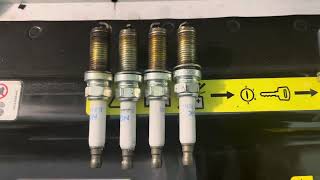
How to confirm: Inspect the spark plugs for wear, fouling, or incorrect gap. If they are near or past their service interval (typically 60,000-90,000 miles), replacement is recommended. Oil on the plug can indicate a more serious issue like a leaking valve seal.
Typical fix: Replace all spark plugs as a set. It's crucial to use high-quality OEM-spec plugs (e.g., NGK or Bosch Iridium).
Est. part cost: $100-$200 - Failing Ignition Coil(s) 🔴 High Probability Coil-on-plug systems are common points of failure. Heat from the engine bay can degrade the coils over time, leading to a weak spark, especially during a cold start.
How to confirm: If a specific cylinder misfire code (e.g., P0306) is present, swap the ignition coil from that cylinder with one from a known good cylinder. Clear the codes and see if the misfire code follows the coil to the new cylinder. This is a classic, effective diagnostic step mentioned frequently in owner forums.
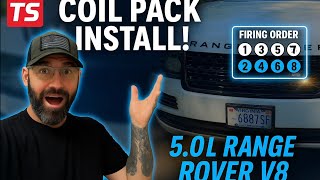
Typical fix: Replace the faulty ignition coil. Many owners choose to replace all coils at the same time as the spark plugs for preventative maintenance.
Est. part cost: $50-$100 per coil - Clogged or Faulty Fuel Injectors 🔴 High Probability As noted in TSB LTB00409NAS3, these direct-injection engines are highly susceptible to injector clogging from poor quality fuel. Leaking injectors can also drip fuel into a cylinder after shutdown, causing a rich misfire on startup. This is a very common failure reported by owners.
How to confirm: This is harder to diagnose without professional tools. A professional can perform a fuel injector balance test. An owner on landroverforums.com noted that their misfire codes (P0305 & P0316) appeared consistently after refueling, pointing towards a fuel system issue that was ultimately injector-related.
Typical fix: Professionally clean or, more commonly, replace the faulty fuel injector(s). 🎬 See how a mechanic diagnoses these common fuel injector misfires. Some sources suggest replacing them in banks.
Est. part cost: $150-$300 per injector - Poor Fuel Quality 🟡 Medium Probability Land Rover explicitly issued a TSB (LTB00409NAS3) stating that poor fuel quality or contamination can cause misfires and trigger P0316 by fouling injectors. These high-performance engines require high-octane premium fuel.
How to confirm: This is often a process of elimination. If the code appeared shortly after refueling, consider this a possibility. An owner on landroverforums.com suspected bad gas from an 'off-grid' location was the start of their P0316 issues.
Typical fix: Fill the tank with high-octane fuel from a reputable source. If contamination is suspected, the fuel tank may need to be drained and cleaned.
Est. part cost: $0-$200
Rare But Worth Checking
- Vacuum Leak: A leak in a vacuum hose, PCV system, or intake manifold gasket can introduce unmetered air, leaning out the air/fuel mixture and causing a misfire. A smoke test is the most effective way to find such leaks.
- Low Fuel Pressure: These engines have both a low-pressure in-tank pump and engine-mounted high-pressure fuel pumps (HPFP). A failing HPFP can cause stumbling, hesitation, and misfires, particularly under load or during startup.
- PCM Software Issue: TSB LTB01023NAS1 notes that for some 2014-2015 models, a fuel injection calibration issue can cause cold start misfires, fixed by a software update at the dealer. This applies when the coolant temperature is below 75°C (167°F).
- Internal Engine Mechanical Issues: In rare cases, issues like worn piston rings, leaking valve seals, or loss of compression can cause a persistent startup misfire. A compression test and leak-down test would be required for diagnosis.
Diagnosis Steps

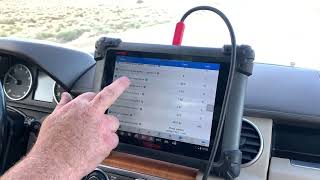
- Use an OBD-II scanner to check for any other codes, especially P0301-P0308, to identify the specific misfiring cylinder(s). 🎬 Watch: A professional diagnostic walkthrough for complex misfire codes. Note the freeze frame data, particularly the engine coolant temperature, to see if the misfire is strictly a cold-start issue.
- If a specific cylinder is identified, inspect its spark plug for wear, damage, or fouling. Replace if necessary.
- Swap the ignition coil from the misfiring cylinder with a coil from a non-misfiring cylinder. Clear the codes and run the engine. If the misfire code moves to the new cylinder, the ignition coil is bad.
- If plugs and coils are good, check fuel trims with a capable scanner. High positive long-term fuel trims at idle that decrease with RPM can indicate a vacuum leak.
- Perform a smoke test on the intake system to check for vacuum leaks from hoses, the PCV system, or intake manifold gaskets.
- Consider fuel system. If the code appeared after refueling, try a high-quality fuel system cleaner and fill up with premium fuel from a top-tier station.
- If the problem persists, more advanced diagnostics are needed, such as testing fuel pressure from both the low and high-pressure pumps or having a professional perform a fuel injector balance test to check for clogged or leaking injectors.
Parts You'll Likely Need
- Ignition Coil
(OEM #LR010687 (5.0L V8, 2010-2013) / LR035548 (3.0L V6 & 5.0L V8, 2014-2017))— Ignition coils are a primary point of failure for misfire codes. They generate the high voltage needed to create a spark.
Trusted brands: Bosch, Delphi, Denso, Bremi
OEM price range: $80-$120
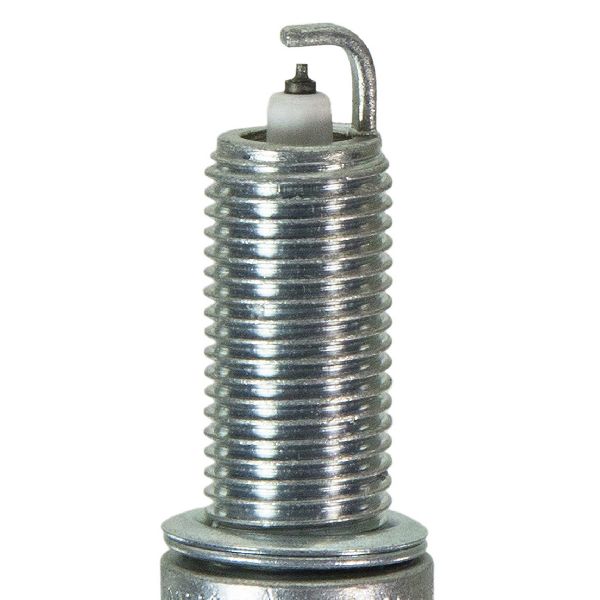
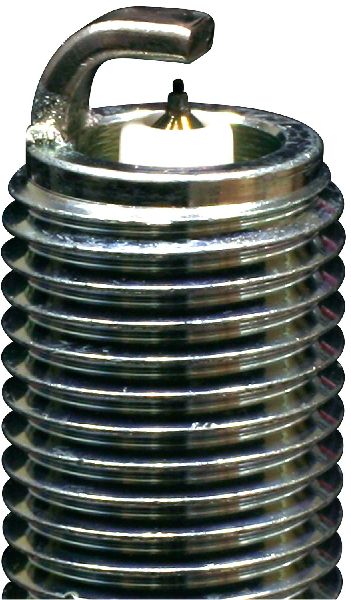
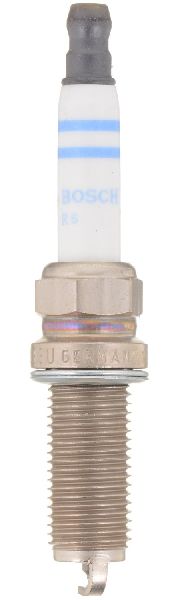
Aftermarket price range: $40-$80 - Spark Plug
(OEM #LR025605 (for 5.0L V8 & 3.0L V6))— As a routine maintenance item, worn spark plugs can't create a strong enough spark for efficient combustion, especially on a cold engine.
Trusted brands: NGK (ILTR6G8G), Bosch (0 242 236 675), Denso (ITV22)
OEM price range: $20-$30 per plug
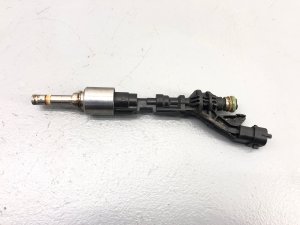
Aftermarket price range: $10-$20 per plug - Fuel Injector
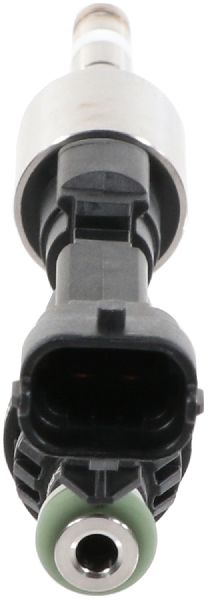
(OEM #LR079542 (for 5.0L V8 & 3.0L V6))— Clogged or leaking fuel injectors are a very common cause for P0316 on these direct injection engines, as highlighted by TSBs and owner experiences.
Trusted brands: Bosch
OEM price range: $200-$350
Aftermarket price range: $100-$200
Related Codes That Often Appear With This One
- P0300 — This code for 'Random/Multiple Cylinder Misfire' often appears with P0316 when the misfire is not isolated to a single cylinder.
- P0301-P0308 — These codes specify which cylinder is misfiring (e.g., P0306 is Cylinder 6). This is extremely helpful for diagnosis, as it points you directly to the spark plug, coil, or injector to inspect first.
- P0171/P0174 — These codes indicate a 'System Too Lean' condition on Bank 1 or Bank 2. They can accompany P0316 if the misfire is caused by a vacuum leak or a clogged fuel injector starving a cylinder of fuel.
Technical Service Bulletins (TSBs) & Recalls
- LTB00409NAS3: Links P0316 and other misfire codes to poor fuel quality or contamination causing clogged fuel injectors.
- LTB01023NAS1: Notes a software calibration issue can cause P0316 on cold starts, requiring a PCM update.
- SSM73378: Discusses P0316 on other Land Rover models caused by faulty fuel injectors, indicating a pattern of injector issues across the brand.
Platform-Specific Known Issues
- TSB LTB00409NAS3 specifically calls out that poor fuel quality or fuel contamination can lead to clogged injectors and cause misfires with code P0316 on 2010-2013 models with the 5.0L V8 engine.
- TSB LTB01023NAS1 identifies a potential fuel injection calibration issue on some 2014-2015 models (V6 and V8) that can cause cold start misfires (P0316 and P030x) when the coolant temp is below 75°C. The fix is a PCM software update at the dealership.
- TSB SSM73378, while for a different model, shows a pattern of Land Rover investigating startup misfires (P0316) linked to faulty fuel injectors, reinforcing this as a potential cause beyond just plugs and coils.
Mechanic-Grade Diagnostic Values
- High-Pressure Fuel Rail Pressure (at idle, engine warm) — expected: 3.0 - 8.0 MPa (435 - 1160 PSI). Failure: A reading of approximately 700-900 KPa (101-130 PSI) that does not increase with engine RPM strongly indicates a failed High-Pressure Fuel Pump (HPFP).
- High-Pressure Fuel Rail Pressure (cold start) — expected: Should be no lower than 2,000 PSI (approx. 13.8 MPa).. Failure: Significantly lower pressure on startup points to a weak high-pressure fuel system.
- Low-Pressure Fuel System Pressure (cranking/priming phase) — expected: 90 - 105 PSI (approx. 620 - 724 kPa). Failure: Pressure significantly below this range during startup can starve the high-pressure pumps and cause misfires.
- Low-Pressure Fuel System Pressure (at idle, engine warm) — expected: 70 - 80 PSI (approx. 482 - 551 kPa). Failure: Pressure dropping below 65 PSI can indicate a weak in-tank fuel pump or a problem with the fuel pump control module.
Scan Tool Commands That Help

- Land Rover SDD / Pathfinder: Datalogger - Live Data Monitoring — Essential for diagnosing fuel pressure issues. Monitor 'Fuel rail pressure (ECM)' for the high-pressure side and 'Fuel pump control B low pressure' for the low-pressure side to compare actual values against the specifications listed in TSBs.
- General Procedure: Hard Reset (Battery Disconnect) — Can be used to clear adaptive values and reset all ECUs after a repair. Disconnect the negative battery terminal, then the positive. Hold the disconnected positive and negative battery leads together for 30 seconds to drain residual power before reconnecting. This is a general reset, not a specific diagnostic for P0316.
Wiring & Ground Locations
- ECM Ground (L494) — Designated as G1D1101E (3.0L) or G1D1101 (5.0L) in wiring diagrams.. A poor ground for the Engine Control Module can cause erratic sensor readings and misfire detection.
- Main Engine Ground Strap — Typically a braided strap from the engine block (often near the starter motor) to the vehicle frame rail.. Provides the primary ground path for the ignition system. Corrosion or a loose connection can cause a weak spark.
- Bulkhead/Firewall Ground Stud — On the bulkhead in the engine compartment, often near the brake or clutch master cylinder. Provides a common ground point for many circuits.. A poor connection here can affect multiple systems, including sensors and relays the ECM relies on.
- A-Pillar Earth Header — Located behind the plastic kick panel in the driver or passenger footwell.. This is a common grounding point for interior electronics and control modules. A fault here can cause a wide range of seemingly unrelated electrical issues.
Real Owner Repair Stories
- iATN (International Automotive Technicians Network) (2011 Land Rover Range Rover Sport Supercharged 5.0L) — P0316, very rough idle, and audible timing chain noise.
❌ Tried (didn't work) Initial diagnosis focused on common causes before checking mechanical timing.
✅ What actually fixed it Diagnosis with an oscilloscope on camshaft and crankshaft sensors revealed the bank 1 intake camshaft was out of time. The root cause was a failure in the timing chain system, not ignition or fuel. - iATN (International Automotive Technicians Network) (2012 Land Rover Range Rover Supercharged 5.0L) — P0316 after major engine work.
❌ Tried (didn't work) Rebuilding bank 2 cylinder head., Installing all new timing chains, guides, tensioners, VANOS gears, and solenoids., Replacing all fuel injectors.
✅ What actually fixed it The thread documents the complexity of the issue, where the P0316 code persisted even after a complete timing system overhaul and injector replacement, highlighting that incorrect timing setup or other underlying mechanical issues can be the cause. The resolution was not posted, but the story is valuable for illustrating the difficulty when basic fixes fail.
OEM Part Supersession History
LR011964, LR069897, LR079542→LR105439— Component revision and consolidation by the manufacturer.
Heads up: These part numbers are for the Bosch direct fuel injector used in both the 5.0L V8 and 3.0L V6. While physically similar, it is critical to use the latest revision (LR105439) when replacing.
Model Year Variations Within This Range
- 2010-2013 (L320 Generation): These models primarily use the 5.0L V8 engine. The specific ignition coil OEM part number is LR010687. TSB LTB00409NAS3 regarding fuel quality causing P0316 specifically lists these model years.
- 2014-2017 (L494 Generation): These models use the 3.0L V6 and 5.0L V8 engines. The ignition coil part number is different from the previous generation (LR035548, from Pass 2 data). The ECM and some ground point locations also differ from the L320.
Helpful Videos
Used OEM Parts in Stock



New Aftermarket Parts Available


The information in this article is provided for general reference and educational purposes only. Vehicle specifications, procedures, and part compatibility can vary by production date, trim level, and region. Always consult your vehicle's factory service manual and verify part numbers before purchasing or performing repairs. Safety-critical components such as airbags, seat belts, and braking systems should be installed by a qualified professional.
- Land Rover RANGE ROVER SPORT:
- 🎬 Helpful Videos
- 🛍️ Shop This Part
- What's Unique About the 2010-2017 Land Rover RANGE ROVER SPORT
- Diagnostic Flowchart
- Symptoms You May Notice
- Most Likely Causes
- Rare But Worth Checking
- Diagnosis Steps
- Parts You'll Likely Need
- Related Codes That Often Appear With This One
- Technical Service Bulletins (TSBs) & Recalls
- Platform-Specific Known Issues
- Mechanic-Grade Diagnostic Values
- Scan Tool Commands That Help
- Wiring & Ground Locations
- Real Owner Repair Stories
- OEM Part Supersession History
- Model Year Variations Within This Range
- 🎟️ Get 5% Off