

P0316 on 2012-2015 Land Rover Evoque: Startup Misfire Causes & Fixes
P0316 on a 2012-2015 Evoque indicates a misfire during the first 1,000 engine revolutions. This is frequently caused by failing fuel injectors, a known issue documented in TSBs SSM71894 and SSM73378. Worn spark plugs and ignition coils are also common culprits. The issue is common enough that Land Rover issued specific diagnostic procedures for dealers to follow when this code appears on a cold engine.
- P0316 means your Evoque is misfiring right after you start it.
- Do not ignore a flashing check engine light, as this can lead to expensive catalytic converter damage.
- The most likely causes are faulty fuel injectors, worn spark plugs, or bad ignition coils.
- A Land Rover TSB (SSM71894) specifically points to fuel injectors as a known problem area for this code.
- Always check for cylinder-specific codes (P0301-P0304) first, as they will tell you where to focus your diagnosis.
What's Unique About the 2012-2015 Land Rover RANGE ROVER EVOQUE
The 2012-2015 Evoque uses a 2.0L turbocharged gasoline direct injection (GDI) engine from Ford's EcoBoost family. While standard ignition components like plugs and coils are common causes for misfires, this platform has a documented history of fuel injector issues. Land Rover issued multiple Special Service Messages (SSMs), including SSM71894 and SSM73378, requesting data on and providing specific diagnostic steps for fuel injector failures that cause intermittent rough running and the P0316 code on these vehicles, particularly after a cold start.
Diagnostic Flowchart
Tap your situation to follow the diagnostic path that matches what you're seeing on this vehicle.
Symptoms You May Notice
- Rough idle or engine vibration immediately after starting
- Flashing or solid Check Engine Light
- Engine hesitation or stumbling, especially when cold
- Vehicle may enter 'Restricted Performance' mode, limiting power
- Strong smell of raw gasoline from the tailpipe
- Replacing only spark plugs when a faulty fuel injector is the true cause.
- Replacing oxygen sensors, which are unlikely to cause a startup-specific misfire.
- Assuming the issue is always ignition-related without considering the well-documented fuel injector problems on this specific engine.
Most Likely Causes
- Failing Fuel Injectors 🔴 High Probability Multiple manufacturer TSBs (SSM71894, SSM73378) were issued to investigate a high rate of fuel injector failures on this engine, directly linking them to rough running and misfire codes like P0316, especially on cold starts. This is a well-documented weakness of the 2.0L EcoBoost engine family.
How to confirm: Check for other codes (like P0301-P0304) to isolate the cylinder. TSB SSM73378 provides a dealer procedure: after an 8-hour cold soak, monitor 'current' misfire counts with the JLR SDD diagnostic tool for the first 300 seconds of idling. More than 25 misfires on one cylinder indicates a likely injector issue. A DIY method is to check fuel trims with a scan tool; a leaking injector may cause a rich condition (negative fuel trim) on one bank.
Typical fix: Replace the faulty fuel injector(s). It is often recommended to replace them as a set. The updated OEM part number is often cited as LR079542, which is part of a supersession chain from the original part.
Est. part cost: $60-$200 per injector - Worn Spark Plugs 🟡 Medium Probability Spark plugs are a regular maintenance item. Carbon buildup and electrode wear can prevent a strong spark, especially on a cold GDI engine, leading to a startup misfire.
How to confirm: Remove the spark plugs and inspect for wear, fouling, or damage. The replacement interval is typically around 40,000-60,000 miles. This is a fundamental first step in any misfire diagnosis. Plugs should be pre-gapped to 0.028 inches (0.71mm).
Typical fix: Replace all four spark plugs. Use high-quality Iridium plugs as specified by the manufacturer, such as NGK or Denso.
Est. part cost: $50-$100 for a set of four - Faulty Ignition Coils 🟡 Medium Probability Ignition coils are subjected to high heat and can fail over time, resulting in a weak or non-existent spark, a common cause for misfires on most modern engines.
How to confirm: Swap the ignition coil from the misfiring cylinder (identified by a P030x code) with a coil from a known good cylinder. Clear the codes and run the engine to see if the misfire code follows the coil to the new cylinder. If it does, the coil is bad.
Typical fix: Replace the faulty ignition coil. It's wise to replace the corresponding spark plug at the same time.
Est. part cost: $30-$70 per coil
Rare But Worth Checking
- Low Fuel Pressure: A weak high-pressure fuel pump (HPFP) or in-tank low-pressure pump can cause a lean condition and misfires during the high-demand startup phase. TSB LTB00730NAS1 noted HPFP issues on this engine family causing various misfire codes.
- Vacuum Leak: A leak in a vacuum hose or intake manifold gasket can introduce unmetered air, disrupting the air/fuel mixture and causing a misfire at idle. This is a common cause for misfires in general.
- Low Engine Compression: Internal engine issues like worn piston rings, a problem with a valve, or coolant ingress into the cylinder can cause a lack of compression, leading to a persistent misfire. TSB SSM73378 suggests a coolant system pressure test if injectors are ruled out.
- Poor Fuel Quality: These direct-injection engines can be sensitive to fuel quality. Contaminated or low-octane fuel can lead to incomplete combustion and startup misfires.
Diagnosis Steps
- Read all stored DTCs with an OBD-II scanner to check for any cylinder-specific misfire codes (P0301-P0304) that will narrow down the location of the fault.
- Note the Freeze Frame data to see the engine conditions (temperature, RPM) when the code was set. For P0316, this will be on a cold start. 🎬 See why the P0316 code causes misfires during cold starts.
- Inspect the spark plugs for wear, damage, or fouling. If they are old or in poor condition, replace them as a first step.
- If a specific cylinder is identified, swap its ignition coil with one from another cylinder. Clear the codes and run the engine to see if the misfire code moves to the new cylinder. If it does, the ignition coil is faulty.
- If the misfire stays on the original cylinder after swapping the coil, the issue is likely the fuel injector or a mechanical problem.
- Given the known issues, suspect a faulty fuel injector. Refer to TSB SSM73378's diagnostic procedure: let the vehicle cold soak for 8+ hours, then monitor misfire counts on startup with a JLR SDD tool. A high count (>25) on one cylinder points to a bad injector.
- Inspect for vacuum leaks by checking all hoses connected to the intake manifold for cracks or loose connections.
- If no cause is found, consider a compression test or a cooling system pressure test to check for internal engine issues, as suggested in TSB SSM73378.
Parts You'll Likely Need
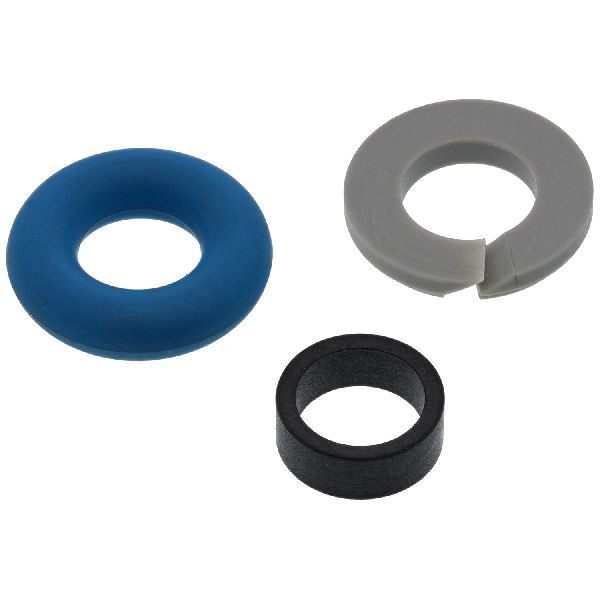
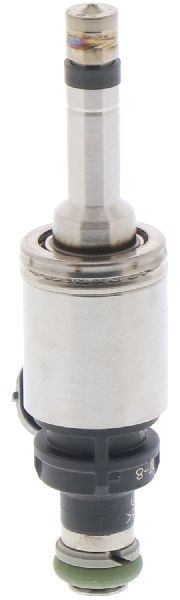
- Fuel Injector
(OEM #LR079542 (supersedes LR024998))— This is a documented weak point on this engine, as highlighted by multiple manufacturer TSBs. It is a very common cause for P0316. LR079542 is an updated part number in a long supersession chain.
Trusted brands: Bosch, Genuine Land Rover
OEM price range: $150-$250
Aftermarket price range: $60-$120 - Ignition Coil
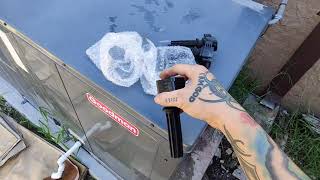
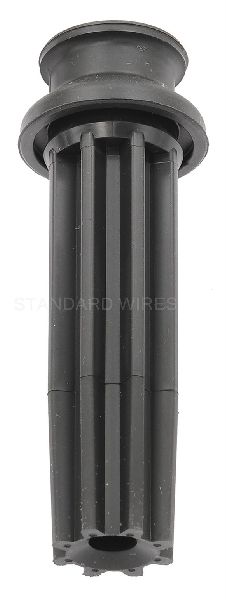
(OEM #LR084889)— A common failure item that causes misfires. It's a primary component of the ignition system and relatively easy to diagnose and replace. 🎬 Watch: A quick walkthrough on replacing the ignition coil packs.
Trusted brands: Bosch, Delphi, NGK
OEM price range: $60-$90
Aftermarket price range: $30-$70 - Iridium Spark Plug
(OEM #LR025605)— Spark plugs are a routine maintenance part and a fundamental first step in correcting any misfire issue.
Trusted brands: NGK, Denso
OEM price range: $20-$30 per plug
Aftermarket price range: $12-$20 per plug
Related Codes That Often Appear With This One
- P0300 — This code for 'Random/Multiple Cylinder Misfire' often appears with P0316 when the misfire is not isolated to a single cylinder. [SSM71894]
- P0301, P0302, P0303, P0304 — These cylinder-specific misfire codes are extremely helpful, as they pinpoint exactly which cylinder is having the problem, directing your diagnostic efforts. [SSM71894]
- P1315 — This manufacturer-specific code is mentioned alongside P0316 in TSB SSM71894 and relates to persistent misfires that could cause catalyst damage. [SSM71894]
Technical Service Bulletins (TSBs) & Recalls
- SSM71894: Notes intermittent rough running at normal operating temperature with various DTC's stored, including P0316-00, and states that engineering is investigating the cause of fuel injector failures.
- SSM73378: Provides a specific dealer diagnostic procedure for cold start misfires (P0316), focusing on identifying faulty fuel injectors by monitoring misfire counts after an 8-hour cold soak.
Platform-Specific Known Issues
- TSB SSM71894 specifically calls out an investigation into fuel injector failures causing intermittent rough running and storing codes P0300, P0301-P0304, P1315, and P0316. This makes fuel injectors a primary suspect for this code on this vehicle.
- TSB SSM73378 provides a detailed diagnostic procedure for dealers to confirm a faulty injector on a cold start. It instructs technicians to let the vehicle sit for at least 8 hours, then monitor misfire counts. If a single cylinder has more than 25 misfires in the first 300 seconds of idling, the injectors should be removed and returned for investigation. This bulletin explicitly tells dealers NOT to replace injectors without performing this test first.
Mechanic-Grade Diagnostic Values
- Misfire Count on Cold Start — expected: Fewer than 25 counts per cylinder within the first 300 seconds of idle after an 8+ hour cold soak.. Failure: More than 25 misfire counts on any single cylinder.
- Low-Pressure Fuel System — expected: Approximately 4.0 - 7.0 bar (58 - 101 PSI) while running.. Failure: Pressure drops below 4.0 bar (58 PSI) at idle.
- High-Pressure Fuel System (at idle) — expected: Target pressure around 3,000 kPa (435 PSI).. Failure: Actual pressure fails to meet the desired pressure reading on a scan tool.
- Fuel Rail Pressure (FRP) Sensor Voltage — expected: 0.5V to 4.5V.. Failure: Voltage is stuck, or reads below 0.3V with Key On, Engine Off.
Hidden / Shadow Codes Worth Checking
- P0316-00: The '-00' is a Failure Type Code (FTC) that may be visible on dealer-level scanners. It specifies 'No sub type information' but confirms the fault is active and logged by the primary control module. (see via JLR SDD or other advanced diagnostic tools that can read manufacturer-specific FTCs.)
- Mode 6, Test ID $A2-$AF: This Mode 6 data tracks misfire counts for each cylinder (Cyl 1-8). A high count in the 'Value' column for a specific cylinder can reveal a developing problem before a P030x code is set. (see via Most advanced OBD-II scan tools capable of displaying Mode 6 test results.)
Scan Tool Commands That Help
- JLR SDD (Symptom Driven Diagnostics): Misfire Analysis Application — This is the specific function required to perform the cold-start misfire test detailed in TSB SSM73378. It allows monitoring of 'current' misfire counts per cylinder, which is essential for diagnosing leaky injectors.
- JLR SDD (Symptom Driven Diagnostics): Fuel System - Fuel Trims / Fuel Rail Pressure — Use this to monitor live data. Compare 'Fuel Rail Pressure - Desired' vs. 'Fuel Rail Pressure - Actual' to diagnose pump issues. Check long-term and short-term fuel trims (LTFT/STFT) to identify rich/lean conditions that could indicate a leaking injector or vacuum leak.
- JLR SDD / Pathfinder: Module Programming / Injector Calibration — This is required after replacing fuel injectors to ensure the Engine Control Module (ECM) knows the precise flow characteristics of the new components.
Wiring & Ground Locations
- ECM (Engine Control Module) — Center rear of the engine compartment.. This is the brain of the system. All sensor inputs (crank, cam) and outputs (ignition coil pulse, injector pulse) originate or terminate here. Poor connections at the ECM can cause a variety of issues.
- G1D130A — Ground point located at the left front of the engine compartment.. A poor engine ground can cause erratic behavior from sensors and actuators, including the ignition coils and crankshaft position sensor, leading to misfire detection.
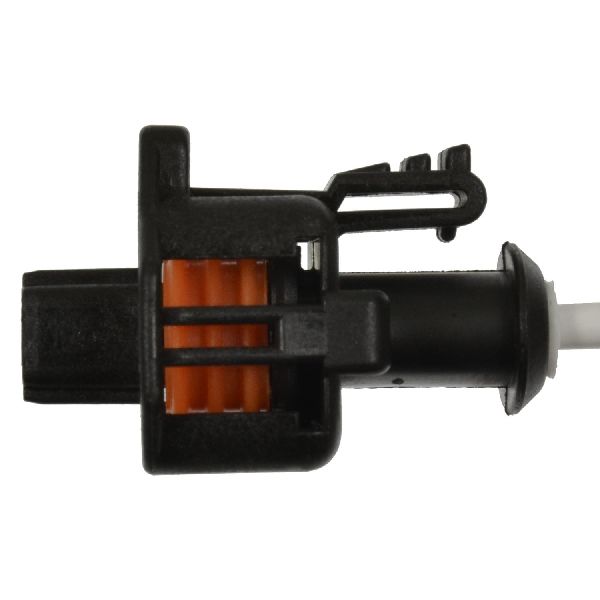
- Ignition Coil Connector (e.g., Cyl 3) — On top of the valve cover at each cylinder. Pinout for Cyl 3 is from ECM connector C1E105A, pin 69.. Allows for targeted voltage and signal tests at the coil itself to determine if the fault is with the coil, the wiring harness, or the ECM driver.
- Chassis Ground Point — A bolt on an engine mounting, located on the right side of the engine bay just behind the windscreen washer filler cap.. This is a designated main ground point shown in the owner's manual for jump-starting, confirming a robust and accessible engine-to-chassis ground connection that should be clean and tight.
OEM Part Supersession History
LR024998 (Fuel Injector)→LR072564, then LR082008. Also related to Ford P/N BB5E-9F593-AA and Bosch P/N 0 261 500 147 (which was updated to 0 261 500 333).— Revisions to improve reliability and address the high failure rate causing cold start misfires.
Heads up: While multiple part numbers exist, it is critical to use injectors that are compatible with the vehicle's ECU calibration. It is highly recommended to replace injectors as a full set to ensure balanced fuel delivery.
Model Year Variations Within This Range
- 2012-2015: The core 2.0L Turbo (EcoBoost) engine and its common faults related to P0316 remained consistent across this period. The primary change was the introduction of a 9-speed ZF automatic transmission, replacing the previous 6-speed. This did not fundamentally change the cause of this engine code but may affect related software in the ECM/TCM.
Helpful Videos
Used OEM Parts in Stock

New Aftermarket Parts Available


The information in this article is provided for general reference and educational purposes only. Vehicle specifications, procedures, and part compatibility can vary by production date, trim level, and region. Always consult your vehicle's factory service manual and verify part numbers before purchasing or performing repairs. Safety-critical components such as airbags, seat belts, and braking systems should be installed by a qualified professional.
- Land Rover RANGE ROVER EVOQUE:
- 🎬 Helpful Videos
- 🛍️ Shop This Part
- What's Unique About the 2012-2015 Land Rover RANGE ROVER EVOQUE
- Diagnostic Flowchart
- Symptoms You May Notice
- Most Likely Causes
- Rare But Worth Checking
- Diagnosis Steps
- Parts You'll Likely Need
- Related Codes That Often Appear With This One
- Technical Service Bulletins (TSBs) & Recalls
- Platform-Specific Known Issues
- Mechanic-Grade Diagnostic Values
- Hidden / Shadow Codes Worth Checking
- Scan Tool Commands That Help
- Wiring & Ground Locations
- OEM Part Supersession History
- Model Year Variations Within This Range
- 🎟️ Get 5% Off