

P0316 on 2010-2013 Land Rover LR4 5.0L: Startup Misfire Causes and Fixes
On a 2010-2013 LR4, P0316 is almost always caused by worn spark plugs, a bad ignition coil, or a failing fuel injector. Expect to pay $150-$400 for plugs and coils (DIY), or more if a direct fuel injector needs replacement, which is a very common failure on this engine.
- P0316 means a misfire happened right at startup. It will almost always be paired with a P0301-P0308 code that tells you which cylinder is the problem.
- Always start diagnosis with the simple parts: swap the ignition coil from the bad cylinder to a good one and see if the code follows.
- If ignition parts (coil, plug) are good, the fuel injector is a very likely culprit on the LR4's 5.0L V8 engine, either from being clogged or leaking.
- Do not ignore a flashing check engine light. It signals a severe misfire that can cause rapid and expensive damage to your catalytic converters.
- Be mindful of fuel quality. Using Top Tier gasoline can help prevent fuel injector issues, which are a known problem on this engine per a Land Rover TSB.
What's Unique About the 2010-2013 Land Rover LR4
The 5.0L V8 (AJ133) in the LR4 is a direct-injection engine, making it particularly sensitive to fuel quality and injector performance. Land Rover issued a Technical Service Bulletin (TSB LTB00409NAS3) that directly links startup misfires (P0316) on these vehicles to poor or contaminated fuel causing clogged fuel injectors. Beyond the TSB, owner forums are filled with reports of leaking fuel injectors being a common failure. An injector can drip fuel into the cylinder after shutdown, leading to a rich, plug-fouling misfire on the next startup—a perfect scenario for triggering P0316. Many owners report replacing coils and plugs only to find the issue persists until the injector is replaced.
Symptoms You May Notice
- Rough idle, especially right after starting the engine
- Flashing or solid Check Engine Light
- Vehicle enters 'Restricted Performance' mode, limiting engine power
- Hesitation or stumbling during acceleration
- Noticeable engine vibration
- Smell of unburnt gasoline from the exhaust, particularly on a cold start
- Replacing oxygen sensors. O2 sensors report on the results of combustion; they rarely cause a misfire on a specific cylinder, though a misfire can sometimes trigger an O2 sensor code.
Most Likely Causes
- Worn or Fouled Spark Plugs 🔴 High Probability Spark plugs are a regular maintenance item and are the most common starting point for any misfire diagnosis. A leaking injector can also foul a new plug quickly.
How to confirm: Check service records for the last replacement. Inspect the spark plug from the misfiring cylinder (identified by P0301-P0308 codes) for wear, oil, or fuel fouling. A plug wet with gasoline points towards an ignition or injector issue.
Typical fix: Replace all 8 spark plugs. 🎬 Watch this step-by-step guide for replacing your LR4 spark plugs. It is recommended to replace them as a set. Use of OEM-spec plugs (e.g., NGK) is advised.
Est. part cost: $80-$150 - Failing Ignition Coil 🔴 High Probability Coil-on-plug ignition systems are common failure points. Heat and vibration cause them to degrade over time, leading to a weak or no-spark condition.
How to confirm: Swap the ignition coil from the misfiring cylinder with a coil from a known good cylinder. Clear the codes and run the engine. If the misfire code 'moves' to the new cylinder (e.g., P0306 becomes P0302 after swapping coils from cylinder 6 to 2), the coil is bad.
Typical fix: Replace the faulty ignition coil. It's wise to also replace the spark plug for that cylinder at the same time.
Est. part cost: $50-$100 per coil - Clogged or Leaking Fuel Injector 🔴 High Probability The 5.0L V8 uses high-pressure direct injection, and the injectors are a widely documented failure point. They are susceptible to clogging from fuel contaminants (per TSB LTB00409NAS3) and internal failure causing leaks. A leaking injector drips fuel into a cylinder after shutdown, causing a rich misfire on startup that clears as the engine warms up, perfectly matching the P0316 condition.
How to confirm: This is difficult without professional tools. After ruling out the coil and plug, the injector is the next logical suspect. A fuel-fouled spark plug is a strong indicator. A mechanic can perform a fuel injector balance test or use a scan tool like the GAP IIDTool to monitor injector performance.
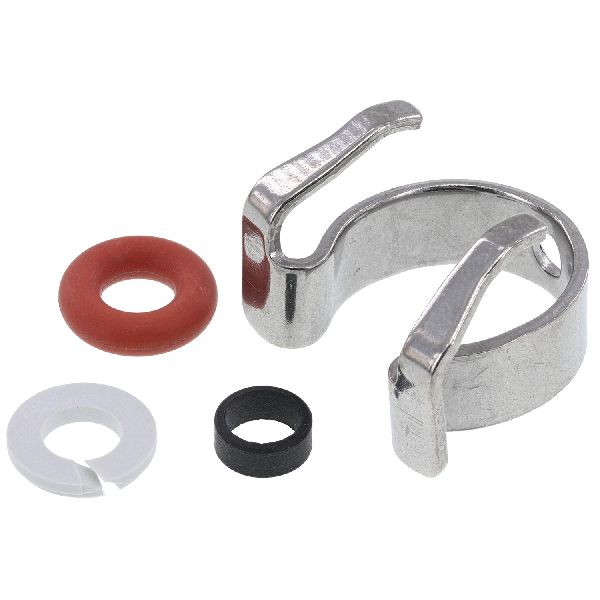
Typical fix: Replace the faulty fuel injector. This is an involved job requiring removal of the fuel rail. New injectors require special Teflon seal installation/sizing tools. Many owners and shops recommend replacing all four injectors on the affected bank at the same time.
Est. part cost: $100-$250 per injector - Failed PCV Valve Diaphragm 🟡 Medium Probability The PCV (Positive Crankcase Ventilation) valve is integrated into the valve cover, and its rubber diaphragm is known to tear, creating a large, unmetered vacuum leak that can cause lean misfires.
How to confirm: A loud whistling or sucking sound from the engine bay at idle is a classic sign. The sound may stop if you place a finger over the small weep hole on the circular PCV cap. A smoke test is the definitive way to confirm a vacuum leak.
Typical fix: The diaphragm itself is not sold separately by Land Rover. The official fix is to replace the entire valve cover. However, aftermarket repair kits with just the diaphragm are widely available and used.
Est. part cost: $20-$50 (diaphragm kit) or $200-$400 🎬 See how to replace just the PCV diaphragm yourself. (valve cover)
Rare But Worth Checking
- Low Fuel Pressure: While less common than a single injector failure, a weak high-pressure fuel pump (HPFP) or low-pressure fuel pump can cause misfires across multiple cylinders, especially on startup. This would typically be accompanied by codes like P0087 (Fuel Rail Pressure Too Low).
- Mechanical Engine Issue (e.g., Timing Chain, Valves): The 5.0L V8 is known for timing chain guide wear, which can lead to stretched chains and incorrect timing, causing misfires. This is a major repair usually preceded by a rattling noise from the front of the engine on startup. In rarer cases, a leaking exhaust valve can cause a persistent misfire at idle that triggers P0316 on the next start; this requires a compression or leak-down test to diagnose.
- Intake Valve Carbon Buildup: As a direct-injection engine, the intake valves are not cleaned by fuel spray. Over time, carbon deposits can build up and restrict airflow into the cylinders, causing cold-start misfires. The solution is a manual cleaning process, typically walnut shell blasting.
- Faulty Crankshaft Position Sensor: The sensor that detects the misfire can itself be faulty, though this is rare. It would typically cause more erratic issues than just a startup misfire, such as stalling or a no-start condition.
Diagnosis Steps
- Read the OBD-II codes with a scanner to identify the specific misfiring cylinder from the P0301-P0308 codes that accompany P0316. Note the cylinder number.
- Move the ignition coil from the misfiring cylinder to a different, known-good cylinder. For example, if P0306 is present, swap the coil from cylinder 6 with the coil from cylinder 1.
- Clear the codes and start the engine. Let it run for a minute, then re-scan for codes.
- If the misfire code followed the coil (e.g., the code is now P0301), the ignition coil is faulty and must be replaced.
- If the misfire code remains on the original cylinder (P0306), the coil is likely good. The next step is to inspect the spark plug. Remove the plug from the misfiring cylinder and check for wear, damage, or fouling (wet with fuel or covered in carbon).
- If the plug is old or fouled, replace all 8 plugs. If the plug is good, you can swap it with another cylinder's plug to be absolutely sure, but the likely culprit is now the fuel injector.
- Inspect for vacuum leaks, especially around the PCV valve on the driver-side valve cover. Listen for a distinct whistling or hissing sound at idle. A smoke test is the most effective way to find leaks.
- If a fuel injector is suspected, professional diagnosis is recommended to confirm before replacement. However, given the high failure rate on this engine, many DIYers proceed with replacing the injector on the affected cylinder after ruling out the coil and plug. 🎬 Watch a technician diagnose a tricky 5.0L fuel injector misfire.
- If misfires are random (P0300) or on an entire bank, investigate systemic issues like fuel pressure or a major vacuum leak before replacing individual components.
Parts You'll Likely Need
- Ignition Coil
(OEM #LR030637)— A primary cause of single-cylinder misfires. They are a common wear item.
Trusted brands: Bosch, Delphi, Denso
OEM price range: $80-$120
Aftermarket price range: $40-$80 - Spark Plug
(OEM #LR025605 (NGK ILKAR7C10))— A fundamental maintenance item required for proper ignition. Often replaced with coils.
Trusted brands: NGK, Bosch
OEM price range: $15-$25 per plug
Aftermarket price range: $10-$18 per plug - Fuel Injector
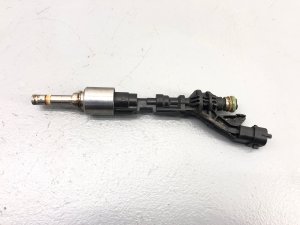
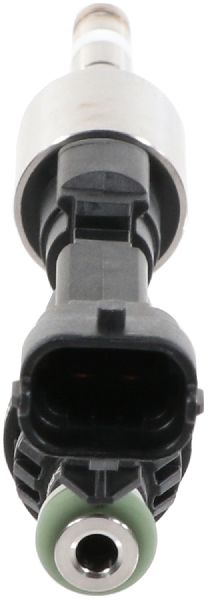
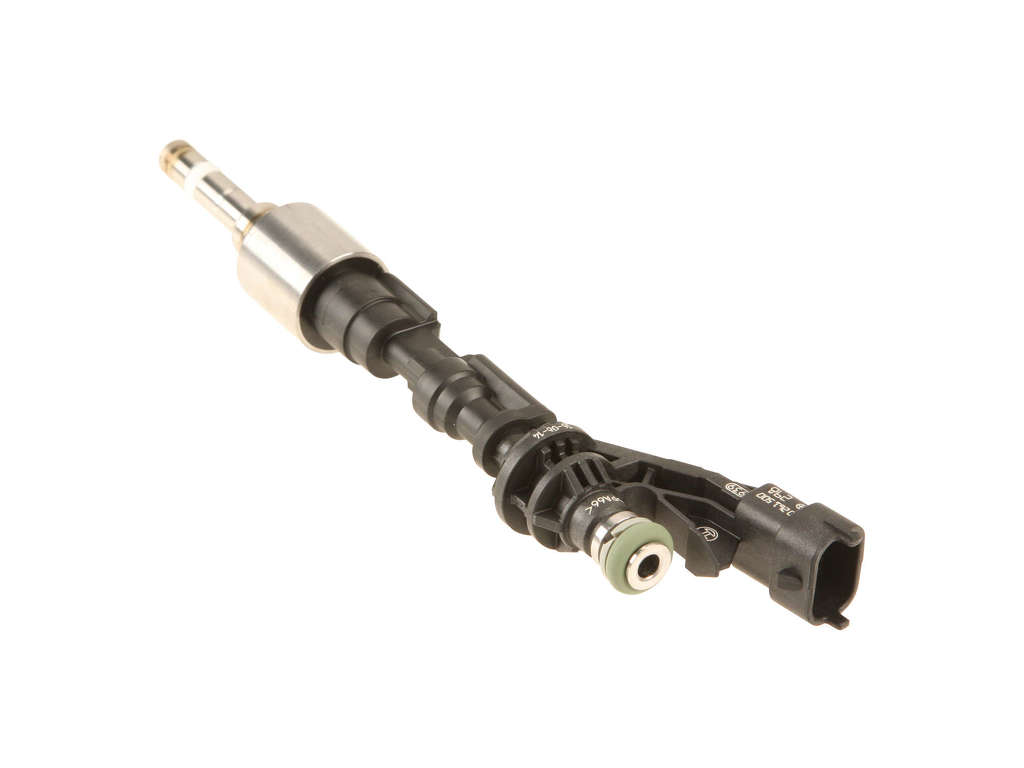
(OEM #LR079542)— A very common failure point on the 5.0L direct injection engine, causing startup misfires when they leak or clog. OEM part is made by Bosch.
Trusted brands: Bosch (OEM)
OEM price range: $100-$250 per injector
Aftermarket price range: $70-$150 per injector - PCV Valve Diaphragm Repair Kit — The diaphragm in the PCV valve tears, creating a vacuum leak. Land Rover sells the whole valve cover, but aftermarket kits are a common, cost-effective repair.
Trusted brands: URO Parts, Various unbranded kits
OEM price range: $200-$400 (for full valve cover)
Aftermarket price range: $20-$50 (for diaphragm kit)
Related Codes That Often Appear With This One
- P0301-P0308 — These codes indicate a misfire on a specific cylinder (e.g., P0301 is Cylinder 1). P0316 is almost always accompanied by one of these, which is essential for telling you where to start your diagnosis.
- P0300 — This code for 'Random/Multiple Cylinder Misfire' may appear with P0316 if the problem affects the whole engine, such as a large vacuum leak, low fuel pressure, or multiple failing injectors.
- P0171 / P0174 — These 'System Too Lean' codes can appear if the misfire is caused by a vacuum leak (like a failed PCV valve) or a clogged fuel injector that isn't delivering enough fuel.
Technical Service Bulletins (TSBs) & Recalls
- LTB00409NAS3: Addresses engine misfires (P0301-P0308, P0316), hard starting, and rough idle. Suggests that if standard diagnostics (plugs, coils, compression) find no fault, the cause may be fuel injector restriction due to poor fuel quality.
- LTB01023NAS1 / JTB00533NAS1: Applies to 2013+ models. Addresses cold start misfires (below 75°C / 167°F) that may be caused by a fuel injection calibration issue, requiring a PCM software update.
Platform-Specific Known Issues
- TSB LTB00409NAS3 was issued for 2010-2013 models, identifying that poor fuel quality can clog fuel injectors, leading to codes P0301-P0308 and P0316. The bulletin advises checking fuel quality if other diagnostics don't find a fault.
- Leaking fuel injectors are a widely reported issue. They drip fuel into a cylinder after shutdown, causing a rich misfire on the next cold start, which directly triggers P0316. This is a very common repair story in owner forums.
- A less common issue covered by TSB LTB01023NAS1 (for 2013+ models) involves a software calibration issue that can cause cold-start misfires, fixable with a dealer software update.
Mechanic-Grade Diagnostic Values
- Low-Pressure Fuel System — expected: Should be ~105 PSI on startup (primed by opening driver's door), settling to ~79 PSI after warm-up at idle. Can drop to 65 PSI and still be within spec.. Failure: Pressure significantly below 65 PSI at idle, or failure to reach ~105 PSI on startup, suggests a weak in-tank fuel pump.
- High-Pressure Fuel System — expected: Should be no lower than 2,000 PSI on startup, leveling out to ~500 PSI at idle. Should rise back toward 2,000 PSI when held at 3,000 RPM.. Failure: Pressure significantly below 2,000 PSI on startup or under load, or pressure that does not respond to RPM changes, can indicate failing High-Pressure Fuel Pumps (HPFPs).
- Mode 6 Misfire Data — expected: Test ID $81, Component ID $01-$08 should show zero or very low misfire counts for each cylinder over a drive cycle.. Failure: A high count for a specific cylinder, even without a corresponding P030x code, points to an intermittent or developing misfire issue on that cylinder.
Hidden / Shadow Codes Worth Checking
- P030x-00: The '-00' suffix is a Failure Type Code (FTC) used by JLR. In this case, it means 'No additional failure information' but confirms the fault is registered in the manufacturer-specific memory, not just as a generic OBD-II code. (see via JLR SDD software or an advanced aftermarket scanner like the GAP IIDTool that can read manufacturer-specific codes.)
- Mode 6, Test ID $81: This is not a trouble code but a diagnostic monitor that provides raw misfire counts for each cylinder for the current and last ten drive cycles. It is invaluable for identifying intermittent misfires that aren't severe enough to set a P030x code yet. (see via An OBD-II scanner with Mode 6 capability.)
Scan Tool Commands That Help
- JLR SDD (Symptom Driven Diagnostics): Power Balance Test — To identify which cylinder is contributing less power than the others, helping to pinpoint a misfire without swapping components.
- GAP IIDTool: Live Values - Misfire Counts — To monitor misfires on each cylinder in real-time. A user reported confirming an idle-only misfire that stopped as soon as RPMs were raised, which helped narrow down the diagnosis.
- GAP IIDTool: Service Functions - Fuel Prime Procedure — To manually activate the low-pressure fuel pump. If the engine starts after running this prime but dies shortly after, it strongly suggests a failing low-pressure pump.
- GAP IIDTool / JLR SDD: Reset Adaptations — After replacing major components like fuel injectors or MAF sensors, this function clears the engine's learned values, forcing it to re-learn based on the new parts, which can resolve rough running.
Wiring & Ground Locations
- Engine Control Module (ECM) — Located in the engine compartment, typically at the top center of the firewall.. This is the source of the code. All sensor inputs (crankshaft position) and outputs (ignition coil and fuel injector commands) route through the ECM. A corroded connector here could cause myriad issues.
- Low-Pressure Fuel Sensor — On the LR4, the sensor is located on the right (passenger) side of the transmission, often covered by an aluminum heat shield.. If diagnosing systemic misfires or a P0087 code alongside P0316, checking the connection and readings from this sensor is crucial for differentiating a bad pump from a bad sensor.
Real Owner Repair Stories
- Land Rover Forums user 'rolledover' (2012 Land Rover LR4, 137k miles) — Persistent P0305 and P0316 codes, slight shake at idle but drove well otherwise. Issue often appeared after refueling.
❌ Tried (didn't work) Swapped ignition coil (misfire did not move), Replaced spark plug and wire on cylinder 5, Replaced fuel injectors on cylinders 1, 3, 5, and 7, Used BG44k fuel system cleaner, Walnut blasted intake valves
✅ What actually fixed it A leak-down test confirmed a leaking exhaust valve on the misfiring cylinder (Cylinder 5). The final fix was internal engine head work, not a fuel or ignition component. - Land Rover Forums user 'ktm_525' (Land Rover LR4 with 5.0L V8, ~50k miles) — Check engine light with codes P0316 and P0308 (Cylinder 8 misfire). No noticeable driveability issues.
❌ Tried (didn't work) User went directly to the dealer for diagnosis rather than attempting DIY fixes.
✅ What actually fixed it The dealer diagnosed a leaking fuel injector. They replaced all four injectors on the affected bank (Bank 2), which resolved the codes.
"I Checked Everything" — The Actual Cause
- In a well-documented case on Land Rover forums, an owner with a persistent P0305 and P0316 had already replaced the coil, plug, and multiple fuel injectors, and even had the intake valves walnut blasted. Standard diagnostics failed to find the issue. The root cause was finally identified via a leak-down test as a leaking exhaust valve on that cylinder, a purely mechanical failure that fuel and ignition system tests would never find.
When the Usual Fixes Don't Work
- While the vast majority of P0316 codes are caused by ignition or fuel components, there are multiple owner-documented cases where replacing plugs, coils, and even all 8 injectors does not solve the problem. In one such case, after extensive parts replacement, the final cause was determined to be a leaking exhaust valve, which required a cylinder leak-down test to diagnose and subsequent engine head repairs. This underscores the need for deeper mechanical diagnosis if the common component swaps fail.
OEM Part Supersession History
LR079542→LR105439— Part revision by the manufacturer (Bosch).
Heads up: LR105439 is the current direct replacement for the earlier part number. The OEM part is made by Bosch, their part number is 0261500298.
Model Year Variations Within This Range
- Late 2012-2013: These model years received redesigned, more robust timing chain tensioners and guides from the factory. While not completely immune to failure, they are significantly less prone to the timing chain issues that affect 2010-early 2012 models. This makes the 2013 model year particularly desirable.
Diagnostic Flowchart
Other Known Issues on This Vehicle
Issues unrelated to this code that are worth knowing about as an owner of this generation:
- Timing Chain Tensioner & Guide Wear 🔴 High — Common on 2010-2012 models, especially before updated parts were used. Often presents as a loud rattle on cold starts between 60k-100k miles.
- Water Pump Failure 🔴 High — Very common failure. The original water pumps are prone to leaking coolant, which can lead to overheating if not caught early. Many owners report failures at relatively low mileage (30k-60k miles).
- Cracking Plastic Coolant Pipes 🔴 High — The plastic coolant crossover pipes at the front and rear of the engine become brittle with heat cycles and crack, causing major coolant leaks. This is a near-guaranteed failure point, often occurring after 80k miles. Failure can be sudden and lead to catastrophic overheating.
- Leaking Valve Cover Gaskets 🟡 Low — Gaskets become hard and shrink over time, causing oil leaks onto the exhaust manifolds. This is a common issue on higher-mileage vehicles.
- Air Suspension Compressor Failure 🟠 Medium — The air suspension compressor is a common wear item and tends to fail around 80k-120k miles, leading to suspension faults and an inability to raise the vehicle.
Used vs. New Parts: Buying Guide for This Vehicle
When a used part is the smart pick: For this repair, used ignition coils from a low-mileage, reputable salvage yard can be a cost-effective option. Other electronic sensors could also be considered if from a trusted source. Avoid used wear items.
Donor-vehicle mileage cap: roughly under 75000 miles for the part to have meaningful remaining life.
What to inspect on the donor part:
- Check for a clean, corrosion-free part.
- For coils, ensure the plastic housing is not cracked and the boot is pliable.
- Ask for the VIN of the donor vehicle to verify mileage and check for accident history (avoid parts from major front-end collisions).
OEM-only on this vehicle (don't cheap out):
- Fuel Injectors: Given their high failure rate and the labor-intensive replacement, installing used injectors is a significant risk. New OEM (Bosch) injectors are strongly recommended.
- Fuel Injector Seals: These are single-use Teflon seals and MUST be purchased new for any injector installation.
- PCV Diaphragm: While the entire valve cover is an OEM part, the common fix is an aftermarket diaphragm kit. The diaphragm itself should always be new, never used.
Aftermarket brands forum-validated for this vehicle:
- Bosch (OEM for fuel injectors and often coils)
- Denso (Ignition Coils)
- NGK (Spark Plugs)
Brands owners have reported issues with on this vehicle:
- Unbranded, 'white-box' fuel injectors and ignition coils from online marketplaces are frequently reported to fail prematurely.
Real Owner Stories
Aggregated from forums and TSBs cited above. Mileages and costs reflect what owners reported in those sources.
2012 Land Rover LR4
Symptoms: A persistent P0305 and P0316, even after the owner had already replaced the spark plug, ignition coil, and multiple fuel injectors.
What fixed it: The issue was ultimately diagnosed as a leaking exhaust valve, which was confirmed by performing a leak-down test.
Source hint: landroverforums.com: 'Engine Misfire' (2012 LR4)
Related OBD-II Codes
Frequently Asked Questions
I have a 2013 LR4 with P0316 on a cold start. Could it just be a software issue?
My mechanic says the misfire is due to bad fuel. Is this a known issue on the 2010-2013 LR4?
I'm getting a P0316 code and hear a loud whistling sound at idle. What could that be?
The dealer wants to replace the whole valve cover for a PCV issue. Is there a cheaper fix?
My LR4 has a misfire on cylinder 6 (P0306) along with P0316. What's the first diagnostic step?
After ruling out the spark plug and ignition coil, what's the most likely cause for P0316 on this 5.0L V8?
Are other Land Rover or Jaguar models with the 5.0L V8 also affected by these P0316 issues?
Helpful Videos
Used OEM Parts in Stock

New Aftermarket Parts Available


The information in this article is provided for general reference and educational purposes only. Vehicle specifications, procedures, and part compatibility can vary by production date, trim level, and region. Always consult your vehicle's factory service manual and verify part numbers before purchasing or performing repairs. Safety-critical components such as airbags, seat belts, and braking systems should be installed by a qualified professional.
- Land Rover LR4:
- 🎬 Helpful Videos
- 🛍️ Shop This Part
- What's Unique About the 2010-2013 Land Rover LR4
- Symptoms You May Notice
- Most Likely Causes
- Rare But Worth Checking
- Diagnosis Steps
- Parts You'll Likely Need
- Related Codes That Often Appear With This One
- Technical Service Bulletins (TSBs) & Recalls
- Platform-Specific Known Issues
- Mechanic-Grade Diagnostic Values
- Hidden / Shadow Codes Worth Checking
- Scan Tool Commands That Help
- Wiring & Ground Locations
- Real Owner Repair Stories
- "I Checked Everything" — The Actual Cause
- When the Usual Fixes Don't Work
- OEM Part Supersession History
- Model Year Variations Within This Range
- Diagnostic Flowchart
- Other Known Issues on This Vehicle
- Used vs. New Parts: Buying Guide for This Vehicle
- Real Owner Stories
- 2012 Land Rover LR4
- Related OBD-II Codes
- Frequently Asked Questions
- 🎟️ Get 5% Off