

P0316 on 2002-2005 Land Rover Freelander: Startup Misfire Causes and Fixes
P0316 on a 2002-2005 Freelander means a misfire was detected right after starting the engine. While standard tune-up parts like spark plugs and coils are common causes, a Land Rover Technical Service Bulletin (SWA09013) also points to fuel system issues. Furthermore, a very common issue on this specific KV6 engine is the failure of the Variable Intake System (VIS) motors, which can cause identical symptoms.
- P0316 means your Freelander is misfiring within the first 1000 revolutions of startup.
- Always check for other codes; a specific cylinder code (P0301-P0306) will tell you where to start looking.
- While spark plugs and coils are the most likely culprits, don't overlook the fuel system (filter, pump, injectors) or vacuum leaks, as these are known issues on this model.
- A flashing Check Engine Light indicates a severe misfire that can damage your catalytic converter; avoid driving if possible.
What's Unique About the 2002-2005 Land Rover FREELANDER
For the 2002-2005 Freelander with the 2.5L KV6 engine, a P0316 code doesn't always point to the usual ignition system suspects. A key piece of evidence is a manufacturer Technical Service Bulletin (TSB SWA09013) that directly links P0316 with hesitation and stalling caused by a fuel system problem. Even more specific to the KV6 engine is the common failure of the Variable Intake System (VIS) motors. These motors control butterflies in the intake manifold to optimize torque. When they fail, the butterflies can be left in the wrong position, leading to lean running conditions, a significant loss of low-RPM power, and misfires that can trigger P0316.
Diagnostic Flowchart
Tap your situation to follow the diagnostic path that matches what you're seeing on this vehicle.
Symptoms You May Notice
- Check Engine Light is on (may flash during misfire)
- Engine hesitation or stumbling, especially on acceleration
- Rough idle, particularly right after starting
- Significant loss of power, especially at lower RPMs
- Engine may cut out or stall
- Strong smell of fuel from the exhaust
- Audible hissing noise from under the intake manifold, indicating a vacuum leak
- Replacing only ignition components when the root cause is a fuel delivery problem as suggested by TSB SWA09013.
- Replacing a crankshaft position sensor when the issue is a simple vacuum leak or fouled spark plug.
- Repeatedly replacing spark plugs and coils without addressing a failing VIS motor or a significant vacuum leak, which are the true underlying causes of the misfire.
Most Likely Causes
- Worn Spark Plugs or Faulty Ignition Coils 🔴 High Probability These are standard wear-and-tear items on any gasoline engine and are the most frequent cause of misfires. The KV6 has three coils on the front bank that are easy to access, and three on the rear bank that require removal of the upper intake manifold.
How to confirm: Inspect spark plugs for wear, fouling, or damage. Swap the ignition coil from the misfiring cylinder (identified by a P030x code) with a coil from a known good cylinder. If the misfire code follows the coil, the coil is bad.
Typical fix: Replace all six spark plugs as a set. Replace the faulty ignition coil(s). 🎬 See this walkthrough on changing spark plugs and coils.
Est. part cost: $60-$180 for a set of spark plugs and one ignition coil. - Fuel System Issues (Filter, Pump, Injector) 🟡 Medium Probability TSB SWA09013 specifically mentions fuel system problems causing hesitation, stalling, and storing code P0316 along with lean codes (P0171, P0174) and other misfire codes. The fuel filter is integrated with the fuel pump in the tank and is a common failure point leading to low pressure.
How to confirm: Check fuel pressure at the fuel rail using a pressure gauge to ensure it's within spec. Listen for a humming sound from the fuel pump when the key is turned on. A clogged injector can be diagnosed by checking resistance or performing a flow test.
Typical fix: The fuel filter is part of the in-tank pump assembly (Part No. WFX000210), so the entire unit is typically replaced. A single clogged injector can be cleaned or replaced.
Est. part cost: $200-$450 for a complete fuel pump and filter assembly, $50-$100 for a single fuel injector. - Vacuum Leaks 🟡 Medium Probability Aging rubber and plastic hoses on the KV6 engine become very brittle and crack. Common leak points include the PCV breather pipes under the engine cover and the main air intake boot. These leaks allow unmetered air into the engine, which disrupts the air-fuel ratio and causes misfires.
How to confirm: Visually inspect all vacuum and breather lines for cracks, especially the T-shaped pipes under the plastic engine cover. With the engine running, spray carburetor cleaner or smoke from a smoke machine around the intake manifold gasket and vacuum hoses. A change in engine idle or visible smoke being drawn in indicates a leak.
Typical fix: Replace the cracked vacuum hose or faulty intake manifold gasket.
Est. part cost: $20-$120 depending on the specific hose or gasket.
Rare But Worth Checking
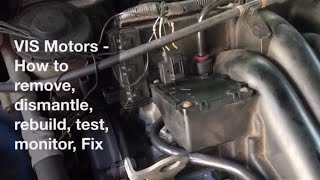
- Faulty Variable Intake System (VIS) Motors: The KV6 engine has two VIS motors ('Power' and 'Balance') that control butterfly valves inside the plastic intake manifold. These motors frequently fail due to oil contamination from the breather system or internal component wear. A failed VIS motor can cause a dramatic loss of low-end torque and create lean conditions that lead to misfires. Owners often report this as the root cause after replacing ignition and fuel parts with no success.
- Faulty Crankshaft Position Sensor (CKP): The CKP sensor provides critical engine timing data. A failing sensor can send erratic signals, especially during startup, causing misfires. While less common than plugs or coils, it can produce these symptoms and may not always set a specific sensor code initially.
- Faulty Upstream Oxygen (O2) Sensor: A faulty upstream O2 sensor can send incorrect data about the air-fuel mixture to the ECM, causing it to adjust fuel trim improperly. Some owners have reported that replacing a faulty O2 sensor resolved persistent misfire codes on one bank.
Diagnosis Steps
- Read all stored fault codes with an OBD-II scanner. Note any accompanying codes like P030x or P0171/P0174.
- Inspect the ignition system. Check the condition of spark plugs and look for obvious damage to ignition coil boots.
- If a specific cylinder misfire is identified (e.g., P0302), swap the ignition coil with another cylinder and clear the codes. If the misfire code moves to the new cylinder, the coil is faulty.
- Check for vacuum leaks. Visually inspect all hoses connected to the intake manifold, especially the breather pipes under the engine cover. Use a smoke machine or carb cleaner to check for leaks around the intake gaskets and vacuum lines.
- Test the fuel system. Connect a fuel pressure gauge to the Schrader valve on the fuel rail to verify fuel pressure meets manufacturer specifications.
- If fuel pressure is low, suspect the in-tank fuel pump/filter assembly (WFX000210).
- Test the VIS motors. Listen for them to actuate when the ignition is turned on. A more thorough test involves applying 12V to the motor pins to check for operation or using diagnostic software to command them. 🎬 Watch: How to test, dismantle, and rebuild your VIS motors.
- If all else fails, investigate less common causes like the crankshaft position sensor or upstream O2 sensors.
Parts You'll Likely Need
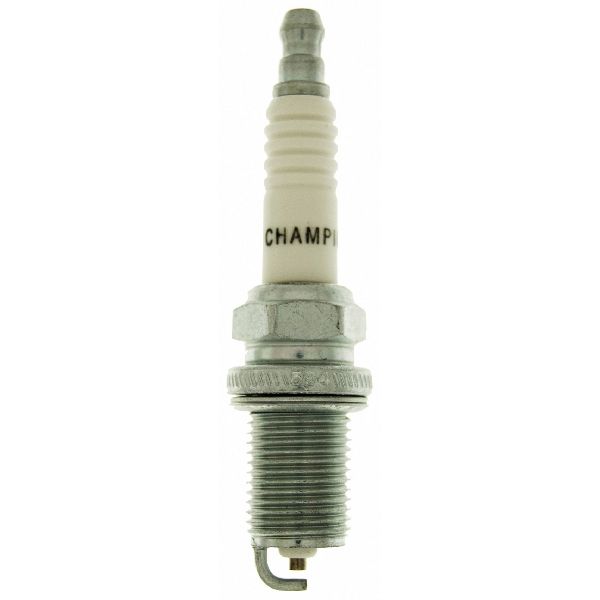
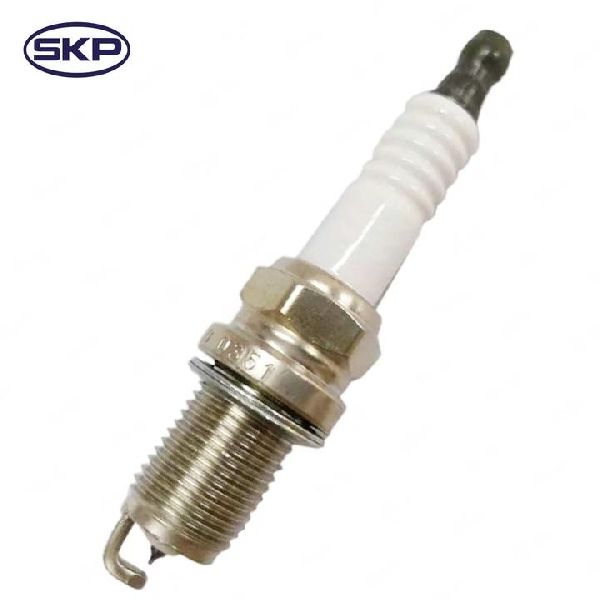
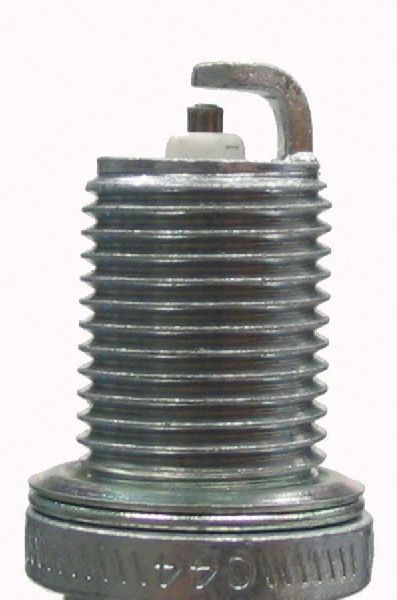
- Spark Plugs (Set of 6)
(OEM #NLP100290L)— These are primary wear items and a leading cause of all engine misfires.
Trusted brands: NGK, Bosch
OEM price range: $80-$120
Aftermarket price range: $40-$70 - Ignition Coil
(OEM #NEC101000L)— Ignition coils fail over time and are a direct cause of cylinder-specific misfires.
Trusted brands: Bosch, Delphi, Intermotor
OEM price range: $100-$150
Aftermarket price range: $40-$80 - Fuel Pump and Filter Assembly
(OEM #WFX000210)— A clogged filter or failing pump can cause low fuel pressure, leading to lean conditions and misfires, as highlighted by the TSB. The filter is integrated into the pump assembly.
Trusted brands: VDO (OEM), Delphi
OEM price range: $350-$450
Aftermarket price range: $150-$250
Related Codes That Often Appear With This One
- P0300 — This indicates a random/multiple cylinder misfire, which often occurs alongside the startup-specific P0316.
- P0301-P0306 — These codes specify which cylinder is misfiring (e.g., P0301 for cylinder 1). They help narrow down the diagnosis to a specific coil, plug, or injector. The TSB SWA09013 explicitly lists these codes with P0316.
- P0171, P0174 — These codes indicate the engine is running lean on Bank 1 and Bank 2, respectively. They often appear with P0316 when the cause is a vacuum leak, a fuel delivery issue, or faulty VIS motors, as noted in TSB SWA09013.
Technical Service Bulletins (TSBs) & Recalls
- SWA09013: Addresses hesitation, engine cut-out/stall, and the possibility of DTCs P0301-P0306, P0171, P0174, and P0316 being stored due to a fuel system issue.
Platform-Specific Known Issues
- Technical Service Bulletin SWA09013 identifies a condition where fuel system problems can cause hesitation, stalling, and the logging of P0316 along with misfire codes P0301-P0306 and lean codes P0171/P0174. This points to a known issue where fuel delivery should be a key diagnostic focus.
- The Variable Intake System (VIS) motors on the KV6 are a notorious failure point. When they fail, the intake butterflies remain in one position, severely impacting engine breathing and causing a lack of power, rough running, and setting lean/misfire codes. This is often misdiagnosed as an ignition or fuel injector problem.
- The plastic and rubber breather hoses of the PCV system become very brittle with age and heat, frequently cracking and causing significant vacuum leaks that lead to lean misfires.
Mechanic-Grade Diagnostic Values
- Fuel Pressure (at idle) — expected: 3.4 - 3.5 bar (approx. 50 psi). Failure: Pressure significantly lower than 3.4 bar indicates a potential issue with the fuel pump, filter, or regulator.
- Fuel Injector Resistance — expected: 14.5 ± 0.7 ohms at 20°C (68°F). Failure: A reading significantly outside this range, or one injector that is very different from the others, points to a faulty injector.
- VIS Motor Internal Microswitch Resistance — expected: Close to 0 ohms when actuated.. Failure: Readings as low as 4-9 ohms are considered too resistive and can prevent the motor from operating correctly, requiring the microswitch to be cleaned or replaced.
Scan Tool Commands That Help
- Land Rover T4 / TestBook: VIS Motor Actuation Test — This function allows a technician to command the VIS power and balance motors to operate, confirming if the motors are functional and if the internal manifold flaps are moving. This is crucial for diagnosing VIS-related lean and misfire codes (P1471, P1472, etc.) that often accompany P0316.
- Land Rover T4 / TestBook: Read SRS/ABS/Body Control Module Codes — Generic OBD-II scanners only read powertrain codes. The T4 or advanced aftermarket tools like iCarsoft LR series can access all vehicle modules to identify other system faults that might be indirectly related or occurring simultaneously.
Wiring & Ground Locations
- Engine Ground Strap — Runs between the chassis rail located under the battery tray and a mounting point on the gearbox.. A poor engine ground can cause erratic behavior in all engine electronics, including the ignition coils, injectors, and ECM, leading to intermittent and hard-to-diagnose misfires.
- Battery Negative to Body Ground — The main negative battery cable connects directly to the body/inner wing just behind the battery.. This is the primary ground point for the entire vehicle's electrical system. Corrosion or looseness here can cause widespread issues, including no-start or weak spark conditions that could be misinterpreted as component failure.
Real Owner Repair Stories
- landroverforums.com user 'Fallstaff' (2005 Freelander V6, 170,000km) — Sudden loss of power and misfiring, with codes P0305, P0306 (misfires on bank 2) and P0032 (O2 sensor heater circuit high, bank 1).
❌ Tried (didn't work) Initial diagnosis pointed towards standard ignition parts (plugs/coils).
✅ What actually fixed it Replacing the upstream oxygen (O2) sensor for the affected bank resolved the multiple cylinder misfires. Another user in the same thread confirmed their similar issue was caused by a corroded pin on the O2 sensor connector. - landyzone.co.uk user 'freelander02' (2002 Freelander KV6 2.5L) — Lean codes P0171, P0174 and VIS motor code P1471. The VIS balance motor was heard oscillating after turning the key off.
❌ Tried (didn't work) Replacing the VIS balance motor.
✅ What actually fixed it Upon inspection after replacing the motor, it was discovered that the plastic arm for the butterfly valve inside the intake manifold had physically broken. The root cause was a mechanical failure inside the manifold, not the motor itself. The fix requires either a complex repair of the manifold internals or a complete manifold replacement. - AULRO.com user 'frans' (2001 Freelander KV6) — Engine bay covered in oil, camshaft seal caps repeatedly blowing out, hissing sound, and audible pressure release when opening the oil filler cap.
❌ Tried (didn't work) Replacing the camshaft seal caps multiple times.
✅ What actually fixed it The root cause was a completely blocked PCV (crankcase ventilation) breather hose that connects to the throttle body. The blockage caused extreme positive pressure to build in the crankcase, forcing seals out. Clearing the blockage with compressed air (115 psi was required) resolved the pressure issue and stopped the seals from failing.
When the Usual Fixes Don't Work
- In several documented cases, multiple misfire codes on a single cylinder bank (e.g., P0305, P0306) along with P0316 were not caused by the expected ignition components like plugs or coils. The actual root cause was a faulty upstream O2 sensor for that bank. The faulty sensor provided incorrect air/fuel data to the ECM, which then commanded improper fuel trim, leading to the misfires. This is often missed as O2 sensors are not typically the first suspect for cylinder-specific misfires.
Model Year Variations Within This Range
- 2004-2005: A facelift was introduced for the 2004 model year which included a revised interior (dashboard, instrument cluster) and external cosmetic changes. However, the 2.5L KV6 engine and its management system remained fundamentally the same, so the causes and diagnostic procedures for P0316 are consistent across the 2002-2005 range.
Helpful Videos

Used OEM Parts in Stock

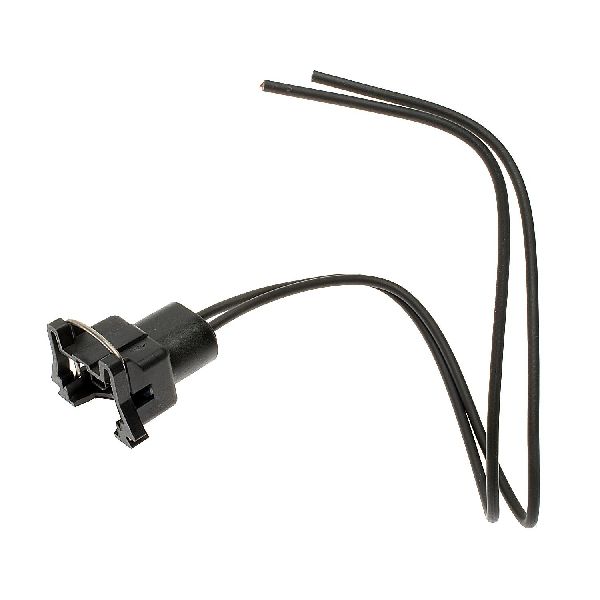
New Aftermarket Parts Available


The information in this article is provided for general reference and educational purposes only. Vehicle specifications, procedures, and part compatibility can vary by production date, trim level, and region. Always consult your vehicle's factory service manual and verify part numbers before purchasing or performing repairs. Safety-critical components such as airbags, seat belts, and braking systems should be installed by a qualified professional.
- Land Rover FREELANDER:
- 🎬 Helpful Videos
- 🛍️ Shop This Part
- What's Unique About the 2002-2005 Land Rover FREELANDER
- Diagnostic Flowchart
- Symptoms You May Notice
- Most Likely Causes
- Rare But Worth Checking
- Diagnosis Steps
- Parts You'll Likely Need
- Related Codes That Often Appear With This One
- Technical Service Bulletins (TSBs) & Recalls
- Platform-Specific Known Issues
- Mechanic-Grade Diagnostic Values
- Scan Tool Commands That Help
- Wiring & Ground Locations
- Real Owner Repair Stories
- When the Usual Fixes Don't Work
- Model Year Variations Within This Range
- 🎟️ Get 5% Off