

P0316 on 2017-2021 Ford GT: Startup Misfire Causes and Fixes
On a 2017-2021 Ford GT, code P0316 is most often caused by multiple short engine runs without letting the vehicle fully warm up. Before replacing parts, ensure the car is driven long enough to reach operating temperature. If the code persists, standard misfire causes like ignition coils, spark plugs, or even seasonal fuel blend changes are the next items to check.
- For a 2017-2021 Ford GT, P0316 is very likely caused by how the car is being used, specifically repeated starts without a full warm-up.
- Always check for specific cylinder misfire codes (P0301-P0306) that will accompany P0316.
- Before buying any parts, clear the codes and drive the car for 15-20 minutes to see if the problem resolves itself.
- Due to the vehicle's value and complexity, any persistent misfire should be diagnosed by a qualified professional.
What's Unique About the 2017-2021 Ford GT
The Ford GT's high-output 3.5L EcoBoost V6 is a race-derived, precision-tuned engine. Its engine management system is highly sensitive, particularly during cold starts. Ford issued a Technical Service Bulletin (TSB) specifically for this vehicle, noting that P0316 can be triggered simply by operational behavior, such as repeated cold starts for short durations (e.g., moving the car in a garage) without allowing the engine to reach full operating temperature. This is a critical distinction from many other vehicles where the code immediately points to a failing component.
Diagnostic Flowchart
Tap your situation to follow the diagnostic path that matches what you're seeing on this vehicle.
Symptoms You May Notice
- Check Engine Light (MIL) illuminated or flashing
- Rough running or shaking engine immediately after starting
- Hard starting condition
- Rough idle that may smooth out after the engine warms up
- Slight hesitation on acceleration, even if no other symptoms are present.
- Immediately replacing ignition or fuel parts without first considering the vehicle's operating conditions, as advised by Ford's TSB SSM 50616.
- Replacing parts for an isolated P0316 code that may have been caused by a normal seasonal fuel blend change. 🎬 See this breakdown of P0316 causes and common fixes
Most Likely Causes
- Repeated Cold Starts Without Sufficient Warm-Up Time 🔴 High Probability As documented in Ford TSB SSM 50616, the engine calibration is sensitive to this condition. Short runs can lead to minor fuel or condensation fouling that the PCM interprets as a misfire on the next startup.
How to confirm: Review the vehicle's recent usage. If it has been started multiple times for short periods without being driven, this is the likely cause. Clear the codes and drive the vehicle for 15-20 minutes to allow it to fully warm up. See if the code returns on the next cold start.
Typical fix: Change vehicle operation to ensure the engine reaches full operating temperature each time it is started. No parts are typically required.
Est. part cost: $0 - Failing Ignition Coil(s) 🟡 Medium Probability Coil-on-plug systems are a common failure point for misfires on modern engines, and turbocharged EcoBoost engines are known to be hard on ignition components. Heat and vibration can cause the coil's internal windings to fail over time, resulting in a weak or absent spark. For the 2020 model year, the Ford GT received more powerful ignition coils as part of an engine update.
How to confirm: If the P0316 is accompanied by a specific cylinder code (e.g., P0302), swap the ignition coil from the misfiring cylinder with one from a known good cylinder. Clear the codes and run the engine. If the misfire code follows the coil to the new cylinder, the coil is bad.
Typical fix: Replace the faulty ignition coil. A user on F150Forum.com with P0316 and P0306 successfully resolved their issue by replacing the coil on cylinder 6. Many technicians recommend replacing all coils at the same time as a preventative measure.
Est. part cost: $70-$150 per coil - Worn or Fouled Spark Plugs 🟡 Medium Probability High-performance, turbocharged engines are demanding on spark plugs. Carbon fouling (especially from short trips) or electrode wear can prevent a strong, consistent spark, leading to a startup misfire. The service interval can be shorter on these high-output engines. A reduced spark plug gap of .028" is often recommended by technicians for EcoBoost engines to prevent spark blowout under high cylinder pressures.
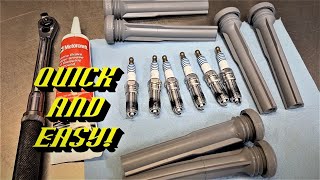
How to confirm: Remove the spark plug from the cylinder indicated by the accompanying P030x code. Inspect for wear, carbon deposits, or oil fouling. The correct gap is critical; check against manufacturer specs. The OEM plug is a Motorcraft SP-583. 🎬 Watch: 3.5L EcoBoost spark plug replacement walkthrough
Typical fix: Replace the spark plugs. It is best practice to replace all plugs as a set. For tuned vehicles, some owners opt for one heat range colder plugs, such as Ford Performance M-12405-35T, to reduce the risk of detonation.
Est. part cost: $100-$250 for a set of high-quality plugs - Leaking Fuel Injector ⚪ Low Probability The GT uses both port and direct injection. A direct or port injector can leak fuel into the cylinder after the engine is shut off. This creates an overly rich mixture on the next startup, causing a misfire until the excess fuel is cleared. This can be exacerbated by certain fuels like E85, especially if the vehicle sits for extended periods.
How to confirm: This is more complex to diagnose. It may involve monitoring fuel pressure bleed-down after shutdown or removing the spark plugs after the vehicle has sat to check for signs of wetness or a strong fuel smell. A professional injector cleaning service can flow-test and identify leaking or clogged injectors.
Typical fix: Replace the faulty fuel injector. A Mustang owner with similar codes traced the issue to one leaking and one clogged injector after the car sat with E85 fuel.
Est. part cost: $200-$500+ per injector - Fuel Quality / Seasonal Blend Change ⚪ Low Probability The P0316 code was specifically developed to monitor cold-start emissions. A switch from 'winter blend' to 'summer blend' fuel (or vice-versa) can change the fuel's volatility. Less volatile summer blend fuel used on a cold morning can cause a brief, slight stumble that the highly sensitive misfire monitor detects, setting a P0316 code without any other codes or actual component faults.
How to confirm: This is a diagnosis of exclusion. If the code appears in isolation (no P030x codes), coincides with a seasonal change, and the car runs perfectly otherwise, this is a strong possibility. The issue may resolve itself after a few tanks of the current season's fuel.
Typical fix: No parts are required. Continue driving the vehicle to cycle through the old fuel. Consider using a high-quality fuel from a top-tier station. If the code appeared after filling up from a questionable station, bad gas could be the culprit.
Est. part cost: $0
Rare But Worth Checking
- Failing Crankshaft Position (CKP) Sensor:
- Intake Valve Carbon Buildup:
Diagnosis Steps
- Scan the PCM for all stored trouble codes. Note the P0316 and any accompanying P030x codes.
- CRITICAL: Per TSB SSM 50616, question the driver about recent operating conditions. Determine if the vehicle has been subjected to multiple cold starts without being allowed to warm up.
- If short trips are confirmed, clear the codes. Start the engine and let it idle or drive it for at least 15 minutes to ensure it reaches full operating temperature. Shut the vehicle off and let it cool completely (several hours).
- Start the engine again and see if the code returns. If it does not, the issue was operational.
- If only P0316 returns and it coincides with a major seasonal temperature change, consider the possibility of it being related to fuel blend and see if it clears after the next fuel fill-up.
- If the code returns with a specific cylinder misfire (e.g., P0304), proceed with standard misfire diagnosis.
- Swap the ignition coil from the misfiring cylinder to a known good cylinder. Clear codes and re-run the engine. If the code moves to the new cylinder, the ignition coil is faulty.
- If the misfire remains on the original cylinder, inspect the spark plug for wear, damage, or fouling. Replace if necessary. Ensure it is the correct part (Motorcraft SP-583) and gapped properly.
- If the coil and plug are good, the issue may be with the fuel injector or, less likely, engine compression or the CKP sensor circuit. These steps require professional-level diagnostics.
- After major engine repairs, such as replacing a crankshaft sensor or timing components, perform the 'Misfire Monitor Neutral Profile Correction' procedure using a dealer-level scan tool like Ford IDS to recalibrate the misfire detection system.
Parts You'll Likely Need
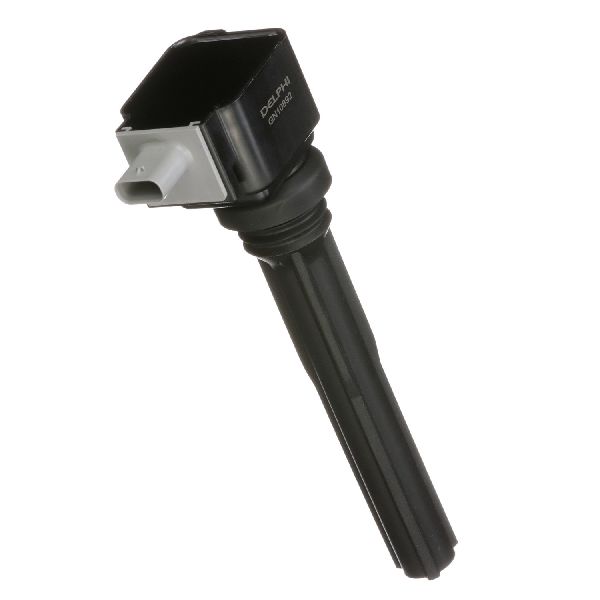
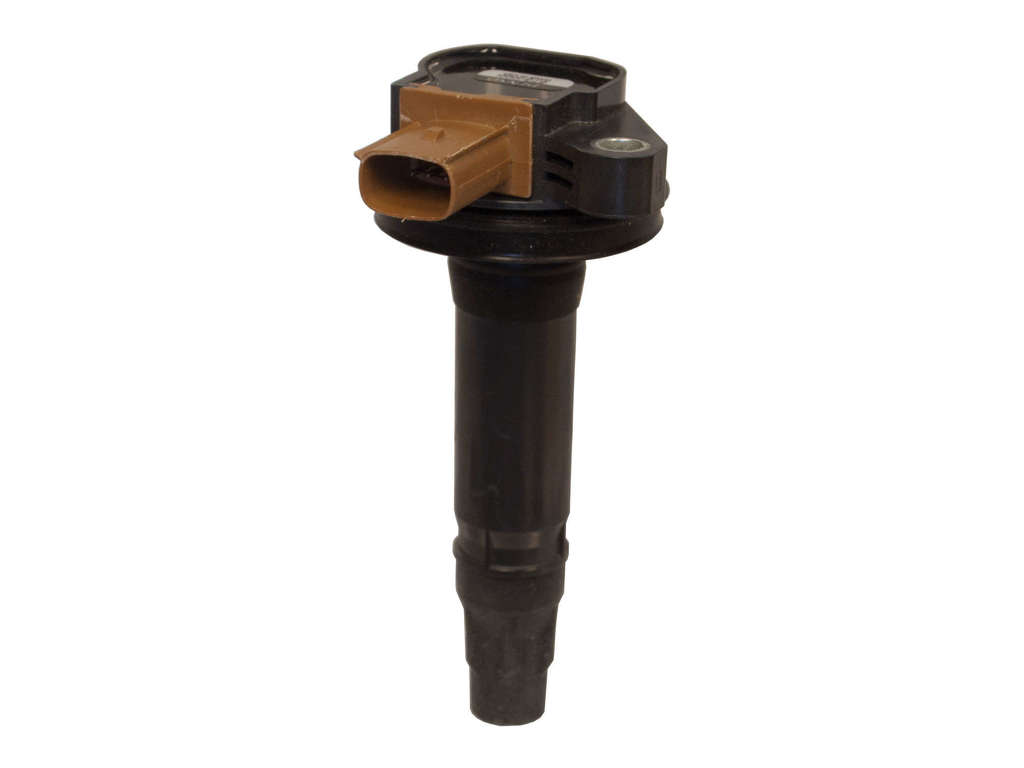
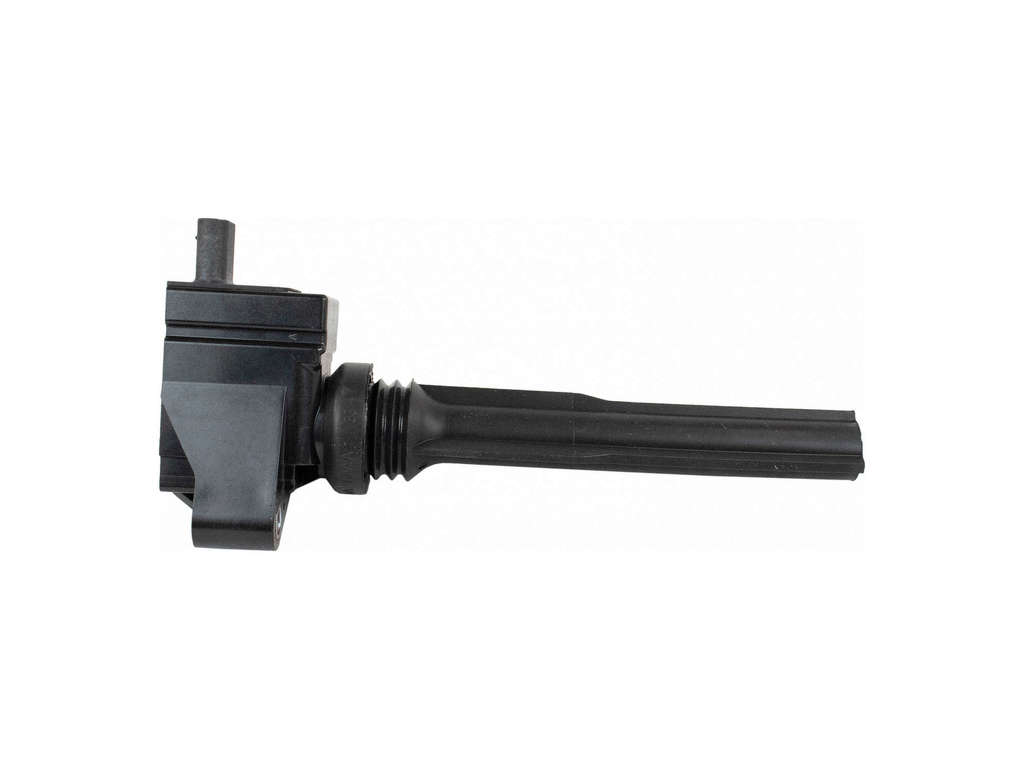
- Ignition Coil — A common cause of specific cylinder misfires if the operational issue is ruled out. Aftermarket examples include Standard Motor Products UF826 or Hitachi IGC0215.
Trusted brands: Motorcraft
OEM price range: $100-$180
Aftermarket price range: $70-$120 - Spark Plugs
(OEM #Motorcraft SP-583)— A maintenance item that can cause misfires when worn or fouled. Should be checked if coils are not the issue.
Trusted brands: Motorcraft, NGK
OEM price range: $15-$25 per plug
Aftermarket price range: $10-$20 per plug
Related Codes That Often Appear With This One
- P0300 — Indicates a random or multiple cylinder misfire, which is the underlying event that P0316 is timing (at startup).
- P0301, P0302, P0303, P0304, P0305, P0306 — These codes pinpoint the exact cylinder(s) that are misfiring, as noted in TSB SSM 50616. P0316 tells you *when* the misfire happened, and these codes tell you *where*.
Technical Service Bulletins (TSBs) & Recalls
- SSM 50616: Notes that a rough run or hard start with DTCs P0300-P0306 and P0316 may be caused by multiple cold starts. Advises checking operating conditions before performing diagnostics.
Platform-Specific Known Issues
- TSB SSM 50616 explicitly states that 2017-2021 GT vehicles can exhibit P0316 with other misfire codes due to multiple cold engine start-ups without allowing the engine to warm up. This should be the first diagnostic consideration.
- The high-strung nature of the engine makes its misfire monitor particularly sensitive, meaning minor issues like seasonal fuel blend changes can sometimes trigger a P0316 code when it might not on a less performance-focused vehicle.
Mechanic-Grade Diagnostic Values
- Low-Pressure Fuel System — expected: 40-60 PSI at idle.. Failure: Pressure significantly below this range could indicate a weak in-tank fuel pump.
- High-Pressure Fuel System (Cranking) — expected: Should reach ~500 PSI while cranking.. Failure: Failure to build pressure can indicate a faulty high-pressure fuel pump (HPFP).
- High-Pressure Fuel System (Under Load) — expected: 1,500 - 2,150 PSI at wide-open throttle; can reach up to 2,900 PSI.. Failure: If actual pressure lags more than 200 PSI behind the desired pressure reported by the PCM, it can indicate a failing HPFP or leaking injector.
- Direct Fuel Injector Resistance — expected: 1 to 2 ohms.. Failure: Readings outside this range indicate a failed injector coil.
- Mode 6 Misfire Counts (TID $A2-$A7) — expected: Should be zero or very close to zero for all cylinders.. Failure: A high count on a specific cylinder (e.g., 28 counts on cylinder 2) points to the source of the misfire, even if a P030x code has not yet set.
Hidden / Shadow Codes Worth Checking
- Mode 6 Data (TIDs $A2-$A7): This data provides raw misfire counts for each cylinder (Cylinder 1 = $A2, Cyl 2 = $A3, etc.) during the last 10 drive cycles. It can reveal which cylinder is misfiring before the count is high enough to trigger a P030x code. (see via A professional scan tool like Ford IDS or an advanced OBD-II scanner with Mode 6 capability (like FORScan).)
Scan Tool Commands That Help
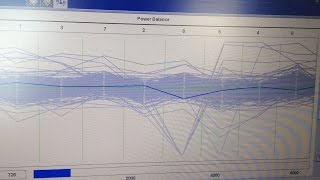
- Ford IDS (or equivalent): Power Balance Test — This is a critical diagnostic test for Ford misfires. It graphically displays the power contribution of each cylinder in real-time, making it easy to spot a weak or non-firing cylinder. It's more definitive than just reading codes.
- Ford IDS / FJDS (or equivalent): Misfire Monitor Neutral Profile Correction — This procedure MUST be performed after replacing the PCM, crankshaft position sensor, crankshaft pulley, transmission, or any internal engine timing components. It recalibrates the crankshaft position profile so the PCM can accurately detect misfires. Failure to do this can cause false P0316 codes or a failure to detect real misfires.
Wiring & Ground Locations
- Engine Ground Stud — There is a ground stud on the back side of the left cylinder head, which serves as a grounding point for components like the cooling fan.. A poor engine ground can cause erratic behavior in sensors and actuators, including the ignition coils and crankshaft position sensor, potentially leading to misfire codes. Ensuring this ground is clean and tight is a valid diagnostic step for unexplained electrical issues.
- Ignition Coil Connector — On top of each valve cover, connecting to the ignition coil for each cylinder.. The 3.5L EcoBoost in this generation typically uses a 3-pin connector for the ignition coils. A damaged connector or poor pin fitment can interrupt the signal or power to the coil, causing a misfire on that cylinder.
Real Owner Repair Stories
- Ford F150 Forum (2011 Ford F-150 3.5L EcoBoost) — High-speed misfire, hesitation under acceleration.
❌ Tried (didn't work) Replacing only one ignition coil., Gapping new spark plugs to the factory setting of .033-.034 inches.
✅ What actually fixed it Replacing all spark plugs and gapping them down to 0.028 inches. This completely resolved the hesitation and misfire under load. - Ecoboost Performance Forum (Ford SHO (3.5L EcoBoost)) — Check Engine Light with code P0316.
❌ Tried (didn't work) Visual inspection and basic checks.
✅ What actually fixed it A technician performed a Power Balance Test and checked Mode 6 data using the Ford IDS scan tool. No misfires were found, indicating the code was likely an anomaly (possibly from fuel blend or a single brief event) and not an active component fault. The code was cleared and did not return.
Model Year Variations Within This Range
- 2020-2021: For the 2020 model year, the Ford GT's engine was updated to produce 660 horsepower. This update included more powerful ignition coils and gallery-cooled pistons. While the part numbers may differ, the diagnosis for a misfire remains the same, but technicians should be aware that pre-2020 coils may not be correct for a 2020+ vehicle.
Helpful Videos

We Have This Part in Stock


The information in this article is provided for general reference and educational purposes only. Vehicle specifications, procedures, and part compatibility can vary by production date, trim level, and region. Always consult your vehicle's factory service manual and verify part numbers before purchasing or performing repairs. Safety-critical components such as airbags, seat belts, and braking systems should be installed by a qualified professional.
- Ford GT:
- 🎬 Helpful Videos
- 🛍️ Shop This Part
- What's Unique About the 2017-2021 Ford GT
- Diagnostic Flowchart
- Symptoms You May Notice
- Most Likely Causes
- Rare But Worth Checking
- Diagnosis Steps
- Parts You'll Likely Need
- Related Codes That Often Appear With This One
- Technical Service Bulletins (TSBs) & Recalls
- Platform-Specific Known Issues
- Mechanic-Grade Diagnostic Values
- Hidden / Shadow Codes Worth Checking
- Scan Tool Commands That Help
- Wiring & Ground Locations
- Real Owner Repair Stories
- Model Year Variations Within This Range
- 🎟️ Get 5% Off