

P0316 on 2016-2023 Ford F-150: Startup Misfire Causes and Fixes
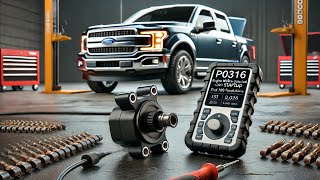
P0316 on a 2016-2023 Ford F-150 means a misfire was detected within the first 1,000 engine revolutions. For 2021+ models, the most common cause is a PCM software glitch fixed by a dealer update (TSB 22-2151). For earlier models (2016-2020), it's often worn spark plugs or bad ignition coils. However, be aware of TSBs linking this code to serious oil consumption issues on some 5.0L and 2.7L engines, which can lead to costly engine repairs.
- P0316 means a misfire occurred right after you started your truck.
- For 2018 and newer F-150s, the first step should be checking with a dealer for a required PCM software update, as this is a very common fix documented by Ford.
- For all years, worn spark plugs and bad ignition coils are the most common mechanical causes and are good DIY starting points.
- If you have a 2016-2018 F-150 (especially with a 5.0L V8), pay close attention to your oil level, as P0316 can be an early warning of a serious oil consumption problem.
- Do not ignore a flashing check engine light, as this indicates a severe misfire that can quickly damage your expensive catalytic converters.
What's Unique About the 2016-2023 Ford F-150

On the 2016-2023 F-150, which spans the 13th and 14th generations, the cause of P0316 can differ significantly by model year and engine. For 2021 and newer trucks, Ford has issued multiple Technical Service Bulletins (TSBs) indicating the code is frequently caused by software parameters in the PCM, requiring a dealer reflash. [TSB 22-2151, TSB 21-2085] In contrast, on earlier 2016-2018 models, particularly those with the 5.0L V8 and 2.7L EcoBoost, TSBs link P0316 to excessive oil consumption, which can be a symptom of more significant internal engine problems like cylinder head or piston ring issues. [TSB 19-2384, TSB 17-0007, 17]
Diagnostic Flowchart

Tap your situation to follow the diagnostic path that matches what you're seeing on this vehicle.
Generation note: This guide covers the 13th generation (2015-2020) and 14th generation (2021-2023) Ford F-150. Key differences for P0316 exist: 14th-gen trucks are prone to PCM software issues causing this code, as noted in TSBs 22-2151 and 21-2085. 13th-gen trucks, especially 2016-2018 5.0L and 2.7L models, have TSBs (17-0007, 19-2384) that connect P0316 to excessive oil consumption and potential internal engine issues.
Symptoms You May Notice
- Check Engine Light (CEL) is on or flashing
- Rough idle, especially immediately after starting
- Engine stumbling or hesitating on acceleration
- Noticeable shaking or vibration from the engine bay
- Reduced engine power
- Delayed throttle response
- Replacing oxygen sensors. O2 sensor codes can be triggered by a misfire, but they are usually the symptom, not the cause.
- Immediately replacing the catalytic converter. A misfire can damage a converter, but the misfire itself must be fixed first to prevent destroying the new converter.
Most Likely Causes

- Powertrain Control Module (PCM) Software 🔴 High Probability Multiple TSBs (22-2151, 21-2085, 20-2324, 18-2310) confirm that software glitches can falsely trigger P0316 and other misfire codes on 2018-2021 F-150s across various engines.
How to confirm: Check your vehicle's VIN against the affected build dates in the TSBs. A Ford dealer can confirm if the software updates apply to your truck. This is the most common cause for 2021+ models.
Typical fix: Reprogramming the PCM with the latest software calibration at a Ford dealership.
Est. part cost: $0-$200 (Labor for reflash, often covered under warranty or TSB) - Worn or Fouled Spark Plugs 🔴 High Probability Spark plugs are a standard maintenance item. Misfires at startup are a classic symptom of plugs that are at the end of their service life or have been fouled by oil or fuel from other underlying issues.
How to confirm: Remove and inspect the spark plugs. Look for worn electrodes, cracks in the porcelain, or heavy carbon/oil deposits. An oil-soaked plug is a strong indicator of a larger problem like oil consumption.
Typical fix: Replace all spark plugs as a set. Use high-quality OEM replacements like Motorcraft to ensure proper performance.
Est. part cost: $50-$150 - Failing Ignition Coil(s) 🔴 High Probability Coil-on-plug systems are common, and individual coils can fail from heat and vibration, causing a misfire in a specific cylinder. This is a frequent point of failure on modern engines.
How to confirm: If you have a cylinder-specific misfire code (e.g., P0301), swap the ignition coil from the misfiring cylinder with one from a known good cylinder. Clear the codes and run the engine. If the misfire code moves to the new cylinder, the ignition coil is faulty.
Typical fix: Replace the faulty ignition coil. It is often recommended to replace the spark plug at the same time.
Est. part cost: $40-$90 per coil - Excessive Oil Consumption 🟡 Medium Probability TSBs 19-2384 and 17-0007 specifically link P0316 to excessive oil consumption on 2016-2018 F-150s (both 5.0L V8 and 2.7L EcoBoost). Oil entering the combustion chamber due to worn piston rings or cylinder head valve guide issues fouls spark plugs and causes misfires. This is a widely discussed issue in owner forums.
How to confirm: Monitor engine oil levels closely. Oil consumption of more than 1 quart in 3,000 miles is considered excessive per TSB 17-0007. A dealer may need to perform a formal oil consumption test.
Typical fix: TSB procedures range from PCV valve replacement to cylinder head replacement (for 2.7L per TSB 19-2384) or, in severe cases for the 5.0L, engine long block replacement.
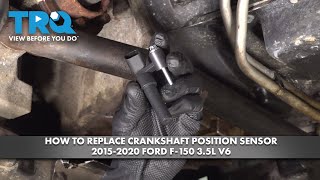
Est. part cost: $20 (PCV) - $8000+ (Engine) - Faulty Crankshaft Position (CKP) Sensor ⚪ Low Probability The PCM uses the CKP sensor to detect misfires by monitoring crankshaft speed variations. A faulty or contaminated sensor can send erratic signals, especially during cranking, leading to a false P0316 code. In some cases, a CKP relearn procedure may be needed after replacement.
How to confirm: Use a scan tool to monitor the CKP sensor data for dropouts or erratic readings during startup. Inspect the sensor and its wiring for damage, corrosion, or contamination on the magnetic tip.
Typical fix: Replace the crankshaft position sensor and perform a relearn procedure if necessary.
Est. part cost: $30-$80
Rare But Worth Checking
- Leaking Fuel Injectors: A fuel injector can leak fuel into a cylinder overnight, causing a rich misfire on startup. This can sometimes lead to more severe engine damage if ignored. Forum users have chased this issue by swapping injectors between cylinders to see if the misfire follows.
- Variable Cam Timing (VCT) Solenoid Issues: On some engines, particularly the 2018 5.0L, a sticking VCT solenoid can cause incorrect cam timing on startup. TSB 18-2058 specifically lists P0316 alongside VCT and cam position codes (P0011, P0012, etc.) for this issue.
- Low Fuel Pressure / Fuel Quality: A weak fuel pump or clogged filter can cause a lean condition and misfires during the high-demand startup phase. Additionally, some technicians note that the seasonal switch from summer to winter blend gasoline can occasionally trigger a P0316 code on a cold morning without any underlying mechanical fault.
Diagnosis Steps
- Read all stored trouble codes with an OBD-II scanner. Note any cylinder-specific misfire codes (P0301-P0308) or other related codes like those for oil pressure or cam timing.
- Check for applicable TSBs for your vehicle's specific year, model, and engine. The TSBs provided (22-2151, 20-2324, 19-2384, 17-0007, 21-2085) are a critical first step.
- If a PCM software update is indicated by a TSB, contact a Ford dealer to have the reflash performed. This is the primary fix for many 2021+ models.
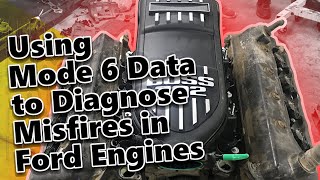
- For advanced diagnosis, use a tool like FORScan to view Mode $06 data. This can show you misfire counts per cylinder, even before a specific P030x code is set, helping to isolate the problem cylinder.
- If a specific cylinder is misfiring, inspect its spark plug for wear, proper gap, or fouling. A plug soaked in oil or fuel points to other issues.
- Swap the ignition coil from the misfiring cylinder with a coil from a non-misfiring cylinder. Clear the codes and run the engine. If the misfire code moves to the new cylinder, the ignition coil is faulty.
- If plugs and coils are good, investigate potential fuel issues. Consider swapping fuel injectors between cylinders to see if the misfire follows.
- Inspect the crankshaft position sensor and its wiring for any visible damage, corrosion, or looseness. Monitor its signal with a scan tool during startup.
- If applicable TSBs mention oil consumption, begin carefully monitoring your oil level. Report excessive consumption (more than 1 quart per 3,000 miles) to a qualified mechanic for further diagnosis, which may involve a compression or leak-down test.
Parts You'll Likely Need
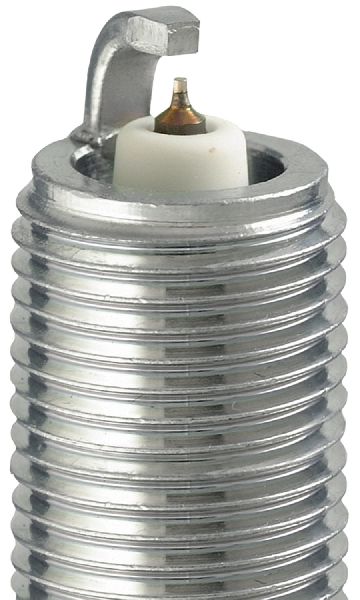
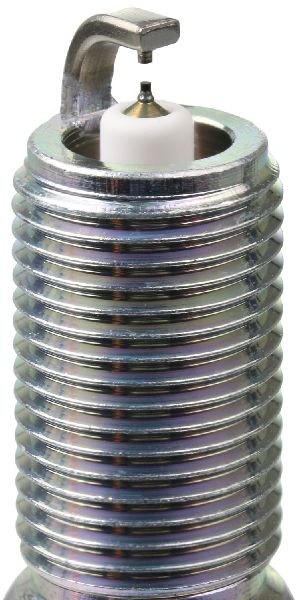
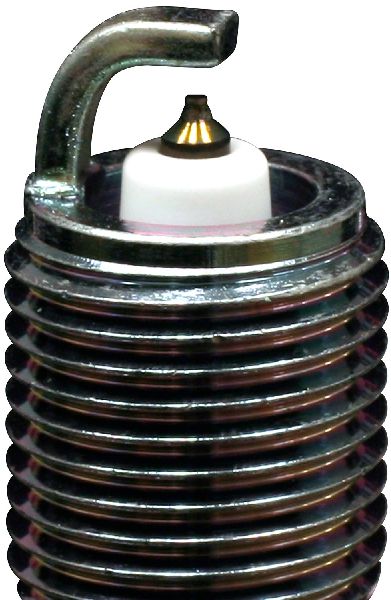
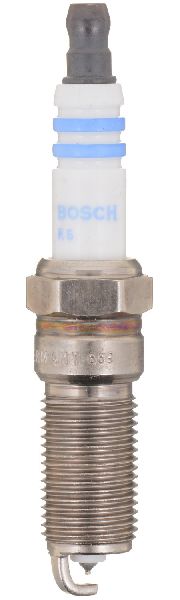
- Spark Plugs
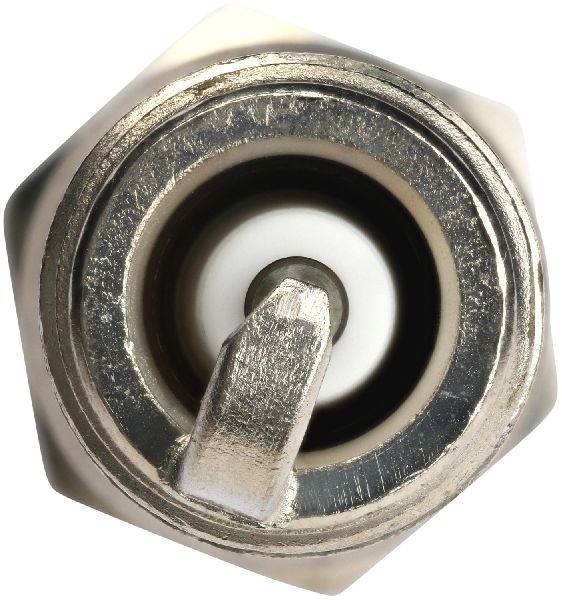
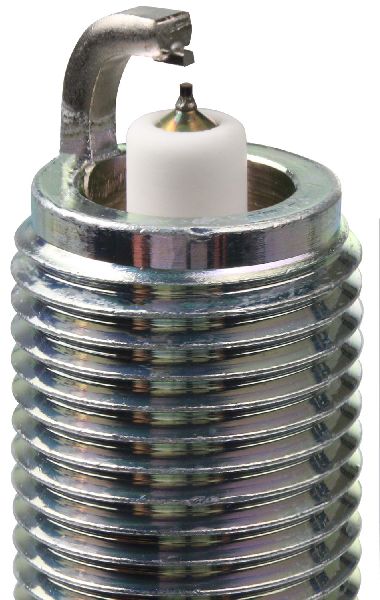
(OEM #Motorcraft SP-589 (2018-2020 5.0L), Motorcraft SP-594 (some 5.0L applications), Motorcraft SP-520 (alternative for 5.0L))— Worn spark plugs are a primary cause of misfires and are a routine maintenance item.
Trusted brands: Motorcraft, NGK
OEM price range: $8-$15 per plug
Related Codes That Often Appear With This One
- P0300 — This is a general 'Random/Multiple Cylinder Misfire' code that often appears with P0316 when the misfire isn't isolated to one cylinder.
- P0301-P0308 — These codes indicate a misfire in a specific cylinder (e.g., P0301 for Cylinder 1). They are extremely helpful for diagnosis, pointing you directly to the spark plug, coil, or injector to inspect.
- P0524, P06DD — These oil pressure codes were cited alongside P0316 in TSBs 19-2384 and 17-0007, indicating the misfire may be related to a larger oil consumption or pressure problem, often preceding major engine work.
- P0011, P0012, P0016, P0018 — These camshaft position timing codes can appear with P0316, especially on 2018 5.0L engines, as noted in TSB 18-2058. This points towards an issue with the VCT system.
Technical Service Bulletins (TSBs) & Recalls
- TSB 22-2151: Addresses P0316 and other codes on 2021 F-150s due to PCM software parameters; fix is a reflash.
- TSB 21-2085: Similar to above, for 2021 F-150s built before March 2021, addresses P0316 via PCM software update.
- TSB 19-2384: Links P0316 to excessive oil consumption on 2016-2017 2.7L EcoBoosts (cylinder head issue) and 2017 5.0L V8s (internal engine issues).
- TSB 17-0007: Connects P0316 with excessive oil consumption on 2016 5.0L V8s, defining 'excessive' as 1 quart per 3,000 miles.
- TSB 18-2058: For 2018 5.0L F-150s, links P0316 with a host of VCT/cam phaser related DTCs, pointing to a timing control issue at startup.
Platform-Specific Known Issues
- 2018-2020 5.0L V8 Excessive Oil Consumption: A significant number of 2018-2020 F-150s with the 5.0L V8 engine experience excessive oil consumption, often more than a quart every 3,000 miles. This is attributed to the plasma wire arc transfer (PWAT) cylinder liners and piston ring design. The oil fouls spark plugs, leading directly to codes P0316 and P030x. Ford addressed this with TSBs (like 19-2384) that may lead to a PCV valve replacement or a full engine long block replacement.
- 2021+ Model Year PCM Software Glitches: For 14th generation F-150s (2021-2023), a P0316 code, especially if accompanied by a host of other seemingly unrelated codes, is very frequently caused by a software issue in the Powertrain Control Module (PCM). TSB 22-2151 and TSB 21-2085 were released specifically to address this by reprogramming the PCM. This should be the first check for any owner of a 2021+ truck with this code.
- 2016-2017 2.7L EcoBoost Oil Consumption / Cylinder Head Issues: TSB 19-2384 details an issue for 2.7L EcoBoost engines built between April 2016 and January 2017 where oil consumption, rough idle, and P0316 can be caused by faulty cylinder head valve guides. The prescribed fix is a complete replacement of both cylinder heads.
Mechanic-Grade Diagnostic Values

- Crankshaft Position Sensor (CKP) AC Voltage — expected: 0.5V to 1.0V AC while cranking. Failure: No voltage or voltage significantly outside this range while the engine is turning over indicates a likely faulty sensor.
- Low-Side Fuel Pressure (Key On, Engine Off) — expected: Approximately 45-60 PSI. Failure: Pressure below this range indicates a weak in-tank fuel pump, a clogged filter, or a faulty fuel pump driver module.
- High-Side Fuel Pressure (Direct Injection Engines) — expected: Varies widely: ~800-1200 PSI at idle, can exceed 3,000 PSI under load.. Failure: If the actual pressure shown on a scan tool does not follow the desired pressure, it can indicate a problem with the high-pressure fuel pump (HPFP) or the rail pressure sensor.
Hidden / Shadow Codes Worth Checking
- Mode $06 Data: Mode $06 is a diagnostic mode that provides access to the results of the PCM's self-tests. For misfires, it stores a 'misfire count' for each cylinder. This allows a technician to see which cylinder is misfiring, and how often, even if the misfire rate isn't high enough to set a specific P0301-P0308 trouble code. (see via Requires an advanced OBD-II scan tool or software like FORScan that can access Mode $06 test results.)
Scan Tool Commands That Help
- Ford IDS, FORScan, or equivalent advanced scanner: Crankshaft Position Sensor Relearn (Profile Correction) — This procedure may be required after replacing the CKP sensor, PCM, or sometimes after a PCM software update. It allows the PCM to learn the specific profile of the new sensor and the crankshaft reluctor wheel to accurately detect misfires. TSB 15-0142 noted a similar procedure was needed after certain software updates.
- Ford IDS, FORScan: Power Balance Test — This is a bidirectional test where the scan tool sequentially disables the fuel injector for each cylinder and measures the corresponding drop in RPM. A cylinder that shows little to no RPM drop when its injector is disabled is the one that is not contributing (misfiring). This is a definitive way to identify a problem cylinder.
Wiring & Ground Locations
- G103 / G104 — Typically located on the lower front or side of the engine block. Described in some diagrams as being near the oil pan or bellhousing area.. These are primary engine block grounds. A loose or corroded connection here can cause unstable sensor readings and erratic behavior from ignition components, leading to misfire codes.
- Firewall PCM Grounds — On the firewall, often on the passenger side, where one or two ground wires from the main harness attach to the body.. These grounds are critical for the Powertrain Control Module (PCM). A poor connection can cause the PCM itself to malfunction, leading to a host of issues including false misfire detection.
- Firewall to Engine Ground Strap — A braided metal strap typically running from the firewall on the passenger side to a bellhousing bolt or a stud on the back of the cylinder head.. Ensures the engine block has a solid ground path to the vehicle's chassis. If this strap is broken or missing (often after major engine or transmission work), the electrical system can seek ground through other paths, causing damage and unpredictable electrical problems, including misfires.
Real Owner Repair Stories
- Ford F150 Forum thread (2006 F-150 5.4L (Note: Older than range, but diagnostic process is identical)) — CEL flashing, P0316 and P0306 codes stored.
❌ Tried (didn't work) Initial diagnosis was uncertain without a cylinder-specific code, though P0306 eventually appeared.
✅ What actually fixed it The owner replaced the ignition coil on cylinder 6. This resolved the issue, confirming the coil was the culprit for both the cylinder-specific misfire and the startup misfire code. - Ford F150 Forum thread (2004 F-150 5.4L) — Rough idle, CEL on with codes P0316 and P0306.
❌ Tried (didn't work) Dealer replaced all spark plugs., Dealer replaced the ignition coil on cylinder #6., Dealer replaced a leaky vacuum line.
✅ What actually fixed it The issue was not resolved by the initial repairs. The dealer, unable to find the root cause despite good compression and fuel injectors, incorrectly recommended a full engine replacement. This story serves as a cautionary tale of misdiagnosis where the initial common fixes fail.
"I Checked Everything" — The Actual Cause
- A cracked flexplate. The crankshaft position sensor reads teeth on the flexplate (on automatic transmission vehicles) to determine engine speed and position. A hairline crack can cause the flexplate to deform or wobble slightly, especially during the high-torque event of engine cranking. This subtle change in rotation can be misinterpreted by the PCM as a misfire, triggering P0316, even though there are no issues with ignition, fuel, or air. This mechanical issue would not be found with a smoke test, fuel pressure test, or ignition system diagnosis. It is often first noticed as a ticking or rattling sound coming from the bellhousing area.
OEM Part Supersession History
Varies by year/engine→DG-562 (Ignition Coil)— Motorcraft DG-562 is a widely cited OEM ignition coil for many 2016-2023 F-150 engines, including the 5.0L V8.
Heads up: Always verify the specific part number for your engine and model year, as different coils are used for different applications.Varies→HL3Z-6M280-A (VCT Solenoid)— This is a cited part number for VCT solenoids applicable to 2018+ 5.0L and 3.5L engines.
Heads up: VCT solenoids changed with engine generations. The solenoids for a 2018+ Gen 3 5.0L are different from a 2015-2017 Gen 2 5.0L. Using the wrong part will result in poor performance or engine damage.
Model Year Variations Within This Range
- 2018-2023: The 2018 model year marked a significant refresh. The 5.0L V8 (Gen 3 Coyote) was updated with a dual fuel system (port and direct injection) and a higher compression ratio. The 2.7L EcoBoost was also revised, and the 10-speed automatic transmission became widespread across these engines. These changes mean that fuel system diagnostics (low vs high pressure) and VCT system components can differ significantly from 2016-2017 models.
- 2017-2023: The 3.5L EcoBoost engine received its second generation in 2017, which was paired with the new 10-speed automatic transmission. This changed its power output and internal components compared to the 2016 model year.
Helpful Videos

We Have This Part in Stock

The information in this article is provided for general reference and educational purposes only. Vehicle specifications, procedures, and part compatibility can vary by production date, trim level, and region. Always consult your vehicle's factory service manual and verify part numbers before purchasing or performing repairs. Safety-critical components such as airbags, seat belts, and braking systems should be installed by a qualified professional.
- Ford F-150:
- 🎬 Helpful Videos
- 🛍️ Shop This Part
- What's Unique About the 2016-2023 Ford F-150
- Diagnostic Flowchart
- Symptoms You May Notice
- Most Likely Causes
- Rare But Worth Checking
- Diagnosis Steps
- Parts You'll Likely Need
- Related Codes That Often Appear With This One
- Technical Service Bulletins (TSBs) & Recalls
- Platform-Specific Known Issues
- Mechanic-Grade Diagnostic Values
- Hidden / Shadow Codes Worth Checking
- Scan Tool Commands That Help
- Wiring & Ground Locations
- Real Owner Repair Stories
- "I Checked Everything" — The Actual Cause
- OEM Part Supersession History
- Model Year Variations Within This Range
- 🎟️ Get 5% Off