

P0316 on 2023-2025 Ford Escape: Startup Misfire Causes and Fixes
On 2023-2025 Ford Escapes, P0316 is most often caused by a software glitch in 2.0L models, fixed by a dealer PCM update per TSB 24-2014 (supersedes 23-2275). For 1.5L engines, it indicates a misfire after a cold soak, which Ford acknowledges is a software issue with a fix pending for Q2 2025 (SSM 53417). A PCM update costs ~$150-200, while plugs/coils are a ~$150-300 DIY job.
- For a 2023-2025 Ford Escape with a 2.0L engine, your first step for a P0316 code should be to ask a dealer about TSB 23-2275 for a software update.
- For a 1.5L engine, this code likely points to a cold-start misfire; inspect spark plugs and ignition coils first.
- This code is almost always accompanied by P0300 (random misfire). If you see a cylinder-specific code (P0301-P0304), focus your diagnosis there.
- Do not ignore this code. Driving with a misfire can cause expensive damage to your catalytic converter.
- While unlikely on these newer models, keep an eye on your coolant level, as P0316 has a history of being an early warning for serious engine problems on other EcoBoost engines.
What's Unique About the 2023-2025 Ford ESCAPE

For this generation of the Ford Escape, code P0316 is directly addressed by manufacturer Technical Service Bulletins (TSBs). On the 2.0L EcoBoost engine, the issue is so commonly linked to a software error that Ford issued TSB 24-2014 to reprogram the PCM as the specific fix. For the 1.5L EcoBoost, multiple bulletins (like SSM 53417) acknowledge a tendency for this code to appear after the vehicle sits overnight ('cold soak') and state that this is also a software issue for which a fix is in development, expected in Q2 2025. This makes checking for software updates the primary diagnostic step, which is unique compared to older vehicles where the cause is almost always a mechanical or ignition part failure.
Diagnostic Flowchart
Tap your situation to follow the diagnostic path that matches what you're seeing on this vehicle.
Symptoms You May Notice
- Check Engine Light (MIL) illuminated or flashing on startup
- Rough or unstable idle immediately after starting, which may smooth out after a few moments
- Engine hesitation or stumbling on initial acceleration
- A noticeable smell of raw gasoline from the exhaust on startup 🎬 Watch: A helpful guide on diagnosing and fixing P0316 codes.
- Replacing ignition coils or spark plugs on a 2.0L model without first checking for the required PCM software update per TSB 24-2014. The TSB indicates the problem is software, not hardware, so new parts will not fix the issue.
- Attempting hardware repairs (plugs, coils) for the cold-soak P0316 issue on 2024-2025 1.5L models. Ford has identified this as a software issue and instructed dealers not to perform repairs until a new calibration is released.
Most Likely Causes

- Powertrain Control Module (PCM) Software Issue (2.0L EcoBoost Only) 🔴 High Probability Ford has officially identified a software calibration issue in the PCM for 2023 models with the 2.0L engine and issued TSB 24-2014 (which supersedes TSB 23-2275) to correct it.
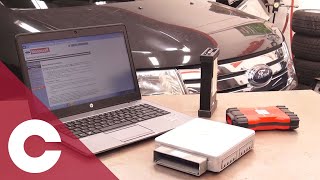
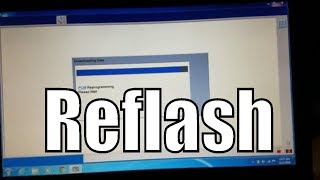
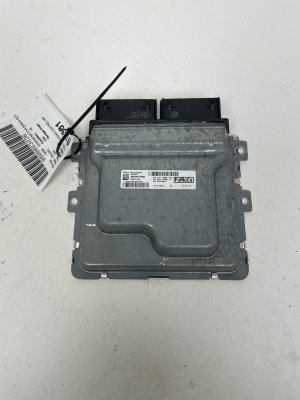
How to confirm: A Ford dealership or a qualified shop with access to Ford's diagnostic system (FDRS) can check the current PCM software calibration level against the latest version specified in the TSB. The bulletin applies to 🎬 See how a professional Ford PCM software reflash is performed. 2023 Escape/Corsair vehicles.
Typical fix: Reprogram the Powertrain Control Module (PCM) to the latest software version. This is a warranty-covered repair.
Est. part cost: $0 (if under warranty) - Cold Soak Misfire Software Issue (1.5L EcoBoost) 🔴 High Probability Ford SSM 53417 explicitly states that 2024-2025 Escapes with the 1.5L engine may set P0300 and P0316 after a cold soak due to a PCM software issue. Multiple owners on forums confirm this happens only on the first start of the day in cool weather.
How to confirm: The code consistently appears only on the first start of the day, after the vehicle has been parked for several hours. Ford states that replacing or reprogramming the PCM will *not* currently resolve this condition.
Typical fix: No repair is available yet. Ford engineering is working on a solution expected in Q2 2025. Dealers are instructed not to attempt repairs at this time. Owners should monitor for the official fix.
Est. part cost: $0 - Worn or Fouled Spark Plugs 🟡 Medium Probability Direct-injection engines like the EcoBoost are sensitive to spark plug condition. A worn plug may struggle to ignite the mixture in a cold cylinder, triggering P0316 before other misfire codes appear.
How to confirm: Remove and inspect the spark plugs. Look for worn electrodes, heavy carbon buildup, or signs of oil/coolant fouling. A customer review confirmed that part number SP-597-X is correct for a 2023 Escape ST-Line, as an incorrect 🎬 Watch this DIY walkthrough for 1.5L EcoBoost spark plug maintenance. part was initially provided.
Typical fix: Replace all spark plugs. Use the OEM-specified Motorcraft plugs for best performance.
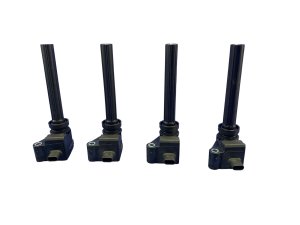
Est. part cost: $40-$80 - Faulty Ignition Coil(s) 🟡 Medium Probability
How to confirm: If a cylinder-specific code (e.g., P0302) is present, swap the ignition coil from the misfiring cylinder with one from a known good cylinder. Clear the codes and run the engine. If the code follows the coil to the new cylinder (e.g., P0303), the coil is faulty.
Typical fix: Replace the failed ignition coil. It is often recommended to replace the corresponding spark plug at the same time.
Est. part cost: $50-$120
Rare But Worth Checking
- Engine Coolant Intrusion: While the widespread coolant intrusion issue was primarily associated with the pre-2020 1.5L and 2.0L EcoBoost engines due to a specific engine block design flaw, it remains a rare but critical possibility. The 4th generation (2020+) uses a different 1.5L 3-cylinder engine and an updated 2.0L. However, NHTSA complaint #11720710 for a 2023 model mentions low compression in cylinder 1 with codes P0301 & P0316, which could indicate a serious internal engine problem like a head gasket leak. If you have P0316 accompanied by a mysterious, recurring loss of coolant, this must be investigated immediately to prevent catastrophic engine failure.
- Leaking Fuel Injector: A fuel injector can leak fuel into a cylinder after the engine is shut off. This creates an overly rich condition on startup, causing a misfire until the excess fuel is burned off. This can be diagnosed with a fuel pressure leak-down test or by observing injector data on a capable scan tool.
- Faulty Crankshaft Position Sensor (CKP): Since the PCM relies on the CKP sensor to detect misfires by measuring crankshaft speed variations, a faulty sensor or damaged wiring can send erratic signals on startup, falsely triggering a P0316 code.
Diagnosis Steps

- Scan the PCM for any other stored trouble codes. Note if P0300 or any cylinder-specific P030x codes are present.
- If you have a 2.0L EcoBoost engine (2023 model year), the first step is to contact a Ford dealer to check if your vehicle needs the PCM reprogram specified in TSB 24-2014, which supersedes TSB 23-2275. This is the most likely fix and is covered under warranty.
- If you have a 1.5L EcoBoost engine (2024-2025 model year), note if the problem only occurs after a long cold soak. Per SSM 53417, this is a known software issue with a fix in development. Do not pursue unnecessary hardware replacements.
- Check the engine coolant level. If it is consistently low with no visible leaks, be aware of the rare potential for coolant intrusion, especially if accompanied by white exhaust smoke or a rough run condition.
- If software issues are ruled out, inspect the spark plugs for wear, fouling, or damage. Replace them if they are worn or past their service interval. Ensure you are using the correct OEM part number.
- If a specific cylinder is identified by a P030x code, test the ignition coil by swapping it with another cylinder to see if the misfire follows the coil.
- Inspect the wiring and connector for the crankshaft position sensor for any damage or corrosion.
- If the above steps do not resolve the issue, a professional may need to perform more advanced diagnostics, such as a fuel injector balance test, a cooling system pressure test, or a cylinder compression test.
Parts You'll Likely Need

- PCM Reprogramming Service
(OEM #242014A (Labor Op Number))— For 2023 2.0L EcoBoost engines, this is the official fix from Ford to correct a software glitch causing the code. The repair is covered under warranty.
Trusted brands: Ford Dealership Service
OEM price range: $0 (Warranty) or $150-$250 (Post-Warranty) - Spark Plugs
(OEM #Motorcraft SP-597-X (for 1.5L) or LTR6DI-8 / SP-594 (for 2.0L))— Worn spark plugs are a common cause of cold-start misfires as they struggle to create a strong spark in a cold engine.
Trusted brands: Motorcraft
OEM price range: $60-$100
Aftermarket price range: $40-$80 - Ignition Coil
(OEM #Motorcraft DG-572 / HX7Z-12029-A (for 1.5L) or Motorcraft DG-565 / JX6Z-12029-A/B (for 2.0L))— An ignition coil that is beginning to fail may be too weak to fire the spark plug properly during a cold start, leading to a P0316 code.
Trusted brands: Motorcraft, NGK, Denso
OEM price range: $80-$150
Aftermarket price range: $50-$120
Related Codes That Often Appear With This One
- P0300 — P0300 means 'Random/Multiple Cylinder Misfire Detected'. Since P0316 flags a misfire event at startup, it's very common for the more general P0300 code to be stored at the same time. All cited TSBs mention these two codes together.
- P0301, P0302, P0303, P0304 — These codes specify which cylinder is misfiring (e.g., P0301 for Cylinder 1). They help you pinpoint the location of the problem, narrowing it down to a specific spark plug, coil, or injector, which is essential for diagnosis.
Technical Service Bulletins (TSBs) & Recalls

- TSB 23-2275: PCM reprogram for P0300/P0316 on 2.0L engines.
- TSB 25-2133: P0300/P0316 after overnight cold soak.
- SSM 53417: P0300/P0316 on 1.5L EcoBoost engines.
- SSM 53293: P0300/P0316 on 1.5L EcoBoost engines.
Platform-Specific Known Issues
- TSB 24-2014: Supersedes TSB 23-2275. Some 2023 models with a 2.0L EcoBoost may set P0300 and/or P0316 due to a PCM software issue, requiring a reprogram to fix. Also applies to t
Mechanic-Grade Diagnostic Values
- Crankshaft Position Sensor (CKP) RPM on Scan Tool — expected: 100-500 RPM while cranking. Failure: A reading of 0 RPM indicates a complete sensor or circuit failure.
- Crankshaft Position Sensor (CKP) AC Voltage — expected: ~200 mV (0.2V) AC while cranking or passing metal over the sensor tip. Failure: No voltage output indicates a failed sensor.
- High-Pressure Fuel System Pressure — expected: 65 to 2,150 psi, depending on engine load and demand. Failure: Pressure that is consistently low or fails to build during startup can cause misfires.
- Spark Plug Gap (1.5L EcoBoost) — expected: 0.025-0.029 in (0.65-0.75 mm). Failure: An incorrect or overly large gap can cause weak spark, especially on a cold start.
Hidden / Shadow Codes Worth Checking
- Mode 6, Test ID $51: This is not a DTC, but a diagnostic monitor that tracks the misfire count for each individual cylinder during a drive cycle. For example, Component ID (CID) $01 tracks cylinder 1, CID $02 tracks cylinder 2, and so on. (see via Use a capable scan tool with Mode 6 functionality, such as Ford's IDS or aftermarket tools like FORScan. This allows a technician to see which cylinder is misfiring intermittently, even if the count is not high enough to trigger a P030x code.)
Scan Tool Commands That Help
- Ford IDS/FDRS (or equivalent high-level scan tool): Power Balance Test — Use this when a misfire is felt but no specific cylinder code is stored. The test graphically displays the RPM contribution of each cylinder, making it easy to visually identify a weak or non-contributing cylinder.
- Ford IDS/FDRS (or equivalent high-level scan tool): Misfire Monitor Neutral Profile Correction — Perform this relearn procedure after replacing a crankshaft position sensor or performing major engine work. It helps the PCM learn the natural variations in the crankshaft's rotation to prevent false misfire detection.
- Ford IDS/FDRS: Relative Injector Flow Test — This function helps diagnose if a fuel injector is flowing differently than the others, which could cause a startup misfire. It's a useful step before physically removing injectors.
Wiring & Ground Locations
- G101 — Typically located on the lower front of the engine block.. This is a primary ground for the Engine Control Module (ECM). A poor connection here can cause erratic ECM behavior, leading to false misfire codes or incorrect sensor readings.
- G102 — Typically located at the rear of the engine.. This ground point is often used for the ignition coils. A loose or corroded ground here can weaken spark intensity across all cylinders, making cold-start misfires more likely.
"I Checked Everything" — The Actual Cause
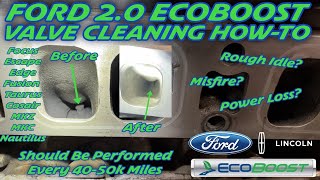
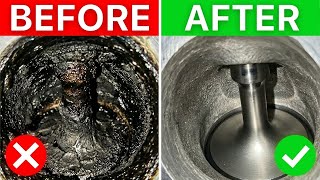
- A common scenario on gasoline direct injection (GDI) engines like the EcoBoost is a cold-start misfire (P0316) caused by carbon buildup on the intake valves. A smoke test for vacuum leaks will show no issues because the problem is not an unmetered air leak, but rather the physical carbon deposits disrupting airflow into the cylinder as the valve opens. This is especially problematic during a cold start when fuel atomization is less efficient. The fix is not sealing a leak, but physically cleaning the valves, often via walnut blasting.
Model Year Variations Within This Range
- 2023-2025: The core 1.5L and 2.0L EcoBoost engine hardware and powertrain options are carry-overs with no significant mechanical changes affecting this code. The primary variations are the software-related TSBs which are specific to certain model years and engine combinations as noted in the 'Common Causes' section.
Helpful Videos

We Have This Part in Stock


The information in this article is provided for general reference and educational purposes only. Vehicle specifications, procedures, and part compatibility can vary by production date, trim level, and region. Always consult your vehicle's factory service manual and verify part numbers before purchasing or performing repairs. Safety-critical components such as airbags, seat belts, and braking systems should be installed by a qualified professional.
- Ford ESCAPE:
- 🎬 Helpful Videos
- 🛍️ Shop This Part
- What's Unique About the 2023-2025 Ford ESCAPE
- Diagnostic Flowchart
- Symptoms You May Notice
- Most Likely Causes
- Rare But Worth Checking
- Diagnosis Steps
- Parts You'll Likely Need
- Related Codes That Often Appear With This One
- Technical Service Bulletins (TSBs) & Recalls
- Platform-Specific Known Issues
- Mechanic-Grade Diagnostic Values
- Hidden / Shadow Codes Worth Checking
- Scan Tool Commands That Help
- Wiring & Ground Locations
- "I Checked Everything" — The Actual Cause
- Model Year Variations Within This Range
- 🎟️ Get 5% Off