

P0314 on 2005-2018 Subaru Outback: Single Cylinder Misfire Causes and Fixes
On a 2005-2018 Subaru Outback, code P0314 is most often caused by a failing ignition component. Start by checking spark plugs, ignition coils, and (on older models) spark plug wires. This is a common maintenance issue, and parts are relatively affordable.
- P0314 on a Subaru Outback is an ignition problem until proven otherwise. Start your diagnosis there.
- Know your vehicle's generation: 2005-2009 models have spark plug wires, while 2010-2018 models have coil-on-plug ignition.
- A flashing Check Engine Light is serious. Stop driving to prevent expensive catalytic converter damage.
- Use a scan tool that can read live misfire data to help pinpoint the problematic cylinder, which simplifies diagnosis significantly.
- Due to the engine design, changing spark plugs and coils is more labor-intensive than on many other vehicles. Budget time accordingly or factor in higher labor costs at a shop.
What's Unique About the 2005-2018 Subaru Outback
For the Subaru Outback, the P0314 code frequently points towards the ignition system, which varies by generation. Earlier models (2005-2009) use a traditional coil pack and spark plug wires, where wires are a common failure point. Later models (2010-2018) use a more modern coil-on-plug design, where individual coils can fail. Due to the boxer engine layout, accessing spark plugs and coils can be more challenging than on inline or V-type engines, often requiring special tools like swivel sockets and extensions. This difficulty can lead to neglected maintenance, increasing the likelihood of age-related ignition failures. Furthermore, Subarus are known for having less-than-robust factory grounding systems, which can lead to elusive electrical issues, including random misfires, if straps corrode or break.
Generation note: This range covers three Outback generations: - 3rd Gen (2005-2009): Uses a central ignition coil pack with spark plug wires on the EJ25 engine. Wires and the coil pack itself are common failure points. - 4th Gen (2010-2014): Switched to a coil-on-plug ignition system, eliminating the spark plug wires. Early models used the EJ25 engine before transitioning to the FB25 engine around 2012/2013. Early FB25 engines are known for potential oil consumption and, more rarely, broken valve springs which can cause misfires. - 5th Gen (2015-2018): Continues with the coil-on-plug system on the FB25 engine. Causes and fixes are similar to the 4th generation.
Symptoms You May Notice
- Rough or vibrating idle.
- Hesitation or stumbling during acceleration.
- Noticeable loss of engine power.
- Solid or flashing Check Engine Light.
- Reduced fuel economy.
- Strong fuel smell from the exhaust.
- Replacing only one spark plug instead of the full set.
- Replacing the O2 sensor, which is unlikely to be the root cause of a misfire code.
- Assuming a major mechanical failure before thoroughly testing the ignition, fuel, and grounding systems.
- Clearing the code and assuming it was a 'random' event without investigation.
Most Likely Causes
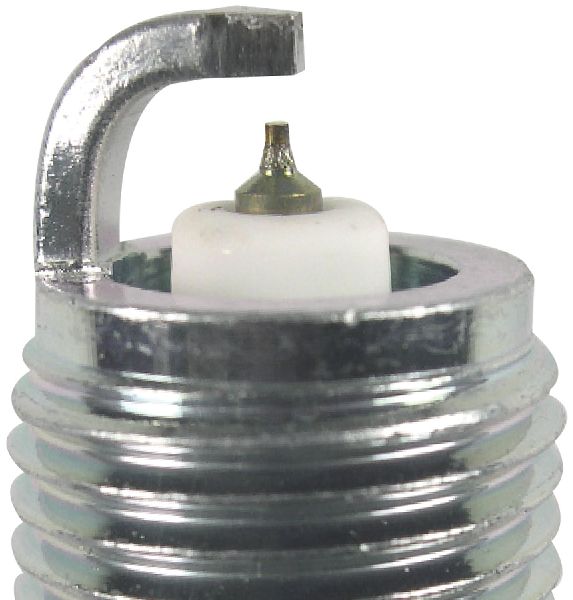
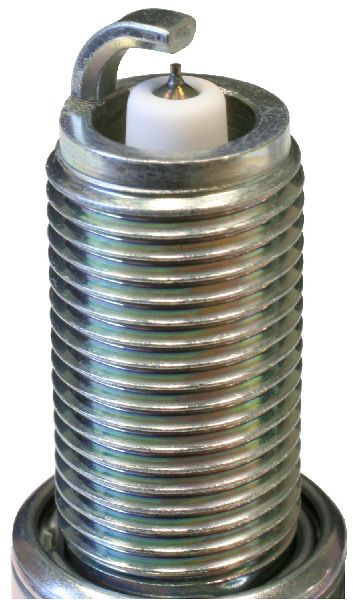
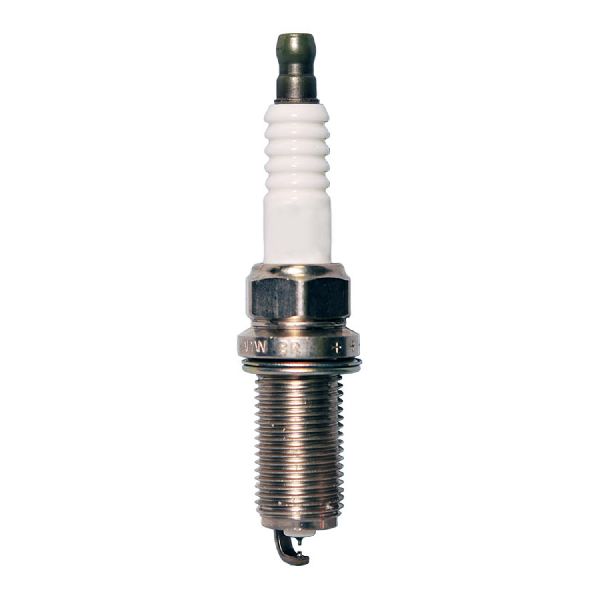
- Worn or Faulty Spark Plugs 🔴 High Probability Spark plugs are a regular maintenance item. Due to the boxer engine design, they can be difficult to access and are sometimes neglected, leading to misfires as they wear out. Owners on forums frequently report this as the first and most successful fix.
How to confirm: Remove and inspect the spark plugs. Look for worn or fouled electrodes, cracked porcelain, or an incorrect gap. Since they are a common cause and relatively inexpensive, replacement is often recommended if they haven't been changed recently. Oil on the plug threads can indicate a leaking spark plug tube seal, which can also cause misfires by shorting the coil boot.
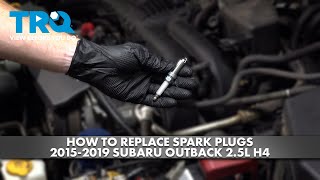
Typical fix: Replace all spark plugs as a set. 🎬 Watch: How to replace spark plugs on 2015-2018 models. It is recommended to use high-quality plugs from brands like NGK or Denso, which are often the OEM supplier.
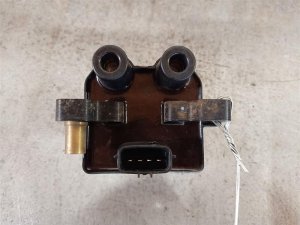
Est. part cost: $40-$100 - Failing Ignition Coil(s) or Coil Pack 🔴 High Probability Ignition coils are a known failure point on many vehicles, including Subarus. Heat and vibration cause them to fail over time, resulting in a weak or non-existent spark.
How to confirm: Use a scan tool with live data to monitor misfire counts or 'cylinder roughness' for each cylinder. Swap the ignition coil from the suspected misfiring cylinder with one from a known good cylinder. If the misfire code follows the coil (e.g., changes from P0301 to P0302), the coil is faulty. For older models with a single coil pack, it can be tested with a multimeter for correct secondary resistance (9.5-12.9 kOhms).
Typical fix: Replace the faulty ignition coil (for 2010-2018 models) or the entire coil pack (for 2005-2009 models). It is often recommended to replace them in pairs or as a full set if they are original and high mileage.
Est. part cost: $50-$150 for a single coil; $100-$250 for a coil pack - Bad Spark Plug Wires (2005-2009 models) 🟡 Medium Probability On 3rd generation Outbacks with the EJ25 engine, spark plug wires degrade over time from heat and electrical stress. The insulation can break down, causing the spark to arc to the engine block instead of the spark plug, especially under load or in damp conditions.
How to confirm: Visually inspect wires for cracks, burns, or corrosion. Test the resistance of each wire with a multimeter; an open circuit or very high resistance indicates a bad wire. Resistance should be between 5-20 kOhms depending on the length of the wire. A simple test is to spray a fine mist of water on the wires with the engine running in the dark and look for arcing.
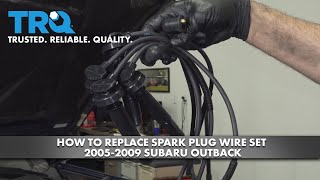
Typical fix: Replace all spark plug wires as a set. 🎬 See this walkthrough for replacing 2005-2009 spark plug wires. Use of quality sets like NGK is highly recommended by owners.
Est. part cost: $50-$120 - Clogged or Faulty Fuel Injector ⚪ Low Probability
How to confirm: Listen to the injector with a mechanic's stethoscope; you should hear a consistent clicking sound. You can also test the injector's resistance with a multimeter; a good high-impedance injector should read between 10-16 Ohms. Swapping injectors between cylinders is a more involved but definitive test.
Typical fix: Clean or replace the faulty fuel injector. Sometimes running a quality fuel system cleaner containing Polyetheramine (P.E.A.), like the one mentioned in Subaru's TSB, can resolve minor clogs.
Est. part cost: $70-$200 per injector - Carbon Buildup ⚪ Low Probability Subaru has issued a technical service bulletin (TSB 09-74-21R) acknowledging that carbon buildup on intake valves and injectors can cause misfires, rough idle, and lack of power. The procedure outlines using Genuine Subaru P.E.A. Carbon Cleaner in the fuel tank as a first step.
How to confirm: This is difficult to confirm without disassembly. It is usually suspected after all ignition and fuel delivery components have been ruled out. A borescope can be used to visually inspect the intake valves.
Typical fix: Perform a professional chemical carbon cleaning service. The TSB outlines a procedure using a P.E.A. additive. For more severe cases, a 'walnut blasting' service may be required to physically clean the intake valves.
Est. part cost: $20 (chemicals only) - $600+ (professional service)
Rare But Worth Checking
- Vacuum Leak: A leak in a vacuum hose, PCV valve, or intake manifold gasket can lean out the air-fuel mixture and cause a misfire. Check for cracked hoses or listen for a hissing sound. A low MAF sensor reading at idle (e.g., below 2.5 g/s) can be an indicator of a vacuum leak.
- Low Cylinder Compression: A mechanical engine issue like a burnt valve, bad piston rings, or a failing head gasket can cause a misfire. A broken valve spring, a known issue on early FB engines, can also cause a loss of compression and misfires. This is a worst-case scenario and should be investigated with a compression test after ruling out other causes.
- Faulty Alternator / Clutch Pulley: On some models (notably 2014-2017 Foresters, which share engine architecture), a defective alternator or clutch pulley assembly can create vibrations and electrical 'noise' that the crankshaft position sensor misinterprets as a misfire, setting false codes. A failing alternator can also cause intermittent electrical problems that may manifest as misfires.
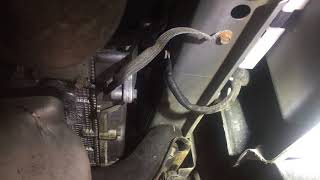
- Corroded or Broken Engine Ground Straps: Subarus are known for having factory grounds that are susceptible to corrosion. The main ECU ground is on the intake manifold, and engine-to-chassis straps can break over time. 🎬 Watch: How to identify and fix common Subaru ground issues. This can cause a host of strange electrical issues, including random, hard-to-diagnose misfires. Inspect the braided straps from the engine to the chassis for integrity.
Diagnosis Steps
- Connect an OBD-II scanner and check for any other stored codes. Note the freeze frame data.
- Use the scanner's live data function to monitor misfire counts or 'cylinder roughness' for each cylinder. This is the most critical step to try and isolate the fault without a cylinder-specific code.
- Monitor Short-Term (STFT) and Long-Term (LTFT) fuel trims. Consistently positive values (e.g., > +10%) suggest a vacuum leak or under-fueling, while negative values suggest a rich condition.
- If a cylinder is identified, begin by inspecting its ignition components.
- For 2005-2009 models, inspect the spark plug wire for damage and test its resistance (5-20 kOhms).
- For all models, remove and inspect the spark plug. Replace if it is worn, fouled, or overdue for service.
- Swap the ignition coil of the suspected cylinder with a known good one. Clear codes and run the engine. If the misfire moves to the new cylinder, the coil is bad.
- If ignition components are good, check the fuel injector. Test its resistance (should be 10-16 Ohms).
- Inspect engine ground straps. Look for the braided metal straps connecting the engine block to the chassis. Ensure they are clean, tight, and not broken.
- If no specific cylinder can be identified, start with a full tune-up: replace all spark plugs and, on older models, spark plug wires.
- Inspect for vacuum leaks by checking all vacuum hoses and listening for hissing sounds around the intake manifold. A smoke test is the most effective method.
- If the problem persists, consider more complex issues like a failing fuel pump, carbon buildup, or a mechanical engine problem like a weak valve spring.
Parts You'll Likely Need
- Spark Plugs
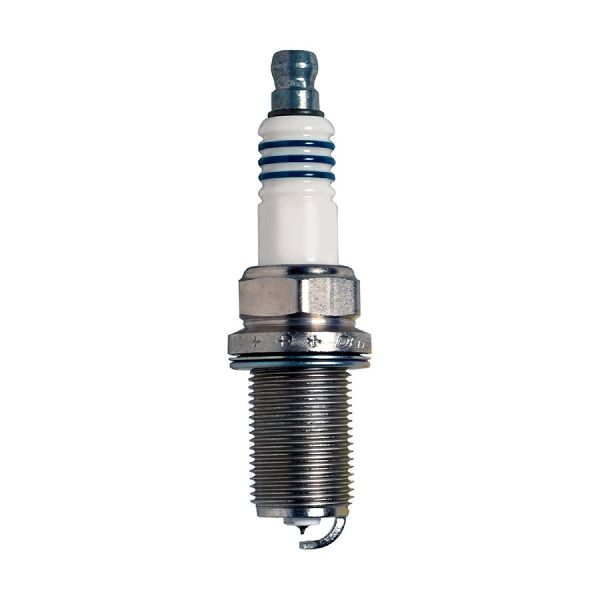
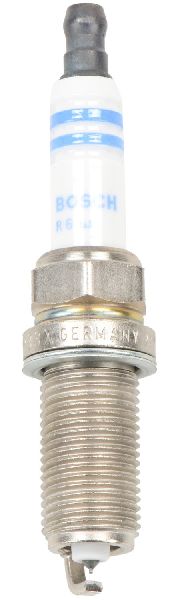
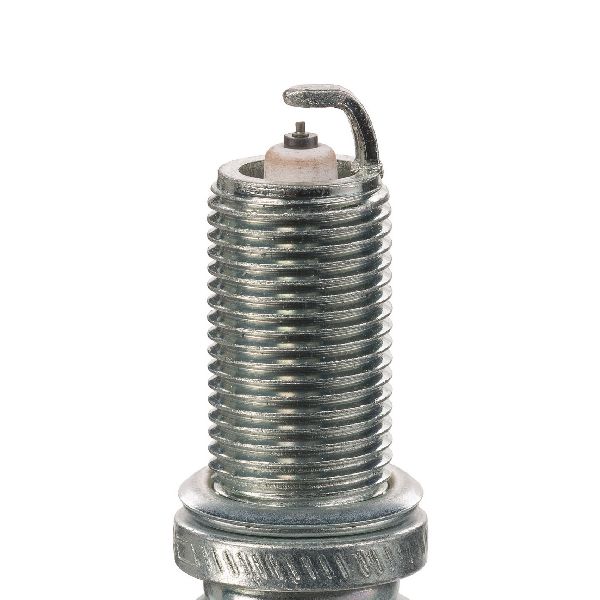
(OEM #NGK SILZKAR7B11 (for FB25 engines, example))— This is the most common maintenance item to cause a misfire. Often neglected due to difficult access on the boxer engine.
Trusted brands: NGK, Denso
OEM price range: $60-$120
Aftermarket price range: $40-$100 - Ignition Coil (Coil-on-Plug)
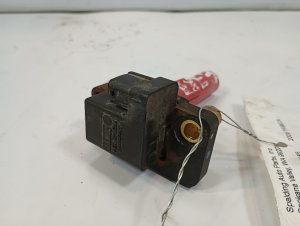
(OEM #22433AA67B (for 2013-2014 2.5L models))— Applies to 2010-2018 models. A common point of failure that directly causes misfires.
Trusted brands: Denso, Hitachi, NGK
OEM price range: $100-$180
Aftermarket price range: $50-$150 - Spark Plug Wire Set
(OEM #22452AA690 (Example for 2005-2009 models))— Applies to 2005-2009 models with the EJ25 engine. Wires degrade over time, causing spark to arc.
Trusted brands: NGK, OEM
OEM price range: $80-$150
Aftermarket price range: $50-$120 - Engine Ground Strap
(OEM #81831AG000)— The factory ground straps are known to corrode and break, leading to various electrical faults including misfires. It's an inexpensive but critical part to check.
Trusted brands: Subaru (OEM)
OEM price range: $15-$30
Aftermarket price range: $10-$20
Related Codes That Often Appear With This One
- P0300 — P0300 indicates a random/multiple cylinder misfire. If the misfire is intermittent and affects more than one cylinder without a clear pattern, both codes may appear.
- P0301-P0306 — If the ECM is eventually able to identify the specific misfiring cylinder, a P0314 may be accompanied by or turn into a cylinder-specific code (e.g., P0301 for Cylinder 1).
- P0171 — This code for 'System Too Lean (Bank 1)' can occur alongside a misfire code if the root cause is a vacuum leak or a fuel delivery problem affecting the entire engine bank.
Technical Service Bulletins (TSBs) & Recalls
- 09-74-21R - Cleaning Procedure for Carbon Accumulation
- 02-157-14R - Related to FB25 Engine Oil Consumption
- 16-107-17 - CVT Warranty Extension Program
Platform-Specific Known Issues
- Difficult Spark Plug Access: Due to the boxer engine's horizontal layout, the spark plugs are located on the sides of the engine bay with limited clearance from the frame rails. This makes replacement more time-consuming than on other engine types and often requires a combination of specific extensions and swivel sockets. Many DIY owners on forums like subaruoutback.org mention this as a key challenge of the job.
- Owner Experience: Misfire Resolved with Tune-Up: A thread on r/subaru titled 'Rough idle, stalling, cylinder 2 & 4 misfire codes...' for a 2005 Outback highlights a common scenario. After major engine work, the user experienced rough idle and misfires on one bank. The community discussion pointed towards ignition components (plugs, wires, coil pack) as the most likely culprits to investigate first, even after other work was performed.
- Owner Experience: Intermittent Misfire: On a Reddit thread, a user with a low-mileage 2021 model experienced a cylinder 4 misfire. The dealer cleared the code and called it a 'random misfire' without replacing parts, leaving the owner concerned. This illustrates how P0314 can be intermittent and frustrating to diagnose, with even dealerships sometimes taking a 'wait and see' approach if the fault isn't actively present.
Mechanic-Grade Diagnostic Values
- Fuel Injector Resistance (High Impedance) — expected: 10 - 16 Ohms at room temperature.. Failure: A reading of infinity (open circuit) or near zero (short circuit). A reading that is significantly different from the other injectors.
- Ignition Coil Pack Secondary Resistance (2005-2009 EJ25) — expected: 9.5 - 12.9 kOhms between corresponding terminals.. Failure: A reading outside of this range indicates a faulty coil winding.
- Spark Plug Wire Resistance (2005-2009 EJ25) — expected: 5 - 20 kOhms, depending on wire length. (Cylinders 1 & 3: 5-13 kOhms; Cylinders 2 & 4: 8-20 kOhms).. Failure: An extremely high or infinite reading (open circuit) means the wire is bad.
- Short & Long Term Fuel Trims (STFT/LTFT) — expected: Total trim (STFT + LTFT) should be within +/- 10% at steady RPM. LTFT should ideally be close to 0%.. Failure: Sustained total trim values greater than +10% indicate a lean condition (e.g., vacuum leak). Sustained values less than -10% indicate a rich condition.
- Mass Air Flow (MAF) Sensor Reading at Idle — expected: Approximately 2.5 - 4.5 g/s for a 2.5L engine at normal operating temperature with no electrical load.. Failure: A significantly lower reading can indicate a vacuum leak somewhere between the MAF sensor and the cylinders. A significantly higher reading could indicate a contaminated sensor.
Hidden / Shadow Codes Worth Checking
- Cylinder Roughness / Misfire Count: This is not a DTC, but live data accessible with a capable scanner like the Subaru Select Monitor (SSM) or some advanced aftermarket tools. It shows a running count of misfire events per cylinder, even if they aren't severe enough to set a P030x code. This is the primary tool for isolating an intermittent misfire when only a P0314 is present. (see via Use a scan tool with Subaru-specific live data parameters. Look for PIDs labeled 'Misfire Count Cyl 1-4' or 'Cylinder Roughness 1-4'.)
Scan Tool Commands That Help
- Subaru Select Monitor (SSM) or equivalent: Current Data Display / Live Data — This is essential for diagnosing P0314. It allows the technician to view critical live data streams like individual cylinder misfire counts ('roughness'), short and long-term fuel trims, MAF sensor readings, and AVCS advance angles to find subtle anomalies that won't set their own specific codes.
Wiring & Ground Locations
- ECU Main Ground — On the back side of the driver's side intake manifold.. The ECU grounds through the engine harness to this point on the intake manifold. If this connection is loose or corroded, or if non-conductive spacers (like phenolic TGV deletes) are installed without a proper grounding bridge, it can cause erratic ECU behavior and phantom misfires.
- Engine-to-Chassis Ground Strap — Typically a braided metal strap bolted from the engine block or head to the chassis/frame rail on one or both sides of the engine bay.. These straps provide the main ground path for the entire engine assembly. They are exposed to the elements and are known to corrode and break completely on Outbacks. A poor engine ground can cause weak spark, incorrect sensor readings, and random misfires.
OEM Part Supersession History
22433AA67A→22433AA67B— Part revision/update by manufacturer.22433AA500, 22433AA50A, 22433AA58A→22433AA580— Part revision/update by manufacturer.
Model Year Variations Within This Range
- 2005-2009: Uses the EJ25 engine with a single ignition coil pack and four spark plug wires. Misfire diagnosis must include testing the resistance of the coil pack's secondary windings and each individual spark plug wire.
- 2010-2018: Uses a coil-on-plug ignition system, eliminating spark plug wires. Diagnosis involves swapping individual coils between cylinders to isolate a fault. The engine changed from the EJ25 to the FB25 around 2012-2013.
- 2011-2014 (Early FB25 Engines): These early FB25 engines were subject to issues like excessive oil consumption and a recall for weak valve springs that could break and cause misfires or catastrophic engine damage.
Diagnostic Flowchart
Other Known Issues on This Vehicle
Issues unrelated to this code that are worth knowing about as an owner of this generation:
- Head Gasket Failure (EJ25 Engine) 🔴 High — Very common on 2005-2011 naturally aspirated 2.5L models, typically manifesting as external oil/coolant leaks between 80,000 and 150,000 miles.
- Excessive Oil Consumption (FB25 Engine) 🔴 High — Affected early FB25 engines in 2011-2014 Outbacks due to piston ring design. Led to a class-action lawsuit and warranty extension. (Ref: TSB 02-157-14R)
- CVT Transmission Failure/Hesitation 🟠 Medium — Reported across 2010-2018 models, symptoms include shuddering, hesitation, or total failure. Subaru extended the powertrain warranty to 10 years/100,000 miles for many affected vehicles. (Ref: TSB 16-107-17 (Warranty Extension))
- Wheel Bearing Failure 🟠 Medium — A common complaint across all generations covered, presenting as a humming or grinding noise that increases with speed.
- Cracked Windshields 🟡 Low — Some owners of later models (particularly 2015+) report windshields that are prone to cracking easily, sometimes spontaneously.
Used vs. New Parts: Buying Guide for This Vehicle
When a used part is the smart pick: For purely mechanical or structural components, used parts can be a great value. This includes items like a fuel pump assembly (if the pump itself is tested), intake manifolds, or engine brackets. Avoid used electronic sensors or high-wear items unless they come from a very low-mileage donor with a warranty.
Donor-vehicle mileage cap: roughly under 80000 miles for the part to have meaningful remaining life.
What to inspect on the donor part:
- For ignition coils or injectors, check for cracks, corrosion on the terminals, or signs of oil contamination.
- For any engine component, look for a donor vehicle that was not in a severe front-end collision.
- Check for excessive rust or corrosion, especially on parts from salt-belt regions.
- If possible, get the VIN of the donor car to verify its year and engine type.
OEM-only on this vehicle (don't cheap out):
- Engine Ground Straps: These are inexpensive to buy new from the dealer (OEM P/N 81831AG000 is around $15-30), so there is little benefit to sourcing a used one that may have hidden corrosion or fatigue.
Aftermarket brands forum-validated for this vehicle:
- Ignition Coils: Denso, NGK, Hitachi (These are often the original equipment manufacturers for Subaru).
- Spark Plugs: NGK, Denso.
- Grounding Systems: iWire Services makes a popular and well-regarded aftermarket grounding kit designed to fix the factory system's weak points.
Brands owners have reported issues with on this vehicle:
- Unnamed or 'white box' ignition coils and sensors from online marketplaces. Forum users consistently report premature failure and chasing codes after using ultra-cheap electronic parts.
Real Owner Stories
Aggregated from forums and TSBs cited above. Mileages and costs reflect what owners reported in those sources.
2005 Outback
Symptoms: Rough idle and misfires on one bank after major engine work.
What fixed it: Community discussion pointed towards ignition components (plugs, wires, coil pack) as the most likely culprits to investigate first.
Source hint: A thread on r/subaru titled 'Rough idle, stalling, cylinder 2 & 4 misfire codes...'
2021 Outback — ~15000 miles
Symptoms: A cylinder 4 misfire code appeared.
What fixed it: The dealer cleared the code and called it a 'random misfire' without replacing any parts, taking a 'wait and see' approach.
Source hint: A Reddit thread mentioned in the vehicle-specific issues section.
Related OBD-II Codes
Frequently Asked Questions
My mechanic mentioned carbon buildup might be causing my P0314 code. Is this a known issue on the Outback?
I want to replace the spark plugs myself to fix P0314. Is it a difficult job on the 2005-2018 Outback?
What brand of spark plugs and wires should I use for my older EJ25 engine Outback?
Is the ignition system different on a 2008 Outback versus a 2015 model?
How can I test the ignition components on my Outback to find the cause of the P0314 misfire?
I found oil on my spark plugs when I pulled them. Could this be related to the P0314 code?
Helpful Videos
Used OEM Parts in Stock


New Aftermarket Parts Available

The information in this article is provided for general reference and educational purposes only. Vehicle specifications, procedures, and part compatibility can vary by production date, trim level, and region. Always consult your vehicle's factory service manual and verify part numbers before purchasing or performing repairs. Safety-critical components such as airbags, seat belts, and braking systems should be installed by a qualified professional.
- Subaru Outback:
- 🎬 Helpful Videos
- 🛍️ Shop This Part
- What's Unique About the 2005-2018 Subaru Outback
- Symptoms You May Notice
- Most Likely Causes
- Rare But Worth Checking
- Diagnosis Steps
- Parts You'll Likely Need
- Related Codes That Often Appear With This One
- Technical Service Bulletins (TSBs) & Recalls
- Platform-Specific Known Issues
- Mechanic-Grade Diagnostic Values
- Hidden / Shadow Codes Worth Checking
- Scan Tool Commands That Help
- Wiring & Ground Locations
- OEM Part Supersession History
- Model Year Variations Within This Range
- Diagnostic Flowchart
- Other Known Issues on This Vehicle
- Used vs. New Parts: Buying Guide for This Vehicle
- Real Owner Stories
- 2005 Outback
- 2021 Outback — ~15000 miles
- Related OBD-II Codes
- Frequently Asked Questions
- 🎟️ Get 5% Off