

OBD-II Code P0313: Misfire Detected with Low Fuel
The Ultimate Guide to Diagnosing and Fixing P0313
- P0313 means the Powertrain Control Module detected an engine misfire while the fuel tank was below 12.5% capacity, pointing directly to fuel starvation.
- Add 4 to 5 gallons of gas immediately; if the code clears and does not return, the issue was simply an empty tank.
- Never drive with a flashing check engine light, as raw fuel dumping into the exhaust destroys a $1,500 catalytic converter in less than 10 miles.
- If the code returns with a full tank, test fuel pressure; a drop below 45 PSI under load confirms a failing fuel pump or clogged filter.
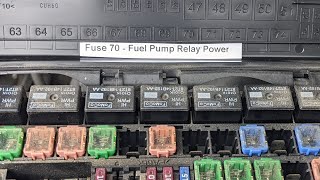
- On 2004-2014 Ford F-150s, inspect fuse #27 and the Fuel Pump Driver Module for melting or corrosion before spending $800 on a new fuel pump.
What Does P0313 Mean?

The Powertrain Control Module (PCM) detected an engine misfire while the fuel level sensor reported a nearly empty tank. This warns that fuel starvation is causing a lean air-fuel mixture (too much air, not enough fuel).
Technical definition: The SAE/OBD-II definition is "Misfire Detected With Low Fuel." The PCM sets this code when it detects a cylinder misfire while the fuel level sensor indicates the tank volume is below a minimum threshold, typically 12.5% (1/8th of a tank). The PCM logic links the misfire directly to low fuel volume, distinguishing it from general misfire codes like P0300.
🎬 Watch: A quick overview of the P0313 fault codeCan I Drive With P0313?
No — Do Not Drive. Do not drive normally. Only drive short distances to reach a gas station or repair shop. A flashing check engine light indicates a severe misfire dumping unburned fuel into the exhaust, which destroys the catalytic converter in miles, turning a simple repair into a $800-$2,500+ expense.
Common Causes

- Extremely Low Fuel Level (Very Common) — When the fuel level is critically low, the fuel pump sucks in air as fuel sloshes away from the pickup during turns or acceleration. This momentary pressure drop causes a lean misfire.
- Weak or Failing Fuel Pump (Common) — A worn-out fuel pump loses its ability to generate adequate pressure. This weakness is exposed when the fuel level is low, as the pump works harder to lift the fuel. It provides sufficient pressure with a full tank but fails when the level drops.
- Clogged Fuel Filter or In-Tank Strainer (Common) — A dirty fuel filter, clogged in-tank strainer, or debris/water in the fuel tank restricts fuel flow. This restriction becomes critical when the fuel pump struggles with a low fuel level, causing a significant pressure drop.
- Faulty Fuel Level Sensor (Less Common) — The fuel level sending unit fails and incorrectly reports a low fuel level to the PCM, even with a full tank. If an unrelated misfire occurs (e.g., bad spark plug), the PCM falsely attributes it to low fuel and sets P0313.
- Clogged or Faulty Fuel Injectors (Less Common) — A dirty or failing fuel injector fails to deliver the proper amount of fuel to a specific cylinder. This issue magnifies when overall fuel pressure is lower due to a low tank level, causing a consistent single-cylinder misfire.
- Major Vacuum Leak (Less Common) — A significant vacuum leak (e.g., cracked intake manifold gasket or bad PCV hose) introduces unmetered air into the engine, creating a lean condition. Combined with the slight pressure drop from a low fuel tank, this triggers P0313.
- Failing Ignition System Components (Rare) — A weak ignition coil or worn spark plug produces a spark sufficient for normal conditions but fails to ignite a lean air-fuel mixture caused by low fuel, resulting in a misfire.
- PCM or Wiring Issues (Rare) — Corroded connectors on the fuel pump harness, a faulty Fuel Pump Driver Module (FPDM), or a PCM software calibration error causes false low-pressure readings or misinterprets sensor data.
Symptoms

- Engine Hesitation or Stumbling on Acceleration — The car stumbles, bogs down, or loses power instead of accelerating smoothly. This is most noticeable under load or when the fuel level is low.
- Engine Stalls, Especially at Low Speeds — The engine shuts off completely when coming to a stop, idling, or during low-speed maneuvers due to inconsistent fuel supply.
- Rough Idle and Engine Shaking — The engine vibrates, shakes, or runs erratically when stopped at a light or in park, indicating one or more cylinders are not firing correctly.
- Hard Starting Condition — The vehicle takes longer than usual to start, requiring extended cranking time. This worsens when the fuel level is low or the vehicle is parked on an incline.
- Whining Noise From the Fuel Tank Area — A failing fuel pump produces a high-pitched whining or buzzing sound audible from the rear of the vehicle. The noise gets louder as the pump works harder.
- Reduced Fuel Economy — An engine misfiring runs inefficiently, leading to a noticeable 5-15% decrease in average miles per gallon (MPG).
- Check Engine Light On or Flashing (also visible on scanner) — A steady light indicates a detected fault. A flashing light signals a severe, active misfire that quickly damages the catalytic converter. Pull over and shut off the engine immediately if it flashes.
Diagnostic Flowchart
Tap your situation to follow the diagnostic path that matches what you're seeing on this code.
Common Fixes & Costs
- Refueling the Vehicle — Parts: $15-$25, Labor: $0, ~0.1 hr book time (DIY)
- Replacing the Fuel Pump Assembly — Parts: $250-$600, Labor: $300-$600, ~3 hr book time (Professional)
- Replacing the Fuel Filter — Parts: $20-$80, Labor: $80-$200, ~1.2 hr book time (DIY)
- Replacing a Fuel Injector — Parts: $70-$400, Labor: $150-$500, ~2.5 hr book time (Professional)
- Replacing Spark Plugs and/or Ignition Coils — Parts: $20-$150, Labor: $100-$350, ~1.5 hr book time (Intermediate)
- Professional Diagnosis — Parts: $0, Labor: $150-$250, ~1.5 hr book time (Professional)
Used vs. New Parts: Buying Guide
When a used part is worth it: Buying a used fuel pump is never recommended. The labor cost to replace a fuel pump is high, and a used part has an unknown history and high failure rate. The risk of paying for labor twice outweighs the initial savings.
Donor-vehicle mileage cap: roughly under 40000 miles for the part to have meaningful remaining life.
Donor quality checklist:
- Verify the donor vehicle had low mileage and was not scrapped due to fuel system or engine issues.
- Avoid parts sitting outside the tank for a long time, as this damages them.
- Ensure the part number is an exact match for your vehicle's original pump.
Decision logic:
- If The labor to replace the pump is more than double the cost of the part. → Always buy a new, high-quality OEM or reputable aftermarket pump.
- If The vehicle is very old, has low value, and you are performing the labor yourself. → A used pump from a low-mileage wreck is a temporary, budget-conscious option, but remains a gamble.
- If The part is a complete fuel pump assembly with integrated sender and housing. → Favor a new assembly to avoid compatibility issues and ensure all components are fresh.
Warranty tradeoff: Used parts from a salvage yard typically have a 30-90 day warranty on the part only, not the labor. New aftermarket parts carry a 1-year to lifetime warranty, while new OEM parts offer manufacturer-backed guarantees.
Worst-case if a used part fails: $400-$800 if a used pump fails after installation, representing the repeated labor cost plus the cost of another pump.
What Happens If You Wait — Timeline
- 0-1 week: Code P0313 appears, MIL is on. Misfire is only noticeable when fuel is very low. No other symptoms perceived. (MPG impact: 0-5%% · Added cost: $0)
- 1 week - 2 months: Engine hesitates more often, even with more fuel in the tank. A consistent drop in MPG is noticeable. The Check Engine Light flashes during heavy acceleration. (MPG impact: 5-15%% · Added cost: $50-$150 in wasted fuel and minor stress on the catalytic converter.)
- 2-4 months: The flashing Check Engine Light becomes frequent. Unburned fuel regularly enters the exhaust, causing the catalytic converter's internal substrate to overheat and melt. Stalling becomes a possibility. (MPG impact: 15-25%% · Added cost: $1,200-$3,000 as the catalytic converter is damaged beyond repair and requires replacement.)
- 4+ months: The fuel pump completely fails, leaving the vehicle stranded. The catalytic converter is melted and clogged, causing significant exhaust backpressure leading to burned exhaust valves or piston damage. (MPG impact: 25%+% · Added cost: $2,500-$7,000+ for a new fuel pump, catalytic converter, and engine repairs.)
Cost of Not Fixing It
- Immediate (0-100 miles): Risk of stalling in traffic, poor engine performance, and a 5-15% drop in fuel economy. (Added cost: Negligible, other than fuel cost.)
- Short Term (100-500 miles): If the check engine light flashes, unburned fuel overheats and melts the internal structure of the catalytic converter, causing permanent failure. (Added cost: $1,200-$3,000)
- Long Term (500+ miles): Continued operation with a lean misfire increases combustion temperatures, damaging pistons or valves. A weak fuel pump eventually burns out completely, leaving the vehicle stranded. (Added cost: $2,500-$7,000+)
Diagnosis Steps

- Add Fuel to the Tank
Add at least 4-5 gallons (15-20 liters) of gasoline to the tank. If the code was triggered by running out of gas, this resolves the issue. Clear the code with a scanner and drive to see if it returns.
Tools: Gasoline (Beginner) - Scan for Codes and Review Freeze Frame & Live Data
Use an OBD-II scanner to confirm P0313. Analyze freeze frame data for conditions at the time of the fault. View live data PIDs for 'Fuel Level Input' (often below 12.5%), 'Fuel Rail Pressure', and individual cylinder 'Misfire Counters'.
Tools: OBD-II Scanner (Beginner) - Test Fuel Pressure (Mechanical Gauge)
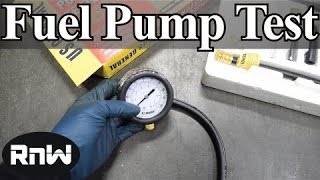
Connect a fuel pressure gauge. With Key On, Engine Off (KOEO), the pump must prime to the manufacturer's spec (e.g., 50.8 PSI for BMW E46; 55-62 PSI for GM 5.3L). A reading below spec, especially with a low tank, confirms a weak pump or clog.
Tools: Fuel Pressure Gauge Kit (Intermediate) - Inspect for Obvious Vacuum Leaks
Perform a visual inspection of all vacuum hoses, the air intake tube, and intake manifold gaskets for cracks or loose fittings. Use a smoke machine to find hidden leaks causing a lean condition.
Tools: Smoke Machine, Flashlight (Intermediate) - Inspect the Ignition System for a Weak Link
If a specific cylinder misfire code (P0301-P0308) is present, inspect its spark plug, ignition coil, and wiring. Swap the coil with a known good cylinder to see if the misfire code follows the coil.
Tools: Socket Set, Spark Plug Socket, Torque Wrench (Intermediate) - [ADVANCED] Test Fuel Pressure Bleed-Down Rate
After priming the system to full pressure, turn the key off and monitor the gauge. Pressure must not drop more than 7 PSI over 20-30 minutes. A rapid drop indicates a faulty fuel pump check valve, leaking injector, or bad fuel pressure regulator.
Tools: Fuel Pressure Gauge Kit (Advanced) - [ADVANCED] Test Fuel Pump Current Draw (Amperage)
A healthy in-tank fuel pump draws 4-8 amps. Use a low-amp clamp on the pump's power wire. A draw below 4 amps proves high resistance or a worn motor. A draw above 10 amps proves the pump is working against a restriction.
Tools: Low-Amp Current Clamp, Multimeter with Amperage Function, Relay Bypass Adapters (Advanced) - [ADVANCED] Analyze Fuel Pump Waveform with an Oscilloscope
Observe the amperage waveform. A healthy pump shows uniform 'humps'. An erratic pattern with sharp spikes or deep dropouts proves worn commutator segments or bad brushes, confirming internal pump failure.
Tools: Automotive Oscilloscope, Low-Amp Current Probe (Advanced) - [ADVANCED] Test Fuel Level Sensor Resistance
Disconnect the sender and measure resistance at 'full' and 'empty' float positions with a multimeter. Compare to specs (e.g., GM 0-90 Ohms). A reading that is open, shorted, or doesn't change smoothly confirms a bad sender.
Tools: Multimeter, Vehicle-Specific Resistance Specs (Advanced) - Inspect the In-Tank Fuel Pump Assembly
If fuel pressure is low and other tests are inconclusive, access the fuel pump inside the gas tank. Visually inspect the pump's intake sock for heavy contamination and check for cracks in the housing.
Tools: Socket Set, Fuel Line Disconnect Tools, Floor Jack, Jack Stands (Advanced)
When This Code Triggers (Freeze-Frame Conditions)
- Engine Coolant Temp: 180-210°F (82-99°C) (The engine is fully warmed up to normal operating temperature.)
- RPM: 1500-3000 RPM (Occurs during steady-state cruising or light acceleration, not typically at idle or full throttle.)
- Engine Load: 20-50% (Happens under moderate load when fuel demand is consistent but the delivery system struggles.)
- Vehicle Speed: 40-65 mph (65-105 kph) (Most common during highway or suburban cruising speeds under sustained, light load.)
Related Codes
- P0300 — P0300 indicates a 'Random/Multiple Cylinder Misfire.' P0313 is a more intelligent version of P0300, correlating the misfire with a low fuel level signal to point directly toward a fuel delivery diagnosis.
- P0301-P0308 — These codes pinpoint a misfire to a specific cylinder. When seen with P0313, it proves that while low fuel pressure affects the whole engine, one cylinder has a weaker component failing first under lean conditions.
- P0171 / P0174 — These 'System Too Lean' codes are a direct consequence of the condition causing P0313. A weak fuel pump starves the engine of fuel, creating a lean mixture. Fixing the root cause of P0313 resolves these codes.
- P0087 — This code for 'Fuel Rail/System Pressure - Too Low' is the smoking gun. P0087 is triggered by a direct reading of low fuel pressure from the sensor. Having both codes guarantees a hardware failure like a weak fuel pump.
Climate & Environmental Factors
- High Altitude: At higher altitudes, lower atmospheric pressure forces the fuel pump to work harder to generate the same relative pressure. A weak pump shows symptoms of failure at high altitude first.
- Hot Weather: Fuel pumps run hotter in warm weather, especially with a low fuel level, as gasoline cools the pump motor. High temperatures cause a borderline pump to overheat and fail, leading to fuel pressure loss.
- High Humidity: Humid conditions accelerate corrosion on electrical components, including the fuel pump wiring harness and Ford Fuel Pump Driver Module (FPDM). This increases electrical resistance, reducing voltage to the pump.
How to Talk to a Mechanic About This Code
Say this: "I have an OBD code P0313, 'Misfire Detected with Low Fuel.' The symptoms only happen when the tank is below a quarter full. I'd like to schedule a diagnostic appointment. Please start by checking the fuel pressure at both a low and full tank level, and check for any technical service bulletins related to the fuel pump, its fuse, or the driver module for my specific vehicle."
This language signals you understand the code's meaning. It directs the mechanic to the most logical diagnostic path (fuel delivery related to fuel level) and requests specific, verifiable tests (fuel pressure) and research (TSBs). This prevents expensive guesswork.
Avoid saying:
- 'My check engine light is on, can you just fix it?'
- 'The car is running rough, I think it's the spark plugs.'
- 'Just do whatever you think is necessary.'
Questions to ask before authorizing the repair:
- What were the fuel pressure readings at KOEO (Key On, Engine Off) and while running? Did you test it when the tank was low?
- Did you find any TSBs or common failure patterns for my vehicle's fuel system?
- If you are recommending a fuel pump, can you confirm you've ruled out the fuse, relay, and driver module first?
- Will you provide me with the old parts when the repair is complete?
- What is the warranty on this specific repair, covering both parts and labor?
Where to Take It: Dealer vs Independent vs Chain
- Dealer:
Best for: Vehicles still under powertrain or emissions warranty., Complex, manufacturer-specific quirks like the Ford F-150 fuse/FPDM issues or BMW DME sensitivity where they have direct access to TSBs and proprietary tools.
Downsides: Typically the highest labor rate., Prefers to replace an entire assembly (e.g., fuel pump module) rather than a smaller component. (Typical cost: +50% vs. baseline) - Independent Shop:
Best overall fit. A good independent shop diagnoses and repairs a P0313 issue effectively and more affordably than a dealer for out-of-warranty vehicles.
Best for: Most out-of-warranty vehicles., This code is a bread-and-butter diagnostic for a competent independent technician.
Downsides: Quality and expertise vary widely. Vet the shop based on reviews, certifications (like ASE), and word-of-mouth. (Typical cost: +0% vs. baseline) - Chain Shop:
Use with caution. Acceptable for a simple, pre-diagnosed part replacement, but AVOID for the initial diagnosis of a P0313 code due to its complexity.
Best for: Simple, related jobs if the diagnosis is already certain (e.g., replacing an external fuel filter).
Downsides: Technician skill is highly variable., Business model encourages upselling unnecessary services like full fuel system flushes when a mechanical part is the root cause. (Typical cost: -10% vs. baseline)
When to Walk Away From the Repair
If the estimated repair cost exceeds 40-50% of the car's private-party value, pause and seriously consider not fixing it.
- Car worth $4000, fix is $1800: Borderline (45%). The repair cost is significant compared to the car's value. Get a second opinion before authorizing and consider the car's overall condition.
- Car worth $12000, fix is $1800: Fix it (15%). The repair cost is a reasonable fraction of the car's value, making it a worthwhile investment to keep it running.
- Car worth $2500, fix is $1800: Walk away (72%). The repair cost is far too high relative to the car's value. The money for the repair is better put towards a replacement vehicle.
What Scan Tool You Need for This Code

Minimum: An OBD-II scanner that reads and graphs live data, specifically the Parameter ID (PID) for 'Fuel Rail Pressure' and 'Fuel Level'.
A basic $20 code reader only shows the P0313 code, forcing you to guess the cause. To properly diagnose this, you must see live fuel pressure data to confirm if the pressure drops when symptoms occur, pointing directly to a failing pump or clog.
Budget: BlueDriver Pro or similar Bluetooth scanner (~$100) — Pairs with your smartphone to read/clear codes, view freeze frame data, and graph live fuel pressure and fuel level data to see the problem in real-time.
Mid-range: Foxwell NT510 Elite or Innova 5610 (~$150) — A dedicated handheld unit providing robust live data, manufacturer-specific codes, and limited bidirectional controls to test components like the fuel pump relay.
Professional: Autel MaxiCOM MK808 or XTOOL D7 (~$500) — Offers full bidirectional control, allowing you to command the fuel pump to turn on/off for testing purposes without starting the engine.
Rent vs buy: For a one-time diagnosis, auto parts stores like AutoZone offer a free tool loaner program to borrow a scanner. Buy a scanner only if you plan to perform your own diagnostics regularly.
How to Clear the Code After You Fix It
- Use an OBD-II scan tool to formally clear the diagnostic trouble codes.
- Ensure the fuel tank is between 1/4 and 3/4 full.
- Perform a complete OBD-II drive cycle to allow the vehicle's readiness monitors to run their self-tests.
Drive cycle (~30 minutes): Start with a cold engine (sit for 8+ hours). Idle for 2-3 minutes with electrical loads on (A/C and defroster). Drive for 15 minutes with mixed city/highway conditions, including steady speeds around 55 mph for at least 5 minutes. Allow the vehicle to coast down and idle before shutting off.
Readiness monitors affected: Catalyst (CAT) Monitor, Evaporative System (EVAP) Monitor, Oxygen (O2) Sensor Monitor, Misfire Monitor
Before emissions retest: drive at least 100 miles to fully set monitors.
Watch out for:
- Disconnecting the battery clears the code but resets all readiness monitors to 'Not Ready', guaranteeing an emissions test failure.
- The code returns immediately if the underlying mechanical issue (like a weak fuel pump) is not fixed.
- Failing to complete the full drive cycle leaves monitors in a 'Not Ready' state.
Will This Fail Emissions / State Inspection?
Yes — this code typically fails an OBD-II emissions inspection.
- California: An active P0313 code is an automatic failure. All OBD readiness monitors must be 'Ready.' After repair, a full drive cycle is required before re-testing.
- New York: A vehicle fails the NYS OBD-II inspection if the Check Engine Light is on for any emissions-related code, including P0313.
- Texas: In counties requiring emissions testing, an illuminated Check Engine Light results in an automatic failure. The OBD-II scan reports the active fault code.
Most Commonly Affected Vehicles
- BMW 3-Series (E46) (1998-2006) — Extremely common on the E46 platform. Original fuel pumps weaken significantly over time. Often accompanied by lean codes (P0171/P0174). Target fuel pressure is 3.5 bar (50.8 PSI).
- Chevrolet Silverado 1500 (5.3L) (2014-2018) — Frequently reported on these trucks. A weak fuel pump fails to maintain the required 55-62 PSI when the fuel level drops below a quarter tank.
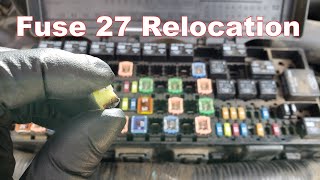
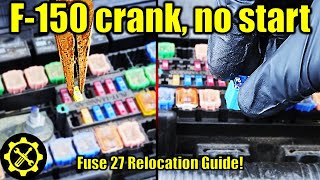
- Ford F-150 (2009-2014) — The No. 27 fuel pump fuse in the under-hood fuse box melts its housing (TSB 15-0137). This causes identical symptoms and must be inspected before replacing the pump. A fuse relocation kit (EL3Z-14293-A) is the fix.
- Ford F-150 (2004-2008) — Notorious for failure of the Fuel Pump Driver Module (FPDM), which corrodes against the steel frame. This module failure cuts power to the pump and is a more common cause of stalling than the pump itself.
- Dodge RAM 1500 (2009-2018) — The in-tank fuel pump is a common failure point manifesting as stalling or hesitation when the fuel level is low, triggering P0313.
- Mini Cooper (S Models) (2007-2015) — On turbocharged 'S' models, the high-pressure fuel pump (HPFP) is a well-documented failure point. A failing HPFP causes misfires and P0313, especially if the in-tank low-pressure pump is also marginal.
- Volkswagen Jetta, Golf, GTI (2006-2015) — Often reported in conjunction with fuel pump failures or issues with the fuel pressure sensor. A failing cam follower on the high-pressure fuel pump (TSI engines) contributes to fuel-related misfires.
- Hyundai / Kia Sonata, Elantra, Optima, Forte (2011-2017) — P0313 is commonly linked to a weakening in-tank fuel pump failing to provide adequate pressure, particularly in hot weather or when the fuel level is low.
- Subaru Impreza, Forester, Outback (2008-2016) — P0313 is a symptom of a failing fuel pump assembly or a clogged in-tank fuel filter sock. On some models, the fuel filter is part of the pump assembly and is not serviced separately.
Manufacturer-Specific Notes
- BMW: On E46 and E90 models, the DME (PCM) is highly sensitive to fuel pressure fluctuations. It uses P0313 as an early warning system to alert the driver of impending fuel starvation before the misfire is severe, preventing engine damage.
- Ford: On 2009-2014 F-150s, always check fuse #27 in the engine bay fuse box for melting before suspecting the fuel pump (TSB 15-0137). A fuse relocation kit (Part No. EL3Z-14293-A) is the proper fix.
- Ford: On 2004-2008 F-150s, the Fuel Pump Driver Module (FPDM) is a notoriously common failure. Its aluminum body corrodes against the steel frame, cutting power to the fuel pump and setting P0313.
- General Motors: On 2017-2019 Silverado/Sierra HD trucks with dual fuel tanks, a recall (NHTSA #23V047000) addresses a faulty rear fuel tank preventing fuel transfer to the front tank, leading to a stall and P0313.
Real Owner Stories
2015 Chevrolet Silverado 5.3L with recurring P0313
Check engine light and rough running only appeared when the fuel tank was below 1/8 of a tank. The truck ran perfectly with a full tank.
What they tried:
- Filled the tank and cleared the code. The problem returned a few weeks later when the tank got low again.
Outcome: A mechanic monitored live data and saw fuel pressure was stable at 58 PSI with a full tank but dropped to 32 PSI when the fuel level was low. This confirmed a weak fuel pump. Replacing the in-tank fuel pump assembly permanently fixed the issue.
Lesson: If the problem is strictly related to the fuel level, it strongly points to a weak fuel pump or a problem with the in-tank pickup, not ignition or injector issues.
BMW E46 at 250k miles with constant misfires and P0313
Car ran poorly with a 'burbling' sound and hesitation at full throttle, even after adding fuel. The owner had already replaced the fuel pump, filter, and O2 sensors.
What they tried:
- Replaced fuel pump, fuel filter, and O2 sensors with no success. Performed a smoke test and fixed a small hole in the intake boot, but the severe misfire persisted.
Outcome: The owner misdiagnosed the issue by focusing only on fuel delivery. The persistent misfire across all fuel levels suggested a fundamental problem. Forum members suggested checking for major vacuum leaks from the CCV system or inspecting ignition coils, which are common failure points on high-mileage E46s.
Lesson: Do not get tunnel vision from the 'low fuel' part of the code. If adding fuel fails to help, the root cause is a major vacuum leak or ignition failure miscategorized by the PCM.
2011 Ford F-150 stalling with P0313, but the fuel pump was fine
The truck intermittently stalled and showed a P0313 code, mimicking classic fuel pump failure symptoms. The fuel tank was not empty.
What they tried:
- The owner was about to order an expensive fuel pump assembly, assuming it had failed.
Outcome: The owner discovered Ford TSB 15-0137, describing an issue where the #27 fuel pump fuse melts its housing, cutting power to the fuel pump. The owner inspected the fuse box and found the melted fuse. Installing a $20 fuse relocation kit (Part No. EL3Z-14293-A) permanently solved the problem.
Lesson: Always check for vehicle-specific Technical Service Bulletins (TSBs) before replacing expensive components. For many Ford trucks, a melted fuse is a far more common cause than a failed pump.
How to Prevent This Code From Triggering
- Keep the fuel tank above 1/4 full. (Daily habit) — Fuel in the tank cools and lubricates the electric fuel pump motor. Running the tank low causes the pump to run hotter and work harder, leading to premature wear and burnout.
- Use Top Tier certified gasoline. (Every fill-up) — Top Tier gas contains higher concentrations of detergent additives. These detergents prevent and clean deposits from fuel injectors, ensuring a proper spray pattern and preventing lean conditions.
- Replace the fuel filter at the recommended interval. (Every 30,000-60,000 miles (varies by vehicle)) — A clogged fuel filter restricts fuel flow, forcing the fuel pump to work harder. A clean filter ensures adequate fuel pressure and volume, reducing strain on the pump.
- Avoid filling up when a fuel tanker is refilling the station's underground tanks. (As needed) — The refilling process stirs up sediment and water settled at the bottom of the station's storage tanks. Pumping this contaminated fuel into your vehicle quickly clogs your fuel filter.
Frequently Asked Questions
What does P0313 mean in the simplest terms?
It means your engine is sputtering (misfiring) because it's running out of gas. This happens because the tank is actually empty, or a weak fuel pump cannot deliver the remaining fuel.
Can I just add gas to fix P0313?
Sometimes, yes. If the code appeared because you ran the tank completely dry, filling it up solves the problem. If the code reappears with more than a quarter tank, you have a mechanical failure requiring diagnosis.
What is the most common misdiagnosis for P0313?
The most common mistake is replacing the expensive fuel pump without performing basic checks. Always rule out an empty tank, a clogged fuel filter, or a melted fuel pump fuse first.
Is it safe to drive with code P0313?
No. A flashing check engine light means raw fuel is destroying your catalytic converter, a repair costing over $2,000. Drive only as far as necessary to reach a safe location or repair shop.
Can a vacuum leak cause P0313?
Yes. A significant vacuum leak creates a lean condition, making the engine highly sensitive to minor fuel pressure drops. This combination triggers P0313 even if the fuel pump is only slightly weak.
Why did P0313 appear right after I replaced my fuel pump?
The new pump is defective, the in-tank strainer was installed incorrectly, or a wiring connector is loose. Debris knocked loose during installation also clogs the new pump's strainer. Re-check all connections and verify fuel pressure.
Can a bad fuel gauge cause P0313?
Yes, indirectly. A stuck fuel level sensor constantly sends a 'low fuel' signal to the computer. If a misfire occurs from a bad spark plug, the computer links the two events and falsely sets P0313.
What's the difference between P0313 and P0087?
P0313 means a misfire happened while the fuel level was low. P0087 means the fuel pressure is too low, confirmed by the fuel rail pressure sensor. Having both codes guarantees a failed fuel pump or major clog.
Key Takeaways
- P0313 means the Powertrain Control Module detected an engine misfire while the fuel tank was below 12.5% capacity, pointing directly to fuel starvation.
- Add 4 to 5 gallons of gas immediately; if the code clears and does not return, the issue was simply an empty tank.
- Never drive with a flashing check engine light, as raw fuel dumping into the exhaust destroys a $1,500 catalytic converter in less than 10 miles.
- If the code returns with a full tank, test fuel pressure; a drop below 45 PSI under load confirms a failing fuel pump or clogged filter.
- On 2004-2014 Ford F-150s, inspect fuse #27 and the Fuel Pump Driver Module for melting or corrosion before spending $800 on a new fuel pump.
Helpful Videos

The information in this article is provided for general reference and educational purposes only. Vehicle specifications, procedures, and part compatibility can vary by production date, trim level, and region. Always consult your vehicle's factory service manual and verify part numbers before purchasing or performing repairs. Safety-critical components such as airbags, seat belts, and braking systems should be installed by a qualified professional.
- 🎬 Helpful Videos
- What Does P0313 Mean?
- Can I Drive With P0313?
- Common Causes
- Symptoms
- Diagnostic Flowchart
- Common Fixes & Costs
- Used vs. New Parts: Buying Guide
- What Happens If You Wait — Timeline
- Cost of Not Fixing It
- Diagnosis Steps
- When This Code Triggers (Freeze-Frame Conditions)
- Related Codes
- Climate & Environmental Factors
- How to Talk to a Mechanic About This Code
- Where to Take It: Dealer vs Independent vs Chain
- When to Walk Away From the Repair
- What Scan Tool You Need for This Code
- How to Clear the Code After You Fix It
- Will This Fail Emissions / State Inspection?
- Most Commonly Affected Vehicles
- Manufacturer-Specific Notes
- Real Owner Stories
- 2015 Chevrolet Silverado 5.3L with recurring P0313
- BMW E46 at 250k miles with constant misfires and P0313
- 2011 Ford F-150 stalling with P0313, but the fuel pump was fine
- How to Prevent This Code From Triggering
- Frequently Asked Questions
- What does P0313 mean in the simplest terms?
- Can I just add gas to fix P0313?
- What is the most common misdiagnosis for P0313?
- Is it safe to drive with code P0313?
- Can a vacuum leak cause P0313?
- Why did P0313 appear right after I replaced my fuel pump?
- Can a bad fuel gauge cause P0313?
- What's the difference between P0313 and P0087?
- Key Takeaways
- 🎟️ Get 5% Off