

OBD-II Code P0309: Cylinder 9 Misfire Detected
The Ultimate 2026 Guide to Diagnosing and Fixing a P0309 Misfire
What Does P0309 Mean?
Code P0309 indicates the Powertrain Control Module (PCM) detected a misfire in cylinder 9. The air-fuel mixture failed to ignite properly, causing a loss of engine power, increased emissions, and unburned fuel entering the exhaust system.
Technical definition: The PCM monitors crankshaft rotational speed using the crankshaft position sensor. When cylinder 9 misfires, it fails to contribute to the power stroke, causing a momentary drop in crankshaft speed. If this speed variation exceeds the manufacturer's calibrated threshold, the PCM triggers P0309.
Can I Drive With P0309?
Yes, But With Caution. Drive only for short, essential trips if the check engine light is steady. If the light flashes, stop immediately. A flashing light means raw fuel is dumping into the exhaust, which destroys the catalytic converter in under 50 miles and turns a $100 fix into a $2,500+ repair.
Common Causes
- Faulty Ignition Coil (Very Common) — The ignition coil transforms 12-volt power into high voltage for the spark. A failed cylinder 9 coil lacks the energy to ignite the compressed air-fuel mixture.
- Worn or Fouled Spark Plug (Very Common) — An old, oil-fouled, or improperly gapped spark plug in cylinder 9 fails to produce the consistent, strong spark required for combustion.
- Faulty Fuel Injector (Common) — A clogged, leaking, or electrically dead fuel injector disrupts the precise air-fuel ratio in cylinder 9, causing a lean or rich misfire.
- Excessive Carbon Buildup (Direct Injection) (Common) — On Gasoline Direct Injection (GDI) engines, oil bakes onto the intake valves. This restricts airflow into cylinder 9, causing misfires that are especially prominent on cold starts.
- Vacuum Leak (Less Common) — A cracked vacuum hose or leaking intake manifold gasket near cylinder 9 pulls unmetered air into the engine, leaning out the mixture until it cannot ignite.
- Low Engine Compression (Rare) — Mechanical failures like a worn piston ring, burned exhaust valve, or blown head gasket near cylinder 9 prevent the mixture from compressing enough to ignite.
- Wiring or Connector Issue (Rare) — A damaged wire, loose pin, or corroded connector for the cylinder 9 coil or injector creates an open circuit, interrupting the firing signal.
- Faulty Camshaft or Crankshaft Sensor (Very Rare) — Failing sensors send erratic timing data to the PCM, mistiming the spark or fuel injection across one or more cylinders.
Symptoms
- Check Engine Light is On or Flashing — A solid light indicates a detected misfire. A flashing light signals a severe, catalyst-damaging misfire requiring immediate shutdown.
- Rough Idle and Engine Vibration — The engine shakes or runs unevenly, especially when stopped at a light. The vibration worsens under load or acceleration.
- Loss of Power and Hesitation — The vehicle feels sluggish, hesitates, or jerks during acceleration because cylinder 9 is not contributing power.
- Reduced Fuel Economy — Gas mileage drops 10-20% as unburned fuel is wasted and the PCM enriches the mixture on other cylinders to compensate.
- Fuel Smell from Exhaust — A raw fuel or 'rotten egg' smell from the tailpipe indicates unburned fuel is dumping into the exhaust system.
Common Fixes & Costs
- Replace Ignition Coil
— Parts: $50-$100, Labor: $100-$150, ~0.6 hr book time
(DIY)
Ford F-250/F-350 V10: OEM Motorcraft DG-511 (pre-05), 8L3Z12029A (08+) (Alt: Denso 673-6200, NGK)
Dodge Ram V10: OEM Mopar 56029098AA (Alt: NGK 48695) - Replace Spark Plug(s)
— Parts: $15-$30, Labor: $150-$300, ~2.5 hr book time
(DIY)
Ford F-250/F-350 V10: OEM Motorcraft SP-479 (pre-05), SP-515 (05+) (Alt: Autolite, NGK)
Mercedes-Benz S600 V12: OEM Mercedes/Bosch FR7KPP33U+ (Alt: NGK Iridium) - Replace Fuel Injector
— Parts: $100-$250, Labor: $200-$400, ~3.0 hr book time
(Professional)
Ford F-250/F-350 V10: OEM Motorcraft CM-5041 (Alt: Bosch, Standard Motor Products) - Replace V12 Ignition Coil Pack (Cassette)
— Parts: $1,000-$1,500, Labor: $250-$400, ~2.5 hr book time
(Professional)
Mercedes-Benz S600 V12 (Left Bank, Cyl 7-12): OEM Mercedes A2751500780 (Alt: Standard Motor Products) - Intake Valve Carbon Cleaning (Walnut Blasting) — Parts: $50, Labor: $600-$1,000, ~6.0 hr book time (Professional)
- Repair Vacuum Leak — Parts: $10-$50, Labor: $100-$300, ~1.5 hr book time (Intermediate)
DIY vs Professional
- Replace Ignition Coil / Spark Plug — Beginner: Yes
Tools: Socket set, spark plug socket, torque wrench, dielectric grease. - Replace Fuel Injector — Beginner: No
Tools: Socket set, fuel line disconnect tools, new O-rings. - Intake Valve Carbon Cleaning (Walnut Blasting) — Beginner: No
Tools: Media blasting equipment, walnut shell media, shop vacuum, manifold removal tools. - Repair Vacuum Leak — Beginner: Yes (for hoses), No (for gaskets)
Tools: Pliers for hoses. Full socket set and torque wrench for intake gaskets.
Used vs. New Parts: Buying Guide
When a used part is worth it: Only for high-cost electronic modules like a Mercedes V12 ignition cassette from a low-mileage donor. Never buy used spark plugs or standard ignition coils.
Donor-vehicle mileage cap: roughly under 60000 miles for the part to have meaningful remaining life.
Donor quality checklist:
- Verify the donor vehicle wasn't scrapped for engine fire or front-end collision damage affecting the engine bay.
- Inspect used coil cassettes for hairline cracks or heat discoloration.
Decision logic:
- If Part is a standard wear item (spark plug, single coil, injector) → Always buy new. Cost savings are minimal and failure risk is high.
- If Part is a Mercedes V12 coil cassette and budget is tight → A used OEM part from a reputable salvage yard with a 90-day warranty is acceptable.
Warranty tradeoff: Used parts offer 30-90 day warranties. New OEM parts offer 12-24 months. Labor is never covered if a used part fails.
Worst-case if a used part fails: $500
Cost of Not Fixing It
- 0-1 month: Reduced fuel economy, rough idle, and poor acceleration. Unburned fuel begins stressing the catalytic converter. (Added cost: $0-$100)
- 1-6 months: Severe risk of catalytic converter failure. Raw fuel overheats and melts the internal ceramic honeycomb structure. (Added cost: $1,500-$3,000)
- 6+ months: Internal engine damage. 'Cylinder wash' occurs when raw fuel strips lubricating oil from the cylinder wall, destroying piston rings. (Added cost: $3,000-$6,000+)
Diagnosis Steps
- Read Codes and Review Freeze Frame Data
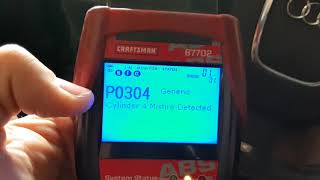
Use an OBD-II scanner to confirm P0309 is active and check for companion codes (e.g., P0300, P0209). Review freeze frame data to see the exact engine speed, load, and temperature when the misfire occurred.
Tools: OBD-II Scanner (Beginner) - Perform the 'Ignition Coil Swap Test'
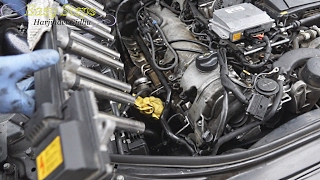
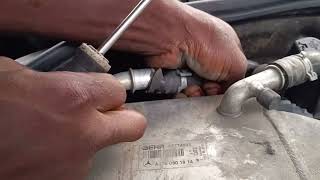
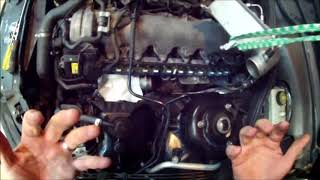
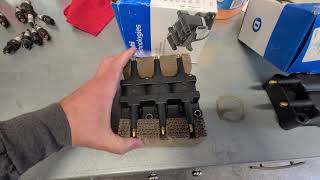
Swap the ignition coil from cylinder 9 with an easily accessible cylinder (e.g., cylinder 1). Clear the codes and drive. If the code changes to P0301, the ignition coil is faulty. If P0309 returns, the coil is good. 🎬 Watch: How to replace ignition coil packs on a V12 engine.
Tools: Basic socket set (Beginner) - Inspect and Swap the Spark Plug
Remove the spark plug from cylinder 9. Inspect it for heavy wear, cracked porcelain, or oil/carbon fouling. Replace it if questionable, or swap it with another cylinder to see if the misfire follows the plug.
Tools: Spark plug socket, ratchet, extension (Intermediate) - Visually Inspect Wiring and Vacuum Lines
Inspect the wiring harness leading to the cylinder 9 coil and injector for melted insulation, rodent damage, or loose connectors. Check nearby vacuum hoses for cracks or disconnections.
Tools: Flashlight (Beginner) - Test the Fuel Injector Circuit
Disconnect the cylinder 9 injector and measure resistance across its pins with a multimeter (typically 12-16 Ω). Next, connect a noid light to the harness connector and crank the engine; a flashing light confirms the PCM is sending the injection signal.
Tools: Multimeter, Noid light set (Advanced) - Check for Vacuum Leaks
With the engine idling, carefully spray short bursts of brake cleaner or use a smoke machine around the intake manifold gasket near cylinder 9. An RPM surge indicates a vacuum leak.
Tools: Brake cleaner or EVAP smoke machine (Intermediate) - Perform an Engine Compression Test
If ignition and fuel check out, test cylinder 9's compression and compare it to an adjacent cylinder. A difference greater than 15% indicates internal mechanical failure (valves, rings, or head gasket).
Tools: Compression tester kit (Advanced) - Analyze Live Scan Tool Data
Use an advanced scanner to monitor Mode $06 live data. Watch the 'Misfire Counter' for cylinder 9. Observe Short-Term Fuel Trim (STFT); consistently high positive trims (>10%) confirm a vacuum leak.
Tools: Advanced OBD-II Scan Tool (Advanced)
When This Code Triggers (Freeze-Frame Conditions)
- Engine Coolant Temp: 170-210°F (Fully warmed up, during closed-loop operation.)
- RPM: 1500-3000 (Under light to moderate load, such as steady cruising or gentle acceleration.)
- Engine Load: 30-60% (Misfires are most easily detected when the engine is working, but not at wide-open throttle.)
- Vehicle Speed: 40-65 mph (Occurs at steady highway speeds where conditions are stable enough to accurately detect crankshaft speed variations.)
Related Codes
- P0300 — Indicates 'Random/Multiple Cylinder Misfire.' If paired with P0309, the issue is systemic (vacuum leak, low fuel pressure) rather than isolated to cylinder 9.
- P0209 — Indicates 'Cylinder 9 Injector Circuit Malfunction.' Strongly points to an electrical fault in the cylinder 9 fuel injector or its wiring harness, ruling out the ignition coil.
- P0420 / P0430 — Indicates 'Catalyst System Efficiency Below Threshold.' Often appears as a direct result of ignoring P0309, as unburned fuel melts the catalytic converter.
Climate & Environmental Factors
- Cold Weather: Increases electrical resistance, causing weak coils to fail. Thickens oil and exacerbates carbon buildup issues on GDI engines, triggering misfires that vanish once the engine warms up.
- High Humidity / Rain: Moisture provides an alternate path to ground for high-voltage electricity. Spark arcs from a cracked coil boot to the engine block instead of jumping the spark plug gap.
- High Altitude: Thinner air forces the PCM to adjust the air-fuel ratio. A weak ignition coil may fail to fire under the high combustion chamber pressures required during mountain climbing.
How to Clear the Code After You Fix It
- Use an OBD-II scan tool to clear the P0309 code.
- Perform a complete OBD-II drive cycle to allow readiness monitors to run.
- Verify the misfire counter remains at zero using live data.
Drive cycle (~30 minutes): A generic drive cycle includes a cold start, 3 minutes of idling, mixed stop-and-go city driving, and 15 minutes of steady highway cruising at 55-60 mph.
Readiness monitors affected: Misfire Monitor, Catalyst Monitor, Oxygen Sensor Monitor
Before emissions retest: drive at least 100 miles to fully set monitors.
Watch out for:
- Clearing the code without driving the vehicle leaves monitors 'Not Ready', resulting in an automatic emissions test failure.
- Disconnecting the battery clears the code but wipes all learned fuel trims, causing rough idle until the PCM relearns the parameters.
Will This Fail Emissions / State Inspection?
Yes — this code typically fails an OBD-II emissions inspection.
- California: An active P0309 is an automatic failure. After repair, all OBD readiness monitors must be 'Ready' before a retest.
- New York: The NYVIP3 inspection fails any vehicle with an illuminated Check Engine Light or incomplete misfire monitors.
Most Commonly Affected Vehicles
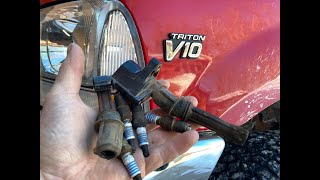
- Ford F-250/F-350 Super Duty, Excursion (V10) (1999-2019) — The Triton V10 is notorious for ignition coil failures. 2005-2008 3-valve models have spark plugs that frequently break off in the cylinder head during removal.
- Dodge Ram 2500/3500, Viper (V10) (1994-2010) — Prone to misfires from failed ignition coils and brittle wiring harnesses. Older Magnum V10s suffer from intake manifold plenum gasket leaks.
- Mercedes-Benz S600, CL600, SL600 (V12) (2003-2015) — The M275 V12 uses a single, expensive coil cassette for each bank. A misfire on cylinder 9 requires replacing the entire left-bank cassette.
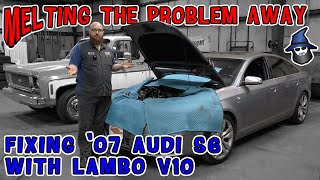
- Audi S6, S8, R8 (V10) (2006-2018) — Direct-injection (FSI) engines are highly susceptible to severe intake valve carbon buildup, requiring professional walnut blasting to cure cold-start misfires.
- Lamborghini Gallardo, Huracan (2003-2024) — Shares V10 architecture with Audi. Highly sensitive to spark plug and ignition coil health; carbon buildup is a guaranteed maintenance item.
Manufacturer-Specific Notes
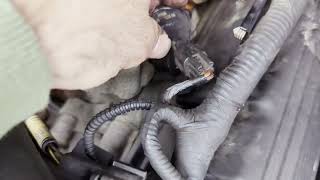
- Ford: On Triton V10s, ignition coils are the primary failure point. The coil-on-plug design makes the 'swap test' highly effective. Many owners replace all 10 coils simultaneously as preventative maintenance.
- Mercedes-Benz: V12 engines use a single coil pack (cassette) for each 6-cylinder bank. You cannot swap individual coils; if cylinder 9 fails, the entire $1,000+ left bank cassette must be replaced.
- Audi/Lamborghini: Direct-injection V10s suffer from intake valve carbon buildup as a guaranteed maintenance issue. Misfires at cold start are the classic symptom, requiring mechanical walnut blasting to fix.
Helpful Videos



The information in this article is provided for general reference and educational purposes only. Vehicle specifications, procedures, and part compatibility can vary by production date, trim level, and region. Always consult your vehicle's factory service manual and verify part numbers before purchasing or performing repairs. Safety-critical components such as airbags, seat belts, and braking systems should be installed by a qualified professional.
- 🎬 Helpful Videos
- What Does P0309 Mean?
- Can I Drive With P0309?
- Common Causes
- Symptoms
- Common Fixes & Costs
- DIY vs Professional
- Used vs. New Parts: Buying Guide
- Cost of Not Fixing It
- Diagnosis Steps
- When This Code Triggers (Freeze-Frame Conditions)
- Related Codes
- Climate & Environmental Factors
- How to Clear the Code After You Fix It
- Will This Fail Emissions / State Inspection?
- Most Commonly Affected Vehicles
- Manufacturer-Specific Notes
- 🎟️ Get 5% Off