

P0308 on 2000-2004 Oldsmobile Alero: Why This Code Is Impossible and How to Find the Real Misfire
A P0308 code means 'Cylinder 8 Misfire,' but the Oldsmobile Alero was never equipped with an 8-cylinder engine. This code indicates a scan tool error or a faulty Powertrain Control Module (PCM). The actual problem is likely a misfire on a different cylinder (P0301-P0306) or a random misfire (P0300).
- P0308 is an impossible code for an Oldsmobile Alero; do not waste time or money trying to fix cylinder 8.
- The presence of this code points to a scan tool error or, more rarely, a faulty vehicle computer (PCM).
- Your car is experiencing a real misfire. The most likely causes are worn spark plugs, bad plug wires (V6), or a failed ignition coil pack/cassette.
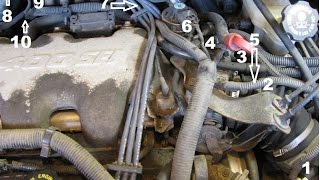
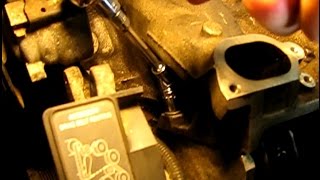
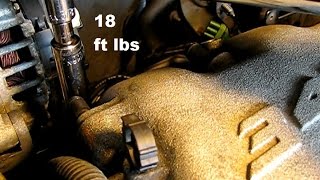
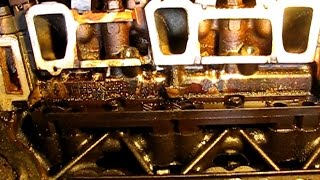
- For the 3.4L V6, a leaking lower intake manifold gasket is a very common cause of persistent misfires.
- Always diagnose the actual symptoms (rough idle, power loss) rather than focusing on the invalid P0308 code.
What's Unique About the 2000-2004 Oldsmobile ALERO
The appearance of a P0308 code on an Oldsmobile Alero is a unique diagnostic problem. Since the platform only uses I4 and V6 engines, the code is invalid. This immediately shifts the diagnosis away from a standard engine misfire on a specific cylinder and towards a problem with the diagnostic equipment itself or the car's main computer (PCM). The challenge is to ignore the 'ghost' code and find the real source of the drivability issue, which is almost certainly a misfire on an existing cylinder (1-6) that is being misinterpreted by the scanner.
Diagnostic Flowchart
Tap your situation to follow the diagnostic path that matches what you're seeing on this vehicle.
Symptoms You May Notice
- Flashing or steady Check Engine Light
- Rough or shaking idle
- Noticeable loss of power or hesitation during acceleration
- Poor fuel economy
- Engine stumbling or running rough
- Smell of unburned fuel from the exhaust
- Replacing cylinder 8 ignition components (This is impossible as the parts do not exist on this vehicle).
Most Likely Causes
- Scan Tool Error 🔴 High Probability Older vehicle communication protocols (GM's VPW) can be misinterpreted by generic or modern OBD-II scanners, leading to the display of erroneous 'ghost' codes. The scanner incorrectly interprets a valid misfire code (e.g., P0304) as P0308.
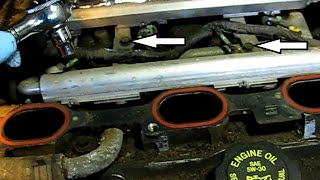
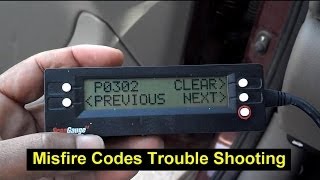
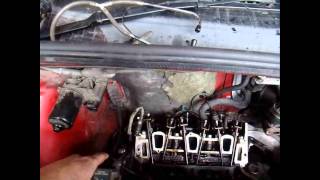
How to confirm: Rescan the vehicle with a different, high-quality scan tool, preferably one known to work well 🎬 See how to troubleshoot ghost misfire codes from P0300 to P0308 with early 2000s GM vehicles (like a Tech 2 or equivalent). If the P0308 code disappears and is replaced by a valid code (e.g., P0300, P0301-P0306), the original scanner was at fault.
Typical fix: Use a reliable scan tool for diagnosis. No parts are replaced.
Est. part cost: $0 - Faulty Powertrain Control Module (PCM) ⚪ Low Probability While rare, internal PCM failure can cause it to send incorrect data, including impossible trouble codes. This can sometimes happen due to age, voltage spikes from jump-starts, or water intrusion.
How to confirm: If multiple high-quality scan tools consistently show P0308, and there are other bizarre electrical symptoms (like erratic shifting or stalling), the PCM becomes a suspect. This requires professional-level diagnostics to confirm.
Typical fix: The PCM may need to be reprogrammed or replaced. Replacement requires programming to the vehicle's VIN.
Est. part cost: $150-$500 - User Misread The Code ⚪ Low Probability It's possible to mistake a P0300 (Random Misfire) or P0306 (Cylinder 6 Misfire) for P0308, especially on smaller scanner displays.
How to confirm: Carefully re-read the code on the scan tool display. Confirm if it's P0308 or another P030x code.
Typical fix: Proceed with diagnosing the correct code.
Est. part cost: $0
Rare But Worth Checking
- Major Electrical or Network Fault: A significant short or voltage issue in the vehicle's wiring harness or a damaged data bus wire could potentially corrupt data communication between the PCM and the OBD-II port, resulting in nonsensical codes like P0308. Chafing of the engine harness on brackets or the cylinder head is a known issue on some GM platforms.
Diagnosis Steps
- Confirm the code. Re-scan the vehicle, preferably with a second, different OBD-II scanner to check for scan tool error. If possible, use a professional-grade scanner like a GM Tech 2.
- If a valid misfire code (P0300-P0306) appears, disregard P0308 and begin diagnosing the real code.
- If P0308 persists, treat the problem as a general misfire ('P0300') and inspect the most common failure points for the engine you have (3.4L V6 or 2.2L/2.4L I4).
- Check Freeze Frame Data. If your scanner can display it, look at the engine parameters (RPM, load, temperature) when the code was set. This can provide clues about the conditions causing the real misfire.
- For the 3.4L V6: Inspect spark plugs and spark plug wires. Worn plugs and failing wires are a top cause of misfires.
- For the 3.4L V6: Inspect for Lower Intake Manifold (LIM) gasket failure. Look for coolant loss with no visible external drips, a 'milky' or cappuccino-colored residue on the oil filler cap or dipstick, and engine overheating. A hissing sound near the intake could also indicate a vacuum leak from the gasket.
- For all engines: Inspect the ignition coil pack(s). The 2.2L Ecotec uses a cassette-style coil-on-plug system where the module can fail. The 3.4L V6 uses a coil pack that can also fail, causing misfires.
- Check for vacuum leaks. A cracked vacuum hose or a leaking intake manifold gasket can cause misfires.
- Inspect fuel injectors. A clogged or failing fuel injector will cause a misfire on its corresponding cylinder.
- If all ignition and fuel components check out, and the P0308 code remains across multiple quality scanners, the Powertrain Control Module (PCM) is the likely culprit and may need professional testing or replacement.
Parts You'll Likely Need
- Spark Plugs — Worn or fouled spark plugs are the most frequent cause of a real engine misfire.
Trusted brands: ACDelco, NGK
OEM price range: $8-$15 per plug
Aftermarket price range: $4-$10 per plug - Spark Plug Wires (3.4L V6 only) — Wires degrade over time, causing weak spark and misfires on the V6 engine.
Trusted brands: ACDelco, Delphi
OEM price range: $50-$80
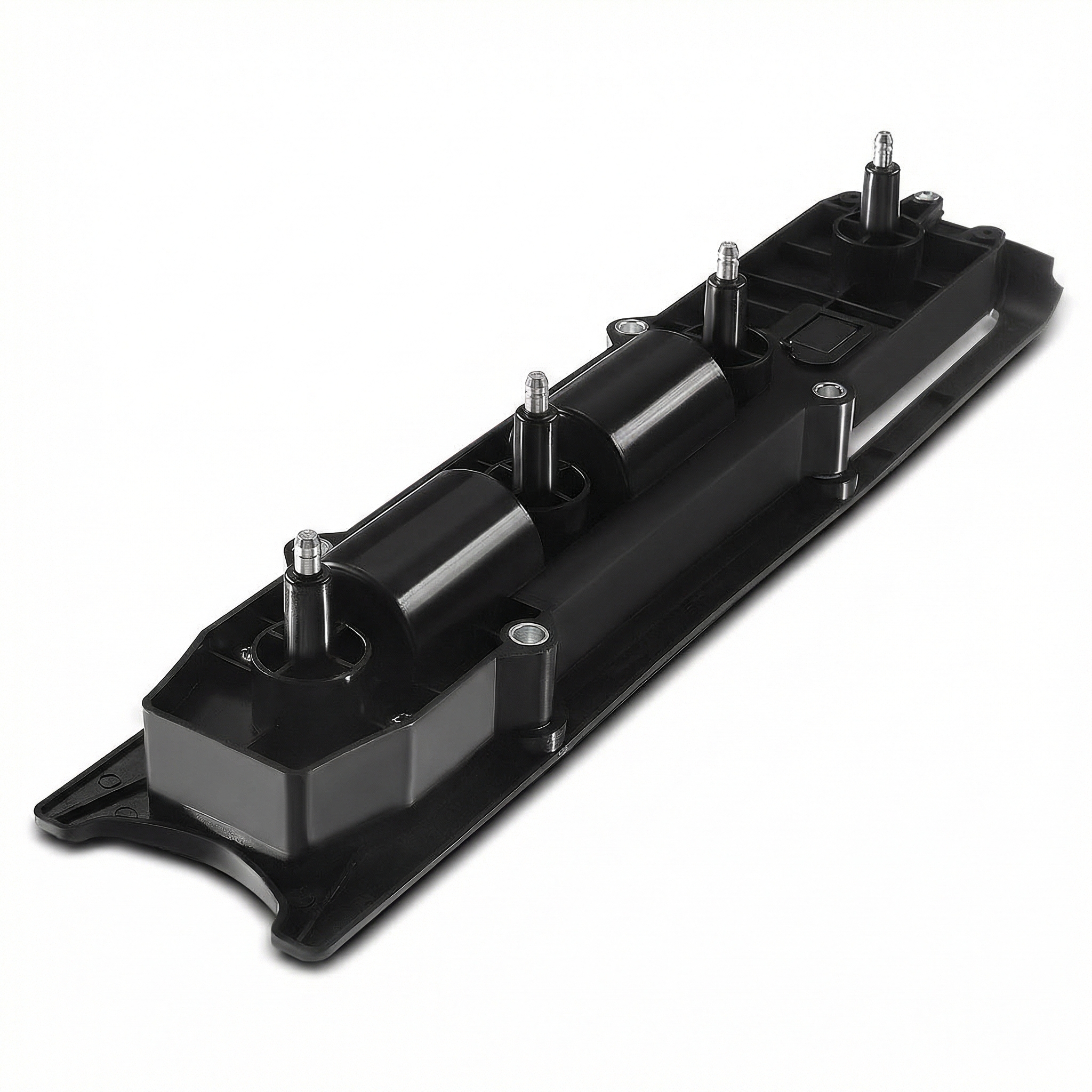
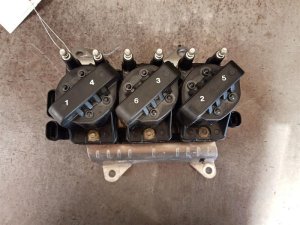
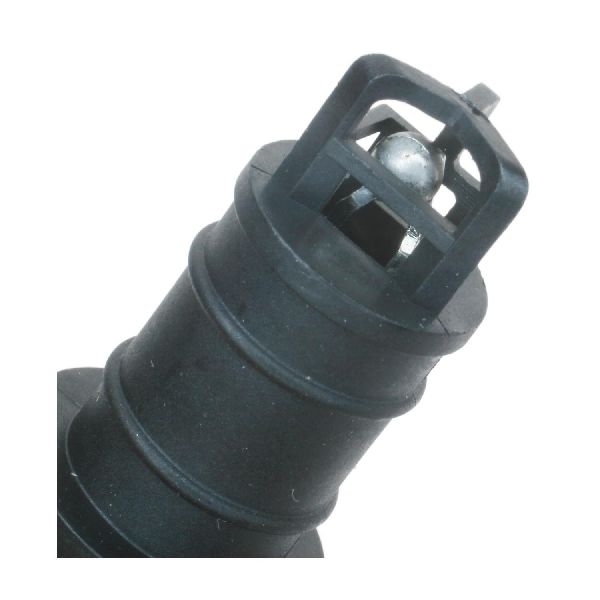
Aftermarket price range: $30-$60 - Ignition Coil Pack / Cassette
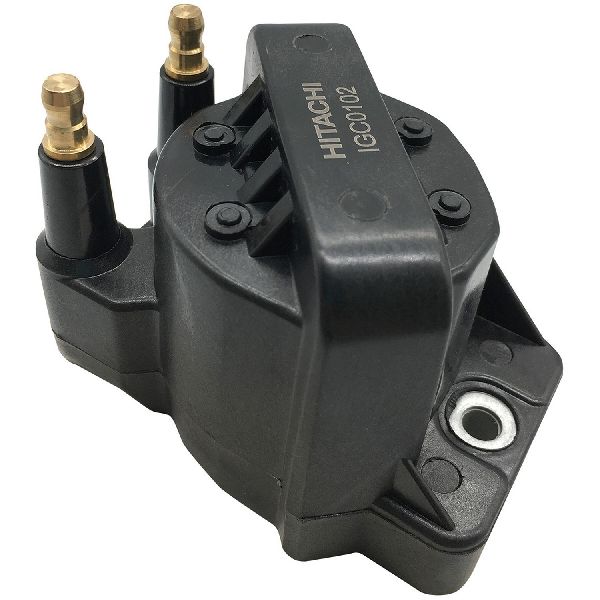
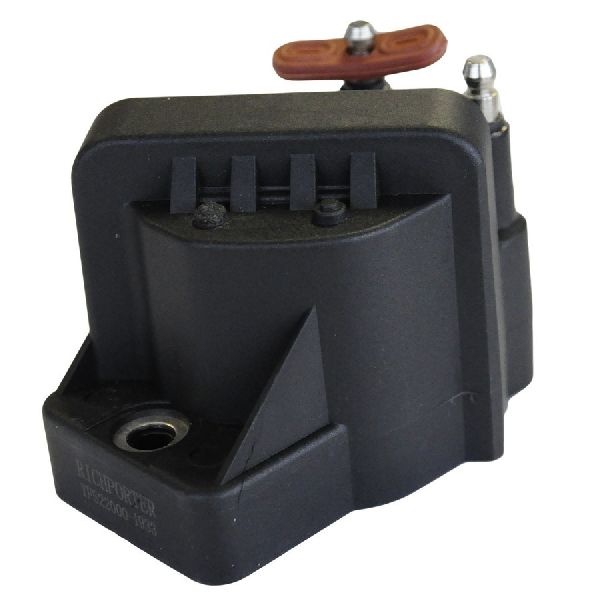
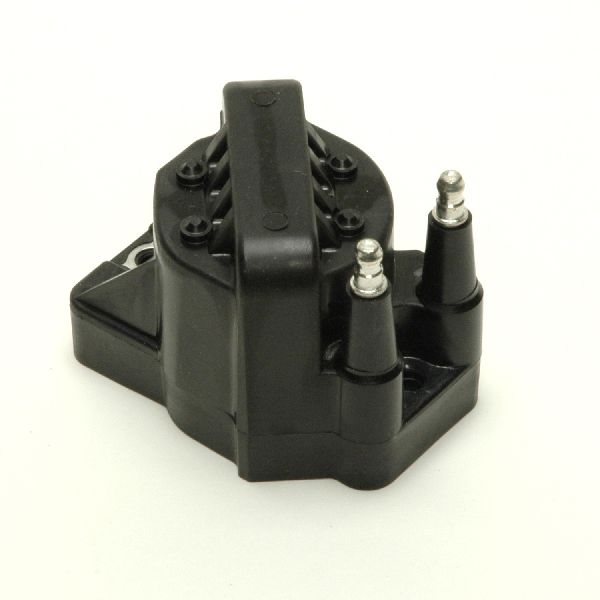
(OEM #ACDelco D555 (for 3.4L V6), ACDelco D592A (for 2.2L I4))— The ignition coil(s) or the integrated control module can fail, causing a loss of spark to one or more cylinders. This is a common issue on both the I4 and V6 engines.
Trusted brands: ACDelco, Delphi
OEM price range: $150-$250
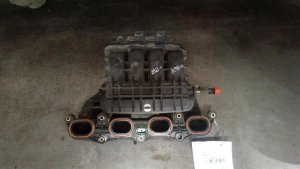
Aftermarket price range: $80-$180 - Lower Intake Manifold Gasket (3.4L V6)
(OEM #Fel-Pro MS 98014 T (Improved Design))— This is a notorious failure point on the GM 3.4L V6, causing coolant leaks (internal and external), vacuum leaks, and persistent misfires. The original plastic-frame gaskets degrade; the Fel-Pro metal-frame version is the standard, superior replacement.
Trusted brands: Fel-Pro (often recommended as an improved design), ACDelco
OEM price range: $60-$100
Aftermarket price range: $30-$70
Related Codes That Often Appear With This One
- P0300 — This is the code for a random/multiple cylinder misfire. It's a very common code and could be the actual issue the PCM is trying to report, especially in cases of vacuum leaks or fuel delivery problems.
- P0301-P0306 — These codes indicate a misfire on a specific, valid cylinder (1 through 6). The P0308 is likely a corrupted signal for one of these codes.
- P0171 — System Too Lean (Bank 1). This often accompanies misfire codes if the root cause is a vacuum leak, such as a failed intake manifold gasket.
Technical Service Bulletins (TSBs) & Recalls
- PIP5628G: This is a general GM bulletin for technicians to gather specific data (like freeze-frame records) before calling GM's Technical Assistance Center (TAC) for help with misfire codes P0300-P0308. Its inclusion of P0308 is as part of a generic code range and does not confirm the code is possible on an Alero; it's a template for any vehicle that might report it.
Platform-Specific Known Issues
- On the 3.4L V6 engine, failure of the lower intake manifold gaskets is extremely common, often occurring between 80,000 and 120,000 miles. This can lead to coolant mixing with oil (creating a 'milkshake' sludge), overheating, and misfire codes. The original plastic/silicone gaskets are known to be degraded by Dex-Cool coolant over time.
- The 2.2L Ecotec engine uses a cassette-style ignition system mounted directly on the spark plugs. The integrated ignition control module within this cassette is a known failure point that can cause misfires on two cylinders at once (e.g., 1 and 4, or 2 and 3).
Mechanic-Grade Diagnostic Values
- Fuel Pressure (3.4L V6) — expected: 48-55 PSI (for 2000 model year), 52-59 PSI (for 2001-2004 model years) with Key On, Engine Off (KOEO).. Failure: Pressure below the specified range indicates a weak fuel pump or clogged filter; pressure above may indicate a faulty fuel pressure regulator.
- Ignition Control Module (ICM) Power Supply (3.4L V6) — expected: Battery Voltage (approx. 12.6V) at the Pink wire (Connector 1, Pin A) with key in 'ON' position.. Failure: Significantly lower or no voltage indicates a problem in the power supply circuit to the ICM, not necessarily the module itself.
- Ignition Control Module (ICM) Ground Circuit (3.4L V6) — expected: Near 0 Ohms resistance between the Black/White wire (Connector 1, Pin B) and a known good chassis ground.. Failure: High resistance (OL) indicates an open or poor ground connection, which can cause erratic ICM behavior and misfires.
Scan Tool Commands That Help
- GM Tech 2 / High-End Bidirectional Scanner: Power Balance Test — If a real misfire is suspected but the specific cylinder is unknown (e.g., only a P0300 is present, or you are ignoring the ghost P0308), this test allows the user to sequentially disable fuel injectors to identify which cylinder causes the least drop in RPM, pinpointing the misfiring cylinder.
- GM Tech 2 / High-End Bidirectional Scanner: Fuel Injector Balance Test — To confirm if a specific fuel injector is clogged or failing. The tool commands the injector to open for a precise amount of time and measures the corresponding drop in fuel pressure. Comparing the drop across all cylinders can identify a weak injector.
Wiring & Ground Locations
- G102 / G103 — For the 3.4L V6, G102 is in front of the starter and G103 is on a transmission stud. For the 2.2L I4, G102 is on the left rear of the engine and G103 is on the lower front.. These are the primary grounds for the Ignition Control Module (ICM) and other critical engine sensors. A loose or corroded connection at these points can cause erratic signals and misfire detection faults, potentially leading to ghost codes like P0308.
- G201 — Located on the left side of the dash, near the interior fuse block.. This is a major interior ground point that serves the Data Link Connector (DLC). A poor connection here could potentially corrupt the data stream between the PCM and the scan tool, leading to erroneous code readings.
- Engine Harness Chafe Points — While not specific to the Alero, GM service bulletins for similar platforms note common chafe points where the engine harness may rub against the corner of a cylinder head, accessory brackets, or the shock tower.. A wire chafing through to ground can short out a sensor or control circuit. If a wire related to the Crankshaft Position Sensor or ICM signal were to short intermittently, it could create bizarre data that the PCM might misinterpret as an impossible code.
"I Checked Everything" — The Actual Cause
- On the 3.4L V6, it is common for the lower intake manifold gasket to fail and leak coolant internally into a cylinder's intake port. This will cause a misfire that is often worse on a cold start and may improve as the engine warms up and parts expand. This type of failure will not be found with a smoke test (which only detects vacuum leaks) and may not even show exhaust gases in the coolant until the leak is severe. A technician on a forum noted a mysterious coolant loss with no external leaks or smoke, and the consensus pointed to the notorious intake gasket as the only logical cause.
OEM Part Supersession History
10467067→ACDelco D555, 19353734— Standard part evolution and consolidation for the ignition coil used on the 3.4L V6 and many other GM applications.
Heads up: While D555 is the correct coil, the entire ignition system (module, coils, crank sensor) must be functioning correctly. A new coil will not fix a bad module or wiring.Original plastic-frame GM intake manifold gasket→Fel-Pro MS 98014 T— The original GM gasket design used a plastic frame that would become brittle and crack from heat cycles and exposure to Dex-Cool coolant. The Fel-Pro replacement features a more durable steel core frame and improved fluoroelastomer rubber sealing beads.
Model Year Variations Within This Range
- 1999-2001 vs 2002-2004: The base 4-cylinder engine changed. 1999-2001 models used the 2.4L LD9 'Twin Cam' I4. 2002-2004 models used the 2.2L L61 'Ecotec' I4. Misfire causes differ; the 2.2L is known for its cassette-style ignition module failure, while the 2.4L had its own distinct issues. The 3.4L LA1 V6 was available through all years.
- 2000 vs 2001-2004: The specified fuel pressure for the 3.4L V6 engine changed. The 2000 model year specifies 48-55 PSI, while 2001-2004 models specify a higher pressure of 52-59 PSI.
Helpful Videos
Used OEM Parts in Stock


New Aftermarket Parts Available


The information in this article is provided for general reference and educational purposes only. Vehicle specifications, procedures, and part compatibility can vary by production date, trim level, and region. Always consult your vehicle's factory service manual and verify part numbers before purchasing or performing repairs. Safety-critical components such as airbags, seat belts, and braking systems should be installed by a qualified professional.
- Oldsmobile ALERO:
- 🎬 Helpful Videos
- 🛍️ Shop This Part
- What's Unique About the 2000-2004 Oldsmobile ALERO
- Diagnostic Flowchart
- Symptoms You May Notice
- Most Likely Causes
- Rare But Worth Checking
- Diagnosis Steps
- Parts You'll Likely Need
- Related Codes That Often Appear With This One
- Technical Service Bulletins (TSBs) & Recalls
- Platform-Specific Known Issues
- Mechanic-Grade Diagnostic Values
- Scan Tool Commands That Help
- Wiring & Ground Locations
- "I Checked Everything" — The Actual Cause
- OEM Part Supersession History
- Model Year Variations Within This Range
- 🎟️ Get 5% Off